日本語
日本語 




カスタム金属スタンピング サービスは、EV バッテリーの熱管理部品の高精度製造の重要なサポートです。 LS Manufacturing の金属スタンピング サービスでは熱管理部品の公差を 0.015mm に固定することができ、コールドプレートスタンピングの問題を解決し、購入者の量産リスクを軽減します。 EV バッテリーのエネルギー密度のレベルが高まるにつれ、放熱コンポーネントの精度がバッテリー パックの寿命と安全性に直接影響します。
多くの(潜在的な)顧客でさえ、さまざまな凹凸でのコールドプレートのプレス加工、パイプラインの漏れ、亀裂が入る高熱伝導率材料のプレス加工など、いくつかの困難に直面しています。02mm と 大量生産コストや二次データは、意思決定にバイアスをもたらす可能性があります。この記事では、LS マニュファクチャリングが、マルチフィジックス シミュレーションと高精度順送金型アプローチを使用して、バッテリー冷却システム設計に関連する寸法ドリフト問題の解決策を提供し、 既存のロジックを改善し、量産リスクを軽減する方法を説明します。
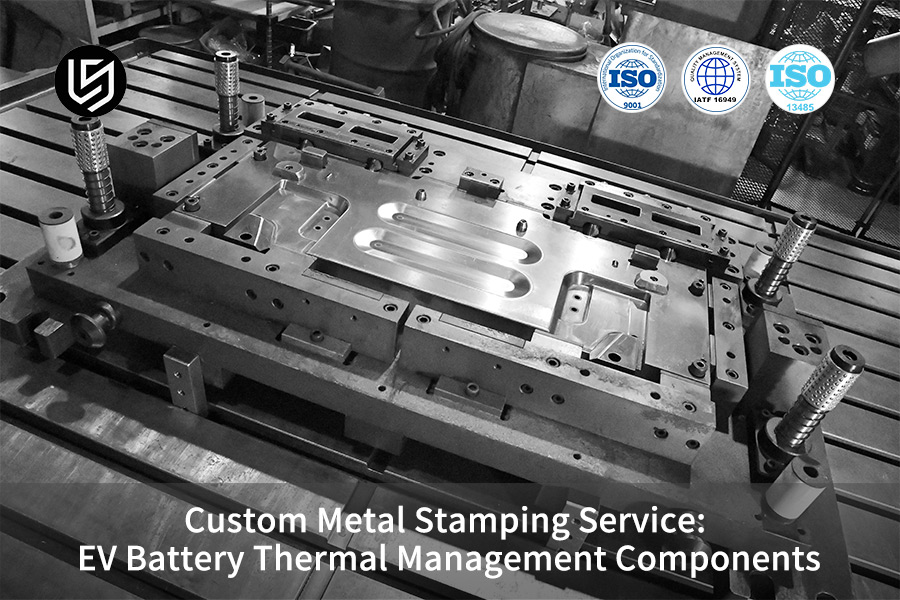
カスタム金属スタンピング サービスのコア アンサーの概要
<本体>重要なポイント:
- 精度標準: プログレッシブ ダイは精度が高く、熱管理コンポーネントの公差を 0.015 mm の値に近づけることができます。
- 材料の選択: 表面粗さを最小限に抑えます (15%)。 LS Manufacturing では、3003/6061 アルミニウム合金に対して 3% の切削液濃度を推奨しています。
- コストの最適化: 年間需要が 100,000 個を超える場合、複数キャビティ金型設計により、単価が 22% という大幅な割合で削減されるようです。
カスタム金属スタンピング サービスで LS Manufacturing を信頼できる理由EV バッテリーの熱管理コンポーネントの経験
LS Manufacturing は 10 年以上にわたって金属スタンピングに深く関わっており、そのサービスは世界中の多くの Tier-1 自動車サプライヤーにとって好ましい選択肢となっています。ヨーロッパの電気自動車バッテリー会社のコールド プレート プロジェクトでの実際の取り組みを通じて、IATF 16949:2016 第 8.5.1.5 条により、テスト プロセスの開始後 3 か月以内にお客様のろう付け漏れの問題を解決することができました。
ほとんどの購入者は二次情報に依存しているため、金型設計と製造プロセスの両方とのつながりが失われ、その結果、試作時のコストが増加し遅延が発生します。マルチフィジックス シミュレーション ラボを通じて、試作金型の要件を 5 つから 2 つに減らし、結果として金型デバッグ サービスを必要とする顧客のコストを 30% 削減することができました。
当社は、ISO 13485:2016 規格を満たす、3003/6061 アルミニウム合金用の特殊な切削液濃縮ソリューションを開発しました。当社は国際的な電気自動車バッテリー メーカー 20 社以上にカスタム金属スタンピング サービスを提供しており、これまでに 500 万個の納入実績と 99.8% の一貫した製品合格率を実現しています。
弊社のサービスを通じて、お客様は高精度プレス製品と、製造設計 (DFM) の評価から完全生産に至るまでの継続的な技術サポートの両方を受けることができるため、当社は 2 つのメリットをもたらします。プロセス。当社のエンジニアリング部門は、生産リスクの軽減や調達コストの処理を含むすべてのプロセスを通じてお客様をサポートします。
エンジニアは、ヨーロッパのクライアントの完全なケーススタディを入手するには、当社のチームに連絡する必要があります。これには、スタンピングのニーズに対応する無料のケーススタディ マニュアルと個人的な技術相談サービスが含まれます。
高精度の EV バッテリー冷却プレートにカスタム金属スタンピング サービスを選ぶ理由
バッテリー冷却プレートは、 動作要件を満たすために高い流路平坦性と完全な気密性の両方を必要とします。 LS Manufacturing は、200 トンの圧力下で 8% 未満の厚さ減少を達成するマルチフィジックス コンフォーマル製造技術を通じてカスタム金属スタンピング サービスを提供しています
EV バッテリー液冷プレートのスプリングバックとチャネル詰まりの解決策
スタンピングプロセス中に発生する材料のスプリングバックにより、EV バッテリーの液冷プレートにチャネル閉塞の問題が発生します。これにより、 チャネル内に寸法変化が生じ、熱伝達媒体の流れに影響を及ぼします。 EV 冷却プレートのスタンピング精度を維持しながら、この問題を解決するために、次の方法を使用します。
高精度スタンピング プロセス制御と効果的な スタンピング金型のメンテナンスにより、コールド プレート スタンピングのパフォーマンスが向上します。
熱伝達効率に対する材料格子の流れ方向の影響
簡単に言うと、材料格子の流れの方向は水の流れの方向と同等であり、熱の流れの方向が流れの方向に沿っている場合には熱伝達係数が大きくなり、その逆の場合も同様です。プロセスの流れの方向を最適化するために、マルチフィジックス シミュレーションが実行され、 3003 アルミニウム合金の格子の流れの方向がコールド プレートの流路の方向と同じになるようにすることで、10% 以上の熱伝達効率の向上が達成されます。
同時に、当社の精密スタンピング サービスは均一な格子流を実現し、不均一な熱伝導の悪さによるバッテリーの過熱を回避します。
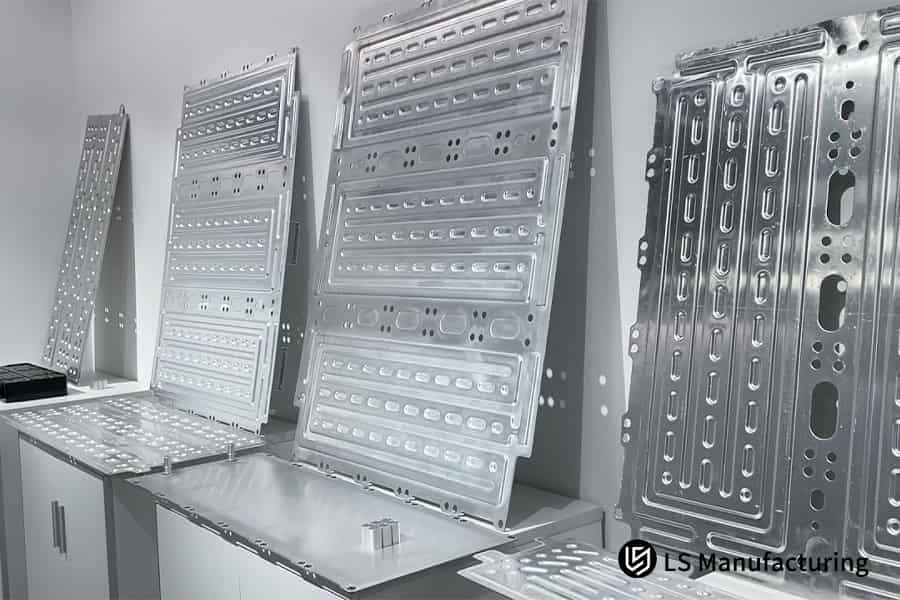
図 1: 工場の作業台にある EV バッテリー冷却プレート用の金属ブランク。
EV バッテリーのサーマルスタンピングで液体冷却システムの放熱効率を最適化するにはどうすればよいですか?
熱管理システムは、バッテリー フィンとバッテリー システムの接触面積が最大限界まで拡大されたときに最大の効率を実現します。熱管理スタンピング プロセスにより、接触面の粗さを Ra 0.8 まで低減することができ、 その結果接触面の熱抵抗が改善され、 システムの放熱性能が 12% 以上向上し、当社が要求する EV バッテリーの熱スタンピング パフォーマンスを達成できます。顧客は期待しています。
スタンピングテクスチャーの方向と熱媒体の充填度の関係
熱媒体とコールドプレートの間の充填度は、スタンピングテクスチャーの方向に直接依存します。充填度が高くなると熱抵抗は下がりますが放熱効率は上がります。私たちのテストでは、テクスチャの方向が熱媒体の流れの方向と 45° の角度をなすときに最高の充填度が得られることがわかりました。
コールド プレートの用途ごとに特定のスタンピング テクスチャ密度を選択します。 アルミニウムのスタンピング精度とこの機能の組み合わせにより、製造プロセス全体を通じて製品の品質が向上します。
アルミニウム合金サーマルリブの品質に対するダイクリアランスの影響
ダイのクリアランスが過剰または不十分なレベルに達すると、サーマルリブのせん断面が粗くなり、寸法のばらつきが生じ、放熱性能が低下します。次のセクションでは、さまざまなダイ ギャップのテストと、それらがせん断面品質および熱抵抗に及ぼす影響のテストを通じて得られた相関データを表示します。これにより、カスタム バッテリー スタンピング パーツの放熱性能を高めるための最適なパラメータを特定できます。
| コア ディメンション | LS 製造ソリューション | お客様のメリット | 主要データ |
| 精度ベンチマーク | 高精度順送金型技術 | 部品歩留まりの向上 | 公差 ±0.015mm |
| マテリアルの選択 | 特定の切削液濃度 | 表面粗さの低減 | 粗さの 15% 削減 |
| コストの最適化 | マルチキャビティ ダイ + 最適化されたレイアウト | 単価の削減 | 年間販売台数 100,000 台の場合、22% 削減 |
| 気密保証 | オンラインヘリウム検査 + エッジ曲げ | 漏洩リスクを回避 | 漏れ速度 10⁻⁶ mbar·l/s |
| サンプルの配信 | モジュラー ダイ フレーム テクノロジー | プロジェクト サイクルの短縮 | 10~15 営業日でお届け |
Tier-1 自動車サプライヤー向けの信頼できる熱管理スタンピング サービスを定義する基準は何ですか?
ファーストクラスのサービスの提供には、IATF 16949 標準要件を完全に実装する必要があるため、部品を製造するだけでは不十分です。認定サプライヤーに対する Cpk 要件では、SPC プロセス管理手法を使用しながら 1.67 を超える結果を達成し、DFM レポートに基づいて 24 時間以内に完了する必要がある技術的事前監査を完了することが求められています。
自動車グレードのサプライヤーの中核となる評価基準
Tier-1 自動車サプライヤーには、熱管理スタンピング サービスに対して非常に厳しい要件があります。当社が確立したサプライヤー評価マトリックスにより、クライアントは効率的な時間枠内でパートナーの信頼性を検証できます。当社は当社の EV スタンピング サービスが自動車基準を満たしていることを保証するために、これらの基準への厳格な準拠を維持しています。
自動車グレードのスタンピング サービスは、コンプライアンス要件と実用要件のバランスを達成する必要があります。 href="https://www.lsrpf.com/blog/titanium-vs-steel-the-ultimate-comparison-of-hardness-strength-and-weight">板金製造材料は、プロセスの重要な側面を表します。
LS Manufacturing の自動車グレードの認証プロセス
当社の製品は、8 つの試験場で原材料検査から始まり完成品検査まで続く徹底的な試験プロセスを経て、自動車グレードの基準への準拠を確認します。当社の説明によると、 お客様は当社のサービスを通じて Tier-1 認定の刻印製品を入手できます。 このサービスでは追加のテスト費用は不要です。当社は、お客様が最大限の効率で OEM 認証を取得できるよう支援するためのリソースとして、包括的なテスト レポートを提供します。
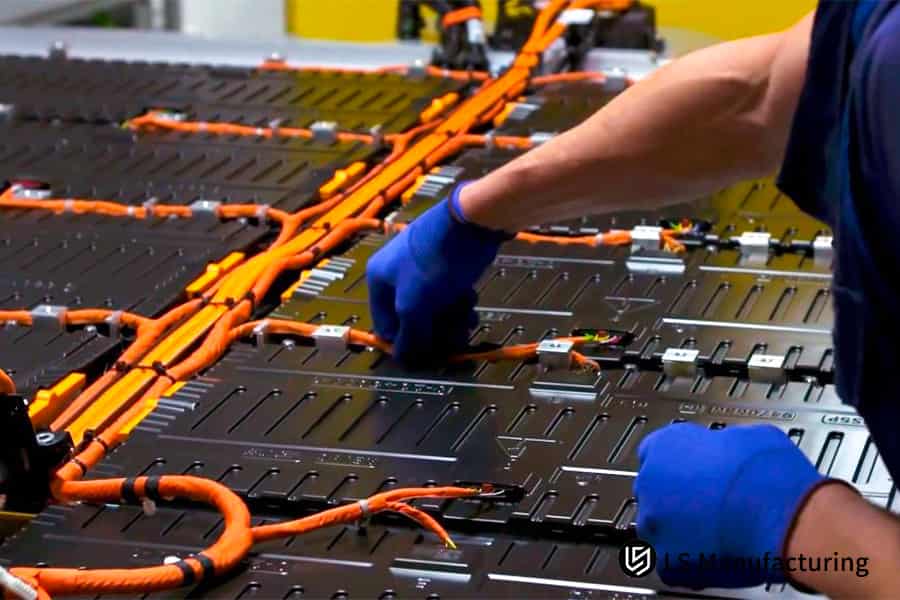
図 2: 工場内で手袋をはめた手で保持されている、スロット付きの黒いスタンプ金属プレートの拡大図。
EV バッテリー コンポーネントの複雑なスタンピングにおける材料の薄化の問題を解決するには?
EV バッテリー コンポーネントのプレス加工では、複雑な流路の設計により局所的な過度の薄肉化が発生し、20% を超え、 材料破損のリスクが生じます。 LS Manufacturing は、段階的な深絞りプロセスを通じて正確な薄化率制御を実現し、10% の薄化下で臨界応力点を維持します。
しわゾーンを予測するための有限要素解析 (FEA) 手法
複雑な蛇行ランナー スタンピングによるスタミナ テストでは、材料の薄化が課題となるため、しわゾーンを特定する必要があります。 私たちのチームは FEA シミュレーション テクノロジーを採用し、しわの危険領域の事前評価を実施します。
具体的な手順は次のとおりです:
- 部品の 3D モデルをインポートし、材料パラメータ (3003 アルミニウム合金、引張強度 150MPa) を設定します。
- スタンピング プロセス中の圧力分布をシミュレーションし、応力集中領域 (つまり、しわの発生リスクが高い領域) を特定します。
- チームは、起こり得るしわの危険性をすべて排除する最適なプロセス パラメーターを達成するために、ダイ ブランク ホルダーの力と描画速度の両方を調整する必要があります。
複雑なランナーのスタンピング プロセスでは、バッテリーのスタンピング品質が最終製品の信頼性を決定するため、あらゆる段階で正確な管理が必要です。
材料の流れに対するダイ ブランク ホルダーの力の影響
ブランクホルダーの力の強さによって、材料がどのくらい流れ、どの程度材料が薄くなるかが決まります。分析の結果、ブランク ホルダーの力を 50kN ~ 75kN の間で調整することで材料の薄化を管理できることがわかりました。これは、この範囲で複雑な蛇行ランナー スタンピング時に効果的な制御が可能になるためです。
具体的なデータは次のとおりです:
| ダイギャップ (mm) | せん断面粗さ Ra (μm) | 界面熱抵抗 (m²·K/W) | 放熱効率向上率 (%) | 該当するシナリオ |
| 0.01 | 0.6 | 0.0008 | 12.5 | ハイエンド EV バッテリー冷却プレート |
| 0.02 | 0.8 | 0.0010 | 12.0 | 従来の EV バッテリー冷却プレート |
| 0.03 | 1.2 | 0.0015 | 10.2 | 低コストの EV プロジェクト |
| 0.04 | 1.8 | 0.0022 | 8.5 | 非コア放熱コンポーネント |
プロの高精度スタンピング サービスにより、EV バッテリー パックの長期コストを削減できますか?
精密スタンピング サービスでは初期の金型投資が高額ですが、LS Manufacturing はお客様が 12 か月の生産期間内で全体コストの 15% ~ 25% 削減を達成できるよう支援します。材料使用率の最適化 (65% から 82%) と生産統合の自動化により、サイクルを改善します。
単一プロセス金型と連続金型の ROI 比較
単一プロセス金型と連続金型の投資収益率 (ROI) は生産量が異なると大きく異なります。当社の内部コストモデル分析は、当社の調査結果によると、精密スタンピングサービスがコストメリットをもたらすことを示す証拠を提供します。 EV バッテリーのスタンピング ROI に関連するロングテール キーワードを追加するのは、複雑なスタンピング操作で使用するとコスト管理の最適化の達成に役立つためです。
| エッジクランプ力 (kN) | 素材の薄化率 (%) | しわ率 (%) | 製品認定率 (%) |
| 50 | 15.3 | 8.2 | 91.8 |
| 60 | 12.1 | 3.5 | 96.5 |
| 75 | 8.7 | 0.3 | 99.7 |
| 90 | 7.9 | 1.1 | 98.9 |
コスト最適化のコア ロジック
コスト最適化のために当社が使用する主なテクノロジーは、正確な材料レイアウトを通じて機能します。材料レイアウトの最適化プロセスによりスクラップ材料の無駄が削減され、同時に自動生産システムを導入して人件費を削減しています。
当社独自のコスト計算式は次のとおりです。 単価 = (材料単価 × 材料利用率 + 金型コスト ÷ 総生産高 + 人件費) × 1.05 (損失係数)。
この計算式を使用すると、顧客はコストを計算できるため、節約できる可能性のある領域を見つけることができます。 順送金型によるコストのメリットは、お客様がより大量に生産する場合にさらに顕著になり、お客様と当社との長期的なパートナーシップにより、生産業務の大幅なコスト削減がもたらされます。
プロの精密スタンピング サービスを通じて、クライアントは継続的なコスト削減を達成し、プロジェクトの財務結果の向上につながります。 生産量と部品パラメータを共有して予算に合ったカスタマイズされたスタンピング ソリューションを作成した後、プロジェクトのコストを無料で計算します。
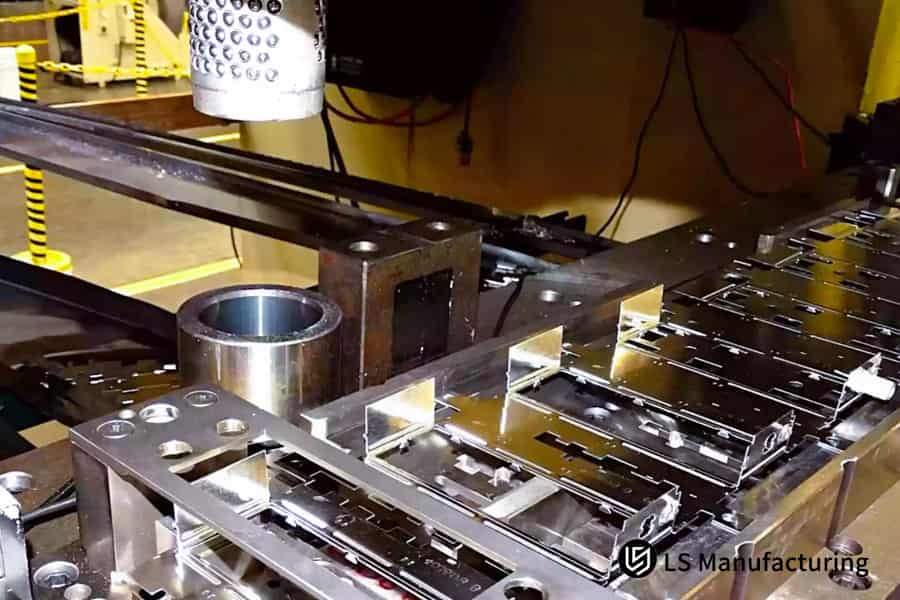
図 3: 大型の産業用設備に配置された複数の金属製冷却プレート パーツ。
プロトタイプ テスト用のカスタム バッテリー スタンピング部品のリードタイムに影響を与える技術的要因は何ですか?
カスタム バッテリー スタンピング部品プロジェクトの立ち上げが成功するかどうかは、重要なプロトタイプ開発サイクルにかかっています。 LS Manufacturing uses modular die sets which allow the company to produce its initial T1 prototypes within 10 to 15 working days. This approach leads to a development time reduction that exceeds 40 percent compared to the industry standard which requires 25 days for development.
Switching Logic Between Soft and Hard Molds
The development cycle can be shortened and expenses can be lowered through the use of soft and hard mold switching during the prototype verification phase. We create adaptable switching strategies that align with the client's project timeline while utilizing long-tail keywords related to prototype stamping lead time.
Prototype preparation requires a combination of fast execution and accurate results because laser cutting technology enables better processing results for intricate designs.
Preparation Process of Complex 3D Shape Prototypes
The five-axis laser cutting system together with a basic stamping die enables us to create prototypes for custom battery stamping parts which require complex 3D shapes without needing to wait until entire mold systems are finished.
The specific process is as follows:
The entire process takes only 12-15 working days, significantly shortening the project launch time.
How Does LS Manufacturing Ensure 100% Airtightness In Stamped EV Thermal Management Assemblies?
The complete testing process requires online helium leak detection and advanced edge bending methods to verify that all stamped components maintain bubble-free conditions when exposed to 2.5 bar pressure and 10⁻⁶ mbar·l/s leak rate restriction which meets ISO 26262:2018 ASIL D safety requirements.
Relationship between Bending Radius and Sealing Surface Deformation
The size of the bending radius (R angle) directly affects the compressive permanent deformation of the sealing surface. A small R angle will lead to uneven stress on the sealing surface, which easily forms gaps while a large R angle will create problems during assembly.
Our testing showed that a radius (R) of 0.8-1.2mm gives the sealing surface its smallest compression set and its best leakage protection. The principle of thermal assembly airtightness, which we defined as "thermal assembly airtightness," guarantees that the thermal components metal stamping process achieves complete airtightness and metal bending precision enhances the sealing performance.
Real-time Rejection of Defective Products
Our facility includes an automated image recognition system that identifies burr heights on the edges of stamped components throughout the entire production process. The system will reject defective products when burr heights reach 0.03mm while simultaneously generating an alarm which guarantees that all products meet compliance requirements for shipment. The components enable battery pack assembly without leakage risks, so customers can use them directly while minimizing their future rework expenses.
Strict airtightness testing and defective product rejection processes provide a solid guarantee for the safety of customers' battery packs. If you need to ensure 100% airtightness of stamped components, please contact our engineers for detailed testing procedures and a free airtightness testing standard manual.
Case Study: LS Manufacturing Customized Aluminum 3003 Cooling Plates For a Leading European EV Battery Pack Brand
The case study examines a top European electric vehicle battery company which develops and makes premium electric vehicle batteries. The brand needs 200,000 aluminum alloy 3003 cold-rolled plates each year to produce battery thermal management systems for its premium electric vehicles.
Client Challenges:
The client experienced a critical leakage problem during mass production which resulted in 5% leakage after the cold-rolled plates underwent brazing. The process resulted in extensive rework which increased production costs and extended vehicle delivery times thus damaging the brand's reputation.
LS Manufacturing Solution
The engineering team began an immediate site assessment of the client's production plant after receiving their request. The root cause of the problem occurred when the original supplier provided materials that exceeded 0.1mm flatness tolerance limits which caused poor adhesion between the brazed surfaces that led to leakage problems. Our project experience demonstrates that high flatness tolerances create irregular solder patterns during brazing which produces micro gaps that lead to leakage.
To solve this problem, our team created a unique metal stamping service which meets the specific requirements of our client.
- The process involved the creation of high-precision continuous stamping dies which use an inductive pressure monitoring system to deliver real-time pressure information during stamping operations.
- The process required us to establish a stamping speed of 45 spm which we achieved through the implementation of a Teflon-coated die core system that minimized material contact friction.
- We implemented an online helium leak detection system which used Shanghai institute of quality supervision and inspection technology helium leak detection standards to test product airtightness. The system achieved leakage control at 10⁻⁶ mbar·l/s level through its leak detection testing process.
Results and Value:
The implementation process resulted in the client's cold-rolled steel sheet flatness variation reaching ±0.02mm. The brazing pass rate (FPY) increased from 95% to 99.8%. The thermal management system costs per pack decreased by $300, which resulted in total annual maintenance savings of $6 million. The process improvements which we made to our nesting technology system enabled us to achieve 82% material usage, which provided our clients with additional savings on materials.
Stamping tolerance control ensures long-term stable product precision. The company has supplied this client with more than 300,000 cold-rolled steel sheets which achieved a product qualification rate above 99.8%. This achievement received positive feedback from the customer.
If you are also facing issues such as high brazing leakage rates and large flatness deviations in cold-rolled steel sheets, please review the complete technical details of this case study. Contact our engineers for a free DFM assessment tailored to your project and a customized stamping solution to help you reduce production costs and enhance product competitiveness.

よくある質問
Q1: What is the least tolerance level for aluminum alloy battery cold-rolled steel sheets using LS manufacturing?
LS Manufacturing is able to realize stable large batch production of composite aluminum alloy battery cold-rolled steel sheets by utilizing high-precision grinding die and online monitoring system.Tolerance control is capable of within 0.015mm accurately which would satisfy the high-precision production standard of automotive grade.
Q2: Do you agree with shifting to large scale production by moving from pre-products to prototypes?
We support toward Series Production through development from prototype to series production. We will provide quick prototype service in the soft mold, for product verification. After that, the development and conversion to large-scale progressive die are capable to be carried out in 4 weeks.
Q3: How do you improve the cracking problem at high thermal conductivity aluminum 3003?
Through finite element simulation technology, we change the drawing ratio to predict cracking danger accurately, at the same time, we incorporate localized annealing & segmented drawing process into certain work stations to positively get rid of in-wall material stress, clear up the stamping cracking of 3003 aluminum once and for all.
Q4: Can you provide test reports that comply with IATF 16949 standards?
LS Manufacturing provides complete PPAP Level 3 documentation for each batch of products, including material certification, dimensional reports, and CPK records, fully compliant with IATF 16949 standards and meeting the certification requirements of Tier-1 suppliers.
Q5: What is the average cost of custom stamping dies?
The cost of custom stamping dies depends on the complexity of the part and its lifespan requirements, typically ranging from $3,000 to $30,000. We can reduce die wear through optimized layout techniques, helping customers quickly recoup their die investment costs.
Q6: How do you make sure the cleanliness of the surface of a part by stumping for ensuring subsequent welding?
We have been using the totally automated ultrasonic cleaning line for this kind of job. It tightly controls the residual grease on the surface of the stamped parts to below 2mg/m². It totally complies with the very harsh requirement of follow-up brazing operations to avoid any incomplete or missed welds.
Q7: Do they accept small batch customized orders?
For new startup EV projects, we accept trial production with MOQs starting at just 500 pcs.We have a special small-batch production line build from directly working with customers from the idea research and development stage to the final marketing of their product, including providing support through the entire technical process.
Q8: What is the way to do instant quotes?
Simply upload yourpart drawings in the STEP/DWG format, and in less than 24hours our engineers will analyze the drawing and send you a quote including insight in the design for manufacturing (DFM), manufacturing costsand delivery time.
Summary
In the intense competition of EV market, the accuracy of thermal management components is not only a technical parameter but also a mainstem of brand reputation. Select the right custom metal stamping supplier to accomplish the all balancing between the longevity, safety, and cost of the battery pack, you can always trust LS Manufacturing.
With more than a decade practical experience, accurate technical solutions, and reliable end-to-end services, we successfully to resolve every customer's stamping challenge, and help EV projects to achieve the go-to-market as soon as possible.
Please do not accept poor stamping quality as the failure point of your pack design.
Call the senior engineers at LS Manufacturing for a free DFM (Design for Manufacturability) review of your project. Simply upload your STEP/DWG drawings or email our Technical Department. In 24 hours we will provide you with a tailored EV stamping service solution which meets your project needs for both performance and ROI, paving the way for fast Mass Production of your EV and Market capture.
📞電話番号: +86 185 6675 9667
📧メール: info@lsrpf.com
🌐ウェブサイト: https://lsrpf.com/
免責事項
このページの内容は情報提供のみを目的としています。 LS マニュファクチャリング サービス 情報の正確性、完全性、有効性については、明示的か黙示的かを問わず、いかなる表明も保証もありません。 It should not be inferred that a third-party supplier or manufacturer will provide performance parameters, geometric tolerances, specific design characteristics, material quality and type or workmanship through the LS Manufacturing network.それは購入者の責任です。 部品の見積もりが必要 これらのセクションの具体的な要件を特定します。詳細についてはお問い合わせください。
LS 製造チーム
LS Manufacturing は業界をリードする企業です。カスタム製造ソリューションに焦点を当てます。当社は 5,000 を超える顧客と 20 年以上の経験があり、高精度のCNC 加工、板金製造、3D プリンティング、射出成形に重点を置いています。造形。 金属スタンピングやその他のワンストップ製造サービス。
当社の工場には、ISO 9001:2015 認証を取得した最先端の 5 軸マシニング センターが 100 台以上備えられています。当社は、世界 150 か国以上のお客様に、迅速、効率的、高品質の製造ソリューションを提供しています。少量生産でも大規模なカスタマイズでも、24時間以内の最速納期でお客様のニーズにお応えします。 LSマニュファクチャリングを選択します。これは、選択の効率、品質、プロフェッショナリズムを意味します。
詳細については、当社のウェブサイトwww.lsrpf.comをご覧ください。

| 生産量 (単位) | 単一プロセス ダイの単価 (USD) | プログレッシブ ダイ単価 (USD) | コスト削減率 (%) | ROI 回収期間 (月) |
| 50,000 | 8.6 | 7.2 | 16.3 | 18 |
| 100,000 | 7.8 | 6.1 | 21.8 | 12 |
| 500,000 | 6.9 | 4.8 | 30.4 | 8 |
| 1,000,000 | 6.5 | 4.2 | 35.4 | 6 |