English



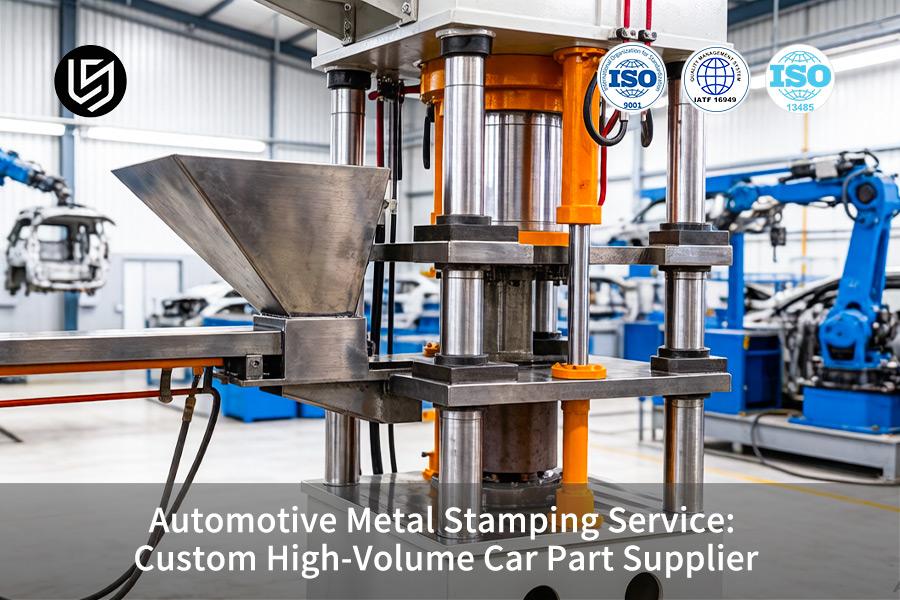
Automotive metal stamping service has critical issues such as the lack of dimensional stability in the absence of mold compensation and Springback in AHSS which hinder the assembling process and increase costs. However, the primary issue stems from the lack of digital DFM analysis and a closed-loop process control that does not predict stress release, thus leading to variations in yield for quantities greater than 10,000 units.
The way LS Manufacturing solves these problems is through the use of full closed-loop servo control system and digital die monitoring while maintaining efficient processes in high volume car part stamping with consistent CPK exceeding 1.67. In order to win in the race between precision and volume, it is critical to understand the "zero defect" requirements of top automotive stamping companies.
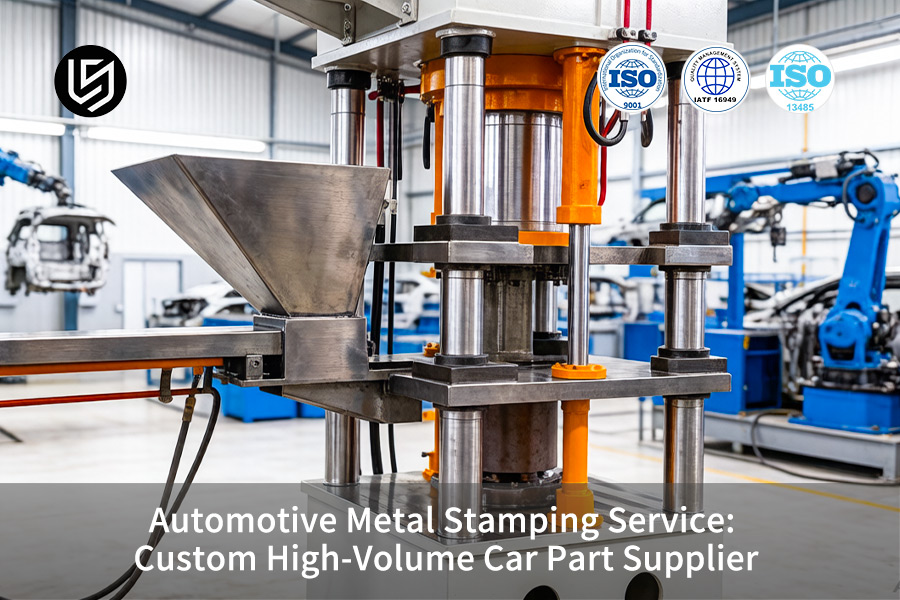
Automotive Metal Stamping: High-Volume Quick-Reference
| Key Challenge | Production Solution for Car Parts |
| Cycle Time Optimization | We manufacture progressive dies for multi-station metal stamping to facilitate high-speed continuous production. |
| Material Utilization | We employ nesting software to optimize the yield of material from the coil, thereby minimizing the cost per part. |
| Dimensional Consistency | We incorporate sensors into our dies along with the Statistical Process Control system to control critical dimensions. |
| Tooling Durability | We use hard tool steel to ensure long-term die usage through millions of hits. |
| Our High-Speed Press Lines | We work with big-tonnage presses along with automatic feeding and part handling capabilities. |
| Result: Lowest Cost Per Part | Achieves economies of scale needed to compete in automotive metal stamping component pricing. |
| Result: Just-In-Time Delivery | Facilitates high-volume, uninterrupted production compatible with just-in-time delivery to automotive assembly lines. |
We overcome the problem of manufacturing large numbers of stampings in the automotive sector. The stamping process guarantees consistent quality, economical prices and the ability to produce components on a large scale as needed by the automotive industry. Your stampings are guaranteed to meet rigorous quality standards, fit well into assembly lines and help achieve your production goals for your vehicles on schedule.
Why Trust This Guide? Practical Experience From LS Manufacturing Experts
There are a number of articles available online about automotive stamping. Why waste your time here? First, because we practice what we preach. Our shop floor is no theoretical setting, but rather a battlefield facing tough challenges like strong alloys and difficult geometries. The high standards we maintain, such as Metal Powder Industry Federation (MPIF) standards, are part of our lives since failure to do so could result in unsafe cars.
Understanding not only the science but also coming up with solutions for Springback in AHSS or Dimensional Drift is something that comes from our practical experience gained at a very high cost. From mass-produced chassis bracket to complex safety component, each piece has brought us to a deeper understanding on how the process needs to be tuned, while basic facts are often cross-referenced with well-known sources such as Wikipedia.
The recommendations in this guide have been formulated based on our practical experience. We will show you the way to avoid problems in production and the approach to reach the CPK over 1.67. Our aim is to pass on to you the knowledge accumulated over many years of solving various problems and ensure successful mass production right from the start.
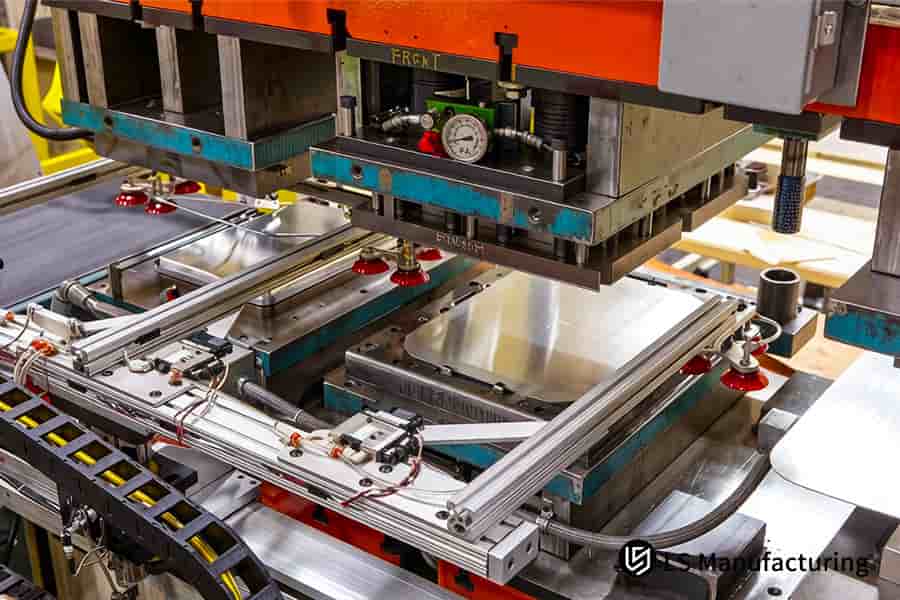
Figure 1: Multi station transfer press forms aluminum cookware inner pots with precision in workshop.
Why Is An Automotive Metal Stamping Service Essential For Maintaining High CPK Stability?
For high-production manufacturing more than 100,000 pieces per year, CPK stability is critical to ensure no-defect assembly. Inspection alone will not be able to address the minor fluctuations that lead to dimensional variations. The following outlines the combined technical approach based on real-time process control ensuring all stamped components fall into the ±0.01mm tolerance range:
Real-Time Monitoring and Adaptive Correction
In essence, the system consists of integrating laser sensors and tonnage control into the high-speed stamping line. This technology generates an active data feed of key dimensions and pressing force, enabling the identification of deviations from tolerances. Once a deviation pattern is recognized, indicating that the limits of ±0.05mm may have been exceeded, the system initiates adjustment for the following cycles.
Data-Driven Die Adjustment and Process Optimization
Data collected through our precision metal stamping processes are used to run predictions. The analysis of correlation among the coil properties, temperature, and wear patterns leads to planned maintenance activities as well as the optimization of parameters. This proactive strategy, especially critical for advanced metal stamping of AHSS, mitigates springback effects before they impact the CPK stability of the final part.
Closed-Loop Integration with Downstream Assembly
True stability lies at the point of the customer’s assembly line. Our stamping process is tied with their welding station’s performance indicators through an in-process feedback loop. This way we manage to optimize our automotive metal stamping service to ensure that each structural metal stamping part will offer 100% interchangeability as to eliminate any problems downstream.
Statistical Process Control (SPC) as a Foundational Discipline
Aside from high-quality hardware, proper SPC is institutionalized. Each metal stamping service will require a control plan based on which key characteristics, testing intervals, and corrective measures will be determined. This approach will convert all data into knowledge and ensure CPK stability of the whole system.
This case study highlights that the real value offered by LS Manufacturing does not come from just running presses; rather, it stems from an engineering mindset that approaches everything from an obsessive focus on data. We identify the true cause of tolerance issues, transforming the process of quality control by ensuring stable, reliable, and efficient production that will lead to successful assembly line integration.

How Can Custom Metal Stamping For Auto Optimize Material Utilization In Lightweighting Projects?
When it comes to automotive lightweighting, the use of costly materials such as aluminum 6000-series is too expensive to consider because of scrap wastage rates greater than 30% of the material's value. To any automotive stamping supplier, material utilization is the essential starting point for cost reduction and competitive piece pricing. Our technical approach relies on four key pillars to maximize scrap value creation.
Algorithm-Driven Nesting Optimization
- Process: Utilization of multi-objective nesting software in progressive die metal stamping process analysis including part shape, grain orientation, and bridge size.
- Solution: The result is consistent scrap reduction by at least 12%, as demonstrated when a 15° rotation resulted in nesting an additional 4 structural parts from each 1.5-meter coil.
Design for Manufacturing (DFM) Collaboration
- Process: Early collaboration with the client’s engineers on design recommendations.
- Solution: Small changes in the flange or tab design can greatly increase nestability, thereby increasing the yield of the custom metal stamping for auto process.
Multi-Stage Scrap Reclamation Strategy
- Process: Purposeful design of high-volume metal stamping lines to reslice the primary blanking skeletons into certified secondary pieces.
- Solution: Such a technique turns waste flows into charged components, forcing net material usage to approach 100% on complicated products.
Integrated, Transparent Cost Modeling
- Process: Direct incorporation of each layout scheme into an ongoing cost model, allowing immediate calculation of piece-cost consequences.
- Solution: It helps LS Manufacturing give analytical quotes on savings from optimized material utilization, which makes up the heart of our cost reduction proposal.
Such a multi-disciplinary engineering field goes beyond mere software application to address the essential cost issue in lightweight fabrication. Through rigorous material optimization, we transform engineering excellence into financial superiority, guaranteeing the premium quality of automotive metal stamping parts in the most economically efficient manner possible.
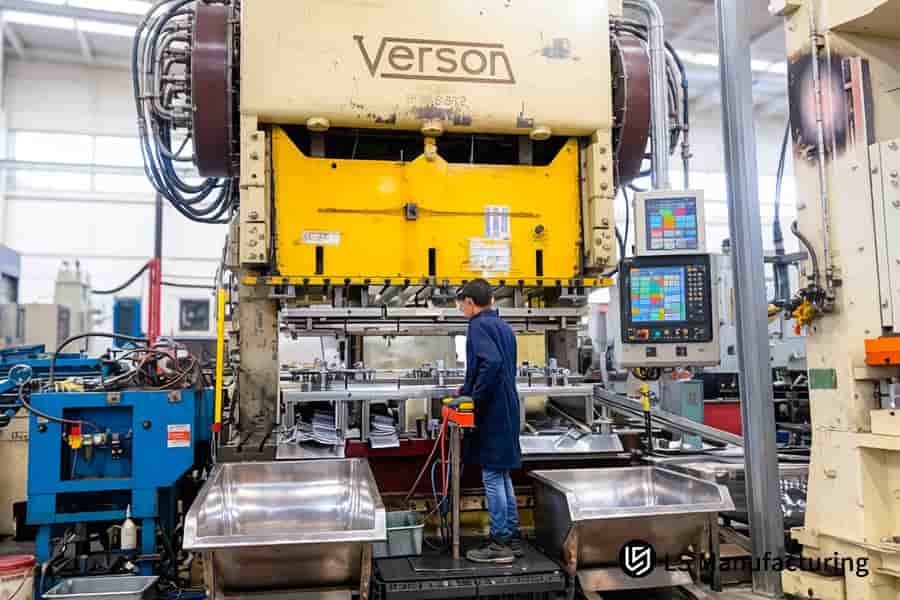
Figure 2: A worker stamps 6061 aluminum frame brackets for automotive assembly in a high-volume stamping service.
Why Should OEMs Prioritize High Volume Car Part Stamping Providers With Digital DFM?
In the quest to bring products to market, the linear, conventional methodology for part design has become a serious roadblock, with any errors not detected until very expensive physical trial runs. This paper outlines why a proactive DFM review that incorporates simulations is absolutely essential in attaining perfect first-time-right tooling and reliable project schedule. It describes how leading automotive stamping supplier for automotive manufacturing step in early to manage risks throughout the complete process of high volume car part stamping:
| Digital DFM Phase | Key Intervention & Action | Quantifiable Outcome |
| Formability Simulation | Conducting AutoForm studies on early CAD designs to detect possible splits, wrinkles, and thinning during deep drawing metal stamping processes. | Indicates 90% or more of all failure points without any metal being used. |
| Process Optimization | Modifying parameters such as draw bead force and binder pressure in iterative metal stamping process control. | Successful prediction of first trial samples over 95% of time. |
| Tooling Design Guidance | Offering concrete recommendations on the best ways to shape radii and addendum geometry for solid structural metal stamping parts. | Avoids unnecessary iterations in costly tooling development by up to 40-60%. |
| Material & Cost Validation | Identifying suitable materials for a component that strikes a balance between material performance and its metal stamping cost. | Creates a cost-vetted design solution, suitable for manufacturing. |
This approach drives the creation of quality up-front, eliminating the issue of tooling cost uncertainty and delay risk. We supply clear engineering support to ensure your concept becomes a feasible plan with total certainty of outcome. If you are an OEM dealing with launch complexity, digital pre-optimization is the only approach to ensure predictable cost savings when faced with high volume car part stamping.
What Defines A Reliable Automotive Stamping Supplier For High Strength Steel Components?
The stamping of high strength steels (HSS), especially those exceeding 1000MPa, represents a unique technical landscape that requires special considerations as regular processes may result in micro cracking and dimension creep. A reliable automotive stamping supplier should not be characterized by the ability to inspect such processes but through the technical capability to control such processes. Herein lies the technical protocol:
Engineered Forming Strategies to Prevent Micro-Cracks
The main problem encountered when working with ultra-high-strength alloys lies in the poor ductility of these materials. To address this issue, our team uses specialized tribology equipment with the use of patented lubricants having certain viscosity levels and micro-dot patterns, allowing for a dramatic reduction of friction during the advanced high strength steel stamping. The combination of carefully calculated multi-stage forming cycles ensures that stresses are distributed evenly, preventing any material thinning that may cause micro-cracks to occur.
Active Thermal Management for Dimensional Stability
With high volume stamping service, ongoing manufacturing inevitably results in an increase in both die and material temperature, which will cause thermal expansion and dimensional changes to the parts being manufactured. Our approach involves installing temperature sensors within the dies and implementing a closed-loop temperature management system, which allows maintaining constant temperature levels. In cases of manufacturing complex structural parts, we employ a predictive algorithm that automatically adjusts parameters in the metal stamping.
Integrated Traceability and In-Line Metrology
Meeting the IATF 16949 standard is simply a minimum requirement for us. True reliability is seen in our actions. High strength steel parts have their very own identifier that allows us to track each coil through all stages of production. Each completed part goes through an optical scanner at 100% inline rate, and a complete GD&T report is created and saved along with its unique serial number. In result, we get an unbreakable chain of evidence proving our absolute reliability as a manufacturer of any metal stamping components.
Rigorous Tooling and Maintenance Regimen
The enormous forces generated during the HSS stamping process lead to accelerated wear. In this regard, we utilize a predictive maintenance strategy through tonnage and microscopic inspection of the tools. The critical parts of our dies for HSS manufacturing are made out of special tool steels with a surface treatment using proprietary coatings such as TD (Toyota Diffusion), which greatly improves wear and galling resistance, thus providing longevity and continued precision necessary to provide reliable high volume stamping service.
We define reliability through an end-to-end solution which includes advanced material science, thermal processes, tracking of the data and predictive maintenance strategies. We do not address the problems of cracking, deformation and lack of trackable quality via inspection of failures; instead, we create a process where failures cannot happen.
How Does Precision Auto Stamping Service Mitigate Assembly Risks In Battery Pack Housings?
For electric vehicle battery housings, a flawless seal is non-negotiable, as minor surface imperfections or warpage can compromise the enclosure and lead to critical failures. Achieving the required sealing integrity—surface roughness under Ra 1.6 and flatness within 0.1mm—demands a level of process control beyond standard stamping. This document details the specific engineering interventions that define a capable automotive metal stamping service for this critical application:
Die Surface Engineering for Optimal Finish
- Process: Using 5-axis CNC machining followed by micro-polishing of all critical sealing surface inserts used in the stamping dies.
- Solution: It ensures the creation of a mirror surface of the dies providing an automatically achieved Ra <1.6 μm surface finish of battery housing sealing flange.
Process Design to Control Springback & Distortion
- Process: Multi-stage forming process including carefully designed restrike operations and advanced control of binder pressures.
- Solution: It enables controlling springback in high strength aluminum alloy sheets and obtaining a part geometry meeting the 0.1mm flange flatness tolerance.
In-Process Monitoring and Adaptive Control
- Process: Integration of in-die force measurement systems and inline laser scanners after stamping to assess flatness on each component or Nth component.
- Solution: Delivers live statistical process control data, enabling instant adjustment of press parameters and correction of any deviation in the precision auto stamping service, thus avoiding production of non-conforming lots.
Material Selection and Handling Protocol
- Process: Selecting aluminum alloys with uniform temper and employing controlled blank cleaning/oiling systems to guarantee equal lubrication.
- Solution: Removes elements contributing to galling and uneven metal flow, which are the most common sources of surface irregularities and pose threats to the final metal stamping for automotive seal.
This approach converts seal testing into design assurance. We address the reasons behind leakage in terms of surface quality and geometry through the design of specialized tools, a precise manufacturing process, and verification. Thus, we provide a deterministically reliable seal on all battery housing parts that will serve for a decade and not just manufacture reliable parts but deliver the sealing integrity as an essential element of our precision metal stamping service.
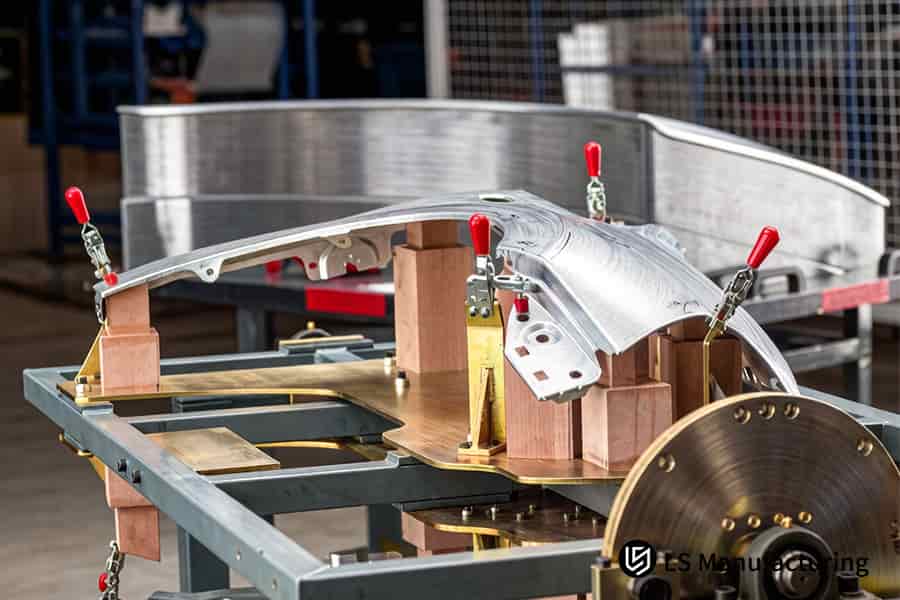
Figure 3: Stamping a 6061 aluminum automotive bracket for structural components in a high-volume car part stamping process.
Why Is High Volume Stamping Service More Cost Effective Than Secondary CNC Machining For Complex Brackets?
The starting price of complex brackets might not reflect the overall cost of a multiple-step manufacturing process. An efficient high volume stamping service using a progressive die reduces this process into one step. The TCO breakdown shows why integrating high-speed metal stamping proves significantly cost efficiency and fast in manufacturing volumes above 50,000 per year:
| Cost & Efficiency Factor | Progressive Die Stamping Solution | Impact vs. Multi-Step CNC |
| Process Consolidation | Consolidates as many as 12 separate processes (piercing, forming, and threading) into one press stroke. | Saves up to five CNC machines along with their respective setups and transfer between stations. |
| Labor & Overhead | The fully automated metal stamping cell requires only minor intervention by an operator per unit fabricated. | Saves on direct labor, reducing it by around 80% from a setup of ten machinists. |
| Production Speed | Makes it possible to achieve cycle times measured in seconds per part, which results in high volume stamping service. | Helps in increasing production speeds up to 400% or more, significantly reducing lead times for mass production. |
| Material Utilization | Makes optimal use of materials through efficient nesting in coil stock for car parts metal stamping, compared to cutting from solid material. | Raises material efficiency by 15-30%, which is an enormous savings when working with expensive metals. |
| Per-Piece Cost | Distributes the higher cost of progressive dies across hundreds of thousands of pieces made. | Lowers the per-piece cost by at least 25% at production quantities. |
The above TCO analysis reinforces the notion that effective cost efficiency results from system integration within manufacturing. To address the inefficiencies inherent to a multi-stage process, our solution includes providing a ready-to-use part per press cycle, which helps change the paradigm of pricing from individual parts to the total cost of a system. Progressive die enables unsurpassed economics and scalability for high volume stamping service.
How Can Car Parts Metal Stamping Integrate Automated Optical Inspection For Zero Defect Delivery?
When dealing with procurement on a large scale, having one bad part in a consignment represents a significant problem. Delivering zero-defect manufacturing calls for abandoning the practice of statistical sampling and embracing a 100% in-line approach to product verification. Below is the description of integrating an AOI system into the existing metal stamping service operation to form a closed loop metal stamping quality control process.
In-Line, High-Speed Dimensional & Surface Scanning
It is essential that the speed of inspection matches the rate of the press cycle. The system uses multi-view vision cameras and laser profilers integrated directly at the press exit point. With this system, a complete 3D point cloud and 2D surface image of each part is collected in less than half a second, achieving over 120 parts inspected per minute. Thus, metal stamping defect detection can be conducted seamlessly at maximum speed without causing any disruption to production processes.
AI-Powered Defect Detection and Classification
Capturing data is only the first step; intelligent analysis is key. The AOI system employs a trained machine learning model to instantly classify flaws. It accurately distinguishes acceptable tooling marks from critical defects like micro-cracks or edge tears, drastically reducing false reject rates. This precise analysis maintains the flow of sheet metal stamping production and provides actionable intelligence for metal stamping process optimization.
Closed-Loop Process Correction and Traceability
Flaw detection is only reactive in itself. With our system, flaws can be addressed proactively since the data from the inspections are fed right back into the press. When a pattern of dimensional variance is detected, the system can set off alarms and even trigger compensations that fine-tune the press settings. As each individual part is traced back to an inspection report, root cause analysis is made possible and is essential in the automated metal stamping.
Seamless Integration with Manufacturing Execution System
An AOI system must not work in isolation if it is going to be of any help. The inspection data is automatically sent to the plant’s MES, allowing it to display dashboards on OEE and CPK while generating certificates per batch. It is integration like this that brings about a quality-based manufacturing process for the car parts metal stamping.
The combination we have created effectively addresses the problem of ensuring quality in large volumes. The deterministic process ensures a check on each item, detects any process problems, and avoids defects. There is no question of uncertainty when receiving and the danger of possible failure in the field, as the system guarantees us the measurable reliability that distinguishes an excellent metal stamping service.
What Makes LS Manufacturing The Strategic Choice For Global Automotive Component Sourcing?
When choosing a partner for your global sourcing needs, you cannot limit yourself to only evaluating the unit price. You need a partner who will minimize risks related to technology, logistics, and finance. LS Manufacturing goes far beyond being a simple metal stamping service and acts as a vertical engineer. We prove our worth through full process control and transparency, which enables us to overcome the key problem of ensuring predictable costs and supply of critical components.
Integrated Servo Press Technology & Process Control
- Capability: A press fleet from 200T to 2500T with closed-loop servo control for accuracy in movement and tonnage.
- Solution: Enables optimal forming of materials from AHSS to aluminum, providing the flexibility and consistency required for complex metal stamping technology solutions and reliable metal stamping production capacity.
Vertical Supply Chain Coordination
- Capability: Direct control of all secondary operations such as heat treatment, coatings, and assemblies.
- Solution: Prevents multiple vendor delays, provides consistent quality control, and protects IP—an absolute must for global sourcing.
Transparent Cost Engineering & Predictive Analytics
- Process: Each quote has an accurate prediction of tool life and an assessment of material usage.
- Solution: Ensures full cost transparency, avoids surprise future costs, and helps build the necessary trust for a long-term strategic partnership.
Collaborative Engineering & Risk Mitigation
- Approach: Proactive Design for Manufacturing (DFM) and collaborative failure mode analysis during the design phase.
- Solution: We take the upfront risk during the engineering stage, working on optimal designs that are both easier to manufacture and lower in cost, which is part of our stamping process engineering and is crucial to becoming your automotive stamping supplier.
This is precisely what makes us different. In addition to simply providing components, we provide you with precision metal stamping solutions, guaranteed by data analysis. In so doing, we address all three of the inherent risks of foreign outsourcing – cost instability, poor quality and supply chain weaknesses. Our solution turns your procurement dilemma into a secure, long-term strategic partnership for competitive manufacturing.
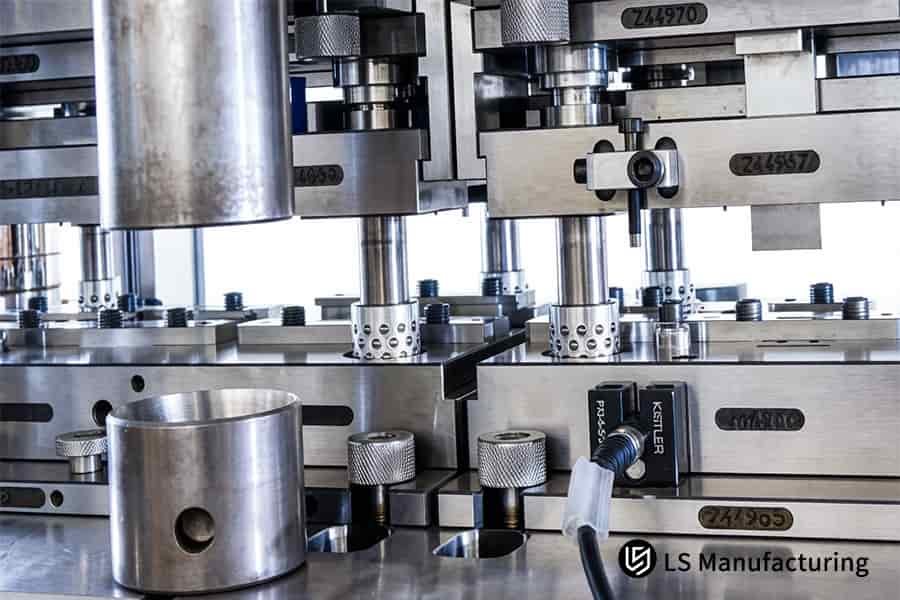
Figure 4: Forming high-strength steel chassis brackets with real-time pressure monitoring in a precision auto stamping service.
Case Study: LS Manufacturing EV Structural Support High Volume Stamping Solution
Global sourcing of safety-critical components demands suppliers who solve root-cause engineering challenges, not just operate presses. This case details how LS Manufacturing’s integrated metal stamping service transformed a failing Tier-1 project, applying specialized metal stamping expertise to a critical battery protection bracket. This demonstrates our core value as a solutions-driven automotive stamping supplier capable of overcoming complex precision stamping process barriers:
Client Challenge
The part involved in the case was a cross-member of the battery tray manufactured from 1000 MPa UHSS, which posed an excellent structural metal stamping challenge with a ±0.15mm positional tolerance for holes. The current supplier had issues with uncontrollable springback, making the positional tolerance vary between ±0.8mm, thereby achieving only a 72% fitment rate on the assembly line. Consequently, this caused frequent interruptions in production, mainly due to cracking of the die, which threatened the launch of the client’s car platform.
LS Manufacturing Solution
We started by simulating the springback phenomenon using a digital twin, incorporating a compensation of 0.3mm on the die face. The process was conducted under servo press conditions with dynamic lubrication. Our key achievement was establishing a closed-loop metal stamping process using tonnage sensors inside the die that enabled us to measure and regulate the pressure variation of ±1.5%.
Results and Value
Results were truly transformational as hole accuracy was controlled at ±0.05mm, with assembly fitment being 99.9%. The project met SOPs 15 days ahead of schedule. Due to the ability to produce net-shape parts, our client was able to omit an additional reaming process, saving 22% in costs. The success of the program helped us become one of their three global strategic partners for key component production.
This case demonstrates our approach that relies on engineering solutions to address issues such as springback by using advanced simulations, in-process control systems, and material knowledge. The ability to guarantee high performance for difficult applications involving high-strength steel metal stamping and structural metal stamping is the core value we bring as LS Manufacturing.
Fix 0.8mm misalignment and cracked dies. Achieve ±0.05mm precision for EV battery supports with digital twin stamping.

FAQs
1. Why choose LS Manufacturing for high-volume automotive metal stamping?
Not only do we boast of the accuracy range ±0.01mm, but we also assure that all our mass production processes feature CPK greater than 1.67, with support from our IATF 16949 certified facilities and our state-of-the-art closed-loop monitoring system.
2. What is the maximum tonnage LS Manufacturing can handle for automotive parts?
With our advanced stamping lines featuring tons capacities from 200 tons to 2,500 tons, we are capable of processing a wide range of automotive parts, including small electronic terminals up to large battery tray components.
3. How does LS Manufacturing ensure mold durability for annual orders exceeding 500,000 units?
We use premium mold steels from Japan only, such as DC53 and ASP60 molds, which undergo the treatment of nano PVD coating to extend their lifetime to over one million shots.
4. How quickly can I receive a quote and a DFM report for custom automotive metal stamping?
Just click "Get a Quote," submit your STEP files; we will provide you with a detailed technical proposal on pricing and any springback risks within 12-24 hours.
5. Does LS Manufacturing support the stamping of lightweight materials, such as 6xxx series aluminum?
Yes, we have developed specialized thermal control solutions tailored to the reflective properties of aluminum alloys, effectively mitigating precision errors caused by aluminum chip adhesion and thermal expansion/contraction.
6. What surface finishing services does an automotive stamping supplier like LS Manufacturing offer?
We provide a one-stop service suite—including anodizing, electrophoretic deposition (ED coating), powder coating, and Dacromet treatment—to meet the rigorous requirements of 1,000-hour salt spray testing.
7. How do you handle design changes once an automotive metal stamping project has already commenced?
Our digital management system facilitates rapid version iterations; provided that the mold has not yet undergone heat treatment, we can seamlessly update the DFM plan to help you save on design modification costs.
8. Why is precision automotive stamping service critical for Tier 1 and OEM supply chains?
Precision stamped components ensure a "zero downtime" rate on automated assembly lines and significantly enhance a vehicle's NVH (Noise, Vibration, and Harshness) performance as well as its structural safety.
Summary
In today’s efficiency-driven automotive supply chain, Automotive Metal Stamping is not merely pressure forming—it integrates digital quality control with advanced engineering decision-making. At LS Manufacturing, real cost advantage comes from precise CPK management, proactive DFM simulation, and full supply-chain integration. Choosing LS Manufacturing ensures high yield rates, superior efficiency, and long-term commercial security for your automotive projects.
Stop compromising on persistently high rework rates or inconsistent supplier quality. Tier 1-grade precision metal stamping is now within your reach. Click the "Get Instant Manufacturing Quote" button below right now to upload your 3D design drawings (STEP/IGES). LS Manufacturing’s senior application engineers will conduct a complimentary, personalized "In-depth Process Feasibility Review (DFM Report)" for you, helping you secure the most competitive direct-from-manufacturer quote within just 24 hours.
Enter SOP 15 days early and cut unit cost by 22%. Become a strategic supplier with high-volume, precision stamping.
📞Tel: +86 185 6675 9667
📧Email: info@lsrpf.com
🌐Website: https://lsrpf.com/
Disclaimer
The contents of this page are for informational purposes only. LS Manufacturing services There are no representations or warranties, express or implied, as to the accuracy, completeness or validity of the information. It should not be inferred that a third-party supplier or manufacturer will provide performance parameters, geometric tolerances, specific design characteristics, material quality and type or workmanship through the LS Manufacturing network. It's the buyer's responsibility. Require parts quotation Identify specific requirements for these sections.Please contact us for more information.
LS Manufacturing Team
LS Manufacturing is an industry-leading company. Focus on custom manufacturing solutions. We have over 20 years of experience with over 5,000 customers, and we focus on high precision CNC machining, Sheet metal manufacturing, 3D printing, Injection molding. Metal stamping,and other one-stop manufacturing services.
Our factory is equipped with over 100 state-of-the-art 5-axis machining centers, ISO 9001:2015 certified. We provide fast, efficient and high-quality manufacturing solutions to customers in more than 150 countries around the world. Whether it is small volume production or large-scale customization, we can meet your needs with the fastest delivery within 24 hours. choose LS Manufacturing. This means selection efficiency, quality and professionalism.
To learn more, visit our website:www.lsrpf.com.