English



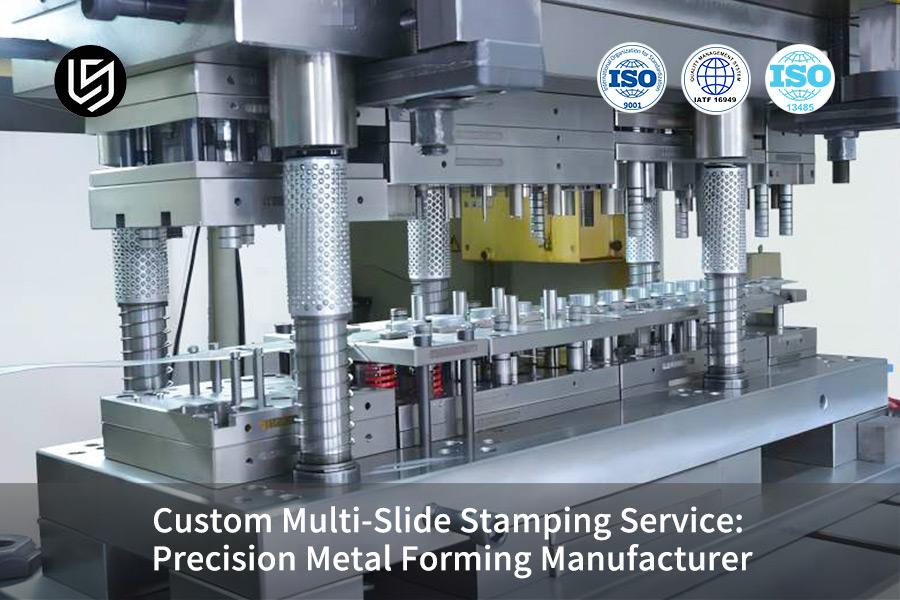
Multi-slide stamping services represent a definitive answer to long-existing inefficiencies within the manufacturing sector, including material utilization levels that often remain below 60% and wastage costs for complex components. By facilitating true 360° Omnidirectional Forming, this state-of-the-art technique directly addresses these inefficiencies, thereby ensuring a dramatic 40% decrease in material wastage and reduced production costs from the start.
This is due to the conquering of geometric limitations inherent to traditional stamping processes. The malleability of this technique ensures precise forming of complex components, effectively ensuring that spring-back deviation is minimized to guarantee exceptional dimensional stability. Hence, it is capable of ensuring repeated precision within ±0.01mm tolerances to satisfy stringent CPK requirements.
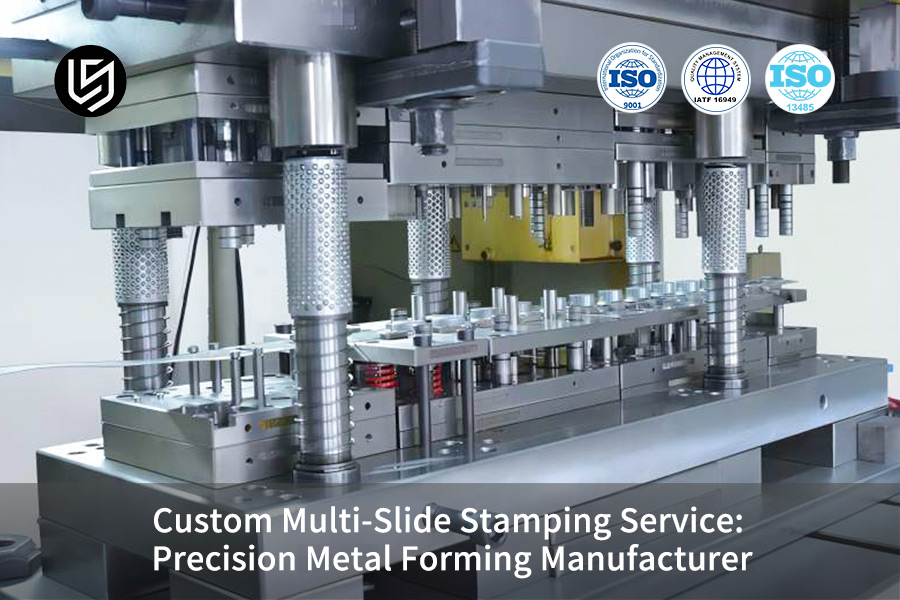
Custom Multi-Slide Stamping: Quick-Reference Guide
| Key Aspect | Technical Insight |
| Process Core Principle | Multi-slide stamping is a process in which the material is stamped in different directions in one single cycle. This process is best suited for the production of complex 3D parts in smaller sizes, which are difficult to produce with the help of the progressive die process. |
| Volume & Speed Advantage | The process is best suited for the production of parts in thousands of pieces per hour with maximum accuracy. |
| Material & Design Efficiency | The process of using thin material and then stamping the parts in different directions makes the process highly efficient in the context of material efficiency. |
| Tooling Complexity & Expertise | The process of multi-slide stamping requires the development of complex tools that must be accurately designed and executed in order to prevent the parts from getting distorted. |
| Our Engineering & Control Process | Our company specializes in the development of complex tools using the process of multi-slide stamping. |
| Result: Unmatched Cost Efficiency | Achieves the lowest possible cost per part for appropriate high-volume multi-slide stamping applications through speed, minimal material waste, and reduced number of assembly steps. |
| Result: Complex Part Realization | Enables economic mass production of complex parts such as electrical contacts, springs, and complex brackets, which would otherwise not be feasible to manufacture. |
We address the problem of mass-producing small intricate metal parts with complex 3D geometries at the lowest possible cost per part. Our expertise in complex multi-slide stamping processes converts coil stock into finished parts in one operation, minimizing waste and secondary processes to deliver best possible value for high-volume applications.
Why Trust This Guide? Practical Experience From LS Manufacturing Experts
Custom multi-slide stamping service is not about theory. Our skills are developed on the shop floor, where the rubber meets the road and where we shape high-strength alloys into complex shapes every day. We don't just know multi-slide stamping theory. We use that knowledge to get the job done. We base every decision on strict standards, including but not limited to those published by ASM International, to ensure that material science is understood and controlled in the stamping press.
We build mission-critical components where failure is unacceptable. For the aerospace industry, the reliability of a tiny connector can be system-defining. For medical devices, the accuracy of a formed spring can be life-defining. Our relentless pursuit of perfection is what informs our process optimization to align with the operational excellence best practices published by American Production and Inventory Control Society (APICS) for unparalleled consistency.
Every piece of advice offered by us has been learned after going through thousands of cycles of production, and painful trials. We have already overcome the problem of springback associated with Inconel and optimized tool paths for brittle titanium. What you are reading here is exactly what we use to bring precision, efficiency, and reliability into every part we make.
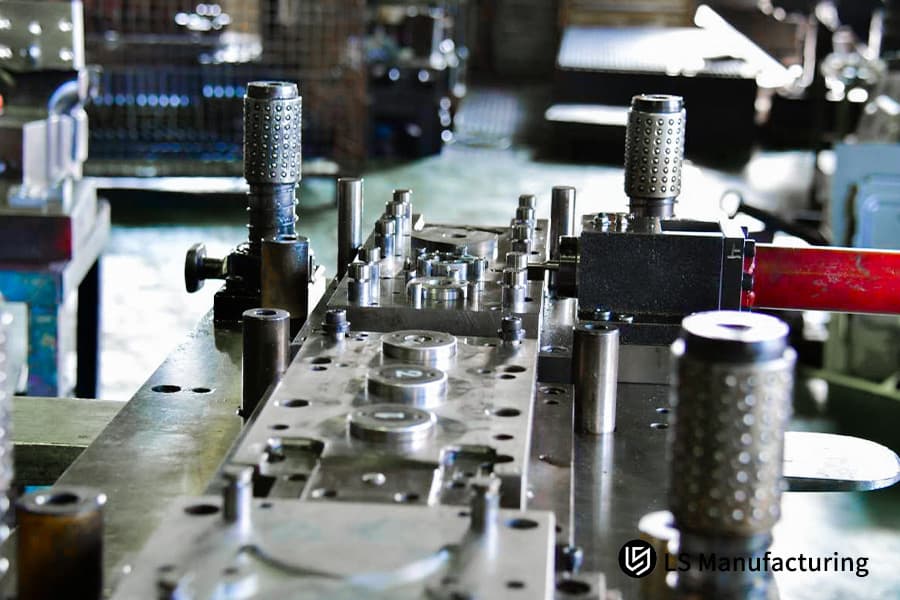
Figure 1: A high speed press stamps and forms high precision beryllium copper pins for aerospace fuel system sensors.
Why Can Multi-Slide Stamping Services Significantly Reduce Your Initial Tooling Investment?
The multi-slide stamping core value is that it offers a fundamental departure from monolithic die construction and directly attacks the capital costs associated with traditional tooling. This is accomplished through its modular and adaptable nature, which significantly reduces costs and associated development time:
Modular Tooling Over Monolithic Dies
Progressive dies are monolithic in nature and consist of complex features that need to be machined. Our multi-slide stamping services offer independent and simpler tooling components that can be mounted on individual slides. This is where monolithic dies are avoided and machining complex features is no longer necessary, directly reducing machining costs. This is the basic premise for tooling cost optimization.
Simplified Design for Complex Geometries
With complex parts that have many bends and asymmetrical features, the design complexity and cost of a progressive die can become exponentially complicated. Our system provides the ability to design and treat each bend and form as its own operation with its own tooling. This greatly simplifies the design and simulation process to reduce engineering costs and prevent costly design errors before any metal is ever cut for high-precision metal stamping.
Rapid Configuration and Changeover
Modular design provides the ability to configure and test tools independently. If there is a specific forming problem to be solved, only one smaller tool can be re-machined instead of re-machining an entire die. This greatly reduces design iterations and allows for quicker development and prototyping. Additionally, this provides unparalleled flexibility for future design changes and family of parts manufacturing to protect your future design and engineering investments in complex metal stamping solutions.
Direct Impact on Project Economics
The cumulative result is a significant reduction in both time and capital necessary to initiate the production process. The end result for our clients is a reduction in initial project budget by 20-30% due to decreased costs associated with machining and engineering. This process is significantly faster than the traditional process, allowing for rapid validation of designs and resulting in a much faster time-to-market. This process is the preferred option for custom metal stamping services.
This evaluation illustrates our position as a primary differentiator for our competitors. Our solution eliminates the cost and rigidity of traditional tooling through engineering, not merely a theoretical advantage. Our documentation outlines exactly how this common problem facing manufacturers becomes a definitive benefit.

How Does A Manufacturer Ensure Zero-Defect Delivery For High Volume Metal Stamping?
Guaranteeing zero defects in high-volume manufacturing requires a fundamental shift from final inspection to the real-time control and correction of variation at its source in the dynamic stamping process. This is accomplished by integrating statistical process control, real-time automated correction, and predictive tooling management to ensure quality consistency from the first piece to the last piece in the stamping process:
Integrated In-Process SPC
- Real-Time Monitoring: Sensors embedded in the tooling monitor key parameters in real-time, including tonnage and position.
- Immediate Feedback: Statistical analysis of the parameters is done in real-time per stroke to automatically stop the press if a trend is detected to correct for deviation.
- Outcome: This approach to quality consistency proactively sustains CpK > 1.67 for all critical dimensions.
Automated Closed-Loop Control
- Material Compensation: In-line sensors monitor batch-to-batch changes in hardness or thickness.
- Dynamic Adjustment: The press controller automatically adjusts parameters (e.g., shut height) to keep the forming energy consistent.
- Outcome: It eliminates the effects of input material variation, which is critical for assured high volume metal stamping.
100% Automated Vision Inspection
- Dimensional & Surface Scan: High-speed cameras inspect all parts for critical features and defects.
- AI-Powered Sorting: The system sorts and rejects defects without slowing down the line.
- Outcome: It offers a final check, which is critical for medical metal stamping and assembly.
Predictive Tooling Management
- Continuous Health Monitoring: Tools are monitored for wear and health by vibration and acoustic sensors.
- Scheduled Maintenance: Tools are serviced based on actual data, not a schedule.
- Outcome: It eliminates defects from tooling wear, which is critical for precision metal stamping.
This framework outlines the specific engineering methodologies used to provide the zero-defect capability for our custom metal stamping services. This framework establishes our technical authority by going beyond our claims and showing the specific systems that are used to integrate our control over the environment, ensuring that all high-volume orders meet the most stringent reliability and fitment requirements.
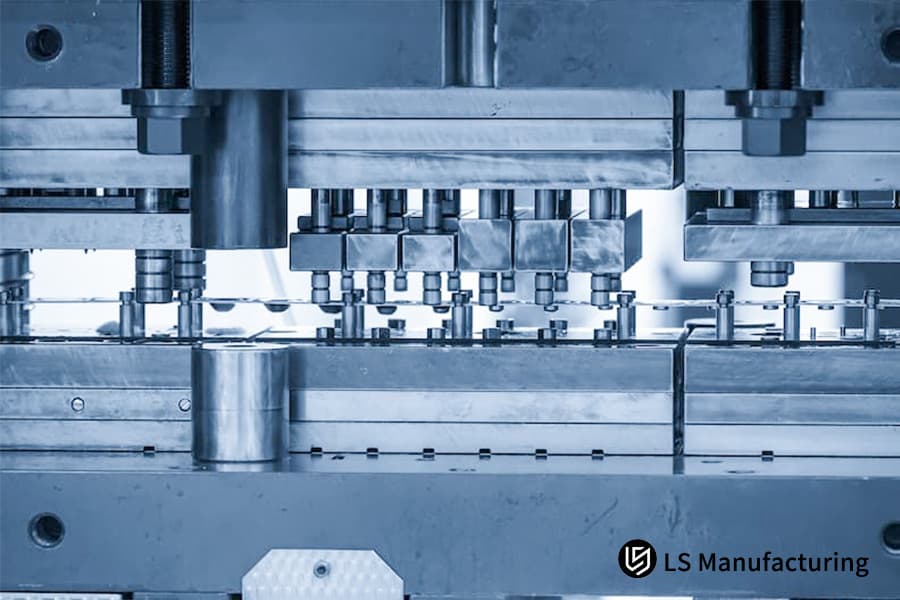
Figure 2: Ultiple precision dies simultaneously form thin phosphor bronze contacts for smartphone antenna modules.
How Do Precision Metal Stamping Processes Maximize Raw Material Utilization Rates?
In high-value manufacturing, raw material cost is one of the biggest influencers, and traditional metal stamping can be very costly due to the necessary carrier rails and large skeletons. This document outlines the specific ways our advanced precision metal stamping processes change the way metal stamping works to reduce this waste. The value proposition comes from the change from strip processing to discrete part processing, which inherently increases efficiency and lowers cost:
| Aspect | Traditional Progressive Die Stamping | Multi-Slide "Zero-Strip" Stamping |
| Process Feature | Parts are stamped from a continuous piece of metal. This necessitates the use of carrier rails and a skeleton for transportation. | Parts are stamped separately from a blank piece of metal. This means that carrier rails and bridges are not needed. |
| Material Utilization | Typically achieves 55-65% yield; 35-45% becomes scrap due to the skeleton and rails. | Routinely achieves 85%+ yield; scrap is reduced to 15% or less by removing structural waste. |
| Primary Application | Generally applicable to simple, high-volume parts for which the setup cost can be minimized by the enormous quantities involved. | Generally applicable to complex metal stamping operations involving high-value parts, like beryllium copper connectors, for which material savings can justify the process. |
| Scrap Stream | Produces a continuous, homogeneous material that can have a lower recycling value. | Produces a small amount of clean scrap, which can be more easily segregated and have a higher recycling value. |
This evaluation has served to substantiate the fact that the maximum material saving are obtained by eliminating the inherent waste of the structural form of the strip-based processes. Clients who work with high-value materials can benefit from our metal stamping services, which directly reduce the piece-part cost of the final product, thereby creating a definitive competitive advantage for our clients. The information contained within this document is intended to provide a critical resource for the selection of a targeted metal stamping application, which can be utilized to reduce costs for high-value components.
Which Precision Metal Forming Services Effectively Solve Three-Dimensional Springback Challenges?
The major challenge in the delivery of high-end precision metal forming services, especially in complex thin-walled geometries, is the effective management of springback. Conventional solutions to the problem of springback generally involve some form of correction after the completion of the forming process, which can be less than optimal in terms of precision and consistency. Our solution to the problem of springback is to incorporate a form of proactive control within the precision metal stamping process:
Multi-Directional Independent Pressure Control
Our multi-slide technology enables us to control the application of forces from four different axes, thereby allowing us to counteract the effects of springback as the material is being bent. For a thin-walled housing of a sensor, we can apply a calculated pressure to the sidewalls to pre-compensate for the springback effect.
Material-Specific Thermal Compensation Strategies
We utilize targeted thermal management to modify the material's performance during the forming process. For difficult-to-form materials such as 300-series stainless steel, we incorporate local tool heating or cooling. The temperature change has the effect of reducing the yield strength of the material during the forming operation, allowing the metal stamping part to "set" in the desired position as it returns to room temperature. The final angles are maintained within ±0.5°.
Optimized Forming Sequence & Tool Path Design
Springback is not an event, but the culmination of the entire forming sequence. We break down complex 3D geometries into an optimized series of sequential bends. The sequence and toolpath for each operation are optimized such that the springback of the previous operation is utilized or compensated for in the next operation, etc. This is particularly important for complex geometries such as medical cannulae.
In-Process Monitoring for Closed-Loop Adjustment
We utilize in-die sensors to monitor forming tonnage and piece position in real-time. This information is then used in a closed-loop metal stamping system that can make micro-adjustments to the position of the slides or pressure for the next stroke. This real-time feedback loop provides consistent springback control process for long production runs, accommodating slight changes in the material lot.
This methodology outlines the actionable and integrated systems that we utilize to overcome the challenges of springback. It moves beyond theoretical compensation to active control of the process. It also outlines our competitive advantage in demanding metal stamping applications by explaining precisely how we control the process to ensure stability in the finished piece for the most challenging prototype to production stamping pieces.
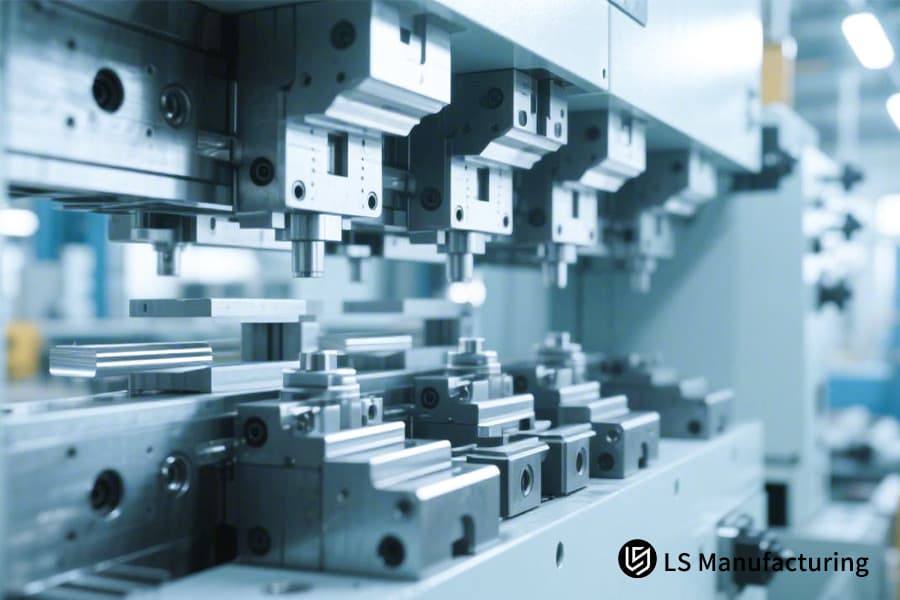
Figure 3: A battery of custom metal stamping services dies produces high volume electronic contacts for computer motherboard assembly.
What Core Engineering Standards Define A Top Custom Metal Forming Manufacturer?
The selection of a custom metal forming manufacturer is more than just the certifications; it involves the evaluation of the engineering standards that must be met to avoid failure and ensure success. This framework for auditing the technical systems and process controls of a manufacturer is designed to provide clear criteria for a technical supplier audit, as follows:
Proactive Design for Manufacturing (DFM) Engagement
- Early Collaboration: Engage the tooling and process engineers at the beginning of the design phase.
- Simulation-Driven Design: Utilize FEA to verify formability, predict springback, and optimize blank shape.
- Outcome: This avoids costly rework of tools and guarantees that the part is designed for high-yield production.
Precision in Tooling & Process Control
- Slide Synchronization Accuracy: Check mechanical and control systems to guarantee precise multi-axis timing (<0.01mm repeatability).
- In-Process Monitoring Coverage: Guarantee 100% SPC control of critical dimensions in real-time.
- Outcome: This guarantees precision required in high precision stamping services.
Unmanned Production & System Reliability
- 24/7 Lights-Out Capability: Examine how automation is integrated in the process, including raw material supply to finished product packaging.
- Predictive Maintenance Systems: Examine how tools and press operations are scheduled according to actual usage rather than time.
- Outcome: This guarantees high-yield production required in high volume stamping runs.
Quality Management as an Engineered System
- IATF 16949 Core Tools: Verify the actual use of APQP, PPAP, MSA, and FMEA.
- Traceability & Containment: Verify systems for full lot traceability and rapid defect containment.
- Outcome: Quality is built into the process, and this is essential for mission-critical metal stamping.
This document outlines our actual, tangible requirements to measure the manufacturer's engineering discipline. It identifies our competitive position based on how we apply these standards—simulation, closed-loop process control, and automation—to mitigate risks and deliver manufacturable and reliable components from first piece to millionth piece.
How Can High Precision Stamping Services Mitigate Manufacturing Risks During Design?
The best opportunity to mitigate risk in high precision stamping services is well before the tooling is ever cut, in the initial stages of the design process. A proactive approach to DFM optimization addresses and solves problems that could cause failures in the future. This document describes the process of a structured front-loaded engineering review process that translates the designer’s intent into manufactured reality:
| Risk Area | Traditional Approach | Our DFM Intervention | Quantifiable Outcome |
| Design Detail | Proceeding with sharp corners or minimum bend radii as designed. | Recommendations on optimized radii and stress relief in the design to facilitate material flow. | Improves tool life by 200,000+ cycles and prevents fractures in complex stamping parts. |
| Material & Grain Direction | Selection of the metal stamping material based on the final spec without taking the manufacturing process into account. | Recommendations on the best temper and grain direction relative to the bend axes for springback. | Improves dimensional variation by up to 60%, ensuring consistency in complex stamping part designs. |
| Tolerance Stack-up | Using blanket, tight tolerances on all features. | Advocating for functional tolerancing, where some dimensions can be relaxed and critical interfaces improved. | Reduces grinding and secondary operation costs by 15-25% for custom metal stamping services. |
| Assembly Risk | Designing the part in isolation from the larger assembly system. | Modeling the part to interact with the assembly system, ensuring features created allow for automatic handling and assembly. | Removes concerns with part fit-up, delivering 100% first-pass yield on customer assembly lines. |
This framework provides a practical approach for the implementation of the design for manufacturability concept in the metal stamping industry. The uncertainty of project success is taken out of the equation with our ability to transform any potential concerns with the production process into optimized metal stamping design guidelines prior to the commencement of procurement activities.
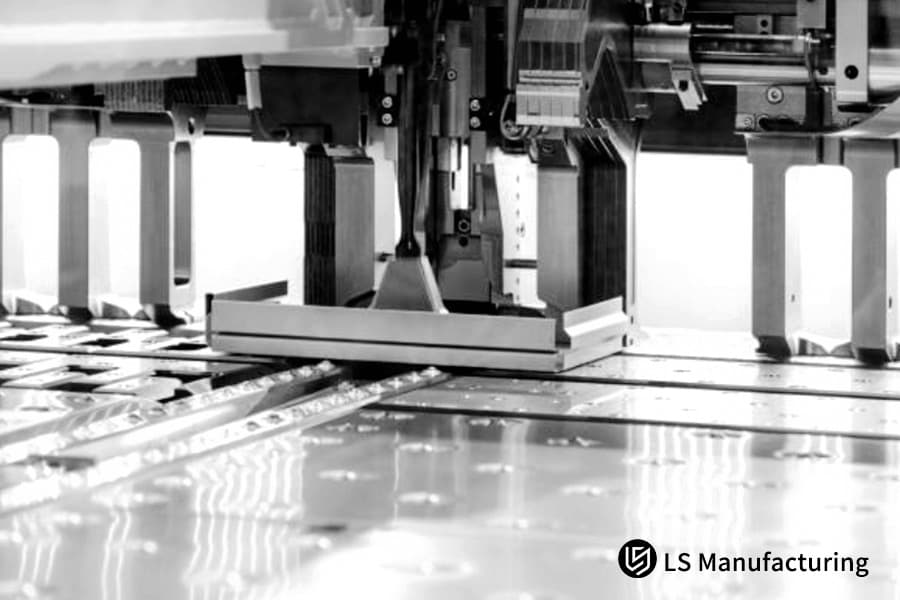
Figure 4: A high tonnage press forms precision electrical contacts from cold rolled steel for automotive fuse boxes.
Case Study: LS Manufacturing Automotive Connectors Multi-Slide Stamping Project
This is a custom stamping case study in which it is explained how LS Manufacturing was able to solve an important manufacturing challenge faced by a global Tier-1 supplier of automotive components. The company was able to move from an inefficient and unreliable process to an efficient and accurate process. This case study is of a high-volume stamping process of next-generation electric vehicle components that required high efficiency and thermal stability in the material:
Client Challenge
The client's battery contacts for electric vehicles, constructed from C17200 Beryllium Copper, needed to have a final flatness tolerance of ±0.025mm. The client's conventional progressive die approach was generating 52% scrap and, more seriously, was causing unpredictable micron-level distortions in the stamped parts after thermal cycling. This was causing failure in the long-term reliability tests. This was a bottleneck that was affecting the project timelines and the final performance of the automotive connectors.
LS Manufacturing Solution
In our new process, the technique used was multi-slide metal forming, which enabled the parts to be formed in a single hit with 360-degree forming and no need for carrier rails. In addition, thermal stress analysis using FEA was done, and the exact value of the reverse angle of 0.15 degrees was pre-calculated for the forming tools to combat the springback of the material due to thermal stress.
Results and Value
The new process resulted in an increase in material yield by 38%, which directly impacted the cost of the piece parts by 24%. Dimensional consistency was greatly improved as CpK was maintained at 1.8. All parts successfully completed a rigorous 1000-hour thermal aging test, thereby validating the new process. This provided our client with a cost-effective solution that increased speed to market, as well as decreasing the overall cost of ownership for this critical part.
This project highlights our company’s capabilities in successfully executing complex metal forming projects that solve complex issues of waste, cost, and performance. Our company achieves this by using simulation-based tooling designs and employing state-of-the-art metal forming capabilities, thereby making our manufacturing challenges our biggest competitive advantage.
Transform your high-volume connectors with 24% cost reduction and 1.8 CPK consistency using LS Manufacturing's multi-slide stamping services.

How To Ensure Global Delivery Reliability For High Volume Metal Stamping Orders?
In order to ensure on-schedule and damage-free delivery for high volume metal stamping orders, it is necessary to extend the precision all the way to the customer’s dock. This involves the integration of automated handling, smart logistics, and smart inventory management to remove the variability and damage potential caused by the global supply chain issues.
Automated, End-to-End Packaging Systems
- In-Line Packaging: The direct transfer of components from the press to automated sorting and reel-to-reel packaging takes place in the in-line packaging area.
- Zero-Handling Design: The design eliminates human interface and handling to ensure damage-free delivery and preserve critical tolerances for precision metal stamping components.
- Outcome: The design ensures 99.9% damage-free delivery and supports the concept of automated delivery to the downstream assembly areas.
Intelligent ERP for Proactive Supply Chain Management
- Real-Time Inventory Visibility: Our ERP offers real-time inventory levels of finished goods, WIP, and raw materials.
- VMI & Kanban Integration: We offer support for Vendor-Managed Inventory (VMI) methodologies that automatically initiate replenishments according to agreed-upon levels.
- Outcome: This enables a highly responsive metal stamping supply chain that is just-in-time in nature, avoiding stockouts as well as overstock situations for our clients.
Multi-Site Production Capacity & Synchronization
- Networked Manufacturing: Leveraging geographically dispersed manufacturing sites to fulfill orders for the same part number.
- Digital Twin Coordination: Production schedules as well as quality information are synchronized in real-time.
- Outcome: This inherently provides supply chain resiliency, allowing seamless load balancing in case of regional disruptions for global stamping orders.
Integrated Global Logistics & Compliance
- Pre-Certified Carrier Networks: Partnerships with logistics companies that have expertise in the transportation of industrial and high-value metal stamping products.
- Automated Documentation: The ERP system automatically generates all shipping and compliance documents.
- Outcome: It provides guaranteed lead times and eliminates clearance delays to ensure reliable delivery for high-mix stamping manufacturing.
This framework outlines the operational systems that enable the transformation of a manufacturing output into a guaranteed delivery stream. Our competitive edge is that we have engineered the entire order to cash process to provide the reliable and consistent supply chain that is needed for mission-critical and global multi-slide stamping services.
FAQs
1. What range of materials does LS Manufacturing's Multi-Slide Stamping process support?
We support the processing of a wide variety of metals with thicknesses ranging from 0.05mm to 2.0mm, including high-strength cold-rolled steel, SUS304 stainless steel, beryllium copper, and surface-plated composite materials.
2. Compared to traditional progressive dies, how long does the tooling development cycle typically take for multi-slide stamping?
Due to the simplicity of the process, the entire process of tool development and sample submission can be completed in 4-6 weeks, which is 2-3 weeks faster than the conventional process.
3. How do you ensure angular consistency for precision metal parts during high-volume production?
LS Manufacturing makes use of a fully closed-loop servo control system for the slides and also has an in-line inspection system in place to achieve ultra-high bending consistency with a tolerance of ±0.2°.
4. Do LS Manufacturing's precision stamping services include post-processing?
Yes, we offer a one-stop service that includes everything from forming to continuous strip plating and vacuum stress relief heat treatment, so that the parts are ready for immediate use right out of the box.
5. If a product is still in the R&D phase, can you provide small-batch samples?
LS Manufacturing also has the capability for rapid prototyping, whereby we can rapidly produce test pieces for functionality using our soft tooling techniques before commencing the development of the tooling for the part.
6. What is the specific mechanism behind the multi-slide process's ability to reduce material waste?
In the multi-slide stamping method, radial feeding is used. As soon as the part is punched, it is separated directly from the base material. As such, the need to retain the "carrier strips" (the bands on the sides of the part), which are necessary in progressive die stamping, is avoided, thus reducing the amount of material used by 20% to 50%.
7. How does LS Manufacturing ensure a high CPK index during high-volume production?
We perform automatic SPC sampling every hour, and through the use of pressure sensors, we are able to ensure the CPK index for our critical dimensions is consistently above 1.67.
8. What information is required to obtain a quotation that includes a DFM (Design for Manufacturability) analysis?
All we will need are your 2D/3D drawings, the material specification, and the volume required on an annual basis.
Summary
Precision metal forming is the ultimate balance of material mechanics, precision in process, and cost-effectiveness. With industry-leading Multi-Slide technology, LS Manufacturing delivers precision forming of complex 3D structures with maximum material usage efficiency and significant cost savings in tooling costs—a major advantage to the automotive industry as well as the medical industry. With LS Manufacturing, you get a deterministic production process backed by SPC statistics, optimized by DFM analysis, and capable of producing millions of parts without defects.
Optimize your precision stamped components' cost structure. Do not allow inefficient traditional stamping processes to eat away your profit margins. Contact LS Manufacturing experts to obtain a comprehensive feasibility audit of your precision stamped components' designs to achieve weight reduction and cost savings. We provide you with an in-depth "Progressive Die vs. Multi-Slide" cost analysis as well as a quote within 24 hours of your request. You can also upload your STEP files or drawings to obtain free technical assessments as well as a DFM audit, or schedule your consultation with our Chief Process Expert.
📞Tel: +86 185 6675 9667
📧Email: info@lsrpf.com
🌐Website: https://lsrpf.com/
Disclaimer
The contents of this page are for informational purposes only. LS Manufacturing services There are no representations or warranties, express or implied, as to the accuracy, completeness or validity of the information. It should not be inferred that a third-party supplier or manufacturer will provide performance parameters, geometric tolerances, specific design characteristics, material quality and type or workmanship through the LS Manufacturing network. It's the buyer's responsibility. Require parts quotation Identify specific requirements for these sections.Please contact us for more information.
LS Manufacturing Team
LS Manufacturing is an industry-leading company. Focus on custom manufacturing solutions. We have over 20 years of experience with over 5,000 customers, and we focus on high precision CNC machining, Sheet metal manufacturing, 3D printing, Injection molding. Metal stamping,and other one-stop manufacturing services.
Our factory is equipped with over 100 state-of-the-art 5-axis machining centers, ISO 9001:2015 certified. We provide fast, efficient and high-quality manufacturing solutions to customers in more than 150 countries around the world. Whether it is small volume production or large-scale customization, we can meet your needs with the fastest delivery within 24 hours. choose LS Manufacturing. This means selection efficiency, quality and professionalism.
To learn more, visit our website:www.lsrpf.com.