English




Custom metal stamping services face an imperative challenge: delivering extreme precision without allowing costs to get out of hand. Traditional sources have been found to have tolerance drifts with complex designs, which can cause assembly line failures with large-scale production. This is where the disconnect occurs to create a much more reliable solution.
The problem is the absence of deep simulation with springback and stress. This creates an unstable production process. Our system harnesses multi-physics stress simulation and Statistical Process Control (SPC) to control these factors. This means every precise stamped part is made with unwavering accuracy to ±0.01mm. Production is now the precise harnessing of material physics.
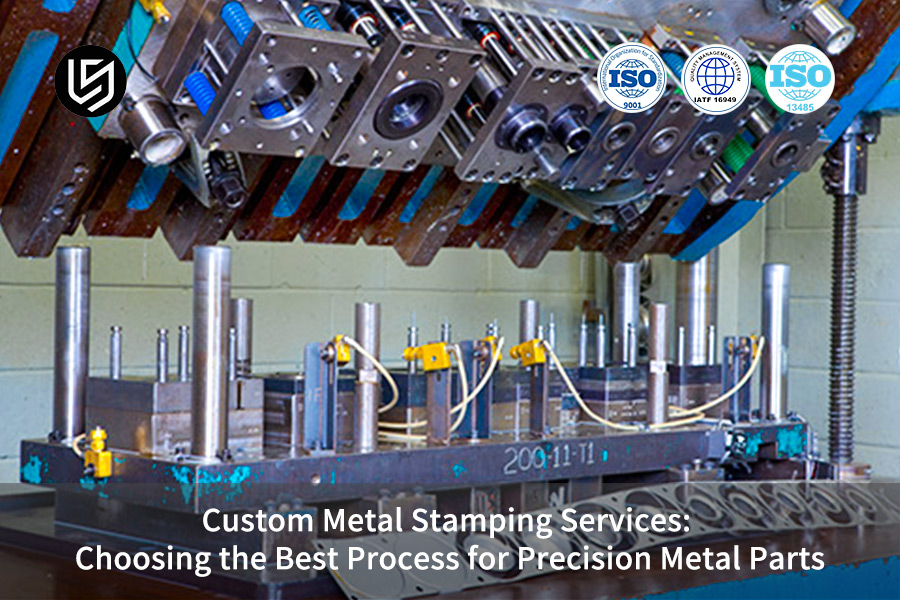
Custom Metal Stamping: Process Selection Guide
| Stamping Process | Primary Application & Volume Fit |
| Single-Stage Stamping | Best suited for simple parts like washers and brackets, and very low to medium volume production. One die is required per operation. Tooling cost is low, and speed is low. |
| Progressive Die Stamping | Complex metal stamping parts requiring several operations such as pierce, bend, and form, and very high to high volume production. One die performs all operations in sequence. High tool cost, very fast production. |
| Transfer Die Stamping | Deep-drawn parts. These parts are mechanically transferred. They are best suited for high-volume production when the use of progressive dies is not possible. |
| Fineblanking | Parts requiring smooth surfaces and square edges with close tolerances. Fineblanking offers the advantages of both stamping and cold extrusion. However, it is more expensive. Fineblanking offers excellent accuracy. |
| Our Selection Methodology | We consider the part's complexity, the volume produced annually, the tolerance levels, and the metal stamping material used in the part to select the process in the most cost-efficient manner. |
| Result: Optimized Unit Cost | We select the process based on the volume of the part to be produced and thus maintain the best balance in the cost of the part. |
| Result: Dimensional Consistency | These processes ensure the accuracy and precision necessary for the proper assembly and functioning of the machine. |
We have solved the problem of how to pick the most efficient and cost-effective metal stamping process for your precision parts. This is important because we have the knowledge that will enable you to pick the best stamping process, whether single stage, progressive, or fine blanking, to produce high-quality, consistent metal stamping parts at the best value. This is the strategic way of ensuring that your project is done successfully with all requirements met.
Why Trust This Guide? Practical Experience From LS Manufacturing Experts
There are many sources available on the internet that discuss the topic of metal stamping. But what makes us different from those sources? Why is the information we provide unique? Well, we are not theorists. We are a working machine shop. We are the front line, fighting every day with high strength alloys, tolerances, and part designs. We understand the importance of getting the right process right when working with precision metal stamping. That is why we follow all the guidelines set by organizations like the National Association for Surface Finishing (NASF).
Our competence has already been proven in such critical areas as aerospace brackets where fit must be flawless, medical device enclosures where precision is the key to safety, and automotive systems where durability is the first requirement. To find the best solution for the stamping process, we rely on the authority in the industry, the NIST Materials Data. Our experience in solving the challenges we face every day has helped us to better understand the key to speed, quality, and cost-effectiveness in difficult production processes.
Every suggestion in this guide has been tested in the fire of experience, in success and in the costly errors of early failure. We would be glad to share our experience in the design of tools and presses, and in quality assurance for stainless steels and other specialty alloys. This isn’t theory. This is the wisdom of experience tested in the crucible of metal, pressure, and inspection.
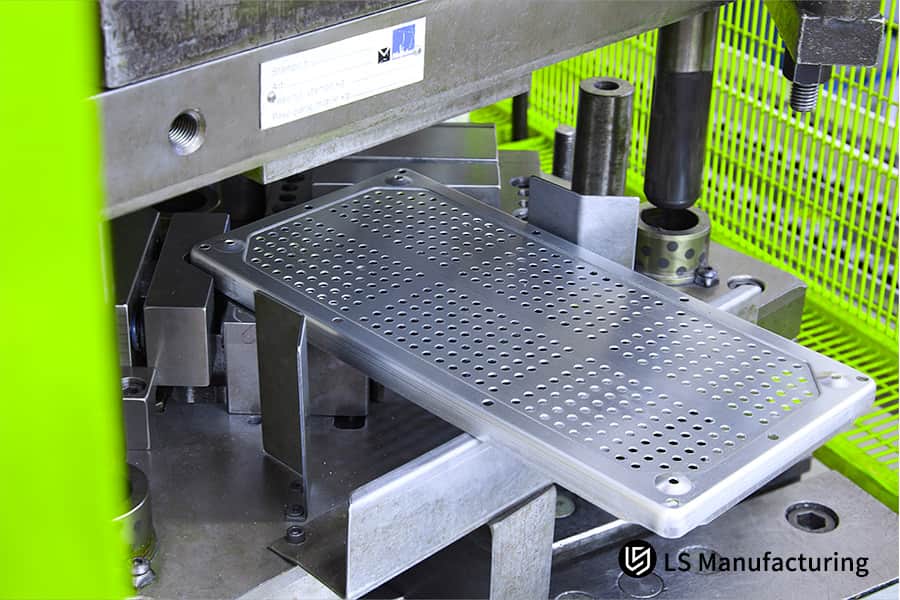
Figure 1: The metal stamping operation produces electronic enclosures from galvanized steel for electronics.
Why Is Selecting A Professional Custom Metal Stamping Services Partner Critical For Project ROI?
The selection of an expert partner in custom metal stamping services is believed to have a direct bearing on ROI through DFM. This is due to the fact that the partnership will ensure reduced material wastage while maximizing press efficiency, thus reducing the cost per part and the payback period. The technical solution is:
Collaborative DFM to Minimize Raw Material Waste
Our engineers work alongside the customer during the design phase, using advanced simulation techniques to advise on design improvements for optimal material utilization. This includes advising on standardized bend radii for better metal stamping services nesting, as well as recommending slight geometrical improvements for better efficiency in precision metal stamping in progressive dies.
Servo-Press Technology for Enhanced Speed and Accuracy
We make use of high-precision servo-driven presses, which allow us to have the best control over the ram profile. This enables us to achieve high strokes per minute (SPM) with complex multi-stage progressive die metal stamping jobs. This results in quality products with high speed and high-volume stamping runs.
Systematic Optimization of Material Utilization
In addition to DFM, we make use of proprietary nesting algorithms to optimize the blank layout from coil or sheet material, thus extracting maximum possible parts from the material. We make use of fine blanking and clearance control techniques to achieve near-net-shape parts.
Integrated Approach to Total Cost of Ownership (TCO)
Our metal stamping approach is not limited to unit price. Rather, it is focused on TCO optimization through the identification of the optimal tool steel grades and coatings to maximize die life, the implementation of predictive maintenance technologies for stamping presses to minimize unplanned machine downtime, and part consistency to eliminate costly assembly or quality problems.
This document presents a methodology that is based on technical execution in the form of simulation-driven design, servo-controlled production, and service. It is used to show the reader the value of in-depth process integration versus service in solving the key issues of waste reduction and efficiency in order to obtain the highest possible ROI. It is the key differentiator in the competitive landscape of precision manufacturing.
How Can Advanced Metal Stamping Services Manage Extreme Material Thickness Variations?
Consistent quality in precision metal stamping services across extreme material thickness ranges is a significant issue in precision metal stamping services. The range varies from thin foils (<0.2mm) to thick plates (>6mm). This document presents a technical methodology that ensures burr-free shear surfaces and the elimination of dimensional instability associated with material thickness variations, which is essential in assembly.
| Challenge / Material Category | Technical Methodology | Quantifiable Outcome / Specification |
| Fineblanking for Thick Materials | Utilization of a V-Ring impingement and counterforce in the heavy-gauge metal stamping process for 6mm 316L. | Ensures a 100% burnished shear zone, thereby eliminating die break and burrs to surpass the ISO 12164-1 functional cut surface standards. |
| Precision Blanking of Thin Foils | Utilization of ultra-fine and controlled die clearances as low as 2.5% material thickness in the prototype metal stamping process for 0.1mm aluminum foils. | Prevents distortion by maintaining flatness within ±0.05mm, which is essential in the subsequent high precision fabrication processes. |
| Compensating for Thickness Tolerances | Utilization of servo presses with a BDC accuracy of ±0.005mm. | Neutralizes the effect of varying thickness in the metal sheets, which might be as high as ±8 percent. |
| Deep Drawing Variable Materials | Employing multi-stage progressive die stamping with controlled cushioning to control material stretch ratios above 40%. | Controlling metal flow to prevent thinning or tearing, thereby providing complex fine blanking services for enclosures. |
This methodology addresses the original cause of fit and assembly problems by compensating for the thickness variation in the material. This ensures the critical features in the assembly process remain within the acceptable range by using adaptive press control in conjunction with material-specific die engineering to control a variable, turning it into a controlled parameter. This methodology establishes the technical depth and deterministic results necessary to provide competitive metal stamping services in industries such as aerospace and medical devices.
What Ensures Long Term Consistency For Metal Stamping For Precision Parts During High Volume Production?
For manufacturers producing millions of precision parts, long-term dimensional and mechanical consistency is the biggest challenge. If minor process drifts are ignored, the consequences are catastrophic, resulting in scrap rates and supply chain failures. This document outlines a tangible technical architecture to go beyond sampling and ensure absolute part-to-part uniformity. Our answer combines real-time Statistical Process Control with inline metrology and automatic corrective action:
Real-Time SPC as the Foundational Nervous System
Our methodology begins with a live Statistical Process Control (SPC) network, which attacks the problem of statistical drift head-on.
- Data Capture: Our CTQ features are measured in real-time using in-die sensor and laser technology.
- Proactive Alerting: Our system will send out alerts in real-time when micron-level changes are detected.
- Performance Benchmark: Our required CPK rating of 1.67 serves as our quality assurance benchmark.
Vision-Guided Closed-Loop Correction
We utilize in-line vision technology in the process of progressive die stamping to allow for real-time corrections.
- In-Line Vision Systems: Our cameras carry out 100% inspection of parts exiting the die.
- Closed-Loop Feedback: The data auto-adjusts the press parameters in the same process cycle.
- Sustaining Unmanned Production: This enables the implementation of steady-state lights-out metal stamping operations.
Ensuring Mechanical Property Uniformity
This is not only true in the dimensions of the parts but also in the metallurgical characteristics of the parts.
- In-Process Monitoring: We monitor parameters such as the material's grain flow and the tonnage used in the process.
- Predictive Correlation: The trends in the data predict the potential deviations in the parts' mechanical characteristics preemptively.
- Holistic Verification: This ensures that all parts conform to the same specs in their performance in the process of metal stamping for precision parts.
This document is an example of a deterministic system. The level of technicality is based upon the integration of real-time SPC with automated corrective responses using vision systems. The key to our being able to compete is our methodology, which addresses the issue of statistical drift and ensures uniformity of parts within any volume, providing our partners with a sense of security in our precision metal stamping service offering.
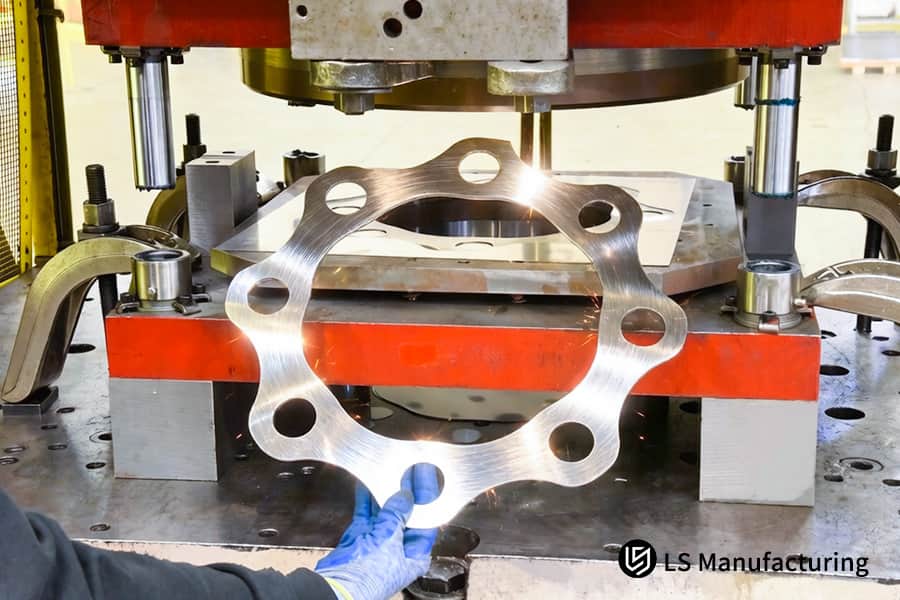
Figure 2: Punching multiple holes in a circular 6061 aluminum bracket for automotive mounting or linkage parts.
Why Is A Scientific Metal Stamping Process Selection Approach Superior To Traditional Trial And Error?
The traditional method for developing processes involves costly iterative tool tryouts. This document will discuss a comparison between empirical approaches and a science-based approach for metal stamping process selection. It will be demonstrated to the reader how CAE-based analysis can be used to select the optimal tool for first-time success, avoiding issues such as development time and integrity of parts produced.
| Key Aspect | Traditional Trial-and-Error Method | Scientific Simulation-First Approach |
| Feasibility & DFM | Formability is normally checked through physical testing of a soft tool, which can involve several iterative steps. | A virtual DFM review is carried out using CAE tools to simulate material movement and springback before physical tool construction. |
| Defect Prevention | Issues such as splits in the prototype metal stamping process are recognized during the tool tryout process. | Software recognizes defects such as wrinkling in the simulation process. |
| Process Optimization | Die type is selected based on expertise, which may not be the most effective way. | Optimal Process is selected based on quantified cost performance data for high-volume metal stamping process. |
| Outcome & Timeline | Ryout-modify process is time-consuming and has low first-time success rates. | Virtual validation results in first-pass success rates above 85%, reducing overall development process by more than 30%. |
This scientific approach de-risks the development process by replacing guesswork with deterministic simulation. The scientific approach solves the basic challenges of cost unpredictability, timing unpredictability, and suboptimal tooling in the design of complex metal stamping projects. The scientific approach provides the technical authority and predictability required for success in the highly competitive high-value custom precision stamping services industry.
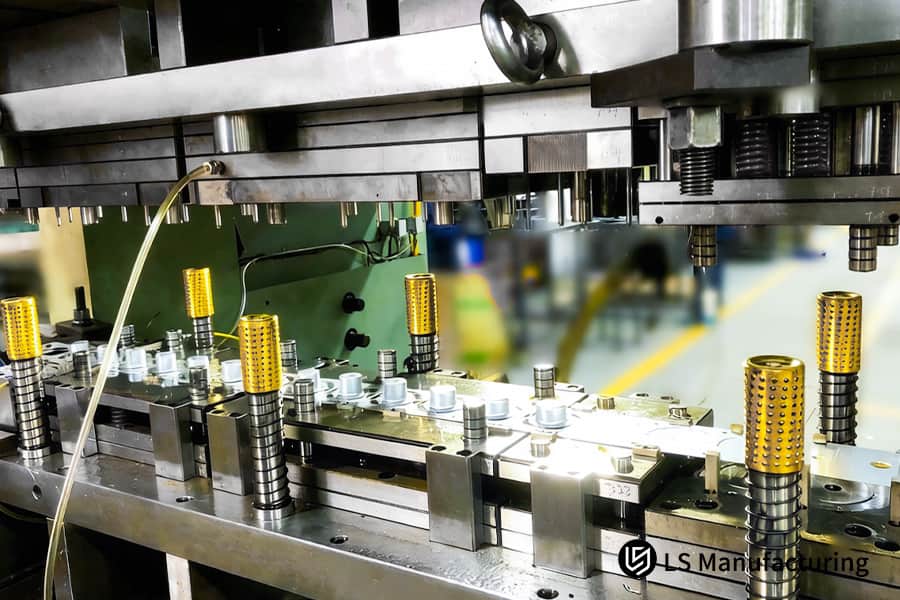
Figure 3: Pressing a 304 stainless steel enclosure with a custom die for automotive electrical system components.
How Do Custom Precision Stamping Services Address The Unique Challenges Of Exotic Alloy Forming?
The process of forming exotic alloys, like titanium and nickel superalloys, has its own set of problems related to springback, ductility, and work hardening. This traditional approach might not be effective. This document describes the specific approach to be employed to overcome the limitations of the material to ensure consistent product formation for critical applications like aerospace and medicine:
Thermal-Assisted Forming Process Control
To avoid the problems related to the high strength and springback properties of the material, the proposed approach is to control the temperature while forming. This material might be exposed to a specific range of temperatures to make it easier to mold. This approach is directly related to the problem of cracking while performing high-temp metal stamping.
Specialized Tooling Surface Engineering
To avoid galling and surface problems, which are critical to the provision of precision metal stamping services, we make use of our proprietary PVD coating on the die tool. This is determined based on the nature of adhesion of the material. This problem has been resolved by performing a series of tribological tests.
Data-Driven Formability Analysis
We avoid trial and error in the determination of the forming limits of the alloy. Instead, we use simulation to determine the alloy-specific FLD. This diagram indicates the forming limits of the alloy. Each process in the deep-draw metal stamping process is compared to this FLD in the simulation process. This solves the problem of failure in the process.
Tailored Lubrication and Process Design
In order to handle work hardening, we utilize stage-specific, high-temperature lubricants. Additionally, we utilize annealing cycles. This is a custom precision stamping services approach. The approach addresses ductility loss, thereby directly solving stress-induced cracking in complex, tight tolerance metal stamping components.
Our methodology addresses exotic alloys challenges through a deterministic, physics-based approach. The technical authority is based on an integrated approach to thermal management, specialized tribology, and data-driven formability. This approach is a deterministic, physics-based solution for manufacturing mission-critical components, where material performance is non-negotiable.
Why Choose LS Manufacturing For High Precision Stamping Process For Metal Parts In The Medical Industry?
The manufacturing of medical devices is an uncompromising process, requiring surface integrity, as well as biocompatibility. The process poses specific hurdles for the stamping process for metal parts. The present document presents a controlled technical protocol for solving specific hurdles, thereby going beyond cleanroom standards. The methodology directly addresses the root causes of contamination and surface degradation.
Controlled Environment & Tooling for Surface Integrity
We have a certified ISO Class 7 Clean Room environment to remove ambient contamination at the source.
- Die Material & Finish: Hard tool steels with a mirror finish (Ra<0.05μm) and proprietary coating to resist micro-galling.
- Process Lubrication: Medical-grade lubricants that are fully removable post-processing.
- Result: This process ensures that the surface roughness (Ra) is consistently below 0.4μm, providing an ideal surface finish for medical device metal stamping.
Advanced Post-Stamping Cleaning & Passivation
We have developed a multi-step cleaning process to provide bioburden and particulate control.
- Ultrasonic Cleaning: Parts are cleaned in validated and filtered solvent baths to ensure all lubricants are removed.
- Passivation Process: A validated and filtered nitric acid passivation bath is utilized to ensure a consistent and inert layer of chromium oxide is formed on all stainless steel metal stamping parts.
- Final Rinse & Dry: De-ionized water and inert gas blow-off are utilized to ensure no watermarks or re-contamination, especially important for implant-grade stampings.
Validated Process for Biocompatibility Assurance
Our precision stamping services are not just about production, but validation as well.
- Material Traceability: Maintains full lot traceability from raw material to finished part.
- Process Documentation: Offers comprehensive data sets (e.g., cleaning validation, passivation reports) to aid regulatory requirements.
- Solution: This eliminates the cost of secondary surface finishing since the product is biocompatible to ASTM/ISO standards directly out of the cleanroom stamping cell.
Our custom precision stamping services for the medical industry address the fundamental issues of surface integrity, cleanliness, and regulatory compliance through a deterministic process. This is achieved through a closed-loop process where the technical authority is defined by the cleanroom environment and post-processing chemistry. This gives our client a comprehensive solution to their product requirements, making their products ready to use and reducing overall cost and time to market for critical medical device applications.
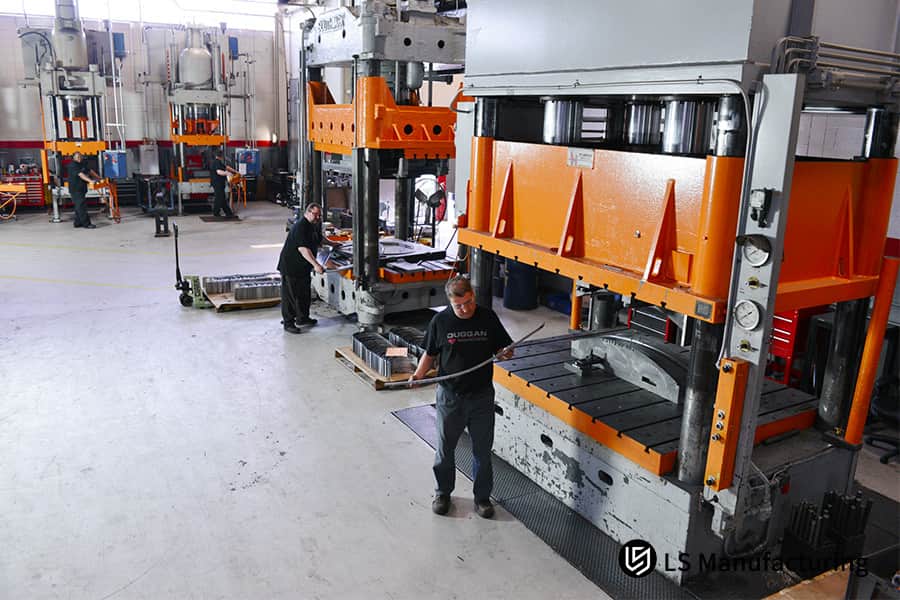
Figure 4: Forming a long cold rolled steel connector bracket on a hydraulic press for automotive or machinery assembly.
Case Study: LS Manufacturing Medical Aerospace Titanium Cooling Module Precision Stamping Project
This case study presents the way in which LS Manufacturing was able to solve an important production failure for a global aerospace company. This failure was centered on the high-precision forming of a thin-wall titanium part, specifically a cooling manifold, wherein traditional metal stamping services were unable to reduce the occurrence of micro-cracking while at the same time ensuring a positional tolerance of ±0.05mm. This was accomplished through the use of simulation techniques and a new metal forming technique:
Client Challenge
The part was a Ti-6Al-4V titanium part used as a cooling manifold. It was necessary for the part to have a burr-free, crack-free edge on complex channels. The client’s previous supplier was struggling with a 35% cracking rate during an aerospace metal stamping operation, resulting from excessive stress concentrations. This was not only resulting in unacceptable scrap costs but was also causing problems for the fatigue life of the part, as well as the program’s development schedule, since no conforming parts could be supplied for assembly.
LS Manufacturing Solution
We utilized a multi-physics forming simulation to examine the stress distribution, specifically the fracture initiation points. This was accomplished through our proprietary graded-pulse stamping process, which regulates the speed and force of the ram during the stamping process, utilizing our custom tungsten carbide die coated with a self-lubricating nanocomposite coating. This high-temp metal stamping technique greatly reduced friction and managed the material movement, while SPC data was utilized to accurately compensate for springback based on the ±0.05mm tolerance.
Results and Value
The scrap rate was greatly reduced to less than 0.2%, while the fatigue strength of the component was increased by 28%. The high degree of dimensionality consistency resulting from our precision stamping services enabled the client to remove the straightening operation from their welding cell. This integration of custom metal stamping services reduced the client's part costs by 18% while positioning LS Manufacturing as the sole approved supplier for this application.
This project represents our ability to solve seemingly impossible engineering challenges through analytical process design and material science. By pushing beyond conventional approaches to develop a unique data-driven tight-tolerance metal stamping solution, we have provided definitive reliability and cost savings. At LS Manufacturing, we have the technical expertise to become a strategic partner for the manufacturing of high-value components for mission-critical applications.
Conquer complex titanium challenges and slash waste with predictive precision metal stamping services.

What Factors Should Procurement Managers Verify When Auditing Precision Stamping Services Providers?
When looking for a supplier for high-volume production, procurement managers are supposed to audit a supplier's capability to control inherent manufacturing variation. This guide identifies critical systemic areas often overlooked in selecting a supplier for precision stamping services. Auditing these areas will ensure you are acquiring a robust risk management system:
Verifying Systemic Quality Management
A certified IATF 16949 system is assumed to be in place as a baseline. In addition to looking for the certificate, assess for integration of core tools such as live SPC charts and Failure Mode Effects Analysis (FMEA). This measures the supplier's systemic approach to preventing defects as opposed to inspecting defects out, which is a significant differentiator for reliable precision stamping services.
Assessing Real-Time Process Transparency
Demand access to real-time production information during the audit. A seasoned provider will offer access to live maintenance activity logs, tonnage graphs, and in-process Cpk values. Such a high level of real-time monitoring demonstrates the provider’s capability to identify and correct micron-level drifts in real time. This capability ensures long-term consistency in high-volume metal stamping processes.
Validating Material and Tooling Traceability
Demand to review the material certification and spectrometer testing reports for the incoming coils. For custom metal stamping services, the design files for the tools, the coating specifications, and the maintenance records must also be checked. This addresses the original problem of material failure and ensures process reproducibility over millions of cycles.
Evaluating Proactive Risk Mitigation
A true partner has a closed-loop corrective action system. Walk through their process for documenting changes, executing countermeasures, and updating control plans. This proactive approach, critical to mission-critical metal stamping, is exactly what is needed to mitigate the risk of unplanned downtime and optimize processes.
A thorough supplier audit must evaluate the complete system for predictability. We offer transparent access to our live quality management processes, tooling information, and material traceability. This illustrates the manner in which the partnership will operate as an extension of your quality control processes, providing you with not just the parts, but the assurance of quality and supply chain security for your most challenging projects.
FAQs
1. What is the highest level of precision that LS Manufacturing's metal stamping services can achieve?
Utilizing servo compensation technology, we can attain a consistency of ±0.01 mm for critical dimensions and guarantee the flatness of critical cross-sections within 0.02 mm.
2. How do you address material springback issues in custom precision stamping orders?
LS Manufacturing uses a "pre-compensation simulation" method in combination with precise die grinding technology to correct springback problems during the T0 stage, thus assuring first-article correctness from the first forming cycle.
3. Does LS Manufacturing support rapid tooling prototyping for small-batch runs?
Yes, we offer "soft tooling" rapid prototyping capabilities starting with a minimum order quantity of 100 pieces. This allows us to provide official samples for functional validation in as quick a time as 7-10 days.
4. How do you prevent surface scratches during the metal stamping process for precision parts?
We utilize our proprietary polyurethane roller feeding technology and our proprietary Nitrogen Assisted Floating Die technology to ensure the surface roughness (Ra) of our medical components and cosmetic parts remains at a mirror finish.
5. Why do LS Manufacturing's stamping dies have a longer lifespan compared to those of standard manufacturers?
This is because we utilize a process involving vacuum heat treatment and PVD nano-coatings, along with real-time tonnage monitoring to prevent die overload and wear.
6. Regarding the selection of metal stamping processes, which is more cost-effective: progressive dies or single-station dies?
This will depend on the volume of orders. Most often, for orders above 10,000 units annually, progressive dies have overwhelming advantages compared to other methods in reducing unit prices while promoting uniformity in parts produced.
7. How does LS Manufacturing ensure on-time delivery stability for large-volume orders?
Our ERP allows for real-time tracking of our 24/7 "lights out" manufacturing operation. We have a spare parts redundancy system to achieve a zero-delivery delay rate.
8. What information do I need to provide to receive a detailed quotation?
Please upload your 3D STEP files along with your 2D technical specifications. One of our engineers will perform a DFM analysis and quote you within 24 hours on price breakdowns.
Summary
Precision metal stamping is a highly complex systems engineering discipline based on predictive material science, digital compensation, and validation. At LS Manufacturing, we take this 'engineered value' to a new level by controlling stress at the micron level, providing zero-defect solutions and becoming a trusted technical partner for you to achieve your most complex designs.
Overcome precision and cost obstacles with our special offer: Get Your free DFM audit report! Get an in-depth analysis within just 24 hours from our experts on the feasibility of the process, compensation of springback, and cost transparency. Upload your STEP files or schedule a consultation today and unlock the true potential of your design!
Achieve flawless high-volume precision with a custom metal stamping service engineered for zero variance.
📞Tel: +86 185 6675 9667
📧Email: info@lsrpf.com
🌐Website: https://lsrpf.com/
Disclaimer
The contents of this page are for informational purposes only. LS Manufacturing services There are no representations or warranties, express or implied, as to the accuracy, completeness or validity of the information. It should not be inferred that a third-party supplier or manufacturer will provide performance parameters, geometric tolerances, specific design characteristics, material quality and type or workmanship through the LS Manufacturing network. It's the buyer's responsibility. Require parts quotation Identify specific requirements for these sections.Please contact us for more information.
LS Manufacturing Team
LS Manufacturing is an industry-leading company. Focus on custom manufacturing solutions. We have over 20 years of experience with over 5,000 customers, and we focus on high precision CNC machining, Sheet metal manufacturing, 3D printing, Injection molding. Metal stamping,and other one-stop manufacturing services.
Our factory is equipped with over 100 state-of-the-art 5-axis machining centers, ISO 9001:2015 certified. We provide fast, efficient and high-quality manufacturing solutions to customers in more than 150 countries around the world. Whether it is small volume production or large-scale customization, we can meet your needs with the fastest delivery within 24 hours. choose LS Manufacturing. This means selection efficiency, quality and professionalism.
To learn more, visit our website:www.lsrpf.com.