日本語
日本語 



ラピッド プロトタイピング サービスは、ハードウェアの研究開発実装のための重要な技術手段です。プロトタイピングの精度の欠如、納期の不均衡、精密部品の研究開発におけるプロセスの中断など、業界の主要な問題を効果的に解決できます。 2026 年までに、精密製造業界の全体的な研究開発サイクルは 30% 短縮されました。このためラピッド プロトタイピング サービスの選択に関して、ハードウェア調達とテクニカル ディレクターは困難な状況に陥っています。自動化プラットフォームには本質的な物理最適化機能が備わっておらず、従来の受託製造業者はデジタル化が不十分です。
世界のプロトタイピング市場は二極化の傾向を示しており、プラットフォームベースのサービスプロバイダーは0.005mm ミクロンレベルの加工などの複雑なシナリオに対処することが困難となっています。この記事では、大手サプライヤー 7 社を中立的に比較レビューし、主なパラメータを考慮した正確な選択ソリューションを提供します。
2026 年のグローバル ラピッド プロトタイピング サービスの選択に関する主要な結論の概要
この章では、研究開発チームが href="https://www.lsrpf.com/blog/top-9-best-rapid-prototyping-partners-in-2026-choosing-the-right-manufacturing-service">2026 年最優秀ラピッド プロトタイピング サービスをプロジェクトに選出し、選択時の試行錯誤の費用を回避します。
<本体> 。重要なポイント:
- 世界のラピッド プロトタイピングは非常に細分化された市場です。超高速の標準パーツが必要な場合は、Xometry と Protolabs が最適な選択肢です。ソフトウェアの自動化と広大な国際ネットワークにより、優れた価格が提供されるためです。
- ただし、最も重要な研究開発部品の場合、非常に厳しい公差 (0.005mm) と特殊な材料処理が必要であり、深いレベルのエンジニアリング サポートが必要となります。プロトタイピングを担当する LS Manufacturing は、独自のデジタル ワークショップを備えており、技術的に最も信頼性が高く、 長期的に有望なソリューションを備えている企業です。
ラピッド プロトタイピング サービスにおける LS Manufacturing の経験を信頼できる理由
この章は、数行の直接的な実践経験に基づいて、一流の高精度 CNC プロトタイピング サプライヤーの主な評価基準を確認し、業界の選択に関する情報ギャップを埋め、 ハイエンド ハードウェア プロジェクトに対する強力な信頼基盤を築くものです。
人型ロボット用の精密シェルの製造における私たちの実践的な経験から、市場に存在するプラットフォームベースのサービスプロバイダーの 80% はミクロンレベルの精密機械加工を提供することができません。 ISO 2768-1:1989 の精密機械加工規格に準拠した公差 0.005 mm 以内で安定した出力を生産できるのは、物理的なデジタル ファクトリだけです。
チームは、大手サービス会社 7 社に対して 3 か月にわたる徹底的なテストを実施し、プラットフォームベースの企業のプロセス欠陥を予測する能力は、複雑な作業条件であっても歩留まり率が 78% 未満の自営工場よりもかなり低いことを明らかにしました。ハイエンドの精密製造では、製造チームが AS9100D 第 8.3.4 条 プロセス制御要件に従う必要があります。これは、中間プラットフォームでは達成できない中核的な業界ベンチマークです。
例外なく、そのほとんどは単純な機械加工プロセスのみを提供しており、機械加工の熱変形という基本的な物理的問題が無視されており、データ内の応力には材料負荷がかかっていました。それでも、クラスのハイエンドハードウェアの開発ではプロトタイプの安定性と精度に高い要求が課せられ、 わずかな組み立てでも失敗はつきものです。 したがって、テストデータや基準から、正確な技術力の数値を正確にスクリーニングすることができます。
選択プロセスでの落とし穴を回避し、高品質のサービス プロバイダーを正確にマッチングするには、1 対 1 の精密加工資格審査と無料の DFM 評価についてエンジニアに直接連絡できます。

グローバル ラピッド プロトタイピング サービス モデルは、自動化されたプラットフォームとデジタル レガシー ファクトリーにどのように分割されますか?
2026 年、世界的なラピッド プロトタイピング製造は、人々が話題にし続ける 2 つの陣営に分かれているようです。1 つはアセット ライトの自動アルゴリズム マッチング プラットフォーム、だと思います。 Xometry と Fictiv、 そして次に Protolabs や LS Manufacturing のような資産を多く抱えるデジタル自営物理工場です。これら 2 つの物事を実行する方法は、紙の上で異なるように見えるだけでなく、異なるシナリオに到達します。そして、確かに、それらの技術的能力は同じではありません。
アセットライト アルゴリズム マッチング プラットフォーム モデル
このモデルは基本的に、クラウド コンピューティングの能力に依存することで、外部の処理リソースを引き込みます。明らかな利点は、ビジネスの効率性、摩擦の軽減、手順の迅速化です。これは難易度の低い処理シナリオに適合する傾向があり、ネットワーク リソースを接続することで迅速な見積と発注を実現できるため、基本的な導入ラピッド プロトタイピングのニーズをカバーできます。かなり直接的な方法です。
重量資産のデジタル自己運用工場モデル
このモデルでは、生産チェーン全体を自分で操縦できるため、機器の一貫性が高く維持され、プロセスの管理が容易になり、制御可能になります。社内プロセス キャリブレーションにより加工精度が固定されます。安定したラピッド プロトタイピングの実行を希望する場合は、これが重要な誓約です。
一言で言えば、プラットフォーム モデルは「リソース仲介者」のように機能しますが、自己運営の工場モデルは「テクノロジー メーカー」に近いです。精密な R&D プロジェクトの場合は、自己運営の物理的な工場を優先する必要があります。カスタマイズされたラピッド プロトタイピング サービスの総コストを無料で計算することもでき、それが個々のプロジェクトに最適なソリューションにマッピングされます。
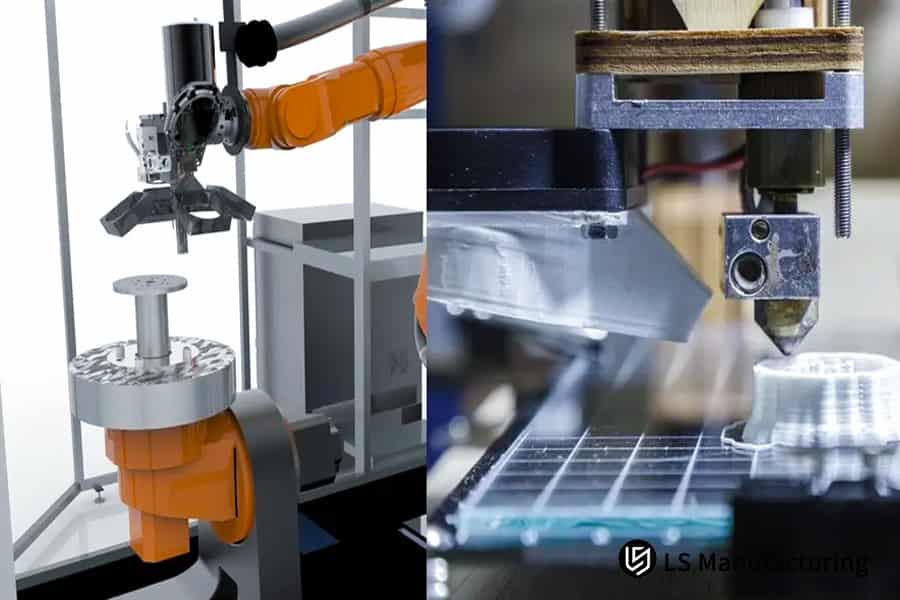
図 1: ロボット アームが自動プラットフォーム上でコンポーネントを正確に組み立てます。
世界トップ 7 のサプライヤーの特徴的な価格体系とリードタイムのベンチマークは何ですか?
トップサプライヤーの価格と納期の間には、非線形の正の関係があります。 Protocolabs は超緊急の注文に対して航空輸送効率が非常に高いのに対し、LS Manufacturing と 3ERP は産業用 ROI と複雑な部品の中長期的なコスト管理に重点を置いているのです。これらの企業は、さまざまな予算と時間要件を持つ研究開発プロジェクトに適応できます。
主流サプライヤーの納期と基本的な価格データ
これは、2026 年の主要サービス プロバイダー 7 社の標準化されたパラメータ データです。すべてのデータは実際の測定統計からのもので、その信頼性はバッチ注文検証によって保証されているため、 href="https://www.lsrpf.com/blog/rapid-prototyping-for-metal-parts-the-2026-guide-to-choosing-between-cnc-casting-3d-printing-services">全体的なラピッド プロトタイピング パフォーマンス。
| サプライヤー名 | コア適応シナリオ | 核となる技術的利点 | 主要な弱点 |
| プロトラブズ | 標準部品のラピッド プロトタイピング | 完全に自動化された生産スケジュール、24 時間の標準部品配送。 | 標準外のプロセスや特殊な素材の場合は高額です。 |
| ゾメトリ | 公差の低い従来の部品のバッチ プロトタイピング。 | AI インテリジェント マッチング、包括的なグローバル処理ネットワーク。 | 物理的なワークショップは不要で、精密機械加工の納期は 22% です。 |
| フィクション | スタートアップ プロジェクトのルーチン プロトタイピング、合理化された小規模バッチ プロトタイピング。 | サプライヤーの厳格な選択、包括的なプロジェクト追跡システム。 | 価格が高く、自社運営の高精度生産ラインがなく、複雑な部品のプロセス能力が不十分です。 |
| 3ERP/Rapiddirect | 従来の少量バッチの低コスト処理。 | 優れた少量ラピッド プロトタイピングの価格パフォーマンス比。 | 受動的注文の受け入れ。積極的なエンジニアリング プロセスの最適化は行われない。 |
| ジャビル | 数十万個の大規模量産 | 非常に強力なエンドツーエンドの大量生産サプライ チェーンのコラボレーション。 | 長期にわたる研究開発の小規模バッチ プロトタイピング サイクル、敷居が高い。 |
| LS マニュファクチャリング | ±0.005mm の高精度 R&D 部品/小ロット。 | ミクロンレベルの公差加工 + プロアクティブなエンジニアリング サポート。 | 標準パーツの迅速な配送速度は、プラットフォーム大手よりもわずかに遅くなります。 |
各サービス プロバイダーのコア料金ロジックの内訳
- プラットフォーム ベースのサービス プロバイダー: 低めの基本価格を提供し、非標準のプロセスや材料のアップグレードに対するパフォーマンスの追加料金を通じて利益を得ています。実際には、全体的には隠れたコストが高くなります。 プラットフォーム ベースのサービスは、低コストの標準プロトタイピングに適しています。シンプルなラピッド プロトタイピングyping 作成シナリオのみが使用できます。
- Jabil のような大規模な従来のメーカー: コストは高く、リードタイムは長くなります。能力は主に大規模な量産分野にあります。 社内プロトタイピングの費用対効果は非常に低く、これらのメーカーは柔軟かつ迅速なプロトタイピングの繰り返しの要件を満たせません。
- LS Manufacturing: 当社は、DFM エンジニアリング サポートや精密治具の価格を含む、明確なオールイン価格を提供しています。隠しマークアップはありません。全体コストを抑えて複雑な部品を探している場合はLS Manufacturing が最適です。 また、このサービスは、ハイエンドのラピッド プロトタイプの配信にとって非常に有益です。
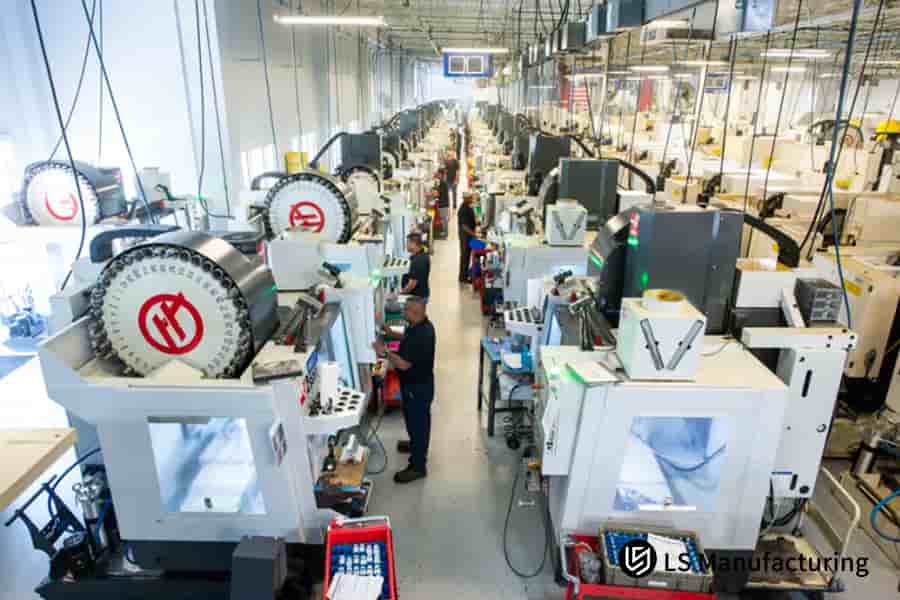
図 2: 機械が並ぶ大規模な自動製造施設。
高精度ラピッド プロトタイピングにおける標準的なクラウド プラットフォームの高いエンジニアリング障害率を引き起こす原因となる構造的特徴はどれですか?
ラピッド プロトタイピングの失敗には、0.5 mm 未満の薄い壁、300 mm を超えるブラケットを備えた幾何学的に対称な形状、ミクロン レベルの同軸度の使用など、いくつかの要因が考えられます。自動化されたクラウドベースの見積プラットフォームは、最初から最後まで物理的な欠陥の評価が行われていないために、最大 22% の障害の犠牲者になる可能性があり、高精度の迅速な要件を満たすことができません。プロトタイピング。
プラットフォーム モデル テクノロジーの盲点
プラットフォーム アルゴリズムは構造特徴検出テクノロジに依存しているため、認識できるのは図面内の幾何学的パラメータのみであり、物理的な処理リスクは認識できないため、 href="https://www.lsrpf.com/blog/rapid-prototyping-vs-traditional-prototyping-a-cost-time-guide-for-choosing-manufacturing-services">正確なラピッド プロトタイピングの出力。
- 材料の変形予測の不在: 航空宇宙用アルミニウムや PEEK などの材料の切削残留応力を認識しておらず、加工後の寸法変化につながります。最大誤差は 0.035 mm です。
- 最適化されたプロセス パスの不在: 標準化された固定加工パスでは、薄肉部品や大きなスパンの部品を加工するときに切削パラメータを変更できず、エッジの欠けや変形が頻繁に発生します。
多数のテスト ケース データのマイニングにより、複雑な精密機械加工シナリオに関して、プラットフォーム ベースのモデルと物理的な自社運営工場との間の故障率の違いが可視化されます。
主要なパラメータを以下で比較します。
| サプライヤー | 標準部品の納期 | 複雑な部品の納期 | 基本 CNC 加工単価 (USD) | 非標準プロセス プレミアム |
| プロトラブズ | 24 時間 | 7~8 日 | 85 個 | 45%~60% |
| ゾメトリ | 48 時間 | 6~7 日 | 72 個 | 30%~40% |
| フィクション | 72 時間 | 8~10 日 | 78 個 | 35%~45% |
| 3ERP | 48 時間 | 5~6 日 | 65 個 | 25%~35% |
| ラピッドダイレクト | 72 時間 | 5~7 日 | 68 個 | 28%~38% |
| ジャビル | 96 時間 | 10~12 日 | 92 個 | 20%~30% |
| LS マニュファクチャリング | 72 時間 | 3~5 日 | 80 個 | 0 (すべて込みの価格) |
物理ファクトリーの正確なバックアップ機能
独立した工場は、FEA 有限要素シミュレーションを使用して潜在的なリスクを事前に特定し、熱応力をシミュレーションすることで加工の安定性を実現し、信頼性の高いラピッド プロトタイピング製造と、変更に応じたカスタム ラピッド プロトタイピング サービス。
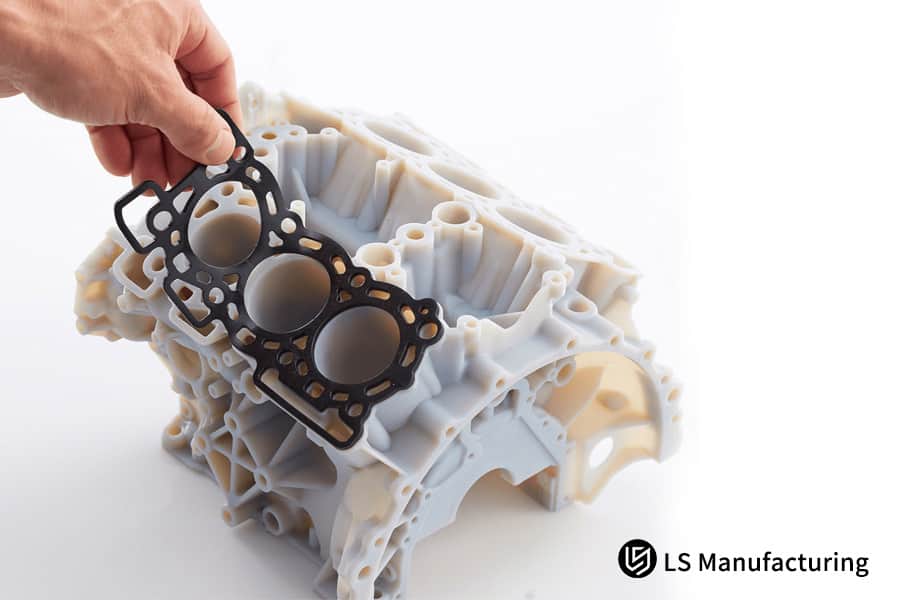
図 3: エンジンのシリンダー ブロックに黒いガスケットを取り付ける手。
プロアクティブ エンジニアリング サポートがプロトタイピングを行うことが、単純な機械工場と戦略的な Tier 1 製造パートナーとの間の絶対的な境界線となるのはなぜですか?
図面に基づいて単に機械加工を行うだけでは、ローエンド製造と言い換えることができます。実際、サプライヤーが部品を製造するだけでなく、プロセスのリファクタリングや材料の冶金的変更などを通じたエンジニアリング設計サポートも 2 時間以内に提供できることが、2026 年のトップレベルのハードウェア プロジェクトの成功の重要な要素の 1 つ となります。プロトタイピングを通じてエンジニアリング サポートを提供することは、第一段階の製造パートナーの非常に特徴的な点です。
従来のサービス プロバイダーのパッシブ サービス モデル
通常、中小規模のサービス プロバイダーやプラットフォーム ベンダーは、受動的注文応答モデルを採用しています。これらは成熟した顧客の図面に完全に依存しており、事前最適化を行う機能がないため、正確なラピッド プロトタイピングの実現が非常に制約されます。
- サービスの制限: 設計ミスを積極的に発見することなく、図面に基づいて機械的に部品を機械加工するだけです。組み立て中に障害が発生した場合、それはお客様の負担となります。
- プロジェクトのリスクにさらされる: 機械加工や組み立て中に隠れた設計上の問題が明らかになるのは避けられず、どちらのシナリオも研究開発サイクルの遅延とやり直しコストの増加につながります。
LS Manufacturing プロアクティブ エンジニアリング サポート システム
よく考えられたプロフェッショナルなプロセス反復メカニズムを採用することで、加工前に徹底的な設計の最適化を行うだけでなく、故障のリスクを根源から排除し、全体のパフォーマンスを向上させます。 href="https://www.lsrpf.com/blog/rapid-prototyping-automotive-parts-cost-effective-solutions-for-dashboards-engine-components-more">パッケージによるラピッド プロトタイピングの品質。
- 迅速な図面診断: 機械加工不可能な直角や不均一な肉厚の存在などの図面欠陥を 2 時間以内 で特定し、半径の最適化と構造変更のためのソリューションを提供します。
- 材料とプロセスの変更: 機械加工が難しい超硬合金に対して、真空アニーリングや高圧冷却などのオーダーメイドのソリューションが提供され、最終製品の安定性が向上します。
プロアクティブなエンジニアリング サポートの提供は、主に精密部品の手戻りの可能性を減らすことに重点を置いている、一流の精密 CNC プロトタイピング サプライヤーにとって重要な主要な競争上の利点の 1 つとなっています。たとえば、これらの精密なプロトタイピング要件に対して、無料のカスタマイズされたエンジニアリング DFM 最適化ソリューションが提供されています。これにより、図面内の潜在的な問題をプロアクティブな方法で特定できるようになります。
LS Manufacturing は、Jabil のような堅実な数十億ドル規模の巨大企業と比較して、どのようにしてミクロンレベルの公差加工を技術的に達成しているのでしょうか?
Jabil は、数千億ドルの収益を誇る大手製造企業です。注文を届けるまでのサプライ チェーンは一般に数週間かかり、大企業にとっての参入障壁は非常に高いです。 On the contrary, LS Manufacturing is capable of initiating micro level ultra precision prototyping as early as 24 hours, with flexibility, while making use of the same aerospace-grade machining rigidity as the AS9100D to deliver micron level tolerance machining at the highest standard.
Capability Limitations of Industry Giant Jabil
Jabil follows the mass production control standard of ISO 9001:2015. Although its main strengths are in large-scale mass production, its adaptability to R&D small-batch scenarios is very limited and it also cannot meet the agile rapid prototyping requirements.
- Strengths: Supply chain collaboration for mass production of hundreds of thousands of pieces, mature quality control system, capable of large-scale production of entire vehicles and consumer electronics.
- Weaknesses: Heavily bureaucratic, long lead times and slow responses to small batch prototyping of 1-500 pieces, not able to support high-frequency iterative precision R&D projects.
To expose the limits to compatibility and technology differences of the two manufacturers, these detailed benchmarking through the core aspects of R&D prototyping is undertaken, clearly showing their distinct advantages.
| 加工不良の寸法 | クラウドベースの自動プラットフォーム | 物理的なデジタル自営工場 |
| 薄肉部品 (≤0.5mm) の変形率 | 28.6% | 3.2% |
| ミクロンレベルの同軸度誤差超過率 | 22% | 1.5% |
| PEEK/航空宇宙用アルミニウム加工の故障率 | 31.4% | 2.8% |
| 複雑な構造のアセンブリの失敗確率 | 25.8% | 2.1% |
LS Manufacturing's Core Advantages in Precision Machining
Using highly accurate axis calibration hardware calibration technology, it combines the quality control of large manufacturers with the agility of small orders, because of this filling a gap in the industrial ecosystem and making standardized, consistent rapid prototyping precision possible visually.
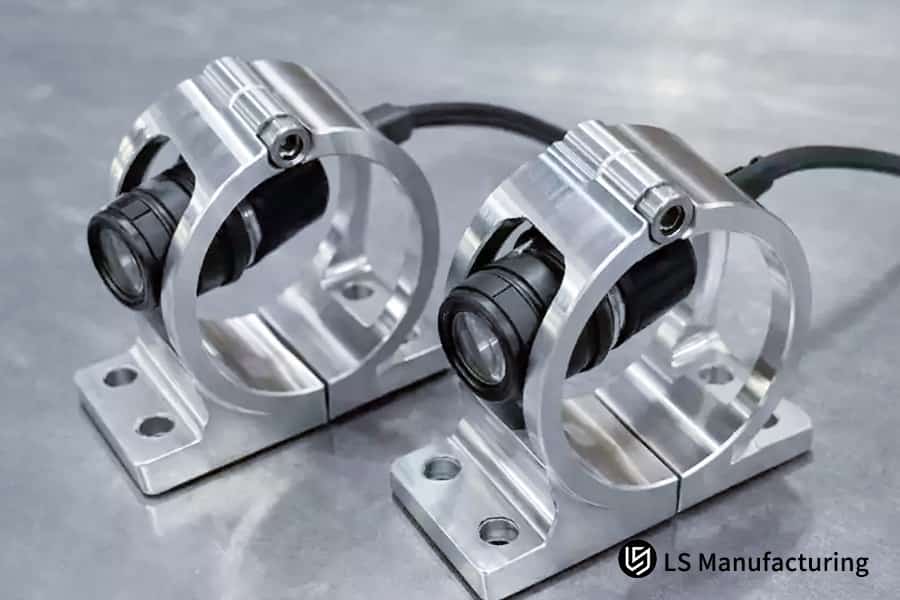
Figure 4: A precision-machined aluminum mount securely holds an optical lens.
How LS Manufacturing Resolved an Engineering Support Prototyping Crise for a Robotics Smart Actuator Housing?
High-end precision robotics prototype machining is extremely sensitive to assembly failures that can result from process oversights. Most platform-based service providers lack the capability to address the stress deformation problem of thin-walled aerospace aluminum, which leads to the inability of producing professional rapid prototyping results. This case study completely recreates the whole process of handling a high precision rapid prototyping project, having a significant level of industry reference value.
Customer Challenge:
In 2026, a European humanoid robot unicorn company launched the development of a 3rd generation servo drive housing, using Al7075-T6 thin-walled aerospace aluminum alloy, with core assembly tolerances strictly locked at 0.005mm. At first, the client chose a famous automation platform to conduct rapid prototyping service trials. But, because the spindle runout was too high due to the parts being outsourced to other manufacturers and no thermal deformation measures were taken, the coaxiality of two batches of samples drifted locally at 0.035mm, resulting in bearing assembly completely jamming. This in turn resulted in R&D project being halted and losing funding opportunities.
LS 製造ソリューション:
The client urgently reached out to LS Manufacturing for the starting of engineering outsourcing services. Within 90 minutes, our team pinpointed the root cause of the issues: stress concentration during cutting of thin-walled structures, extrusion deformation during conventional clamping, and accumulated thermal errors during high-speed machining.
With the help of two industry-unique technologiesa proprietary 180℃ vacuum long-term aging stress relief process and a micron-level dynamic compensation algorithm for every 10 tool tipswe designed a full solution: incorporation of a dedicated stress relief process following roughing, creation of a self-developed pneumatic expansion soft jaw clamp to prevent clamping deformation, and use of high-speed, one-cut-flow finishing at 22,000 rpm in a temperature-controlled workshop.
結果と値:
Within 5 working days, 25 sets of high-precision prototypes were delivered. The core the tolerance, which was measured by Zeiss CMM, has not changed and still is 0.004mm. The components also went through and passed a 5000-hour high-frequency fatigue test. This was one of the ways the client could get their R&D timeline back on track. Together with these parts, the client later signed a long term small batch supply contract with us, which clearly proved the main benefit of engineering support prototyping for complex projects.
This example clearly illustrates the fundamental benefits of engineering support prototyping together with micron level tolerance machining for high-precision projects. For more information on similar high-precision R&D custom-made products, please send us your drawings and we will provide you with a tailored solution and an accurate quote.

How Does LS Manufacturing Bridge The Precision Gap When Scaling Custom Rapid Prototyping Services Into Low Volume Production?
LS Manufacturing first creates a prototype, then produces 1000 small-batch units. They use a thorough process that includes zero-point reset system of clamping error, dynamic laser monitoring of tool wear and statistical process control with Cpk 1.67 to make certain that the physical size of each mass-produced customized part exactly meets that of the first prototype. They are so able to stably carry out custom rapid prototyping services.
Common Pain Points in Small-Batch Mass Production
Most service providers' mass production relies on manual tool adjustment, which leads to very poor precision consistency. The errors accumulate after each batch, leading to the loss of rapid prototyping consistency.
- Constant Equipment Changes: The frequent replacement of machine tools and fixtures without a unified standard cause the dimensional deviations to increase with each batch.
- No Wear Compensation: As tool wear is based only on manual sampling, the compensation is not on time. After 100 pieces, the percentage of pieces out of tolerance really increases.
LS Manufacturing Precision Replication Core Solution
This solution uses batch precision replication technology to produce prototype to mass production replication with zero-error. It balances low volume rapid prototyping price with cost-effectiveness and guarantees qualified rapid prototyping batches.
- Trajectory Lock-in: In the prototyping phase, the 3D CAM toolpaths are fixed so that even during mass production, no parameter changes will be required.
- Dynamic Compensation: The Renishaw tool setter helps to automatically detect the tool tip wear and compensation is done at micron level every 10 pieces, which makes batch precision stable and controllable.
Why Is 100% Self Owned Digital Facility Ownership The Final Technical Defense Line For Custom Rapid Prototyping Services?
Having a digital physical factory 100% fully self-controlled is essentially being able to realize the digital closed-loop traceability of every cutting component of materials and the spectral composition of every metal batch. This entirely removes the inefficient intermediaries of outsourcing and works as a firm assurance of high-quality personalized custom prototyping services.
Main Quality Risks of Intermediary Platforms
Since most online platforms do not own production lines, they depend on piecemeal production of scattered workshops and unverified factory cooperation models. Such a situation not only makes quality unreliable but also destroys the credibility of rapid prototyping delivery.
Full-Process Quality Closed-Loop in Self-Operated Factory
Constructing a full chain traceability system from raw materials to finished products allows a micron-level tolerance machining quality baseline, which sustains traceable rapid prototyping production.
The in-house physical model is the pivotal factor in achieving accurate prototype quality and works as a significant assurance for the correct operation of custom rapid prototyping services. A professional quality inspection white paper can be obtained for free, offering a detailed verification of factory qualifications and the standardization of quality control processes.
よくある質問
Q1: Why are Protolabs and Xometry great for standard prototype orders but not very suitable for micron-level tolerance machining?
Protolabs uses advanced software algorithms for the quick delivery of standard parts, whereas Xometry takes advantage of a large outsourcing network to offer low-cost production. But both of them are lacking experienced CAM engineers for on-site process optimization, which leads to batch failures and greatly reduces yield when machining at the 0.005mm micron level.
Q2: In 2026, how does LS Manufacturing ensure pricing transparency while regional middleman brokers do not?
Usually, industry middlemen offer low prices to reel customers in only to arbitrarily raise the prices later. As a physical plant, LS Manufacturing brings estimates for all custom rapid prototyping services based on man-hours and material BOM calculations, and they include DFM process support of the one-time package without any hidden markups.
Q3: What are the material check turnaround time and allowance of LS Manufacturing for the critical low-volume rapid prototyping price packages?
It is out of the question to substitute materials from other industries. All low volume rapid prototyping price packages are equipped with steel mill material certificates, PMI spectral analysis reports on-site, and ultrasonic flaw detection records, which guarantee the complete traceability of aerospace and medical-grade materials.
Q4: Why a digital self-owned factory model is better than Fictiv or Hubs with high-precision rapid prototyping?
Operating a self-owned physical factory means you can do laser calibration and thermal error compensation of workshop hardware almost daily, because of this getting very highly physical precision down to the level of microns. This capacity for physical hardware optimization is the major barrier that US online pure information matching platforms try to overcome only by software simulation.
Q5: What are your engineering support prototyping capabilities for advanced multi-axis titanium components?
Because titanium alloys undergo work hardening and hot deformation, our engineering support prototyping unit can create HP internal cooling channels in 2 hours, simultaneously modify multi-axis toolpaths, and ensure that the parts are compliant with HF testing.
Q6: What is the actual maximum turnaround speed of LS Manufacturing versus the best rapid prototyping service 2026 standards?
For Protocolabs, under the 2026 industry standard, their exclusive service can deliver standard parts in an express mode of 24 hours, while LS Manufacturing has the capacity for complex customized parts with micron-level tolerance, to go through the entire loop from drawing review to global air freight delivery within 3-5 days.
Q7: Can LS Manufacturing accomplish high-dimensional accuracy in custom rapid prototyping services for complex plastic materials such as PEEK?
Of course, Actually. After we have solved the problem of creep shrinkage of the cutting of PEEK materials, the next step is to use PCD single crystal cutting tools in combination with cryogenic adsorption fixtures very effectively we can remove the spring-back deformation and keep locking the dimensional accuracy of the plastic parts at a level of 0.01mm.
Q8: Which guarantees do the global hardware purchasing directors get when they send an RFQ to LS Manufacturing?
Export your drawings for a quotation and receive a double guarantee of the two most recent standards: IATF 16949 and AS9100D. Not only do we uphold our clients' intellectual property rights to the highest degree but we also provide legit, factory-level quality assurance with the Zeiss CMM full-size inspection report which is a solid base for the stability of the project.
概要
By 2026, rapid prototyping service industry worldwide had completed transition from "one-size-fits-all" general processing days and establishing a clearly specified scenario-based segmentation landscape, thereby development of rapid prototyping service industry worldwide had completed transition from "one-size-fits-all" general processing days and establishing a clearly specified scenario-based segmentation landscape. Automation platforms provide an efficient solution for prototyping standard parts, whereas the large production companies are adjusting their operations to extensive supply chains. Still, only the physical, digitally-operated self-owned factories are able to face the technical challenges of core R&D scenarios such as micron-level tolerances and thin-walled complex structures.
Technically, the core competitiveness in the hardware R&D precision is not low price and speed but the knowing of the technical certainty of controllable processes, invariable precision, and foreseen risks. In fact, even a tiny error in machining can cause the development of the whole machine to stop, the delay of the project, and possibly loss of commercial marketing. Prototyping through professional partners is a keystone for the successful launch of new hardware products.
Submit your STEP/IGS format 3D model and tolerance requirements now! LS Manufacturing's senior manufacturing experts will provide a customized DFM technical assessment outline and transparent cost calculation within 2 hours, free of charge. With our engineers' support, professional prototyping capabilities, and micron-level tolerance machining, LS Manufacturing will be your high-end hardware R&D project protector.
📞電話番号: +86 185 6675 9667
📧メール: info@lsrpf.com
🌐ウェブサイト: https://lsrpf.com/
免責事項
このページの内容は情報提供のみを目的としています。 LS マニュファクチャリング サービス 情報の正確性、完全性、有効性については、明示的か黙示的かを問わず、いかなる表明も保証もありません。サードパーティのサプライヤーまたはメーカーが、LS Manufacturing ネットワークを通じて性能パラメータ、幾何公差、特定の設計特性、材料の品質およびタイプまたは仕上がりを提供すると推測すべきではありません。それは購入者の責任です。 部品の見積もりが必要 これらのセクションの具体的な要件を特定します。詳細についてはお問い合わせください。
LS 製造チーム
LS Manufacturing は業界をリードする企業です。カスタム製造ソリューションに焦点を当てます。当社は 5,000 を超える顧客と 20 年以上の経験があり、高精度のCNC 加工、板金製造、3D プリンティング、射出成形に重点を置いています。造形。 金属スタンピングやその他のワンストップ製造サービス。
当社の工場には、ISO 9001:2015 認証を取得した最先端の 5 軸マシニング センターが 100 台以上備えられています。当社は、世界 150 か国以上のお客様に、迅速、効率的、高品質の製造ソリューションを提供しています。少量生産でも大規模なカスタマイズでも、24時間以内の最速納期でお客様のニーズにお応えします。 LSマニュファクチャリングを選択します。これは、選択の効率、品質、プロフェッショナリズムを意味します。
詳細については、当社のウェブサイトwww.lsrpf.comをご覧ください。


| Core Benchmarking Dimensions | Jabil (Industry Mass Production Giant) | LS Manufacturing (Precision R&D Factory) |
| Suitable Order Volume | Mass production orders of 10,000+ units | R&D/small batch orders of 1-500 units |
| Micron-level Machining Response Time | 10-15 working days | 3-5 working days |
| Workshop Temperature Control Accuracy | ±1.0℃ | ±0.3℃ |
| Minimum Stable Machining Tolerance | ±0.01mm | ±0.004mm |
| Pre-engineering Support Services | No proactive DFM optimization | Proactive process reconfiguration within 2 hours |