English



High-precision prototyping services start with ambiguous requirements, causing chaos in scope, quotes, and costs going over 200% because of over-specification in requirements. The solution is to replace the quote request process with a process that allows us to work in collaboration with you to convert ambiguous requirements into specific and technical terms. This eliminates all ambiguity and chaos, and we can start the project with a budget, timeline, and manufacturability from the very first day.
Our proven and refined process, perfected on over 500 projects, offers specific tools that include a Prototype Objective Priority Matrix, which reduces process options by a significant 60%. Our process offers quotes on multiple processes in just 2 hours using a cost simulator. By working in partnership with us, you can now achieve 80% of key validations with just 30% of the budget spent on phased prototyping. By working in partnership with us, you are in total control from day one regarding costs, timelines, and quality.
High-Precision Prototyping: Core Considerations
| Key Element | Our Methodology |
| Fidelity vs Speed Conflict | To achieve the tolerances and finishes possible in a production environment, it is necessary to have an accurate process, which can be difficult to achieve in terms of speed, as required in rapid prototyping. |
| Material Behavior | There can be considerable differences in the behavior of the prototype material in comparison to the final product material when subjected to machining stresses, requiring different approaches to prevent distortions. |
| Metrology as a Foundation | First and foremost, it is impossible to verify that the prototype has achieved the form and function for which it was intended without the aid of CMM and optical scanning technologies. |
| Process Selection Criticality | Failure to correctly select a process, 3D printing versus micro-machining, for a test part to verify the performance of the part can lead to incorrect performance data. |
| Our Integrated Solution | Our integrated solution includes 5-axis CNC machining, metrology, and production-oriented materials in a digital, closed-loop process. |
| Design for Precision (DFP) Review | We will evaluate the part to identify areas of the part that could be problematic to correctly machine and make recommendations to the designer to improve the part for manufacturing without sacrificing performance. |
| Outcome: Predictive Accuracy | Ensures that the prototypes created are dimensionally and functionally identical to the final product that will be created in the future, thus allowing for conclusive testing at the mechanical, thermal, and assembly levels. |
| Outcome: De-risked Scaling | Allows for a clear path from the created prototype to the final product, thus eliminating costly redesigns that might be required in the future. |
Why Trust This Guide? Practical Experience From LS Manufacturing Experts
In the world of high-precision prototyping services, there is no shortage of generic information on scoping and quoting a project. What makes us different? The simple fact is, we are not theorists, we are pragmatists, and we have spent years taking vague ideas and turning them into successful projects every day. We are students of the “school of hard knocks” in workshops where vague requirements lead to costly overruns and delays. We know how to turn vague ideas into a concrete, executable plan that guarantees accurate quotes from the very beginning.
Our proven methodology, honed on over 500 projects, utilizes tools such as the Prototype Objective Priority Matrix, rapid cost simulation, and industry standards from the Metal Powder Industry Federation (MPIF) and TWI Global, a world leader in industry validation for materials and processes.
As a result of phased prototyping and hard-won knowledge gleaned from both success stories and initial failures, it is possible to attain 80% of critical validations with only 30% of the budget spent. Not our book-smart knowledge, but our battle-hardened knowledge is what allows us to avoid costly mistakes and ensure guaranteed results with guaranteed prototypes that have cost, time, and quality controls from day one of the project.
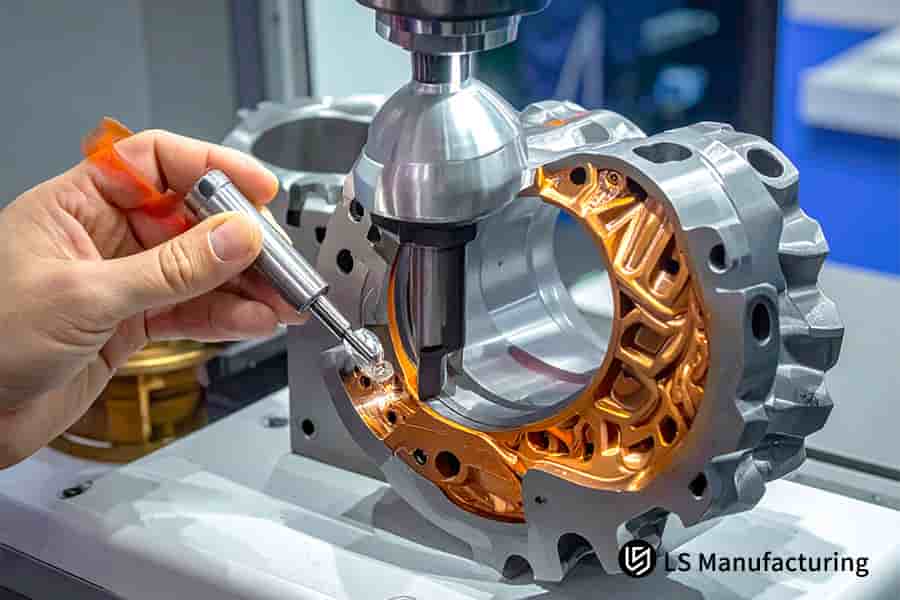
Figure 1: Assembling a precision gold-and-silver alloy component for rapid prototyping and manufacturing cost analysis.
How To Transform Vague Prototype Ideas Into Clear, Actionable Technical Requirements?
The most critical, and yet most frequently ignored, aspect of the entire prototype development project is the translation of the conceptual need into a rigorously defined, manufacturable, and verifiable set of technical requirements. This rigorous project scoping discipline is the absolute basis for delivering the project in a timely fashion, at the correct cost, and to the required level of success:
Prioritize Validation Objectives with a Weighted Matrix
Merely stating you need a "functional prototype" is insufficient. The first collaborative step is to rank and weight core verification aims—such as form & fit (60%), mechanical performance (30%), and user ergonomics (10%). This quantified prioritization immediately eliminates incompatible processes, narrowing the feasible solution space for high-precision prototyping services by over half and directing focus to the most critical technical requirements.
Quantify All Performance Criteria as Measurable KPIs
We substitute vague terms such as "strong" or "smooth" with clear, unambiguous statements. A requirement now reads "withstand static load of 500N with deflection of <0.1mm" or "attain Ra ≤ 0.8µm on cosmetic surfaces." Such unambiguous terminology often referenced against standards from MPIF or TWI Global removes any guesswork, makes it possible to choose the appropriate process (e.g., CNC or metal AM), and specifies the acceptance criteria for the resulting product.
Define Operational Environment and Required Lifespan
The purpose and function of a prototype are what guide decisions on material and process selection. We identify if a part must survive 50 assembly cycles, brief chemical exposure, or a given range of thermal conditions. By clearly establishing these requirements up front, we can be certain that the given rapid prototyping process and material selection, such as anodized aluminum or fatigue-resistant resin, are appropriate for a given purpose and function and avoid costly redesigns at a late stage of a given rapid prototyping cycle.
Collaborate Using a Structured Scoping Template
As a standard procedure, we commence every project with a co-developed "High-Precision Prototype Definition Form." This dynamic form consists of prioritized, quantified, and contextual requirements as discussed above and is used as a single source of truth for both our clients and our engineering team. This critical tool is what removes risk from a given rapid prototyping project and provides a fixed and accurate quote and project plan.
This is hard-hitting front-end process that converts the quote process into a predictable discipline rather than a gamble. Our depth is not in our ability list; it's in this working framework that converts intent into definitive specification statements to assure your project is ready to go with complete alignment, cost certainty, and a clear path to meet your core validation objectives.
How To Match The Most Cost-Effective Combination Of Precision And Process For Your Validation Objectives?
The disjointed selection of process, precision, and materials has led to prototypes failing and costs increasing out-of-control. Our answer to this problem is our decision process with KPIs to calculate manufacturing trade-offs to assure cost-effective precision and process. It is now an objective process that was previously subjective:
Dimensional Fidelity for Assembly & Function
- KPI Analysis: GD&T is equated to a specific tolerance requirement.
- Process Selection: CNC machining specified for accuracy.
- Material Optimization: POM/Aluminum specified for cost-effective precision.
- Outcome: Reliable functional testing via structured prototyping process selection.
Surface-Driven Processes for Aesthetics & Ergonomics
- Finish Definition: Texture/coating specified.
- Process Cascade: CNC + Paint or VCM for high-fidelity appearance.
- Value: Enables valid rapid UX prototyping.
- Benefit: Achieves mass production-like look/feel cost-effectively.
Material Fidelity for Extreme Performance Validation
- Material Lock: Production materials (e.g., Titanium) are mandated.
- Post-Process Integration: Treatments such as anodizing are planned.
- Trade-off Transparency: We justify cost for valid performance data.
- Application: Critical for rapid performance validation.
The level of competition in this approach is in the decision logic for precision, material, and costs, which centers on how to scope a prototyping project. It involves critical manufacturing trade-offs. This is a de-risking build strategy where every prototype, even rapid prototypes and verification prototypes, is an optimal and economically rational verification tool in a cost-effective precision manner.
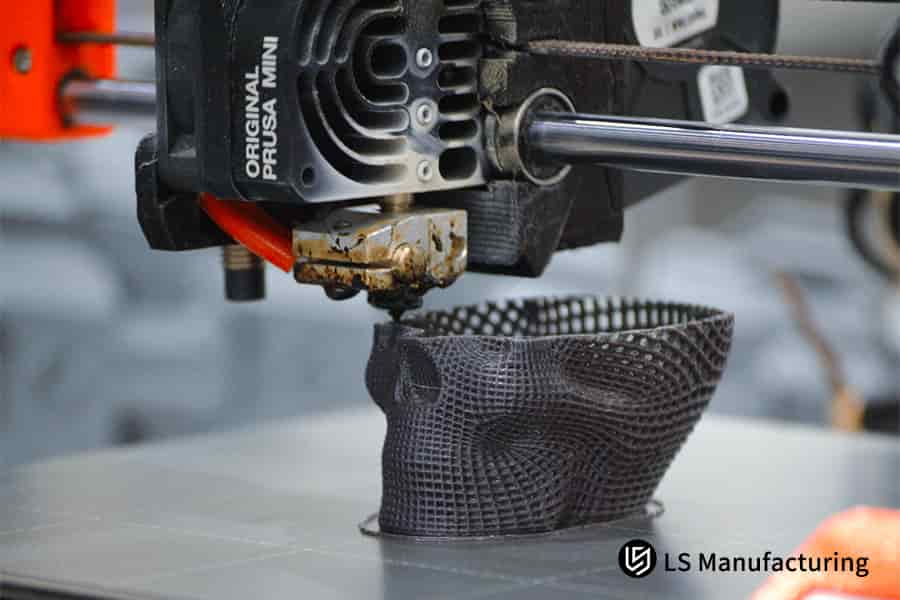
Figure 2: Rapid prototyping creates black polymer resin mesh objects for prototyping quotes and custom services.
Which Design Document Details Are Absolutely Essential For Obtaining An Accurate Quote?
Inaccurate quotes, risk of timelines, and non-conforming prototypes are a consequence of an unclear data situation supplied by the supplier. The design package is a key component to an accurate rapid prototyping project. This document provides a list of required inputs on how to get an accurate quote, eliminating any guesswork on the part of the supplier.
| Documentation Element | Technical Requirement & Rationale |
| Complete 3D Model | A complete and feature-rich 3D model in a neutral file format such as STEP is a prerequisite for error-free computer-aided manufacturing programming. |
| Detailed 2D Drawings | Dimensions, tolerances, surface finishes, and notes should be included on 2D drawings. Incomplete or confusing engineering drawings can result in looser tolerances, leading to assembly failures. |
| Explicit Material Spec | Material grade, standard, and temper, and/or alternatives should be included on 2D drawings to enable cost-effective material procurement during rapid turn prototyping. |
| Quantities & Timeline | Quantities, such as 3pcs for fit tests, 50pcs for pilot runs, and timelines should be included on 2D drawings. |
This protocol solves the first and biggest issue, unclear specifications, a leading cause of project failure. It utilizes an automated audit of your RFQ documentation, like engineering drawings, to answer how to get an accurate prototype quote. This ensures a fixed, suitable price and timeline, transforming variable-cost rapid design exploration into a risk-free development phase.
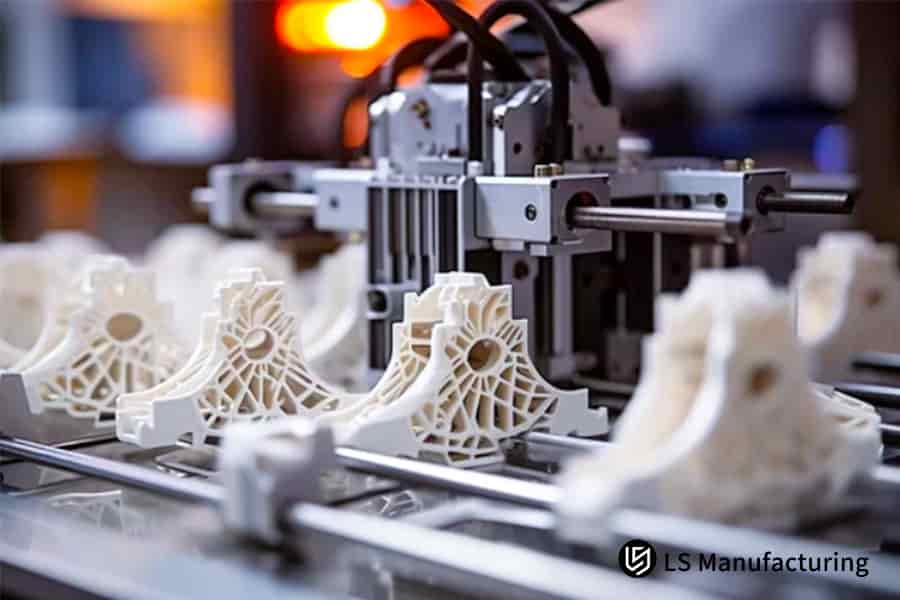
Figure 3: 3D printing high-accuracy, complex geometric prototypes for obtaining accurate quotes and project scoping.
LS Manufacturing (Optical Equipment Industry): Prototype Project For Multi-Process Fusion Of LiDAR Housings
Concurrent validation of extreme dimensional, RF, and environmental specs in a single prototype presents a severe technical and cost challenge. This LS Manufacturing lidar enclosure case demonstrates how a tailored, multi-process prototyping strategy resolved such an impasse. We delivered a functional, cost optimization-focused solution enabling rapid integrated validation for an autonomous systems developer.
Client Challenge
The client needed to develop a design for one of the components in their solid-state LiDAR device, and the requirements were that it should meet three conflicting KPIs. The quotes provided by the incumbent supplier were only for either a monolithic and expensive CNC aluminum part or lower-fidelity alternatives that did not meet key specifications. This was a situation in which there was a definite need to develop a rapid functional prototype.
LS Manufacturing Solution
The process to develop the solution involved deconstruction of the part in function. The optical mount was made using the CNC process with Al6061 material with accuracy levels at ±0.025mm. The RF shield was made using 3D printing with stainless steel and then with electroless copper plating over 35dB. The shell was made using Vacuum Cast with weather-resistant PU with UV. The multi-process prototyping used in the project was a technique, in which the best process was used for making the component.
Results and Value
This prototype was successful in all KPIs, including precision at 0.025mm levels, RF shielding at 38dB levels, and QUV testing at 500 hours. The final prototype was successful in reducing the price by 20% compared to a full prototype quote for aluminum, and the build process was reduced by 35%. This validation solution has high fidelity and has a lot to offer in terms of cost optimization.
This is just a quick example of how we do things around here at Method: engineering-led, and how we solve validation problems by technically deconstructing a solution and then matching that against a hybrid manufacturing solution with precision levels. This approach provides clients with a definitive prototype quote, achieving predictable precision prototyping cost. This is a definitive solution for our clients, where all the constraints are now just a solution.

How To Analyze A High-Precision Prototype Quotation To Gain Insight Into Its True Cost And Value?
The complex prototype quotation is a form of proposal that is technically based and has a degree of forensic analysis that searches out costs and value beyond the price represented at the bottom line. It is a form or model that allows for the accurate quote analysis and enables the financial instrument to become an instrument for the elimination of risks for the rapid prototyping project, which is fundamentally enabled by precision prototype machining. This process offers complete value transparency.
Mandate a Granular Cost Breakdown
We demand and examine a completely itemized prototyping cost breakdown, analyzing all of the components for the type of materials used, grade of materials used, programming time, run time, etc., to search out any type of inefficiencies in the cost of machining that overruns.
Audit the Manufacturing Process Plan
The process path described is also analyzed. A quote from a professional indicates exactly what is required in terms of equipment and fixturing. We also ensure that the process path described is aligned with the part's KPIs so that we can be sure that the process strategy used is adequately accurate. This is an indication of a professional competency and is a must in order to avoid "cutting corners" in order to attain rapid process alignment.
Formalize Assumptions and Exclusions
Assumptions such as the validity of quoted material, default tolerances, and services not included in the work, such as specialized inspection services and expedited shipping, are clarified. By stating all these clearly in a "Scope of Work" appendix, we are effectively locking in the project baseline, thus eliminating costly "scope creep." This is an integral part of our process to ensure final deliverability predictability and value transparency.
This framework is shifting the focus from price negotiation to a thorough risk analysis process. We are providing our clients with a clear prototyping cost breakdown and a confirmed plan, allowing for accurate quote analysis provided. This turns a complex quote into a clear roadmap for successful rapid complex prototyping, providing financial and technical certainty from project inception itself.
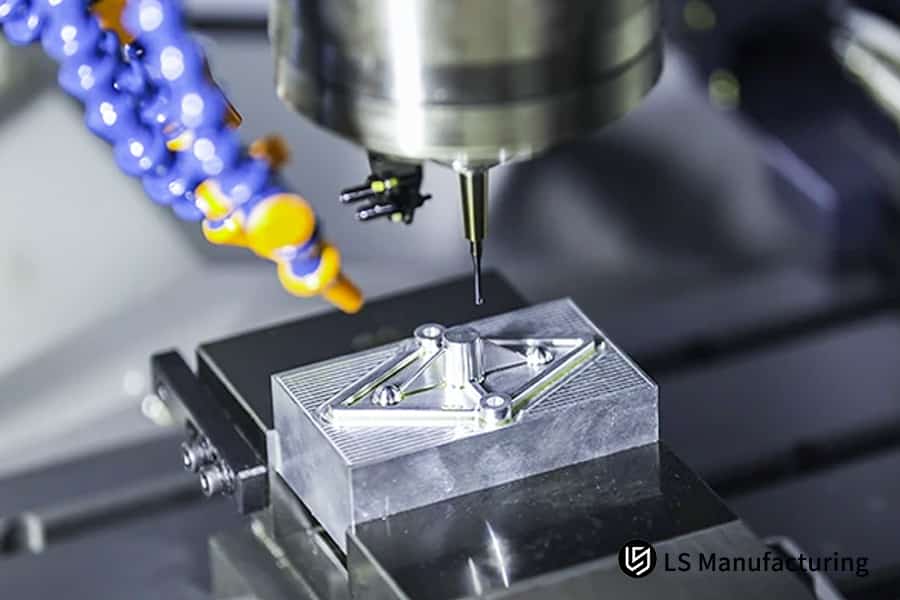
Figure 4: Machining a complex geometric alloy part to accurately scope prototyping costs and generate precise quotes.
Why Is The "Phased Prototyping" Strategy The Optimal Solution For Controlling Total R&D Costs And Risks?
The attempt to validate all design, functional, and performance requirements in a single prototype is a risky approach that maximizes cost and uncertainty. The structured phased prototyping approach provides a strategic method for process fidelity and investment in support of specific verification milestones, a systematic method to prototyping that leverages rapid prototyping services. This is ideal for proactive risk management and optimal R&D cost control, turning the cost of prototypes into value-generating learning vehicles.
Low-Fidelity Concept Validation
- Objective: Validate basic geometry, assembly logic, and spatial fit.
- Our Execution: Leverage the least expensive process available (e.g., FDM, CNC POM) for 1 to 3 units.
- Value: Facilitates rapid validation, allowing major architectural changes with minimal cost, a key approach to risk management.
Functional Performance Verification
- Objective: Validate functional performance, load, and material performance under stress.
- Our Execution: Leverage materials and/or processes that are performance-matched (e.g., CNC aluminum, engineering resins).
- Value: Rapid functional iteration to prove engineering models and detect defects, thus directly enabling R&D cost control by eliminating costly design failures.
Pre-Production & Design Validation
- Objective: Complete design aesthetics, longevity, and manufacturability in near-production intent.
- Our Execution: Utilize processes such as CNC + finishing or Vacuum Casting on 10-20 pilot run products.
- Value: The final rapid validation phase ensures the final transition to full-scale production and tooling investments.
This rigorous phased prototyping approach replaces the gamble of risk with a rigorous discovery process. By frontloading the learning process with minimal models and proportionally increasing model fidelity in proportion to design maturity, risk is mitigated. A quantified savings in development costs is achieved, providing a guaranteed path to a certified design through rigorous R&D cost control and risk management.
How To Assess Whether A Prototyping Service Provider Possesses Genuine Collaborative Engineering Capabilities?
In order to identify the correct rapid prototyping supplier, it is critical that the order taker is distinguished from the solution partner. The technical framework provides an assessment that can be used for the evaluation of the engineering collaboration capability of the supplier. It enables data-driven supplier assessment, ensuring alignment on functional goals and de-risking development.
| Evaluation Dimension | Key Behavioral Indicator (What to Look For) | Quantifiable/Objective Metric |
| Proactive Technical Clarification | The supplier's engineer makes the first contact after the RFQ with in-depth questions regarding the application, load cases, or functional intent of the tolerances. | A mandatory technical discussion occurs prior to the submission of the quote. |
| Solution-Oriented Quoting | The supplier's quote includes at least two different manufacturing process or material options with comparative analysis. | A minimum of two validated options are offered, not simply a single-point solution. |
| Knowledge Transfer & Justification | The supplier's willingness to explain the engineering rationale for the design for manufacturability (DFM) recommendations. | DFM reports include justification notes that relate the recommendations to the performance or readiness of the parts. |
The essence of how to choose a prototyping partner is to assess their engineering collaboration behaviors, not just their quote. A thorough supplier assessment must include a confirmation of proactive inquiry, solution options, and knowledge sharing. This method turns a rapid prototyping project into a strategic value-based partnership for a successful custom manufacturing project.
Why Does Choosing LS Manufacturing Mean Securing Definite Project Results And A Return On Investment?
To ensure that there is a predictable level of Return on Investment (ROI) within the field of prototyping, it is necessary for it to be converted into a managed risk-mitigated engineering discipline, rather than the open-ended service that it currently is. This is achieved by LS Manufacturing, who provide custom prototyping services and operate as a ‘co-accountable partner’ that develops a structure for the attainment of guaranteed outcomes right from the start of the project, as described within the following document:
Standardized Front-End Scoping: Defining the "Done" Criteria
We begin with a mandatory technical alignment session, turning ambiguous requirements into a signed-off project charter. This provides clear and objective success measures for form, fit, and function before any commitment is made, de-risking the why choose LS Manufacturing phase from the start and providing an answer for your critical projects.
Transparent Process Management via Real-Time Portal
Our client portal provides a window into the real-time management of all projects and activities on a 24/7 basis, giving us access to project data and feedback in real-time. This allows us to ensure that the entire custom manufacturing process is traceable, managed, and free of any information gaps.
Outcome-Oriented Delivery: From Part to Decision-Enabler
Our commitment is complete when we confirm that the prototype has met its defined verification criteria, not just when we ship. Our deliverables are validated to ensure they meet our charter of providing the actionable data you need to make your next go/no-go decision, connect to your program's ROI on prototyping.
This methodology offers a systematic approach for the reduction of risks associated with rapid prototyping by institutionalizing front-end alignment, transparency, and validation. This methodology changes the process so that each round maximizes the technical learning with guaranteed outcomes and a ROI on prototyping for competitive development. This is the framework for our value proposition for a partnership.
FAQs
1. How long does it take from submitting a request to receiving a detailed quote?
Once we receive all of the complete technical documents, we promise to have a preliminary process plan and quote ready in 4 working hours. However, in the event of a complex assembly, it could require us 8 hours to fully examine.
2. What is the minimum order quantity (MOQ) for high-precision prototypes?
The minimum order quantity for high precision prototypes is 1 piece. However, we would like to stress to you the importance of having us make 2 to 3 pieces, so we can offset the one-time costs associated with this project, and so we can provide you with a "spare" piece to obtain the best possible price for you.
3. How can I ensure that my design drawings and ideas are not leaked or misappropriated?
As a prerequisite, a legally binding NDA (Non-Disclosure Agreement) is a requirement prior to any kind of cooperation. We already have a project isolated data management system in place and all employees are well-trained in confidentiality.
4. If design modifications are needed after prototype testing, will the cost of a revised quote be high?
This depends on the level and scope of changes. If changes are minor dimensional changes that do not include a change in primary processes, only reprogramming and processing fees for a specific process are applicable. We shall provide a clear and transparent comparison of costs before and after changes.
5. Do you offer a seamless transition from prototype to small-batch pilot production?
Yes. This is one of our strengths. We use scalable processes in the prototype stage. We accumulate all data for the manufacturing process to ensure consistency in performance from small-batch production to mass production, thus eliminating the risk of changes in suppliers.
6. Does it include comprehensive quality inspection reports?
Yes. Our standard delivery package includes a first article inspection report (FAIR) and inspection data for key characteristics. In precision projects, we can include a CMM report.
7. How do you handle urgent project needs? Is there an expedited track?
We have a "Fast Response" production line, which, together with our expedited path, can significantly reduce lead times for you. The costs of expedited service are clearly determined based on the degree of change to existing production plans, which requires your approval prior to service.
8. How do I start my first high-precision prototype project?
You can start by visiting our website, then going to the "Start a Project" page. You can then upload your design files, and we'll contact you within one hour to arrange a meeting for requirements definition.
Summary
In order to deliver successful high precision prototyping projects, it’s essential to first understand and scientifically define success in terms of a successful project, rather than a blueprint for a successful prototyping process. By scientifically defining the validation objectives, matching the process and precision, and working in an open environment with partners who have collaboration engineering capabilities, you can turn the entire process of prototyping from a chaotic cost drain into a lean and predictable product innovation accelerator where savings are not just a budgetary issue, but a competitive advantage that can’t be bought.
By uploading your initial concept or sketches today and scheduling a free online consultation with our rapid prototyping expert team at LS Manufacturing, you can have a "Preliminary Process Route and Cost Range Analysis" for your project and turn the anxiety of the unknown into a plan.
Define your project clearly to get an accurate quote and a prototype that delivers on its promise.
📞Tel: +86 185 6675 9667
📧Email: info@lsrpf.com
🌐Website: https://lsrpf.com/
Disclaimer
The contents of this page are for informational purposes only. LS Manufacturing services There are no representations or warranties, express or implied, as to the accuracy, completeness or validity of the information. It should not be inferred that a third-party supplier or manufacturer will provide performance parameters, geometric tolerances, specific design characteristics, material quality and type or workmanship through the LS Manufacturing network. It's the buyer's responsibility. Require parts quotation Identify specific requirements for these sections.Please contact us for more information.
LS Manufacturing Team
LS Manufacturing is an industry-leading company. Focus on custom manufacturing solutions. We have over 20 years of experience with over 5,000 customers, and we focus on high precision CNC machining, Sheet metal manufacturing, 3D printing, Injection molding. Metal stamping,and other one-stop manufacturing services.
Our factory is equipped with over 100 state-of-the-art 5-axis machining centers, ISO 9001:2015 certified. We provide fast, efficient and high-quality manufacturing solutions to customers in more than 150 countries around the world. Whether it is small volume production or large-scale customization, we can meet your needs with the fastest delivery within 24 hours. choose LS Manufacturing. This means selection efficiency, quality and professionalism.
To learn more, visit our website:www.lsrpf.com.