English




Rapid prototyping RFQ processes frequently start with a fundamental breakdown in communication. Offering only a fundamental model results in bids that differ by 300% and are impossible to compare in any meaningful way. Overloading with unstructured data, on the other hand, is a waste of valuable resources and still results in a working prototype that meets the drawing but fails its fundamental functional test.
This common problem is caused by a lack of structured framework for technical and commercial alignment. Our solution to this problem is definitive in that it takes your initial concept and turns it into a clear, actionable, and comparable request. Guesswork is eliminated, cost premiums for uncertainty are removed, and your RFQ directly results in a working prototype from the very first submission.
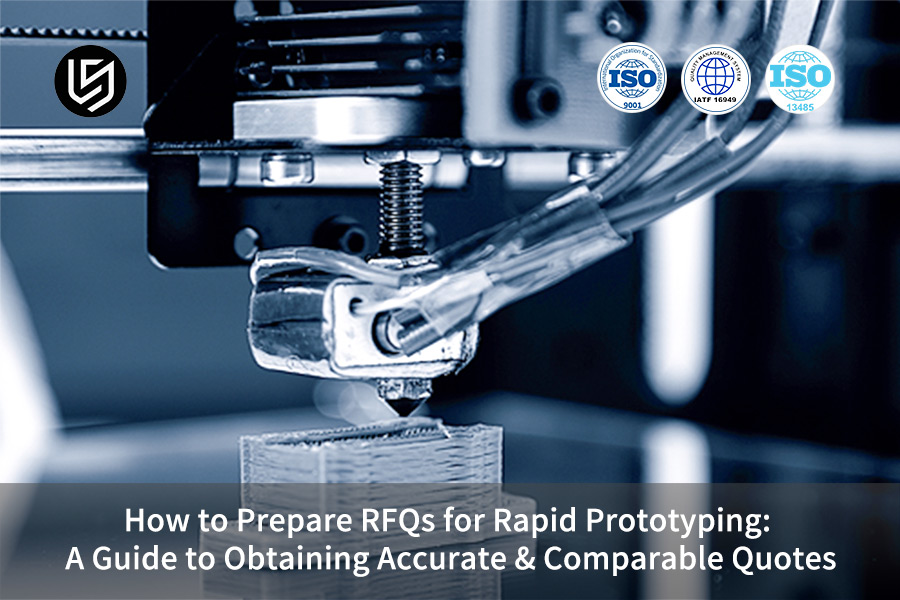
How To Prepare RFQs For Rapid Prototyping: A Supplier's Guide
| Key Element | Supplier Guidance for an Accurate Quote |
| Define the Prototype's Primary Goal | Define whether this part is for visual fit, functional rapid prototype testing, or form & fit. |
| Provide Complete, Controlled Documentation | Always include a latest revision available 3D CAD file (STEP/IGES) and a PDF drawing with all critical dimensions and tolerances clearly called out. |
| Specify Material & Quantity Precisely | Specifically indicate the material grade (e.g., Al 6061-T6, ABS) and quantity required for this batch, as this will directly affect the recommended process. |
| Outline Post-Processing & Finishing Needs | Specify all secondary needs: machining allowances, surface finish (e.g., Ra 3.2), color, texture, painting, or required certifications. |
| Set Realistic Timeline Expectations | Supply your "need-by" date and indicate if this project is time-sensitive. |
| Clarify Budgetary Constraints (Optional but Helpful) | By indicating a target budget range for this project, you can help suppliers suggest a solution that meets your key goals in a cost-effective manner. |
| Request a Recommended Process | Ask your supplier to suggest and support a manufacturing process (e.g., CNC, SLS, SLA), based on your requirements, as they are experts in their field. |
| Facilitate Design for Manufacture (DFM) Feedback | Encourage and be receptive to your supplier’s early feedback on your design for manufacturing, as this step is beneficial in optimizing your rapid prototyping design for cost, speed, and manufacturing ease. |
Our solution for your problem of obtaining accurate, comparable, and timely quotes for your prototypes is to assist you in providing thorough and unambiguous requirements for your project, allowing for precise process recommendations and proactive DFM feedback, thereby facilitating your procurement process and speeding up your way to successful prototypes and validation of your requirements.
Why Trust This Guide? Practical Experience From LS Manufacturing Experts
Out of all the articles written so far on the topic of rapid prototyping RFQs, this article is unique because we are not theorists; we are pragmatists who work in the real world where ambiguous RFQs can cause delays and failed prototypes. In the real world, the development of an accurate quote is an essential skill set we've learned through successfully designing and building working prototypes for critical testing in autonomous vehicles, medical devices, and robotics. We understand the quality of the question determines the quality of the response.
Our approach is based on our real-world experience in rapid prototyping. We understand the need for precision in a quote requires precision in the specifications. We achieve this through distilling our thoughts and intentions into clear statements. Our approach has exhaustively considered all the relevant specifications from well-established authorities such as the Aluminium Association (AAC) for the properties of materials and quotes from well-respected sources such as the NIST Materials Data to ensure we all start from the same place.
All this advice is gained from learning from experience. We have learned from observing the benefits gained by proper organization of your RFQ documentation, with well-stated assumptions, to remove guesswork and reduce cost premiums associated with uncertainty. We are sharing this learned, non-theoretical knowledge with you to help you avoid making the same mistakes we have learned from. The methodology we are sharing with you is the way we use to develop manufacturable prototypes with predictable results and costs.
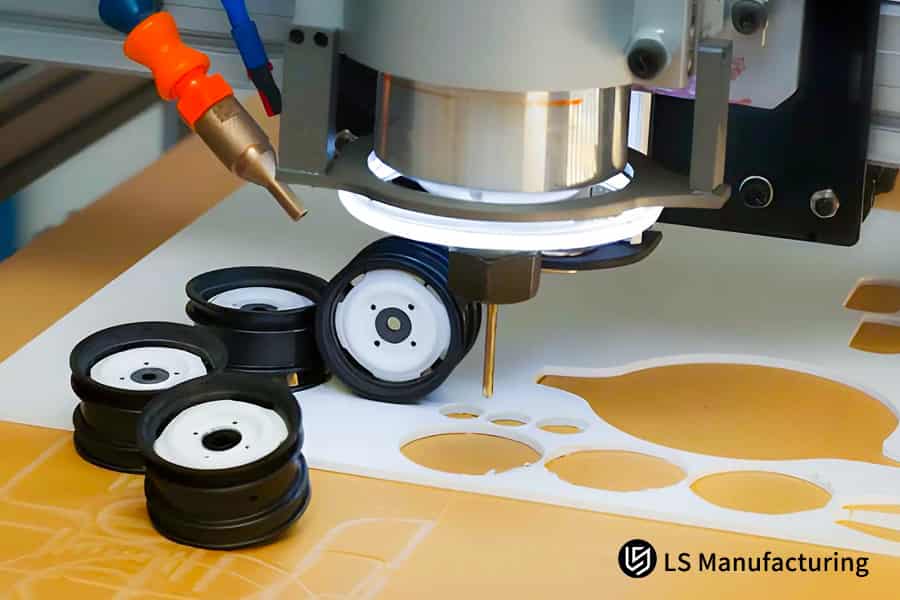
Figure 1: Preparing RFQ for plastic prototype parts to compare quotes and specifications in prototyping services.
What Core Modules Should An RFQ (Request For Quotation) That Drives Accurate Pricing Include?
Vagueness in RFQs will cause incorrect pricing and lead times in quotes. The following section will discuss how to structure this documentation to ensure total technical clarity, thereby eliminating the fundamental issue of scope ambiguity within RFQs to suppliers. This will allow us to develop comparable, optimized rapid prototyping quotes using total technical and commercial clarity, which will determine the fundamental definition of what constitutes a superior RFQ documentation structure:
Defining the 'Why': The Strategic Project Brief
The first module of the RFQ process involves developing a validation goal, which is more than just defining the "what" of the part in question. For example, "validate integrity of seal at 10,000 dynamic cycles and -40°C." This statement defines exactly how the supplier will select materials, processes, and validation strategy. The fields we have organized demand this level of definition, which will be the fundamental starting point to define exactly how to prepare an RFQ for prototyping, which will provide us with useful data and ensure total alignment on the primary technical risk.
Focusing Engineering Intent with Data Discipline
We need revision control of 3D/2D data, and this is accomplished with the Key Characteristics and Tolerances list. This means defining 5 to 10 key dimensions for function with stated consequence of failure. This allows the supplier to apply metrology and process control resources at the exact time of rapid prototyping, where costs are related to actual complexity. This is the key element of an effective rapid prototyping RFQ.
Enabling Economical Feasibility in the Solution Space
The RFQ must be defined in performance parameters instead of providing the supplier with the option of providing a "single solution." "Material with UL94 V-0 rating" and providing alternatives enables value engineering. Defining the requirement in the RFQ as "CNC for final validation, open to MJF for rapid prototyping initial fits" enables the supplier to use the most economical path. This is particularly relevant in rapid prototyping services and fundamentally changes the way the RFQ is used, changing the process into a dialogue instead of the traditional bid process.
This process helps to advance RFQ beyond its administrative role to an important technical alignment process, thus becoming a hallmark of partnership. This process pre-solves the problem of budget and schedule overruns, as this process has been proven to be executable. This process results in an accurate, competitive, and executable approach to success, ensuring optimal value and integrity are delivered from the quotation phase onwards.
How Do I Define A Prototype "Success Criterion" To Obtain A Feature-Driven Quote?
It is quite possible to design and build a functional prototype, which meets all the dimensional requirements, but still fails functionally, or to design and build a functional prototype, which meets all the requirements, but still fails dimensionally, thereby leading to budget and schedule overruns. This document is concerned with the critical question of how to effectively translate design intent into quantified 'success standards' which challenge the supplier to provide the solution which guarantees functional validity rather than geometrical conformity:
Translating Design Goals into Testable Metrics
- Assembly & Interface Validation: Requirements that involve mating parts and/or measurable limits, e.g., "Hand Assembly Force < 20N" – to inform tolerancing.
- Functional Performance Criteria: Requirements for explicit, quantified functional requirements definition, e.g., "5,000 actuation cycles @ 25°C" – to inform material selection for durability.
- Environmental & Operational Limits: Requirements that involve definition, e.g., "48 hour soak @ 95% RH" – to inform material selection beyond standard grades for a functional prototype.
Specifying Tolerances that Matter for Function
- Key Characteristics: The key characteristics are identified in the prototype design specifications, e.g., "Bore Diameter ±0.03mm for Seal."
- Surface Finish for Purpose: The surface finish is identified by function, e.g., "Grip Area Ra 3.2μm" – to inform surface finish in the rapid prototyping process.
Driving a Value-Based Manufacturing Response
- Material & Process Selection: There are specific criteria in place to allow for optimal solutions (i.e., using PA12 instead of PLA based on impact requirements).
- Cost vs Capability Alignment: This is to allow quotes based on levels of validation (basic fit check vs functional rapid prototyping).
This is the embodiment of RFQ as validation document rather than wish list, demonstrating our expertise in application engineering. This is to have a conversation based on capability rather than price alone. This is because our clients can be considered sophisticated buyers of certainty rather than just buyers of parts. This is due to their ability to understand the correlation between functional requirements definition and solutions provided in the rapid prototyping phase.
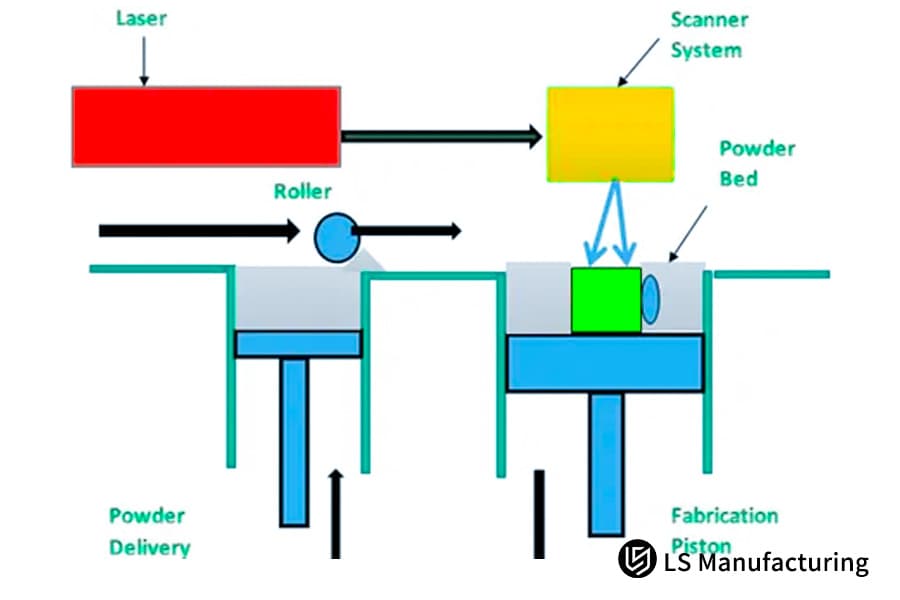
Figure 2: Preparing high-resolution metal powder specifications for accurate aerospace and automotive RFQs.
Which Design Document Details Are Key To Eliminating Ambiguity In The Quotation?
Ambiguous design files lead to costly supplier interpretation, resulting in variance from quotes and manufacturability issues. This document outlines the key aspects of the design file that remove the ambiguity from the design. Adhering to these engineering drawing best practices is fundamental to get accurate prototype quote:
| Critical Detail Area | Implementation for Clarity (One-Sentence Guideline) |
| Datum Reference Frame | Clearly define and label primary (A), secondary (B), and tertiary (C) datums as the reference point for all dimensions and geometric tolerances. |
| Surface Finish & Texture | Utilize standardized ASME/ISO symbols for surface finish and texture, avoiding subjective terms like "smooth finish." |
| Tolerance Classification | Classify all dimensions as "CRITICAL (±0.05mm)" if function-critical or "STANDARD (±0.25mm)" if not critical. |
| Version Control | To ensure all parties are utilizing the correct version of the drawing, include a revision block within the title block of the drawing. |
| Impact on Process | The data provided to the supplier will help them optimize the parameters of the machine and choose the correct rapid prototyping technologies. |
| Proactive Clarification | We do not view the review of these specifications as part of the process, but rather view this process as value-added to help de-risk your rapid prototyping project. |
Our process solves the problem of variance in quotations at its very essence by eliminating ambiguity and replacing it with clear, standardized messaging. This is accomplished by including a drawing review prior to the sourcing process, ensuring every prototype quote is exact and comparable. This is an important process, especially for complex projects, to ensure predictability of budgets and timelines from the very beginning of your functional rapid prototyping process.
How To Manage Supplier Risk Expectations Through The "Assumptions And Constraints" Statement?
This is because quotes are based on unknowns and therefore have a built-in risk premium. As a result, costs can explode, and changes can be necessary. The following document is intended to illustrate how clearly defining assumptions and constraints in the RFQ process can provide an exact quote and create a collaborative partnership based on addressing the very essence of the problem:
Declaring Design Maturity to Guide Process Selection
Clearly defining the stage of design maturity, e.g., "Design is 80% mature; one revision post-fit-check is anticipated," is a key part of managing supplier expectations and can allow the supplier to offer flexible processes such as urethane casting and fixturing of CNC machines instead of hard tooling solutions, which can be costly. This can allow the conversation to shift from price to rapid prototyping solution, optimizing the process for the iterative prototyping phase.
Defining Intellectual Property & Communication Protocols
Clearly define the requirements for IP considerations, e.g., "Proprietary design; NDA required prior to data release." Clearly define communication protocols, e.g., "Technical clarifications via scheduled conference call." Clearly defining RFQ best practices for IP and communication protocols, it is easier to work with the supplier and establish trust with them in order to efficiently communicate and have a more professional approach towards the rapid prototyping project.
Specifying Evaluation Criteria to Shape Quote Substance
Publishing the decision matrix, e.g., "Evaluation Weighting: Technical Solution 50%, Total Cost 30%, Lead Time 20%." This makes their answer not only a price quote but a value proposition. It also makes them explain how they manufacture and what materials they use, which is in direct alignment with what is most important to us for our rapid prototyping.
Our well-defined "Assumptions & Constraints" statement takes this RFQ from being just another tool in our tool box to being one of our key tools in ensuring project alignment. It is the essence of advanced program management in pro-actively addressing ambiguity in price. We utilize this as part of our client's RFQ methodology to ensure an economically rational response that is technically correct and meets risk criteria in an engineering collaborative relationship.
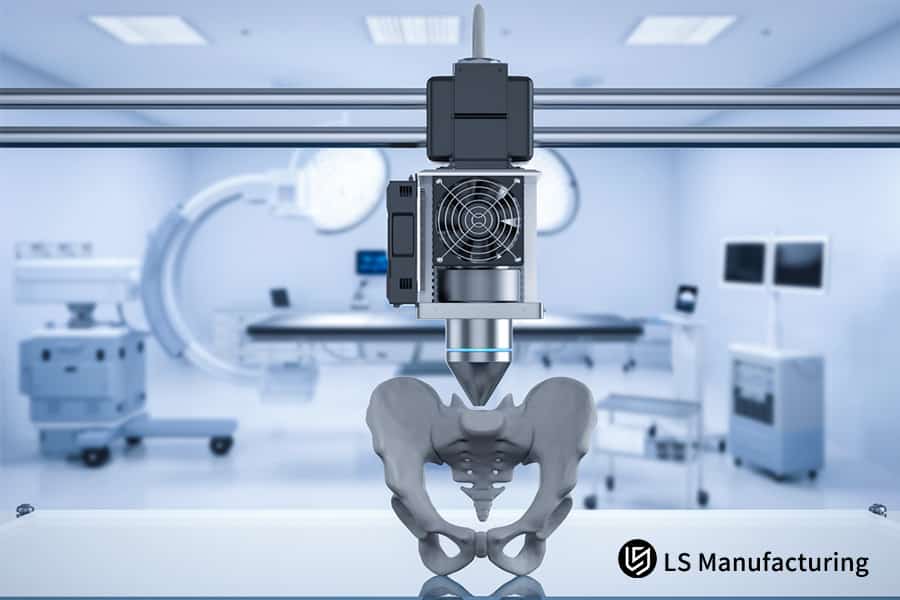
Figure 3: Creating a high-precision resin pelvic model to prepare detailed RFQs for surgical prototyping services.
LS Manufacturing (Consumer Electronics Industry): TWS Earphone Charging Case Multi-Round Iterative RFQ Optimization Project
The costs were spiraling out of control, and there were issues with procuring five iterations of the design for the TWS charging case, as the RFQs were too vague to compare prices. This LS Manufacturing consumer electronics case demonstrates how changing the way to request these iterations has enabled us to offer more predictability and cost-effectiveness to the client, replacing the traditional "fast and cheap" with a more structured and phased approach.
Client Challenge
The client had to procure five iterations of the compact TWS charging case, designed with PC + ABS materials. The RFQ had been issued with only the STEP file and the requirements to be made "fast and cheap." This had resulted in 300% cost variance between the quotations, with no idea of the process or any support for the revision, creating uncertainty on the project, which is one of the most common mistakes with the iterative prototyping RFQ approaches.
LS Manufacturing Solution
We created a new iterative prototyping RFQ template for the client. This template included all the validation objectives for each round of iteration, e.g., R1 for parting line assemblies and R5 for surface finish. We locked in key materials like PC + ABS and key processes like CNC and painting to ensure cost stability. Perhaps one of the biggest innovations was creating a 24-hour turnkey quote process for Engineering Change Notices (ECNs) between rounds of iteration. This created a rapid prototyping streamlined process.
Results and Value
As a result of this process, we were able to provide the client with three comparable and in-depth quotes by the end of the second iteration within 48 hours. Furthermore, we were able to decrease the cost of the entire project by 25% and deliver it 40% faster compared to the initial chaotic model. In fact, the client commented that we had "transformed prototype development from an art into a science, validating the complex assemblies rapid prototyping by disciplined process management."
This is an example of how we work with our clients to de-risk complex development through an engineering-centric approach. We are able to de-risk fundamental programmatic risks such as unpredictable costing and scheduling through the deployment of structured and transparent sourcing solutions. This is how LS Manufacturing is able to position itself as a rapid prototyping partner to manage high-iteration and high-stakes projects in consumer electronics and other industries, not only to deliver parts but to deliver certainty.
Tired of chaotic quotes for iterative prototypes? Let us help you structure your RFQ for clear, comparable bids and predictable outcomes.

How To Scientifically Compare Multiple Quotes ("Apple To Apple")?
It is a huge mistake in sourcing to only look at overall bottom-line figures. This document provides a structured approach to transform supplier quotes into an insightful analysis for evaluation of comparable manufacturing quotes. The key benefits lie in providing an "apples-to-apples" evaluation of key areas of importance to assess true value, risk, and technical alignment:
Specification Deconstruction for True Equivalence
- Process & Material Mapping: Audit of proposed methodologies (SLA rapid prototyping, CNC, casting) against part functionality and future production intent.
- Material Traceability: Mandatory requirement for manufacturer and grade specification to ensure no performance compromise in prototype quote comparison.
- Technical Decision Matrix: Providing a clear trade-off of the commercial and financial impact of each option.
Transparent Cost Driver Analysis
- Itemized Cost Breakdown: Mandatory requirement and provision of explicit breakdown of costs of materials, programming, machine time, etc., to highlight areas of value.
- Scenario-Based Cost Engineering: Using the breakdown to model the financial effect of design changes, allowing for supplier bid analysis.
- Value-Add Justification: Quantifying costs of essential services such as CNC rapid prototyping DFM feedback to avoid future costs.
Critical Path Timeline Mapping
- End-to-End Schedule Audit: Instead of just providing costs for machine time, we’re including all aspects of critical path activities, such as procurement, production, inspection, shipping, etc.
- Proactive Risk Mitigation: On bridge tooling projects, identifying long-lead items early to mitigate risk to the project timeline.
Quantified Quality & Compliance Deliverables
- First Article Inspection (FAIR) as Standard: Providing a detailed conformity report to the part drawing as a non-negotiable requirement.
- Standards-Based Framework: The inclusion of a detailed specification with regard to inspection methodology and the adherence to geometric tolerancing standards (e.g., ASME Y14.5) for objective quality measurement.
The audit trail outlined above extends beyond the norm of any procurement process with the development of a detailed audit trail from both a commercial and technical perspective. The depth of information with regard to costing, critical path analysis, and quantified quality measurements creates a powerful decision-making tool for clients, thereby allowing them to mitigate risks with the selection of a partner based on their ability and precise alignment with the technical requirements of the client’s project.
How To Assess A Supplier's Engineering Rigor And Potential For Collaboration Based On Their Quotation Response?
The quotation response from the supplier is the first deliverable from the supplier and is an important window into the supplier's capability. This framework enables a systematic engineering assessment from quote responses, moving beyond the price and including the approach to problem-solving and the proactive approach to risk mitigation during the rapid prototyping services phase.
| Evaluation Dimension | Key Indicator in Quotation Response |
| Quality of Clarifying Questions | Is the supplier answering design-related questions in its response, or is it providing the DFM suggestion in its response? |
| Provision of Comparative Options | Is the supplier’s response providing active options for the design of the product? In other words, is the supplier’s response providing a comparative option for the design of the product using CNC and SLA rapid prototyping technology? |
| Transparency in Risk Identification | Is the supplier’s response transparent with regard to design risks and providing solutions for mitigating design risks for rapid prototyping technology? |
This framework allows for quotation review as a strategic technical audit. It identifies partners that prevent failure and de-risk projects through the power of engineering dialogue. It offers a definitive comparative manufacturing quotes tool for selecting the ideal partner according to the demonstration of technical rigor in intricate bridge tooling and development scenarios.
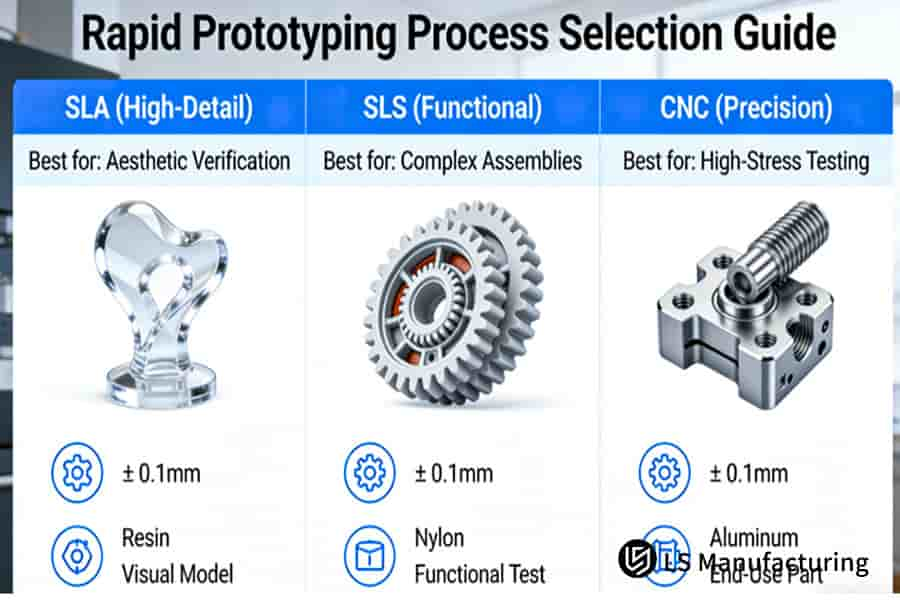
Figure 4: Compare rapid prototyping services processes SLA, SLS, and CNC to prepare accurate RFQs for medical and automotive projects.
Why Does Using A Structured RFQ Process And Selecting LS Manufacturing Maximize The Return On Investment For Prototyping?
A structured RFQ process fundamentally shifts how you approach prototyping as a business from a traditional purchase approach to a value-oriented engineering sub-project approach. LS Manufacturing provides the opportunity for decades of technical expertise to be injected into your workflow in the most effective way possible. The value proposition is the systematic approach to maximize the prototyping ROI efforts by making supplier implicit knowledge explicit knowledge:
Institutionalizing Expert Judgment: From Tacit Knowledge to Explicit Process
We're able to encode complex manufacturing knowledge like form via SLA rapid prototyping or function via CNC milling directly into our RFQ templates and checklists. This gives your team a framework to define requirements so that all relevant technical and commercial aspects are well understood at the outset. This ensures that we're providing consistent and high-quality inputs to produce fully comparable manufacturing quotes from the very beginning.
Enabling Data-Driven Decisions: Creating Certainty at Each Gate
Our structured RFQ process is designed to require transparent and itemized quotes and analysis. This gives us clear "go/no-go" criteria with associated data on cost, schedule, and technical feasibility to potentially avoid costly rework or schedule slippage. This is especially important when dealing with complex projects that may require bridge tooling and/or multiple material variations.
Building a Repeatable Competitive Asset: The Long-Term Advantage
One successful engagement establishes a new standard. The evolved specifications, communication techniques, and trust that are established in the LS relationship are now SOPs for all future external development projects with your team. This is a perpetual and accelerating impact on procurement efficiencies and success rates, creating a strategic return on investment in answering the question of why choose LS Manufacturing? beyond the costs of the project itself.
This methodology establishes a winning strategy in critical development projects. It establishes a return on investment in that it systematically removes technical uncertainty and establishes an institutional advantage in vendor management and project execution, assuring that your investment in a prototyping project yields not only a successful part but also a successful team.
FAQs
1. How long does it typically take to receive a detailed quote after submitting an RFQ?
Once we have this complete and structured RFQ, we promise to provide you with a quote within 4 hours, which includes process analysis, cost, and delivery schedule. However, this duration may extend up to 8 hours in cases of complex assembly.
2. How much quantity forecast should be included in the RFQ?
It is suggested that you provide us with the most realistic forecast possible, which includes your current batch sizes and forecasted requirement over the next 3-6 months. This can help us determine the cheapest method (using molds), which can lower your unit price.
3. How is the security of design documents in the RFQ protected?
We can agree to a legally binding NDA before the commencement of the project. The documents can be sent through encrypted channels and stored on our server. Watermarks can also be added to your designs.
4. What is the process if the design needs to be modified after receiving a quote?
Any modifications to the design shall be made through an appropriate Engineering Change Notice. Please send us the modified drawings along with your description of the modifications.
5. What is the Minimum Order Quantity (MOQ)? How does the price change with quantity?
Yes, we do support single-piece prototyping. Generally, the cost of a part decreases non-linearly with an increase in order quantity. It is requested that you provide us with the quantity range in your RFQ. Then we would be able to provide you with a curve showing how the cost varies with quantity.
6. Does the quotation include taxes, shipping, and inspection fees?
Yes, we have a very transparent pricing policy. Quotations to local customers would be given on an EXW basis, excluding tax. It would clearly mention all the costs. For international customers, a detailed description of various pricing conditions would be included in the quotation. FAIR charges would be included as part of the standard cost.
7. How do I start my first RFQ? Are there templates?
You may also contact us to arrange a time to visit our "Get a Quote" webpage at www.lsmfg.com, which will walk you through an online RFQ process based on the suggested format. Additionally, your account manager can arrange to send you a template document outlining a written RFQ process.
8. Can you provide Design for Manufacturability (DFM) feedback in addition to a quotation?
Yes. As part of our standard service offering, a free written DFM report will be included at the time of, or prior to, submitting a quote on your project.
Summary
The process of accurately procuring a quote for a rapid prototyping service is a rigorous engineering discipline, completed as a standardized RFQ process. At its heart, this process involves converting ambiguous requirements into a standardized language, which can be clearly understood throughout the entire supply chain process. The secret to mastering this process is converting this ability into a potent force used to propel forward in the business world, understanding how to lead a true RFQ process, differentiating true experts from incomparable quotes, where every penny in a budget works for you to identify a true partner.
If you want to avoid the guessing game and confusion in the next prototyping RFQ process, order "LS Manufacturing Rapid Prototyping Structured RFQ Self-Checklist and Supplier Response Evaluation Matrix" today! This tool will help you systematize the process and scientifically evaluate quotes.
Stop receiving incomparable quotes. Let us guide you in preparing a structured RFQ to secure accurate and actionable proposals.
📞Tel: +86 185 6675 9667
📧Email: info@lsrpf.com
🌐Website: https://lsrpf.com/
Disclaimer
The contents of this page are for informational purposes only. LS Manufacturing services There are no representations or warranties, express or implied, as to the accuracy, completeness or validity of the information. It should not be inferred that a third-party supplier or manufacturer will provide performance parameters, geometric tolerances, specific design characteristics, material quality and type or workmanship through the LS Manufacturing network. It's the buyer's responsibility. Require parts quotation Identify specific requirements for these sections.Please contact us for more information.
LS Manufacturing Team
LS Manufacturing is an industry-leading company. Focus on custom manufacturing solutions. We have over 20 years of experience with over 5,000 customers, and we focus on high precision CNC machining, Sheet metal manufacturing, 3D printing, Injection molding. Metal stamping,and other one-stop manufacturing services.
Our factory is equipped with over 100 state-of-the-art 5-axis machining centers, ISO 9001:2015 certified. We provide fast, efficient and high-quality manufacturing solutions to customers in more than 150 countries around the world. Whether it is small volume production or large-scale customization, we can meet your needs with the fastest delivery within 24 hours. choose LS Manufacturing. This means selection efficiency, quality and professionalism.
To learn more, visit our website:www.lsrpf.com.