日本語
日本語 



カスタム ビジョン ハウジングのレーザー切断欠陥を排除するには、大きなパラメータを変更するだけでなく、プロセスのミクロレベルで非常に細かい制御を行うことも必要です。たとえば、材料制御内で最も厳密なレーザー焦点 (負の焦点距離 -1.8 mm ~ -2.2 mm) と、純度 (18 Bar 以上) の高圧窒素ガス (99.999% 以上) を効果的に使用すると、デューティ サイクル 35% 以下のパルス波形変調でうまく機能し、マイクロクラックと側壁のドロスを完全に除去し、HAZ 深さを 0.05 未満に制御できます。 mmにより、光学センサーの位置合わせに対するミリメートル未満の精度要件を満たします。
カスタム ビジョン ハウジングの側壁の微小亀裂や粘着性のドロスは、レーザー切断でよく発生します。これらの欠陥により、ハウジングの正確な位置合わせが妨げられるため、購入者はこのような理由だけでこのような OEM レーザー切断 サプライヤーを拒否することがよくあります。光学センサー。利用可能なソリューションは主にマクロレベルでの焦点距離、ガス圧力、速度の調整に依存していますが、高周波パルス変調パラメータ、高反射材料の動的補償、 切断カーフガスの流体力学などの根本原因は無視されています。この記事では、LS Manufacturing の処理データを利用して、定量化可能なプロセス制御基準の設定に加えて、波形変調、高圧窒素流場の最適化、オンライン マシン ビジョン モニタリングのための非常に実用的な方法を紹介します。
レーザー切断の欠陥の排除: コア テクノロジーの概要
<本体>重要な結論
- 錫除去の重要なポイント: 短い焦点距離と≧18Barの高純度窒素を使用して、こびりついた高粘度の溶融アルミニウムを突然吹き飛ばします。つまり、側壁の錫堆積物が除去されます。
- 熱変形の防止: パルスマイクロ接続とポイントバイポイント断続切断の組み合わせにより、熱影響を受けるゾーンの深さを 0.05 mm に制限できます。
- クローズドループの品質管理: リアルタイムのオンライン カメラが異常な切断火花を 50 ミリ秒未満で検出し、パラメータを自動的に調整して欠陥のあるバッチの生産を防ぎます。
LS Manufacturing のバリなしレーザー切断サービスによって保証される切断品質を信頼できる理由
大手自動運転ティア 1 サプライヤー向けの ADAS カメラ ハウジングの量産プロジェクトから得た運用知識を活用したところ、理論上のパラメーターと実際の量産とのギャップは、単なる焦点と空気圧の調整よりもはるかに複雑であり、3,000 個を超えるバッチの安定性が最も重要なポイントであることがわかりました。バリのないレーザー切断サービスの信頼性は、データのクローズドループから生まれます。
ベースISO 9013:2018 熱切断、分類および寸法公差、精密レーザー切断は次のように定義されます: 輪郭公差 ≤0.1mm、HAZ 深さは対応する厚さグレード制限内でなければなりません。
すべての重要なパラメータ(焦点位置、気圧、パルスデューティサイクル、切断速度) をデジタル化し、装置システムに結び付け、この基準が達成されることを保証します。そうすれば、誰でも同じプログラムを使用して同じ品質を得ることができます。 3 か月の量産期間中、5,000 個を超える AL6061 ハウジングに対して破壊的金属組織検査を実施しましたが、 その中でHAZ 深さは継続的に 0.025 ~ 0.035 mm の範囲内であり、顧客の最大制限である 0.05 mm よりもはるかに小さいことがわかりました。
当社では、製品にバリがないことを口頭で保証するだけでなく、到着後すぐに手戻りなしで次の工程に移れるという自信を提供します。
データ主導の安定性は、欠陥ゼロの納品の基礎です。 当社のアプリケーション エンジニアに直接お問い合わせいただき、無料の量産コスト計算をご利用ください。1 営業日以内に歩留まりと納期を含む評価レポートを受け取ります。

カスタム ビジョン ハウジングのレーザー切断欠陥を排除するために負の焦点位置が不可欠である理由
アルミニウム合金ビジュアル ケーシング上のスラグの蓄積を除去するには、レーザー焦点を板金の内側またはその下面(負の焦点距離 -1.8 mm ~ -2.2 mm)に配置し、切断底部の溶融池を広げ、高圧空気流を使用してスラグのない排出を実現する必要があります。レーザー切断の欠陥を排除する核心は、切断の形状を変更することにあります。
逆 V 字型切り溝のスラグ除去ロジック
レーザーレーザービームが負の焦点距離に設定されている場合、カーフは上部が狭く、下部が広い逆 V 字型になります。このような形状は、高速レーザー切断システムのエネルギー分布を決定する鍵となります。
これは、カスタム ビジョン ハウジングの製造プロセスで特に必要です。薄ゲージのレーザー切断操作は負の焦点距離に非常に敏感であり、 0.3 mm を超える偏差があるとスラグが発生する可能性があります。
ガス力学と表面張力のブレークスルー
よりクリーンな切断プロセスを追求するために、チームはレーザー切断と超音速ガス噴射を組み合わせた高度なソリューションを考案し、アルミニウムの側壁の蓄積を防ぎました。特に、純度 99.999% の窒素を高圧レベル (≧18 Bar) で使用しました。 高度なレーザー切断技術の中核は流れ場の制御にあります:
レーザー切断ドロ除去の有効性は、気流の安定性に直接影響されます。 私たちは、300 セットを超える直交実験を使用して、負の焦点距離と気圧の関係を特定しました。この結果は、産業用レーザー切断装置パラメータのデータベースに追加されました。
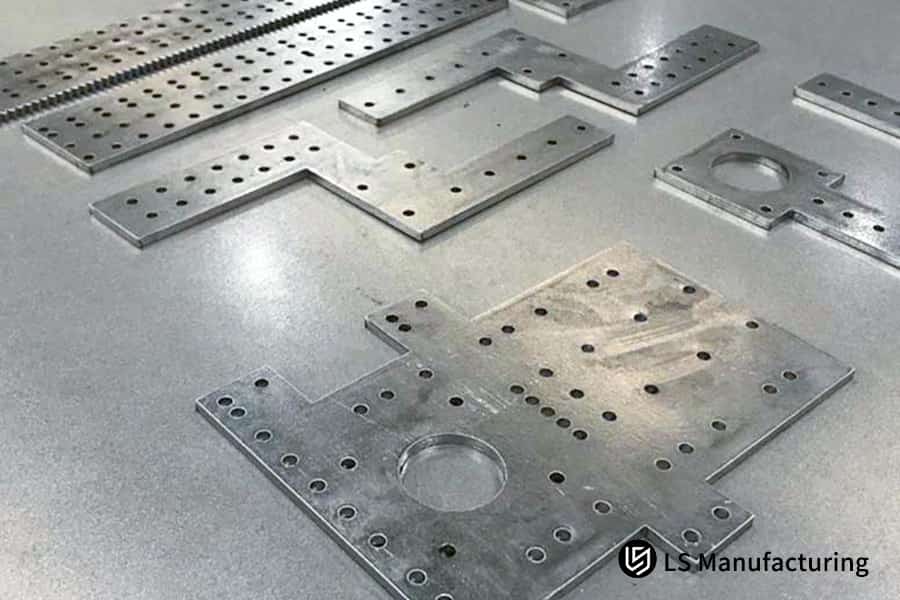
図 1: 工業用表面上の精密穴あき金属プレートとブラケット。
薄肉ハウジングの熱影響部の歪みを避けるためのマイクロパルスレーザー切断サービスの選び方
薄肉ハウジングの熱変形を防ぐには、一般に高周波変調パルス レーザー (デューティ サイクル ≤ 35%) を使用して、少量の熱のみが導入されるようにします。 精密レーザー カット ハウジング サービスは、基本的に入熱を正確に制御することにかかっています。
パルスマルテーション技術の原理
LS Manufacturing では、高周波パルス変調技術 (PWM) を使用してデューティ サイクルとピーク電力を制御し、この方法でマイクロジュールの熱入力レベルを達成しています。 パルス方式によるレーザー切断には、次の 3 つの側面で利点があります。
- レーザーがオンになった直後に起こる気化現象: レーザーがオンになっているとき、ピーク出力はマイクロ秒以内に最大 6kW になります。これは、金属が溶けずにすぐに蒸発するのに十分です。この方法により、伝導による熱変化が大幅に減少します。
- 冷却間隔: 窒素によるフラッシュは、数十マイクロ秒のレーザーオフ時間中に非常に頻繁に行われます。この作用により残留熱が除去され、温度上昇が防止されます。
- イメージしてください: 一定温度に保たれた熱いアイロンで金属全体を加熱するのではなく、非常に熱い針で非常に素早く点を作るようなものです。
マイクロパルス レーザー切断技術は、熱の影響を受けるゾーンを従来の連続波の 10 分の 1 に減らすことができます。
パルスと連続波の比較
テストデータは、パルス処理がいくつかの重要な指標において連続波モードよりも大幅に優れていることを示しています。
| プロセスの寸法 | 主要な技術パラメータ | パフォーマンス | お客様のメリット |
| カスの除去 | 負の焦点距離 (-1.5~-2.5mm) + ≥18Bar 高純度窒素。 | サイドウォールに粘着性のドロスなし、Ra≤1.6μm | 二次研削が不要となり、単体加工コストが 15%~20% 削減されます。 |
| 熱変形制御 | パルスマイクロ接続 + ポイントバイポイント断続切断。 | HAZ 深さ≤0.05mm | センサー取り付け穴の公差 ±0.01mm、組み立てずれゼロ。 |
| クローズドループの品質管理 | 同軸オンライン ビジョン(サンプリング レート ≥1000Hz)。 | 50 ミリ秒以内の動的パラメータ修正 | バッチ欠陥率 <0.1%、到着時に完全な検査は必要ありません。 |
- HAZ 深さ: パルス処理では深さ 0.03 mm に達する可能性がありますが、連続波処理では深さ 0.25 mm しか達成できません。パルス処理の深さは連続波の深さのわずか 12%です。
- エッジの状態: レーザーパルスによりエッジは酸化や黄変しませんが、連続波は深刻な変色を引き起こすため、酸洗いを行う必要があります。
- 穴公差: パルス処理では制御公差を 0.01 mm までとすることができますが、連続波では 0.05 mm しかありません。
レーザー切断サービスを選択するときは、パルス能力に注意を払うことが不可欠です。これはバリのないレーザー切断サービスを実現するための基本であるためです。 高精度レーザー切断ソリューションには、パルス パラメータをプログラムできる機能が含まれている必要があります。
パルス処理では、穴公差 ±0.01 mm で、HAZ を 0.03 mm 以内に制御できます。 完全なデューティ サイクルとピーク電力設定の推奨事項については、AL6061/SUS304 パルス切断パラメータ比較表をダウンロードしてください。無料サンプルをリクエストすることもできます。
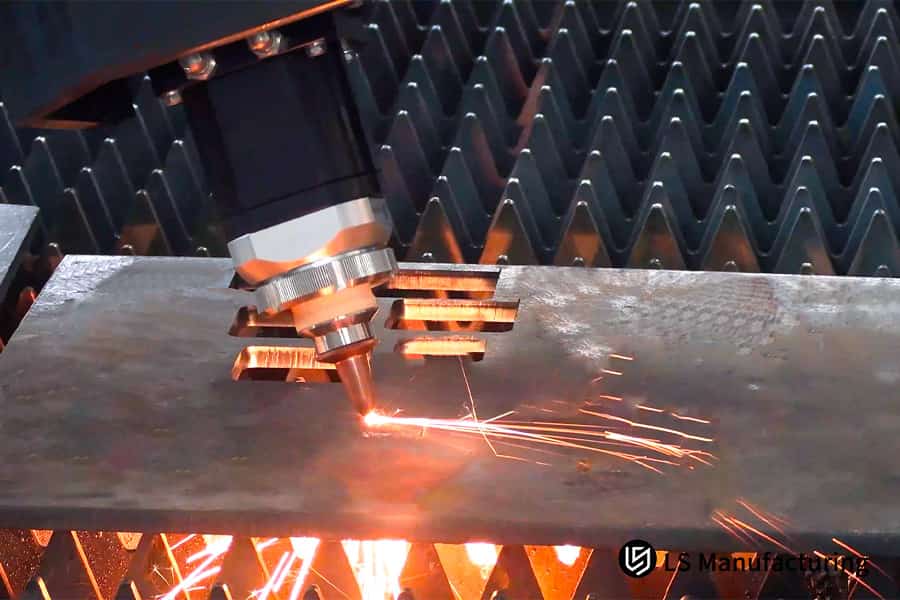
図 2: 火花が飛び散る動作中の CNC レーザー カッター。
信頼できる OEM レーザー切断サプライヤーには、どのようなネスティングおよび傾き防止マイクロジョイント レイアウトが必要ですか?
精密に切断されたピースの傷やノズルの衝突を防ぐには、ブリッジ幅 0.4 mm のアンチチルト マイクロジョイントと動的経路回避アルゴリズムが必要です。 OEM レーザー切断サプライヤーは、間違いを防ぐための高レベルの設計能力を備えている必要があります。
アンチチルトマイクロコネクションの動作原理
小さくて奇妙な形の止まり穴の廃棄物を高圧でレーザー切断すると、廃棄物が反転してレーザー ヘッドの衝突や表面の傷が発生します。自動レーザー切断ラインのマイクロ接続スキームは、歩留まりを決定する大きな部分を占めます。
- 最適なブリッジ幅の確認: 不規則な形状の部品に対する 300 回を超えるテストの結果である 0.4mm のブリッジ幅により、LS Manufacturing のブリッジ幅は標準の 0.3mm のものより 60% 優れています。
- パスの「オーバーカット」戦略: この戦略を採用すると、ほとんどの接続が重要なコーナーで切断され、無駄が傾かないように微細なブリッジ ポイントのみが残されます。
- 傷の深さ: マイクロ接続のないワークピースには最大 0.15 mm の深さの傷が見られましたが、マイクロ接続を使用すると、傷は完全に除去されました。
インテリジェント パスと衝突回避を備えたリザーバー
ノズル衝突検出システムと自動トーチ昇降が処理パスに統合されています。 多軸レーザー切断システムの経路計画では、動的なスクラップの動作を考慮する必要があります。
- レーザー ヘッドを自動的に持ち上げる機構: スクラップの浮き上がりやワークピースの変形が検出された場合、レーザー ヘッドは安全な高さになり、カッティング ヘッドへの衝突による損傷を回避します。
- 静電容量式センサーのリアルタイム観察: 0.05mm の感度でノズルとワーク間の距離の変化を継続的に検出し、設定値からの偏差がある場合は即座に経路調整を開始します。
- レーザー ヘッドの持ち上げ経路の完全な計画: レーザー ヘッドは部品間の空の移動経路全体にわたって持ち上げられた状態を維持するため、すでに加工された精密表面との偶発的な接触を回避します。
これらの実装のおかげで、当社は高効率で精密なレーザー切断ハウジング サービスを提供するだけでなく、傷や衝突痕などのレーザー切断欠陥を根本的に排除することも約束します。
99.999% の窒素純度と最適なノズル流体力学がバリのないレーザー切断サービスを提供する理由
バリのない高品質の結果を生み出すには、二層濃縮ノズルから供給される非常に純粋な窒素ガス (99.999%) を使用する必要があります。これは酸素が入り込まず、 非常に均一なダウンフロー場を生成するためです。 バリのないレーザー切断サービスを実現するために基本的に必要なのは、ガス純度と流れ場の制御です。
窒素純度が切断品質に与える影響
窒素純度が 99.5% 未満の場合、少量の酸素が残り、 アルミニウム合金やステンレス鋼のエッジに酸化層の形成の原因になります。レーザー切断パラメータの中で、ガス純度が主にエッジの品質に影響します。
| 処理モード | 平均入熱 (J/mm) | HAZ 深さ (mm) | エッジの状態 | 穴の公差 (mm) |
| 連続波 (CW) | 15.2 | 0.25 | 重度の黄ばみ | ±0.05 |
| パルス変調 (PWM) | 4.8 | 0.03 | 銀白色、無酸化 | ±0.01 |
ノーズのデザインと流れの均一性
LS Manufacturing では、構造的にエアフローの安定性を保証するために、赤銅製のダイレクトドライブ二層赤銅ノズルを採用しています。レーザーによる切断の表面品質は同軸ノズルの設計に直接依存します:
レーザー切断ドロ除去には高純度窒素の使用が必要ですが、これがなければ、高品質のレーザー切断サービスの出力を達成することはほとんど不可能です。
窒素純度によって切断面が酸化して黒くなるかどうかが決まり、ノズルの設計によって切断面の滑らかさが決まります。 CAD 図面をアップロードすると、当社のエンジニアが無料のガス マッチング ソリューションと DFM 最適化の提案を提供します。
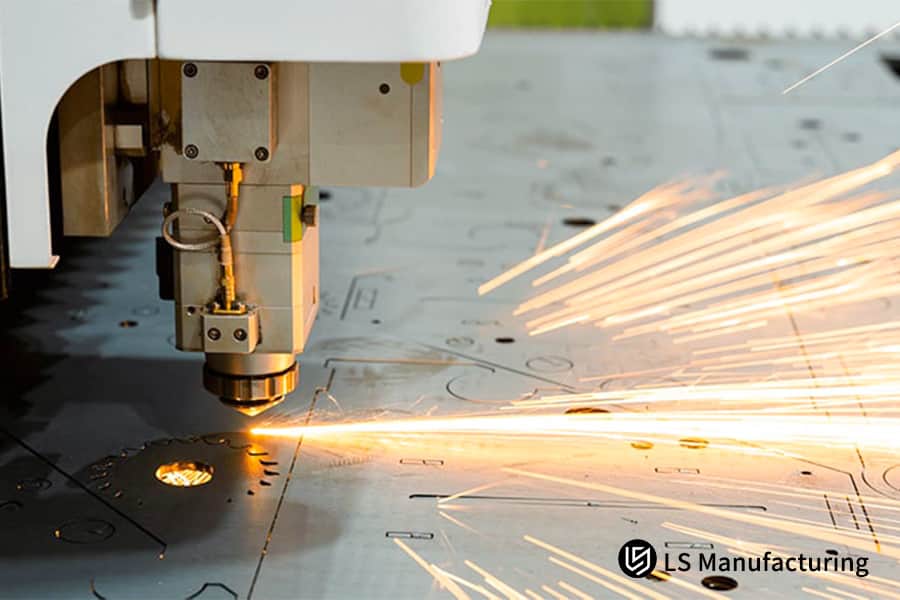
図 3: 冷却ノズルを備えたレーザー切断ヘッドの拡大図。
同軸リアルタイム インライン ビジョン モニタリングは、B2B 調達におけるレーザー切断の品質管理をどのように強化しますか?
量産品質管理では、切断異常を瞬時に捕捉し、 加工パラメータを修正するための同軸リアルタイムオンラインビジョンモニタリングシステムを装備する必要があります。これにより、レーザー切断の品質管理が、製造後のサンプリングから工程内管理に変わります。
リアルタイム監視と AI 異常認識
LS Manufacturing は、同軸高速カメラと AI アルゴリズムを高出力ファイバー レーザー ヘッドに組み込んでおり、 これによりミリ秒レベルの異常捕捉に達しています。
- マルチモーダル信号取得: システムは、1000 Hz のサンプリング速度でレーザー溶融池の IR 放射とスパーク ジェット パターンを検出でき、この方法で 1 秒あたり 1000 を超える一連の特徴データを生成します。
- AI 異常検出: スパーク ジェットの角度変化が 5 度を超える場合、溶融池面積が 15% 以上突然変化する場合、または赤外線スペクトルの偏差が事前に設定された制限を超える場合、AI は 5 ミリ秒以内に判断を下します。
- 一般的な誤報率: システムの誤報率は、120,000 時間の生産ライン データでトレーニングされた後では 0.3% 未満です。
これは、大量の注文を扱う OEM レーザー切断サプライヤーにとって非常に重要です。また、リアルタイムのレーザー切断モニタリングは、大量のデータを収集してプロセスを最適化する優れた方法
です。クローズドループ補正とデータトレーサビリティ
AI が異常を検出すると、システムは 50 ミリ秒未満で閉ループ修正を実行し、同時に完全に文書化されたトレーサビリティ記録を作成できます。
- 自動パラメータ修正: 異常の種類に応じて、システムは適切な修正戦略を選択します。圧力が変化した場合は送り速度を調整し、ノズルの詰まりがある場合は一時停止アラームを発行し、焦点がドリフトした場合は Z 軸の位置を補正します。
- デジタル品質ダッシュボード: 溶融池曲線、パラメータ ログ、修正記録を含む、各バッチの完全な品質プロファイルを作成します。このようなプロファイルには、効率的な検索のためにインデックスが付けられます。
- 自動車グレードのトレーサビリティ: データ形式はIATF 16949 監査要件に従っており、SPC 管理図として簡単にエクスポートできます。
With highly customized products, like custom vision housing fabrication, this system may be instrumental in getting rid of scrap risk.
Fiber vs. CO2 Lasers: Which is the Best Precision Laser Cut Housing Service for AL6061 and SUS304 Materials?
For visual housings made of AL6061 aluminum alloy and SUS304 stainless steel, a fiber laser at the wavelength of 1.06 micrometers is better than a traditional CO2 laser for speed and edge steepness. Fiber lasers should be the first option for precision laser cut housing service.
The Crucial Influence of Wavelength and Absorption Rate
Fiber lasers of high power that use beam shaping technology have an inherent advantage with absorption rate. Wavelength absorption in laser cutting determines processing costs:
<オル>Key Performance Indicator Comparison
Horizontal data comparison shows that fiber lasers are comprehensively superior in the thin-plate processing field. The advantage of fiber laser cutting speed is particularly prominent in the thin-plate field:
| 窒素純度 | 残留酸素濃度 (ppm) | 切断面の色 | 二次スラグ硬度 (HV) | 後処理が必要です |
| 99.5% | 5000 | 灰がかった黒 | 450 | はい、酸洗浄/研磨します |
| 99.9% | 1000 | ライトグレー | 320 | 状況による |
| 99.999% | <10 | 銀白色、酸化なし | <200 | いいえ、直接組み立てることができます |
Fiber lasers have a natural advantage in eliminating laser cutting defects.
For processing thin plates under 4mm, fiber laser kerf width is 0.08mm, speed is 15m/min, and cost is reduced by 20%. Provide material grade, plate thickness, and batch size, a detailed cost and lead time comparison for both fiber and CO2 solutions will be provided within one business day.
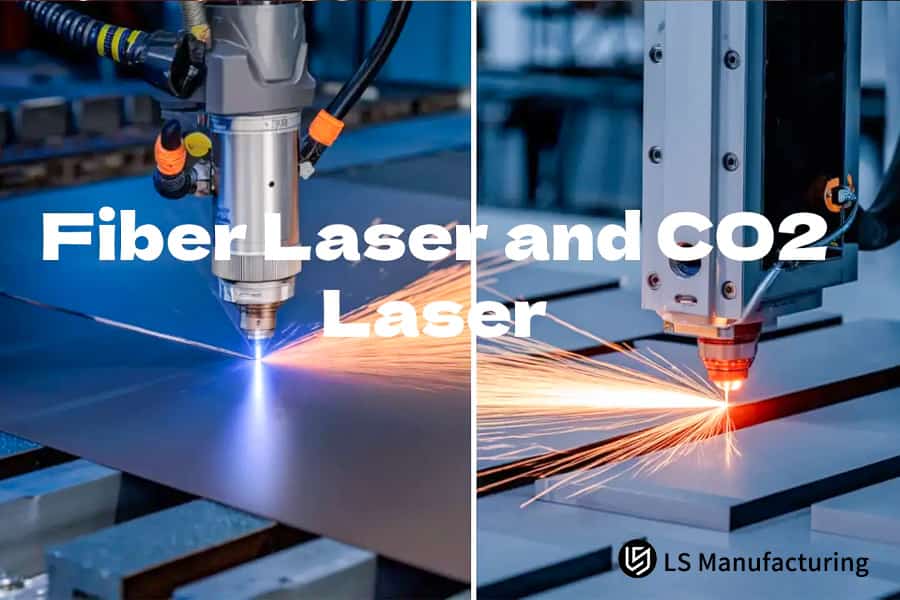
Figure 4: Fiber and CO2 laser cutting comparison with sparks.
What Equipment Maintenance Protocols Predict Lens Degradation and Protect Your Laser Cutting Quality Control?
Laser cutting quality control is intimately connected with conducting preventive maintenance regularly. For instance, one of the work practices that need to be done is keeping an account of the laser protective lens scattering rate (loss in transmittance ≤0.2%) and adjusting the coaxiality of the nozzle every 24 working hours. Forward-looking preventive maintenance is a must for laser cutting quality control.
Measurement of Thermal Lens Effect
Continuous operation at high-loads level results in the formation of thermal lens effect attributable to micron-level processing dust or air backflow on the focusing lens surface, causing an actual shift of focus.
- The focus drift consequences: Actual focus raising by 0.1-0.3mm results in reappearance of slag and sidewall scratches that are hardly detectable by operators.
- Data-driven monitoring techniques: LS Manufacturing employs optical power meters and collimators to measure the percentage of transmittance loss in protective lenses accurately to 0.01%
- Setting a threshold depends on the basis: Previously, large numbers of SUS304 housings were sent back for rework due to hidden lens loss exceeding the HAZ limit.
After that, the direct implementation of the ISO11145:2018 stipulations: The transmittance decay of laser-processed protective lenses should be ≤0.2%/24h operating cycle was the threshold that was fed into the system of the equipment automatic monitoring.
Maintenance Process Documentation
We have established a rule that nozzles of high-concentricity must be replaced every shift to ensure the stability of the process. A preventive maintenance plan is the basis of consistent cutting:
- Inspection at daily start-up: Wipe optical lenses, check if the air pressure, focus parameters, and program match, and note the initial transmittance baseline value.
- 24-Hour Transmittance: Lightly handle with a dedicated instrument to measure the transmittance loss of protective lenses, if it is more than 0.2%, change immediately, and after replacement recalibrate the focus position.
- Nozzle Replacement Every Shift: Change to high-concentricity nozzles (concentricity ≤0.01 mm), and use calibration tools to make sure the laser beam aligns with the nozzle's center.
This system is one of our core competitive advantages as an OEM laser cutting supplier. These measures are directly related to the long-term stability of laser cutting dross removal.
How Can a Reliable Laser Cutting Service Address Custom Geometric Challenges in Automotive Vision Sensor Enclosures?
To deal with the autonomous driving enclosures that feature stepped holes, 3D curved surfaces, and multi-angle heat dissipation slots, it is necessary to resort to five-axis linkage 3D fiber laser cutting and non-standard tooling fixtures. Laser cutting service will have to be capable of multi-dimensional mechanical motions.
Five-Axis Linkage and 3D Dynamic Focus Compensation
LS Manufacturing owns several five-axis linkage laser cutting centers that are installed with direct-drive rotary axes for surface processing of complex shapes.
<オル>Non-standard Tooling Adaptability Value
To different geometric features of workpieces, we offer personalized tooling solutions. A custom fixture design is instrumental in addressing the issues of laser cutting irregularly shaped parts:
<オル>These devised strategies showcase very well the production flexibility of custom vision housing fabrication.
How LS Manufacturing Perfected an Aluminum AL6061 Custom Vision Housing Fabrication Project for an Autonomous Driving Leader
Customer Challenge
Initially, a system integrator of autonomous driving vehicles purchased a custom vision housing made of 2.5 mm thick AL6061 aluminum alloy from a previous supplier who used continuous wave laser with gasless flow field control. When processing 1.5 mm heat dissipation micro-holes no wire drawing occurred but instead, slag buildup was observed which resulted in a 0.28mm uneven HAZ depth. The housing underwent a 0.12mm runout, leading to image sensor distortion, and the yield rate was around 62%. This case illustrates the significance of choosing the right process for custom laser cutting projects.
LS 製造ソリューション
<オル>結果と値
<オル>Yield jumped from 62% to 99.8%, and the unit cost decreased from $12.8 to $9.7. Upload your 3D CAD drawings (STEP/IGS format) directly and receive a customized process solution and quotation within 24 hours.

よくある質問
Q1: Why should I work with an OEM laser cutting supplier who has 99.999% nitrogen gas capability for my custom vision housing project?
Using nitrogen gas that is 99.999% pure helps to avoid oxidation of the metal edges when aluminum/stainless steel are melted in the process, which leads to a silver-white surface of the cut metals without black scale. That means, there is no need for secondary pickling or polishing. To check the effect, you can upload your drawings for free samples, we are willing to supply comparative samples for evaluation.
Q2: How does LS Manufacturing deal with the issue of laser cutting dross removal at the time of cutting inside corners of complex geometry?
The CNC system has a corner deceleration look-ahead algorithm feature, which changes pulse frequency and power on the fly during cornering, with a response delay of ≤2ms, this way preventing heat build-up which is the biggest reason of burrs. This algorithm has been tested on thousands of irregularly shaped parts and the corner dross removal rate has been reduced to below 0.1%.
Q3: Is it possible to remove the micro-cracks when cutting ultra-high strength aluminum automotive enclosures with fiber laser?
Definitely. The ultra-high frequency micro-pulse technique drastically lowers single-shot heat input to the microjoule level, this way keeping metal grains intact and reducing intergranular microcracks probability almost to zero. Also, negative focal length technology totally removes any micro-cracking risk in high-strength aluminum materials.
Q4: Up to what thickness can you guarantee a burr-free laser cut service for SUS304 housing?
By using 22 Bar high-pressure laminar flow nitrogen and negative focal length technology, it can be achieved that no sticky slag adheres to SUS304 stainless steel with a thickness up to 8mm. For thinner sheets (less than 4mm), Ra can be as low as 1.2μm, while at 8mm it can still be maintained at about 1.6μm.
Q5: How does modular nesting software prevent scrap retention and part gouging defects during precision fabrication?
The software ensures that the scrap parts are locked and cannot flip by carving 0.4mm bridges between the parts, at the same time setting a full-lift path to avoid scratches. The bridge width of 0.4mm has been the result of over 300 tests and has an anti-ghosting capability that is 60% higher than the industry standard of 0.3mm.
Q6: On average, how much does the lead time change if one starts using LS Manufacturing's precision laser cut housing service?
Since the need for manual secondary deburring and rework is removed, the entire production cycle for large-volume customized vision housings can be 25%-35% shorter than that of the traditional factories. If you want a quote and a personalized lead time assessment, just click here, the first batch of samples is usually ready in 7-10 days.
Q7: Do you serve standard laser cutting quality control data sheets for the automotive certification IATF 16949?
Yes, every batch comes with a complete set of traceable SPC charts including online vision melt pool curves, three-coordinate aperture reports, and waveform parameter logs. These data can be exported to PDF/Excel format and directly used as part of the IATF 16949 audit documentation package.
Q8: What are the reasons for commercial-grade laser cutting services being unsuitable for the fabrication of high-end optical vision sensor?
As far as general-grade laser cutting services are concerned, they employ continuous wave + ordinary nitrogen that results in edge ripples and thermal deformation. These are not only visually unpleasing but also lead to the failure of coaxial sealing and alignment tests of high-end optical sensors. However, our pulse modulation and high-purity nitrogen methods allow us to achieve a HAZ≤0.05mm, and optical axis deviation is ensured to be < 0.01°.
概要
Manufacturing precision vision housings calls for tight control of processes. Achieving zero-defect machining depends on combining technologies like negative focal length hydrodynamics, pulse waveform control (PWM), high-purity nitrogen gas flow management, and online AI vision dynamic feedback. Suppliers that have these parameters and the required hardware can ensure consistent quality in high-volume manufacturing and strike the production risks down to almost zero.
LS Manufacturing offers free Design for Manufacturing Feasibility (DFM) analysis and cost modeling. After optimizing the pulse modulation parameters and using nested bridging designs techniques, we solve the problem of thermal deformation and blind hole slag buildup in high-reflectivity aluminum alloys. Please click the right side of the page for a quote and to upload your 3D CAD (STEP/IGS) drawings. Our engineering team will devise a tailored technical processing solution within 24 hours.
📞電話番号: +86 185 6675 9667
📧メールアドレス: info@lsrpf.com
🌐ウェブサイト:https://lsrpf.com/
免責事項
このページの内容は情報提供のみを目的としています。LS マニュファクチャリング サービス情報の正確性、完全性、有効性については、明示的か黙示的かを問わず、いかなる表明も保証もありません。サードパーティのサプライヤーまたはメーカーが、LS Manufacturing ネットワークを通じて性能パラメータ、幾何公差、特定の設計特性、材料の品質およびタイプまたは仕上がりを提供すると推測すべきではありません。それは購入者の責任です。必須部品の見積もり これらのセクションの具体的な要件を確認してください。詳細についてはお問い合わせください。
LS 製造チーム
LS Manufacturing は業界をリードする企業です。カスタム製造ソリューションに焦点を当てます。当社は 5,000 を超える顧客と 15 年以上の経験があり、高精度CNC 加工、板金製造、3D プリンティング、射出成形に重点を置いています。成形、金属プレス、その他のワンストップ製造サービス。
当社の工場には、ISO 9001:2015 認証を取得した最先端の 5 軸マシニング センターが 100 台以上備えられています。当社は、世界 150 か国以上のお客様に、迅速、効率的、高品質の製造ソリューションを提供しています。少量生産でも大規模なカスタマイズでも、24時間以内の最速納期でお客様のニーズにお応えします。 LSマニュファクチャリングを選択します。 This means selection efficiency, quality and professionalism.
To learn more, visit our website:www.lsrpf.com
| Performance Indicators | Fiber Laser (1.06μm) | CO2 Laser (10.6μm) |
| AL6061 Absorption Rate | ~30% | ~7% |
| 4mm SUS304 Kerf Width | 0.08mm | 0.22mm |
| 2mm AL6061 Maximum Cutting Speed | 15m/min | 8m/min |
| Relative Processing Cost (including consumables) | Baseline 100% | 125% |
| Intergranular Microcrack Depth | <0.01mm | 0.03-0.05mm |