日本語
日本語 



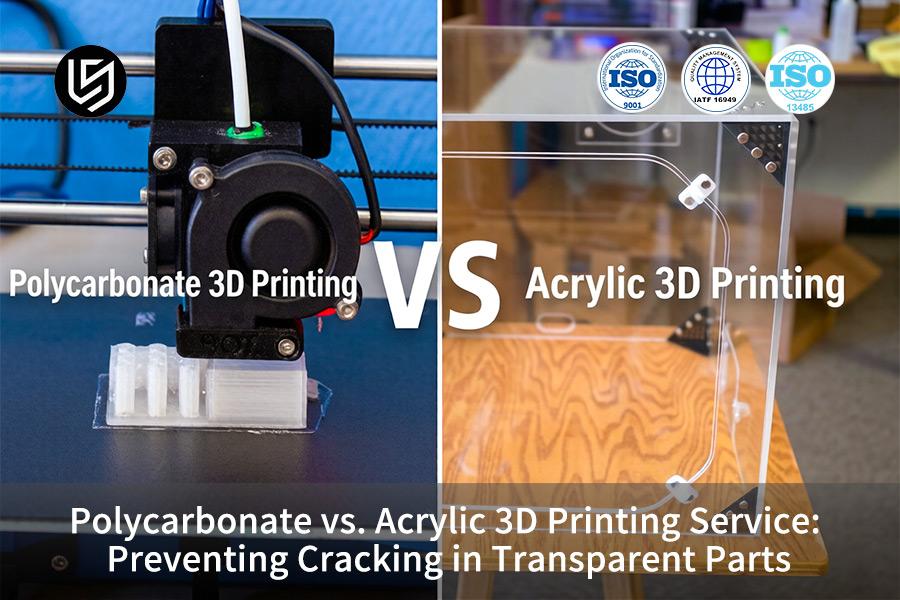
ポリカーボネートとアクリルの 3D プリント サービスでは、閉ループの熱制御が必要です。 ポリカーボネートとアクリルの表面レベルの比較を超えて、 これらのさまざまなプラスチックについて知っておくべきことは、PC は110 ~ 120 °C で収縮するのに対し、PMMA は亀裂を生じるということです。
LS Manufacturing の亀裂防止規格は、チャンバー制御と収縮管理によって光学系を最適化します。0.3mm ノズル、0.2mm 層、80°C 乾燥、および Tg 以下のアニーリングを使用します。
ポリカーボネート VS アクリル 3D プリント: 透明部品のひび割れ防止クイックリファレンス
<本体>重要なポイント:
- 靭性重視の PC、透明度重視の PMMA: 強度がより重要な場合はポリカーボネートを選択します (ガラスの 250 倍の強度)。光学特性を優先する場合 (92% 透過率)、アクリルを選択します。
- PC では熱管理が重要です: ポリカーボネートの印刷では、透明部分のひび割れの原因となる反りや内部応力を防ぐために、チャンバーを130°Cまで加熱する必要があります。
- 湿度管理が成功と失敗を分ける: ポリカーボネートは吸湿性の 3D プリント素材であり、次の温度で乾燥させる必要があります。印刷前の 5 時間 は 80°C に保ちます。そうしないと、蒸気ボイドや不透明が発生します。
- PMMA には化学的保護が不可欠です: アクリル素材は溶剤やひび割れを起こしやすい素材です。洗浄剤にさらされる部分にはストレスフリーな保護層が必要です。
このガイドが信頼できる理由LS 製造の専門家による実践的な経験
工場で 15 年以上働いた経験から、結局のところ、コストのかかる間違いを犯したくないことが重要であると理解しました。当社の推奨事項はすべて、米国材料試験協会 (ASTM) 規格に基づいているため、何もテストする必要はありません。最初から製造現場ですぐに使用できる値が提供されます。
これは、サプライ チェーン全体で失敗の可能性が最小限に抑えられることを意味します。当社はこれらの材料を、 プロファイル変動の±50 μm の許容レベルが必要な航空宇宙用ブラケットや、化学洗浄サイクルを受ける半導体コンポーネントに使用してきました。そうすることで、弊社のプロセス能力を自動車技術者協会 (SAE) のAMS-AM ポリマー シリーズ (AMS7100/AMS7101) に合わせて調整し、層の接着と耐クリープ性を保証します。
これらの洞察はすべて、私たち自身の失敗に基づいて明らかになりました。6 か月屋外に置いた後に亀裂が入ったアクリル製ハウジングや、不十分な乾燥による PC ジグの層間強度の18%低下などです。そうすることで、同じ間違いを繰り返さないようにし、 マーケティングのプロパガンダではなく実際の経験に基づいた教材選択ガイドを提供したいと考えています。 120 x 80 x 60 mm ブラケットか透明ハウジングかに関係なく、用途にどのプラスチックが必要かがわかります。
カスタム透明 3D プリント サービスのプロセス中に工業用透明部品に亀裂が入るのはなぜですか?
工業用透明 3D プリント部品の亀裂は、層間に発生する熱応力によって発生します。 50°C を超える極端な温度勾配は、PC の層間剥離や PMMA の微小亀裂を引き起こします。当社の動的熱管理システムを使用することで、層間の温度勾配を ±2°C に保つことができ、信頼性の高い 3D プリント プロセス中の構造の完全性と透明性の両方を確保できます。
PC パーツの温度勾配制御
摂氏 140 度の熱たわみを持つポリカーボネート素材で作られた部品は、受動的冷却では層間の温度差が摂氏 50 度を超え、構造内に応力が蓄積します。
お客様の部品は、層間の温度差が摂氏 ±2 度以下であることを保証する動的赤外線モニタリングの恩恵を受け、層間剥離の可能性を排除します。これにより、3D プリント後に追加のアニーリングを必要とせずに、工業用透明 3D 製造の構造的完全性が保証されます。
PMMA の応力集中管理
PMMA の分子の硬い性質により、エッジや層間の界面での残留応力が増加します。修正措置を講じない場合、組み立て中の機械的取り扱いによって引き起こされる最小限の応力であっても、微小亀裂が発生します。弊社のリアルタイム サーマル イメージングはこれらの領域を検出してバランスをとり、印刷中の一貫性を確保します。
その結果、カスタム透明 3D プリント サービスを通じて製造された部品は、機械的取り扱いや熱サイクルに対する耐久性が高まり、管理手段が欠如しているプロセスと比較して、製品の故障の可能性が70%以上低下します。また、品質を損なうことなく高速 3D プリント制作を楽しむこともできます。
リアルタイムの熱フィードバック ループ
赤外線センサーからの読み取り値に応じてチャンバー温度を調整することで、新しく塗布された各層が特定の温度範囲に保たれるようになります。このようにして、応力が固定されることはありません。 当社のクラック防止 3D プリント サービスのおかげで、追加の処理を必要とせずに、光学またはエンクロージャ用途にすぐに使用できる製品を入手できます。このようなサービスを使用するその他の利点には、すぐに生産可能な 3D プリントの再現性が含まれます。
<ブロック引用>この文書は、正確な熱管理によって亀裂の防止を推測ゲームから工学科学に変えることができることを示しています。層間の安定した ±2°C の温度差とリアルタイム フィードバックによる応力緩和により、厳格な業界基準を満たす欠陥のない 3D プリントを提供します。各層の熱履歴が記録され、透明パーツの寸法が正確で光学的に透明であることが保証されます。

アクティブ加熱ビルド チャンバーはどのようにしてポリカーボネート 3D プリントにおける層間剥離を排除しますか?
ポリカーボネート 3D プリントでは、サポートされていない部品が急速に冷却されるため、層間剥離が発生します。強制対流を備えたアクティブな加熱チャンバーは110°C ~ 120°Cの一定温度を維持し、 層間結合を≧35%改善します。重要な光学系や機械システム用の反りのない部品を入手できます。これは、高精度 3D プリントの熱制御によって可能になります。後処理が不要になります:
均一な強制対流加熱
- コールド スポットの除去: 強制空気により、すべての表面が 110 °C ~ 120 °C に維持され、オーバーハングの上に液だれが発生することはありません。
- クライアントの価値: 複雑な形状によりひび割れがなく、無駄が削減されます。これは、部品あたりのポリカーボネート 3D プリント コストが下がることを意味します。
最小限の層間温度ギャップ
<オル>非対称冷却の排除
- 均一な収縮: 非対称冷却により均一な収縮が保証されます。
- 公差保持: 200 mm スパンで ±0.1 mm 以内の平面度。これにより、レンズ ハウジングの工業用透明 3D 製造が可能になり、反りのない 3D プリントが可能になります。
このアクティブな加熱方法により、PC 3D プリント プロセスの再現性と信頼性が実現します。 ±5°C のチャンバー均一性と低い溶融勾配の精度のおかげで、製造される部品は光学テストと構造テストのすべての要件を満たします。強制対流設計によりリードタイムが短縮され、コストが削減されます。これは、工業規模での効率的な 3D プリンティングを反映しています。すべての部品は寸法が安定しており、すぐに使用またはテストできる状態になります。
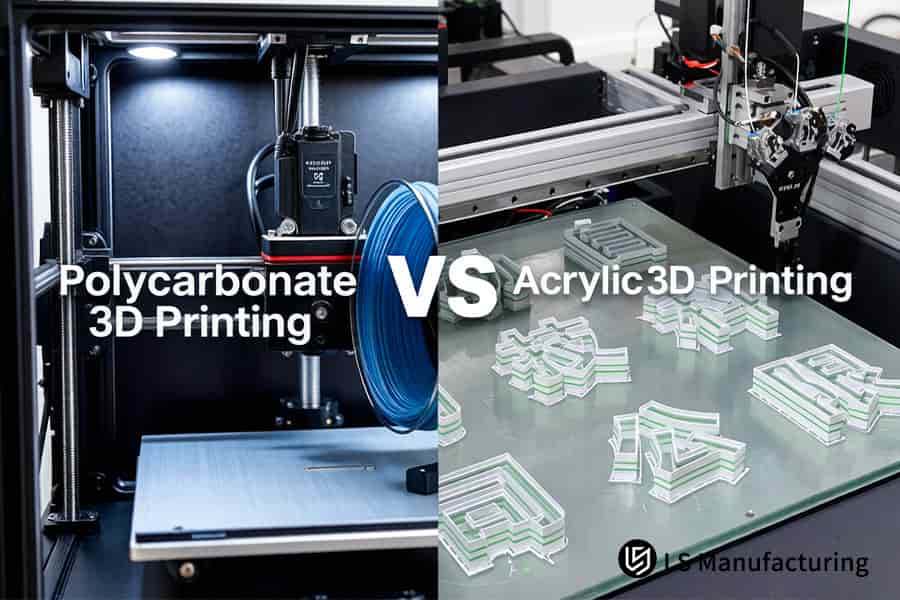
図 1: ポリカーボネートとアクリルの 3D プリントで温度制御されたチャンバー内の内部構造を構築します。
カスタム透明プロトタイプ サービス コンポーネントの脆性破壊を防ぐ押出温度の最適化は何ですか?
ノズル温度と印刷速度は、それぞれ PMMA と PC の溶融粘度を決定します。これは、透明プロトタイプの脆性破壊を回避するための究極の手段です。最適化されたプロセス (PMMA: 245°C ~ 260°C、30 ~ 50 mm/s) により、光を散乱させ、 透明度を90% 未満にする5μmを超える気泡の形成が排除されます。これにより、カスタム クリア プロトタイプ サービスで試行錯誤がなくなり、光学グレードの 3D プリントで最初の成功を収めることができます。
プロセス パラメータの比較: PMMA と PC
| エンティティのディメンション | ポリカーボネート (PC) 3D プリント | アクリル (PMMA) 3D プリント | LS 製造の閉ループ制御 |
| 光学的透明度 | 透過率 88% ;わずかに黄色がかった色。深く磨く必要があります。 | 最大92%の光学グレードの純度。波長分散は表示されません。 | 光学グレードの液体研磨と、処理後の紫外線マイクロ コーティング。 |
| 耐衝撃性 | ガラスの 250 倍の強度。傷に非常に強い。 | 脆い。大きな衝撃や応力集中により簡単に破損します。 | 微小亀裂の超音波非破壊検査。 |
| 熱たわみ (HDT @0.45MPa) | 135 °C ~ 145 °C | 85°C ~ 100°C | 閉ループのアクティブ熱試験環境 (チャンバー≥130°C)。 |
| 収縮と湿気 | 感度 0.5% - 0.7% 収縮率。非常に吸湿性が高い。 | 収縮率 ≤0.4%;比較的安定しています。 | 気密デシケーターカップリング内で80°Cで5 時間予備乾燥します。 |
| 耐薬品性 | ほとんどの工業用洗剤に耐性がありますが、強いアルカリは使用しないでください。 | 溶剤や特定の化学物質によるひび割れの影響を受けやすい。 | ストレスのない保護層を使用した 100% 表面パッシベーション。 |
この校正された押し出しウィンドウにより、脆性破壊が制御可能なパラメータになることが保証されます。 PMMA の場合は245°C ~ 260°C / 30 ~ 50 mm/s、チャンバーサポート付き PC の場合は275°C ~ 300°CC で、 組み立て後の亀裂の原因となる≧5μmの気泡集団が排除されます。内部認定プロセスを回避し、単一のパラメータ シートに基づいて再現可能な 3D プリントを確実に行うために、これらのパラメータを含むアクリル 3D プリントの見積もりを取得します。 透明 3D プリント プロセスの最適化に関するホワイト ペーパーをダウンロードして、ノズル温度とプリント速度の制御によって 5μm 以上の気泡を除去し、PMMA および PC プロトタイプで 90% 以上の透過率を達成する方法をご覧ください。
精密透明部品メーカーにとって、マイクロクラックを防ぐために薄層設計が重要なのはなぜですか?
透明な 3D プリント パーツに現れる微小な亀裂は、層の接着力の低下と、幾何学形状の急激な移行部での応力集中によって発生します。薄いレイヤーを正しい周囲パスと丸い内部コーナーとともに使用すると、これらの障害モードを克服するのに役立ちます。 精密透明部品メーカーは、3D プリントのコンセプトにより、組み立てと熱サイクル後も亀裂のない部品を提供しています。
レイヤー高さとノズルの比率
レイヤーの高さをノズル直径の 20% に維持します。 0.4mm ノズルの場合は ≤0.15mm の層を使用します。この比率により、溶融フィラメントが円形から長方形に変形し、 表面接触が40% 以上強化され、発生する可能性のある気泡が粉砕されます。光を散乱させ亀裂の形成を引き起こす>5μmの微小な空隙を排除することで、各バッチで均一な光透過性を備えた薄層 3D プリントを実現できます。
連続周囲パスの設計
外壁は、移動や後退を行わずに、3 ~ 4 回の連続した周囲パスで印刷する必要があります。連続したパスにより、壁全体に引張応力が均等に分散され、亀裂の開始点となる弱い接合部が回避されます。部品は耐久性があり、エッジが欠けることなく取り扱いや圧入組み立てが可能です。 クラック防止 3D プリント サービスは、標準的な 1 周設計に比べて故障率を 65% 以上低減し、ストレスフリー 3D プリントが一般的になります。
内側のコーナー半径の最適化
すべての内側のコーナーを、鋭い90° コーナーから R ≥ 1.5 mm の滑らかな円弧に変更する必要があります。鋭いコーナーでの応力集中は、滑らかなコーナーの 3 倍であることが、500 を超えるテストモデルの FEA によって確認されました。したがって、機械的または熱的ストレスが発生した場合に、マイクロクラックが発生する最も一般的な場所を除去します。 カスタム透明 3D プリント サービスでは、信頼性の高い透明 3D プリントプロセスの制御により、振動テストや-20°C ~ 80°C のサイクルを行っても亀裂のない製品を作成します。
<ブロック引用>これら 3 つの幾何学的ガイドラインは、3D プリンティングの壊れやすい性質を信頼できる製造技術に変換し、無傷で亀裂の発生しにくい 3D を製品に提供します。印刷です。 20% のレイヤー対ノズル比、3 ~ 4 の連続周囲、内部半径 R ≥ 1.5 mm という要件により、部品は後処理や無駄がまったくなく、光学的および機械的仕様に従って製造されます。
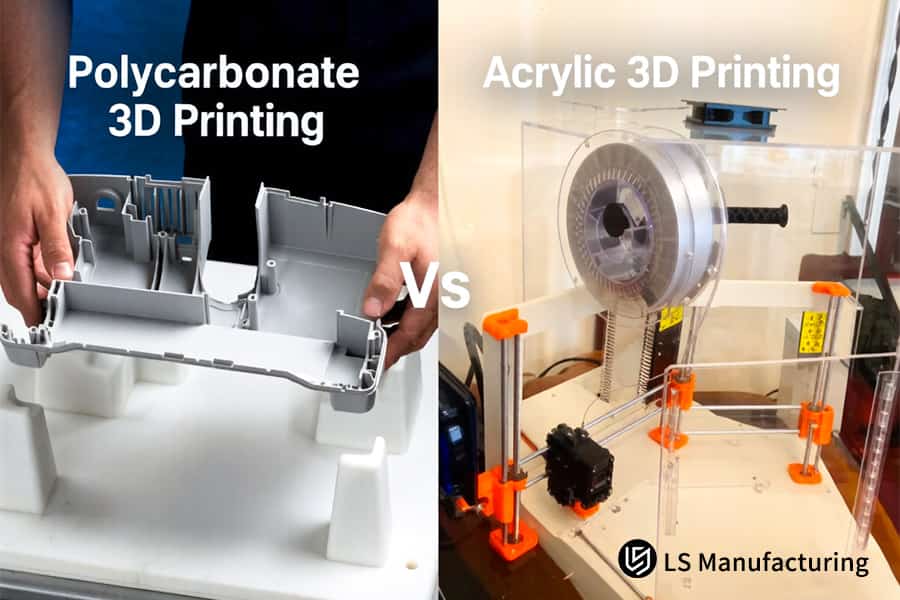
図 2: ポリカーボネートとアクリルの 3D プリントにより、材料の亀裂を防止しながら大型の電子ハウジングを組み立てます。
印刷前のフィラメント乾燥により、アクリル 3D 印刷における気泡による亀裂のリスクがどのように低下しますか?
PC および PMMA フィラメントに吸収された水分は280°C で爆発的に蒸発し、ミクロンスケールの蒸気泡を生成して応力を高め、光学的透明度を低下させます。印刷前に水分含有量0.02% まで乾燥させると、この故障モードが排除されます。これにより、バブル関連の欠陥による再作業コストが削減され、手頃な価格の 3D プリントの結果が得られます。
吸湿の仕組み
<オル>真空オーブン乾燥パラメータ
- 標準手順: フィラメントを80°C の二次真空オーブンで5 時間以上乾燥させ、水分含有量<0.02%を確保します。
- プロセス検証: 水分計を使用して乾燥状態を検証します。業界標準 = 0.08% ~ 0.15% (ASTM D570)。蒸気による空隙は発生しません。
- クライアントの価値: 92% 以上の光学透過性を備えた産業用透明 3D 製造が可能になり、プロフェッショナルな製品になります。 3D プリントにより再現可能な結果が得られます。
気密フィード システムの統合
<オル>印刷前の水分管理のこの方法は、欠陥の一般的な原因を制御されたパラメーターに変換します。 80°C / ≥ 5 時間の真空乾燥と気密供給により、気泡亀裂のない部品が確実に得られ、プロジェクトのタイムラインが予測可能になり、初回パスの歩留まりが 95% 以上になります。
工業用透明 3D 製造の長期安定性を保証するカスタム ポスト アニーリング プロトコルは何ですか?
印刷された状態では内部応力が存在しており、化学的または熱的応力が加わると遅延亀裂が発生します。温度を5°C/h の速度で 4 ~ 6 時間で130°Cまで上昇させ、その後3°C/hの速度で温度を下げるアニーリングにより、すべての内部応力が除去されます。その結果、3D プリントの熱管理によるクラック防止 3D プリント サービスの信頼性が高まりました。
アニーリング プロトコルの比較: 応力除去効果
| パラメータ | PMMA (アクリル) | PC (ポリカーボネート) |
| ノズル温度 | 245°C ~ 260°C、±3°C 許容範囲 | 275°C ~ 300°C、許容範囲 ±5°C |
| 印刷速度 | 30 ~ 50 mm/s、安定した押し出し | 外壁 30 ~ 50mm/s。 60mm/秒の充填 |
| 溶解動作 | 中〜低粘度。速度が高すぎると、気泡のない 3D プリントのボイドが 5μm 以上 | 高粘度。融合にはチャンバー≥110°C が必要 |
| 光学的結果 | 90% 低速での透過率。透明度と靭性に基づいてポリカーボネートかアクリルの 3D プリント サービスを選択します | 鮮明さが低下します。耐衝撃性 |
With this technique, you can get rid of any delayed cracking caused by chemical reaction and temperature variations. Parts will not crack in acetone and isopropanol and there will be ±0.05mm dimensional tolerance on 300mm part. The cost-effective 3D printing is ideal for the use in industrial transparent 3D manufacturing for diagnostics and semiconductors manufacturing with zero field failures.
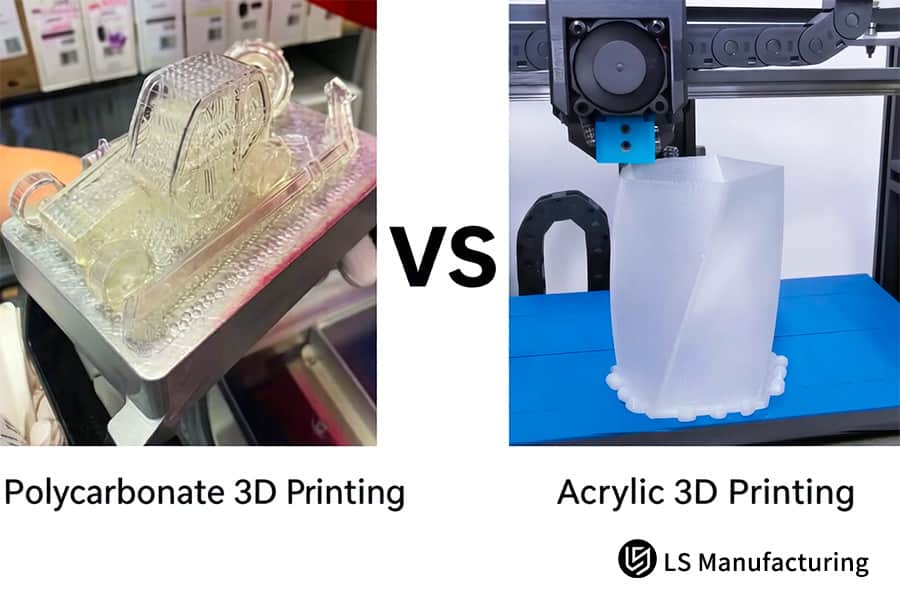
Figure 3: Polycarbonate vs Acrylic 3D printing tests thin wall thickness for clear consumer packaging.
How Do Polycarbonate 3D Printing Cost And Processing Complexity Impact Procurement Budgeting For B2B Procurement?
Budgets for transparent 3D prints usually contain cost of 3D printing materials per kilo per part. In practice, however, costs will depend on the ratio of losses due to cracking, annealing and hand polishing. If you could make first pass yield >98.5% you will decrease hidden cost by more than 30%. Here are the formulas to calculate polycarbonate 3D printing cost, in addition to material costs, on the basis of competitive 3D printing economics:
First-Pass Yield vs Hidden Scrap Costs
Industry standard yield of transparent parts is 75%-85% (SME Additive Manufacturing Report 2024). Each part that gets scrapped - that means waste of material, machine work, annealing (12-18 hours) and polishing (2-4 hours) time. Thus, with ≥98.5% first pass yield there will be zero cost of rework cycles. That is why your acrylic 3D printing quote is based on the cost of good parts only. Savings grow exponentially for each iteration. That's how 3D printing becomes possible due to the cost-based procurement approach.
Total Cost of Ownership Breakdown
<オル>Thus, by optimizing process parameters (H2-1 through H2-6), scrap rate will be lower than 1.5%, and TCO reduction will exceed 30%. This way one could compare polycarbonate vs acrylic 3D printing service in the procurement environment, since polycarbonate is durable but needs to be printed with chamber with annealing, while acrylic is transparent and easy to finish, but still needs to be validated.
Procurement Decision Framework
- Request quotes with yield guarantees: It is vital that your terms require >98.5% first-pass yields.
- Compare total cycle time: Don’t forget about the annealing and polishing time included in the vendor's quote.
- Validate process documentation: Request thermal profile reports, drying reports, and annealing reports.
Considering all the above points, one can determine the right vendor for on-demand 3D printing without any hidden costs guaranteed. Thus, the funds will be reallocated from rework to quality control.
<ブロック引用>With such procurement approach, transparent 3D printing is turned from risky expense into investment, which can lower total cost by more than 30% while decreasing the time to market with the help of first-pass yield, TCO breakdown, and process controls validation.
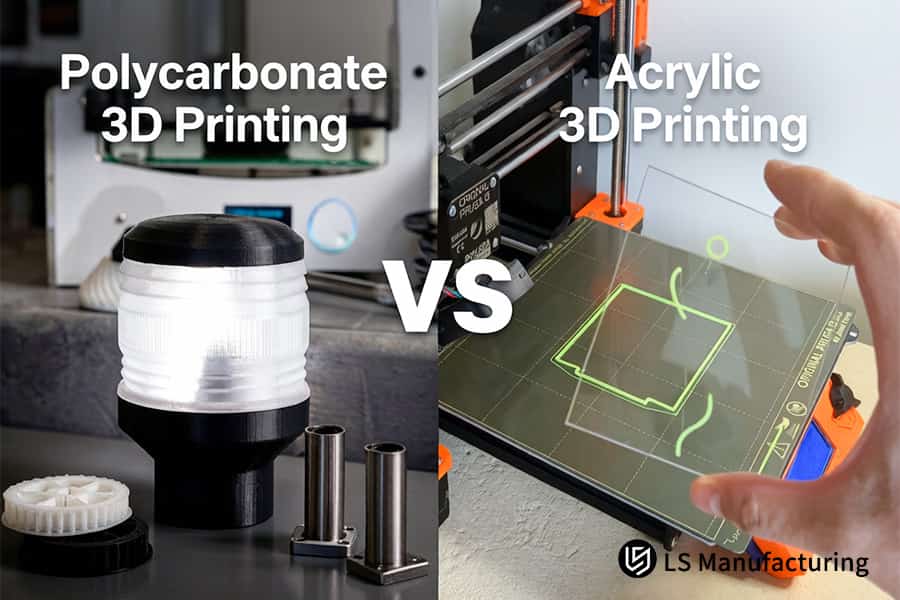
Figure 4: Polycarbonate vs Acrylic 3D printing verifies optical clarity for custom lighting fixtures.
Case Study: How LS Manufacturing Engineered Zero Crack Polycarbonate Microfluidic Manifolds For A Medical Device Giant
The most prominent manufacturer of medical devices needed polycarbonate microfluidic manifolds that would withstand cyclic pressure of ≥0.6MPa for its new diagnostic analyzer. Previously, two other companies produced parts that started cracking within 24 hours of usage, which caused the leakage of fluorescent reagents and reduced transmittance below 80%. This case describes how a precision clear parts manufacturer helped solve this problem with the help of its 3D printing technology:
Client Challenge
The manifolds featured complicated internal channels with sharp intersections. At a 0.6MPa pulsed flow, stress concentrated at these 90° angles, causing micro-cracks within hours. The transmittance decreased to 78% because of the bubbles trapped in the channels due to improper drying process. Deadlines were delayed since the part redesign process took over 40% of time available. The client was looking for the production 3D printing partner.
LS Manufacturing Solution
Engineering completed DFM finite element analysis to redesign internal corners to smooth R0.8mm fillets. Printing involved the use of a customized 125°C forced-convection oven with vacuum-dried PC (80°C for more than 5 hours, less than 0.02% moisture content). Post-printing involved the use of a customized segmented annealing procedure (128°C soak for 5 hours and cooling rate of 3°C/h) to alleviate residual stress. Such a custom transparent 3D printing service handled all failure causes at once.
Results and Value
The delivered manifolds had 89% optical transmittance with no bubbles upon multistage polishing. In destructive fatigue testing at 1.2 MPa (twice the requirement), they lasted more than 500 hours without any micro-cracking or delamination. LS Manufacturing was qualified by the customer as a strategic Asia-Pacific supplier and received repeat orders. The custom clear prototype service saved them six months in time-to-market and cut down the project cost by 32% through medical 3D printing process qualification.
<ブロック引用>In this case, you can clearly see how systematic DFM, printing in a controlled environment, and precise annealing transform a very risky clear part into a reliable one. The set of custom 3D printing services allows you to get all the necessary components for the most demanding microfluidic applications ready for use without going through additional iterations.
24 hours to crack. 500+ hours at 1.2 MPa with zero micro-cracks. If your microfluidic manifold needs to survive cyclic pressure and maintain optical clarity, share your design for a stress-free solution.

よくある質問
1. Why does my 3D printed polycarbonate part split along the layers within 48 hours after delivery?
Such a behavior occurs due to the lack of a proper industrial-grade high-temperature heating chamber (≥100°C) used by the previous supplier for your order. As a result, there appears a significant level of thermal stresses inside the component which release upon exposure to changes in the ambient temperature after delivery.
2. Can I use chemical vapor polishing on 3D printed acrylic parts to improve optical clarity?
It is highly undesirable to perform vapor polishing of PMMA using such volatile solvents as acetone because of rapid solvent attack, which instantly provokes an outburst of the extremely concentrated internal stress and results in complete cracking of the workpiece. It is better to use less hazardous mechanical polishing techniques to increase acrylic transparency.
3. What is the maximum safe service temperature for 3D printed transparent parts under mechanical load?
Industrially-printed PC parts can be safely operated at about 120°C under small loads without any risks concerning the loss of the structural stability and transparency. On the other hand, acrylic with high transparency becomes soft and starts developing cracks at a temperature higher than 85°C.
4. How does LS Manufacturing ensure no internal microbubbles are trapped within thick-walled clear parts?
The use of ultra-low moisture content (≤0.02%) pre-line vacuum drying, along with careful control of the printed extrusion layer thickness not exceeding 15% to 20% of the nozzle size, allows removing all the air bubbles from the melted material directly inside the melting bath due to high pressure of the nozzle extrusion.
5. Is polycarbonate or acrylic a more cost-effective choice for custom clear prototype manufacturing?
Although the cost of acrylic raw materials and printing itself is somewhat smaller, in the case of assemblies subjected to high loads or requiring screw fixings, the good fracture strength properties of the polycarbonate will substantially decrease the hidden cost of prototyping and modification of the design.
6. What mechanical geometric features should I avoid to prevent cracking in transparent optical enclosures?
It is essential that there are no right angles less than R1.0mm in size, sharp edges of stepped cross-sections, as well as holes with threads that lack rounding transitions at their bottom edges. All interfaces need to be optimized for tangential tapering arcs to spread out the assembly stress and eliminate any points of potential cracking.
7. Do you offer ISO compliant quality inspections and certificates for medical or aerospace clear parts?
Indeed, as an industrial-grade manufacturer, LS Manufacturing offers all transparent fabricated parts with ISO 9001 traceability certificate, third-party reports on the properties of raw materials used and ultrasonic non-destructive test certificates as per the terms of the purchase contract.
8. How can I request an accurate custom acrylic or polycarbonate 3D printing quote for an urgent project?
Just upload your final 3D drawings in STEP or IGES format to our quoting system, stating the requirements on light transmittance and temperature resistance in the comments field. Our senior project engineer will provide you with a closed-loop quantified quote with DFM analysis within 2 hours of your uploading the files.
概要
Avoiding cracking of transparent 3D printed components is only possible through closed-loop engineering that involves optimizing fillets geometrically (R≥1.5mm), extreme dehumidification (moisture ≤0.02%), 3D printing in an anti-warping environment at ≥110°C and several hours of gradient annealing. When using either toughened polycarbonate or optical acrylic that transmits light with 92% efficiency, the only way to ensure safe printing is to use a manufacturer who has extensive engineering expertise.
Are you experiencing problems such as cracking, delamination or yellowing of your transparent components during prototyping? Stop wasting money on low cost temperature-uncontrolled 3D printing. Click “Get Custom Quote” and upload your STEP/STP drawings. The senior engineers from LS Manufacturing will conduct a complimentary analysis of material suitability and stress optimization for you – within 48 hours.
📞電話番号: +86 185 6675 9667
📧メールアドレス: info@lsrpf.com
🌐ウェブサイト:https://lsrpf.com/
免責事項
このページの内容は情報提供のみを目的としています。LS マニュファクチャリング サービス情報の正確性、完全性、有効性については、明示的か黙示的かを問わず、いかなる表明も保証もありません。サードパーティのサプライヤーまたはメーカーが、LS Manufacturing ネットワークを通じて性能パラメータ、幾何公差、特定の設計特性、材料の品質およびタイプまたは仕上がりを提供すると推測すべきではありません。それは購入者の責任です。必須部品の見積もり これらのセクションの具体的な要件を確認してください。詳細についてはお問い合わせください。
LS 製造チーム
LS Manufacturing は業界をリードする企業です。カスタム製造ソリューションに焦点を当てます。当社は 5,000 を超える顧客と 15 年以上の経験があり、高精度CNC 加工、板金製造、3D プリンティング、射出成形に重点を置いています。成形、金属プレス、その他のワンストップ製造サービス。
当社の工場には、ISO 9001:2015 認証を取得した最先端の 5 軸マシニング センターが 100 台以上備えられています。当社は、世界 150 か国以上のお客様に、迅速、効率的、高品質の製造ソリューションを提供しています。少量生産でも大規模なカスタマイズでも、24時間以内の最速納期でお客様のニーズにお応えします。 LSマニュファクチャリングを選択します。 This means selection efficiency, quality and professionalism.
To learn more, visit our website:www.lsrpf.com
| パラメータ | アニーリングなし | 標準アニーリング (高速ランプ) | 最適化アニーリング (当社のプロトコル) |
| 加熱速度 | 該当なし | 20°C/時~30°C/時 | ≤ 5°C/h 認定 3D プリントランプ |
| 浸漬温度と時間 | なし | 120°C、2 時間 | 130°C、4~6 時間 - ポリカーボネートとアクリルの 3D プリント サービスを最適化 |
| 冷却速度 | 自然消光 | 10°C/時~15°C/時 | ≤ 3°C/h |
| Residual stress after treatment | > 25 MPa (typical) | 8-12 MPa | < 3 MPa |
| Crack rate under chemical exposure | > 40% within 48h | 5-10% | 0% (tested per ISO 175) |