中文 (简体)



工具钢激光切割服务是一种柔性制造,不仅兼容HRC 58-62硬化工具钢,还可以用来解决传统线切割效率低、成本高以及普通激光切割造成的热损坏等行业普遍问题。
除了将热影响区控制在0.03mm外,还能始终满足0.01mm的量产公差,并100%保留钢材原有的HRC 58+硬度,因此是顶级模具制造的关键加工技术。传统的线切割加工异形淬硬工具钢的方法极大地限制了其产量供应链效率。
精密工具钢激光切割核心结论快速概述
本章概括了工具钢激光切割的主要技术创新和性能优势。 所有数据均来自生产级测量,毫无疑问可以用作 B2B 加工选择的基础。
<正文>关键要点
- 高频、短脉冲光纤激光器控制热影响区(HAZ)不超过0.03mm,避免了材料软化边缘。
- 18巴高压纯氮气保护,能够彻底消除切口表面氧化,保证稳定金属基体的硬度。
- 凭借独特的制造技术,LS Manufacturing成功地将淬火工具钢的量产波动范围控制在0.01mm以内。
为什么相信 LS Manufacturing 在激光切割和高精度硬化工具钢部件方面的专业知识?
加工高端硬化部件的根本竞争优势来自于拥有可追溯的测量数据和合规的质量体系,而不是来自于单台设备的优势。
借鉴行业经验,经过团队三个月的淬火工具钢激光切割参数校准测试,我们成功制定了冷切割工艺体系,符合ISO 13957:1997质量标准,兼容D2等高端钢材和H13。
淬火工具钢的加工公差非常严格,即使是最轻微的热损伤也可能导致工件报废。 这是我们团队在实际实施过程中面临的主要挑战 。 为了解决这个问题,我们不断调整脉冲和气体参数,最终进行了200多个工艺测试组。
以及两次获得的ISO 9001:2015认证,我们的车间不仅配备了三座标测量机和显微硬度计组成的测试套件,而且可以进行加工、测试、校正的闭环管理。凭借我们自己的短脉冲技术,完全解决了传统方法产生的热软化和微裂纹问题,这使我们能够帮助大约一百家制造企业克服其加工瓶颈。
凭借强大的质量体系和数百组测量的工艺数据,我们的品牌能够生产高质量的硬化部件激光切割,没有任何加工缺陷。当您有加工问题时,可以进行一对一的技术咨询,当您有定制需求时,可以提交图纸,获得定制化的加工方案。

为什么定制工具钢激光切割会导致硬化部件出现微裂纹?
极端的热循环会导致高碳、高合金硬化工具钢的性能严重受损。在激光操作过程中,产生的高热量会导致瞬时拉应力过大,进而导致切口中出现微裂纹。此外,激光加工后的热暴露,即冷却,会引起新的马氏体转变并进一步硬化材料,对其韧性产生负面影响。这是定制工具钢激光切割的主要问题之一。
激光热输入应力产生机制
微裂纹主要是由高峰值功率激光发射引起的,但是较低功率的热控激光切割几乎可以完全防止热损伤。使用 4kW-6kW 峰值功率的激光脉冲熔化和汽化 D2 和 A2 淬火工具钢只需几微秒。由于导热率非常低,材料会经历非常陡峭的温度梯度,从而导致热膨胀,然后快速收缩。
微裂纹的危害和传播效应
如果没有精确的热输入模型控制,残余拉应力将能够克服晶界处的结合力并使材料破裂,形成深度为0.05毫米至0.15毫米的微裂纹。 微米级激光切割可以精确约束热影响区,从而抑制裂纹萌生源。微裂纹可以作为工件中的疲劳源,并且顶盖和断裂失效可能是工件在高应力条件下造成的。
- 即时效果:由于表面粗糙度较高,切割平滑度严重降低,甚至达不到精密装配要求。
- 延迟效应:工件结构完整性受损、工件寿命缩短 50% 以上、客户更换产生额外费用。热应力不平衡是定制工具钢激光切割中产生微裂纹的最大原因。
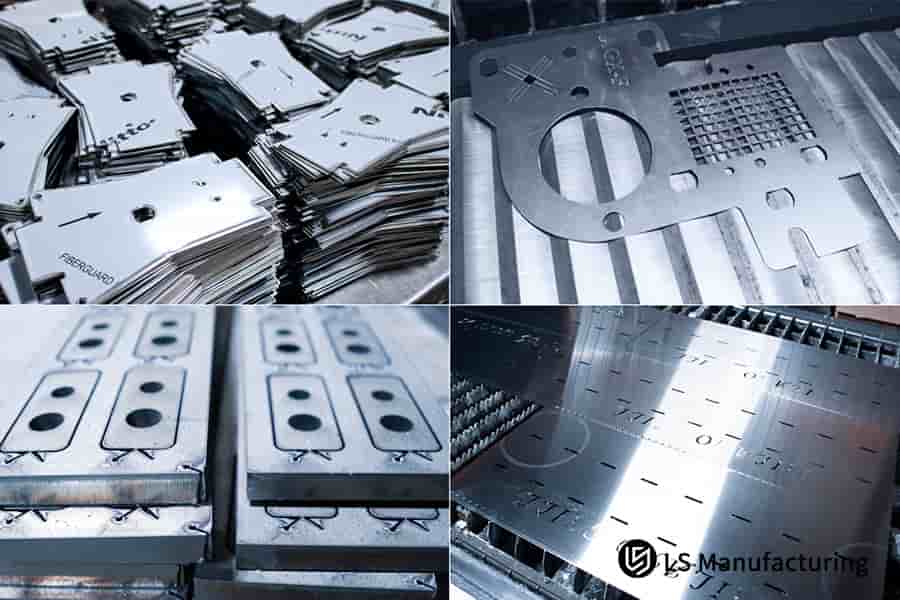
图 1:具有精确孔和各种几何形状的激光切割不锈钢零件堆叠。
如何将工具钢激光切割公差控制在±0.01mm以内且边缘不变形?
为了稳定维持0.01mm工具钢激光切割公差,动态焦点补偿系统和直线电机驱动机床势在必行。另外,应采用慢速分段插补算法,以抑制夏季热量积累,防止工件热变形和尺寸偏差。
高精度机床硬件支持
精密直线电机定位是超高精度加工的基础。 无裂纹激光切割采用高精度硬件,可以达到无损加工效果。该设备依托双面直线电机龙门结构,定位精度达到0.003mm,远优于行业标准。因此为淬硬钢的精密加工带来了有力的支撑。
动态能量与轨迹控制技术
传统上,人们发现连续激光将能量集中在尖角和小孔上,从而导致材料熔化、塌陷和变形。基于微米级路径分割的参数化激光切割技术,能够满足各种异形结构的加工要求。
- 功率自适应调节:切割小圆弧R0.5mm时,功率从3kW线性降低至1.2kW,保持单位长度输入能量恒定。
- 焦点稳定控制:采用电容式传感器,喷嘴与工件之间的距离固定在0.3mm0.02mm,不会产生焦点漂移误差。
以及高端的硬件和精准的参数控制,这两点是通过激光切割培训维持工具钢0.01mm激光切割公差的主要关键点。您可以查看高精度加工案例,一对一咨询精度提升技术,如有工件加工需求,还可以提交图纸获取精加工报价。
高硬度激光切割服务能否防止热影响区软化?
专业的高硬度激光切割服务基于15s超短脉冲调制和高频冷切割方法。这些有助于减少零件的热影响区,保持钢基体的原始硬度,并避免二次回火引起的软化。
传统激光工艺的软化缺陷
- 非常大的热影响区:传统的连续激光切割方法会形成0.2毫米的热影响区。结果,钢材表面的大面积遭受热损伤。 高质量的激光切割可以完全弥补这一缺陷。
- 基体硬度急剧下降:由于热退火的发生,硬化工具钢的硬度水平(最初为 HRC 60)在某些区域已降至 HRC 45 以下。
- 功能丧失本质:事实上,硬度降低破坏了钢材原本的生物特性例如耐磨性和结构稳定性。这就是为什么工件变得不适合高端模具的精密工作条件。
准冷加工防软化核心技术
实现低温激光切割效果的一种方法是优化脉宽调制。该技术包括将脉冲持续时间压缩至 12 秒至 20 秒,并借助 25%-35% 的工作周期,为“准冷加工”提供足够的冷却时间。利用激光能量在热扩散之前完成切割阶段。根据显微测试,0.02mm 切割时硬度下降小于 HRC 1.5。
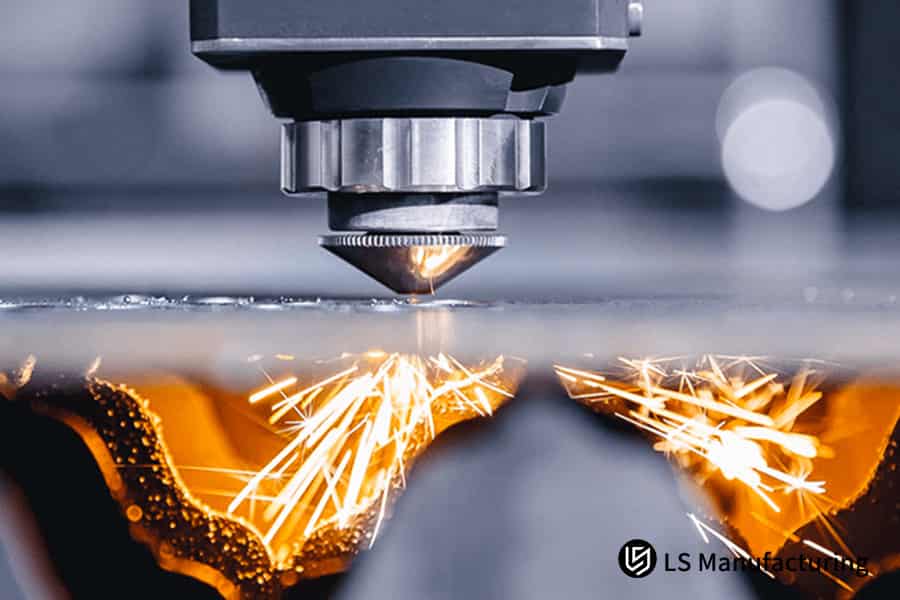
图 2:激光切割头在金属零件上精确加工时产生光束和火花。
哪些光纤激光切割服务参数最适合 D2 和 H13 钢?
高合金工具钢的最佳加工条件为:功率2.5kW-3.5kW,频率3500Hz-4200Hz,占空比30%,速度1.2m/min-1.8m/min。这是切割质量和热量之间的良好折衷,非常适合定制工具钢激光切割批量生产场景。
差异化钢材参数标定逻辑
不同的合金成分具有不同的熔化特性,因此适用于一种工具钢的加工参数可能不适用于其他工具钢。 通过速度优化的激光切割,可以调整以适应不同钢材的加工特性。由于D2和H13钢的熔点和激光反射率差异很大,因此每种钢都需要一组参数。
批量生产的最佳参数和结果
根据我们在精密模具钢量产项目的实践经验,固定参数可实现稳定的加工效果,并且无缺陷激光切割 确保各批次工件质量一致。
| 核心流程模块 | 关键技术参数 | 处理性能 | 客户利益 |
| 短脉冲调制技术 | 脉冲宽度≤15μs,工作周期25%-35% | HAZ ≤0.03mm,消除微观热裂纹 | 保留钢材原有的耐磨性。 |
| 高压氮气保护系统 | 18bar超高压,99.999%高纯氮气。 | 切口处无氧化或熔渣。 | 无需二次打磨,缩短流程。 |
| 超高精度机床控制 | 定位精度±0.003mm,动态焦点补偿。 | 稳定量产公差±0.01mm。 | 满足精密装配要求。 |
| 差异化材质参数标定 | 3500-4200Hz脉冲频率,平顶光束整形。 | 表面粗糙度 Ra ≤1.6μm | 提高工件贴合精度。 |
| 高速成型工艺 | 一次切割成型,无需多次整理工序。 | 处理效率提升15-20倍。 | 处理成本降低 70% 以上。 |
专业工厂如何优化硬化部件激光切割的辅助气压?
顶尖制造商依靠99.999%超高纯氮气(16-20 bar)通过高压机械冲刷作用快速剥离熔渣,从而有效制止剧烈的放热氧化反应,确保硬化部件激光切割保持不变。
辅助气体选择背后的主要原理
正确控制气体反应温度至关重要,稳定的激光切割质量取决于选择合适的辅助气体。用氧气切割不仅加热温度超过2000℃,而且会导致切边脱碳和剥落,这肯定会损害淬火钢的基本性能。
高压氮气量产优化详情
高压氮气冲刷可以促进无损切割。 低氧化激光切割需要高压氮气,目的是隔离空气并防止形成氧化缺陷。 18巴的高纯氮气可以隔绝氧气,能够有效清理熔渣,切割面呈现闪亮的金属颜色,没有任何氧化或夹渣的迹象。
- 纯度标准:99.999% 超高纯度氮气,去除杂质,从而防止切割污染。
- 压力范围:18巴稳定压力,可批量生产3-5mm厚的淬硬钢。
超高压、高纯度氮气保护对于提高硬化部件激光切割质量、消除氧化和积渣问题非常重要。查看气体工艺优化案例研究,接受有关气体压力适应技术的一对一咨询,并提交您的工件要求以获得详细的加工报价。
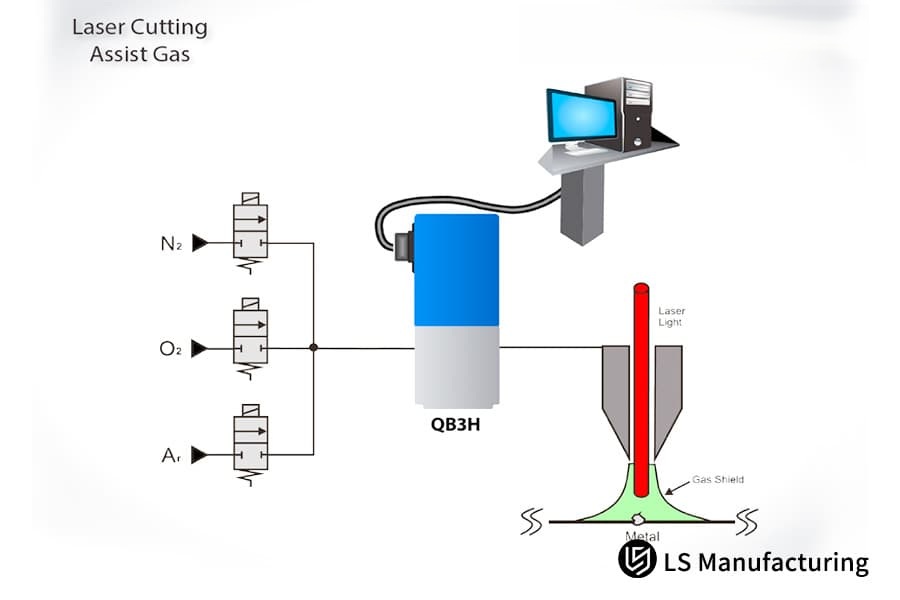
图 3:用于激光切割工艺优化的气体混合系统(N2、O2、Ar)示意图。
为什么工具钢高精度激光切割优于传统电火花加工?
使用高精度激光切割工具钢比线切割快15-20倍。除了不需要定制电极之外,它还在制造小批量定制形状零件方面带来了巨大的成本和交货时间优势,并将柔性制造能力提升到了一个全新的水平。
传统 EDM 加工的长期短缺
电极丝消耗和速度低导致 EDM 加工效率极低。一个高速激光切割周期完全消除了效率低下的问题。高精度精加工电火花加工需要分多次精加工进行,这意味着单件加工时间较长,相应的耗材和设备折旧成本也较高。
激光切割综合优势比较
| 钢材类型 | 最佳功率 | 固定脉冲频率 | 喷嘴规格 | 成品参数 |
| D2 工具钢 (3mm) | 3.0kW | 3800Hz | 1.2mm单层喷嘴 | Ra≤1.6μm,角度≤0.03mm |
| H13工具钢(3毫米) | 3.2kW | 3800Hz | 1.2mm单层喷嘴 | 无渣、硬度稳定HRC 58+ |
对工具钢进行高精度激光切割,精度极高,整个过程的成本和时间消耗均突破传统电火花加工工艺。尽管如此,它们仍然能够适应广泛不同的定制场景。

图 4:集中激光束在工厂中高精度切割工具钢工件。
LS 如何制造定制医疗级激光切割硬化组件?
LS Manufacturing凭借独特的超高压气流控制和多轴激光微加工技术,令人印象深刻地生产出高精度、定制化批量生产的医疗手术器械硬质导轨,无热裂,完全满足激光切割硬化部件。
客户挑战
医疗器械行业对于产品质量、精密硬度和无裂纹操作有非常严格的标准,主要针对硬化部件。使用医疗级激光切割技术可以成为满足顶级医疗器械严格加工要求的绝佳解决方案。该客户是一家大型国外医疗器械公司,打算生产由以下材料制成的手术导板: D2 工具钢,硬度为 58-60 HRC。多家供应商的产品被发现存在质量缺陷,这可能导致项目推迟。
LS 制造解决方案
- 我们的技术团队决定不再修复旧的连续激光工艺,而是采用波长为 1064nm 的新型脉冲激光。它们是精密调谐的激光切割,并且在热量输入的控制方面非常精确。
- 将脉冲频率保持在 4000Hz,脉冲宽度窄于 15s,它们能够最大限度地减少热量输入。
- This is done with a 19 bar ultra-high purity nitrogen coaxial nozzle and laser cuts are dynamically tracking the focal point with an exact 0.15 mm nozzle spacing which helps in the rapid dissipation of cutting heat and prevention of molten metal backflow and buildup of thermal stress.
Here is a nice tip for troubleshooting: When laser cutting small holes in hardened steel and experiencing punctures, changing the progressive piercing time to 0.8s can totally eliminate puncture defects.
结果和价值
Coordinate measuring machine (CMM) inspection and microhardness testing confirm that all product tolerances at the finished stage are stably held within 0.01mm, HAZ 0.02mm, and the edge hardness is consistently HRC 59, without any microcracks.
This solution enables customers to save 65% on processing costs, which is a reduction of $320 in cost per workpiece. Also, it drastically shortens delivery cycles and assists customers to get rid of production bottlenecks and even achieve cooperation over time.
<块引用>Advanced process tuning and detailed optimization have paved the way for laser-cut hardened workpieces to be used in premium medical precision contexts and their quality has been confirmed by mass production. Check out full project case studies as a way to learn and get free DFM feasibility analysis as well as tailor high precision workpiece processing solutions.

What Variables Drive The Actual Cost From a Precision Tool Steel Laser Cutting Supplier?
Weight of material alone doesn't dictate the price of precision tool steel laser cutting. The main elements that dictate the cost are the complexity of the workpiece, the thickness of the metal, the hardness of the steel, and how tight the dimensional tolerances are. By knowing these factors, customers can fine-tune their designs and keep their budgets in check.
Primary Factors Affecting Cost
How hard a material is to penetrate will not only decide how long the process will take but also the cost of raw materials. Laser cutting that adjusts to thicknesses can cope with various sheet metal processing scenarios. The main factors influencing costs can be broadly classified into two categories:
- The Impact of Sheet Thickness: Every time the thickness of steel is increased by 1mm, laser penetration resistance goes up in a geometric fashion, causing very significant reduction of cutting speed and continuous increase of machine time costs.
- Losses in Drilling Process: It is very tough to drill hardened steel, a single hole takes 0.5s-2s. Not only this increases processing time but also causes rapid wear of the nozzle, resulting in higher material costs.
Cost Differences Based on Tolerance Grades
How accurately a tolerance grade is defined can mainly determine processing difficulty, and because of this, price. Thanks to tolerance-controlled laser cutting, it is possible to have exactly different tolerances matching different accuracy levels, and the technical difference between various tolerance standards is quite significant:
- Standard Tolerances (0.05mm): Highest processing speed, no full-process inspection required, lowest process difficulty, and lower overall processing cost.
- Ultra-precision Tolerances (0.01mm): Necessary to lower machinery speed and carry out 100% online full inspection, high technology level, high processing time, and greatly increased overall cost.
- Calculation Basis: The proprietary formula for cost calculation is below: Single-piece machine time cost = Cutting time × Equipment rate + Nitrogen consumption × Gas unit price. This formula makes pricing transparent and accurate.
How To Evaluate The Quality Standards Of a Tool Steel Laser Cutting Manufacturer?
Top-notch laser cutting service suppliers should not only be certified with IATF 16949 & ISO 9001:2015 but also have precision testing equipment set for a closed-loop quality check of the workpiece and accurate control of the laser cutting tolerance of the tool steel.
Standards for Hardware Testing Configuration
High grade professional inspection instruments are a pillar of guarantee of the quality a product. It will be only a good one if the entire set of test instruments is capable of making a full inspection of the external features, dimensions, and metallographic structures.
Quality Control System for Full-Process
Only those laser cutting manufacturers who have a well-established quality control system over the full process can give stable batch quality. The key control steps are what comes next:
- First Article Inspection Mechanism: The very first article from a batch is inspected in all aspects to detect any kind of process deviation beforehand to prevent the risk of batch scrapping.
- Process Statistical Control: Statistical process control (SPC) is done with a stable CPK value >1.33, which is to guarantee mass production stability.
- Three Core Inspections: Including cross-sectional stripe analysis, metallographic structure observation, and full-dimensional accuracy inspection, these provide the closed-loop product quality control.
Qualified personnel, accurate measurement tools, and thorough process control are essential elements to manage tool steel laser cutting tolerance and assure batch quality. You could hand over your workpiece requirements to receive customized, high quality processing solutions.
常见问题解答
Q1: Will laser cutting hardened tool steel cause the edges to get soft?
No, the edges will not get soft. By using advanced ultra-high frequency pulse modulation combined with an 18-bar ultra-high pressure pure nitrogen cooling method, the heat input from the process can be limited to just a few microseconds, which completely prevents the softening effect of annealing and keeps the steel hardness intact as originally.
Q2: What is the maximum tolerance you can obtain for laser cutting hardened tool steel?
By using a highly accurate linear motor drive together with a real-time focus closed-loop feedback system, the plant can reliably control the linear dimensional tolerance on hardened tool steel within 0.01mm even in large scale production, which is quite suitable for the requirements of very precise high end assembly.
Q3: Why is the price of laser cutting hardened tool steel higher than that of ordinary carbon steel?
Hardened tool steel has high hardness and strong heat sensitivity. Processing requires low speed and temperature control to suppress microcracks. At the same time, it consumes a large amount of high-pressure, high-purity nitrogen gas. Combined with complex and precise parameter adjustments, the equipment wear and process costs are far higher than those of ordinary carbon steel cutting.
Q4: Can laser cutting process hardened steel plates thicker than 10mm?
It is possible for high power laser cutting systems to penetrate 10mm hardened steel plates. But, heat accumulation will be a major concern when performing laser cutting on thick plates. An ideal processing window that allows producing 0.02mm high precision and crack free quality can be achieved predominantly with plates under 5mm thick.
Q5: Does the laser-cut surface require secondary deburring or grinding?
During the whole processing the usage of 18bar ultra-high pressure pure nitrogen for rinsing aid offers the cut edges that are smooth, clean and free of burr and slag. The surface quality is so high that a secondary grinding is not necessary. The cut can be directly assembled or polished.
Q6: Which specific grades of hardened tool steel do you support for custom laser cutting?
We can easily process several popular hardened tool steels at our factory, such as D2, A2, and O1 cold work die steels, H13 hot work die steel, and M2 high speed steel, this way fulfilling various high end molds and precision parts customization requirements.
Q7: Does the local residual stress caused by laser cutting affect the entire structure of the workpiece?
Traditional continuous lasers usually induce a lot of residual stress. Though, our exclusive ultra-short pulse technique can lower the tensile stress levels by over 85% while not compromising the structural integrity of the workpiece, this way guaranteeing the parts' long-term service stability.
Q8: What is your minimum order quantity (MOQ)? Do you provide single prototype production service?
Our brand mainly serves B2B high end flexible manufacturing and That means there is no MOQ restriction. Whether it is a single R&D prototype, a small batch prototyping, or a large scale mass production, we are capable to offer you standard professional technical support and processing services without any problem. You can simply upload the drawings and get quick and accurate quotations as well as a customized processing method.
摘要
The main difficulty in precision machining of hardened tool steel lies in effectively juggling the three aspects of accuracy, hardness, and processing efficiency. Thermal stress-caused microcracks, hardness reduction, and dimensional deviations are the main barriers to the mass production of top-grade molds.
By completely resolving the industry pain points of traditional machining through a combined process of high frequency short-pulse thermal control, dynamic linear energy adjustment, and ultra-high pressure nitrogen protection, we achieve uninterrupted high quality machining results with 0.01mm accuracy, micron-level HAZ, and HRC 58+ hardness retention.
If you are experiencing issues like long lead times, elevated costs, and non-compliance of product quality in hardened tool steel machining, kindly forward us your 2D/3D CAD drawings. Our seasoned technical team will turn around your request with a professional DFM assessment report and a precise quotation within 2 hours, helping your project to be rapidly initiated and taking advantage of the market opportunities.
📞Tel: +86 185 6675 9667
📧Email: info@lsrpf.com
🌐Website: https://lsrpf.com/
免责声明
The contents of this page are for informational purposes only. LS Manufacturing services There are no representations or warranties, express or implied, as to the accuracy, completeness or validity of the information.不应推断第三方供应商或制造商将通过 LS Manufacturing 网络提供性能参数、几何公差、具体设计特征、材料质量和类型或工艺。 It's the buyer's responsibility. Require parts quotation Identify specific requirements for these sections.Please contact us for more information.
LS 制造团队
LS Manufacturing 是一家行业领先的公司。专注于定制制造解决方案。 We have over 20 years of experience with over 5,000 customers, and we focus on high precision CNC machining, Sheet metal manufacturing, 3D printing, Injection molding. Metal stamping,and other one-stop manufacturing services.
Our factory is equipped with over 100 state-of-the-art 5-axis machining centers, ISO 9001:2015 certified.我们为全球150多个国家的客户提供快速、高效、高质量的制造解决方案。无论是小批量生产还是大规模定制,我们都能以最快的24小时内交货满足您的需求。选择LS制造。 This means selection efficiency, quality and professionalism.
To learn more, visit our website:www.lsrpf.com
| 比较尺寸 | 线切割 | 精密激光切割 | 客户利益 |
| 处理时间(同一工件) | 8 小时 | 4.5 分钟 | 交付周期缩短 99% 以上 |
| 单件加工成本 | 高电极丝+机器时间成本。 | 减少超过 70%。 | 成本节省每件超过 200 美元 |
| 灵活的生产能力 | 需要定制电极,适应性差。 | 一次成型,适应复杂不规则零件。 | 支持快速原型制作和批量生产 |
| 过程损失 | 设备折旧快,耗材消耗高。 | 无电极损耗,设备损耗低。 | 降低长期采购成本 |