English



Small hole laser cutting service is frequently a major constraint for designers in semiconductor, aerospace, and medical industries. Conventional methods such as EDM are too slow and expensive, and even laser cutting companies usually treat micro-drilling as a scaled-down version of laser cutting flat materials. This incorrect approach results in excessive taper rates, extreme heat damage that causes material brittleness, and the loss of valuable components in batches.
Our solution is to address the fundamental issue of energy dissipation in laser cutting. Our micro-nano photonic control system for laser cutting addresses this issue by controlling beam energy density with microsecond resolution and removing heat accumulation via femtosecond laser interference. This process allows for the creation of clean and deep micro-holes with high aspect ratio, as proven by the dramatic improvement in qualified rate for an aerospace material fuel injector nozzle from 65% to 99.2%. We provide this quantified audit checklist for you to ensure this success.
Small Hole Laser Cutting: Precision Drilling Guide
| Technical Challenge | Laser Processing Solution |
| Heat Accumulation in Deep Holes | Heat accumulation in deep holes is a major problem, especially in high-aspect-ratio holes, as it may cause recast layers and micro-cracks. We utilize a pulsed laser to manage heat input. |
| Taper & Roundness Control | Controlling straight walls and roundness in deep, small-diameter holes laser cutting is challenging. We utilize specialized optics and beam shaping to reduce taper in the holes. |
| Material Ejection & Cleanliness | Effective ejection of molten material from deep holes is critical to prevent plugging and maintain hole cleanliness. We optimize the assist gas pressure for efficient ejection. |
| Our Advanced Process Parameters | We utilize high-peak-power short pulse lasers to remove material from the workpieces with minimum heat transfer. This enables precise and accurate holes in challenging materials. |
| Application-Specific Tolerances | We provide accurate holes for applications such as cooling, fuel injection, and filtration. We also provide accurate hole sizes, i.e., diameter accuracy up to ±0.025mm. |
| Result: Functional Precision | We provide clean and precise micro-holes that meet exact flow, pressure drop, and filtration requirements for critical applications. |
| Result: Material Integrity Preserved | Achieves drilling with minimal heat-affected zone, thereby retaining the base laser cutting material's strength and corrosion resistance around the hole. |
We provide a solution for a specific problem: clean, precise, high-aspect-ratio small holes in hard materials. Our innovative laser technology gives you burred holes with perfect geometry and no heat damage, perfect for critical cooling systems, filters, and fluid delivery systems. This ensures that your system works as expected with quality and long life.
Why Trust This Guide? Practical Experience From LS Manufacturing Experts
There are hundreds of articles on small hole laser cutting service available on the internet. Why should you read this article when there are so many others available? The reason is that we are not theorists; we are practitioners. Our company is a real-world battleground, not a laboratory, where we struggle every day to drill high-aspect-ratio holes in the hardest materials with zero room for error in heat damage or taper.
Each and every recommendation is born out of this direct and hands-on experience and is continually measured against the fundamental guidelines and best practices set out by the Wikipedia entry and checked against the latest and greatest methodologies in Additive Manufacturing (AM) technologies. We've designed and built everything from aircraft injectors to medical devices, and with each and every success and failure, we've learned the exact specifications for working with an Inconel or the intricacies of holding a ±0.5° taper in a titanium.
We've built tens of thousands of precision-drilled parts for customers over the years. Each and every part has been a teaching moment for us, and the information and recommendations that we provide here aren't simply theoretical quotations from a textbook; they're the actual protocols that we use to guarantee your part's success on the first try.
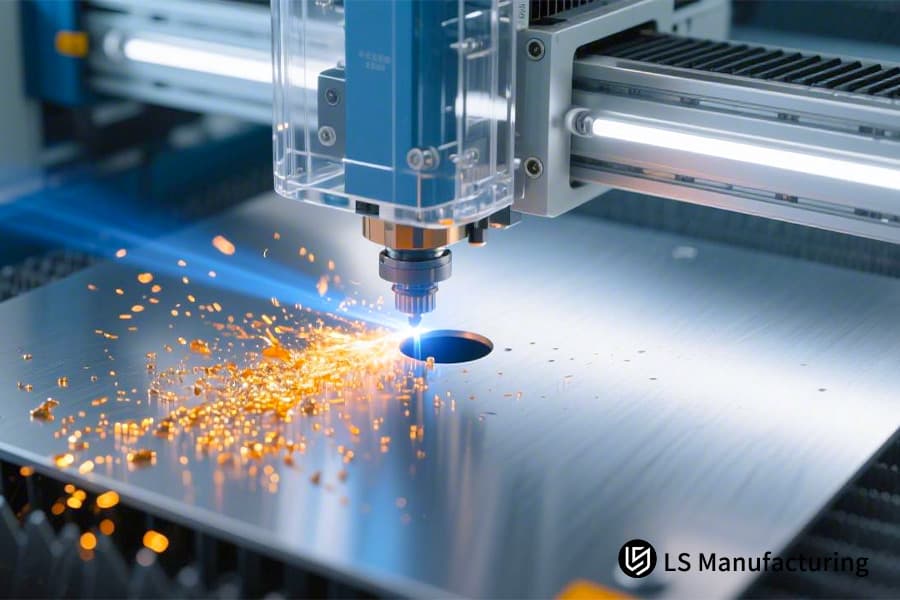
Figure 1: A high aspect ratio micro micro hole laser cutting in stainless steel for electronic component fabrication.
Why Choose A Professional Small Hole Laser Cutting Service To Solve Taper Issues?
The key challenge in small hole laser cutting service is to reduce inherent taper, as it critically affects flow consistency in precision fluid parts. Our approach to this challenge is through a precision photonic control system that converts light energy to precise geometry. This approach directly addresses the "funnel" effect to provide functional reliability:
Beyond Simple Piercing: The Trepanning Strategy
We avoid the use of standard percussion drilling, which can lead to taper. Instead, our system incorporates a controlled trepanning action in which the laser beam follows the circumference of the final hole diameter. This ensures mechanical cutting action with minimal thermal effect, creating a near-vertical sidewall to lay the foundation for excellent taper control.
Dynamic Optical Compensation for Vertical Walls
Even with the process of trepanning, absorption of energy can differ based on the depth. Our system is able to dynamically change the angle of incidence of the deep-hole laser drilling process in real-time. For example, to maintain a sidewall angle greater than 89.5 degrees in a 2.0mm thick stainless steel plate, a ±5 degree compensatory action is implemented.
In-Process Monitoring for Guaranteed Geometry
This requires real-time verification. We also integrate coaxial vision monitoring, which monitors the hole profile at various stages in the micro-hole laser drilling process. This feedback enables instant parameter adjustment to ensure that the desired geometry is not only desired but also definitively obtained.
From Geometry to Functional Performance
Functional validation is the last step. A hole of 0.15mm and 89.5° in verticality compared to another hole of the same dimensions but with 85° in verticality shows a clear difference in laminar flow coefficient. We measure performance and directly correlate the results obtained from our precision laser drilling service with system operation. This process effectively eliminates post-process system tuning and performance variability for our clients.
This document describes a methodology wherein photonic energy is orchestrated in a precise fashion. Our methodology for small hole laser cutting changes this process from a geometry-focused approach to a fluid dynamics approach. The depth of this approach is demonstrated in our choice of using angular compensation as opposed to post-processing, as this approach ensures fluid dynamics consistency at the outset and is a demonstration of the technical authority we bring to a project.

How Can A Precision Laser Cutting Service Control HAZ Without Affecting Material Properties?
In laser cutting for precision parts, particularly when precision is required, the Heat Affected Zone (HAZ) from a laser cutting process can be a major cause of failure. Our precision laser cutting service addresses this issue fundamentally by providing a paradigm shift from a thermal ablation process to a photophysical ablation process, which provides a HAZ of < 5µm compared to a HAZ of 50µm from a nanosecond-based process: our process leaves the base properties of the materials untouched.
The Paradigm Shift: From Thermal to Athermal Interaction
- Core Mechanism: Utilizing ultrashort (femtosecond) pulses.
- How it Works: Each pulse has a duration shorter than the time required for energy transfer via heat to the lattice structure of materials.
- The Result: Direct solid to plasma ablation, allowing for true cold machining without the micro-cracks caused by melting and resolidification.
Precision Energy Delivery for Controlled Removal
- Energy Control: Precisely controlled fluence (energy per unit area) at the focal point.
- Process Outcome: Ensuring that material removal is only achieved through non-linear absorption at the precise point.
- Technical Benefit: It limits all interaction to a tiny volume, and this is extremely important in the high-temp alloys laser cutting, as uncontrolled heat will spread rapidly.
In-situ Verification & Process Validation
- Monitoring Method: High-resolution coaxial imaging verifies the micro-scale laser cutting process.
- Validation Data: This provides direct visual evidence of the absence of a visible HAZ and absence of melt.
- Quality Assurance: The process ensures that all parts are made to the precise <5µm HAZ standard, providing a measurable benchmark for precision laser cutting service.
From Laboratory Parameter to Production Assurance
- Parameter Optimization: We have developed proprietary parameter sets that provide the best speed and integrity for various materials such as Inconel.
- Functional Result: This methodology for provides a discipline that prevents the initiation of fatigue fractures from the edges of the holes.
- Client Value: This methodology provides parts that can withstand high pressure cycles without degrading performance.
This methodology provides a description of a controlled process of photonic disruption rather than simply laser cutting. The level of technical expertise that we provide is the selection of femtosecond pulses rather than nanosecond pulses and the ability to actively prevent the diffusion of heat. This provides a heat affected zone (HAZ) that is virtually eliminated, thereby preserving the inherent strength of the final precision part laser cutting that is the essence of our competitive authority.
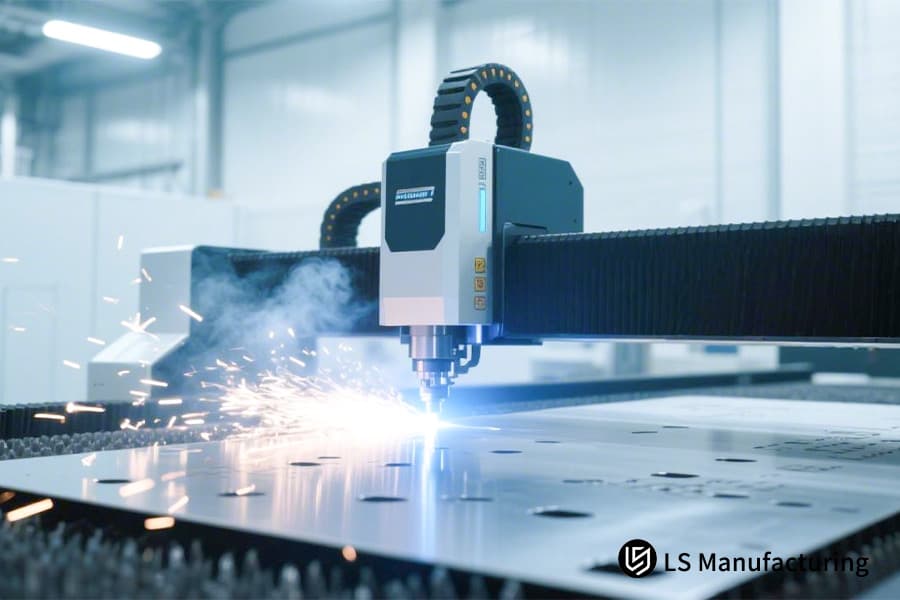
Figure 2: Cutting precise small holes in thin gauge stainless steel for medical instruments and micro sensors.
How To Achieve Deep Hole Drilling In Hard-To-Cut Alloys With High Aspect Ratio Laser Cutting?
The challenge of achieving a consistent high aspect ratio laser cutting process for a micro hole laser cutting in hard-to-cut materials is a significant one, as energy delivery and debris evacuation become exponentially more difficult with depth in such a scenario. This document describes our methodology in ensuring a precise and clean operation in drilling a hole with an aspect ratio exceeding 20:1, with an emphasis on quantifiable actions to guarantee a successful operation in a functional application such as a medical filter or sensor housing.
| Technical Focus | Our Execution & Quantified Outcome |
| Energy Delivery Strategy | Our solution utilizes a multi-pass trepanning strategy in achieving a precision laser cutting in drilling operation, with precise control of energy delivery per pass to avoid taper and control heat input. |
| Depth Compensation | The implementation of a real-time tracking system to compensate for depth, ensuring optimal fluence is maintained at the cutting front during a deep-hole laser cutting operation. |
| Debris Evacuation | The implementation of a high-pressure coaxial gas flow model, optimized for a given material to exceed a 90% reduction in dross adhesion in a deep hole scenario. |
| Process Validation | The integrated solution for the micro-features laser cutting allows for the precise drilling of 20:1 aspect ratio holes in TC4 Titanium, while satisfying rigorous bore cleanliness requirements. |
This protocol offers a systematic engineering answer to the key problems of energy, focus, and debris in deep micro hole laser cutting. Our authority is supported by our ability to specifically integrate dynamic focal tracking and our unique gas dynamics model. The answer to our client's problems is realized through the active combination of these two key elements, guaranteeing precise deep holes in hard-to-cut materials, completely free from debris, and therefore able to satisfy required flow rates and eliminate costly cleaning processes.
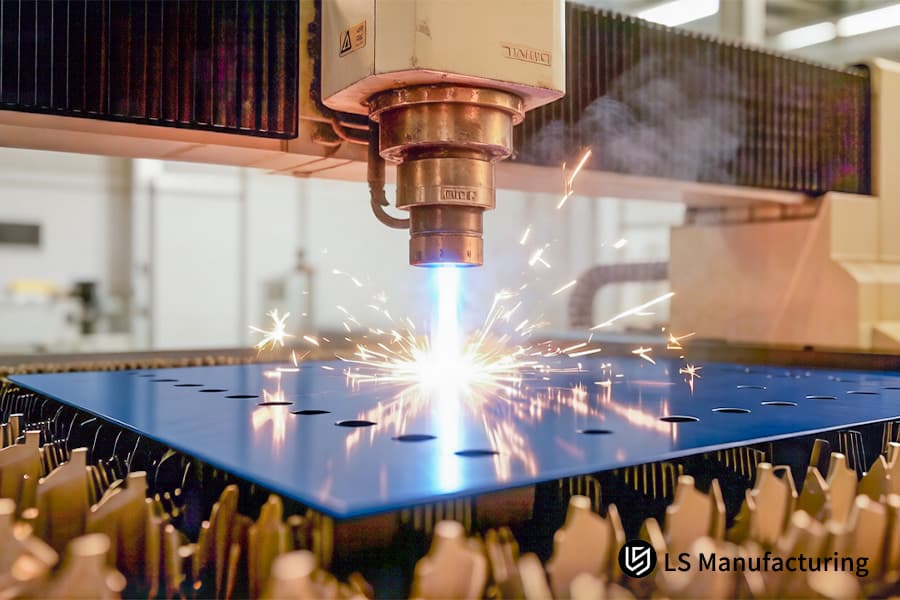
Figure 3: Cutting precise micro holes in an aluminum alloy sheet for computer or telecom heat sink fabrication.
LS Manufacturing Precision Laser Drilling For 0.1mm Micro-Holes In Ceramic Substrates
This micro hole case study presents one of the most significant manufacturing challenges facing the semiconductor industry and the engineered solution from LS Manufacturing. The challenge was to produce reliable micro-hole arrays, 0.1mm in size, in a brittle, specially customized ceramic substrate, where both mechanical and conventional laser approaches resulted in unacceptably high failure rates and cost issues, jeopardizing the launch of a major product:
Client Challenge
A semiconductor packaging company needed to produce Φ0.1mm through-holes in an aluminum nitride (AlN) ceramic substrate. The company had previously tried traditional mechanical drilling with severe chipping effects, and standard infrared laser cutting had micro-cracks from excessive thermal stress, leading to a 25% crack rate and an unknown scrap cost.
LS Manufacturing Solution
We provided a precision laser cutting process with a 515nm femtosecond laser with a green wavelength. The precision laser cutting process was performed with a dynamic mask anti-vibration stage and a Burst Mode pulse strategy to eliminate heat and shock effects. Moreover, the process featured real-time image recognition for precision positioning with an accuracy of ±3μm for all 2,000 holes in the substrate array, thus resolving the chipping and cracking effects from the previous cutting processes.
Results and Value
The final component yield went from 75% to 99.8%, and the processing speed increased threefold. This new advanced laser cutting solution eliminated the need for post-processing crack removal and de-burring. For the client, it meant a stabilized supply chain, substantial cost savings in total cost of ownership, and the acceleration of their high-reliability product's time to market, earning them the distinction as a key strategic supplier for LS Manufacturing.
This is just one example of our approach to our methodology: providing application-specific photonic processes rather than generic services. By solving the fundamental thermo-mechanical problem in ceramic machining in a disciplined, parameter-controlled way, we don't just deliver components; we deliver outcomes for the most demanding applications in the semiconductor industry and beyond.

How Does Precision Laser Drilling Service Use SPC Systems To Ensure Batch Consistency?
For a precision laser drilling service, true capability is not defined by the production of one perfect part, but rather by the unrelenting consistency of ten thousand parts. The challenge in high precision laser cutting is mitigating the inherent variability in the cutting process, as illustrated below. LS Manufacturing solves the challenge in precision laser cutting through the implementation of Statistical Process Control, turning inspection after production into real-time control:
Real-Time Data Acquisition: The Foundation of Control
- In-Process Monitoring: An inline laser interferometer is employed to measure the focal point and power density of the beam every 5 seconds.
- Measured Parameters: The parameters measured include focus position, pulse energy stability, and others.
- Immediate Benefit: It provides real-time monitoring and a digital twin of the SPC process laser cutting, allowing for the measurement of micro-variations not visible during inspection after production.
Automated Feedback & Correction
- Closed-Loop System: The data from the monitoring system is input into the machine's controller.
- Corrective Action: The system dynamically adjusts the position of the galvanometer and the pulse picker to counteract the effects of thermal lensing or power drift.
- Result Achieved: This maintains the laser drilling service parameters within a pre-defined control window for the entire production run, ensuring batch consistency.
Data-Driven Process Validation and Commitment
- Performance Quantification: We evaluate the data to determine statistical performance indexes (Cpk).
- Demonstrated Capability: We demonstrate a process that maintains a Cpk >1.67 for a critical dimension such as hole diameter (tolerance of 2µm) for a total of 50,000 holes.
- Client Assurance: This quantified process stability enables us to provide a "ship to stock" or "inspection free" guarantee for our batches laser cutting process of material.
Actionable Quality Documentation
- Transparent Reporting: This provides clients with a comprehensive SPC report containing all relevant control charts.
- Proactive Management: This enables predictive maintenance and optimization of processes before any issues occur.
- Supply Chain Value: This gives procurement engineers and quality engineers irrefutable evidence to qualify suppliers, removing a significant part of their inspection workload.
This methodology represents a proactive, data-driven manufacturing protocol, not merely a high precision laser cutting operation. The level of detail within our SPC quality control system is determined by our ability to provide automatic correction—a decision-based process which avoids defects rather than reacting to them. This addresses our clients' fundamental requirement for risk-free, predictable supply, transforming a precision laser drilling service from a variable cost center to a source of quality.
Can High Precision Laser Cutting Services Optimize Surface Roughness For Stainless Steel And Aluminum?
For high precision laser cutting operations, particularly in small hole laser cutting service, the material's internal surface roughness (Ra) is a significant functional characteristic that influences capillary action, fluid flow, and fatigue resistance. This document describes our material-specific methodologies for actively managing Ra to convert this previously post-process problem into a process specification for cost reduction and performance improvements.
| Material | Challenge & Strategy | Quantified Process Outcome |
| Stainless Steel (e.g., 316L) | To prevent oxidation and ensure a clean, "bright" cut. | Utilization of high-pressure nitrogen assist gas in precision laser cutting operations to produce a clean cut in an inert atmosphere, ensuring no oxide formation with Ra < 0.8µm. |
| Aluminum Alloys | To prevent dross and re-solidified material. | Utilization of a high-frequency, low-pulse-energy laser cutting for micro-holes strategy to ensure a smooth cut with Ra < 1.0µm and minimal adhesive slag formation. |
| Result & Value | Elimination of secondary finishing. | The precise nature of this controlled laser cutting technique allows for finished bore quality to be achieved directly from the machine, resulting in a reduction of over 15% in polishing costs and a significant improvement in lead times. |
In this protocol, a process-engineered approach to surface roughness is provided, taking this fundamental cutting operation to a higher level. Evidence of our technical authority is provided by the deliberate choice of assist gas and pulse regime, based upon material thermodynamics. This provides a solution to the client's problem in high precision laser cutting, enabling significant cost reduction by eliminating expensive secondary finishing operations, a key benefit in high-value laser cutting components such as those required in medical and precision fluidic devices.
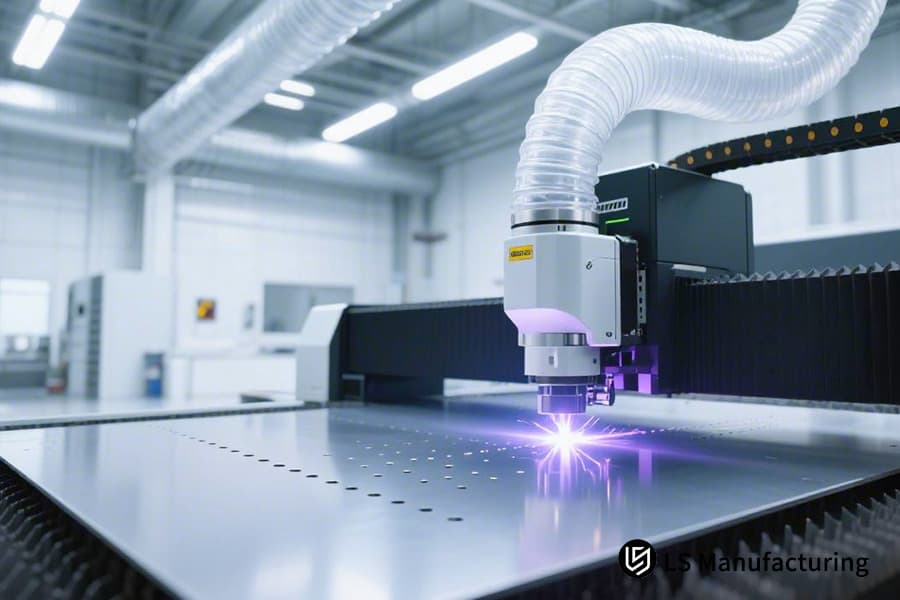
Figure 4: Cutting a grid of high-precision holes in galvanized steel for industrial ventilation or filtration systems.
How Does DFM Advice In Laser Cutting For Precision Parts Help Clients Optimize Micro-Hole Designs?
The highest value in laser cutting for precision parts is often achieved before the actual cutting process begins. In order to be a true precision laser cutting service, we must be a manufacturing partner that solves latent design problems that impact cost, quality, and speed to market. Our complimentary DFM analysis transforms concepts into best-in-class designs, unleashing productivity and quality potential in the parts we cut:
Early-Stage Design Interrogation
- Process Review: We review the parts' geometry and hole content in the early stages of the process.
- Problem Identified: We identify problems such as inadequate space for thermal dissipation or features that make beam paths inefficient.
- Proactive Solution: We provide specific recommendations for design optimization to avoid thermal distortion and ensure structural integrity, backed by data.
Geometry Optimization for Laser Efficiency
- Strategic Redesign: We recommend design changes to accommodate the physics of precision laser micro-cutting.
- Specific Tactic: This could include recommending a stepped hole design rather than a deep, straight hole of equivalent diameter.
- Tangible Result: In a specific case, this change reduced the total path length and number of passes, reducing the time to perform the complex holes laser cutting operation by 40% without compromising functionality.
Cost and Lead Time Forecasting
- Impact Quantification: Our DFM analysis offers new estimates of cycle time and material usage based on the optimized design.
- Client Benefit: This offers a clear contrast between initial and final project costs and time.
- Collaborative Outcome: This allows the client to make informed decisions, balancing ideal design with manufacturability and budget.
Risk Mitigation Before Production
- Failure Prevention: The process eliminates high-risk features that are likely to crack or suffer from tolerance failure.
- Assurance Provided: This front-end engineering ensures that the first article is highly likely to meet all specification requirements.
- Strategic Value: This process changes a project from a gamble to a predictable production program.
The above methodology shows our approach to integrating manufacturing intelligence during the design phase. As a further measure of our depth in performing a DFM analysis, our proposed solution to incorporate a stepped hole design is a clear design optimization, based on physical laws, to solve a client problem of high costs and long cycle times. Our proactive partnership in laser cutting for precision parts avoids costly mistakes, ensuring reliability and efficiency are designed into parts from their very first sketch.
How To Identify A Precision Laser Drilling Manufacturer With Micro Hole Laser Cutting Core Technology?
To identify a supplier with capabilities in micro hole laser cutting and small diameter laser drilling, one must go beyond a supplier's capabilities and look to their core technology and quality philosophy, rather than their standard equipment list. This guide provides a framework to conduct a technical audit of a supplier to differentiate a foundational partner from a mere job shop based on in-process controls:
Validate Core Photonic Processing Assets
It is not enough to simply have a laser. You need to provide evidence of technology generation, i.e., the use of ultra-fast pulsed lasers. This is a requirement that cannot be compromised if you want to achieve real cold ablation laser cutting. This is necessary if you want to achieve near-zero HAZ and micro-cracks, which are important considerations if you want to achieve part integrity instead of part geometry.
Interrogate Proprietary Motion and Control Software
In addition to the laser technology, another important aspect of achieving precision is the control algorithms. A competent partner needs to provide evidence of proprietary software used in trepanning and helical drilling paths. This will enable controlled taper laser cutting, which will achieve a minimum of 89.5 degrees of sidewall perpendicularity.
Scrutinize Metrology and Process Documentation Capability
Examine the quality lab. The key equipment to be found is a vision measurement system (VMS) with at least 1000x magnification and a white light interferometer for surface roughness. Moreover, as part of the rigorous audit, the supplier audit should be checked to see if they have a Quality Control Plan (QCP) and if there is full traceability of all their materials (mill certs, heat numbers).
Request a Witnessed Process Qualification Run
The last test is to see them actually do it. Ask them to create a sample part that is similar to your original problem, be it the material, the aspect ratio, and the surface finish. Witness their entire setup, monitoring, and inspection. This will demonstrate how well their equipment, software, and monitoring work together to deliver a precision laser cutting process.
The audit framework we provide is based on actionable verification of technical systems, and our authority is evidenced by our willingness to open ourselves up to this degree of scrutiny to demonstrate the control of our photonic process and quality systems to deliver our micro hole laser cutting solutions.
FAQs
1. What is the minimum micro-hole diameter that LS Manufacturing can achieve?
By utilizing femtosecond lasers, we are able to deliver ultra-fine micro holes with diameters as small as 0.02mm in 0.5mm thick stainless steel materials.
2. How long does the lead time typically take for high-aspect-ratio micro-hole processing?
Our standard prototype lead time is 3-5 business days after confirmation of the drawings, and our lead tim
3. How do you ensure the positional accuracy of micro-hole arrays?
Through our closed-loop linear encoder feedback system, along with our vision-based alignment technology, we are able to maintain an error rate of within ±0.005mm on the center-to-center distance across our entire processing area.
4. Does laser cutting of micro-holes result in slag formation?
Through our coaxial high-pressure nitrogen gas purging, along with our subsequent ultrasonic cleaning technology, LS Manufacturing is able to provide our customers with smooth internal walls within our micro-holes, completely devoid of any slag formation.
5. Which specialized materials do you support for precision laser drilling?
In addition to our ability to work with stainless steel alloys and titanium alloys, LS Manufacturing specializes in working with materials such as aluminum nitride, silicon carbide ceramics, quartz glass, as well as refractory metals such as tungsten and molybdenum.
6. Why are your quotes higher than those of standard laser cutting providers?
Our pricing model takes into account substantial costs of equipment depreciation, operation of our climate-controlled cleanroom facilities, and provision of data reports via SPC, all designed to help you minimize your overall costs of scrap.
7. Does LS Manufacturing accept small-batch R&D orders?
We warmly welcome small-batch custom orders and prototyping orders with a minimum order quantity of one piece, aiming to assist in early-stage R&D validation for leading-edge industries.
8. What documents do I need to provide to receive an accurate quote?
Please send us 3D model files in STEP/STP formats with tolerance specifications, and 2D engineering drawings, and we'll get back to you with a quote in 24 hours or less.
Summary
Precision micro-hole processing is a complex systems engineering challenge involving energy density distribution, fluid-dynamic debris removal, and stress field control. Leveraging ultra-short-pulse laser matrix technology and rigorous quality control, LS Manufacturing overcomes key industry challenges: high aspect ratios, eliminated HAZ, and extreme consistency. From prototyping to mass production, we deliver quality certainty that exceeds expectations, ensuring product leadership in end applications.
Ready to push the boundaries of manufacturing? Don't let micro-hole machining bottlenecks slow down your R&D progress. Contact a senior process engineer at LS Manufacturing today to receive your "Specialized Report on Precision Micro-Hole Laser Cutting". We will conduct a complimentary Design for Manufacturability assessment based on your technical drawings, providing a detailed comparison of process paths and a comprehensive cost analysis.
Achieve micron-perfect micro-holes with near-zero taper and HAZ using LS Manufacturing's high-aspect-ratio laser cutting service.
📞Tel: +86 185 6675 9667
📧Email: info@lsrpf.com
🌐Website: https://lsrpf.com/
Disclaimer
The contents of this page are for informational purposes only. LS Manufacturing services There are no representations or warranties, express or implied, as to the accuracy, completeness or validity of the information. It should not be inferred that a third-party supplier or manufacturer will provide performance parameters, geometric tolerances, specific design characteristics, material quality and type or workmanship through the LS Manufacturing network. It's the buyer's responsibility. Require parts quotation Identify specific requirements for these sections.Please contact us for more information.
LS Manufacturing Team
LS Manufacturing is an industry-leading company. Focus on custom manufacturing solutions. We have over 20 years of experience with over 5,000 customers, and we focus on high precision CNC machining, Sheet metal manufacturing, 3D printing, Injection molding. Metal stamping,and other one-stop manufacturing services.
Our factory is equipped with over 100 state-of-the-art 5-axis machining centers, ISO 9001:2015 certified. We provide fast, efficient and high-quality manufacturing solutions to customers in more than 150 countries around the world. Whether it is small volume production or large-scale customization, we can meet your needs with the fastest delivery within 24 hours. choose LS Manufacturing. This means selection efficiency, quality and professionalism.
To learn more, visit our website:www.lsrpf.com.