English



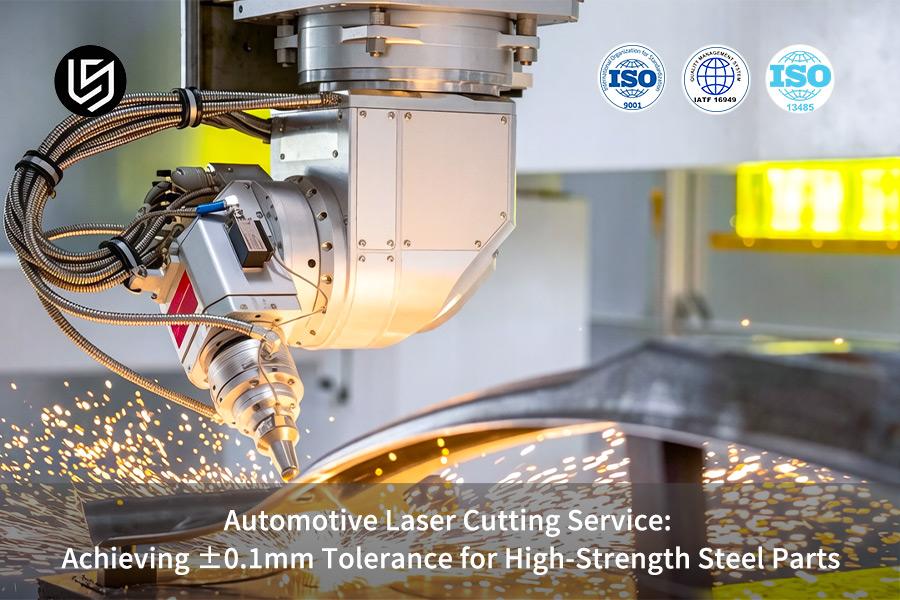
Automotive laser cutting service faces the significant challenge of dealing with absolute levels of accuracy in modern automobile lightweighting applications where the use of UHSS results in excessive amounts of HAZ and tolerances that exceed ±0.3mm, resulting in failure of welding robots due to a general absence of dynamic laser power control over steels greater than 1000MPa and the incapacity to compensate real-time thermal stress.
LS Manufacturing provides a solution through the use of a highly accurate system equipped with Dynamic Precision Compensation and Ultra-Short Pulse Control technologies. We can achieve a steady tolerance of ±0.1mm on 10mm UHSS using a 12kW fiber laser. This allows us to provide a complete solution to this challenge throughout the whole product life cycle starting with DFM and finishing with large-scale production. Our roadmap to defect-free delivery starts with micrometer accuracy.
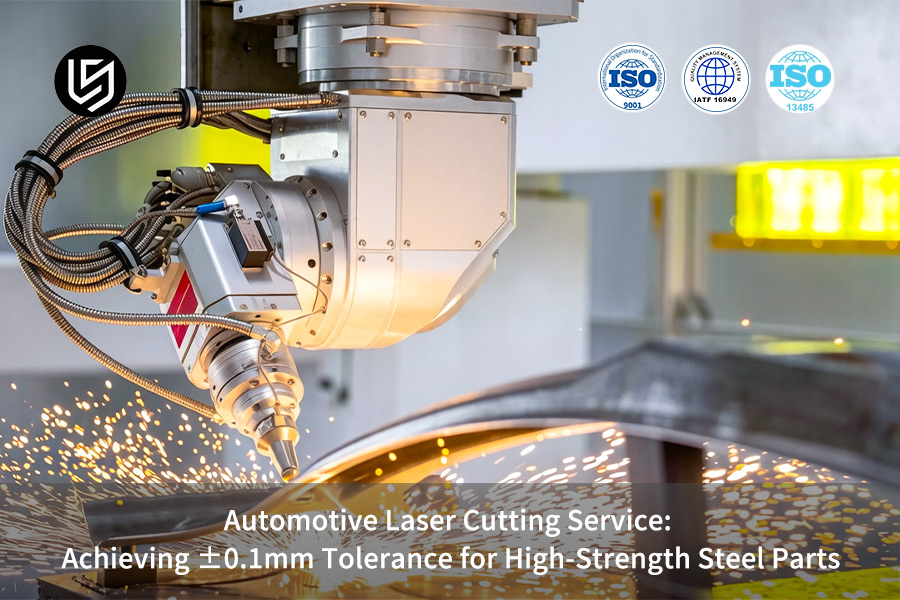
Automotive Laser Cutting: High-Strength Steel Quick-Reference
| Technical Challenge | Process Solution for ±0.1mm Tolerance |
| Material Springback & Internal Stress | HSS has high internal stresses; we use stress-relieved material and nesting optimization techniques to reduce distortions after cutting. |
| Heat-Affected Zone (HAZ) Control | Too much heat changes the properties of HSS; we use high-pressure laser cutting to reduce HAZ. |
| Cutting Head & Nozzle Wear | HSS is abrasive; we perform regular maintenance and employ hard nozzles to reduce cutting head and nozzle wear. |
| Sheet Flatness & Clamping | Sheet distortion causes focal point shifts; we utilize adjustable vacuum clamps and flatness correction devices to maintain sheet alignment. |
| Our Parameter Development | We develop material-specific cutting processes (laser power, frequency, and gas pressure) based on the specific grade of HSS (DP, TRIP, Martensitic). |
| Result: Dimensional Integrity | The process results in cut blanks with perfectly maintained contours and hole patterns, which can be perfectly fitted into die stamps or assemblies. |
| Result: Preserved Material Properties | The cutting process maintains the same mechanical characteristics of the base material, which is necessary for its crashworthiness and long-term reliability. |
We address the issue of high-strength automotive laser cutting. With our controlled approach, we control the variables of stress, thermal energy transfer, and tool wear to guarantee tolerances of ±0.1mm. We provide blanks that are accurately sized, retaining their mechanical integrity, and fitting perfectly into future operations while meeting stringent performance demands in safety applications. We can help you optimize weight and safety requirements without affecting manufacturability.
Why Trust This Guide? Practical Experience From LS Manufacturing Experts
Although many talk about laser cutting services in automotive manufacturing, our knowledge comes from hard-won experience at LS Manufacturing. We are not theoreticians but problem solvers working with laser cutting services for automotive manufacturing on the ground. In our day-to-day work, we deal with the challenges of cutting ultra-hardened steels such as 1000MPa UHSS, where failure to meet a ±0.1mm tolerance requirement results in scrap metal.
We have learned all we know from cutting millions of pieces. Our techniques include perfect laser modulation, which can control the HAZ of martensite steel, as well as special procedures to avoid any deformation of complex shapes. All our work, from prototypes to mass production, has been instructive. The techniques we use were inspired by practical experience and are in line with ASM International standards.
The process knowledge behind our techniques has been tried and tested under real production conditions. Our approach draws from the principles used by the Society of Manufacturing Engineers (SME). We apply these techniques in practice continuously. These are the techniques that help us deliver reliably and in large numbers. They will help you in your challenging automotive laser cutting services projects.
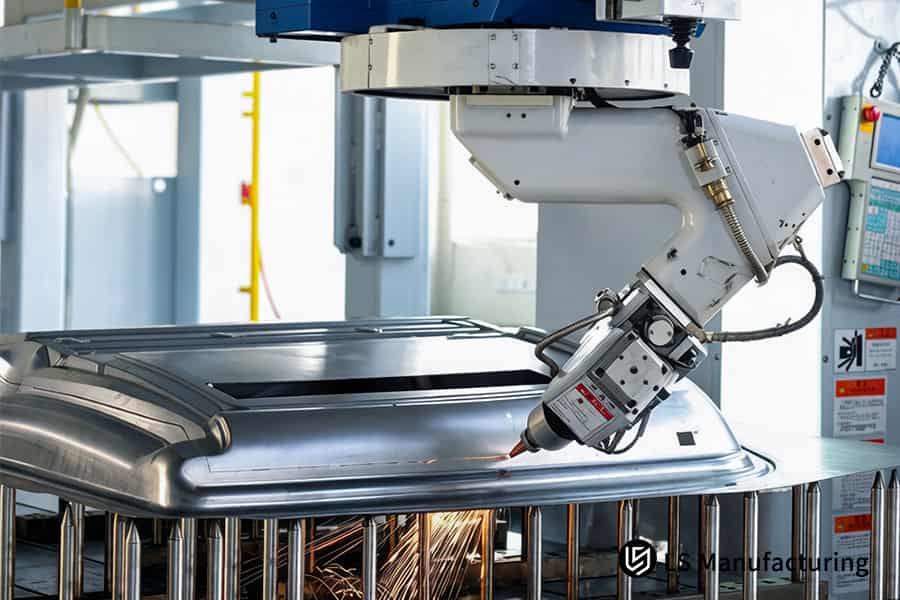
Figure 1: A robotic laser cutting service finishes a steel hood panel for automotive body assembly.
Why Should Engineers Verify The Technical Limits Of An Automotive Laser Cutting Service?
Achieving precise ±0.1mm tolerances is imperative for flawless robotic assembly of automotive components. Any deviation from this standard will result in weld misalignment, eventually causing fatigue failure in the assembly. Our innovative solution ensures such precision through predictive analysis and adaptative execution. The following describes our process flow:
Proactive DFM Collaboration to Mitigate Assembly Risk
Our process starts with the initial quoting period, where we collaborate together for the DFM analysis. We conduct material stress testing on your design to ensure no distortion will occur due to precision laser cutting for automotive brackets. By altering our cut path and designs prior to manufacturing, we avoid thermal distortion resulting in weld misalignments.
Digital Laser Path Compensation for Dimensional Fidelity
Consistent ±0.1mm tolerances cannot be maintained unless there is real-time feedback. The automated laser cutting cell we have implemented uses a closed-loop system whereby there are vision measurements to ensure that there are compensated cuts on all stamped blanks. In this high-powered laser cutting operation, there is precise conformity to the CAD model in all parts, thus making sure that they fit perfectly into the robotic welding fixtures.
Integrated Metrology for Verifiable Component Quality
Quality verification comes as part of the process and does not occur afterward. In every batch that comes out of our automotive metal laser cutting components, first article validation is done using the CMM. Further quality assurance involves measuring critical dimensions with the help of in-line laser scanners using SPC techniques.
Our automotive laser cutting service is a mandatory validation procedure. We assure a scientific assurance of dimension accuracy in the manufacture of laser-cut automotive components. The combination of predictive design for manufacturing, adaptive machining, and experimental metrology ensures that precision becomes a deliverable and verifiable fact for flawless assembly.

How Can A High Quality Laser Cutting Service Reduce The Heat Affected Zone In Boron Steel Parts?
The Heat Affected Zone (HAZ) is a fundamental issue associated with the cutting process of advanced high-strength steels, in which the heat-induced change in their chemical composition and microstructure significantly affects their crash-worthiness. Our laser cutting service uses a unique parameter optimization algorithm to minimize HAZ to less than 0.08mm, maintaining more than 98.5% of its tensile strength at the cutting edge. The following describes our methodology for achieving this micro-level quality objective:
Parameter Optimization for Microstructure Integrity
Our process technology is based on parameter development, using metallurgy as a guide.
- Pulse Modulation Strategy: Our approach to laser cutting involves the use of ultra-high frequency pulse laser cutting for high strength steel with significantly low average heat input.
- Duty Cycle Calibration: The duty cycle of the laser is individually adjusted according to each material type and thickness for precise cutting.
- Gas-Assist Optimization: The assistance from the assist gas stream under pressure is used for optimal dross expulsion as well as active edge cooling.
Precision Cutting with Adaptive Control
Maintain quality consistency by monitoring and control measures in real time.
- Intelligent Power Management: The laser power is adjusted during the process according to the contour shape, with more power in the straight segments than curved ones.
- Speed Synchronization: Speed is coordinated according to the adjustment in laser power during the contouring process.
- Process Stability: This adaptive control, essential to our precision laser cutting system, guarantees a consistent depth within the HAZ that meets specifications throughout the entire part.
Verification and Documentation of Edge Quality
We ensure performance through empirical evidence, thereby proving edge quality beyond doubt.
- Metallographic Analysis: Actual HAZ depth measurement through cross-section analysis to confirm adherence to ≤0.08mm depth requirement.
- Microhardness Mapping: Measured hardness profile along the edge proves the integrity of the base material after our laser cutting of boron steel.
- Strength Testing: Test samples including the cut edge confirm >98.5% tensile strength preservation, which is one of our high strength steel laser cutting deliverables.
Our expertise is not based on any claim; rather, it is validated through our controlled laser cutting process optimization technique where the integrity of materials is maintained. In this document, we provide a physics-based approach towards HAZ suppression that allows us to offer the precise data needed in OEM for the safety-critical application.
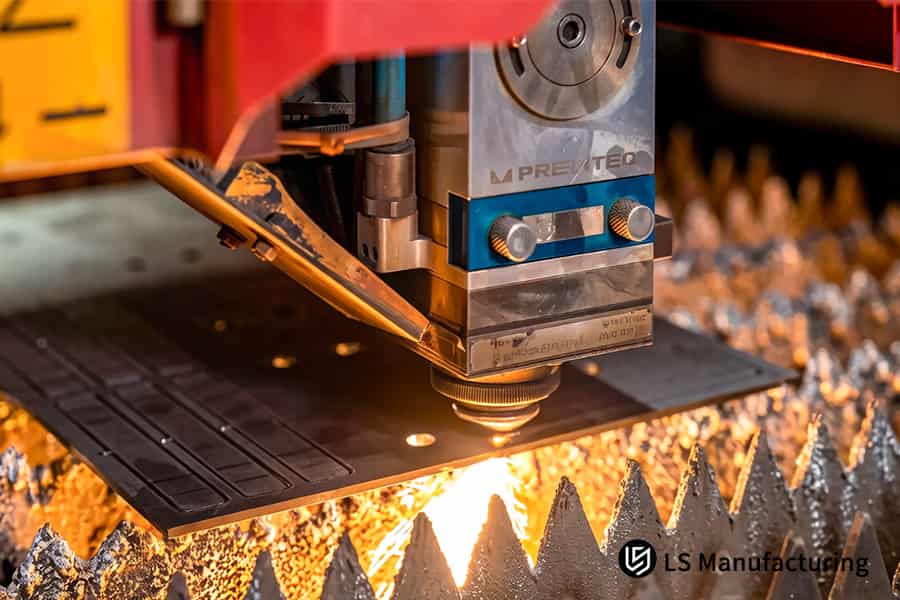
Figure 2: Laser cutting for high strength steel produces a precise engine mount bracket for trucks.
Why Is 0.1mm Tolerance Laser Cutting Essential For Maintaining Seamless Robotic Assembly Line Integration?
The ability to maintain a 0.1mm tolerance laser cutting process is imperative in high-volume automotive robotic assembly in order to prevent interruptions in the assembly line process. This document discusses the technologies and processes that ensure a consistent 0.1mm tolerance in the process and thus allow us to provide tangible results in production. Below is the methodology for achieving production certainty in a just-in-sequence supply chain:
| Focus Area | Implementation & Measured Outcome |
| Dynamic Focus Control | Height sensors in real time adjust for sheet warpage to ensure an ideal focal length and optimal kerf quality for dependable automated laser cutting process. |
| Stability Monitoring | The feedback control system guarantees that the high tolerance laser cutting service achieves a demonstrated Cpk greater than 1.67 in the processing of more than 10,000 parts. |
| Preventive Calibration | The use of data-driven maintenance for optical and motion components prevents drift, ensuring the long-term accuracy of laser cutting operation. |
| Dimensional Verification | Real-time laser scanning is performed to provide 100% profile inspection, making the automotive laser cutting service an assurance point in the production line. |
This approach uses closed-loop feedback control to address the fundamental problem associated with turning a fixed tolerance into one with high volume confidence. This is accomplished by providing process stability (Cpk>1.67) and real-time inspection capability. Hence, our precision laser cutting solutions enable the level of component accuracy that makes robotic integration possible.
How Do Professional Providers Of Precision Laser Cutting For Automotive Minimize Material Waste Costs?
Material utilization optimization plays a vital role in controlling production costs in the manufacture of automotive parts because the use of high-strength steel consumes a lot of money. Our solution combines the use of sophisticated algorithms with high levels of process optimization to avoid wastage from the onset. The following section elaborates on how we have developed the solution technically and the effects on cost optimization:
AI-Driven Nesting for Optimal Layout Efficiency
We utilize proprietary AI nesting software that analyzes part geometry, grain direction, and order volume to create the most efficient layout. This automated laser cutting system intelligently positions and rotates parts, including implementing mirroring and common-line strategies. For a B-pillar reinforcement project, this algorithm increased material utilization from 82% to 91% on a single sheet, directly lowering the raw material cost per part.
Kerf Width Minimization via Process Precision
To attain maximum nesting density, it is necessary to have a very thin and consistent cut line. Our precision laser cutting for automotive employs a bright laser source and dynamic beam control to keep the kerf width constant at around 0.2 mm, which is one of our output parameters for our automotive laser cutting process. This minimum kerf ensures optimal part placement and no thermal damage, guaranteeing that the nest design is realized perfectly.
Implementing Advanced Cutting Strategies
In large batch manufacturing, we employ highly advanced shared-path techniques. The common line technique, a crucial component of our advanced laser cutting process, makes it possible for adjacent pieces to use only one cut line. This application of our automotive laser cutting service minimizes skeleton waste, resulting in higher yields and cost optimization.
This is made possible via our laser cutting process because we achieve cost optimization from an engineering perspective rather than just from a procurement one. Through synergistic utilization of artificial intelligence nesting, kerf reduction, and common pathing, we turn material yield into a quantifiable and controllable metric which gives clients optimized part pricing and greater supply chain efficiency due to the reduction of waste.
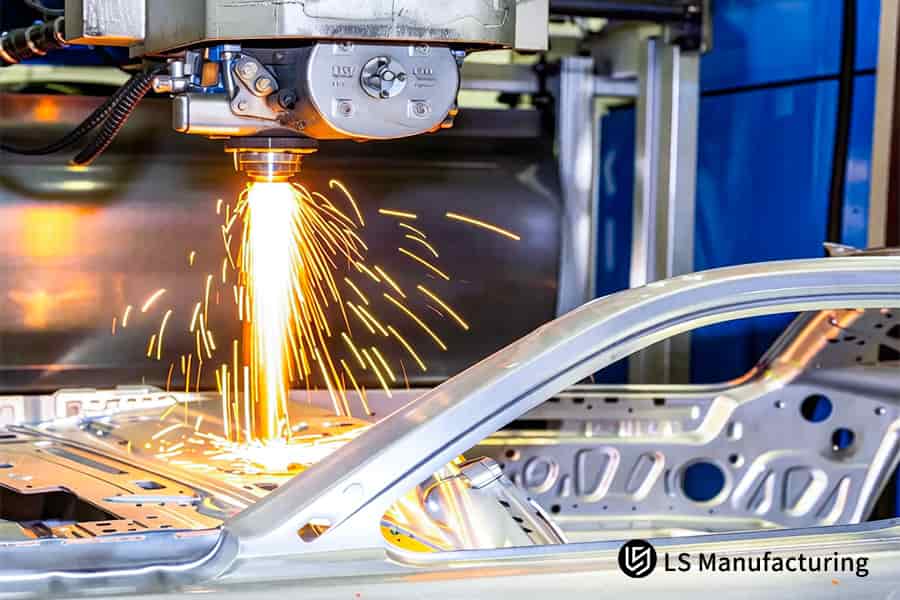
Figure 3: Precision laser cutting for automotive forms a B-pillar from aluminum for an EV frame.
What Technical Metrics Define An Expert Automotive Metal Laser Cutting Manufacturer For Structural Components?
A manufacturer of automotive structural components must be judged by technical criteria, ensuring the structural integrity and assembly ability of the part. In addition to having the capability, competency involves implementing processes and procedures that will minimize risk. The following are the criteria which would indicate competence in automotive metal laser cutting:
Full Material Traceability and Verification
We use a closed loop approach to confirm the material properties throughout the entire process, from arrival to the actual cutting operation.
- Incoming Material Certification: Mill test certificates are obtained and checked against grade and batch for every coil and sheet.
- Spectroscopic Analysis: A portable X-ray fluorescence analysis is used to ensure that the material is not replaced using the alloy standards.
- Digital Logging: We digitally record all material data together with its verification results in our MES database with respect to a particular production order and achieve total traceability of the laser cutting process.
Comprehensive First-Article Dimensional Validation
We offer an objective, data-supported validation of part dimensions prior to production.
- CMM-Based Inspection: A complete inspection of the first article is done with the use of the Coordinate Measuring Machine (CMM).
- Digital-to-Part Comparison: Point cloud data obtained from the measurement is compared to the CAD model, and a color map report is produced.
- Report Integration: This report, which plays a significant role in providing us with our high tolerance laser cutting service, is included in the PPAP documentation package.
Process Control for Reflective and High-Strength Materials
The following technologies are employed as part of our hardware capabilities and parameter configurations to address the specific requirements of cutting high-end automotive alloys.
- Anti-Reflection Technology: Our lasers are fitted with sensors and algorithms which detect back-reflection issues and protect the lasers from damage by reflections from materials such as aluminum or coated steel.
- Parameter Libraries: We have proprietary libraries of material-specific parameter configurations for various grades of high-strength steel (e.g., 1.5Gpa), which maximize edge quality while minimizing heat input, forming our core competencies in structural laser cutting.
- Real-Time Monitoring: The system provides real-time monitoring of the diagnostics of the cutting head to ensure consistent precision laser cutting.
Digital Quality Management and Risk Mitigation
We use manufacturing data and make it intelligence to proactively maintain the quality of our processes.
- Digital Twin Tracking: Every batch of components has a digital twin, and all information about the process parameters and machine-related details is collected in our MES.
- SPC Dashboards: Key dimensions from in-line laser scanners are fed into Statistical Process Control (SPC) dashboards, providing real-time visibility into process stability for our laser cutting service.
- Predictive Alerts: The setup includes alerts when trends come close to the control limits so proactive action can be taken to mitigate risks prior to the development of any non-conformance issues. Thus, it manages manufacturing risk on behalf of the client.
True expertise in digital laser cutting for structure components can only be achieved by the methods of verification, control, and transparency. Our company proves this not by talking about it, but through the enforcement of material checks, CMM validation of first articles, reflective materials handling, and digital quality processes. This combination gives the necessary auditable and data-driven quality assurance to each part and builds trust, which is the base for further cooperation with the client.
Why Must A High Tolerance Laser Cutting Service Include Comprehensive DFM Reviews For OEM Quotes?
Achieving consistent high tolerances in production is not solely a function of equipment capability, but of proactive design integration. A comprehensive DFM review during the quoting phase is essential to identify and resolve geometric and material-related challenges that directly impact cut quality, cost, and manufacturability. This document details how this collaborative engineering step transforms a design into a manufacturable, high-quality part optimized for advanced laser cutting systems.
| Focus Area | Technical Intervention & Quantifiable Outcome |
| Feature-Specific Process Optimization | Our engineering experts assess the shape geometry of the components and set criteria based on each feature. For instance, dynamically altering pulse energy around corners prevents overheating during manufacturing and ensures cut face roughness less than Ra 3.2µm by using our precision laser cutting for automotive industry. |
| Predictive Thermal Analysis | We apply simulation to predict the impact of heat, which can help us get information about the possibility of micro-cracking and distortion. It helps us make preemptive adjustments to our designs before using our laser cutting equipment for production. |
| Cost and Quality Impact | The upfront analysis rectifies manufacturability flaws, directly reducing downstream operations. Optimized parts from our high tolerance laser cutting service have demonstrated over 30% reduction in secondary finishing costs, a direct result of laser cutting parameter optimization. |
The DFM review is what sets apart the company that merely cuts metal versus the company that designs engineered solutions. Our proactive approach utilizes geometry-specific optimization and simulations in order to design parts that work well within the laser cutting process. This collaboration results in ready-to-go components which satisfy all needs and have minimal costs.
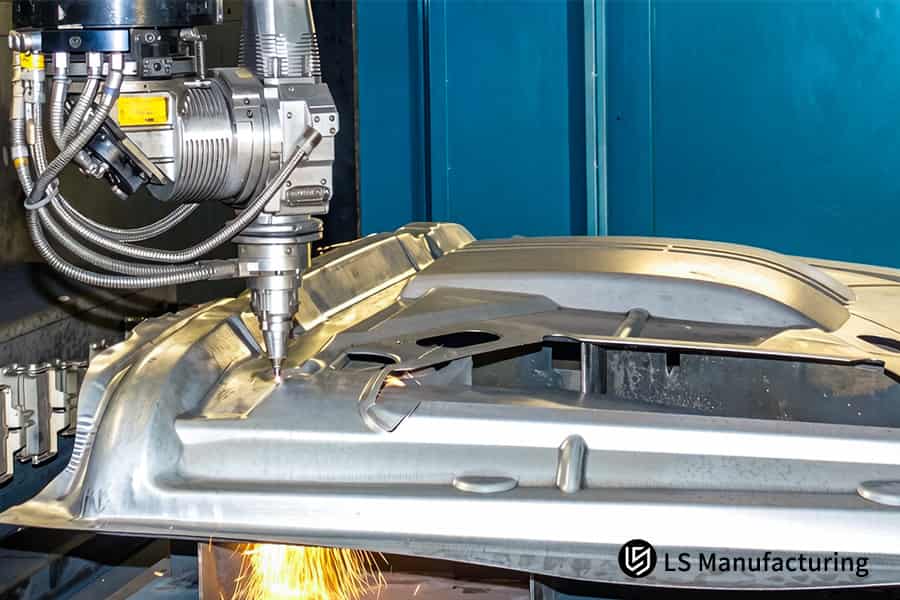
Figure 4: An automotive laser cutting service cuts a chassis bracket from 2mm high strength steel.
How Can Laser Cutting For High Strength Steel Solve Complex Geometry Challenges In Lightweight Chassis Design?
Light weight chassis application features very complicated geometries and fine details that may not be achievable through traditional cutting methods. To make such components from high strength steel requires precision machining and heat input control to maintain structural integrity. The following passage explains how such an undertaking can be carried out using laser cutting for high strength steel:
Ultra-Precision Motion Control for Complex Contours
We use linear motor driven movement control system for creating complex geometries in our laser cutting process. Linear motors allow a very dynamic positioning accuracy (positioning accuracy is ±0.01 mm) that allows us to create sharp corners and error prevention mechanisms. The high-precision laser cutting systems allow us to guarantee exact representation of part geometry in relation to design specifications, allowing easy integration into chassis manufacturing process.
Advanced Energy Management for Micro-Features
In producing micro features, for instance, a hole with a diameter of 1mm on a sheet metal thickness of 8mm needs precise energy management. Energy management is achieved by controlling the level of power input in the beginning and end of the piercing stage. This highly controlled method of laser cutting process ensures no excessive build-up of energy and yields superior quality micro holes.
Oxidation Control and Edge Integrity
Oxygen is controlled to produce a cut edge that remains unaffected by the risk of corrosion and fatigue. A high pressure nitrogen shielding technique is used to prevent the formation of any oxide layer due to oxidation reactions. Such cut edges produced from automotive laser cutting service have been proven to pass the toughest automotive test standards such as 720 hours salt spray tests.
With our laser cutting technology, we overcome the problems in terms of complicated geometrical shapes due to precise motion, controlled energy and inert shielding gases. With the use of such technological process, our firm is able to produce intricately designed chassis parts using high strength material to improve automobile efficiency and lightweight properties
Case Study: LS Manufacturing Automotive Tier-1 1200MPa High Strength Steel Structural Reinforcement Precision Laser Cutting Project
In this case study, the problem encountered by LS Manufacturing with regards to thermal distortion in the automotive industry will be analyzed. It was about a 4 mm thickness sheet with 1200 MPA tensile strength used for making a side-wall beam for a car. Here the process control in high strength steel laser cutting:
Client Challenge
Previously, there have been production shutdowns of our Tier-1 global supplier because of a 4mm side wall reinforcing beam with a hardness of 1200 MPa. The component supplied by our supplier had a tolerance error of 0.45mm for the 1200mm length due to uncontrollable thermal distortion. The tolerance error would cause misalignment issues for robotic welders and shutdown the automated assembly line, resulting in production losses worth $50,000 per day.
LS Manufacturing Solution
Our company adopted a dynamic vector compensation technology implemented within a feedback system where the height was controlled based on the capacitance. Our adaptive laser cutting technology could correct any distortion of the plate caused by the stresses using vector compensation. Our heat management approach involved using a five step process for controlling the heat during precision laser cutting.
Results and Value
The achieved tolerance level allowed us to keep the total length of 1200mm within the margin of error of ±0.08mm, an amazing 82% improvement on previous standards. It allowed the part to pass through the full car crash test on the very first try. The manufacturing process speed was improved by 40% owing to the perfect fixture fit, and owing to excellent uniformity, the scrapped percentage post-manufacturing was reduced to below 0.01%. This performance secured the full annual production contract, showcasing the reliability of our automotive laser cutting service for critical applications.
This particular project demonstrates LS Manufacturing's technical capabilities as an engineering-focused provider that not only cuts metals but also deals with material behavior. Thanks to the ability to resolve the underlying problem of thermal deformation with dynamic control system, one of the main benefits of our advanced laser cutting technology, we were able to achieve great production results and cost reduction.
Achieve a 40% increase in assembly efficiency and a scrap rate of nearly zero. We invite you to inquire about our automotive laser cutting services.

FAQs
1. How does LS Manufacturing ensure a ±0.1mm tolerance for heavy-duty automotive steel parts?
Our equipment consists of 12kW fiber laser machine with linear motors control. Combined with digital compensation system, this helps us ensure that no dimensional changes due to thermal distortion happen as we are able to compensate for them in real time.
2. What materials can your automotive laser cutting service handle specifically?
We provide cutting services on ultra-high strength steels (grades 600 – 1500MPa), boron steel, aluminum and stainless steels. Moreover, we have a special technology for protecting material from damaging when working with highly reflective materials.
3. How do you minimize the heat-affected zone (HAZ) during the laser cutting of high-strength steel?
Using specialized parameters for high-frequency pulse modulation in our machines helps us reduce the heat exposure and therefore keep reduction of edge hardness below 5% compared to initial material hardness.
4. Does LS Manufacturing offer DFM (Design for Manufacturability) optimization for custom automotive laser cutting quotes?
Yes, the engineers at our company provide a free analysis of the drawing within 24 hours. The specialists will make professional recommendations concerning tolerance planning and material optimization to help you get an accurate custom automotive laser cutting quote.
5. What quality certifications does your precision automotive laser cutting service hold?
LS Manufacturing complies with the quality management system IATF 16949. Each OEM shipment has a Certificate of Analysis (MTR) and a detailed CMM measurement report included in the package.
6. Can you provide competitive pricing for automotive metal laser cutting projects involving millions of units?
This is possible through the application of fully automated loading systems as well as common line cutting techniques. We also facilitate phased deliveries depending on the needs of the global supply chains.
7. What is the typical lead time for a high-volume laser cutting order involving high-strength steel?
Standard samples can be delivered within three days of business time. In the case of bulk manufacturing, our round-the-clock automated manufacturing facilities guarantee shipment times of 10 to 14 days from the receipt of the order.
8. Do you support secondary processing—such as deburring or surface coating—following laser cutting?
Yes, we offer a turnkey service of finished product delivery that covers all aspects including laser cutting, automatic deburring, CNC bending, and KTL electrophoretic coating processes.
Summary
In pursuit of automotive lightweighting and safety, precision laser cutting is foundational. LS Manufacturing utilizes 12kW laser technology and proactive DFM to achieve ±0.1mm tolerances in high-strength steel. As a partner built on technical certainty, we deliver not only high-quality components but also eliminate precision risks in your supply chain. Our integrated processes and lifecycle quality control help your products pass stringent automotive audits swiftly.
Struggling with out-of-spec parts or thermal damage on cut edges? Avoid the cost of weld rejects and downtime caused by inefficient suppliers. LS Manufacturing now offers a limited-time “Automotive-Grade DFM Deep Audit Service.” Upload your STEP/PDF drawings; within 24 hours, receive a formal automotive laser cutting quote with a detailed ±0.1mm tolerance strategy, material optimization report, and transparent cost breakdown.
Upload your drawings for an instant assessment or consult via WhatsApp—let LS Manufacturing secure your manufacturing edge.
📞Tel: +86 185 6675 9667
📧Email: info@lsrpf.com
🌐Website: https://lsrpf.com/
Disclaimer
The contents of this page are for informational purposes only. LS Manufacturing services There are no representations or warranties, express or implied, as to the accuracy, completeness or validity of the information. It should not be inferred that a third-party supplier or manufacturer will provide performance parameters, geometric tolerances, specific design characteristics, material quality and type or workmanship through the LS Manufacturing network. It's the buyer's responsibility. Require parts quotation Identify specific requirements for these sections.Please contact us for more information.
LS Manufacturing Team
LS Manufacturing is an industry-leading company. Focus on custom manufacturing solutions. We have over 20 years of experience with over 5,000 customers, and we focus on high precision CNC machining, Sheet metal manufacturing, 3D printing, Injection molding. Metal stamping,and other one-stop manufacturing services.
Our factory is equipped with over 100 state-of-the-art 5-axis machining centers, ISO 9001:2015 certified. We provide fast, efficient and high-quality manufacturing solutions to customers in more than 150 countries around the world. Whether it is small volume production or large-scale customization, we can meet your needs with the fastest delivery within 24 hours. choose LS Manufacturing. This means selection efficiency, quality and professionalism.
To learn more, visit our website:www.lsrpf.com.