中文 (简体)



钣金加工服务是现代高端制造业的核心基础工艺,特别是新能源、医疗、通信等行业复杂结构件的精密成型和可靠连接的解决方案。 PEM(聚合物搪瓷)铆接工艺与集成技术的结合,首先可以消除紧固件失效的风险,其次可以减少总采购费用22%。
在汽车设备、服务器机箱、医疗钣金等领域,铆接工艺极易出现螺母、螺柱扭矩滑移、钣金翘曲等重大问题,导致关键部件损坏导致整机报废的风险很高。这是一个重大缺陷,会对通过钣金组装生产的产品质量产生负面影响。
大多数常规钣金工厂认为铆接只是另一种冲压操作,因此关键变量如材料硬度匹配、预冲精度和保压持续时间完全被忽视了。这就是为什么没有动态过程监控,导致极高负载条件下铆接失败的根本原因。
这样,我们将从孔径调整、冷作硬化、液压模具管理等方面对PEM铆接优化技术进行全方位的研究,从源头赋予紧固件的抗扭和推力能力,使产品具有非常高标准的可靠性(航空级),同时有效降低供应链成本。
PEM 插入服务核心答案概述
<正文>关键要点:
- 预冲孔锥度控制在0.03mm以内以及保持毛刺面向铆接面是决定设计防止PEM螺母打滑效果的关键因素。
- 在任何情况下,如果没有采取适当措施,不锈钢质子交换膜不得直接铆接到硬度为 HRB 80 的不锈钢板上。必须采用高硬度紧固件(如 SP 系列紧固件)以保证与冷流道的接合。
- 在工业生产中,能够进行自动位移压力双闭环监控(SPC)的液压机是事实上的标准,不仅可以消除铆钉的缺失和批量报废,而且可以进行准确的询价报价。
为什么选择 LS Manufacturing 的五金制造钣金加工服务?
LS Manufacturing是一家致力于精密钣金铆接的公司。我们利用强大的冶金技术和深厚的行业知识,以确保零缺陷的高质量钣金产品来满足市场顶级参与者的需求。此外,我们还可以提供解决方案,让设计人员尽早发现并解决生产过程中的问题。
在实际情况下测试时发现,以往使用的制作方法的结果失败率约为3.2%。但是,我们的数字闭环方法已将这一比例控制在0.001%以下,整个过程符合ISO 9001:2015质量体系标准。
主要是我们开发的液压闭环方法可以优化主要参数,压力精度优于2%,板材平整度控制在0.5mm以内。该方法还可以实现全流程SPC数据记录和可追溯,生产质量远优于传统气动流程。
我们的专家技术团队曾与财富500强名单中的许多知名企业合作,帮助他们解决各种紧固件故障问题。我们的汽车级产品完全符合IATF 16949行业标准的要求。
凭借高精度的工艺和全流程的追溯体系,实现钣金五金装配的高品质、稳定的量产。为了直接验证其流程实施的强度,可以免费查看行业标杆量产案例,快速对比自己的产品质量标准。

为什么选择精密钣金硬件组装服务来消除板后返工?
一体化的钣金五金组装服务可以从根本上消除电镀、喷涂后的二次返工。通过精密预冲DFM设计和电镀前涂层厚度补偿,可以避免铆钉螺纹粘漆、防腐层损坏等问题。
性能的处理顺序注意事项
- 加工前铆接:涂层完全封装接头,耐盐雾水平达到 480 小时。但螺纹上的积漆是该工艺的弱点,因此高品质钣金加工的防腐工艺应该是核心工艺。
- 预处理后进行铆接:虽然螺纹精度保持不变,但接头容易受到腐蚀。此方法通常用于耐腐蚀要求不高的钣金加工。
涂层应力消除措施
- 预镀间隙:螺纹孔周围预留0.05mm镀层间隙,符合精细钣金加工精密装配标准。
- 密封紧固件的选择:使用带密封盖的 PEM 螺母可以很好地防止油漆进入螺纹,从源头上消除堵塞。
- 特殊遮蔽工艺:对关键螺纹区域进行针对性保护,是钣金美观与装配效率之间的良好折衷。
基本上,就像在粉刷房子之前先放一个门锁盖,这是达到外观最终目标的方法,同时,罐头操作完全不受影响。

图1:用铜螺栓精密紧固的金属板,展示了可靠的硬件组装方法。
如何在定制钣金制造中定义孔公差以实现高扭矩 PEM 插入?
在能够承受高扭矩的定制钣金制造中,预冲孔的直径公差应非常严格在+0.08/-0.00mm以内,有效避免了PEM螺母扭矩滑移,以及孔径偏差导致的板材翘曲和冷流填充不足等钣金加工中出现的高扭矩情况的主要问题。
不同切削工艺的孔特征
- 数控冲孔:产生垂直于表面的孔壁,不留热影响区,这意味着最适合高精度钣金中孔精度控制的场景制造是主要要求。
- 光纤激光切割:效率更高,但会产生0.02-0.05mm的锥度和热影响区,需要再次进行二次加工以消除缺陷。
不同材料厚度的最佳预冲直径
| 比较尺寸 | 传统流程性能 | LS 制造优化流程性能 |
| 预冲孔锥度控制 | 没有严格控制,锥度经常> 0.05mm,毛刺方向不标准化。 | 严格控制≤0.03mm,将毛刺强行压向铆接面,防止螺母滑脱。 |
| 硬度匹配设计 | 没有明确的硬度差异要求,往往基材硬度高于紧固件。 | 基材与紧固件强制硬度差≥HRB 20,与SP系列配套的高硬度不锈钢基材高硬度紧固件。 |
| 铆接过程控制 | 仅简单冲压,无压力-位移监控,无标准化保持时间。 | 采用位移-压力双闭环SPC监控,保压时间精确控制在0.4-0.8s,确保足够的冷流。 |
| 边缘距离设计 | 没有明确的标准,通常边缘距离 < 1.5×D。 | 严格遵循≥2×D的DFM黄金法则,针对特定场景制定特殊的流程减载方案。 |
| 量产失败率 | 紧固件打滑和拆卸失败的风险为 2%-5%。 | 批量故障率 < 0.01%,100% 符合推力和抗扭性能标准。 |
| 纸张平整度控制 | 无压精准控制,铆后板材翘曲常见,平整度一般>2.0mm。 | 压力控制精度±2%以内,铆后板材平整度≤0.5mm,无翘曲。 |
防止激光热影响区 (HAZ) 的措施
- 降低切割功率:通过降低激光功率,可传递更少的热量。这样,可以缩小热影响区,并且可以优化激光加工对基础钣金制造的整体效果。
- 采用氮气辅助切割:这样可以获得更好的孔壁表面,并使孔的形成更加准确。
- 二次铰孔操作:除了去除热影响区外,还可用于使孔锥化,使其适合高扭矩铆接装配。
根据不同材料和厚度精确定制预冲孔属性、改进切割方法以及消除激光加工缺陷,是抑制板材在高扭矩铆接过程中打滑和变形的主要设计要素。对于需要孔径优化的客户,免费提供专用的DFM解决方案精确校准参数以适应高压铆接场景。
什么材料硬度矩阵可确保 PEM 组件 100% 可靠的精密钣金?
PEM 组装精密钣金可靠性的关键因素之一是紧固件硬度应比钣金基材硬度高 HRB20 或更高。 极高硬度的不锈钢基材可能会导致紧固件无法钩住,从而导致松动,脱落等故障。精确的材料匹配是 PEM 加工优质精密钣金的基础之一。
一般材料硬度匹配规则
- 铝合金 (HRB 40-60):碳钢和不锈钢 PEM 通常都可以接受,因为这些材料符合传统的钣金制造硬度匹配逻辑。
- 低碳钢(HRB 50-70):建议使用碳钢PEM,其材料涵盖了大多数一般钣金批量生产应用。
- 不锈钢(HRB 80-95):应使用SPC系列高硬度PEM,以避免紧固件打滑的问题。
常见钣金基材与PEM紧固件硬度配对合规参数表
| 材质 | 厚度(毫米) | M3 螺母(毫米) | M4 螺母(毫米) | M6 螺母(毫米) |
| AL 5052-H32 | 1.0 | 4.10 | 5.40 | 7.80 |
| AL 5052-H32 | 1.5 | 4.15 | 5.45 | 7.85 |
| SUS304 | 1.0 | 4.05 | 5.35 | 7.75 |
| SPCC | 2.0 | 4.20 | 5.50 | 7.90 |
LS制造独家解决方案
我们采用经过特殊热处理的马氏体不锈钢PEM螺母,硬度达到HRC 37以上,与高硬度不锈钢基材完美匹配,为高质量钣金制造。根据我们的独家测试数据,这种配对方法与标准配对相比,推力阻力增加了 120%。
换句话来说,就像用钢刀切黄油一样,只有比黄油硬的刀才能把黄油切得干净、准确。

图 2:带有精确网格孔的银色金属零件,体现了优质的钣金制造。
实时吨位控制如何防止 PEM 插入服务操作期间面板变形?
海格自动铆接机的位移压力双实时监控,可以在钣金PEM插入服务时完全消除应力翘曲变形,精确锁定铆接压力范围,保证足够的金属冷流而无残余应力变形。
传统铆接机故障模式
- 过压:金属板形状变形、螺纹压扁和紧固件断裂是由于使用非标准金属板制造压力而导致的典型故障校准。
- 欠压:冷却流量不足、推力不够、紧固件松动是降低钣金装配可靠性的直接因素。
智能铆接工艺
- 预压阶段:低压使金属板首次接触,消除任何间隙,从而有助于设定金属板制造工艺操作标准。
- 主压阶段:借助设定压力将紧固件压入,同时观察位移并严格控制成型精度。
- 保压阶段:保压0.6秒,确保冷却充分,同时增强咬合强度。
- 释放阶段:压力逐渐减小,以减少残余应力,从而防止板材变形。
多规格定制硬件钣金制造能否受益于自动化矩阵工具?
在多规格定制五金钣金加工过程中,全自动化矩阵工装可以大幅提升量产效率水平,杜绝人工装夹误差和遗漏,实现集成化、高度自动化不同类型紧固件的精密、自动铆接。这确实是现代定制钣金制造中使用的关键高效工艺。
自动化矩阵工具的主要优点
- 多种规格同时加工:不再需要更换模具,一次铆接所有紧固件,促进高效自动化钣金加工生产。
- 避免错误系统:光电传感器测量紧固件规格和位置,完全消除人为装配错误。
- 重复精度高:铆接位置精度高达0.05mm,确保产品制作批量一致性。
成本和效率优化模型
正如我们的成本计算公式:单件加工成本=(设备折旧+人工成本+材料成本)/产量。安装自动化矩阵模具后,人工成本下降70%,产量提高300%,导致钣金制造量产成本得到大幅压缩。
对于高密度服务器机箱项目,我们利用这项技术将客户的生产周期从 14 天缩短到 8 天。此外,这个经过充分测试的自动化解决方案可以非常容易地定制,以满足来自专业钣金硬件组装服务的不同批量生产要求。
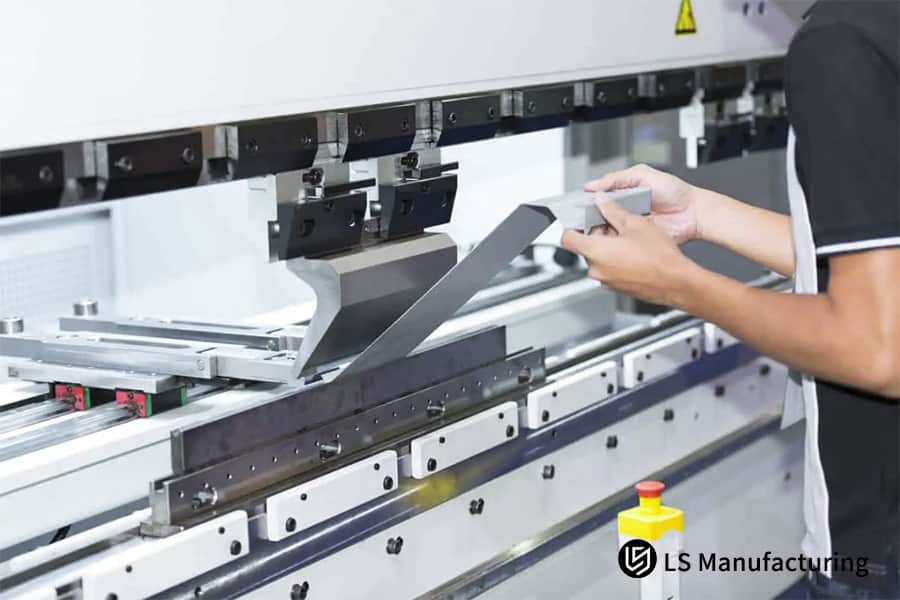
图 3:用于高效、高精度定制钣金制造的自动化矩阵工具系统。
哪些边缘距离设计指南规则可以最大限度地提高钣金紧固解决方案的完整性?
A key Design Factors (DFM) rule for boundary strength in sheet metal fastening solutions is a minimum of 2 times the fastener outer diameter distance between the riveting center and the sheet metal edge. An edge distance that is too short will produce compressive stress, the result of which is the cracking of the sheet and the damage of the torsional structure of the fasteners.
Ways to taclke Insufficient Edge Distance:
- Riveting before bending: scheduling the riveting operation first, prevents deformation damage and enhances the effect of sheet metal fabrication edge reinforcement.
- Design process load-reducing grooves: Along the bending line, construct 0.5 mm wide load-reducing grooves to releasing compressive stress.
- Add local reinforcing ribs: Supplement the structural ability of the edge region and strengthen the sheet metal in total.
Riveting Principles near Bending Lines
- The minimum distance from the riveting center to the bending line is given by the inequality 3 D + R (where R is the bending radius).
- Do not place rivets in the bending deformation area, as this will harm the threads and the metal structure.
- Employ a multi-step bending technique to lessen the effects on the riveted elements and maintain the accuracy of the assembly.
Strictly adhering to DFM design principles such as riveting edge distance and bending avoidance, combined with dedicated optimized processes, can completely solve structural problems such as sheet metal edge cracking and fastener torque failure, ensuring connection integrity. For those with mass production plans, we can provide free process cost calculations to optimize designs and reduce production budgets in advance.
Case Study: How LS Manufacturing Revolutionized an EV Automotive Tier-1 Supplier BDU Chassis Production via Automated Precision Sheet Metal Hardware Optimization
Customer Pain Points:
A Tier-1 supplier of new energy vehicles used an AL5754-H111 chassis which failed during stud slippage in the on-board bump test. The original process had no prediction on hole wall hardening and monitoring of tonnage was also missing, this situation caused the parts to move, there was a short circuit risk, and claims of potentially high values were the results.
LS Manufacturing Solution:
- When we got hold of the project, the senior engineering team of LS Manufacturing instantly reacted with a closed-loop DFM reconfiguration to resolve this automotive-grade issue, resulting in a vehicle-grade sheet metal fabrication processing solution that meets high standards.
- Fully committed to the cause, we gave up the laser cutting method which generates microcracks in the heat-affected zone quite easily, and replaced it with very accurate CNC cold punching using carbide molds. Due to this, the hole wall perpendicularity error was confined within 0.02 mm, the original ductility of the base metal was excellently preserved.
- We swapped out standard fasteners for custom grade stainless steel PEM studs which are super hard (HRB 90+) and have reverse involute locking teeth.
- Installed Haeger automated riveting workstations throughout the production line and enabled them with an intelligent "displacement-pressure" dual closed- loop monitoring system. The system really does the job of deciding the driving tonnage at 4.2kN and the holding time is kept constant at 0.6 seconds which gives rise to 100% plastic cooling of the aluminum alloy substrate, this way the fastener's engagement groove is fully locked.
结果和价值
By means of the process transformation at LS Manufacturing, the single-point push-out strength of the power battery BDU chassis riveting element shot up massively from the initially weak 580N level to the rock-solid 1450N one. Its torsional torque was 35% above the automotive-grade standards. During the subsequent 100-hour sideways multi-frequency random vibration tests (per ISO 16750-3 automotive standards), it had a flawless 0 failure outcome, completely confirming the excellent achievement of tailormade sheet metal fabrication reliability enhancement.
What is more, we made it possible for completely automated feeding and riveting through a multi-station automated matrix die, which allowed the auto client to trim its total unit processing cost by 22%. By strengthening its capability in top-notch precision sheet metal hardware tailoring, LS Manufacturing assisted the client in gaining a strong hold on the core market share with OEMs even in the midst of the cost reduction trend in the new energy vehicle supply chain, so leading to a deep customer recognition.
With process re-engineering, physical updation, and smart riveting management, automotive sheet metal riveting slippage failure issue was totally eliminated, with mass production zero-failure achieved even in the toughest working conditions. This gave the firm a chance to dodge quality issues and cut expenses while ramping up output.
Should you have a high-end sheet metal customization requirement, please upload your drawings and get back to you with a process solution and cost estimate tailored to your requirements.

Why Partner with LS Manufacturing as Your Strategic Manufacturer for High-Intent Custom Hardware Projects?
Built a strong foundation in producing custom hardware sheet metal fabrication and integrating PEM processing, our company exploits metallurgical technology, the highest level CNC, and DFM optimization to find new solutions outside of the traditional models of OEM. The goal is to solve the problem of fastening safety hazards in the design stage, which is a major issue under the most extreme work conditions.
International Manufacturing Certifications
- ISO 9001:2015 Quality Management System Certification at the Basic Level - This is a great way to organize your documentation for sheet metal fabrication quality management in general.
- IATF 16949 Automotive-Grade Supply Chain Quality Standard - A standard which addresses the challenging environment of automotive sheet metal.
- ISO 13485 High-Precision Medical Device Manufacturing Compliance Endorsement - This certification is suitable for multi-industrial scenarios of high-end customization.
State-of-the-art Welding Equipment
- Swiss Bystronic fiber laser cutting center, guaranteeing accuracy and precision in sheet metal fabrication.
- The use of AMADA CNC bending clusters of Japanese origin helps in standardizing operations of sheet metal forming.
- A completely self-developed intelligent high-precision riveting production line helps to greatly raise the level of riveting assembly.
We can provide traceable SPC pressure monitoring reports, microscopic burr inspection results, and third-party destructive torque test reports at any time. By fully integrating sheet metal forming, hardware riveting, post-processing painting, and precision packaging under one roof, LS Manufacturing offers highly competitive DFM cost reduction solutions, lightning-fast sample delivery (as fast as 3 days), and flexible, highly customized mass production pricing support with no minimum order quantity.
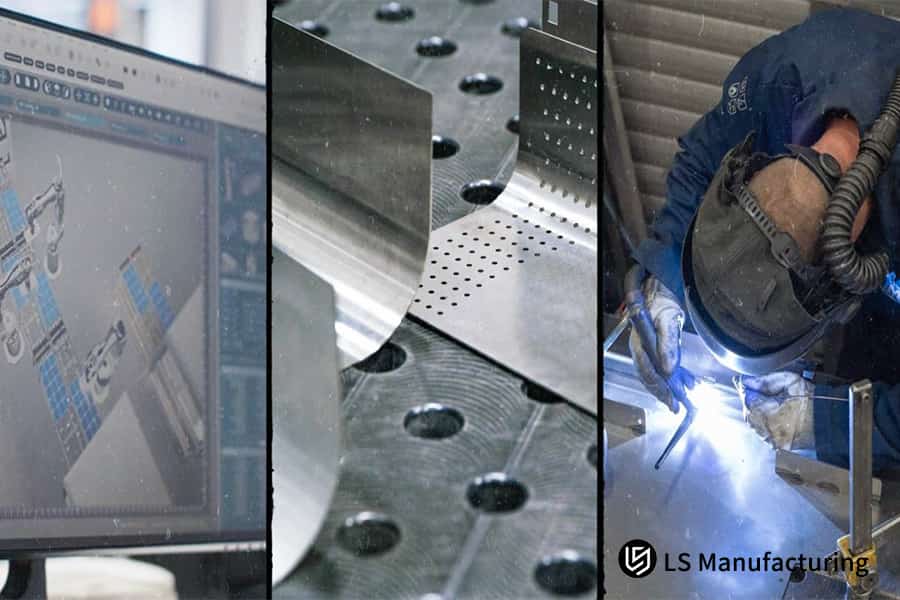
Figure 4: A skilled technician welding an electronic component onto a metal plate in a workshop.
常见问题解答
Q1: What is the minimum recommended plate thickness for installing standard PEM nuts in a custom sheet metal fabrication service?
The minimum sheet metal thickness to install standard S/SS series PEM nuts is 0.8mm. When dealing with ultra-thin sheets that measure 0.5mm, our team relies on specialized fastening and flanging technologies that can strengthen the riveting connection enough to fulfill thin sheet metal assembly requirements.
Q2: Why do PEM studs loose or strip during the final torque assembly on stainless steel enclosures?
Because the hardness of stainless steel is greater than HRB80, which is a level very close to the hardness of standard PEM fasteners, effective locking cannot be achieved. We have resorted to SP series hardened fasteners with HRC37 or even greater, plus precision hydraulic technology to do away with riveting stripping and loosening completely.
Q3: How does laser cutting taper affect the pull-out force during the PEM insertion service process?
Laser cutting the hole wall creates taper and orientation errors that distort the allowable engagement area enough to reduce product thrust resistance drastically. We implement CNC punching to reshape the hole and then we tightly keep the hole wall perpendicular for fully activating the press-fit locking performance.
Q4: Is it better to perform PEM hardware insertion before or after sheet metal powder coating?
The standard process in the industry is to first press-fit and then powder coat, which for sure covers the joint fully and thereby reaches up to 480 hours of high salt spray corrosion protection. To tackle the problem of paint build-up on threads, we use tailor-made masking treatment which is a compromise between corrosion protection and assembly accuracy.
Q5: How do you protect the internal threads of precision sheet metal hardware during heavy bending operations?
As press-fitted parts are generally located close to the bending deformation zone, it causes thread deformation and hole out-of-roundness in most cases. By changing the sequence of processes and employing stress-relieving grooves we can break the bending deformation path and this way protect the accuracy of the internal threads in every aspect.
Q6: What diagnostic test report does LS Manufacturing provide to verify the performance of sheet metal fastening solutions?
For every batch of products, besides providing quality assurance test reports, including thrust and torsion test curves, aperture sampling and burr detection data, we are also offering a RoHS declaration, ensuring product quality traceability and compliance with industry standards.
Q7: Can automated multi-position machinery accommodate different types of sheet metal hardware assembly concurrently?
Our multi-station automated riveting machines have a smart feeding system. They do not require the change of mould and can perform the riveting of fasteners of different sizes at a time, thereby decreasing the human error and providing the advantages of high efficiency and low processing costs.
Q8: How can I request an optimization and accurate instant quote for custom hardware sheet metal fabrication?
You can directly submit 3D drawings in STEP, IGS, DXF and other formats. Our professional DFM engineers will issue a feasibility analysis report within 24 hours, complete interference and aperture parameter optimization, and provide accurate mass production quotations with cost-effective material solutions.
摘要
PEM press-fit sheet metal fabrication is a precision system process that takes into account such factors as material hardness matching, aperture tolerance control, and digital tonnage monitoring. The main goal is to understand thoroughly the core process so that fasteners will continue to exhibit stable and reliable performance even when exposed to the harshest conditions of high vibration and high load, thereby eliminating failure issues of all sorts.
Are you being seriously disrupted in your assembly line and increasing your overall procurement costs due to frequent loosening of press-fit parts, sheet warping, or peeling of post-processing paint by your current supplier? Don't allow the inadequate hardware assembly to diminuate your hard-earned brand reputation.
Get in touch with LS Manufacturing's senior sheet metal DFM engineering experts right away, upload your 3D CAD drawings, and you will get a free detailed design optimization report with a comprehensive mass production inquiry quote. We will be glad to utilize our digital lean manufacturing capabilities, which are certified to international automotive-grade (IATF 16949) and medical-grade (ISO 13485) standards, to protect your key hardware innovations!
📞电话:+86 185 6675 9667
📧电子邮件:info@lsrpf.com
🌐网站:https://lsrpf.com/
免责声明
本页内容仅供参考。 LS Manufacturing services 对于信息的准确性、完整性或有效性,不作任何明示或暗示的陈述或保证。不应推断第三方供应商或制造商将通过 LS Manufacturing 网络提供性能参数、几何公差、具体设计特征、材料质量和类型或工艺。这是买家的责任。 需要零件报价 确定这些部分的具体要求。请联系我们了解更多信息。
LS 制造团队
LS Manufacturing 是一家行业领先的公司。专注于定制制造解决方案。 We have over 20 years of experience with over 5,000 customers, and we focus on high precision CNC machining, Sheet metal manufacturing, 3D printing, Injection molding. 金属冲压,以及其他一站式制造服务。
我们的工厂配备了 100 多台最先进的 5 轴加工中心,并通过了 ISO 9001:2015 认证。我们为全球150多个国家的客户提供快速、高效、高质量的制造解决方案。无论是小批量生产还是大规模定制,我们都能以最快的24小时内交货满足您的需求。选择LS制造。这意味着选择效率、质量和专业性。
要了解更多信息,请访问我们的网站:www.lsrpf.com。


| 基材材质 | 基材硬度范围 | 推荐的 PEM 紧固件类型 | 紧固件的最低硬度要求 | 最小硬度差要求 | 适合的核心场景 |
| AL 5052-H32 | HRB 40-50 | S/SS系列碳钢质子交换膜 | HRB 60+ | ≥HRB 20 | 消费电子、通讯机箱 |
| AL 5754-H111 | HRB 45-55 | CLS系列不锈钢质子交换膜 | HRB 65+ | ≥HRB 20 | 新能源汽车、工业控制 |
| SPCC冷轧钢板 | HRB 50-70 | S系列碳钢质子交换膜 | HRB 70+ | ≥HRB 20 | 通用钣金、设备外壳 |
| SUS304不锈钢 | HRB 80-90 | SP系列马氏体不锈钢质子交换膜 | HRC 35+ (≈HRB 100+) | ≥HRB 20 | 医疗器械、高端设备 |
| SUS316不锈钢 | HRB 80-90 | SP系列马氏体不锈钢质子交换膜 | HRC 37+ (≈HRB 105+) | ≥HRB 20 | 海洋环境、耐腐蚀设备 |