English



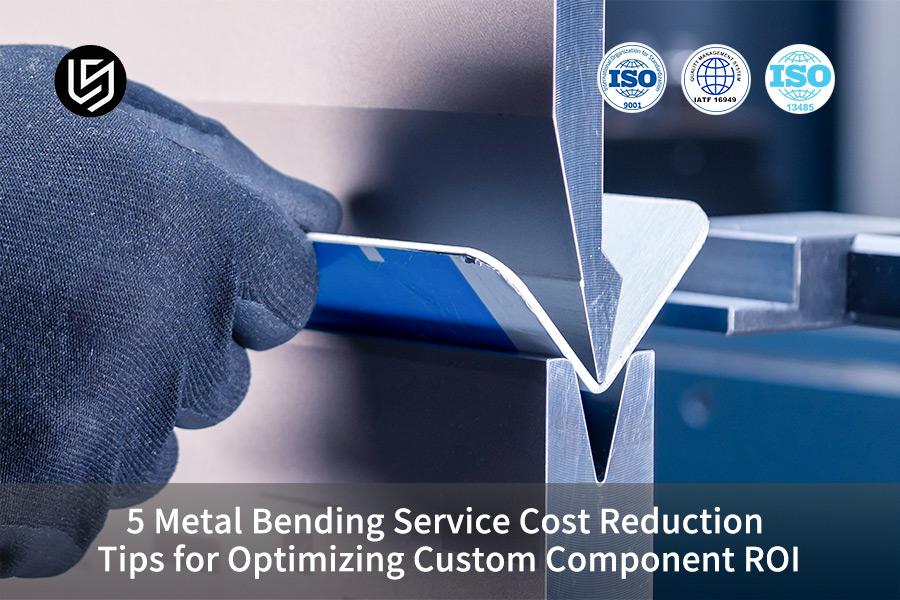
Metal bending service is a type of precision machining that uses CNC equipment to shape metal sheets plastically. It can address issues like high costs, low precision, and surface defects after a wrong structural component design. Usually, customized bending processes make up more than 35% of the cost in precision sheet metal manufacturing.
Traditional manufacturers just blindly follow the drawings mechanically, which means high trial-and-error costs will be borne by the customers. This article is about five core DFM cost-reduction technologies that can guarantee a processing accuracy of 0.1mm and effectively reduce the cost of bending procurement.
Metal Bending Service Cost Reduction Core Techniques Overview
| Technique | Core Requirement | Cost Reduction | Precision Guarantee | Application Scenario |
| Standard Radius | 1.0-1.5 × material thickness | 25% tooling time | ±0.1mm angle tolerance | All sheet metal parts |
| Springback Compensation | Wila dynamic system | 0% material waste | ±0.01mm stroke adjustment | High strength alloys |
| Hole Edge Distance | 3-4 × material thickness | 100% rework elimination | ±0.05mm hole roundness | Parts with mounting holes |
| Marks Free Tooling | Polyurethane film | 20% surface treatment cost | Ra 0.8 surface finish | Appearance critical parts |
| Process Optimization | 3D offline programming | 40% cycle time | ±0.08mm linear tolerance | Complex multi-bend parts |
Key Takeaways
- Throughout the drawing, make the bending radius (R angle) the same as the material thickness. Using 1.0-1.5 times the sheet metal thickness for the bending radius allows for "multiple bends in a single clamping, " which in turn leads to a direct reduction in tooling and mold changeover time by about 25%.
- By keeping the distance from the bend edge to the hole a minimum of 3-4 times the sheet metal thickness, you will be able to steer clear of the costly rework and inspection due to hole stretching deformation.
Why Trust LS Manufacturing's Expertise in Cost Control for Custom Metal Bending Parts?
For 20+ years in precision sheet metal manufacturing, we have been evolving metal bending and processing skills at a very high level. Currently, our customers include 30+ world top 500 companies. Based on a 3-month deep-diving study in bending costs of different materials, an ill-designed product may cause the price to more than double.
Our manufacturing line strictly follows the requirements of IATF 16949 - the international quality management system of the automotive industry. To this end, every step is not only carefully controlled but also attuned to the most stringent industry standards and capable of supporting various precision high-end sheet metal projects.
Besides mastery and hands-on experience (average of 10 years in a frontline position) with various bending issues by our staff, in-depth DFM consultations can be given to you from a multi-dimensional perspective - material science, mechanical engineering, and process engineering. Our concern is not just the processing, but we do our best in helping you reduce the cost right from the design stage as well.
Also, since our quality control system is operating in line with international standards ISO 9001, the products are put through the Three - Coordinate Measuring Machine (CMM) test so that we have complete control over dimensional and appearance accuracy.
With dual international certifications and a team of experienced engineers, we can fundamentally avoid the pitfalls of bending costs. Download the "Metal Bending DFM Cost Reduction White Paper" to learn more core techniques for optimizing metal bending service costs.

How To Choose a Cost Effective Metal Bending Radius To Optimize Custom Component ROI?
A key technique for optimizing cost effective metal bending and minimizing the cost of bending is a unified bending radius of 1.0-1.5 times the thickness of the sheet. Through this technique, one can perform multiple bends at different sections using the same mold in one go. This technique also eliminates debug costs incurred due to frequent mold changes and A lot enhances the ROI of custom parts.
Effect of Various Radius Angles on Production Costs
Unclear radius angle specifications on part drawings are a key thing causing bending processing costs to skyrocket. Expert metal bending service firms first and foremost work on optimizing design parameters, keeping away from unnecessary losses, and finishing the main precision bending manufacturing operations. Uncommon radius (R) angles might cause a series of processing issues:
- Small R angle: Strain localization can result in surface cracks in low-carbon steel or aluminum alloy with the R angle of less than 0.5 times the plate thickness, which necessitates extra annealing and raises processing costs by 40%.
- Large R angle: Springback grows exponentially, and when the R angle is greater than 2 times the plate thickness, this event becomes more and more prominent. As an illustration, the springback angle of 5052-H32 aluminum alloy may go up to 5 to 7, which is accompanied by the need for trial bending iterations.
- Presence of multiple R angles: Each and every new R angle ensures that the mold has to be changed. On average, each change lasts for a period of 15 minutes. So, production efficiency goes down drastically.
Having a uniform R angle means a single mold can be used for most of the the bending processes, which in turn goes a long way toward saving the time for changing and debugging molds. Designing parameters in a standardized way is not only the main criterion for a high-grade custom component bending service but also the basis for efficient sheet bending optimization.
Practical Benefits of Standardized Radius (R-angle)
LS Manufacturing suggests standardizing the bending radius to 1.0-1.5% of the sheet thickness. With the help of CNC multi-axis bending machines, several bending stages can be done within one single setup, because of this yielding a highly flexible, low cost metal bending service and at the same time enhancing the bending accuracy of the structures.
- Die Costs: Much decrease the number of dies by up to 80%, because of this reducing die amortization costs.
- Labor Costs: Get rid of 100% of secondary setup time, thereby enhancing production efficiency.
- Quality Costs: Prevent dimensional variations due to die changes, resulting in better product consistency.
| Common Sheet Metal Materials | Standard Bending Radius (Sheet Thickness Multiple) | Process Optimization Value | Applicable Service Type |
| Low Carbon Steel Q235 | 1.0-1.2 times | No micro-cracks during bending, significantly reducing mold changeovers. | metal bending service |
| 5052 Aluminum Alloy | 1.2-1.5 times | Controls springback error, avoiding repeated trial bending costs. | cost effective metal bending |
| SUS304 Stainless Steel | 1.5-2.0 times | Suitable for high-strength materials, preventing cracking and scrapping. | low cost metal bending service |
Standardizing the radius (R) is the most direct and efficient way to reduce costs, quickly cutting mold and labor costs. Contact our engineers for personalized radius optimization suggestions for your custom component bending service.
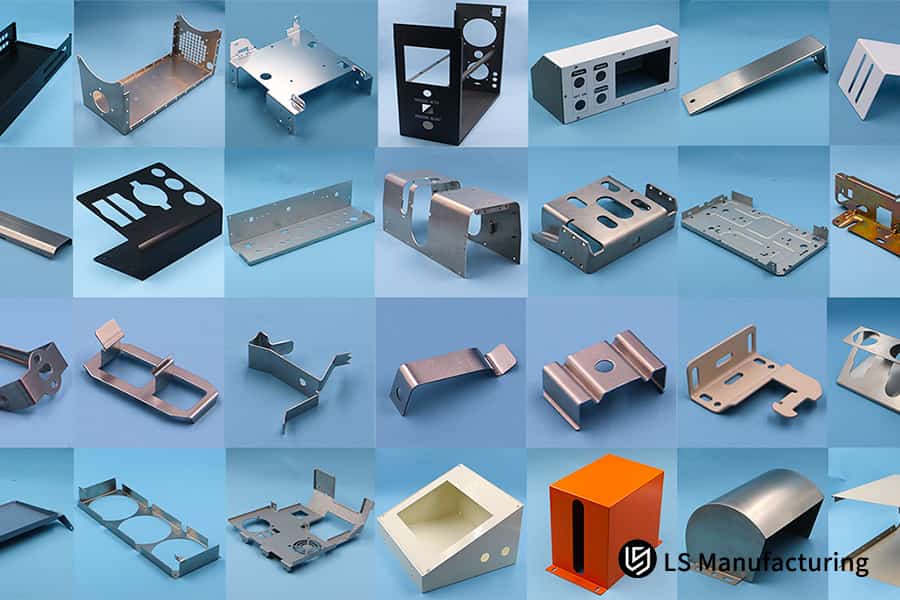
Figure 1: An array of various custom metal parts with precise bends, displayed on a blue background.
Why Does Professional Springback Compensation Ensure Low Cost Custom Bending High Accuracy?
Accurate springback prediction combined with real-time compensation can reliably keep bending errors within a tolerance of 0.1mm. This prevents undesired costs linked to trial and error, mold repairs, and scrapping. The final outcome of this process is a low cost custom bending operation that is at the same time high in accuracy and low in price.
Disadvantages of Old Springback Compensation
Metal will elastically spring back after bending. Guesswork and trial and error based on experience will greatly increase the metal bending price. Traditional compensation approaches have major disadvantages. They will still not be able to meet the requirements for low cost custom bending production. Besides this, they also inhibit precise industrial bending calibration:
- Strong Reliance on Experience: Different levels of operator experience can result in quite different compensation outcomes.
- Weak Material Consistency: The yield strength of various batches of the same grade of material can differ by more than 10%.
- Time-Consuming Iteration: As a rule, 3-5 trial bends are necessary for each angle to fulfill the requirements.
LS Manufacturing's Technology for Dynamic Compensation
SUS304 stainless steel is a kind of metal that has a very high hardness level and springback. A 2.0 mm sheet after bending 90° can springback 3.5°. Being very accurate in the calibration of processes is the only way to fulfillment of cost effective metal bending in an efficient manner. It also checks stable bending performance.
The main technical principles are:
- Based on Data: Bringing in residual stresses obtained from testing the yield strength of each batch of steel sheets during the programming phase.
- Compensation in Real Time: Employs mechanical hydraulic dead point dynamic compensation system (Wila compensation system) to vary the slider stroke in real time at 0.01mm level.
- Compliance from the very first piece: Results in "first-piece qualification" that virtually eliminates material waste due to sample testing.
The variation in process efficiency between old manual compensation and a skilled dynamic compensation is very large, dramatically influencing the product accuracy and processing costs. Below is a table showing the main parameters of the two bending compensation methods:
| Bending Compensation Method | Adjustment Efficiency | Material Scrap Rate | Accuracy Stability | Applicable Scenarios |
| Traditional Manual Experience Compensation | Low, 3-5 trial bends at a single angle | High, large sample loss | Poor, highly influenced by manual experience | Ordinary low-cost bending processing |
| Wila Dynamic Springback Compensation | Extremely high, achieves first-piece qualification | 0 scrap loss | ±0.01mm high precision stability | Low cost custom bending, cost effective metal bending |
Professional dynamic compensation can achieve first-piece qualification, completely eliminating material and time waste caused by trial and error. Send your product parameters to calculate your potential cost savings in low cost custom bending free of charge.
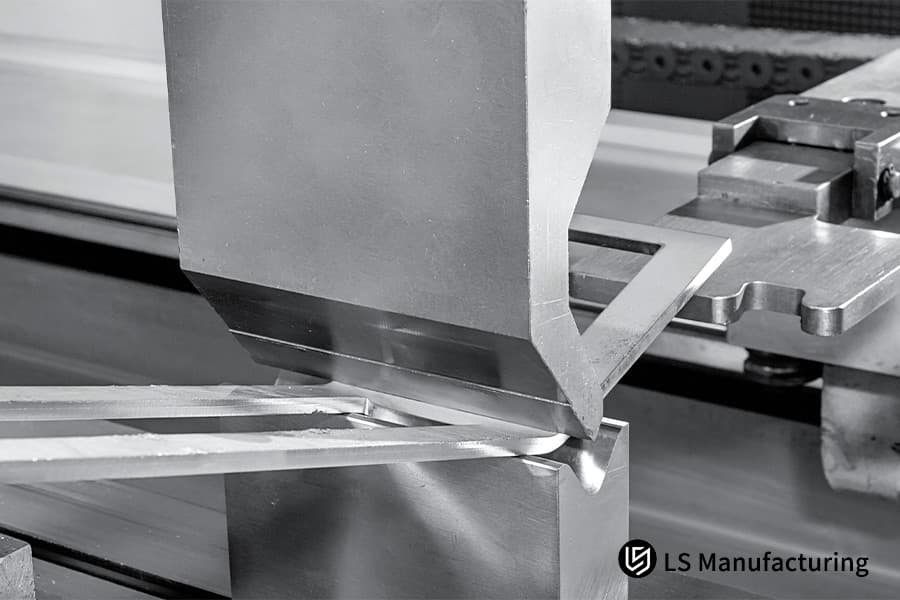
Figure 2: Close-up of an industrial bending machine precisely clamping a metal sheet for forming.
What Design Rules Avoid Deformation Around Holes For a Low Cost Metal Bending Service?
Tightly regulating the distance from the bend line to the edge of the hole and keeping it within 3-4 times the thickness of the plate plus the bending radius is one of the ways to completely avoid the hole getting stretched and that means the need for the secondary finishing can be eliminated. A stable and reliable and low cost metal bending service can be created this way.
Dangers of Insufficient Hole Edge Distance
When you put holes or slots really close to the bending line, the combined metal stress can stretch the hole wall. Lots of non-professional bending service supplier usually ignore this problem resulting in reduced bending efficiency and increased processing costs.
The specific negative impacts are:
- Shape Distortion: Circular holes become elongated or elliptical, and the difference between the axes of the ellipse exceeds the standard (>0.15mm).
- Assembly Errors: Thread tapping and locating pin assembly after the bend will no longer work.
- Cost Issues: A method of bending before drilling has to be implemented that increases the cost of processing or the unit price by more than three times.
Effective Methods for Stress Relief
LS Manufacturing is committed to standardizing the hole edge distances right from the design stage, this being the main idea for consistently providing low cost metal bending service. When certain structural restraints do not allow the standards to be met, the surface bending quality can be ensured by carrying out specialized stress relief procedures like:
- Relief Notch: A long and narrow one is pre-made along the bending line to forcibly isolate stress concentration areas from the holes.
- Deforming the hole shape during hole punching: One of the holes is shaped into an ellipse to compensate for bending-induced deformation.
- Local Thickening: Resistance to deformation is raised through local thickening of the sheet metal around the holes.
How Do Marks Free Tooling Techniques Deliver High Value Custom Bending Components?
Nylon molds, polyurethane mark-free films, and other tooling techniques can separate bending friction very well so that no indentations are made on the part surface, which leads to the elimination of polishing and grinding operations, as well as a great increase in the quality and cost-effectiveness of high-end custom bending components.
Surface Damage Problems of Traditional Steel Molds
High-end appearance parts and aerospace aluminum alloy panels require extremely smooth surfaces. The extrusion and friction of a traditional steel mold bending method may damage the surface of a sheet metal. This way of bending aluminum may create many problems, among which are the limitations on the aluminum bending processing and the difficulties in processing high-end custom bending components:
- Bumped Surface: Clearly visible double-stripe dark bumps remain on the outside of the bend, sometimes up to 0.05mm deep.
- Decreased Surface Adhesion: Some operations like anodizing or spraying are almost completely impossible.
- Expensive Repairs: Quite a few purchasing departments have to assign the equivalent of 20% of their budget to manual polishing and repair.
Technical Advantages of Seamless Tooling
LS Manufacturing has implemented seamless bending as the technology behind their product offering. This is a hallmark of high-end custom component bending service, allowing for precise control over bending and ensuring that the surface quality of parts is top-notch:
- Nylon Die: For high appearance requirement parts, further precision tuning and the use of nylon die without seams is possible.
- Polyurethane Film: A 0.2mm thick coating of special high wear-resistant polyurethane film is laid onto the metal die surface for its protection.
- No Grinding Required: Keeps the material surface with the original brushed or mirror finish as 100% no-grind is the goal.
The seamless process completely eliminates surface indentations, saving on expensive subsequent grinding processes. View our appearance part processing case studies to understand the actual effects of seamless technology on custom bending components.
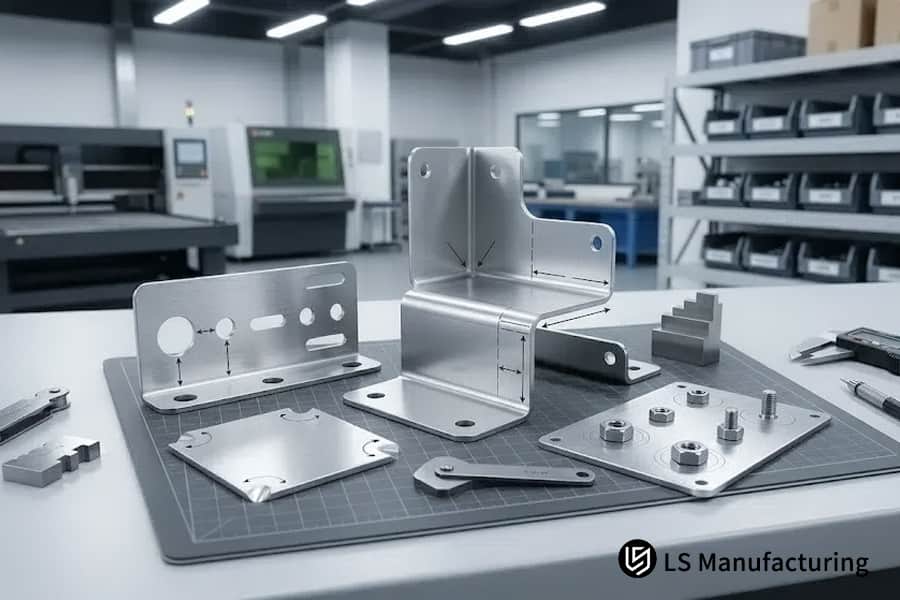
Figure 3: Smooth metal parts made with mark-free tooling techniques in a professional workshop.
How Does Process Sequence Optimization Help a Bending Service Supplier Cut Batch Cost?
Optimizing the sequence of the bending process and decreasing the number of tool changes and workpiece flipping often means a cut in bending time per piece of over 40%. This is one of the main strategies that professional bending service provider uses to decrease the cost of batches of complex components.
Cost Loss Due to Inefficient Process Steps
Usually, completely setting up time wastage results from the absence of a proper and scientific process step plan of complex multi bend parts. A professional bending service provider can reduce metal bending fabrication losses up to the minimum through process optimization which means avoiding these issues:
- Excessive Turning Around: At one or both ends of the machine tool, operators have to move and turn the workpiece a lot.
- Interference and Collisions: Sometimes, interference and collisions happen between the back gauge and the bent edge which leads to disassembling the mold and re-segmenting.
- Time Waste: Naturally has a direct effect on the generation of time wastage and hidden stagnation costs.
Digital Process Step Optimization Methods
In the digital world, we use 3D offline programming software for performing interference detection and path optimization, and this is how we give power to our metal bending services to be efficient and accurate and further change the complex bending shaping process. Below are the main methods of optimization:
- Interference Detection: Identifying problems and raising solutions of backgauge interference and also interference with bent edge problems.
- Path Planning: Changing bending order and reducing the number of times the workpiece is moved and rotated.
- Multi-Process Merging: Grouping several simple steps to form a single complex step, because of this decreasing tool changes.
Digitally optimizing processes can be a complete solution to the problem of time loss in traditional bending. Differences in efficiency and cost between the two processing modes can be shown very easily and visually in table below.
| Bending Process Mode | Single Piece Processing Time | Tool Change Frequency | Overall Time Cost | Service Provider |
| Manual Unordered Bending Processing | 35-50 seconds/piece | Frequent tool changes, rework and debugging | High cost, serious loss | Ordinary bending service supplier |
| 3D Offline Programming Process Optimization | 15-28 seconds/piece | Significantly reduces tool change frequency | Reduces time cost by more than 40% | Professional metal bending service supplier |
Process optimization strictly controls the bending time of a single piece to 15-28 seconds. Relying on a mature digital process system, the cost advantage of time optimization is transformed into a superior quote, benefiting purchasing customers.
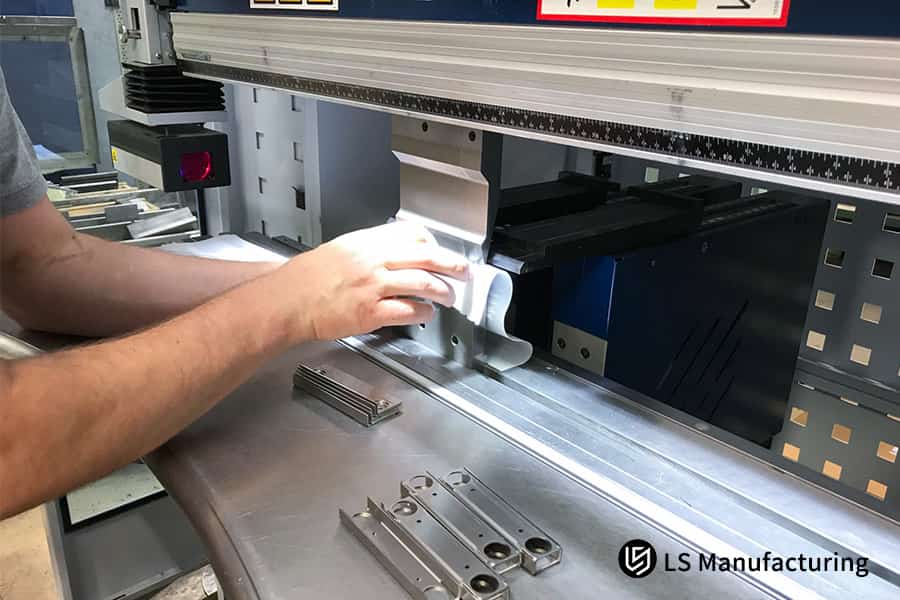
Figure 4: A worker manually operates a large industrial bending machine to form a metal component.
How Do Multi Directional Standard Folding Setups Support Low Cost Custom Bending Runs?
Using multi-directional folding fixtures, it is possible to carry out bi-directional bending in one go without human intervention and so, lower the cost of small-batch, multi-variety customization. This is one of the critical process configurations for low cost custom bending.
Efficiency Bottlenecks of Unidirectional Bending
Typical unidirectional bending machinery has great difficulty in processing folded parts with two bends facing different directions. It is unable to cope with flexible production demands during the manufacture of complicated custom bending components, which gives rise to multiple issues with both efficiency and costs:
- Manual Flipping: After each bend, the operators must stop the machine to flip the sheet manually by 180°.
- Positioning Error: The cumulative positioning errors increase due to multiple flips.
- High Changeover Costs: This leads directly to very high labor costs for multi-variety, small-batch productions.
Flexibility Advantages of Bidirectional Folding
There are CNC bending machines and a modular tooling system in the shop that will meet the small-batch, low cost custom bending requirements after which flexible bending manufacturing capabilities will be strengthened. The main advantages of the process are:
- Automatic Bidirectional Bending: With the core pressure plate, the sheet is firmly held, and two sets of folding blades perform high speed bending in opposite directions automatically.
- One-Time Completion: The sheet has to be set by the operator only once at the feed end, and the machine will carry generally process by itself.
- Low switching costs: Small batch switching costs for parts could be nearly zero.
LS Manufacturing Helps Global Communication Giants Optimize High Precision 5G Base Station Aluminum Alloy Heat Dissipation Case for Customized Bending Processing
Customer Challenge
A major European telecom giant encountered difficulties technically and economically in improving the 6063-T6 aluminum alloy heat dissipation casing for their 5G base station. The item was composed of eight composite bend parts while the original drawings had complicated radius angles, which led to frequent mold changes and single-piece debugging time up to 8.5 minutes.
6063-T6 aluminum alloy is not suitable for deep drawing and very small radius angles may cause stress cracking which on its turn yields 72% of product qualification rate only. Surface scratches caused by steel mold bending brought about high monthly costs for polishing and the customer ultimately had low return on investment, besides that the mass production was severely affected.
LS Manufacturing Solution
Drawing upon our 5G base station project experience, we believe even small design changes at the design stage would be able to yield significant cost advantages. After we started to work on the project, the engineering expert team at LS Manufacturing expeditiously performed complete DFM (Design for Manufacturing) engagement and process reengineering:
- Standardized Radius: We managed to convince the customer to make the radius of all bends uniform to 1.5mm (roughly 1.2 times the plate thickness). That ensured that grain flow during bending was good, that there was no risk of bending cracks (100% of risk was removed), and the parts could be completely finished in a single setup on a multi-axis bending machine without tool changes.
- No-Cut Process: For this the customer requested not only area indentations but also a very high level of precision so that a 0.2mm thick polyurethane anti-indentation film serves as the physical insulation layer.
- Process Enhancement: With the help of offline 3D software, the process steps have been updated to use a 6-axis back gauge CNC folding in an automated, bidirectional manner to completely eliminate bending edge/back gauge interference.
Results and Value
After the full deployment of DFM optimization solution, product processing efficiency and quality were greatly enhanced: the bending time per piece was cut down from 8.5 minutes to 2.3 minutes, which is an efficiency gain of 72.9%, bending accuracy always met standards, and the pass rate went up from 72% to 99.8%, with indentation and grinding costs completely eliminated.
This optimization enabled the customer to reduce the price per piece by 31.5%, halve the delivery cycle time, and save over $120,000 annually in procurement costs, thereby fully illustrating the commercial value of DFM bending optimization.
Systematic DFM optimization can simultaneously achieve triple improvements in cost, accuracy, and delivery time. Upload your 3D drawings now to get your exclusive metal bending quote and DFM evaluation report.
Why Choose LS Manufacturing As Your Trusted Custom Component Bending Service Provider?
LS Manufacturing not only offers bending processing services but also produces professional DFM design optimization solutions. These solutions help to reduce costs and increase efficiency at the source, enhance product ROI, and LS Manufacturing is a reliable partner for high-quality custom component bending service over the years.
Limitations of Typical Suppliers
Most typical bending service suppliers simply carry out the execution of drawings without considering the cost issues that stem from design flaws and as a result, trial-and-error and inefficient labor costs are passed on to customers. In addition, typical custom component bending service is low in precision, costly, and lack good cost-effectiveness.
LS Manufacturing's Main Strengths
LS Manufacturing addresses the pain points of traditional processing completely and offers custom bending services (high-performance, high-precision) to multinational sourcing customers by leveraging a number of core advantages:
- Senior Engineer Team: Highly skilled engineers who have been working in the front lines for more than 10 years will personally evaluate each of your drawings.
- First-Class Hardware Setup: A 24/7, fully digitalized, light-free precision sheet metal workshop (certified by IATF 16949 and ISO 9001) fitted with world-class machines like German TRUMPF CNC bending machines.
- Rigorous Quality Control: Statistical process control and process capability index software are used at the prototype stage for full-scale data modeling of material stability and dimensional tolerances (ensuring CPK1.33).
Leveraging actual process data, a clear cost system, and mature project cases, we tightly monitor bending procurement costs of customers, help products to be competitive in the market, and ultimately gain a win-win scenario.
FAQs
Q1: What is your maximum metal bending thickness limit?
We have a 250-ton CNC bending machine, which allows us to bend low-carbon steel up to 12mm in thickness and stainless steel up to 8mm in thickness. Through stringent accurate bending process control, we can keep the finished product tolerance within 0.15mm, at the same time flexibly meeting various thick plate bending requirements.
Q2: How do you prevent springback in high-strength metal bending services?
We obtain the main mechanical strength parameters of every batch of metal materials beforehand and couple it with a top-notch Wila CNC hydraulic bottom dead point dynamic deflection compensation system. This is capable of correcting bending springback errors to 0.01mm at the precision level, thereby guaranteeing stable bending accuracy of high-strength metals.
Q3: Can you provide a fast metal bending quote for custom prototypes?
Yes, we offer quick quotation services for custom prototypes. You may upload your drawings directly. Our technical experts promptly conduct a DFM evaluation within 24 hours after receiving your 3D drawings in STEP or DXF formats. This way, you are able to get a quote fast and generate your formal and accurate bending quotation.
Q4: How do you ensure surface quality for custom bending components?
We adopt a continuous processing technology that uses precision nylon bending dies at every stage of our production line. Besides, to prevent friction and pressure between the die and the sheet metal, we cover the die with a highly wear-resistant special polyurethane seamless protective film. As a result, custom bent parts reach 100% are scratch-free and indentation-free surfaces.
Q5: What is your minimum order quantity for low-cost custom bending?
We are very flexible with custom needs. We can give you different product types and small batches. Strictly speaking, we don't fix a minimum order quantity. Even a single sample order can utilize our advanced CNC offline programming technology and standardized low-cost bending processing services.
Q6: How do you avoid crack risk in 6061 aluminum custom component bending service?
About 6061 aluminum alloy bending, a bending radius of 1.5-2.0 times the sheet thickness is required. And the bending line is made perpendicular to the sheet rolling direction, so the aluminum bending at the source is completely free from the risk of cracking.
Q7: What international standards does your bending service supplier comply with?
Our factory will be continuously doing the whole process with the ISO 9001 quality management system and the IATF 16949 automotive industry standard very strictly. All bent products will be tested very strictly before leaving the factory. And 100% of them will come with a professional three-coordinate measuring machine (CMM) inspection report.
Q8: How do you manage intellectual property for proprietary cost-effective metal bending?
We are able to sign NDA confidentiality agreements compliant with regulations and set up a multi-layered firewall digital drawing access control system to strictly handle client-customized drawings and core process data, because of this fully ensuring the absolute security of client intellectual property rights.
Summary
Custom metal bending's main source of profitability is not reducing the cost of raw materials per unit, but rather making the most out of the details like the reuse of standard radius angles, the automatic compensation of springback, continuous flows, and the optimization of processes (DFM) to both uncover and eliminate hidden processing losses while increasing the usefulness of the procurement budget. Anyway, bad bending layouts and processes that are not thought out properly will constantly eat into project profits.
So, if you have high-precision sheet metal structural parts that have to be checked for bending feasibility and optimized for procurement cost, please get in touch with our senior engineering experts at any time. After uploading your 3D drawings, we will be able to finish a complete DFM audit in less than 24 hours, providing you with a tailor-made, cost-effective and high-precision process solution plus a formal quotation.

📞Tel: +86 185 6675 9667
📧Email: info@lsrpf.com
🌐Website: https://lsrpf.com/
📞Tel: +86 185 6675 9667
📧Email: info@lsrpf.com
🌐Website: https://lsrpf.com/
Disclaimer
The contents of this page are for informational purposes only. LS Manufacturing services There are no representations or warranties, express or implied, as to the accuracy, completeness or validity of the information. It should not be inferred that a third-party supplier or manufacturer will provide performance parameters, geometric tolerances, specific design characteristics, material quality and type or workmanship through the LS Manufacturing network. It's the buyer's responsibility. Require parts quotation Identify specific requirements for these sections. Please contact us for more information.
LS Manufacturing Team
LS Manufacturing is an industry-leading company. Focus on custom manufacturing solutions. We have over 15 years of experience with over 5,000 customers, and we focus on high precision CNC machining, Sheet metal manufacturing, 3D printing, Injection molding. Metal stamping, and other one-stop manufacturing services.
Our factory is equipped with over 100 state-of-the-art 5-axis machining centers, ISO 9001:2015 certified. We provide fast, efficient and high-quality manufacturing solutions to customers in more than 150 countries around the world. Whether it is small volume production or large-scale customization, we can meet your needs with the fastest delivery within 24 hours. choose LS Manufacturing. This means selection efficiency, quality and professionalism.
To learn more, visit our website: www.lsrpf.com