English



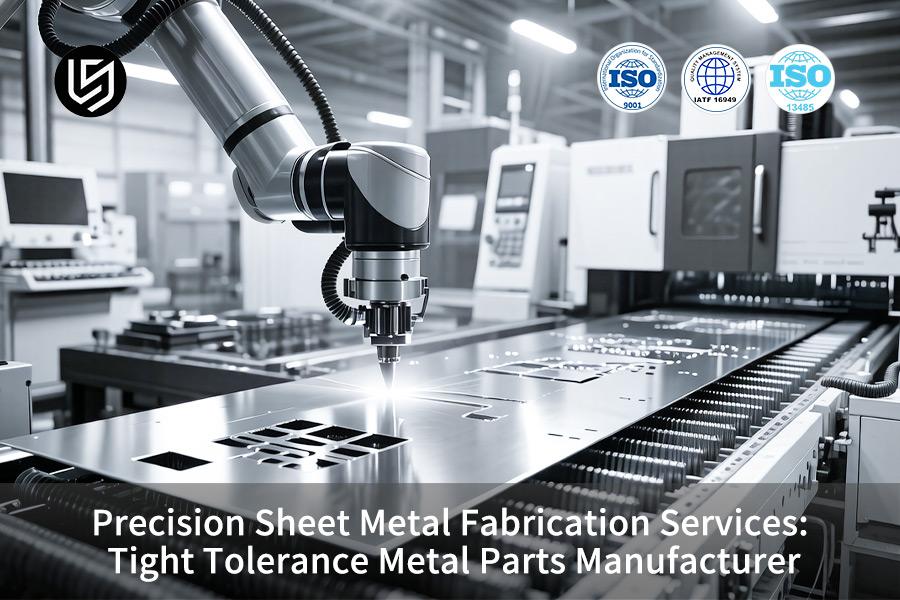
Precision sheet metal fabrication services are not as accurate as required, which means you will have additional costs from sorting out the pieces and assembly time. This is because they are only focused on machines, not the whole system required for precision. This is where we step in with our deterministic manufacturing system, which has the ability to handle materials like spring-back with our proprietary correction models, making each tolerance a certainty.
Our data-driven process has been proven with results like increasing CPK for hole position from 1.1 up to more than 1.8 through adaptive cutting and tapping. This means that for every 10,000 parts you produce, you will perceive virtually no assembly errors. We pre-compensate for distortion, like a mass spectrometer chamber, which increased flatness from 0.3mm to 0.08mm through simulation. By working with our precision sheet metal fabrication services, you will get an anti-variation quality system, which means consistency will become a certainty for performance, cost, and delivery.
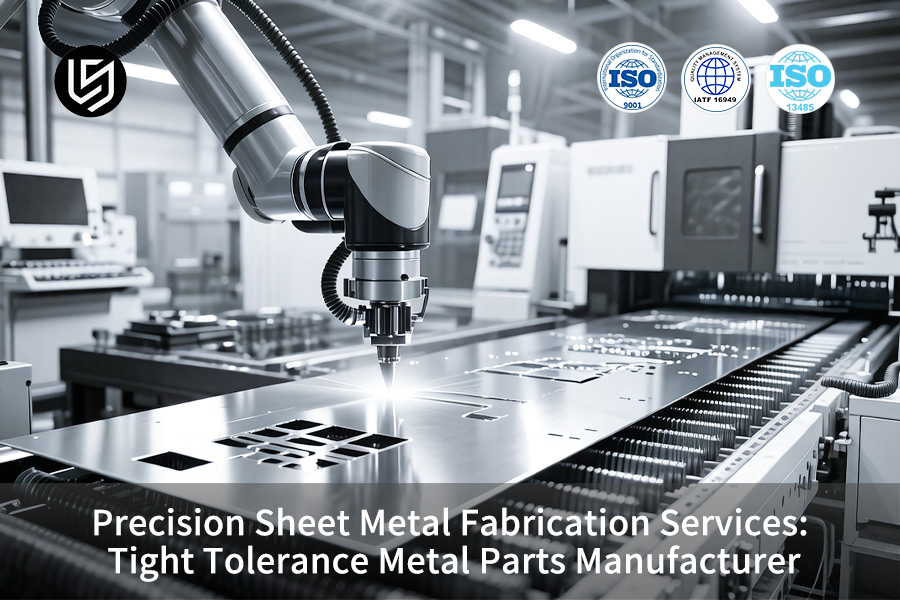
Precision Sheet Metal Fabrication: A Quick-Reference Guide
| Key Factor | Technical Consideration |
| Tight Tolerance Maintenance | To hold precise dimensions throughout the bending, cutting, and welding processes, sophisticated and accurately calibrated machinery, and expertise in the application thereof, are essential. |
| Complex Bend & Form Accuracy |
To accurately bend the materials to the desired angle, expertise in the precision sheet metal fabrication application is essential, particularly when dealing with small flanges or hard materials. |
| Weld Distortion Control | The intense heat produced in the welding process often causes the materials to warp; to prevent this, sophisticated machinery is used. |
| Surface Finish & Cosmetic Integrity | The end product, being a fabricated piece, has to be free from scratches, dings, and any form of surface damage; hence, sophisticated machinery is employed. |
| Our Precision-Engineered Process | We employ CNC press brakes with automatic angle correction, laser cutting with high positional accuracy, and robotic welding with precision control over heat input. |
| Integrated Quality Assurance | Inspections with CMM machines for critical parts and first-article inspection ensure that all dimensions meet specifications before proceeding with assembly. |
| Result: Predictable Assembly Fit | Delivers sheet metal components that fit together perfectly in the final assembly process, eliminating costly assembly fits, adjustments, or force fits. |
| Result: Professional Aesthetic Finish | Ensures that the finished product presents a professional look with clean edges, precision bends, and a flawless paint or plated finish. |
The solution to this sheet metal fabrication challenge lies in our expertise in manufacturing sheet metal parts that are not only formed but are precision-engineered components. Our expertise in sheet metal parts ensures that they are not only formed but are precision-engineered components with tight tolerances, perfect fits, and finishes that meet quality standards.
Why Trust This Guide? Practical Experience From LS Manufacturing Experts
Many resources exist on precision sheet metal, and this is no exception – learned through the crucible rather than the academic text. Our craft is a daily struggle against spring back in materials, welding distortion, and the unrelenting quest towards true micron-level tolerances. We have lived with the very high stakes of failure, where one incorrectly toleranced item can bring a high-value assembly line to a standstill.
We have learned through the successful delivery of tens of millions of parts to life science and semiconductor tool sets. This has created a very deep, empirical understanding – how tooling interacts with given batches of alloys, how to weld to maintain precision parts, and how to apply rigid standards to deliver flawless results. This is all informed by the very rigid standards set by ISO 9001 and International Aerospace Quality Group (IAQG).
Every recommendation you'll read about here has been proven in the crucible of hands-on success, hard-won at significant expense, and precisely measured. What you're about to read is the same "shop-floor" intelligence we apply to ensure fit, function, and delivery. The knowledge you'll read about is precisely what we apply to build certainty into every part so you can move forward with confidence.
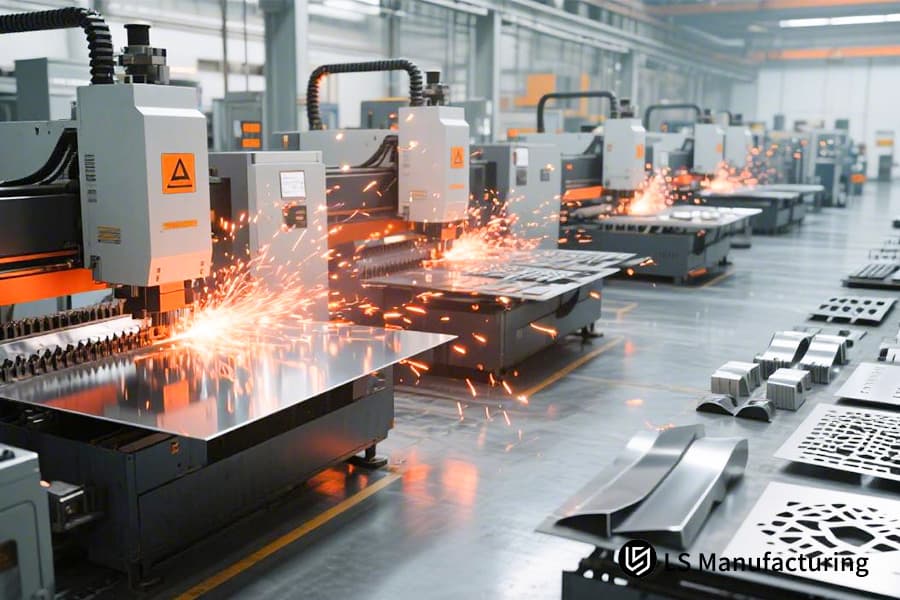
Figure 1: Cutting a high-carbon steel plate with a plasma torch for heavy machinery structural components.
How Do You Define "Functional" Precision And Tolerances That Are Truly Applicable To Sheet Metal Manufacturing?
The true test of precision sheet metal fabrication services is not a report showing precision levels; it's a part that fits and functions flawlessly. The problem is that tolerances on a drawing represent ideal conditions. What's needed is a way to move from measuring parts to designing the fabrication process to ensure deterministic results.
A Strategic Distinction in Measurement
The first step, and the most important one, is to conduct a thorough functional tolerance definition. This would help in differentiating between the spot accuracy of a feature and the precision of that feature's relationship to all other features in the assembly. Our analysis focuses on the implementation of process control on these critical relationships. This is a primary discipline in our sheet metal fabrication process. Assembly is key to nominal conformity.
Controlling Static Dimensions for Reliable Assembly
In static features such as the arrangements in a bolt pattern, consistency is key. This is done by using high repetition accuracy lasers with deterministic fixturing to ensure position is maintained batch to batch. This is the controlled process. This is the understanding of the ramifications of acuracy vs. precision to ensure that the alignment of the bolts is not only guaranteed but not a test.
Mastering Dynamic Tolerances Through Pre-Compensation
The more difficult aspect is managing dynamic results, e.g., flatness, after a welding procedure. To do this, we use a simulation of a digital twin to manage thermal distortion. Also, we add accurate information on anti-deformation in our sub-components. This step in the manufacturing process transforms a wish into a pre-determined function, which is the definition of cutting-edge sheet metal fabrication.
Implementing a Closed-Loop Quality System
The guarantee of the quality of our results involves a closed-loop system. Every critical dimension is statistically monitored in relation to a pre-determined functional intent. This system provides feedback on the results, allowing appropriate changes in real-time. This system guarantees the quality control in our service. Our closed-loop quality system instills reliability in our DNA as a manufacturer, which is the guarantee we provide as a sheet metal fabrication provider.
The way in which complex problems are solved by the method we utilize to do so begins with determining our functional intent. The next step in the process would be to design our entire manufacturing process to ensure that our previously defined intent is accomplished in a predictable way. This process will ultimately serve as a road map to convert our theory into a real-world component in a reliable way.

Which Sheet Metal Manufacturing Process Stages Require Coordinated Control To Achieve Tight Tolerances?
In order to ensure a reliable outcome in tight tolerance sheet metal fabrication, it is necessary to do more than optimize each process in the way that it must be done with an integrated process chain control. This document will identify the important manufacturing process stages that must be synchronously controlled in sheet metal fabrication:
Blanking: Controlling Geometry and Material Integrity
- Laser Cutting Precision: Utilizing high-powered fiber lasers to ensure that edges are at right angles and precision is ±0.05mm in contour cutting.
- Managing Heat-Affected Zone (HAZ): Managing cutting parameters to restrict the hardened zone’s interference with precision sheet metal forming.
- Secondary Finishing for Critical Features: Utilizing "Laser cut with allowance + precision grinding" technique for paramount edges.
Forming: Actively Compensating for Springback
- Database-Driven Prediction: Utilizing a proprietary database with pre-defined compensation values to perform the process of bending springback compensation based on grade, thickness, and angles.
- Real-Time Angle Correction: Utilizing press brakes with in-cycle angle measurement and real-time correction.
- Result Achieved: Control over the bend angles to a tolerance of ±0.5° to resolve the problem of elastic recovery.
Joining: Managing Stress and Distortion
- Low-Heat-Input Welding: The process uses laser welding, which has shown to have >80% less heat input compared to TIG, thus reducing thermal distortion in complex sheet metal assemblies.
- Alternative Fastening Solutions: Precision press joining or adhesive joining is used, which is employed when weldable materials are not suitable, or when there is a need to remove heat altogether.
- Adaptive Parameter Setting: The joining parameters are set according to the actual measured output state of previous forming and cutting processes.
This is a process chain control strategy to address the client’s basic problem with dimensional drift in demanding sheet metal fabrication. The strategy is to actively connect and control all the processes in the manufacturing sequence, thus ensuring precision in parts by the use of predictive bending springback compensation and stress-based joining. The strategy is important in ensuring the production of high-reliability parts, where reliability is proportional to the accuracy with which individual operations are performed.
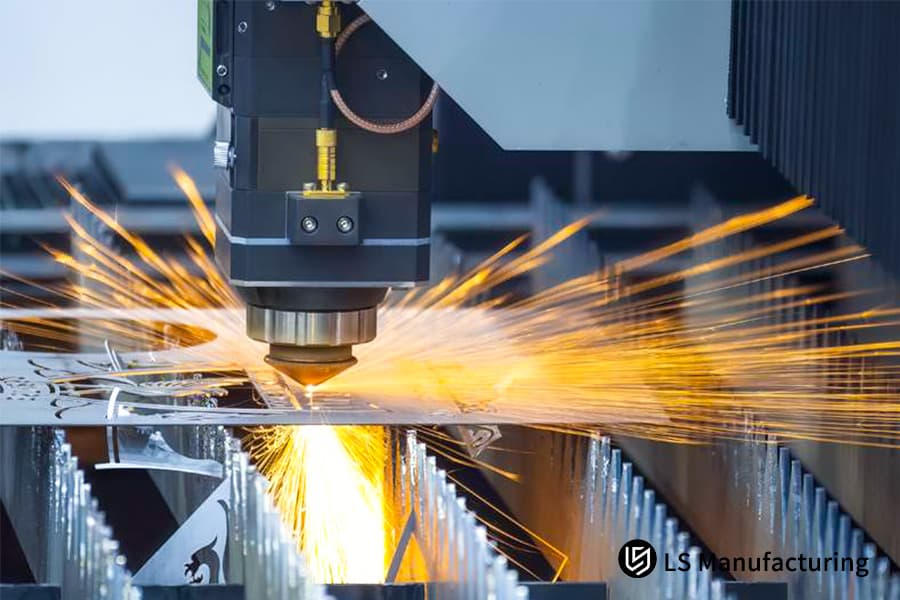
Figure 2: Cutting a high-tolerance steel sheet with a fiber laser for precision industrial machinery parts.
What Customized Strategies Are Employed For High-Precision Sheet Metal Manufacturing Services Tailored To different materials?
In the high-performance industries, success in sheet metal fabrication processes requires more than just general methods. This document highlights the essential material-specific fabrication strategies to address the specific problems associated with various material groups. This will be a decisive technical guideline to translate material properties into reliable processes for high-tolerance sheet metal fabrication, which will add critical value to the process.
| Material Category | Primary Challenge | Customized Fabrication Strategy |
| Aluminum Alloys | Adhesion to tools (built-up edge), deformation, marking during bending. | Sharp edge punch tools to be used; specific polyurethane pads to be used during bending to prevent marking; press joining to be used instead of welding. |
| Austenitic Stainless Steel (e.g., 304) | High spring back and work hardening during forming. | Bend radius ≥ material thickness to be used; incremental bending to be used. |
| Precipitation-Hardening Stainless (e.g., 17-4 PH) | Extremely hard after treatment, unpredictable distortion during the process of aging. | Machining to be done after solution treatment, followed by age hardening; specific distortion control to be used during the process of aging. |
| Special Alloys (e.g., Invar, Titanium) | Unique thermal coefficients, with high reactivity in the hot working regime. | Maintain environmental temperature control; employ inert gas shielding in all welding operations. |
| General Protocol | Defining the optimal process parameters for any new material or design. | Perform small batches in a dedicated materials lab to empirically determine the final process window. |
This analysis offers a definitive framework to de-risk custom precision sheet metal fabrication. We help our clients address key technical challenges: determining the best advanced sheet metal fabrication sequence, controlling deformation in aluminum and stainless steel precision forming, and ensuring dimensional stability in the final product. The depth of this analysis is designed to support high-value engineering scenarios where empirical validation in is critical.
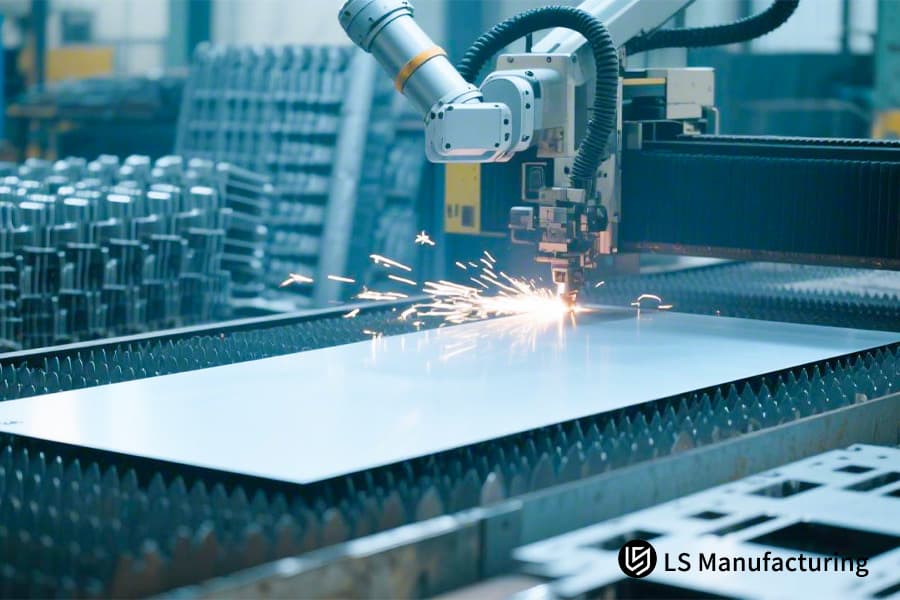
Figure 3: Cutting a carbon high precision sheet metal fabrication a fiber laser for precision industrial machine parts.
How Do Precision Sheet Metal Stamping And Laser Cutting Complement Each Other In Achieving Tight Tolerances?
The process of achieving these tight tolerances on metal components involves a synergistic combination of these two basic processes. We will discuss how precision sheet metal stamping and laser cutting for tight tolerances are utilized synergistically to achieve economic viability as well as part geometry complexity, which will provide a clear-cut choice for part fabrication:
Leveraging Stamping for High-Volume Precision
For components that are to be produced in high volume with repetitive features such as standard holes, louvers, or shallow embosses, precision sheet metal stamping is the most appropriate process. This process will be the answer to the challenge of producing microscopic variances on components by the thousands, which is a basic principle for dependable high-volume sheet metal fabrication. This process ensures consistency within tolerances of ±0.03mm using a progressive die.
Applying Laser Cutting for Complex, Low-Volume Geometry
In cases where there is complexity in contours, internal features, and design changes, laser cutting for tight tolerances (±0.05mm) allows the design to have the necessary flexibility without incurring tooling costs. The non-contact nature also prevents any mechanical stress on parts, which is essential in the case of complex parts. This addresses the problem in the sense that it allows rapid iteration in precision sheet metal fabrication.
Integrating Processes via Hybrid Manufacturing
In cases where components have complex contours and forms, hybrid manufacturing solutions play a crucial role. This is because the machine uses a laser to cut complex features and shapes in sheet metal parts. It then uses a punching unit to make forms such as tapped features in a single clamping operation. This solves alignment errors and reduces handling, merging the flexibility of laser with the speed of forming for complex sheet metal parts.
Data-Driven Process Selection
The solution methodology uses a quantified decision matrix that considers volume, feature complexity, and tolerance bands. Our solution analyzes part geometry to determine the most cost-effective single or combined process solution, thus solving the client’s issue of capital investment versus unit cost trade-offs to achieve both technical and cost objectives.
This document provides a methodological approach in the selection and integration of precision sheet metal fabrication processes. We address critical challenges facing our valued clients, which include finding the most cost-effective approach in attaining precision, eliminating secondary alignment issues through hybrid manufacturing solutions, and reducing the risks involved in the scale-up of processes. The technical information provided is specific to competitive, high-value applications in which precision and optimum manufacturing economics go hand-in-hand.
LS Manufacturing — Semiconductor Equipment Industry: Manufacturing Project For Ultra-Flat Aluminum Alloy Vacuum Chambers For Wafer Transfer Modules
In this LS Manufacturing semiconductor case, the company was faced with the challenge of solving a crucial fabrication problem in the development of a wafer handling module. This was in the design of an ultra-flat aluminum vacuum chamber that failed to respond to conventional techniques when exposed to thermal stress. This led to a re-engineering of the precision sheet metal fabrication technique to ensure reliability:
Client Challenge
The specification called for a 600mm x 400mm, 6061 aluminum alloy chamber, which needed a flatness of ≤0.1mm. Also, there needed to be zero leakage at all flanges after thermal cycles. The incumbent’s approach resulted in varying flatness (0.2-0.3mm), and conventional leak-proof fabrication techniques were not successful, as there were micro-leaks at the stress points after thermal shock. This resulted in the client experiencing machine downtime, which affected tool reliability and their new product introduction schedule.
LS Manufacturing Solution
Our high precision sheet metal fabrication solution involved a series of steps, which were designed specifically to mitigate the stresses. The solution involved pre-stretching the aluminum plate, high-speed milling of the sealing surfaces, and pulsed laser welding. The innovative aspect of the solution involved vibrational stress relief, as opposed to thermal aging, which ensured homogenization of the stresses at the critical joints.
Results and Value
Due to material springback, the initial batch of sample parts exceeded specifications by 0.05 mm; we subsequently adjusted the parameters of the compensation model. The delivered chamber has a verified flatness of 0.08mm, which met our specifications, and has passed a helium leak detection test. The delivered chamber has withstood 1000 thermal cycles between -40°C and +120°C with zero leakage. This has resulted in zero failure during the field, secured our position as exclusive suppliers of non-standard chambers, and created a new joint corporate standard, giving the client a guarantee of component reliability over a long period of time.
This case demonstrates our capability to solve root-cause engineering challenges in advanced sheet metal fabrication. We provide solutions for guaranteed hermetic sealing under thermal cycling, achieving and holding extreme flatness tolerances, and de-risking the production of mission-critical components. Our methodology is designed for high-value, technically demanding sectors where failure is not an option.

How Can The Dimensional Accuracy Of Sheet Metal Parts Be Verified And Guaranteed Through Advanced Inspection Methods?
In tight tolerance metal fabrication, conformity cannot be assumed; it must be empirically demonstrated. The following is a guide to the advanced metrology for sheet metal that are critical to the validation of component precision. It is a guide to a sophisticated inspection methodology that extends beyond end-point inspection to provide continuous verification, critical to a reliable precision metal parts manufacturer for critical industries.
| Inspection Phase | Methodology & Purpose | Key Outcome / Metric |
| First-Article Verification | Dimensional scan of the component using a sophisticated CMM and functional gauge inspection to provide a deviation report. | To provide a digital record of the component (e.g., to within ±0.025mm accuracy). |
| In-Process Monitoring | Real-time inspection using a laser angle sensor at the press brake station and optical vision sensors at welding stations to monitor process drift. | To enable real-time correction of critical parameters such as bend angle (to within ±0.1°) during the manufacturing of precision sheet metal. |
| Functional Validation | Utilization of master fixtures specifically designed and created to replicate the final assembly interface and mating relationships of the component. | A rapid means of validating the functionality, fit, and critical interface dimensions of a part, going far beyond simple geometric dimensioning and tolerancing checks. |
| Digital Quality Archiving | The collection of all raw measured data in a verifiable "Digital Quality Dossier," which is linked to the serial number of the component in question. | A powerful tool in the quest to create new, higher-quality standards in advanced sheet metal fabrication processes. |
This system will also satisfy the client’s primary concern of having verifiable data-based confidence in part conformance. This is not just a certificate; it’s a rich data set showing conformance to specifications in all critical parameters. This kind of advanced metrology for sheet metal using CMM and functional gauge inspection, as well as process control, is essential in tight tolerance metal fabrication, especially in aerospace, medical, and semiconductor industries, where failure is not an option.
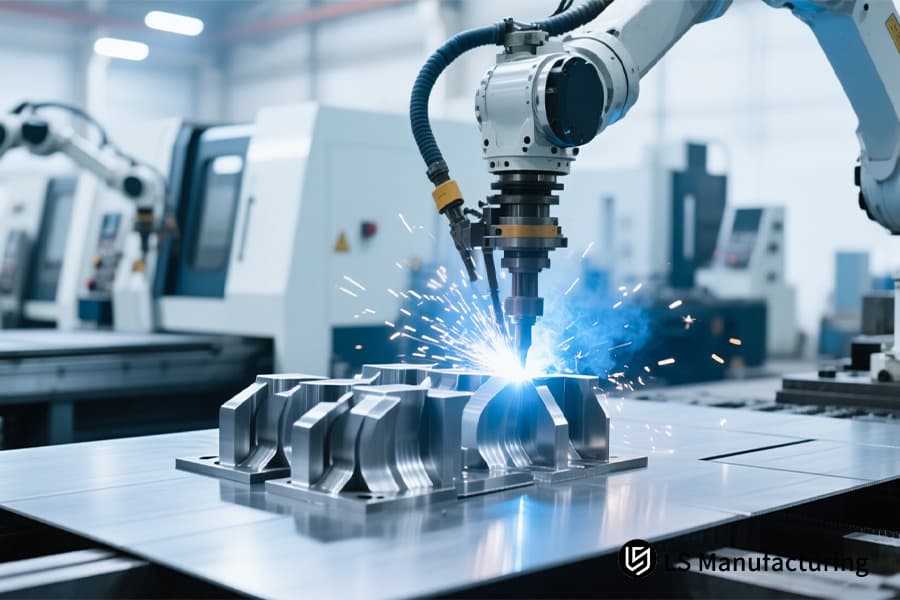
Figure 4: Welding a stainless steel bracket with a robotic arm for automotive chassis assembly.
When Evaluating Sheet Metal Fabrication Suppliers, How Can One Discern Their Actual Process Control Capabilities?
When seeking to find a quality supplier of sheet metal fabrication for tight tolerances, it is not enough to just look at what they claim; you have to look at what quality processes they have in place. The following is a framework to conduct a supplier process capability audit, which will include the key steps to take in your investigation:
Quantifying Control with Statistical Evidence
- Request Empirical Process Data: Request X-R control charts and Cpk reports on a key dimension, such as Bend Height, from recent X-R control charts.
- Benchmark Against Industry Standards: Cpk > 1.33 is a basic level of control, while Cpk > 1.67 is superior capability, indicating high-precision fabrication.
- Solution Provided: We will provide our sanitized SPC data to show our processes are controlled and predictable.
Evaluating Response to Non-Conformance
- Present a Failure Scenario: Suggest that there is a hardness problem in the material that causes a 0.5° springback in the parts. Evaluate their non-conformance response.
- Audit the Response Protocol: Evaluate their response protocol to non-conformance. This will include steps to contain the problem, analyze the causes of non-conformance, rectify the process, and quarantine non-conforming products.
- Solution Provided: Demonstrate our response to non-conformance by having a system in place to respond to non-conforming material.
Assessing Management System Substance
- Verify Relevant Certifications: Verify the presence of industry-specific certifications, e.g., IATF 16949 or ISO 13485, which require risk-based thinking and traceability.
- Audit Beyond the Certificate: Review the integration of the documented system into day-to-day precision sheet metal business processes.
- Solution Provided: Our system, e.g., IATF 16949, provides the framework for a preventive approach to managing risk and ensuring full traceability, standardizing sheet metal fabrication quality.
This audit methodology addresses a critical issue facing our client, which is how to measure a supplier’s quality discipline vs. their compliance. We help our clients find partners whose SPC and quality management systems actually drive prevention of defects. The technical approach outlined is critical in evaluating suppliers of critical sheet metal fabrication processes, as it is not inspections, but control processes, which drive ultimate reliability and cost.
FAQs
1. What is the typical lead time for producing a high-precision sheet metal part, from the initial drawings to the delivery of samples?
For precision sheet metal components that are not excessively complicated, the standard lead time, i.e., the time taken to deliver the first samples once the drawing finalization is complete, ranges between 4 to 6 weeks. A detailed schedule will be sent to you at the time of project inception.
2. What level of tolerance can you typically guarantee for sheet metal parts made from stainless steel or aluminum alloys?
We guarantee a tolerance of ±0.1mm for laser cutting, ±0.5° for angular tolerance, and ±0.1mm for positional tolerance. In case you need tighter tolerances, i.e., ±0.05mm, this is possible with specialized techniques such as profile grinding or stamping; however, this would need to be evaluated on cost and time implications.
3. How do you ensure consistency across hundreds or thousands of parts during mass production?
We maintain this consistency through a combination of "standardized operations" and "Statistical Process Control" or "SPC." Every project is subject to a highly detailed process control card that locks in critical process parameters. Our products are subject to regular sampling inspections of critical dimensions, with "Statistical Process Control" control charts plotted to ensure consistent output quality.
4. If my design proves difficult to manufacture using existing processes, or if the production costs are prohibitively high, will you offer alternative suggestions?
We will offer a complimentary, in-depth "Design for Manufacturability" analysis. Within 24 hours of receiving your drawings, we will issue a highly detailed "Design for Manufacturability" report that will contain suggestions for optimizing your part to overcome any potential manufacturing problems that may be encountered. These suggestions can result in substantial cost savings.
5. Do you offer a comprehensive suite of services ranging from sheet metal fabrication to welding, machining, and surface finishing?
We provide "one-stop" turnkey solutions designed to ensure that quality remains fully controllable and lead times remain predictable throughout the entire production workflow, while simultaneously eliminating the quality interface issues that often arise when coordinating multiple separate vendors.
6. What is your Minimum Order Quantity (MOQ)? Do you support the production of prototypes?
We fully support the production of prototypes and very small-batch trial runs, with MOQs starting as low as 1 to 10 units. This capability is crucial for validating designs, materials, and manufacturing processes, and represents a necessary investment for effectively mitigating overall project risks.
7. How do you handle sharp edges and burrs on sheet metal parts to ensure operational safety and aesthetic appeal?
All our parts go through a mandatory deburring operation before they leave our plant. Depending on the specific needs, different deburring operations, like vibratory finishing, magnetic polishing, or manual sanding, may be employed to assure smooth edges on the parts. In some cases, where extremely high cleanliness is demanded, electropolishing may be done on the parts.
8. How do I initiate an inquiry and collaboration for a new project?
You may send us your complete 2D drawings in PDF or DWG formats, and 3D models in STEP formats, clearly indicating the materials, quantities, important features, and surface finishes to be achieved. Our application team will start their analysis in less than 4 hours, with a transparent quotation showing the complete manufacturing process.
Summary
In precision equipment manufacturing, sheet metal components have progressed beyond basic covers to interface components that establish product performance and reliability. To achieve critical tolerances, however, involves more than simply utilizing state-of-the-art machine tools; it involves the synergistic integration of materials science, metal forming science, thermal management, and metrology. This necessitates a partner who understands how to proactively compensate for cumulative error to guarantee that outputs always tend to converge within critical tolerance bands.
Partner with us to establish new standards for precision sheet metal fabrication on your next-generation products by uploading your most demanding part drawings today. In 4 hours or less, you will receive a detailed "Specialized Feasibility Report" that includes critical manufacturability analysis, precision risk identification, and cost reduction opportunities.
📞Tel: +86 185 6675 9667
📧Email: info@lsrpf.com
🌐Website: https://lsrpf.com/
Disclaimer
The contents of this page are for informational purposes only. LS Manufacturing services There are no representations or warranties, express or implied, as to the accuracy, completeness or validity of the information. It should not be inferred that a third-party supplier or manufacturer will provide performance parameters, geometric tolerances, specific design characteristics, material quality and type or workmanship through the LS Manufacturing network. It's the buyer's responsibility. Require parts quotation Identify specific requirements for these sections.Please contact us for more information.
LS Manufacturing Team
LS Manufacturing is an industry-leading company. Focus on custom manufacturing solutions. We have over 20 years of experience with over 5,000 customers, and we focus on high precision CNC machining, Sheet metal manufacturing, 3D printing, Injection molding. Metal stamping,and other one-stop manufacturing services.
Our factory is equipped with over 100 state-of-the-art 5-axis machining centers, ISO 9001:2015 certified. We provide fast, efficient and high-quality manufacturing solutions to customers in more than 150 countries around the world. Whether it is small volume production or large-scale customization, we can meet your needs with the fastest delivery within 24 hours. choose LS Manufacturing. This means selection efficiency, quality and professionalism.
To learn more, visit our website:www.lsrpf.com.