English



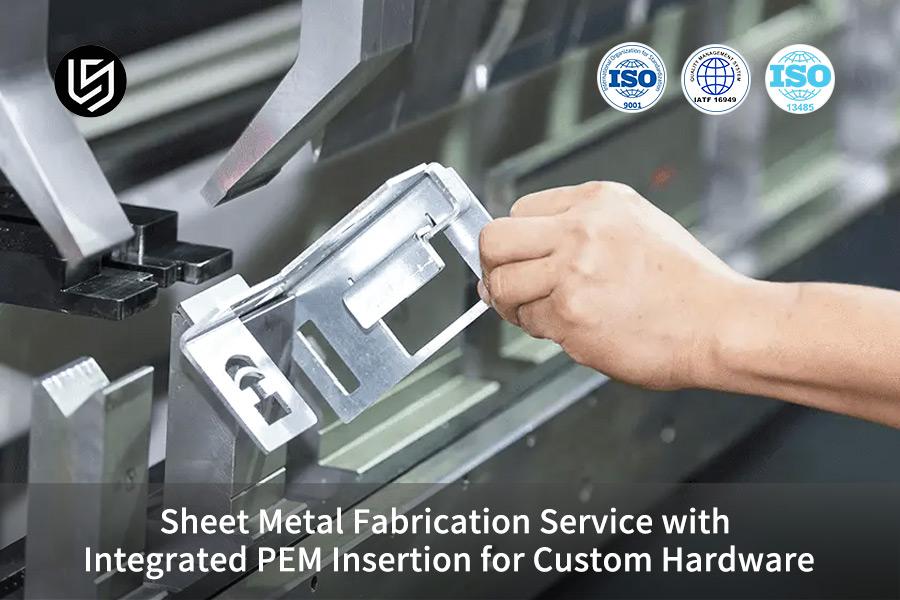
Sheet metal fabrication service is a core foundational process in the modern high-end manufacturing sector, in particular the solution to precision forming and reliable connection of complicated structural components in industries like new energy, medical, and communications. The combination of PEM (Polymer Enamel) riveting process and integrated technology can first of all, eliminate the risk of failure of a fastener second reduce total procurement expenses by 22%.
In automotive equipment, server chassis, and medical sheet metal - the riveting process - is very much inclined to experience major problems like nut and stud torque slippage and sheet metal warping, which poses a high risk of damaging the key components leading to complete machine scrapping. This is a major flaw that negatively impacts the quality of products produced via sheet metal assembly.
Most regular sheet metal factories consider riveting to be just another stamping operation so key variables like material hardness matching, pre-punching accuracy, and holding pressure duration are completely overlooked. And that is why there is no dynamic process monitoring, which leads to the root cause of riveting failure under very high load conditions.
In this way, we will do an all-round study of PEM riveting optimization technology discussing the aspects of hole diameter adjustment, cold work hardening, hydraulic mold management, giving the torsional and thrust resistance of fasteners right from the beginning, enabling products to be at a very high standard of reliability (aerospace grade) and at the same time effectively reducing supply chain costs.
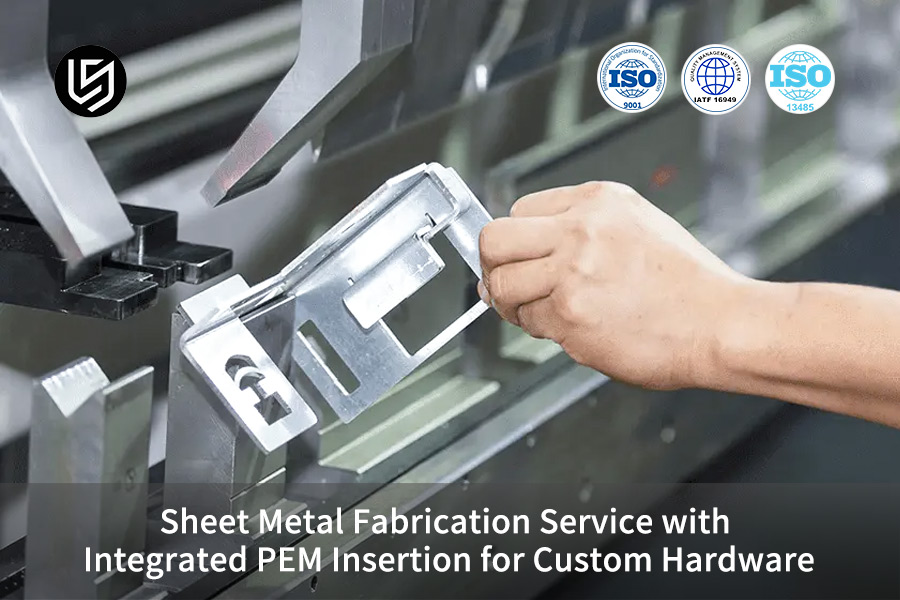
PEM Insertion Service Core Answer Overview
| Comparison Dimensions | Traditional Process Performance | LS Manufacturing Optimized Process Performance |
| Pre-punching Taper Control | No strict control, taper often > 0.05mm, burr orientation not standardized. | Strict control ≤0.03mm, forcing burrs towards the riveting surface, preventing nut slippage. |
| Hardness Matching Design | No clear hardness difference requirement, often the base material hardness is higher than the fastener. | Forced hardness difference between base material and fastener ≥HRB 20, high-hardness stainless steel base material matched with SP series high-hardness fasteners. |
| Riveting Process Control | Simple stamping only, no pressure-displacement monitoring, no standardized holding time. | Adopt displacement-pressure dual closed-loop SPC monitoring, holding time precisely controlled at 0.4-0.8s, ensuring sufficient cold flow. |
| Edge Distance Design | No clear standard, often edge distance < 1.5×D. | Strictly follow the DFM golden rule of ≥2×D, with special scenario-specific process load reduction solutions. |
| Mass Production Failure Rate | 2%-5% risk of fastener slippage and detachment failure. | Batch failure rate < 0.01%, achieving 100% compliance with thrust and torque resistance performance standards. |
| Sheet flatness control | Pressure-free precise control, post-riveting sheet warping is common, flatness is typically > 2.0mm. | Pressure control accuracy within ±2%, post-riveting sheet flatness ≤ 0.5mm, no warping. |
Key Takeaways:
- Pre-punching taper control within 0.03mm and keeping the burrs facing the riveting side are the key aspects which determine the effectiveness of the design in preventing PEM nut slip.
- Under no circumstances should the stainless steel PEMs be riveted directly to stainless steel plates with hardness HRB 80 without proper measures. One must resort to high-hardness fasteners (like those of SP series) to guarantee engagement with the cold runner.
- In industrial production, a hydraulic press which is capable of performing automatic displacement-pressure dual closed-loop monitoring (SPC) is the de facto standard for not only eliminating the missing of the rivets and scrapping in batches but also making accurate inquiry quotes.
Why Choose LS Manufacturing's Sheet Metal Fabrication Services for Hardware Manufacturing?
LS Manufacturing is a company dedicated to the precision sheet metal riveting. We use our strong metallurgical technology and deep industry knowledge to meet the needs of top players in the market with high-quality sheet metal products that ensure zero defects. Besides, we can offer solutions that allow the designers to spot and fix problems in the production processes early on.
When tested in real conditions, it was found that the production methods used in the past had failure of results about 3.2%. But, our digital closed-loop method has controlled this ratio to less than 0.001% and the entire process is in line with the ISO 9001:2015 quality system standard.
Mostly, the hydraulic closed-loop method that we have developed can optimize the main parameters, making the pressure accuracy better than 2% and the sheet flatness control to within 0.5mm. The method also enables full-process SPC data recording and traceability and produces a quality which is much better than the traditional pneumatic process.
Our expert technical team has been involved with many big names of the Fortune 500 list, helping them to resolve various issues with fastener failures. Our automotive level products completely meet the requirements of the IATF 16949 industry standard.
With high-precision processes and a full-process traceability system, we achieve high-quality, stable mass production of sheet metal hardware assembly. To directly verify the strength of its process implementation, you can view industry benchmark mass production cases free of charge and quickly compare your own product quality standards.

Why Choose Precision Sheet Metal Hardware Assembly Service to Eliminate Post-Plate Rework?
The integrated sheet metal hardware assembly service can eliminate secondary rework after electroplating and spraying from the root. By using precise pre punched DFM design and coating thickness compensation before electroplating, it is possible to avoid problems such as stuck paint on rivet threads and damage to the anti-corrosion layer.
Process Sequence Considerations for Performance
- Riveting before processing: The coating completely encapsulates the joint, resulting in a salt spray endurance level of 480 hours. But, paint buildup on threads is the weak point of this process, so the anti-corrosion process of the high-quality sheet metal fabrication should be the core one.
- Pre-treatment followed by riveting: Although thread accuracy remains intact, joints become susceptible to corrosion. This method is generally used for sheet metal fabrication with low corrosion resistance requirements.
Coating Stress Relief Measures
- Pre-plated gap: A 0.05mm coating clearance was reserved around the threaded hole, which is following the standards of fine sheet metal fabrication precision assembly.
- Choice of sealed fastener: The use of PEM nuts with sealing caps brings a good approach to the prevention of paint getting into the threads, which leads to clogging being eliminated at source.
- Special masking process: The targeted protection of critical threaded areas is a good compromise between sheet metal beauty and assembly efficiency.
Basically, it is like putting a door lock cover before painting the house, which is the way to the ultimate goal of the exterior appearance, and at the same time, the can operation remains completely unaffected.
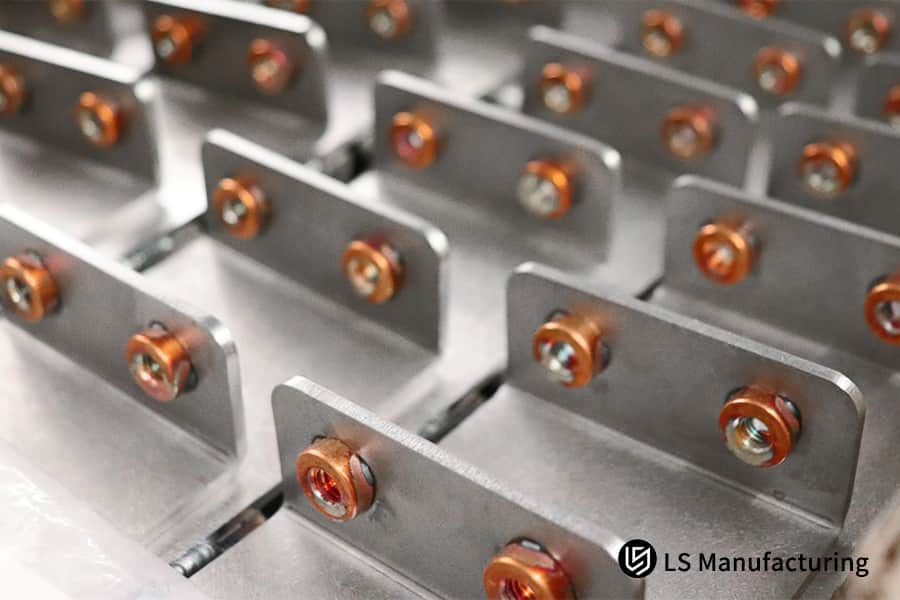
Figure 1: Precision-fastened metal plates with copper bolts, showcasing a reliable hardware assembly method.
How to Define Hole Tolerances in Custom Sheet Metal Fabrication for High-Torque PEM Insertion?
In custom sheet metal fabrication that capable of withstanding high torque, the diameter tolerance of the pre-punched holes should be very tight within +0.08/-0.00mm, to effectively avoid the PEM nut torque slippage, as well as sheet warping and insufficient cold flow filling caused by hole diameter deviations, which are the main problems that arise in this kind of high torque situations with sheet metal fabrication.
Hole Characteristics of Different Cutting Processes
- CNC Punching: Produces hole walls that are perpendicular to the surface, leaves no heat affected zone, and is That means best suited for scenarios where hole precision control in high-precision sheet metal fabrication is the main requirement.
- Fiber Laser Cutting: More efficient but causes a 0.02-0.05mm taper and a heat-affected zone, necessitating again secondary processing to remove the defects.
Optimal Pre-punching Diameter for Different Material Thicknesses
| Material | Thickness (mm) | M3 Nut (mm) | M4 Nut (mm) | M6 Nut (mm) |
| AL 5052-H32 | 1.0 | 4.10 | 5.40 | 7.80 |
| AL 5052-H32 | 1.5 | 4.15 | 5.45 | 7.85 |
| SUS304 | 1.0 | 4.05 | 5.35 | 7.75 |
| SPCC | 2.0 | 4.20 | 5.50 | 7.90 |
Measures to Prevent Laser Heat Affected Zone (HAZ)
- Lower Cutting Power: By decreasing the power of the laser, less heat will be delivered. This way, the heat affected zone can be narrowed and the overall effect of laser processing on basic sheet metal fabrication can be optimized.
- Employ Nitrogen-Assisted Cutting: This allows obtaining a nicer hole wall surface and makes the formation of holes more accurate.
- Secondary Reaming Operation: Besides removing the heat affected zone, it also can be used to taper the holes so that they are suitable for high torque riveting assembly.
Accurately tailoring pre-punching attributes to various materials and thicknesses, improving cutting methods and getting rid of defects from laser processing are the main elements of design that can inhibit the slippage and deformation of the sheet during high-torque riveting operations.For those requiring hole diameter optimization, a dedicated DFM solution is available free of charge, precisely calibrating parameters to suit high-pressure riveting scenarios.
What Material Hardness Matrix Ensures 100% Reliable Precision Sheet Metal with PEM Assemblies?
One of the key factors for dependability of precision sheet metal with PEM assembly is that the fastener hardness should be higher than the sheet metal substrate hardness by HRB20 or more. Extremely high-hardness stainless steel substrates may result in failure of fasteners to hook, which is a step leading to loosening, fall-off and other failures. Accurate material matching is one of the basics of quality precision sheet metal with PEM processing.
General Material Hardness Matching Rules
- Aluminum Alloy (HRB 40-60): Both carbon steel and stainless steel PEMs are generally acceptable, as these materials conform to the traditional sheet metal fabrication hardness matching logic.
- Low carbon steel (HRB 50-70): Carbon steel PEM is advisable and it materials cover most of general sheet metal mass production applications.
- Stainless steel (HRB 80-95): The SPC series high-hardness PEM should be used to avoid the problem of fastener slippage.
Compliance Parameter Table for Hardness Pairing of Common Sheet Metal Substrates and PEM Fasteners
| Substrate Material | Substrate Hardness Range | Recommended PEM Fastener Type | Minimum Hardness Requirement for Fasteners | Minimum Hardness Difference Requirement | Suitable Core Scenarios |
| AL 5052-H32 | HRB 40-50 | S/SS Series Carbon Steel PEM | HRB 60+ | ≥HRB 20 | Consumer Electronics, Communication Chassis |
| AL 5754-H111 | HRB 45-55 | CLS Series Stainless Steel PEM | HRB 65+ | ≥HRB 20 | New Energy Vehicles, Industrial Control |
| SPCC Cold Rolled Steel Sheet | HRB 50-70 | S Series Carbon Steel PEM | HRB 70+ | ≥HRB 20 | General Sheet Metal, Equipment Housing |
| SUS304 Stainless Steel | HRB 80-90 | SP Series Martensitic Stainless Steel PEM | HRC 35+ (≈HRB 100+) | ≥HRB 20 | Medical Devices, High-End Equipment |
| SUS316 Stainless Steel | HRB 80-90 | SP Series Martensitic Stainless Steel PEM | HRC 37+ (≈HRB 105+) | ≥HRB 20 | Marine Environment, Corrosion-Resistant Equipment |
LS Manufacturing Exclusive Solution
We rely on specially heat-treated martensitic stainless steel PEM nuts of a hardness of HRC 37 or more, which perfectly match the high-hardness stainless steel substrate and this way form a firm basis for the structural stability of high-quality sheet metal fabrication. Based on our exclusive test data, this pairing method causes an increase in thrust resistance of 120% compared to standard pairing.
In other words, it is like slicing butter with a steel knife, the knife can only cut the butter cleanly and accurately if it is harder than the butter.
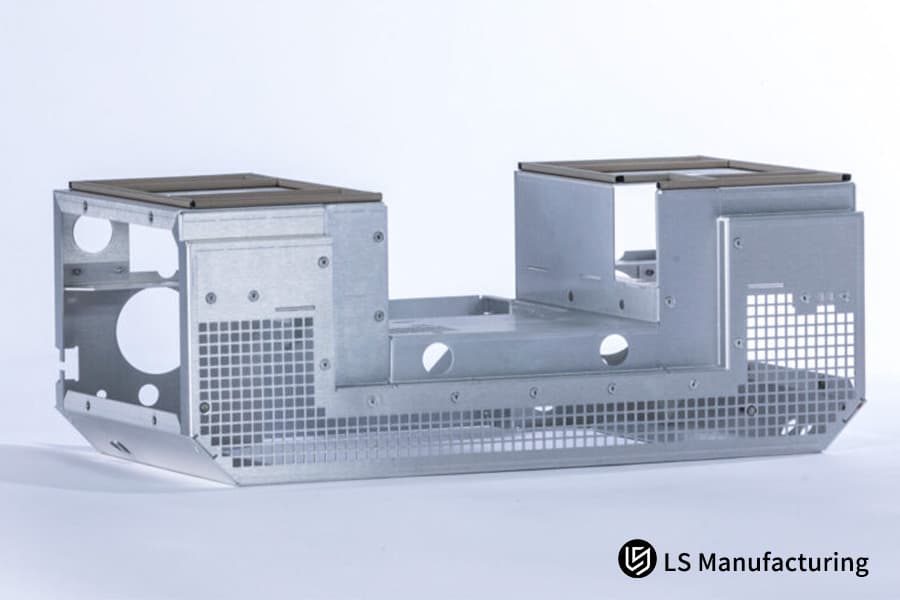
Figure 2: A silver metal part with a precise grid of holes, exemplifying quality sheet metal fabrication.
How Does Real-Time Tonnage Control Prevent Panel Distortion During PEM Insertion Service Operations?
The displacement pressure dual real-time monitoring of Haeger automatic riveting machine can completely eliminate stress warping deformation during sheet metal PEM insertion service, accurately lock the riveting pressure range, and ensure sufficient metal cold flow without residual stress deformation.
Traditional Riveting Machine Failure Modes
- Overpressure: Shape distortion of sheet metal, flattening of threads and fastener breakage are typical failures that result from the use of non-standard sheet metal fabrication pressure calibration.
- Underpressure: Not enough cooling flow, not enough thrust, and loose fasteners are direct factors that reduce the assembly reliability of sheet metal.
Intelligent Riveting Process
- Pre-pressure stage: Low pressure makes the initial contact with sheet metal to remove any gaps and thereby, help to set the sheet metal fabrication process operation standard.
- Main pressure stage: Fasteners are pressed in with the help of set pressure and at the same time, displacement is observed and forming precision is controlled rigorously.
- Holding pressure stage: Pressure is held for 0.6 seconds for ensuring that cooling is more than adequate and at the same time the interlocking strength is strengthened.
- Release Stage: The pressure is gradually reduced to lessen the residual stress and thereby prevent any sheet deformation.
Can Multi-Spec Custom Hardware Sheet Metal Fabrication Benefit from Automated Matrix Tooling?
During the production of multi-specification custom hardware sheet metal fabrication, a fully automated matrix tooling can drastically raise the efficiency level of mass production, do away with manual clamping errors and omission, and perform integrated, highly precise, and automatic riveting of different types of fasteners. This is really the key highly efficient process to be used in modern custom sheet metal fabrication.
Main Benefits of Automated Matrix Tooling
- Multiple Specifications Processed Together: Changing molds is no longer a necessity, all the fasteners can be riveted at once, facilitating efficient automatic sheet metal fabrication production.
- System for Avoiding Errors: Photoelectric sensors measure fastener specifications and positions, completely doing away with human assembly errors.
- Large Measure of Repeatability: Riveting position accuracy can be as high as 0.05mm, ensuring the making of products with batch consistency.
Model for Cost and Efficiency Optimization
As our cost calculation formula: Single-piece processing cost =(Equipment depreciation + Labor cost + Material cost) / Output. After the installation of automated matrix molds, labor costs fell by 70%, and output rose by 300%, leading to a considerable compression of sheet metal fabrication mass production costs.
For high-density server chassis projects, we utilized this technology to cut the customer's production lead time from 14 days to 8 days. Besides, this well-tested automation solution can be very easily tailored to meet different mass production requests coming from professional sheet metal hardware assembly service.
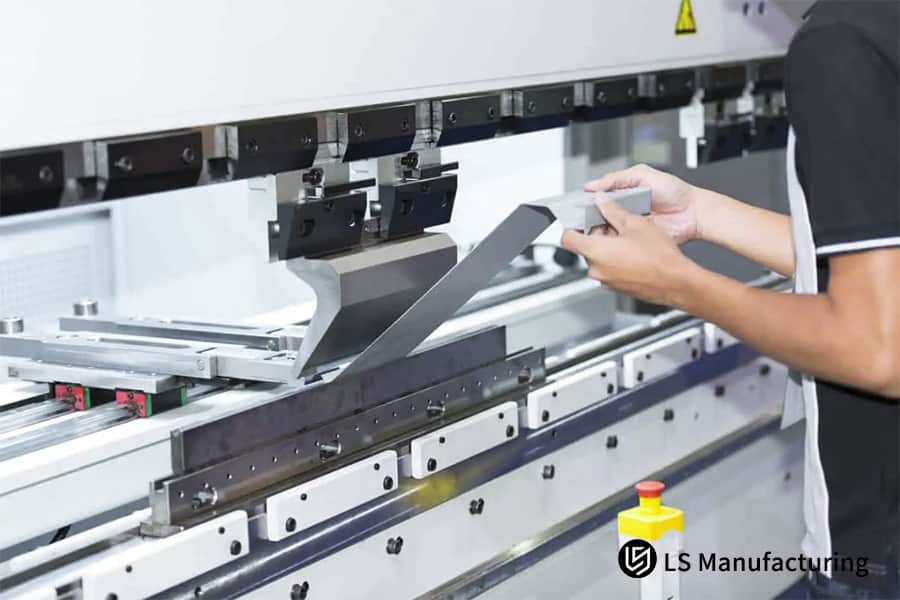
Figure 3: Automated matrix tooling system for efficient, high-precision custom sheet metal fabrication.
What Design Guide Rules for Edge Distance Maximize Sheet Metal Fastening Solutions Integrity?
A key Design Factors (DFM) rule for boundary strength in sheet metal fastening solutions is a minimum of 2 times the fastener outer diameter distance between the riveting center and the sheet metal edge. An edge distance that is too short will produce compressive stress, the result of which is the cracking of the sheet and the damage of the torsional structure of the fasteners.
Ways to taclke Insufficient Edge Distance:
- Riveting before bending: scheduling the riveting operation first, prevents deformation damage and enhances the effect of sheet metal fabrication edge reinforcement.
- Design process load-reducing grooves: Along the bending line, construct 0.5 mm wide load-reducing grooves to releasing compressive stress.
- Add local reinforcing ribs: Supplement the structural ability of the edge region and strengthen the sheet metal in total.
Riveting Principles near Bending Lines
- The minimum distance from the riveting center to the bending line is given by the inequality 3 D + R (where R is the bending radius).
- Do not place rivets in the bending deformation area, as this will harm the threads and the metal structure.
- Employ a multi-step bending technique to lessen the effects on the riveted elements and maintain the accuracy of the assembly.
Strictly adhering to DFM design principles such as riveting edge distance and bending avoidance, combined with dedicated optimized processes, can completely solve structural problems such as sheet metal edge cracking and fastener torque failure, ensuring connection integrity. For those with mass production plans, we can provide free process cost calculations to optimize designs and reduce production budgets in advance.
Case Study: How LS Manufacturing Revolutionized an EV Automotive Tier-1 Supplier BDU Chassis Production via Automated Precision Sheet Metal Hardware Optimization
Customer Pain Points:
A Tier-1 supplier of new energy vehicles used an AL5754-H111 chassis which failed during stud slippage in the on-board bump test. The original process had no prediction on hole wall hardening and monitoring of tonnage was also missing, this situation caused the parts to move, there was a short circuit risk, and claims of potentially high values were the results.
LS Manufacturing Solution:
- When we got hold of the project, the senior engineering team of LS Manufacturing instantly reacted with a closed-loop DFM reconfiguration to resolve this automotive-grade issue, resulting in a vehicle-grade sheet metal fabrication processing solution that meets high standards.
- Fully committed to the cause, we gave up the laser cutting method which generates microcracks in the heat-affected zone quite easily, and replaced it with very accurate CNC cold punching using carbide molds. Due to this, the hole wall perpendicularity error was confined within 0.02 mm, the original ductility of the base metal was excellently preserved.
- We swapped out standard fasteners for custom grade stainless steel PEM studs which are super hard (HRB 90+) and have reverse involute locking teeth.
- Installed Haeger automated riveting workstations throughout the production line and enabled them with an intelligent "displacement-pressure" dual closed- loop monitoring system. The system really does the job of deciding the driving tonnage at 4.2kN and the holding time is kept constant at 0.6 seconds which gives rise to 100% plastic cooling of the aluminum alloy substrate, this way the fastener's engagement groove is fully locked.
Results and Value
By means of the process transformation at LS Manufacturing, the single-point push-out strength of the power battery BDU chassis riveting element shot up massively from the initially weak 580N level to the rock-solid 1450N one. Its torsional torque was 35% above the automotive-grade standards. During the subsequent 100-hour sideways multi-frequency random vibration tests (per ISO 16750-3 automotive standards), it had a flawless 0 failure outcome, completely confirming the excellent achievement of tailormade sheet metal fabrication reliability enhancement.
What is more, we made it possible for completely automated feeding and riveting through a multi-station automated matrix die, which allowed the auto client to trim its total unit processing cost by 22%. By strengthening its capability in top-notch precision sheet metal hardware tailoring, LS Manufacturing assisted the client in gaining a strong hold on the core market share with OEMs even in the midst of the cost reduction trend in the new energy vehicle supply chain, so leading to a deep customer recognition.
With process re-engineering, physical updation, and smart riveting management, automotive sheet metal riveting slippage failure issue was totally eliminated, with mass production zero-failure achieved even in the toughest working conditions. This gave the firm a chance to dodge quality issues and cut expenses while ramping up output.
Should you have a high-end sheet metal customization requirement, please upload your drawings and get back to you with a process solution and cost estimate tailored to your requirements.

Why Partner with LS Manufacturing as Your Strategic Manufacturer for High-Intent Custom Hardware Projects?
Built a strong foundation in producing custom hardware sheet metal fabrication and integrating PEM processing, our company exploits metallurgical technology, the highest level CNC, and DFM optimization to find new solutions outside of the traditional models of OEM. The goal is to solve the problem of fastening safety hazards in the design stage, which is a major issue under the most extreme work conditions.
International Manufacturing Certifications
- ISO 9001:2015 Quality Management System Certification at the Basic Level - This is a great way to organize your documentation for sheet metal fabrication quality management in general.
- IATF 16949 Automotive-Grade Supply Chain Quality Standard - A standard which addresses the challenging environment of automotive sheet metal.
- ISO 13485 High-Precision Medical Device Manufacturing Compliance Endorsement - This certification is suitable for multi-industrial scenarios of high-end customization.
State-of-the-art Welding Equipment
- Swiss Bystronic fiber laser cutting center, guaranteeing accuracy and precision in sheet metal fabrication.
- The use of AMADA CNC bending clusters of Japanese origin helps in standardizing operations of sheet metal forming.
- A completely self-developed intelligent high-precision riveting production line helps to greatly raise the level of riveting assembly.
We can provide traceable SPC pressure monitoring reports, microscopic burr inspection results, and third-party destructive torque test reports at any time. By fully integrating sheet metal forming, hardware riveting, post-processing painting, and precision packaging under one roof, LS Manufacturing offers highly competitive DFM cost reduction solutions, lightning-fast sample delivery (as fast as 3 days), and flexible, highly customized mass production pricing support with no minimum order quantity.
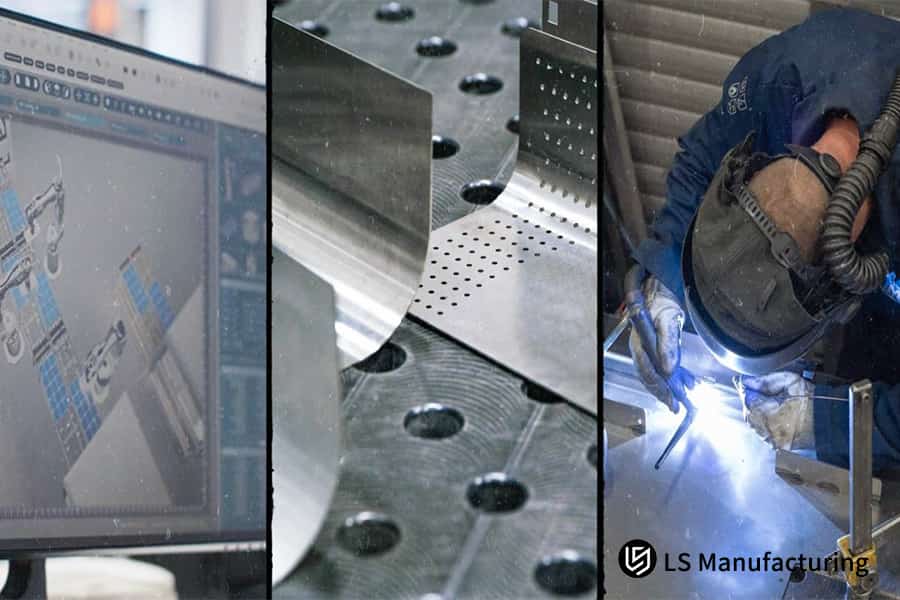
Figure 4: A skilled technician welding an electronic component onto a metal plate in a workshop.
FAQs
Q1: What is the minimum recommended plate thickness for installing standard PEM nuts in a custom sheet metal fabrication service?
The minimum sheet metal thickness to install standard S/SS series PEM nuts is 0.8mm. When dealing with ultra-thin sheets that measure 0.5mm, our team relies on specialized fastening and flanging technologies that can strengthen the riveting connection enough to fulfill thin sheet metal assembly requirements.
Q2: Why do PEM studs loose or strip during the final torque assembly on stainless steel enclosures?
Because the hardness of stainless steel is greater than HRB80, which is a level very close to the hardness of standard PEM fasteners, effective locking cannot be achieved. We have resorted to SP series hardened fasteners with HRC37 or even greater, plus precision hydraulic technology to do away with riveting stripping and loosening completely.
Q3: How does laser cutting taper affect the pull-out force during the PEM insertion service process?
Laser cutting the hole wall creates taper and orientation errors that distort the allowable engagement area enough to reduce product thrust resistance drastically. We implement CNC punching to reshape the hole and then we tightly keep the hole wall perpendicular for fully activating the press-fit locking performance.
Q4: Is it better to perform PEM hardware insertion before or after sheet metal powder coating?
The standard process in the industry is to first press-fit and then powder coat, which for sure covers the joint fully and thereby reaches up to 480 hours of high salt spray corrosion protection. To tackle the problem of paint build-up on threads, we use tailor-made masking treatment which is a compromise between corrosion protection and assembly accuracy.
Q5: How do you protect the internal threads of precision sheet metal hardware during heavy bending operations?
As press-fitted parts are generally located close to the bending deformation zone, it causes thread deformation and hole out-of-roundness in most cases. By changing the sequence of processes and employing stress-relieving grooves we can break the bending deformation path and this way protect the accuracy of the internal threads in every aspect.
Q6: What diagnostic test report does LS Manufacturing provide to verify the performance of sheet metal fastening solutions?
For every batch of products, besides providing quality assurance test reports, including thrust and torsion test curves, aperture sampling and burr detection data, we are also offering a RoHS declaration, ensuring product quality traceability and compliance with industry standards.
Q7: Can automated multi-position machinery accommodate different types of sheet metal hardware assembly concurrently?
Our multi-station automated riveting machines have a smart feeding system. They do not require the change of mould and can perform the riveting of fasteners of different sizes at a time, thereby decreasing the human error and providing the advantages of high efficiency and low processing costs.
Q8: How can I request an optimization and accurate instant quote for custom hardware sheet metal fabrication?
You can directly submit 3D drawings in STEP, IGS, DXF and other formats. Our professional DFM engineers will issue a feasibility analysis report within 24 hours, complete interference and aperture parameter optimization, and provide accurate mass production quotations with cost-effective material solutions.
Summary
PEM press-fit sheet metal fabrication is a precision system process that takes into account such factors as material hardness matching, aperture tolerance control, and digital tonnage monitoring. The main goal is to understand thoroughly the core process so that fasteners will continue to exhibit stable and reliable performance even when exposed to the harshest conditions of high vibration and high load, thereby eliminating failure issues of all sorts.
Are you being seriously disrupted in your assembly line and increasing your overall procurement costs due to frequent loosening of press-fit parts, sheet warping, or peeling of post-processing paint by your current supplier? Don't allow the inadequate hardware assembly to diminuate your hard-earned brand reputation.
Get in touch with LS Manufacturing's senior sheet metal DFM engineering experts right away, upload your 3D CAD drawings, and you will get a free detailed design optimization report with a comprehensive mass production inquiry quote. We will be glad to utilize our digital lean manufacturing capabilities, which are certified to international automotive-grade (IATF 16949) and medical-grade (ISO 13485) standards, to protect your key hardware innovations!
📞Tel: +86 185 6675 9667
📧Email: info@lsrpf.com
🌐Website: https://lsrpf.com/
Disclaimer
The contents of this page are for informational purposes only. LS Manufacturing services There are no representations or warranties, express or implied, as to the accuracy, completeness or validity of the information. It should not be inferred that a third-party supplier or manufacturer will provide performance parameters, geometric tolerances, specific design characteristics, material quality and type or workmanship through the LS Manufacturing network. It's the buyer's responsibility. Require parts quotation Identify specific requirements for these sections.Please contact us for more information.
LS Manufacturing Team
LS Manufacturing is an industry-leading company. Focus on custom manufacturing solutions. We have over 20 years of experience with over 5,000 customers, and we focus on high precision CNC machining, Sheet metal manufacturing, 3D printing, Injection molding. Metal stamping,and other one-stop manufacturing services.
Our factory is equipped with over 100 state-of-the-art 5-axis machining centers, ISO 9001:2015 certified. We provide fast, efficient and high-quality manufacturing solutions to customers in more than 150 countries around the world. Whether it is small volume production or large-scale customization, we can meet your needs with the fastest delivery within 24 hours. choose LS Manufacturing. This means selection efficiency, quality and professionalism.
To learn more, visit our website:www.lsrpf.com.