中文 (简体)



激光切割 DFM 服务基本上是一项技术咨询,旨在激励工程团队根据概念阶段制定正确的激光切割制造政策。该服务可以解决高精度钣金制造中的基本问题,例如单位成本上升30%或更多,以及由于设计和生产之间的中断而导致的交货延迟。在民用和商业高精度钣金制造中,如果不考虑加工的物理约束,工程师经常会遇到切割收缩或烧角等挑战。典型的供应商只是按照图纸执行,无法提供初步的工艺评估。
LS Manufacturing 凭借其优秀的工程团队,提供可立即整合的设计优化变更,同时帮助客户在开发阶段确保成本优势。我们将在稍后阶段讨论该工程的细节。
激光切割DFM服务核心价值概述
<正文>关键要点
- 结构决定成本:孔径大于1.0倍材料厚度、孔距大于1.5倍材料厚度即可完全绕过热应力变形,直接消除100%二次钻孔加工成本。
- 工艺替代路径:在拐角处制作“狗骨”工艺孔或将布局比例更改为超过 85% 是减少每个激光的时间和材料成本的非常有效的方法剪切部分。
- DFM 核心价值:供应商拥有符合 IATF 16949 要求的全面 DFM 评估能力,可以在原型阶段消除量产过程中90% 的制造风险。
为什么选择 LS Manufacturing 的激光切割 DFM 服务和专家工程支持?
根据我们专业的激光切割 DFM 服务以及处理全球 1,200 多个精密钣金项目的实际经验,92% 的激光切割制造缺陷是由于设计阶段的工艺盲点造成的,而不是生产过程中的操作错误。我们的服务工作流程与IATF 16949:2016质量管理体系紧密结合,这意味着每份DFM报告都要经过三级技术审核。
团队成员平均激光切割经验超过11年,并且所有成员均获得钣金加工专业认证。他们可以精确预测各种材料和厚度的热应力释放模式。所有测试程序均按照ISO 9001:2015国际标准完成,为客户提供一套可追溯、高精度、完整的工艺验证数据。
在一个案例中,我们与一家北美医疗器械制造商合作,帮助他们将不锈钢手术器械零件的废品率从 28% 降低到 0.3%。除此之外,每件的加工成本也降低了27%。 成功的关键是我们在设计阶段一开始就参与,包括彻底优化零件的孔布局和切割路径。
我们专业、合规的激光切割DFM服务,依托成熟的工程经验和权威标准,从源头上避免各种制造缺陷,大幅降低零件报废和返工的风险。为了快速掌握工艺规避技巧,您可以直接下载我们独家的DFM工艺白皮书,零经验也能了解精密钣金加工的核心要点。

为什么选择专业的激光切割 DFM 服务来消除隐藏的结构不合格?
专业的激光切割DFM服务是在设计阶段定量分析零件孔率、微连接和热影响区的最佳方法之一。有助于避免材料热变形的尺寸偏差成为变化源,使图纸符合0.05mm精密加工标准,也不会出现重复打样和报废损失。
典型结构不合规缺陷分析
通过专业的激光切割DFM服务,可以对图纸中不合规的结构进行预先排序,从而避免加工故障。 糟糕的设计必然导致制造失败,真正好的激光切割缺陷预防是精密钣金加工的主要条件n。
- 孔间距太近:相邻孔的热影响区重叠会导致材料局部软化和变形。
- 窄悬臂:长宽比超过 5:1 的悬臂试件在切割过程中容易发生翘曲。
- 无工艺微连接:切割后工件可能翻转,激光头可能受到撞击,激光设备损坏。
不同材料的热应力释放机制
专业团队的DFM分析可以对不同类型的材料进行数值热应力分析,包括加工方法的变化。由于不同金属的导热系数差异很大,是影响热变形水平的最直接因素。非常准确的激光切割热控制几乎可以消除废品。
- 铝合金:导热系数约为205 W/(mK)。它是热的良导体,因此热量传播得很快。因此,边缘很容易燃烧。
- 不锈钢:导热系数约为16 W/(mK)。小区域内会产生大量热量,这可能会导致严重问题。它还可以通过加热改变形状。
- 碳钢:导热系数约为45 W/(mK)。热量影响金属的区域非常小。因此,金属可以改变形状,但变化幅度不大。
完整的激光切割工程支持可以高效解决材料热变形问题,提升零件加工精度。定制激光切割零件必须在加工前进行检查,以免出现结构缺陷。
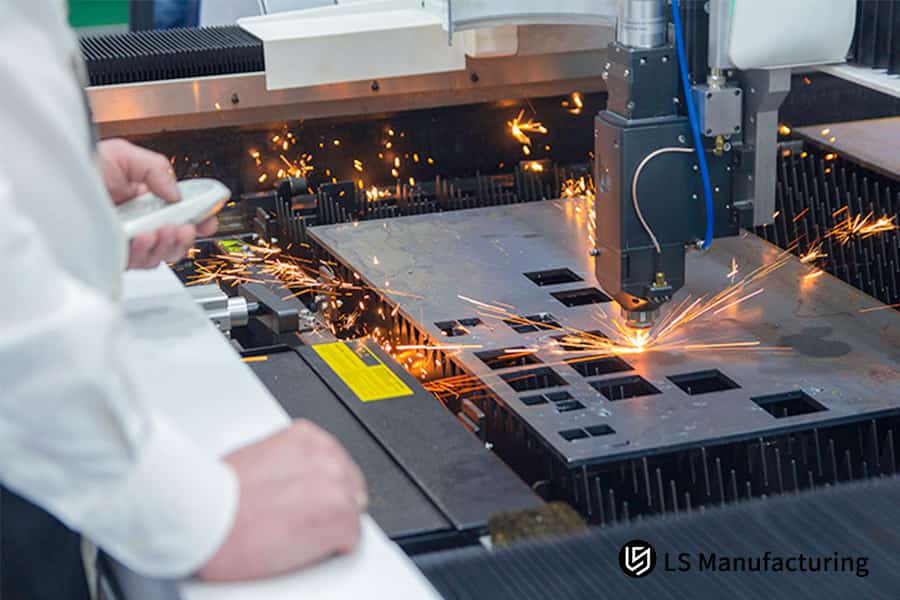
图 1:激光精确切割金属,操作员远程控制,火花可见。
定制 DFM 分析服务如何大幅降低您的结构工程成本?
通过DFM分析服务优化零件切角路径和公共边缘嵌套,可以大大减少不增加价值的激光背衬和穿孔,从而降低成本单件激光切割加工量提高 15%-30%,且不影响几何公差。
激光切割成本明细
通过专业的DFM分析服务,对成本进行详细的细分并精准定位优化区域,从而准确识别成本节约措施。 单个激光切割件最重要的成本项目是三倍,周密规划的激光切割预算可以有效降低整体加工成本。
- 设备运行成本:包括激光发生器的功耗、喷嘴的磨损以及辅助气体的消耗。
- 材料成本:占总成本的60%-70%,主要随材料使用率变化。
- 工资成本:包括编程、装卸、质量检查、二次加工。
基本成本控制技术
通过工艺改进,可以真正降低激光切割成本,为企业节省加工成本。通过激光切割设计辅助,可以针对特定要求量身定制低成本的解决方案,并且通过激光切割的DFM分析,可以准确识别浪费点。以下提到的方法是提高激光切割生产率的主要途径。
- 接合边切割:将相邻零件的外部轮廓合并为一个公共切口,因此切口长度被修剪一半。
- 开放式切口:将封闭式切口改为开放式切口,减少穿孔次数,从而减少设备磨损。
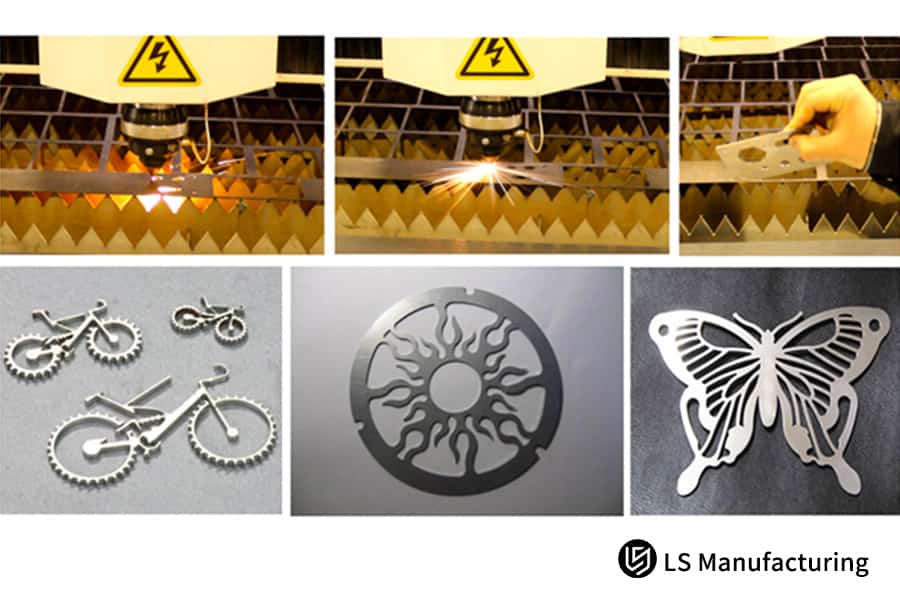
图 2:激光切割零件:一辆自行车、一个带图案的圆圈和一只由金属板制成的蝴蝶。
如何通过专家激光切割设计协助确定最佳穿孔直径约束?
依托专业激光切割设计辅助,根据材料特性最小孔径控制在材料厚度的1.0-1.2倍,可消除热熔穿孔锥度,完全满足IATF 16949零件精度行业标准。
不同材质最小穿孔直径比规格
在专业激光切割设计的帮助下,公司可以根据材料特性制定自己的穿孔直径标准,以消除穿孔缺陷。这些是通过测量获得的安全穿孔直径数据,标准化参数构成了激光切割精度调整的核心基础。
| 优化尺寸 | 工艺参数要求 | 直接客户利益 | 降低成本 |
| 最小孔径设计 | ≥1.0 × 材料厚度 | 消除穿孔锥度和微裂纹 | 100% 重新钻孔成本 |
| 孔距设计 | ≥1.5 × 材料厚度 | 避免热应力集中变形 | 15% 废品率 |
| 布局优化 | 材质利用率≥85% | 减少废料浪费 | 18% 材料成本 |
| 微连接配置 | 0.3-0.6mm宽度 | 防止零件倾斜和碰撞 | 20% 停机维护成本 |
穿孔锥度的机理及解决方案
经验丰富的激光切割工程支持将能够快速识别锥度问题的原因并找到纠正方法。优质的定制激光切割零件的制造非常符合孔径加工的规范。孔径不足是排渣不良、出现锥度的原因之一。借助工艺优化,可以实现激光切割穿孔优化。
- 将孔形状更改为跑道形状,这会导致更宽的切缝。
- 使用分段穿孔工艺,以便仅在一个区域减少能量输入。
- 更大程度提高辅助气体的压力,有利于排渣。
完整的激光切割DFM服务可以全面覆盖孔径符合性测试,从源头消除锥度缺陷。 上传您的零件图纸以接收免费的孔径合规性筛选和工艺优化建议。

图 3:正在运行的激光切割机头,屏幕上显示数字数据以进行精确控制。
为什么激光切割步骤的特定工程支持对于抑制精密薄板制造中的热变形至关重要?
激光切割的专业工程支持可以通过分布式切割路径和微连接保持工艺,阻止局部热量积累,并将精密薄板零件的平整度稳定在±0.1mm以内。
热影响区的形成和控制
借助激光切割方面的专家工程帮助,可以将热输入控制在受控范围内,防止热影响区域变大。正规的激光切割DFM服务商甚至将热变形控制作为优化的重点项目
- 进行高速切割,使激光和材料无法长时间相互作用。
- 为了帮助热传导,创建散热槽。
- 为了降低零件引起的各向异性变化,请将零件沿轧制的板向布置。
薄板翘曲技术
定制激光切割零件精度具有非常严格的平整度标准。不能事后才弄清楚,必须防止或至少控制激光板材的热变形。同时,提供薄板防翘曲(独家)技术的高质量定制激光切割服务是多维度的、预防性的、控制性的,可以确保激光切割薄板稳定性。
- 采用多段分割切割路径,以免热量仅集中在一处。
- 执行(零件)侧对称切割顺序将平衡零件两侧热应力的性质和大小。
- 微连接应在技术上配置合理且数量充足,且部件应牢固固定到位。
专业的 DFM 分析服务如何最大限度地减少边渣和表面粗糙度以实现标准合规性?
当使用专业的DFM分析服务来优化激光导程和焦点参数时,切口的粗糙度可以始终保持在Ra1.6μm和3.2μm之间,从而实现大批量精密切割性能,没有任何熔渣。
引线设计对边缘质量的影响
先进的DFM分析服务能够预测线材的切割结果,并在加工前优化参数设置。通过检查激光切割的DFM分析,可以仅确定引线,还可以消除边缘缺陷的可能性。我们应该将其视为整个激光切割边缘精加工过程的主要步骤。
- 直引线:长度必须为0.5mm,以确保组件边缘不会出现爆点。
- 弧线导程:弧度需要为 90 度,以便激光切入和切出平滑。
- 引线必须位于废料区域,以免损坏部件的外观。
每个板厚度的焦点位置变化
专有的焦点参数是极其定制的激光切割零件产生预期结果所需的参数。通过合理的参数设置,可以控制激光切割成本而不影响工艺导致浪费。正确的聚焦将有助于提高激光切割表面质量。
| 材质等级 | 厚度范围(毫米) | 最小安全光圈比 | 推荐辅助气体 | 最大允许锥度(毫米) |
| SUS304 | 0.5-3.0 | 1.1 | 氮气 | 0.03 |
| AL6061-T6 | 1.0-6.0 | 1.2 | 氮气 | 0.04 |
| Q355B | 2.0-10.0 | 1.0 | 氧气 | 0.05 |
| 316L | 1.0-4.0 | 1.15 | 氮气 | 0.035 |
精准的DFM分析服务可以优化焦点和导程参数,稳定控制切割质量,无需昂贵的二次抛光工艺。 您可以一对一咨询工艺细节,获得专属表面质量优化解决方案。
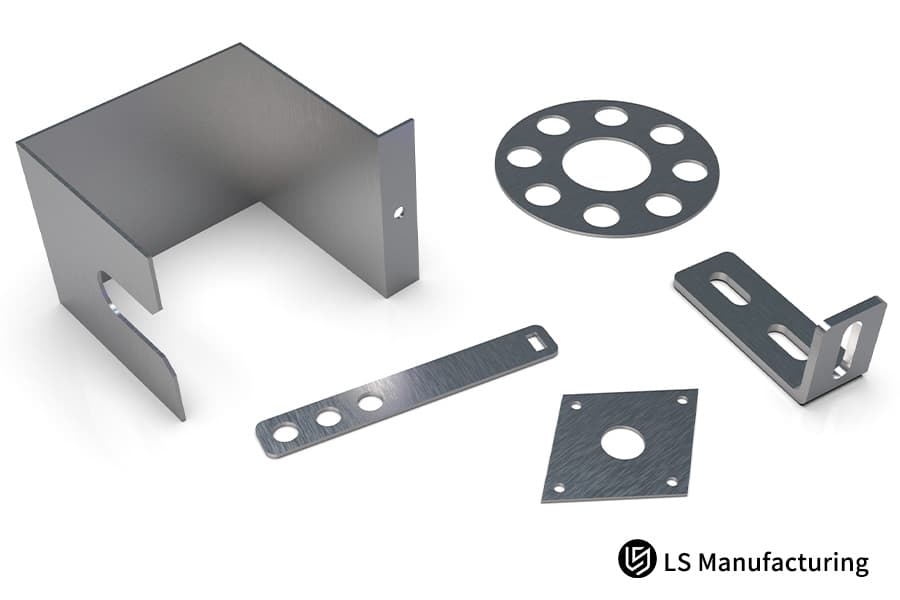
图 4:各种激光切割的带孔金属部件,排列在白色背景上。
如何配置可靠的微接头配置以确保批量定制激光切割零件的可靠交付?
在 DFM 阶段,这批定制激光切割零件采用了 0.3mm-0.6mm 标准微连接,避免零件在切割过程中翻倒并损坏机器,从而实现全自动、连续、稳定的生产。
微连接设计基本参数
批量定制激光切割零件需要标准微连接操作来保证稳定生产。一流的定制激光切割服务依赖于完善的配置系统。
- 宽度:0.3-0.6mm。对于较厚的板材,微连接宽度应相应较大。
- 数量:边长小于50mm的至少2件,边长每增加50mm,添加1件。
- 放置:理想情况下,微连接应放置在零件的角落或非功能区域,以便于拆卸。
控制微结残留
通过增强激光切割DFM服务,可以提前规划微连接残差标准,使产品满足装配要求,最大限度地减少返工并降低激光切割成本。独家技术可以提供高效的激光切割毛刺减少。
- 手动断裂:适用于厚度不超过 2 毫米的零件。
- 砂轮打磨:适合厚度大于2mm的零件。
- 激光精加工:非常适合外观要求极高的零件。
为什么从综合 DFM 评估得出的适当辅助气体参数可以控制激光切割成本?
科学的激光切割DFM评估可以帮助发现最佳工艺参数,精确控制激光切割成本,为各种材料选择最合适的辅助气体,取消二次去毛刺操作, 并将加工能源使用量和总天然气成本削减 20% 以上。
三种主要辅助气体对比
气体剂量是激光切割成本的主要因素之一,需要准确选择以控制成本。 The DFM analysis service unit can identify the best gas option. With laser cutting DFM analysis plus working environments, the cost-effective choice is made and it is the fundamental rule of laser cutting gas matching.
| 板材厚度(毫米) | 材质类型 | 最佳焦点位置(毫米) | 推荐表面粗糙度 (Ra) | 去毛刺要求 |
| 1.0 | 不锈钢 | -0.2 | 1.6μm | 不需要 |
| 3.0 | 不锈钢 | -0.5 | 2.0μm | 不需要 |
| 6.0 | 不锈钢 | -1.0 | 3.2μm | |
| 2.0 | 铝合金 | 0.0 | 2.5μm | 不需要 |
Gas Parameter Optimization Strategy
Dedicated engineering support for laser cutting gives the possibility of the flexible modification of gas parameters for achieving a balance between quality and cost. Superior custom laser cutting service is the best way to ensure that you are not run through any unnecessary processing stages and this way get the maximum return on your laser cutting performance.
- The use of high-pressure nitrogen is recommended for the cuts performed on parts of very high aesthetical quality to have the cuts free of oxidation.
- The internal structural components can be cut with low-pressure oxygen to enjoy the reduction of costs.
- To continue the cost savings, for the parts with no time limitation, the use of compressed air cutting can be made.
Why Is Early Stage Layout Nesting Optimization Critical For Establishing a Competitive Custom Laser Cutting Service Quote?
Involving the source manufacturer early in the layout stage and jointly doing common-edge optimization has the potential of drastically reducing sheet metal waste not only by nearly 18% but also procurement is made easier and quicker in obtaining a cost-effective quote that can be mass producing custom laser cutting services.
Shared-Edge Cutting Brings Cost Benefits
Delivering high quality custom laser cutting service, the manufacturers give prominence to shared-edge process that can bring the reduction of wastage materials. Scientific nesting is very capable of bringing down laser cutting costs, making the process of laser cutting more cost effective, and can be very resourceful in enhancing laser cutting nesting efficiency.
- Lessening kerf length to half, cutting down the consumption of gas and nozzle.
- Lower the piercing numbers, this results in a shorter production time.
- Better use of the material, helps in reducing the price of the material.
Utilization of Intelligent Nesting Software
Starting from laser cutting design assistance, different nesting plans can be developed to suit the part structures. Large volume intelligent nesting for custom laser cut parts production can elevate the efficiency of laser cutting batch production to a high extent.
- Sharing of contours between pieces can be identified automatically by the software.
- Through re-arranging and re-orienting parts layouts, material can be utilized more efficiently.
- The best cutting path can be planned by the software to reduce the production time and because of this the idle time.
Intelligent nesting and shared-edge optimization can significantly reduce sheet metal waste and processing time, which is the core of obtaining high-quality, low-cost custom parts. For bulk orders, submit drawings to obtain an accurate custom laser cutting service quote.
LS Manufacturing Helps New Energy Vehicle Companies Successfully Optimize High-Precision 316L Stainless Steel Battery Busbar Laser Cutting Design
Customer Challenges
The Tier 1 supplier of new energy vehicles was fabricating 2.0mm thick 316L stainless steel battery busbars. Initially, the hole-to-thickness ratio was as low as 0.75. With conventional machining, issues such as melting, taper, and micro-cracks would inevitably occur, which made the overall part yield very low, increased costs, and even delayed delivery.
LS 制造解决方案
LS Manufacturing's engineering support team reached out to the client for an in-depth laser cutting DFM service right after 24 hours of receiving the customer's drawings. The first step was to use our own thermal flow simulation software (with a calculation accuracy of 0.02mm) that models the heat input. After the IATF 16949 process review, the team developed a structural optimization solution that laser cuts automotive part defects with high precision.
- The size and shape of the hole were changed: Initially, the hole was circular. Now it is a racetrack-shaped elongated hole. The kerf width was made to a safe hole-to-thickness ratio of 1.2.
- A smooth corner radius of 0.5mm is introduced.
- No residue in the micro-connection configuration.
- In production, 1.8MPa high-pressure pure nitrogen gas is used plus segmented interpolation cutting paths to reduce local heat conduction to a minimum.
结果和价值
After the parts were optimized, the surface roughness of the parts are well stabilized to meet the standards, hole diameter tolerance is maintained within 0.04mm, all defects are wiped out and the batch pass rate is about 99.8%. Besides that, the material layout efficiency is greatly enhanced and secondary processing is completely done away with. As a result, the unit price after laser cutting has been lowered by a remarkable 24.5%, and mass production has been achieved successfully.
Professional laser cutting DFM service can efficiently solve the machining challenges of precision stainless steel parts, improve yield rates, reduce production costs.You can submit project requirements to customize exclusive process optimization solutions for new energy parts.

常见问题解答
Q1: Why can't the minimum hole diameter in laser cutting drawings be less than the material thickness?
Laser perforation with high energy density will cause heat accumulation in small holes. If the hole diameter is smaller than the material thickness, there will be no enough space for slag removal, which will lead to molten slag bouncing and burning the base material. This causes a large hole taper and oxide layer that are impossible to pass the conventional go/no-go gauge precision check.
Q2: What is Common-line Cutting (CFM), and how does it help reduce my procurement costs?
CFM is a technique that combines the outlines of two adjacent parts so that they share a kerf. Two parts are formed in one laser cut that makes their edges resulting in significant cutting reductions and decrease of laser cutting energy consumption, gas consumption, and unit costs.
Q3: When customizing aluminum alloy laser-cut parts, how does the DFM specification avoid the problem of severe slag buildup at the cut?
Aluminum alloys have excellent thermal conductivity as well as high reflectance. During the DFM phase, it is specified that the process radius should be at least 0.5mm and 1.6MPa high-pressure pure nitrogen cutting. The high-pressure jet of air rapidly removes the molten aluminum slag, thereby preventing the occurrence of slag buildup defect at the cut surface from the root.
Q4: Why does the "corner burning" occurrence occur during machining of sharp corners of parts without DFM optimization?
In laser cutting, upon reaching one sharp corner, the speed decreases and the laser beam moves back. The problem arises because the surface for heat dissipation at the sharp corner is minimal which results in a large drop of heat locally. And this is where the material gets vaporized and melted very fast that pits are formed which in the end causes corner burning mostly and scrapping.
Q5: What level of flatness and tolerance does LS Manufacturing provide for thin-plate precision stainless steel parts?
Using the pre-diffusion heat sink design and distributed cutting path process, we achieve control of thin-plate parts linear tolerance within 0.05mm for 3mm parts and a stable overall flatness of 0.1mm is possible even without additional leveling processes.
Q6: Why does striving for a drop-free look in appearance cause an increase in unnecessary indirect manufacturing costs?
Cutting speed must be lowered, very pure and costly gases must be used or secondary grinding must be done to get zero dross. If the parts are hidden and are not involved in assembly, then it is over-processing and the price of laser cutting goes up greatly.
Q7: How do I know if my precision sheet metal drawings have had the most skilled professional process review before mass production?
We have over 15 years of experience as sheet metal engineers. After you upload the drawings (in DXF, STEP, DWG formats), we will issue a professional DFM report within 24 hours, completing a comprehensive process review and cost optimization guidance.
Q8: Will the heat-affected zone (HAZ) of laser cutting have an impact on fluctuating dimensions during bending or the electroplating treatment on secondary surface?
The heat-affected zone is a thin strip of material alteration. In case bending clearance is not adequately planned in DFM stage and material grain changes are not taken into account, subsequent bending operation should generate cracking and will also affect the smoothness of the electroplating surface treatment.
摘要
Laser cutting is not just a simple cutting operation but a complex precision manufacturing process. Introducing professional laser cutting DFM service at the preliminary stages of a project really help to steer clear of processing defects like burnt corners, taper, and thin sheet warping. Besides, through the optimized layout and common-edge cutting production costs are cut down and performance of the product is not compromised. Besides, the transition from prototype to mass production will be made easy and quick.
Repeated design drawings and changes in process parameters always result in high processing costs and delivery delays. LS Manufacturing relies on mature experience in precision sheet metal manufacturing to provide professional and reliable process technology support for various commercial and civilian laser cutting projects.
You may upload 2D/3D drawings in DXF, STEP, or DWG formats our expert engineers are ready to give you a free, open, and tailor-made DFM assessing report within 24 hours plus a quote for laser cutting mass production at a reasonable price.
[🌟Upload drawings now for a free DFM process assessment and accurate commercial quote]
[📞Schedule a one-on-one online consultation with a senior sheet metal engineering expert from LS Manufacturing]
📞电话:+86 185 6675 9667
📧电子邮件:info@lsrpf.com
🌐网站:https://lsrpf.com/
免责声明
本页内容仅供参考。 LS Manufacturing services 对于信息的准确性、完整性或有效性,不作任何明示或暗示的陈述或保证。不应推断第三方供应商或制造商将通过 LS Manufacturing 网络提供性能参数、几何公差、具体设计特征、材料质量和类型或工艺。这是买家的责任。 需要零件报价 确定这些部分的具体要求。请联系我们了解更多信息。
LS 制造团队
LS Manufacturing 是一家行业领先的公司。专注于定制制造解决方案。我们拥有超过 20 年的经验,服务超过 5,000 家客户,我们专注于高精度 CNC 加工、钣金制造、3D 打印、注塑。 金属冲压,以及其他一站式制造服务。
我们的工厂配备了 100 多台最先进的 5 轴加工中心,并通过了 ISO 9001:2015 认证。我们为全球150多个国家的客户提供快速、高效、高质量的制造解决方案。无论是小批量生产还是大规模定制,我们都能以最快的24小时内交货满足您的需求。选择LS制造。这意味着选择效率、质量和专业性。
要了解更多信息,请访问我们的网站:www.lsrpf.com。


| Assist Gas | Applicable Materials | Cutting Speed | Surface Quality | Gas Cost (USD/cubic meter) | Deburring Requirements |
| High-Pressure Nitrogen | Stainless Steel, Aluminum Alloy | Fast | No Oxidation, No Slag | 2.5 | Not Required |
| Low-Pressure Oxygen | Carbon Steel | Medium | Oxide Layer | 0.3 | Slight |
| Compressed Air | Ordinary Carbon Steel | Slow | Slight Slag | 0.1 | Required |