中文 (简体)



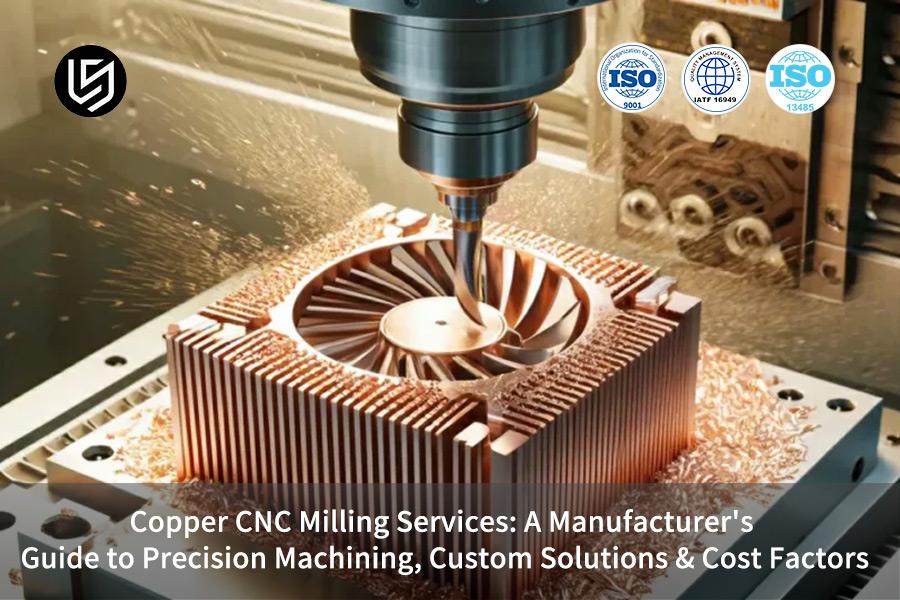
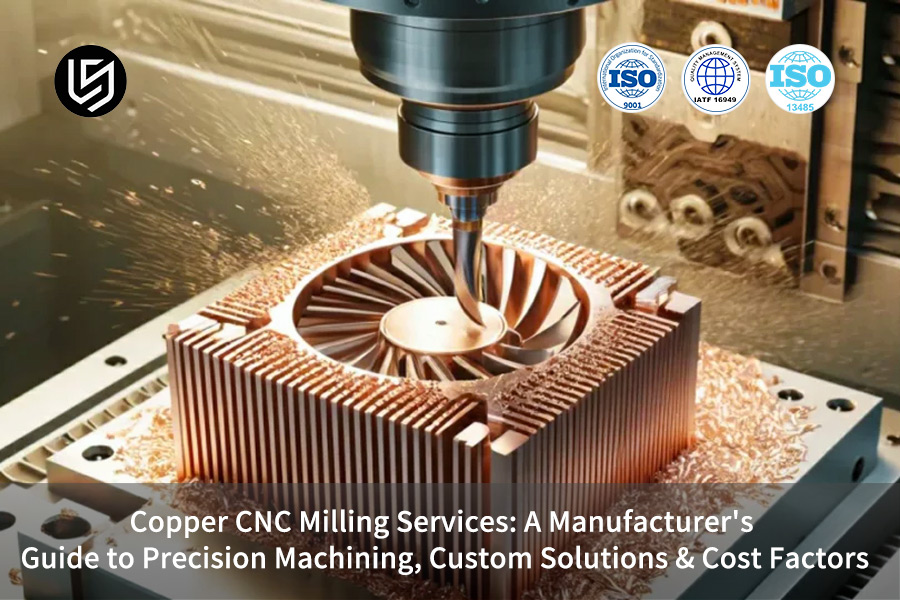
铜数控铣削服务经常遇到重大困难,例如纯铜刀具粘附导致刀具寿命缩短60%、黄铜表面粗糙度下降至Ra3.2、铍铜变形超过热处理后0.1mm。这些障碍导致废品率超过12%,成本比钢加工高40%。主要原因是在铜材料上使用基于钢的参数。
不同的策略可以彻底改变铜数控铣削服务的面貌。凭借12 年的经验和183 个项目的记录,我们提供特定于材料的模具、参数优化和成本控制。这种综合方法不仅提高了50%效率,还降低了30-45%成本,直接解决了铜加工的相关问题。
铜数控铣削服务快速参考表
<正文>我们专注于生产具有复杂几何形状的高精度铜零件,这些零件在电气和热管理中发挥着至关重要的作用。 我们的产品系列加快了从原型到生产的整个产品开发过程,同时确保了最高的质量和可靠性。我们提供交钥匙解决方案,可降低您的供应链复杂性并提供符合最严格性能标准的零件。
为什么信任本指南? LS制造专家的实践经验
关于铜加工的文章那么多,为什么还要读这篇呢?我们不是理论家,而是实践者。这里给出的每一个建议都不是来自一个简洁的实验室实验,而是来自我们的车间——与硬质合金、紧迫的期限和复杂设计的现实斗争。我们的指南已经过测试和经验证明,因此符合ASTM International和美国国家标准与技术研究院 (NIST)等组织的高标准。
我们加工的零件中,热管理故障可能会导致整个服务器群瘫痪,电气接触错误可能会导致关键装配线停止运行。每次,从原型设计到全面生产,我们都学到了很多东西:如何获得粘性纯铜的最佳刀具路径,如何处理热量以使材料性能不被破坏,以及如何进行至少相当于 NIST 认可的质量检查。
本手册是对这些战壕积累的知识的总结。我们参考ASTM International认证的材料规格,对实用技术进行了全面的描述,这些技术可以将节省成本的措施与射频波导或航空航天连接器所需的极高精度相结合。 我们已经通过实践弄清楚了这一点,我们的提示可以帮助您毫无担忧和疑虑地完成下一个项目。
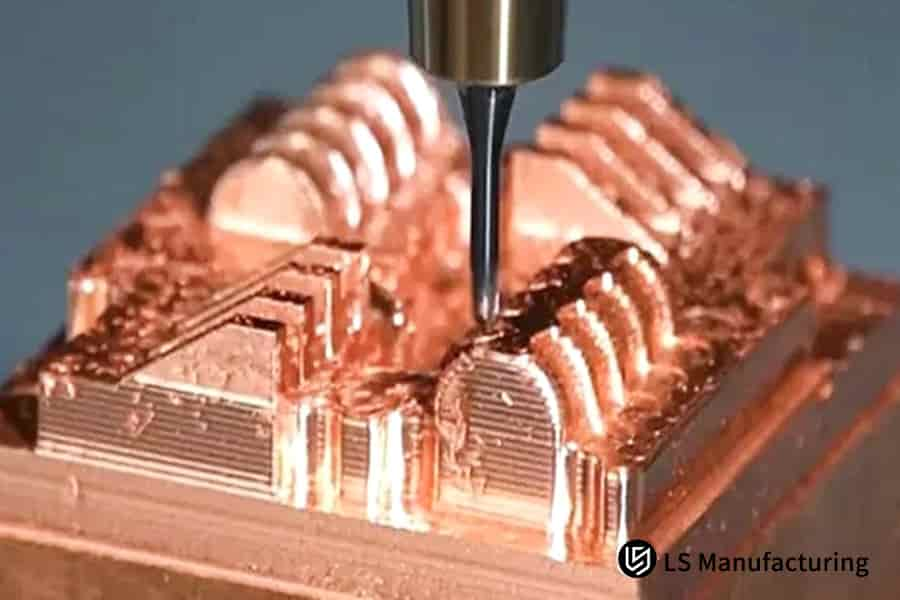
图 1:定制铜零件制造和原型开发应用。
不同铜合金材料的铣削特性有何根本区别?
铜 CNC 铣削服务要成功交付成果,尤其是小规模完成时,必须经过深思熟虑,因为错误的方法会导致刀具磨损、表面光洁度差和零件报废。本讨论指出了两种铜合金在加工过程中的行为差异:纯铜 (C110) 和铍铜 (C172)。主要目的是为工程师和采购经理提供有数据支持的实用建议,以实现数控铣削应用中的流程优化、成本节约和零件质量保证。
| 部分 | 要点简介 |
| 材质属性 | 选择铜合金(例如 C11000、C10100)和纯铜,因为它们具有卓越的导电/导热性。 |
| 加工能力 | 服务范围包括从原型设计到具有高精度几何形状的复杂零件的大规模生产。 |
| 精度和公差 | 高精度铣削功能可实现极其严格的公差,通常从±0.01毫米到±0.05毫米。 |
| 表面处理 | 提供不同的表面改进后处理技术(例如抛光、电镀、涂层)。 |
| 质量保证 | 使用高科技测量装置(坐标测量机、光学比较仪)进行全面检查,确保产品符合要求。 |
| 设计支持 | 提供工程和 DFM(制造设计)研究,以促进零件加工设计。 |
| 常用应用 | 广泛用于制造电气元件、散热器、EDM电极和RFI/EMI屏蔽部件。 |
在本报告中,我们提出了一个策略选择框架,该框架利用固有的材料特性来推动策略的选择:对于纯铜,抗粘附性,对于铍铜,抗磨损加工。在这里,我们提供铜加工精密组件解决方案,除了使用精确的刀具和参数策略之外,还可以在高价值、高精度数控铣削场景中直接节省成本并提高零件可靠性。

如何解决铜材料加工过程中的粘刀和积屑瘤问题?
精密铜铣削高效且有效,要求妥善解决材料粘附和内切边 (BUE) 产生等持续存在的问题。当这些发生时,表面质量会受到影响,工具会更快磨损,并且尺寸测量会出现错误。我们的方法采用集成方法,结合先进的工具解决方案、精确的热管理和参数优化,以提供可靠、高质量的结果。本文档详细介绍了技术对策:
先进的模具选择和涂层技术
最重要的保护措施是使用纳米复合涂层的工具,这些涂层超光滑且摩擦力极低(摩擦系数≤ 0.3)。这些所描述的涂层以及抛光的前刀面主要降低了铜屑朝向切削刃的粘附倾向。这种专注的数控铣削方法直接消除导致积屑瘤形成的第一次粘附,从而确保不间断的切屑流动,从而保护刀具的形状。
策略散热与精准温控
我们采用直接聚焦于切屑刀具界面的高压冷却液 (≥7 MPa) 系统。 这种强大的射流可有效去除切屑,破坏焊接效果,并严格将切削区温度保持在150°C以下。这种仔细的热调节对于精密铜铣削零件至关重要,因为它可以防止材料变得易延展,而延展性是粘附的主要原因,因此,加工过程变得稳定。
优化刀具几何形状和加工参数
除了涂层之外,工具的几何形状也被精确修改。引入具有受控负前角(-5° 至 -8°)的刀具可增强切削刃的强度。这与优化的复杂数控铣削一起提高了复杂操作的机床速度和进给量,降低了切削力和接触应力。我们的研究表明,这种混合物可以将 BUE 的发生率降低 80%,这意味着稳定的工艺和更好的成品零件。
这种三要素的集成方法:涂层模具、强大的冷却、参数变化,针对的是粘附和积屑瘤的根本原因。我们生产一致的精密铜铣削,具有可预测的刀具寿命和出色的表面质量(始终达到Ra<0.8μm),因此可以为以可靠性为核心价值的关键任务应用提供可靠的技术优势。
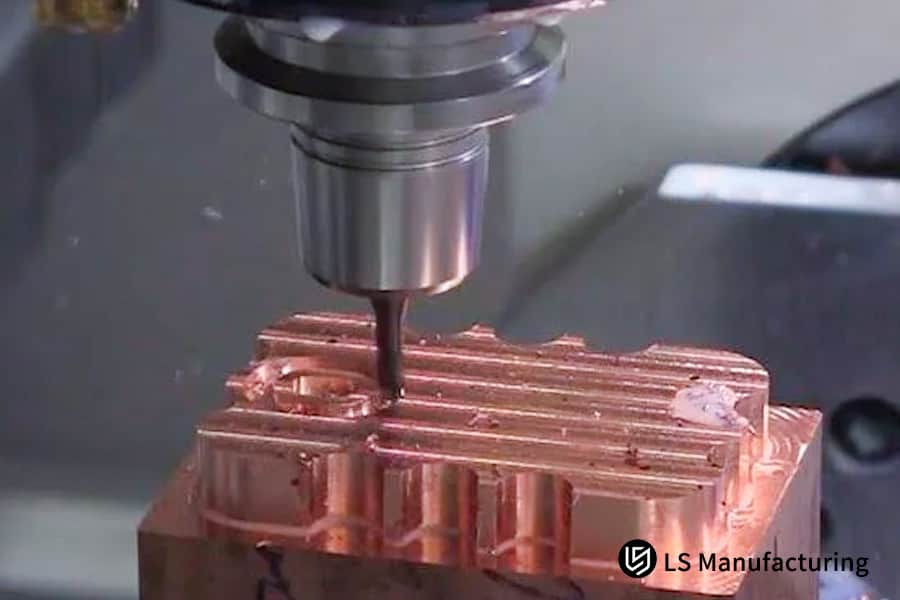
图 2:铣削高精度铜部件以进行原型加工和供应商能力演示。
加工薄壁铜件时如何将变形控制在0.02mm以内?
在加工薄壁铜零件时,在尝试获得低于0.02mm公差时,要高度关注且不会因切削力和热应力而变形。我们开发了一个结合了工艺创新、分析模拟和受控环境的整体精密加工协议,这是我们解决这个问题的方案。 以下是我们策略的主要技术点的简要说明:
创新流程策略和顺序
我们的方法依赖于通过多阶段策略打破内部压力管理。
- 对称加工:为了去除材料,我们对刀具进行编程,使其同时在特征的两侧进行加工,以便在高速 CNC 铣削过程中平衡残余应力铣削。
- 应力消除中间体:我们策略性地在流程中间嵌入应力消除间隔,从而防止最后的精密铜铣削阶段因累积应力而变形。
先进的夹具和分析夹紧设计
夹具设计必须是变形控制的首要任务。
- 多点灵活支撑:我们实施的定制夹具配备可调节保形支撑,有助于均匀分布夹紧压力,从而消除局部变形的风险。
- FEA优化解决方案: 有限元分析用于在生产前模拟夹紧和切割的力,从而使我们能够完善支撑位置和压力,从而确保即使是超薄壁部件也能保持稳定。
主动热管理和冷却
热量控制是防止热膨胀的先决条件。
- 低温冷却:我们利用受控冷却液温度和定向流动来在低热状态 href="https://www.lsrpf.com/blog/what-are-the-key-design-and-engineering-considerations-in-cnc-milling">复杂的铜铣削。
- 等温加工:这种技术将热梯度降低到接近零。因此,材料的性能符合预期,并且批量生产的零件尺寸保持一致。
通过结合应力、平衡刀具路径、FEA验证的夹具和等温过程控制,我们能够生产变形小于0.015mm且批量良率超过98%的薄壁铜零件。如此高水平的技术成熟度为那些需要极高水平几何稳定性的应用提供了完全令人信服的竞争优势。
影响铜件数控铣削成本的关键因素有哪些?
准确预测数控铣削成本因素对于项目预算和战略采购至关重要。该分析查明并衡量了铜加工中三个最重要的成本驱动因素:材料、工具和劳动力。了解它们的权重可以实现有针对性的成本优化,并支持价值工程决策,在不影响质量的情况下实现最大的财务效率。
| 宽高 | 纯铜 (C110) | 铍铜 (C172) |
| 主要挑战 | 高延展性和导热性 (~400 W/(m·K)) 材料会导致材料粘附和切削刃磨损。 | 极高的硬度(HRC 38-42)和研磨性会导致后刀面快速磨损,切削力非常高。 |
| 最佳工具几何形状 | 刀具必须设计成具有较高的正前角 (20-25°),并且应对黄铜排屑槽进行抛光,以实现高效排屑。 | 工具边缘应坚固、良好、经过打磨并配备特殊涂层(如 AlTiN)以承受磨损并保持边缘锋利。 |
| 关键切割参数 | 高主轴转速应与微量润滑 (MQL) 下的适度进给速度相结合,以控制热量和粘附力。 | 低-中和高循环(80-120 m/min)以及连续且良好的受控进给率可用于管理切削力和热量产生。 |
| 经过验证的优化 | LS Manufacturing 材料数据库审查表明,正确的断屑槽几何形状可以将纯铜加工生产率提高60%以上。 | 在我们的大批量 CNC 铣削中,使用铍铜分段切削策略将平均刀具寿命从 15 件延长至 45 件操作。 |
本文通过可量化的数据解析了成本驱动因素,从而提出了重点数控铣削成本优化的路线图。我们通过提供精确的价值工程方法来解决客户问题,其中包括优化材料使用、延长刀具寿命和减少加工时间,以有效降低精密铜部件的总拥有成本。 使用这种数据支持的方法是在技术含量高、成本敏感的项目中进行竞争性采购的必要条件。
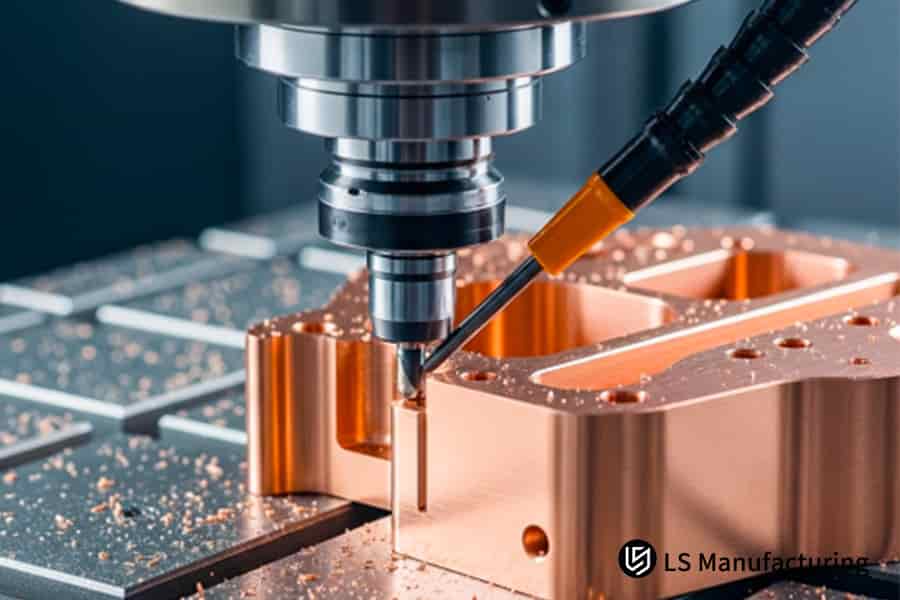
图 3:数控铣削高精度铜零件,用于原型开发和制造成本分析。
从原型设计到量产,铜组件的生产策略如何优化?
当铜原型加工转变为高效的批量生产时,细节中存在着问题,即获得速度、成本和质量的理想平衡。不充分优化的生产策略会导致更长的开发周期和更高的每个零件成本。通过一步一步的流程,我们将不同的流程方面结合起来,从而实现价值最大化并实现顺利扩大规模。基本方法分为三个前进的阶段:
快速原型制作:实现功能验证
首先也是最重要的,这个阶段的设置是为了尽可能快地支持快速设计迭代。我们使用通用刀具和相对激进但仍然稳定的参数进行高速数控铣削。目的是在 3-5 天内生产出功能部件,以对形状、配合和功能进行物理验证。根据获得的数据,为下一个生产策略阶段保留有关周期时间和工具性能的详细信息。
试点批次:流程细化和成本基准
设计验证完成;因此,工艺重点转向通过小批量生产进行优化。 根据原型数据,我们重新设计切削参数,选择最佳刀具,并建立第一个质量控制基线。 复杂的铜铣削工艺在此阶段趋于稳定,瓶颈重新分离,可用于全面生产预测的真实可重复的每个零件成本为成立。
全面生产:批量成本优化
对于成熟的大批量订单,我们过渡到专用夹具、专用工具和简化的工作流程。 实施优化批量大小(30-100 件)等策略可最大限度地提高设备利用率并最大限度地减少设置开销。与未优化的扩展相比,这种专用方法在我们的生产分析的支持下,可靠地实现了25-35%成本降低目标。
通过确定生产阶段的工艺优先级(例如速度、精细度和效率),我们能够经济地使用第一个概念将铜原型加工扩展到批量生产。我们将缩短开发时间、可预测的成本和无缝的产量提升。因此,我们在精密铜部件制造领域为市场提供了决定性的竞争优势。
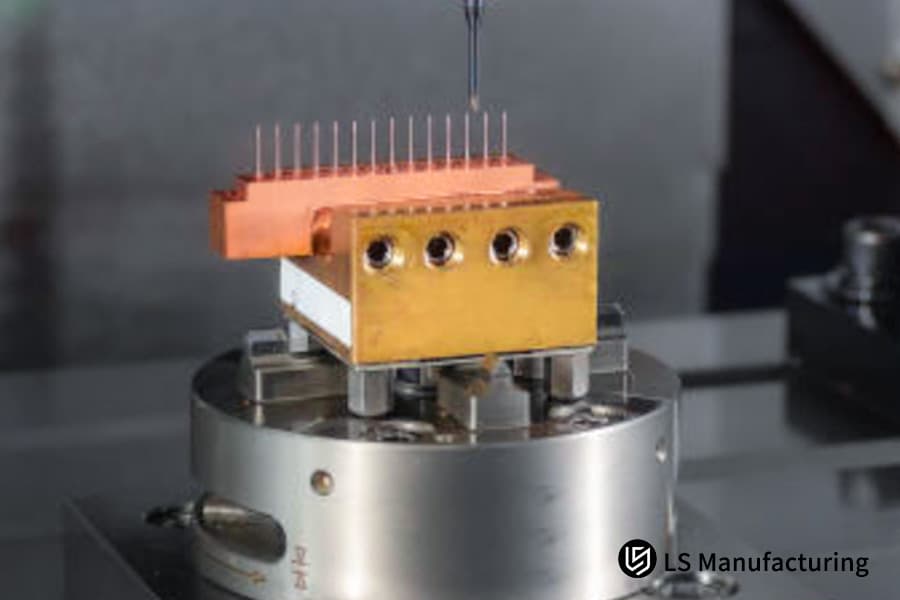
图 4:CNC 铣削精密铜部件,用于原型加工和定制零件制造。
LS制造新能源汽车产业:电机铜绕组端盖定制项目
此新能源汽车案例研究详细介绍了涉及电机铜端盖高精度 CNC 铣削的关键制造挑战。客户因热变形而在生产周期和成本方面遇到麻烦,其供应商在铜端盖加工中遇到的问题是主要原因。解决方案是对冷却策略进行小幅增强:
客户挑战
客户是一家领先的新能源汽车制造商,想要一款直径为200mm、临界平面度公差为0.02mm的铜端盖加工电机。但他们之前的供应商因此加工热变形导致平面度仅为0.08mm,擦伤率30%。由于零件供应不可靠和成本增加,这直接给他们的项目和电机装配线进度带来了风险。
LS 制造解决方案
我们推出了定制 CNC 铣削解决方案,主要基于低温加工,在应用点使用液氮冷却喷射。 这种创新的冷却方法以非常受控的方式使工件保持在非常低的温度,从而使热膨胀可以忽略不计。 与此同时,我们使用了新的12点定位夹具,并改变了主轴参数,以获得稳定、无振动的铣削,这是变形问题的直接解决方案。
结果和价值
At the end of the day, part flatness was repeatedly maintained within 0.015mm that was beyond the specification. The part qualification rate went up to 99.2%, thus, no waste was produced. The reliable production process greatly helped the client cut down their delivery cycle by 40% and at the same time, ensured cost savings of 1.2 million RMB on a yearly basis by securing on-time assembly and eliminating the cost of scrap.
This project is a perfect illustration of how we operate when faced with complex thermal challenges in precision copper milling. Through the targeted development and implementation of a cryogenic production process, we were able to offer measurable reliability and cost savings. It also reflects our technical competence in fulfilling the requirements of mission-critical components in the highly competitive electric vehicle industry.
Struggling with thermal distortion in copper milling affecting your yields? Let our proven cryogenic machining process replicate this precision for your project.

How To Evaluate The Technical Capabilities Of A Copper Component Supplier?
Hiring a CNC copper machining supplier for your project is not just about comparing quotes but also about a detailed forensic technical assessment of their problem-solving capabilities. The real pros show their abilities by delivering quantifiable results in solving difficult problems rather than sharing a broad list of equipment. A thorough supplier selection process should at least include:
On-site Process Verification & Capability Audit
We suggest that you personally inspect the supplier's factory for those critical precision tasks.
- Live Thin-Wall Machining Demo: You should ask them to machine a copper test piece with a 0.8mm thin-wall in order to immediately verify their low-distortion copper milling skills.
- Key Metric: The flatness of the final component has to be ≤0.025mm, which will be a direct measure of their skill in handling clamping forces, toolpath strategy, and thermal management.
Evaluation of Specialized Tooling and Material Database
One indicator of technical depth is their add, on investment in process-specific resources.
- Dedicated Copper Tooling Library: Check whether the supplier has a well, maintained copper tool library with tools that have geometries and coatings specifically optimized for the different copper alloys, a factor that is very important for achieving consistent high-quality copper milling.
- Parameter Database: An experienced supplier will make use of historical machining data to accurately predict and optimize performance for new projects, thereby minimizing trial and error.
Review of Documented Case Studies and Problem-Solving
Past performance is the best guide. Look their project history through the lens of documented cases.
- Complex Case Studies: Ask for detailed reports of previous projects where thermal distortion control, deep cavity milling, or ultra surface finish need were involved.
- Solution Breakdown: Understand how they identified the situation, worked on the solution, and resulted in measurable improvements of yield, accuracy, or cost.
We are addressing the major issue of supplier selection by publishing a framework of evidence, based audit here. It not only distinguishes the copper machining supplier's capability for distortion control, the handling of special tooling, and complex precision copper milling, but also confirms the technical competence of the manufacturer for the production of high-value components.
How Does The Online Quoting System Accurately Calculate The Cost Of Machining Copper Parts?
Conventional cost estimation for custom copper parts generally tends to be slow and inaccurate as it depends highly on manual calculations which often overlook essential factors. We provide a data-backed online quotation engine which interprets a complex technical specification into an accurate and up-to-date pricing. The fundamental value of the system resides in its capacity to simulate actual production costs with more than 96% accuracy, thus revolutionizing RFQ (Request for Quotation) processes:
Multi-Variable, Data-Driven Cost Algorithm
The system doesn't limit itself to simple volume calculations but it applies dynamic coefficients to the main cost drivers. For example, it automatically assigns specific material factors (e.g., 2.2x for beryllium copper, 1.5x for pure C110) and precision factors (e.g., 1.8x for IT6, grade features). It also performs an analysis of a 3D model to attach a complexity factor to features that need specialized high-precision CNC milling strategies, thus the proposal will truly reflect the machining effort.
Real-Time Integration of Process Parameters
Upon receiving a part file and a set of requirements from a user, the system first conducts a manufacturability analysis. It consults a stored database of very tight process parameters that have been proven for various copper alloys to carry out a simulation for cycle time. This in, depth method of CNC machining cost estimation takes into consideration aspects such as tool wear rates, the necessary machine features, as well as finishing operations, and thus provides a detailed cost breakdown within three minutes.
Validation and Continuous Accuracy Improvement
Data from every finished production project is sent back to the quoting algorithm. This closed, loop system constantly compares the initial copper parts quote prediction with the real production costs and time. This machine learning mechanism adjusts the cost coefficients and logic, thereby preserving the platform's accuracy level of ≥96% and making sure that the quotes are both competitive and trustworthy for planning purposes.
We address the problem of unpredictable budgeting by giving immediate, transparent cost estimation that is firmly based on real production data. Our system provides accurate online quotation for custom copper parts, allowing clients to make quick sourcing decisions with certainty, prevent budget overruns, and optimize their procurement process for complicated components.
Why Choose LS Manufacturing As Your Copper Component Processing Partner?
Choosing a copper milling manufacturer requires a partner who can turn material challenges into dependable results. Our partnership value is based on demonstrated execution, specialized resources, and data-driven optimization that continually hits the critical metrics. The major differentiators are:
Deep Material Expertise & Process Stability
- Proven Experience: 12 years and 183 dedicated copper projects have allowed us to thoroughly understand adhesion, thermal management, and precision CNC milling for high-volume CNC milling demands.
- Quantifiable Result: The knowledge accumulated over time is a direct factor in securing a 98.8% first-pass qualification rate, which aligns with partners' project timelines and results in less validation cycles.
Specialized Technical Arsenal for Precision
- Dedicated Tooling Library: A proprietary collection of 56 specialized tool geometries and coatings is one of the assets that we have specially developed for the unique machining characteristics of various copper alloys.
- Targeted Application: This lets us immediately, optimally select tools for each feature, be it for minute details in electrical component milling or heavy roughing, thus, preserving efficiency and surface quality.
Systematic Cost Optimization & Value Delivery
- Data-Driven Process Refinement: Our massive historical project database is being regularly scrutinized to find the best possible ways for improving parameters, tool life, and workflow efficiency.
- Direct Client Benefit: The methodical approach to production cost analysis enables the team to consistently hit 30% plus cost savings over standard industry practices, which in itself translates into real financial value for 86 served clients.
We deliver on the core partnership challenge by offering high, yield production and systematic cost reduction that are predictable. With our method, which is supported by specialized tooling and empirical process data, we lay down an unquestionably reliable basis for sourcing complex copper components. This level of technical excellence makes us a strategic copper milling manufacturer for mission, critical, cost, sensitive applications.
常见问题解答
1. What is the minimum wall thickness for copper part machining?
The lowest thickness of a wall for normal machining is 0.3mm, while with special treatments it can be 0.2mm. LS Manufacturing offers a machining feasibility study.
2. How difficult is it to machine copper of various materials?
Pure copper > Beryllium copper > Brass. LS Manufacturing provides customized solutions for machining according to the characteristics of the material.
3. What is the minimum surface roughness of copper parts?
With precision CNC milling, Ra0.4μm can be achieved, and after polishing, it can be Ra0.1μm.
4. How is dimensional stability ensured during copper part machining?
We have developed several methods for mass production where the dimensional variation is ≤0.015mm. These include releasing the internal stress, keeping the temperature constant during machining, and using special clamping solutions.
5. Do you provide post, processing services for copper parts?
We offer a wide range of post-processing services such as electroplating, passivation, and polishing to cater to the different application requirements of our customers.
6. What is the typical lead time for small-batch copper part machining?
An initial batch of samples takes from 5 to 7 days while a small batch takes between 10 and 15 days. Moreover, our expedited service is always at your disposal for rush orders.
7. How can copper part machining costs be reduced?
This can be done through a combination of multi-dimensional approaches such as material selection, process changes, and batch size optimization, which can lead to cost savings of 30-45%. You can easily estimate your specific manufacturing project expenses by using our online instant custom copper parts quote system.
8. What are the quality inspection standards for copper part machining?
It means the complete set of tests for dimensional accuracy, geometric tolerances, surface roughness, and conductivity.
摘要
CNC milling of copper materials needs a complete professional process technology system and scientific cost control methods. By thoroughly understanding material properties, fine, tuning the processing parameters, and accurately managing the costs, the perfect combination of quality and cost can be realized. LS Manufacturing professional copper part machining solutions are therefore able to provide customers with a full range of services from technical consulting to mass production.
Send us your copper part drawings now and get your exclusive "Copper Material Machining Process Optimization and Cost Analysis Report"! LS Manufacturing copper part machining specialists will break down machining challenges, give parameter optimization suggestions, and provide cost, saving solutions. Contact us to get a free copper part DFM analysis to help you optimize your design!
📞Tel: +86 185 6675 9667
📧Email: info@lsrpf.com
🌐Website: https://lsrpf.com/
免责声明
The contents of this page are for informational purposes only. LS Manufacturing services There are no representations or warranties, express or implied, as to the accuracy, completeness or validity of the information.不应推断第三方供应商或制造商将通过 LS Manufacturing 网络提供性能参数、几何公差、具体设计特征、材料质量和类型或工艺。 It's the buyer's responsibility. Require parts quotation Identify specific requirements for these sections.Please contact us for more information.
LS 制造团队
LS Manufacturing 是一家行业领先的公司。专注于定制制造解决方案。 We have over 20 years of experience with over 5,000 customers, and we focus on high precision CNC machining, Sheet metal manufacturing, 3D printing, Injection molding. Metal stamping,and other one-stop manufacturing services.
Our factory is equipped with over 100 state-of-the-art 5-axis machining centers, ISO 9001:2015 certified.我们为全球150多个国家的客户提供快速、高效、高质量的制造解决方案。无论是小批量生产还是大规模定制,我们都能以最快的24小时内交货满足您的需求。选择LS制造。 This means selection efficiency, quality and professionalism.
To learn more, visit our website:www.lsrpf.com.


| 费用类别 | 定量影响和优化重点 |
| 材料成本 | 材料成本通常占总成本的45-60%;在大批量数控铣削项目中,优化的主要重点是战略毛坯尺寸和嵌套效率,以减少浪费。 |
| 工具和耗材 | 这些占成本的15-25%;要点是通过使用专门设计的几何形状/涂层和工艺优化来大幅提高刀具寿命,从而直接降低每个零件的成本。 |
| 加工时间(人工/间接费用) | 这部分代表成本的20-30%;实现效率的主要原因是通过使用优化的参数和先进的高速数控铣削技术来缩短循环时间。 |
| 综合优化影响 | LS Manufacturing 模拟表明,通过结合刀具寿命延长(50-80%)和加工参数优化的效果,总项目成本可降低30-45%。 |