English




CNC milling services frequently grapple with persistent challenges in threading, including tap breakage and unstable thread quality. Dependence on traditional, experience-based selection leads to severe tool life inconsistencies and high scrap rates, which directly undermine production efficiency and profitability in precision manufacturing.
Our system employs a database of cases with over 2000 instances that help design a scientific approach to select the tap. This provides an exact correspondence between tool and specification — material and threads; besides this, it enables our customers to increase their processing efficiency by 35% and reduce tool costs by 40%.
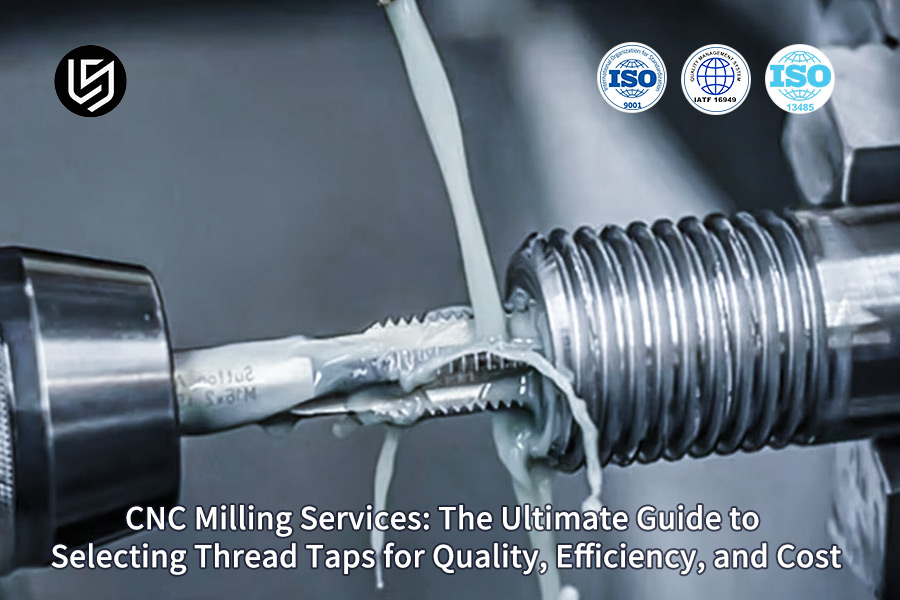
CNC Milling Services: Quick-Reference Guide
| Section | Core Content |
| Current Challenges | Tap breakage, unstable thread quality, inefficient. High variance in tool life (300%) and scraps (5%) due to selection based on experience. |
| Root Cause | Not having a scientific system for selecting taps. Not considering the concepts of CNC milling material, spec, and parameters. |
| Our Solution | Data-driven selection model based on 2000+ case database. Achieves optimal matching of tools and process parameters. |
| Measurable Outcomes | 35% higher machining efficiency, 40% lower tooling costs. Consistent, high-quality threads and reliable production. |
We specifically solve your expensive thread management issues related to tap breakage, variation, and ineffectiveness by offering our data-driven choice approach in lieu of guesswork. Hence, our scientific approach with successful cases at 2000+ provides you with the greatest tool selections to increase productivity by 35%, decrease tool expenses by 40%, and deliver thread quality and reliability.
Why Trust This Guide? Practical Experience From LS Manufacturing Experts
You can count on this resource, because it takes experience from people in our own community who are directly in the trenches regarding CNC milling, because we have various problems that must be solved, whether it be aviation-type threads to prevent what amounts to a medical disaster or medical implants that wouldn't be an option to get wrong.
In materials science, for instance, in the accretion of aluminum alloys according to the guidelines of the Aluminium Association (AAC) in their publications, experience gives confidence in regard to the most appropriate milling technique related to cutting in terms of power, accuracy, and surface finish, then rooted in material science principles.
For this, we incorporate our system with concepts developed by other organization entities such as the American Production and Inventory Control Society (APICS) to connect theoretical concepts with practice. Here, we have developed a system like this for the reason that it helps us provide the optimal blend of speed, cost, and quality for our CNC milling services for clients.
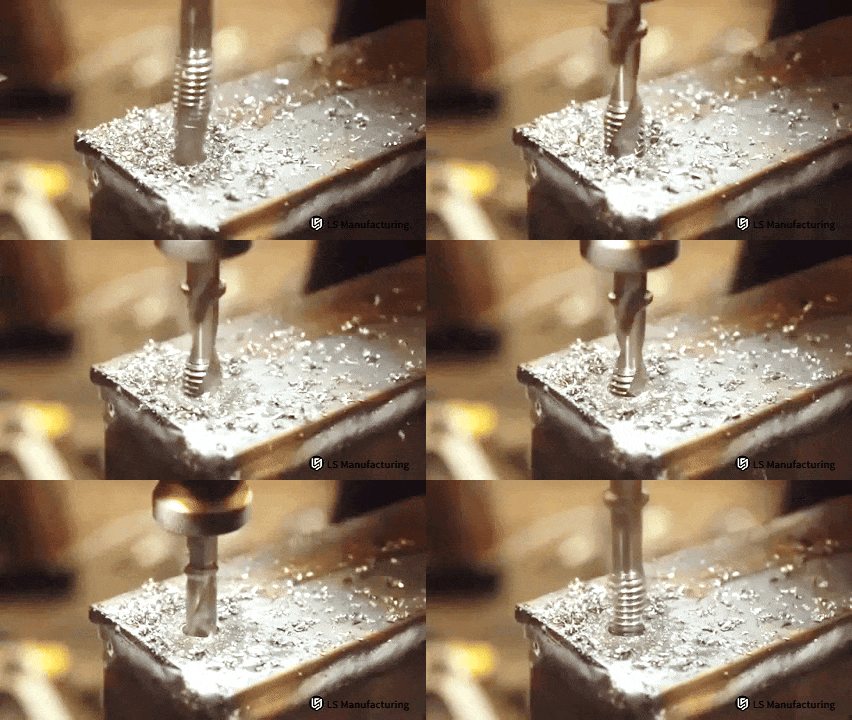
Figure 1: Cost-efficient thread creation through precise computer numerical control tapping by LS Manufacturing
How To Improve Thread Machining Quality And Efficiency Through Tool And Process Selection?
The core challenge in thread tap selection lies in overcoming the trial-and-error approach that leads to tool failure and inconsistent quality. Whereupon, high-quality performance is directly possible for material-tool parameter match models due to the creation of such models, thereby resulting in the proposed solution. The procedure to be followed would include the successful three-step process:
Systematic Material and Tool Matching
Its key characteristics are that it takes into consideration material selection of work pieces depending on machining difficulties associated with particular materials. For example, to counter the chips, gumy 304 stainless steel uses cobalt HSS spiral-fluted tap material while that of abrasive cast iron requires oxide-coated straight-fluted tap material with the purpose of preventing tap breakage since it is the major cause of tap failure.
Parameter Optimization from Empirical Data
It means that without accurate values of the parameters of cut, choosing suitable tool geometry doesn't make sense. In our design, speed/feed rate is calibrated with the internally developed database. A TiN-coated Spiral Point tap has been identified, which results in 3 times longer tool life due to prevention of sticking aluminum residue on threads at 25-30 m/min for aluminum.
Process Validation and Integration
The final stage is followed by the verification of the decision reached in the production environment about the availability of CNC milling services. This stage entails programming optimized cycles and in-process verification. It provides a complete solution by means of which the precision thread tapping, 6H threads, with first pass yield at 99.5% is achieved.
It involves a normative and non-general guide for thread tap selection, ranging from compatibility to actual production parameters. This technology has the edge in being able to counter-expensively the challenge of tap breakage and deviation in quality.

How To Select The Most Suitable Tap Type For Tapping Different Materials?
Improper allocation of types of thread taps to a type of material, in particular, has been identified to be among the primary reasons for tools failing as well as poor thread quality. This document described a clear-cut approach to applying generic assignment to optimal assignment with guaranteed performance.
| Workpiece Material | Optimal Tap Selection | Critical Parameter | Documented Outcome |
| Quenched & Tempered Steel (HRC 30-35) | Powder Metallurgy HSS | 8°-10° Rake Angle | Maintains cutting edge under high shear stress |
| Austenitic Stainless Steel | Cobalt HSS, Spiral Flute | 35° Helix Angle | Prevents chip packing and workpiece galling |
| Heat-Resistant Superalloy | Solid Carbide | 5-8 m/min Cutting Speed | Resists abrasive wear at extreme temperatures |
The requirements for how to choose thread taps adequately and descriptively encompass the primary difficulty involved in thread tapping, including abrasion, adhesion, or high strength, to name a few. The systematic approach for tooling reflects cost-effective thread tapping, with optimal costing and measurable enhancement of up to three times longer tool life, a crucial aspect of high value-added processes.
How Can Tapping Achieve Breakthroughs Through Optimization?
Achieving true thread tap efficiency extends beyond tool selection to precise control of the machining process itself. Unproductive speed, feed, or coolant use will automatically impair productivity. The following document outlines a methodical way of overcoming these issues:
Establishing the Speed and Feed Foundation
- Core Principle: The cutting speed (SFM) varies with the type of material being machined and tap base materials. While machining carbon steel, it is recommended to begin with 20 m/min with a cobalt high-speed steel tap.
- Execution Process: The tapping takes place at a speed that corresponds to the tempo of the tap. The tapping speed is set at 95% of the theoretical spindle speed.
- Reason for Speed Reduction: The reason for this is to decrease friction and overheating between the tapping edges. The friction and overheating are primarily responsible for wear and tear of the tapping threads due to rubbing of edges.
Implementing Effective Cooling and Chip Evacuation
- Challenge: Inadequate chip removal is the leading cause of tap breakage in blind holes. This necessitates a targeted cooling strategy.
- Solution: Utilizing through-spindle coolant (TSC) at a minimum pressure of 1.2 MPa. The high-pressure stream serves a dual purpose: it effectively cools the cutting zone and forcefully evacuates chips out of the flutes, preventing recutting and seizure.
Integrating Adaptive Control for Process Stability
- How it Works: Present tapping systems utilizing CNC tapping services feature adaptive control of feeds. The levels of spindle torques in a machine or a monitor computer are constantly verified.
- Outcome: Once it detects the occurrence of abnormal torque rise, which denotes the packing of chips or the wearing of the tools, it compensates this automatically through the feed action or through the withdraw of its tap.
This framework provides a prescriptive, non-generic roadmap for cost-effective thread tapping. The value addition for competitors will be judged by its ability to offer a solution for a specific problem of ‘unplanned tool failure, thus establishing predictability. It will ensure that there is a 40% improvement in throughput and a life of over 5,000 holes.
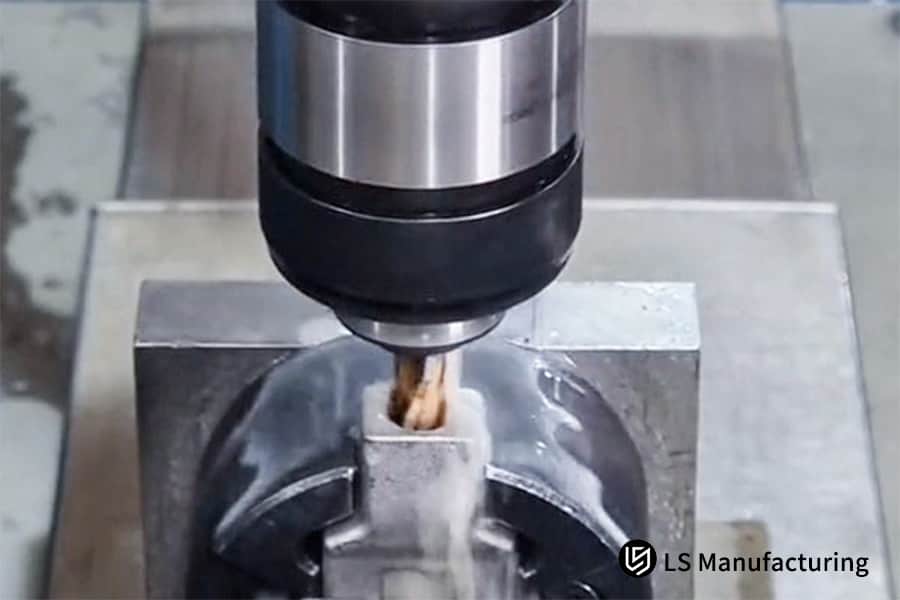
Figure 2: Choosing the optimal tap for precise thread cutting in CNC machining by LS Manufacturing
How Can Precision Thread Machining Ensure Dimensional Stability At The Micrometer Level?
Achieving consistent micron-level accuracy in precision thread tapping requires a holistic system to control cumulative errors from environment, machine, tool, and process. Isolated improvements fail; stability is a system property. This document details the integrated control methodology essential for high-reliability production:
Environmental and Machine Foundation Control
First of all, the problem of thermal drift and machine drift has to be eliminated. This is accomplished through the maintenance of a temperature-controlled workshop at 20±1°C, and machine tool calibrations performed through laser interferometry, which makes possible a position accuracy of ±0.003mm.
Proactive Tool Management and In-Process Compensation
Improved thread tap selection based on geometry and coatings is just the tip of the iceberg. In order for the system to compensate for the natural wear that comes with any cutting tool, the system has incorporated into it an in-process probing system. This will determine the successive measurement of the pitch diameter of the threads at intervals of time, and the data will then be transmitted back to the CNC machine for compensation.
Statistical Process Control for Sustained Capability
The final inspection by itself does not guarantee the quality of the batch. The dimensional data from the online system is therefore captured and analyzed by using statistical process control. It is therefore possible to foretell the tendency of the trend towards the tolerance limits; hence the value of the Cpk level is above 1.67 for critical thread features.
This systematic approach to precision thread tapping moves beyond simple tooling choices. It is a production philosophy that integrates environmental stability, machine accuracy, real-time metrology, and data analytics. The result, applicable within advanced CNC milling services, is predictable, verifiable micron-level stability, transforming precision from a hope into a guaranteed, statistical outcome for high-value components.
How Can Tap Geometry Optimization Solve Tapping Challenges?
Conventional tap geometries often fail with difficult materials, leading to rapid work hardening, delamination, or vibration. The solution lies in purpose-engineered geometric modifications that directly counteract the primary failure mode of each specific material, transforming a marginal process into a reliable one:
High Shear-Angle Design for Work-Hardening Alloys
The tools exhibit higher rates of strain hardening and come with Inconel among other materials. The 15°+ angle of rake allows for efficiency with regards to low force and low heat. The tool design is integrated with a high-performance coat and also features a polished flute for easy chip evacuation without generating friction thus causing built-up edge and catastrophic failure of taps.
Polished Lands & Sharp Cutting Edges to Prevent Delamination
Looking at carbon fiber composites in particular, the issue at hand is delamination in the removal of a ply from the material. In this case, standard types of thread taps will hardly prove functional. Instead, there is a requirement for a very precise polishing process that will create a mirror finish on the lands of the tap, as well as a sharp edge produced through grinding.
Variable-Lead & Vibration-Damping Geometry for Thin-Wall Parts
In thin sectioning, rigid tapping creates chatter, which deteriorates the surface finish of threads. Specialty tapping with an unconventional lead (pitch) breaks the harmonic resonance created by chatter. Raising the area of the neck rear side from the chamfer, the tapping tool eliminates chatter caused by the resonances.
This methodology defines a superior approach for how to choose thread taps for demanding applications: it requires analyzing the material's dominant failure mechanism and selecting a geometry engineered to counteract it. This transforms precision thread tapping from a standard operation into a controlled, predictable process, enabling documented first-pass yield rates above 98% for the most challenging alloys and composites.
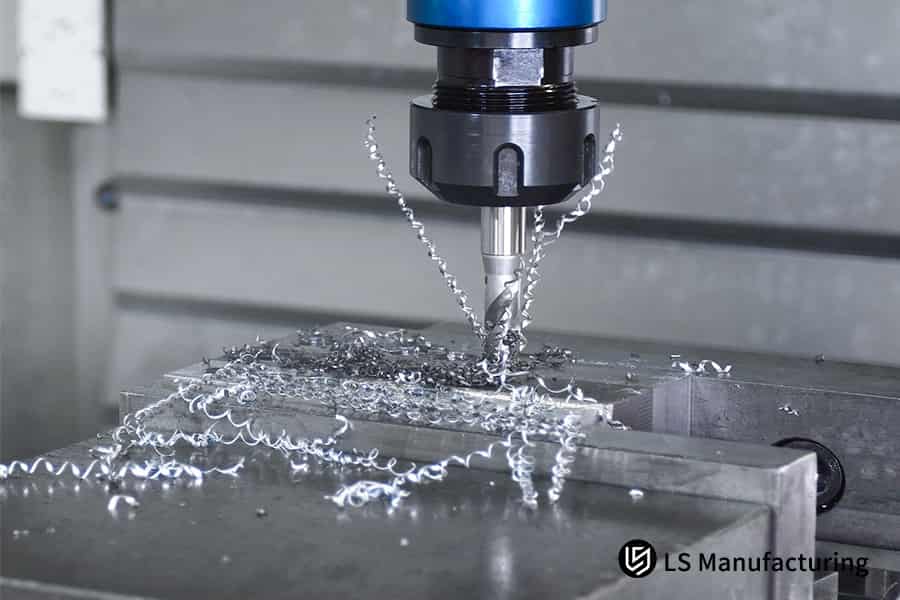
Figure 3: Computer numerical control tapping precisely generates flying metallic chips by LS Manufacturing
How Does CNC Tapping Service Ensure Consistent Quality In Large-Scale Production?
There is more to consistency at a micron level in high-volume manufacturing than just machine precision. It has to do with the management of tool wear and processes that cause drift. The most important thing that can be said about CNC tapping services is assurance of quality degradation from batch to batch. For that, a closed-loop digital management system will be required where reactive tool changeovers are replaced by predictive capabilities on the basis of:
Implementing a Digital Tool Lifecycle Management System
- Foundation: Each tooling hold has its own unique RFID chip installed. It records all key data points, including holes tapped, material worked, and runtime hours.
- Execution: The machine interface automatically scans the data and synchronizes it into a digital system. This shows that for every tool tracked, there is some history that will be there, not despite errors which may occur through manual recording.
Establishing Data-Driven Predictive Tool Change Protocols
- Process: The historical record is analyzed to determine a scientifically justifiable limit for wearing, based on the materials used in the tooling (e.g., number of holes produced prior to 0.2mm flank wear).
- Action: The effect where a tool is close to reaching 90% utilization will trigger the system to automatically produce a work order for a pre-emptive replacement for the tool. The action will be based on avoiding unexpected breaking of the tool that results in scrap production with the aim of improving the thread tap efficiency.
Integrating SPC for Closed-Loop Process Control
- Monitoring: Dimensional data, obtained either by in-process gauging measurement or by post-process measurement, is entered directly into a Statistical Process Control software environment.
- Control: The trend in critical threading parameters, like the pitch diameter, is being watched, and when there is an indication of a trend towards the control limit, an alert message regarding the change of parameter and/or inspection of the tool before production of nonconforming parts may be sent.
This presents a holistic way to deal with what constitutes as modern high reliability CNC tapping services. The management of tools in these operations is transformed from a logistic activity to a well-thought-out process in a bid to attain first pass yield percentages beyond 99.2%. The consistent delivery of quality in the integrated CNC milling services that may include tapping operations demands a crucial step in combating production costs through the elimination of quality escapes.
How To Evaluate The Cost-Effectiveness Of Different Tapping Solutions And Optimize Them?
A true assessment of cost-effective thread tapping requires analyzing total cost-per-hole, not just tool price. A premium tap can offer a lower total cost. This document provides a clear, data-driven framework for evaluating the true ROI of different thread tap selection strategies, transforming procurement from a price-based to a value-based decision.
| Evaluation Dimension | Standard HSS Tap | High-Performance Coated Tap | Rationale & Impact |
| Tool Purchase Price | Baseline Cost | +30% | Higher initial investment. |
| Documented Tool Life | 1,000 holes | 3,000 holes | 3x life reduces tool cost per hole by 67%. |
| Relative Cutting Speed | Baseline Speed | +40% | Higher throughput reduces machine time cost per part. |
| Calculated Cost-Per-Hole | 100% (Baseline) | 55% | Net 45% reduction despite higher unit price. |
How to choose thread taps for optimal economy: calculate the total cost per finished thread, factoring in tool life, cycle time, and scrap risk. The most cost-effective thread tapping strategy often involves selecting a higher-performance tool validated for your specific material, as its extended life and faster speeds drastically lower production costs. This analytical approach is fundamental for profitable, high-volume CNC tapping services, providing a decisive competitive edge.
What Core Threading Capabilities Should A High-Quality CNC Machining Supplier Possess?
While assessing a source of supply to procure precision components, second-level processing knowledge and competence should also be taken into account. To be regarded as competent at precision thread tapping, a source of supply should possess a system and not a system of machines. The ultimate source of supply to ally with is a knowledge system.
Certified Metrology for Process Validation
Only capability can be proved by proof of verification. The use of a lab with a CNAS-accreditation and thread scanning precision of no less than ±0.002mm allows for the creation of a first-article verified product. The machining process is then proved and locked before production commences to lock all factors into levels that will produce a piece with a given class of threads.
In-House Tool Regrinding for Cost and Geometry Control
The wear and tear in tools can be controlled and endured. Special-purpose taps can be created in the 5-axis tool grinder for re-grinding and re-coating taps. Today, it has become possible to recreate worn cutting edges for re-grinding according to their type and material parameters and thereby regenerate the tools as optimum tools for extended usage.
Empirical Process Database for Predictive Engineering
Knowledge becomes formalized. They set up their own internal database, correlating the amount of material, the threading needs, and the techniques of tooling with tens of thousands of previous solutions. Now, it accesses the knowledge directly, predicting process design ranging from conceptual to guaranteed solutions on the actual wearing of the tooling so that they could meet the demand for fast development time in new designs.
To be a complete and best-of-breed provider of CNC milling services, it is therefore essential that it comprises knowledge about measurement, development of proprietary tools, and process knowledge from experience. Thus, it can be ascertained that CNC tapping services also become an in-house task with a guarantee of reliability, cost, and risk of manufacturability, respectively.
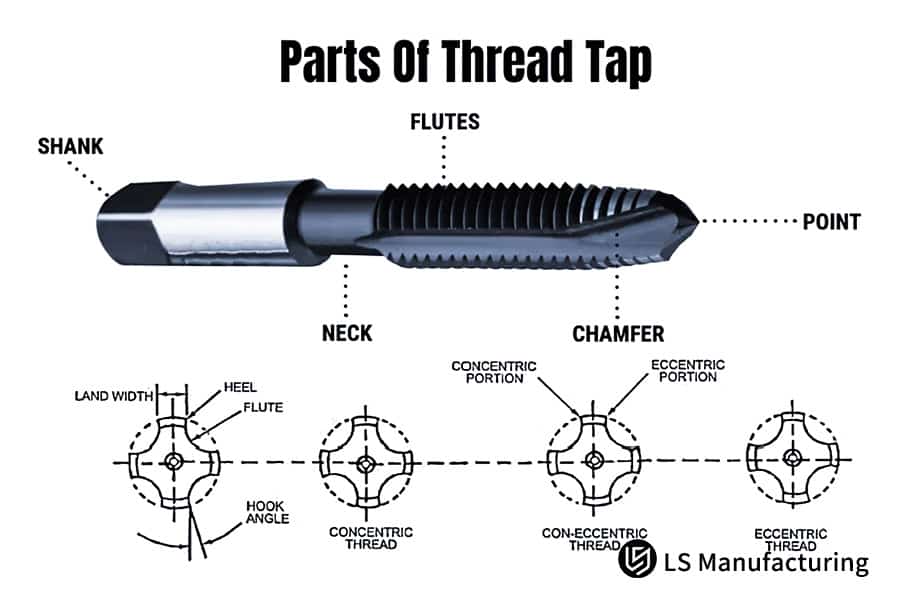
Figure 4: A guide to selecting efficient tap geometries for cnc threading operations by LS Manufacturing
LS Manufacturing Automotive Engine Cylinder Block Threaded Hole Machining Project
The automotive industry is a high-stakes market, and one simply cannot speak of reliable engines without mentioning consistent quality threads. The following is a case dealing with how our client was experiencing a production bottleneck when machining their cast iron engine blocks and how we at LS Manufacturing were in a position to help them overcome this problem with our CNC tapping services:
Client Challenge
The customers had been experiencing large lot production losses when tapping holes M12×1.5 in gray cast iron engine blocks (GG-25) with conventional HSS taps, having a life of only 800 holes with continuous and frequent unplanned stops for tap changes. The customers experienced poor precision of tap holes because of frequent unplanned stops at rejection rates of 3% in in-process inspections, which directly affected the production program.
LS Manufacturing Solution
The technique that is employed by us is a process redesign. The requirement specification is that of a powder metallurgy HSS tapping tool that is TiCN-coated and is intended for iron casting. The tapping speed is fixed at 15 m/min, and also a coolant supply with a pressure of 12 bars is also required. A torque condition monitoring system is also provided that shows torques that are not standard.
Results and Value
The effect of the introduced change was revolutionary. The life of the tools increased to 3,500 holes. Consequently, this led to a 337% increase. The number of tool change cycles decreased by over 70%. The threading tolerance remained constant at 6H. Consequently, the scrap rate of 3% decreased. The tooling process saves over $20,000 every year to the satisfaction of the customer. In turn, this earned a 100% satisfaction rate.
In such a project, we display the way in which LS Manufacturing provides CNC milling services with zero risk with the inclusion of material science, optimization, and predictive monitoring. In this case, we are not a tool but instead engineer a process which is data-validated, responding to specific cost-effective thread tapping issues.
Obtain your customized milling solution, based on an assessment of your specific materials and working conditions.

Future Development Trends And Innovation Directions In Thread Machining Technology
In this project, thread cutting is The future of threaders will be to move the art of empirical thread selection to the next level of smarter and self-optimizing processes. The challenge is to address the unexpected failures of quality by realizing a machining process suited for the realities of quality. In our research, we establish three crucial paths for the innovation of a next-generation precision thread tapping.
Intelligent Tooling with Embedded Process Sensing
- Real-time Monitoring: Contemporary faucets are equipped with micro-sensors, thanks to which torque, vibration, and temperatures at the cutting edge can be monitored.
- Predictive Intervention: This data can be used for predictive, actual maintenance preceding an event in order to avert unscheduled production downtime and product scrapping.
Closed-Loop Adaptive Control for Unmanned Production
- Dynamic Adjustment: The software changes the speed of the machine based on the inputs provided by the sensors. It is therefore a self-correcting mechanism.
- Consistent Output: This gives appropriate cutting forces for any material and ensures that the threads produced are stable regardless of the batch being cut.
Advanced Materials and Hybrid Process Integration
- Nano-composite Coatings: New tool coatings drastically reduce friction and thermal load, extending life in high-temperature alloys.
- Ultrasonic-assisted Tapping: Superimposing high-frequency vibration reduces cutting forces, enabling clean threads in brittle composites and difficult-to-machine materials.
It is an evolution that combines smart tooling, adaptive control, and hybrid processing, so as to turn what has conventionally been a discrete process of threading into an intelligent and predictive system. It ensures that even something seemingly mundane as the thread tap selection becomes a data-driven process in the connected process so that precision thread tapping is an optimized output in an unmanned CNC milling services cell.
FAQs
1. How to choose the most suitable tap type for different materials?
Material hardness, durability and other properties choose high-speed steel tap with cobalt for stainless steel, spiral-point tap for aluminum alloys, and treated tap for cast iron material. The optimum cutting speeds shall be determined through cutting tests.
2. How to determine if a tap needs to be replaced to avoid mass production quality problems?
The faucet has to be replaced as soon as there is an increase in the values for tapping torque by 15% or if there are changes in the roughness values for the thread surface and error in the pitch diameter. The tool life management system helps in preventing defects during mass production.
3. Which key parameters need to be optimized for efficient tapping processes?
The factors cutting speed, feed rate, and coolant need optimization. Internal cooling can prove beneficial in getting a smooth removal of chips. It can also result in an efficiency improvement by 40% through optimized factors while retaining quality during processing steps.
4. What key technical points should be noted when tapping special materials?
There is a need for the geometric parameters of Tap to be optimized, and appropriate control of cutting parameters is a prerequisite while cutting difficult-to-cut materials. In machining high temperature alloys, a greater rake angle is needed, so that work hardening is avoided. Special care is required while machining composite materials.
5. How to evaluate whether the thread processing quality meets the requirements?
Accuracy could be verified using thread gauges or coordinate measuring machines. A roughness meter could also be employed for verification of surface finish. Spec compliance at critical part features has to be inspected on a 100% basis.
6. How to ensure consistency in thread processing during mass production?
It is essential to have a good tool management system at the second level of manufacturing, including statistical process control for key parameters and calibration & parameter checks.
7. Although high-quality taps have a higher unit price, how to evaluate their overall economic benefits?
Good-quality taps reduce production cost per hole considerably when it comes to mass production. A detailed study of an ROI analysis might be necessary to understand what benefit can be derived.
8. How to obtain professional thread processing solutions and accurate quotations?
Please provide detailed information concerning your material, workpiece specifications, and production volume. You can submit your requirements through our online platform to get a professional quote within 2 hours.
Summary
Scientific tap selection and process improvement enable an enterprise to maximize the quality of thread processing with the greatest accuracy and economy. LS Manufacturing has rich experience in customization, as well as a flawless technological system. It will assure customers of reliable services in thread processing.
Should you need a custom tap solution, or perhaps a free process analysis, please do not hesitate to contact our technical personnel at LS Manufacturing. Provide us with your machine requirements and your solution with a free quote is ours for the asking. Rest assured we will be behind you in your thread-related problems.
Get your personalized tapping solution now, boosting efficiency by 35% and reducing costs by 40%!
📞Tel: +86 185 6675 9667
📧Email: info@lsrpf.com
🌐Website: https://lsrpf.com/
Disclaimer
The contents of this page are for informational purposes only. LS Manufacturing services There are no representations or warranties, express or implied, as to the accuracy, completeness or validity of the information. It should not be inferred that a third-party supplier or manufacturer will provide performance parameters, geometric tolerances, specific design characteristics, material quality and type or workmanship through the LS Manufacturing network. It's the buyer's responsibility. Require parts quotation Identify specific requirements for these sections.Please contact us for more information.
LS Manufacturing Team
LS Manufacturing is an industry-leading company. Focus on custom manufacturing solutions. We have over 20 years of experience with over 5,000 customers, and we focus on high precision CNC machining, Sheet metal manufacturing, 3D printing, Injection molding. Metal stamping,and other one-stop manufacturing services.
Our factory is equipped with over 100 state-of-the-art 5-axis machining centers, ISO 9001:2015 certified. We provide fast, efficient and high-quality manufacturing solutions to customers in more than 150 countries around the world. Whether it is small volume production or large-scale customization, we can meet your needs with the fastest delivery within 24 hours. choose LS Manufacturing. This means selection efficiency, quality and professionalism.
To learn more, visit our website:www.lsrpf.com.