English



Precision CNC milling services often cannot machine complex parts with features such as sub-1mm thickness or internal mazes, sending back "unmachinable" messages or redesign costs, or parts failing from machining stress. This is because of the inability of a standard 3-axis approach to proactively analyze manufacturability or accessibility of the machine tools or distortions in thin walls of the parts being designed.
We solve this problem by including manufacturability analysis from the beginning as a design partner. Our solution is a simulation-based approach that is a more proactive approach to solving problems. It includes pre-deformation compensation, which has been shown to improve a critical surface flatness by as much as 15 times from 0.15mm to 0.03mm.
Precision CNC Milling Services: Essential Guide
| Core Consideration | Our Engineering Approach |
| Achieving Micron-Level Accuracy | For micron-level CNC milling, i.e., ±0.01mm, a highly rigid machine, thermal stability, and sophisticated measurement tools are necessary, which cannot be provided by a machine. |
| Surface Finish & Integrity | For a good surface finish, i.e., Ra < 0.4µm, it is necessary that the toolpaths are optimized, and the machining parameters are controlled in a way that the workpiece does not vibrate or "burnish." |
| Complex 3D Contour Machining | For machining complex 3D contour workpieces of organic nature, it is necessary that a 5-axis CNC milling machine be provided, along with sophisticated programming of the machine, allowing the tools to move smoothly. |
| Thin-Wall & Delicate Feature Machining | For machining workpieces with thin walls, which may distort if not machined properly, it is necessary that sophisticated programming of the tools be provided, along with a strategy for managing the forces. |
| Our Process-Centric Methodology | For a highly predictable environment, which is necessary for precision, it is necessary that sophisticated machines be provided, along with a controlled environment. |
| Material-Specific Expertise | A good understanding of the behavior of aluminum, stainless steel, titanium, and plastics during the machining process, which varies from one material to another, is necessary to achieve the best results. |
| Result: Predictable Part Quality | Consistently delivers components that meet guaranteed specifications for accuracy, quality, and consistency, batch after batch. |
| Result: First-Time-Right Assembly | Guarantees machined parts fit and function perfectly in final assembly, eliminating rework, delay, and performance compromise. |
We have fundamentally solved the CNC milling challenge of transforming intricate and sophisticated designs into tangible parts that consistently achieve guaranteed specifications for accuracy and quality. This encompasses micron-level precision, superior surface finish, and the rigorous fulfillment of all other critical performance and functional parameters as originally designed. The result delivers substantial value by saving you significant time, reducing overall costs, and completely eliminating the need for quality compromise.
Why Trust This Guide? Practical Experience From LS Manufacturing Experts
There are countless numbers of articles and blogs written on the subject of precision CNC milling services. However, this is not an academic treatise. We are a company, a battleground, a war zone where we daily face the challenge of "unmachinable" parts, parts with ultra-thin walls, parts with complex geometries. But, unlike other companies, our experience is not just knowledge, but the hard-won expertise to survive and thrive.
Our methodology is based upon a strong foundation of engineering analysis, utilizing TWI Global standards, with the application of subtractive as well as Additive Manufacturing (AM) techniques to achieve the best possible outcome. Just as with pre-deformation compensation machining, where flatness was increased from 0.15mm to 0.03mm, we are able to solve for distortion, stress, and precision with non-standard parts.
All the information we give you is based on our experience. We're a manufacturing design partner, and we're here to help you with the knowledge we use every day to keep you from making costly mistakes and to help you bring your most innovative part designs to life with seamless efficiency.
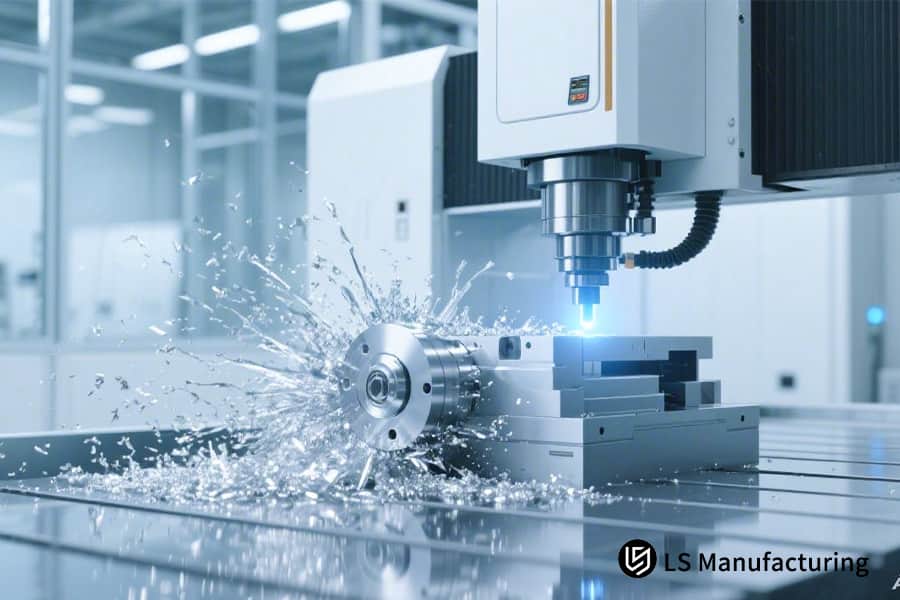
Figure 1: Actively milling high-tolerance alloy steel for custom complex parts in automotive and aerospace manufacturing.
How Do Professional CNC Milling Services Evaluate The "Tool Accessibility" Of Complex Parts?
Manufacturing failure happens because the tool is not accessible to make the proper part geometry. Therefore, a professional CNC milling for complex parts service starts with a thorough tool accessibility analysis. This is a forward-thinking approach because it considers the entire process and all the tools involved.
Dynamic Collision Simulation in CAM
We go beyond static review of a 3D model. By employing sophisticated CAM tools, we can now simulate the entire CNC milling tool path, checking for collisions between the toolholder, tool, and part. This is a precise analysis of what tools of various lengths and diameters are accessible to all cavities and undercut areas. This is the factual foundation for all machining strategies, as well as areas of high risk where strategic planning is necessary.
Quantifying Deep Cavities and Narrow Channels
A significant result is to calculate the length-to-diameter ratio of a tool necessary for machining deep areas. When the ratio is greater than 5:1, machining is a high-risk operation since tools will flex and resonate. We provide actionable information, for example, recommending a design change to increase an internal corner radius from 0.5mm to 1mm, enabling standard tools to be used, saving 40% of production costs and ensuring a stable process.
Strategic Multi-Axis Machining Planning
This analysis definitively dictates the necessary machine capability. The features are classified as requiring full 5-axis simultaneous motion for machining on the side wall, versus features that can be efficiently machined with a 3+2 axis indexed motion. This manufacturability assessment is precise and ensures that the most optimal and cost-effective CNC milling is selected from the very beginning, rather than inefficiently utilizing a 5-axis machine for a feature that a 3-axis machine can effectively machine.
Optimizing Internal Intersections and Undercuts
We analyze the smallest tool size required to effectively clean the internal corners of the part (“floor radii”), and we analyze the capability of this tool to effectively accomplish the task without interfering with the surrounding walls of the part. This is a key step in ensuring the removal of material in areas where standard tooling libraries cannot effectively access.
This is the difference between a CNC milling service and a true engineering partner. We take what could potentially go wrong in a manufacturing process and turn it into a designed and executable process. We give our clients the power of actionable data that ensures their most complex parts are not only designed but also manufacturable. Our documentation is a technical foundation of a partnership that is not based on general claims of capability but specific analytical outcomes.

How To Select The Optimal Multi-Axis Simultaneous Milling Strategy For Non-Standard Parts?
It’s not enough to just have a 5-axis machine available; the effective implementation of its capabilities is critical to its efficiency and quality of work. For precision CNC milling services, the appropriate 5-axis milling strategy is a fundamental element of a part’s production. The following document offers a tactical guide to effectively match particular part features with effective multi-axis strategies.
| Part Feature / Challenge | Recommended Multi-Axis Strategy | Core Mechanism & Quantifiable Benefit |
| Free-form surfaces (e.g., aerofoils, impellers) | Drive surface projection toolpaths. | Ensure the tool axis remains normal to the part’s free-form surfaces, thus optimizing contact conditions to deliver the best possible finishes (often < Ra 0.4 µm). |
| Deep cavities & steep walls | Side-cutting (plunge milling) operations. | Leverage the stiffer side of the endmill to take advantage of much deeper axial depths of cut (up to 3 to 5 times deeper), greatly reducing overall cycle times for parts with deep features. |
| Thin-walls & flexible structures | Helical ramping entry with constant scallop Z-level finishing. | Removes full-width engagement shocks and ensures constant cutting forces, effectively managing deformation to less than 0.05mm for high-aspect-ratio titanium components. |
| Complex undercuts & internal geometries | 3+2 indexed positioning with specialized tooling. | Locks the rotary axes for optimal orientation of the part, effectively enabling access with shorter, stiffer tools for complex parts CNC milling, including those impossible with 3-axis machining. |
Our custom solutions for complex geometries de-risk complex CNC milling projects by predicting and controlling forces and access through documented strategies. This empirical, feature-based approach reliably translates demanding designs into manufacturable parts with known quality, cost, and lead time for advanced sectors.
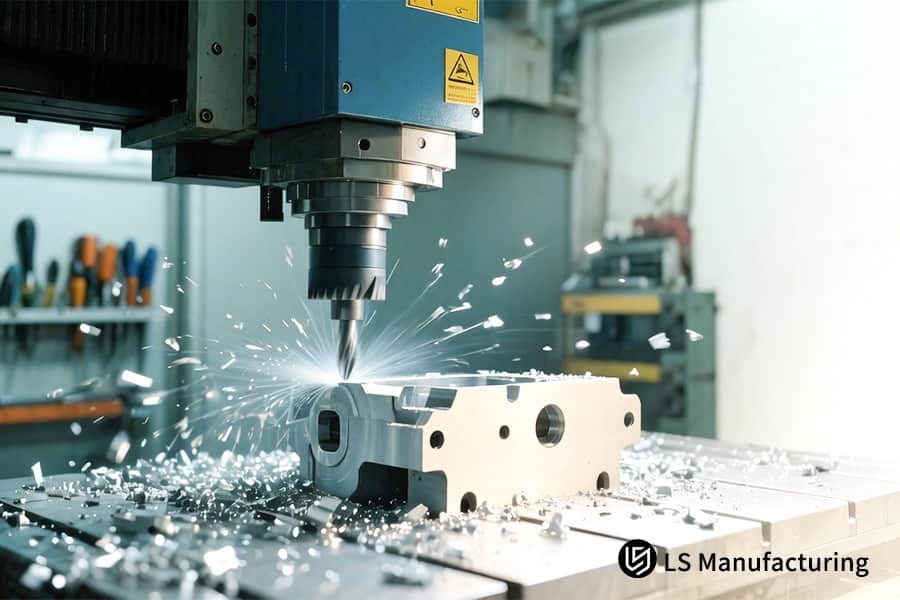
Figure 2: Performing CNC milling for complex parts on close-tolerance metal alloy for specialized high-tech manufacturing.
How Do High-Precision CNC Milling Services Control Machining Deformation In Thin-Walled And Complex Structures?
Distortion is the main problem with machining high aspect ratio and monolithic parts. A genuine CNC milling will address this issue, rather than simple fixturing, through a sophisticated, multi-layered engineering approach to predict, prevent, and correct distortion as it occurs during machining.
Process Sequence Optimization via FEA Simulation
- Core Action: Use FEA simulation to calculate the redistribution of stress after each machining operation.
- Implementation: Create a symmetrical staggered approach for material removal to counteract internal stress.
- Outcome: Creates a basic machining sequence to control distortion at its source, an important factor for tight tolerance CNC milling.
Multi-Stage Semi-Finishing & Finishing
- Core Action: Create a "step-down" machining sequence for final part dimensions.
- Implementation: Leave 0.5mm stock after semi-rough machining, relieve stress, and then remove remaining 0.25mm in two increasingly lighter cuts.
- Outcome: Gradually relieves stress, allowing part to settle between machining operations, an effective method of distortion control for thin-walled parts.
Active In-Process Error Compensation
- Core Action: Introduce in-machine scanning after semi-finishing.
- Implementation: Compare the scanned part with its original CAD design in order to create a "compensation map" that offsets the final milling path.
- Outcome: Active compensation of distortion – in-process compensation milling technique that allows for accuracy beyond what is possible with passive compensation.
This is our integrated defense-in-depth approach. This is what sets a good custom CNC milling partner apart from the rest when it comes to your critical applications. We have taken the inherent challenge of complex CNC milling projects and made it a predictable outcome. Our approach, as validated with a >70% distortion reduction on standard aerospace-grade aluminum thin walls, is what is ultimately required in order to provide the necessary assurance required for single-digit micron tolerances on the most challenging geometries.
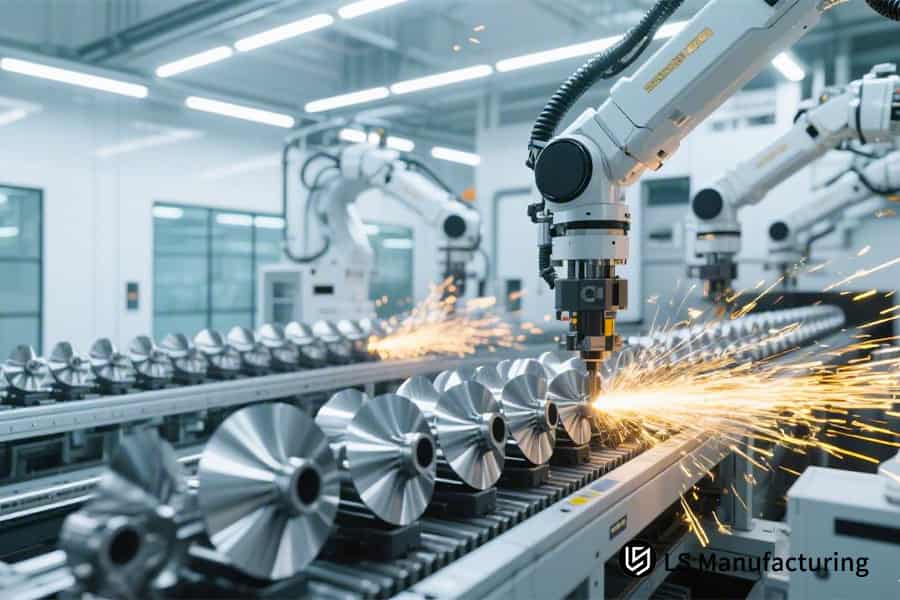
Figure 3: Robotic CNC milling delivers precision metal parts for high-tech industrial manufacturing solutions.
What Specialized CNC Milling Solutions Are Required For Miniature And Non-Standard Features?
When feature sizes are reduced to millimeter or even sub-millimeter sizes, it is no longer possible to implement machining solutions. For effective machining of micro-features, it is necessary to implement micro-milling solutions to address physical considerations. The capability is defined by a comprehensive solution set. The solution set is as follows:
Micro-Tooling and High-Speed Spindle Systems
We are utilizing solid carbide as well as diamond-coated tools as small as 0.1mm in diameter, along with high-speed spindle solutions with spindle speeds of over 40,000 RPM. This ensures that cutting speeds are maintained, tool wear is minimized, and rigidity is provided for precision micro milling of intricate features.
Advanced Process Control and Cooling Strategies
Chip evacuation is another important consideration. For effective chip evacuation, as well as thermal considerations, it is necessary to implement Minimum Quantity Lubrication (MQL) or vapor mist cooling. This ensures effective chip evacuation for a precise environment near the cutting interface. This eliminates re-welding of chips onto the workpiece or tool, a critical failure mode for non-standard feature machining.
Integrated Visual Metrology and In-Process Verification
High magnification machine vision systems are critical for the process. These are required for tool setting and breakage detection for micro tools, as well as for preliminary on-machine inspection of micro features. This closed-loop verification is a critical part of high precision CNC milling for this scale of work.
Environmental and Strategic Machining Protocols
For a successful CNC machining for micro-features, it is necessary not only to control the tool path but also the environment in which it is performed. This is usually performed in a temperature-controlled, clean room-type environment, free of any environmental and temperature-related effects. The machining protocols include light radial engagement, tool path optimization, and sequential machining for final tolerancing.
This integrated, equipment-agnostic approach is our methodology for custom CNC machining for complex parts with miniature features. The solution to our main problem is achieved through control of the entire process chain from tool-spindle interface to environmental stability. This allows us to transform a risky micro-machining problem into a predictable and repeatable process. The result is our ability to deliver components, such as optical mold arrays with feature accuracy within ±5µm, to meet the extreme requirements of med-tech, optics, and micro-electronics.
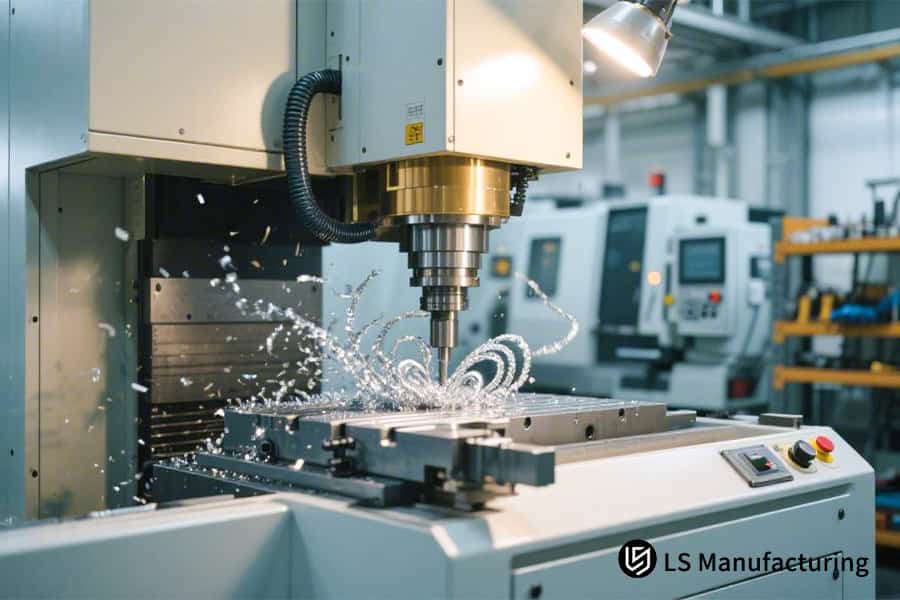
Figure 4: Providing high-precision CNC milling for tight tolerance metal components in industrial applications.
LS Manufacturing — Semiconductor Equipment Industry: Precision Milling Project For Ceramic-Composite Aluminum Substrates In Wafer Transfer Modules
CNC machining of intricate components with multiple materials is at the frontier of non-standard CNC milling. The case study involves a wafer transfer module baseplate, an alumina ceramic disk brazed to an aluminum body. The challenge required precision substrate machining of fragile composites, a process where standard machining is inadequate and a new approach is necessary.
Client Challenge
This involved the milling of thousands of micro air-bearing holes in the ceramic, along with guide rails in the aluminum, with a precise positional alignment of ±15 µm. Conventional CNC milling for complex parts was not possible, owing to issues such as ceramic chipping, interfacial cracking, and thermal distortion, which are a result of the different material properties. This brought the development of the client’s next-generation tool to a grinding halt.
LS Manufacturing Solution
In the case of the ceramic-aluminum composite milling, ultrasonic vibration-assisted machining was employed to reduce cutting force on the ceramic, which is a brittle material, by using a diamond-coated tool. A vacuum fixture, which referenced the machined ceramic, was used to allow precision aluminum machining in one set-up. In-process probing was employed to ensure accurate production, which compensated for micron-level deviations.
Results and Value
All the specifications were achieved, as the micro-holes did not contain chips, the braze joint remained intact, and the positional accuracy remained within ±15 µm. This complex part success allowed us to immediately integrate the client's modules, which resulted in a 20% increase in their tool's throughput. This project solidified our position as a supplier of CNC milling solutions for extreme material combinations, which directly addresses the needs of critical semiconductor device production.
This LS Manufacturing semiconductor case highlights our capability to offer a complete manufacturing solution. We address high-risk machining challenges through integrated process innovation, which solves complex multi-material component designs, ensuring the creation of reliable and production-worthy parts for the most extreme industries.
Conquer complex multimaterial challenges with LS Manufacturing's precision CNC milling services engineered for micron-level accuracy.

How Can Collaborative Design Optimization Reduce The Cost Of Custom CNC Milling For Complex Parts?
True cost optimization of complex components is not done in the quoting process, but in the initial design phase through active collaboration. Our custom CNC milling services include in-depth collaborative engineering for complex parts, where actionable Design for Manufacturability (DFM) analysis is performed to help identify and solve cost drivers, not after the toolpath is created but before, turning the possibility of over-engineering into a cost-effective solution.
| Optimization Strategy | Specific Collaborative Action | Quantifiable Impact & Rationale |
| Feature Standardization | Standardize varied radii, hole sizes, and pocket corners into a small set of standard tool sizes. | Removes the need to constantly reconfigure the tools, saving 15-25% in overall machining time in a cost-driven CNC milling process, especially in parts with a large number of features. |
| Setup Minimization | Change the part design and add a datum feature such as a boss or a hole to allow the part to be made in 1-2 setups. | Reduces the overall error potential in fixture and alignment, saving over 20% in labor and programming time. |
| Material & Process Strategy | Recommend local high-performance inserts or bonded sections as an alternative to a monolithic exotic alloy block. | Enables a reduction in raw material costs by up to 60% and facilitates the machining of hard materials, which directly directly enabling design for cost reduction. |
| Tolerance Rationalization | Opportunity to rationalize some features where a reduced tolerance of ±0.1mm, as opposed to the current ±0.025mm, is acceptable. | Enables increased feed rates and standard tool usage, reducing machine time. |
This systematic approach to manufacturability analysis is a direct response to our clients with complex CNC milling projects. Our analysis allows our clients to make informed decisions through a data-driven approach. This results in a guaranteed 15-30% potential cost avoidance for our clients. Our analysis equates to a predictable project result, where manufacturability is designed-in from the start for optimum performance.
When Evaluating CNC Milling Suppliers, How Can One Verify Their Actual Capability To Handle Complex, Non-Standard Parts?
When choosing a vendor for CNC milling solutions, it is necessary to distinguish between a true engineering partner and a machine shop. A thorough CNC milling solutions provider assessment is centered on their problem-solving methodology and verification process, not just their equipment offerings. This verification process is critical for capability verification for non-standard parts:
Require a Proactive DFM Analysis
- Action: Request a preliminary Design for Manufacturability report as a step in the RFQ process.
- Assessment Focus: Evaluate the degree of feedback on accessibility of the tools, stability of parts, and fixturing strategies beyond basic geometry.
- Value: It shows their ability to proactively problem-solve before the programming process has begun.
Audit Their Process Knowledge Base
- Action: Ask them about their previous problem areas with projects such as chatter, distortion, etc., and how they solved these problems.
- Assessment Focus: Evaluate their knowledge base of a process library and simulation tools such as FEA and CFD.
- Value: It clearly defines the difference between the reactive troubleshooter and the analytical approach using known techniques to guarantee a result.
Verify Metrology and Quality Systems
- Action: Audit their internal metrology systems with complex geometries.
- Assessment Focus: Evaluate the use of CMMs, surface profilers, and on-machine probing systems as a means of quality assurance for complex milling.
- Value: It ensures they not only have the capability to make the parts but can definitively prove that the parts meet or exceed specifications.
This structured assessment is a review of the engineering discipline that goes into advanced CNC milling services. By applying this criteria, you can find a partner that has a proven track record of success, thereby de-risking your program by ensuring that your most challenging designs are worked on by a team that has the ability to bring them into manufacturable reality.
FAQs
1. How long does it take to produce a sample of a complex, non-standard part—from the initial drawings to the finished prototype?
Typically, this would take 4 to 8 weeks, depending on the complexity of the part, including the process review, programming, tooling, machining, and inspection. This timeframe may be extended for very complex parts or for specialized tooling requirements, and a detailed project milestone schedule will be provided after the process review.
2. What level of precision can you typically guarantee for complex aluminum alloy parts?
We can achieve dimensional tolerances of ±0.025mm, geometrical tolerances of flatness and true position to 0.05mm, and thickness tolerances of ±0.05mm for thin wall features. For parts made of steel or other specific materials, precision can be controlled depending on the properties of the material used.
3. How do you ensure consistency during the production of small batches of complex parts?
We can ensure consistency during the production of small batches of complex parts through the use of "standardized process packages." Once the first article inspection of the first part of the parts to be made is completed, the specific process used to create the part, along with the tools used, is documented into a standard document. The document will be used to replicate, rather than recreate, the process used to create the part.
4. Will you decline an order if the design presents significant machining challenges?
We don't decline orders. Instead, we like to solve problems. We would be willing to offer you a complete DFM report and work with you to explore potential design improvements. However, if we determine the design is indeed unworkable, we would let you know and offer you potential solutions.
5. Do you offer end-to-end services—ranging from the milling of complex parts to surface treatments and specialized coatings?
Yes, we do. We offer complete and comprehensive services and can handle the entire chain to offer you complete control over the entire process, from the initial machining phase to the final processing and finishing.
6. What is your Minimum Order Quantity (MOQ)? Do you support the production of single-piece prototypes?
We fully offer the capability to produce a one-piece prototype. For intricate, non-standard parts, the initial prototype is a critical risk reducer for the entire project. Therefore, our MOQ is one piece.
7. How do you handle situations where issues are discovered during assembly or usage—specifically if the problem is suspected to stem from the machining process?
We will immediately start a joint investigation. We will provide complete records of the machining process and inspection reports, as well as assist in a root cause failure analysis. If it is conclusively determined that the cause of the problem was a result of our manufacturing process, we will cover any costs incurred.
8. How do I initiate a project consultation for a complex, non-standard part?
Please provide a 3D model (STEP format) and 2D drawings (PDF format), along with a brief description of the part's function, performance criteria, and any problems experienced so far. You can submit these files directly through our online custom machining quote page. We will start an analysis within two business days, followed by a meeting to discuss the project with you.
Summary
Precision manufacturing of complex, non-standard parts is at its heart a test of foresight and control. It requires a company that not only executes on instructions but is able to anticipate physical conflicts such as interference or deformation and has a process in place to overcome them. The key value is not in the cost of the equipment but in the marriage of machine capabilities, material science, cutting mechanics, and measurement into a deterministic process that converts a virtual model into a real-world part.
Is a "stubborn" part holding up your supply chain? Are you looking for a partner that matches your vision of the future? Send us your part today! Our CNC milling parts solutions team at LS Manufacturing is ready to deliver a complimentary in-depth "Manufacturability Risk and Optimization Potential Assessment" – using our expertise in solving the pioneering challenges of the future to overcome the hurdles in the way of your vision.
Transform your most intricate designs into reality with LS Manufacturing's precision CNC milling services engineered for complexity.
📞Tel: +86 185 6675 9667
📧Email: info@lsrpf.com
🌐Website: https://lsrpf.com/
Disclaimer
The contents of this page are for informational purposes only. LS Manufacturing services There are no representations or warranties, express or implied, as to the accuracy, completeness or validity of the information. It should not be inferred that a third-party supplier or manufacturer will provide performance parameters, geometric tolerances, specific design characteristics, material quality and type or workmanship through the LS Manufacturing network. It's the buyer's responsibility. Require parts quotation Identify specific requirements for these sections.Please contact us for more information.
LS Manufacturing Team
LS Manufacturing is an industry-leading company. Focus on custom manufacturing solutions. We have over 20 years of experience with over 5,000 customers, and we focus on high precision CNC machining, Sheet metal manufacturing, 3D printing, Injection molding. Metal stamping,and other one-stop manufacturing services.
Our factory is equipped with over 100 state-of-the-art 5-axis machining centers, ISO 9001:2015 certified. We provide fast, efficient and high-quality manufacturing solutions to customers in more than 150 countries around the world. Whether it is small volume production or large-scale customization, we can meet your needs with the fastest delivery within 24 hours. choose LS Manufacturing. This means selection efficiency, quality and professionalism.
To learn more, visit our website:www.lsrpf.com.