Italiano



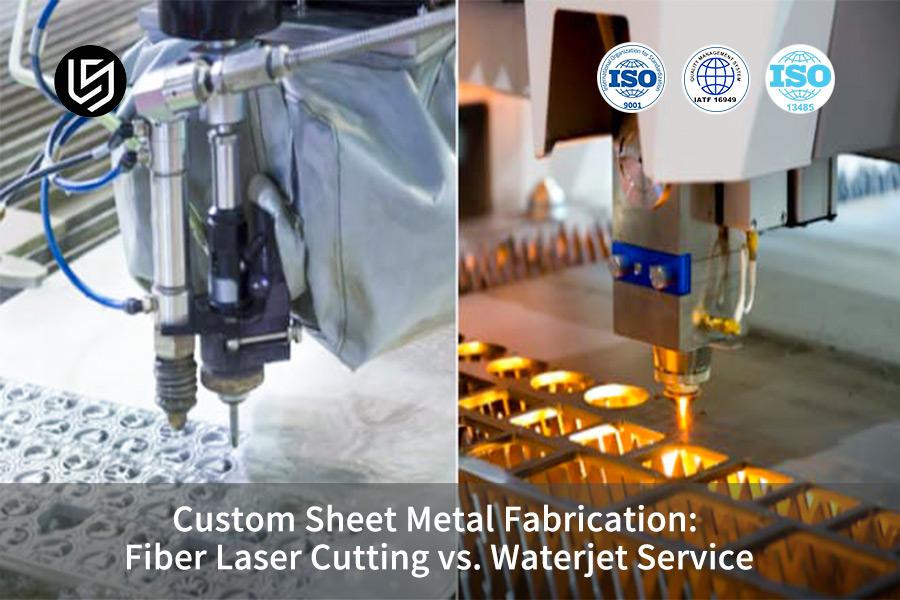
La fabbricazione di lamiere personalizzate determina la qualità della parte, i costi e i tempi di consegna attraverso la scelta tra taglio laser a fibra e getto d'acqua.
Il taglio laser a fibra è l'opzione migliore per fogli sottili (1 mm-12 mm) con una precisione di 0,1 mm, il taglio a getto d'acqua è l'opzione migliore per fogli spessi (30 mm e oltre) o materiali sensibili al calore (per prevenire la deformazione termica, perpendicolarità di 0,05 mm). Fare la scelta giusta può ridurre i costi fino al 25%.
I capi reparto acquisti e gli ingegneri a volte sono sconcertati dalle decisioni sul taglio della lamiera. Decisioni sbagliate possono portare a perdite materiali e ad un aumento dei costi oltre il controllo, principalmente perché non esistono confronti quantitativi dei processi.
Questo articolo, utilizzando i dati misurati di LS Manufacturing, delinea i limiti tecnici e offre standard selezionabili per assisterti nel fare le scelte giuste, ridurre i costi e migliorare la produttività.

Panoramica delle risposte principali per la selezione del processo di fabbricazione della lamiera personalizzata
Abbiamo dettagliato in modo esplicito le principali differenze e gli scenari ideali dei due processi. Insieme a dati di test di follow-up, casi di studio e strumenti decisionali, potremmo assisterti nell'identificazione rapida dei requisiti del tuo progetto di fabbricazione di lamiere personalizzato, evitando errori di scelta e ottimizzando con successo la duplice qualità e costo.
Perché scegliere LS Manufacturing per la fabbricazione di lamiere personalizzate? Taglio ad alta efficienza e precisione
Nella fabbricazione della lamiera, le vostre massime priorità sono senza dubbio "precisione, efficienza e basso costo" e questo è esattamente ciò che LS Manufacturing è pronta ad offrirvi.
Essendo certificati ISO 9001:2015, i nostri servizi garantiscono la coerenza del prodotto, riducono le rilavorazioni e aiutano a ridurre gli sprechi aggiuntivi.
Grazie alla configurazione integrata di LS Manufacturing con diversi laser a fibra da 12 kW e getti d'acqua ad alta pressione, sei in grado di lavorare con diversi spessori da 1 mm a 100 mm. Ciò significa che non dovrai più cercare fornitori diversi e i costi di comunicazione saranno risparmiati.
Prendiamo come esempio l'acciaio al carbonio Q235 da 12 mm, puoi tagliare a una velocità di 6000 mm/min, con un taglio molto stretto di soli 0,1 mm. Si tratta dell'8% in più di parti di fabbricazione metallica personalizzate che potrai ottenere in un unico foglio da 4'x8', il che significa meno spreco di materiale e costi di approvvigionamento inferiori.
La nostra tecnologia di compensazione dinamica della frequenza affronta l'accumulo di scorie sui bordi delle parti in lega di alluminio sensibili al calore, consentendo un'efficienza di elaborazione che è 8 volte superiore rispetto ai tradizionali getti d'acqua.
Quando si tratta di lavorazione di lastre spesse, i getti d'acqua ad alta precisione aiutano a mantenere la verticalità entro 0,05 mm, eliminando così la necessità di processi di rettifica e determinando una riduzione del 15%-20% del costo di produzione per parte.
Oltre a ciò, LS Manufacturing è sempre conforme standard di saldatura per strutture in acciaio AWS D1.1, fornendoti il massimo controllo sulla zona termicamente interessata e sulle saldature successive.
Abbiamo fornito soluzioni personalizzate a oltre 500 clienti in tutto il mondo, aiutandoli a ridurre i costi complessivi di approvvigionamento in media del 20%. Se hai difficoltà con la selezione del processo, contatta i nostri ingegneri per una valutazione gratuita del processo DFM per trovare la soluzione di elaborazione ottimale.

Perché il taglio laser a fibra può diventare la prima scelta in termini di efficienza per la fabbricazione di lamiere personalizzate ad alta precisione?
La movimentazione di lamiere di spessore sottile o medio (1 mm-12 mm) richiede circa il 70% del lavoro nella fabbricazione di lamiere personalizzate. In questo campo, il taglio laser in fibra è in cima alla classifica in termini di efficienza. I suoi punti di forza che contribuiscono principalmente alla generazione di reddito dei clienti sono velocità, precisione e costi.
Vantaggi di velocità e densità di energia del taglio laser a fibra
- Lavorazione dell'acciaio al carbonio Q235: la velocità di taglio raggiunge i 12.000 mm/min per lo spessore di 1 mm, 3.000 mm/min per lo spessore di 6 mm e 6.000 mm/min per lo spessore di 12 mm, superando di gran lunga la media del settore e aumentando significativamente la capacità produttiva.
- Lavorazione dell'acciaio inossidabile 304: Velocità di taglio di 2000 mm/min per 6 mm di spessore, con una densità di energia perfettamente controllata a 10^6 W/cm, evitando così la fusione eccessiva del materiale e mantenendo così una buona qualità di taglio.
Vantaggi in termini di precisione e costi del taglio laser a fibra
- Precisione e limitazione delle perdite: il taglio è di soli 0,1 mm e ha una larghezza inferiore del 50% rispetto a quella usuale nel taglio a fiamma. Ciò significa che un foglio da 4'x8' può contenere il 5%-8% in più di parti di fabbricazione metallica personalizzate con conseguente riduzione del costo del materiale per parte del 3%-5%.
- Meccanizzazione e spedizione: può essere combinato con sistemi di carico e scarico automatizzati e di pianificazione intelligente, riducendo così del 40% i tempi di consegna per la produzione su larga scala oltre a ridurre gli interventi manuali e gli errori umani.
Il servizio di taglio laser della lamiera può migliorare notevolmente l'efficienza della linea di produzione. In questo modo, i clienti della produzione di massa possono aumentare la capacità e ridurre i costi unitari. Se il progetto si concentra principalmente su lastre medio-sottili, puoi scaricare il nostro white paper sul servizio di taglio laser personalizzato per conoscere parametri di lavorazione specifici e metodi di contabilità dei costi.
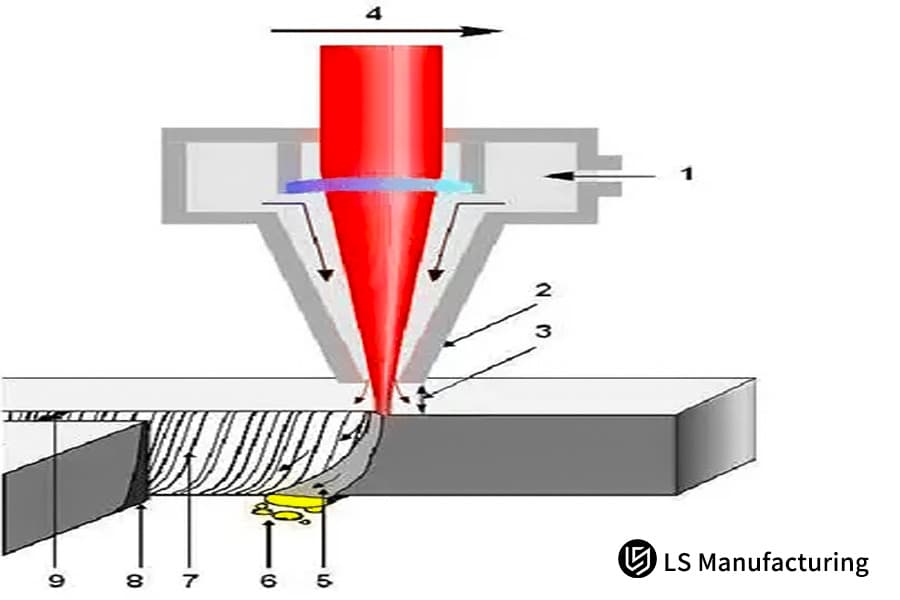
Figura 1: Un diagramma tecnico che mostra un raggio laser a fibra che taglia una lamiera metallica con elevata precisione.
In base a quale sfida di processo il servizio di taglio dei metalli a getto d'acqua è l'unica soluzione per evitare la deformazione termica del materiale?
A volte, la fabbricazione di lamiere personalizzate si blocca quando le piastre sono molto spesse o quando i materiali sono molto sensibili al calore. In questi casi, la zona alterata dal calore (HAZ) dovuta al taglio laser a fibra potrebbe addirittura rivelarsi il fattore distruttivo del processo.
Il servizio di taglio dei metalli a getto d'acqua con le sue proprietà di lavorazione a freddo risolve magnificamente questo problema ed è l'unica opzione praticabile.
Applicazioni più tipiche del taglio a getto d'acqua
- Lavorazione di lamiere spesse: utilizzata principalmente per lamiere di spessore superiore a 30 mm. In particolare, se un acciaio al carbonio spesso 50 mm viene tagliato con un getto d'acqua ad alta pressione, la perpendicolarità sarà entro 0,05 mm e l'angolo sarà 1, ovvero così preciso che non è necessaria alcuna lavorazione aggiuntiva.
- Lavorazione di materiali sensibili al calore: questo metodo è adatto per leghe di titanio, leghe ad alta temperatura e simili, poiché la temperatura di lavorazione è 50. Poiché non viene creata alcuna zona influenzata dal calore, l'indurimento del materiale viene eliminato e inoltre non si formano strati di ossido o microfessure.
Parametri di taglio a getto d'acqua per piastre spesse di materiali diversi
|
Processo di taglio
|
Materiali applicabili e spessore
|
Precisione della tolleranza
|
Vantaggi principali
|
Scenari applicabili
|
|
Taglio laser fibra
|
Acciaio al carbonio, acciaio inossidabile 1-12 mm, lega di alluminio 1-8 mm.
|
±0,1 mm
|
Alta efficienza, taglio stretto, bassa perdita di materiale.
|
Lamiere medie e sottili prodotte in serie, parti standard ad alta precisione.
|
|
Taglio a getto d'acqua
|
Tutti i tipi di metalli ≥30 mm, leghe sensibili al calore.
|
±0,05-±0,15 mm
|
Lavorazione a freddo, nessuna deformazione termica, buona verticalità.
|
Piastre spesse, parti sensibili al calore, parti che non richiedono ossidazione.
|
|
Laser a fibra (assistito da azoto)
|
Acciaio inossidabile, lega di alluminio 1-6mm.
|
±0,08 mm
|
Senza strato di ossido, sezione liscia.
|
Parti di precisione con requisiti elevati come parti mediche e aerospaziali.
|
|
Getto d'acqua (grado di precisione)
|
Leghe speciali 20-100mm.
|
±0,05 mm
|
Nessuna zona influenzata dal calore, nessun cambiamento nelle proprietà del materiale.
|
Parti strutturali industriali, lavorazione di precisione di lamiere spesse.
|
|
Processo composito
|
Parti complesse, parti combinate a più spessori.
|
±0,08 mm
|
Bilanciare efficienza e qualità.
|
Parti metalliche complesse personalizzate.
|
Come dovrebbe essere il laser a fibra vs. Precisione del bilanciamento del taglio a getto d'acqua e qualità della sezione trasversale durante la personalizzazione di parti complesse?
Al centro della fabbricazione di lamiere personalizzate per parti complesse su misura c'è la triade di precisione, qualità della sezione e costo.
Prendere una decisione tra il metodo taglio laser a fibra e taglio a getto d'acqua dovrebbe far parte del dialogo relativo alle forme e dimensioni delle parti da realizzare. Stabiliamo criteri espliciti per questo compromesso con l'aiuto di dati di misurazione effettivi.
Confronto delle prestazioni principali di due processi
|
Tipo materiale
|
Spessore
|
Velocità di taglio a getto d'acqua
|
Verticalità
|
Necessità di elaborazione secondaria
|
|
Acciaio al carbonio
|
30 mm
|
300 mm/min
|
±0,05 mm
|
Non necessario
|
|
Acciaio inossidabile
|
50mm
|
250 mm/min
|
±0,08 mm
|
Non necessario
|
|
Lega di titanio
|
20mm
|
200 mm/min
|
±0,05 mm
|
Non necessario
|
|
Lega di alluminio
|
40mm
|
350 mm/min
|
±0,07 mm
|
Non necessario
|
Principi di selezione del processo per parti complesse
- Parti a struttura fine: se le parti hanno fori molto piccoli (meno di 0,5 mm) o passo super fine, il taglio laser a fibra è il modo migliore per farlo. La dimensione dello spot focalizzato più piccola di 0,05 mm non solo aiuta a ottenere una risoluzione più elevata, ma impedisce anche che il materiale venga danneggiato.
- Parti con grandi caratteristiche della sezione trasversale: Quando le parti devono raggiungere Ra3,2 m e hanno anche un grande spessore, il taglio a getto d'acqua è il metodo migliore. Poiché si tratta di un processo a freddo, la sezione trasversale sarà bella e liscia senza ossidazione, quindi non sarà nemmeno necessaria la rettifica successiva.
In sintesi, il taglio laser a fibra è ottimo per realizzare parti molto dettagliate, mentre il taglio a getto d'acqua funziona meglio per piastre spesse che necessitano di un'elevata qualità della sezione trasversale, che insieme garantisce la qualità accurata delle parti.
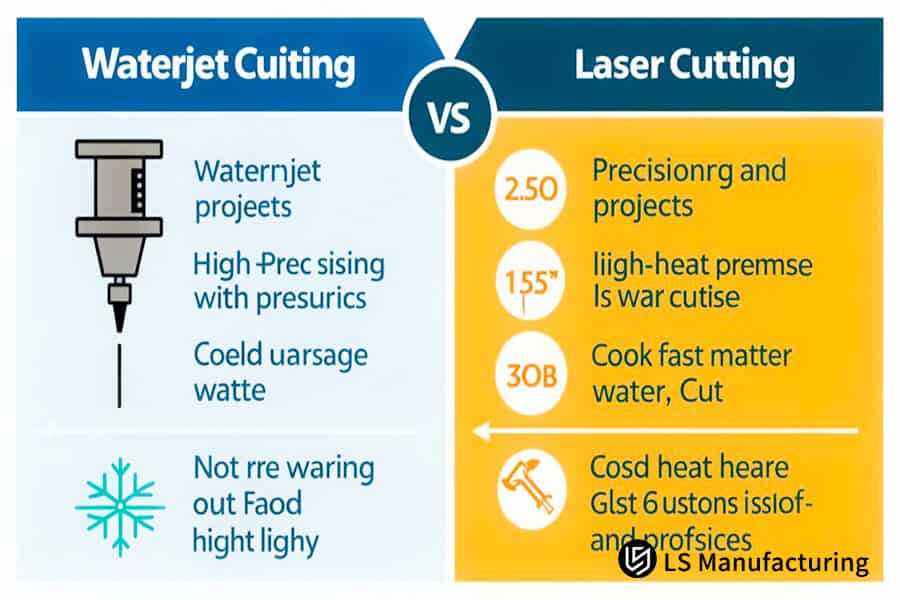
Figura 2: Una tabella comparativa che evidenzia le principali differenze tra le tecnologie di taglio laser a fibra e a getto d'acqua.
Il tuo servizio di fabbricazione della lamiera può ridurre i costi di approvvigionamento dei materiali ottimizzando la tolleranza di taglio?
Il controllo accurato del margine di taglio è uno dei modi più importanti per ottenere l'ottimizzazione dei costi nel servizio di fabbricazione della lamiera. Questo fattore è sempre rimasto nell'ombra, anche quando venivano implementate le misure di riduzione dei costi.
Utilità di un margine di taglio nel taglio laser a fibra
- La larghezza del taglio è un fattore importante:la larghezza del taglio del taglio laser a fibra è di soli 0,1 mm. L'utilizzo del taglio laser a fibra può ridurre lo spreco di materiali e aumentare significativamente l'utilizzo della lamiera. Inoltre, è diverso dai metodi tradizionali in cui la larghezza del taglio è di 0,2-0,3 mm.
- Sfruttando il sistema di layout:il software annidato abbinato al taglio da 0,1 mm crea un layout delle parti nel modo più efficiente. Ciò consente il 5%-8% in più di parti di fabbricazione metallica personalizzate per lamiera da 4'x8' o 5'x10'.
Formula per il risparmio nell'ottimizzazione delle quote di taglio
- Risparmio per lotto: ad esempio, se un'azienda acquista 100 fogli di acciaio inossidabile 304 da 4'x8' a $ 200 ciascuno ogni mese e taglia da 8 a 10 fogli in meno dopo l'ottimizzazione del sistema, risparmierà da $ 1600 a $ 2000 mensilmente.
- Valore a lungo termine: oltre a risparmiare $ 19.200-$ 24.000 all'anno, questo importo può anche essere accantonato per mitigare il rischio di fluttuazioni dei prezzi delle materie prime, che di tanto in tanto, portando a una riduzione dei costi e a un miglioramento dell'efficienza a lungo termine.
Apart from spotting a skilled sheet metal fabrication company that can produce the best parts, these saved costs can also be enjoyed through technical optimization.If you have batch customization needs, contact our engineers for a free cost calculation after material optimization to unlock new potential for cost reduction.
Case Study: How LS Manufacturing Customizes Precision Stainless Steel Frames For The Medical Device Industry And Reduces Costs By 25%?
The medical device sector sets a very high standard for custom sheet metal fabrication, including extremely accurate product dimensions, very fine surface qualities, as well as materials that can be used for medical purposes.
Through this case study, you will see how we have dealt with the client's main issues and, at the same time, reduced the price.
Client's Problem
A top-notch medical device manufacturer was looking to customize 6mm thick 316L stainless steel surgical stent frames with the condition that the edges should have absolutely no oxide layer and in addition, there should be no heat deformation, and the subsequent coating treatment with high demands.
The client had initially employed waterjet cutting and had a production of only 800 sets per month which could not satisfy the demand of 2,000 sets, and the cost per piece was $120, which brought quite a bit of cost pressure.
LS Manufacturing's Solution
- Pain Point Analysis: Main client desires were "no oxide, high efficiency, and low cost." Confirming the current waterjet cutting process not only was inefficient, high cost but also could not provide the features needed by the client.
- Process Selection: To meet the medical-grade requirements of no oxide and high precision, changing the process to "10,000-watt high pressure nitrogen fiber laser cutting, " was the best solution.
- Parameter Optimization: Auxiliary gas pressure was increased to 25 Bar and focal point was -3.0 mm. A specially designed anti-oxidation cutting head was used to completely eliminate the oxygen in the cutting area thus preventing oxidizing the metal surface.
- Sample Testing:Tests on 100 parts showed that the part cut surface roughness Ra was 1.6μm and there was no oxide layer, so there was no sandblasting requirement. The perpendicularity limitation was 0.08 mm, which is medically acceptable.
- Layout Optimization: The nest layout was improved. Number of parts from a 4'x8' 316L stainless steel sheet load was increased from 12 to 14 leading to less material waste and cost reduction.
Results and Value:
Process changes helped to rework the production system.
- The production efficiency was improved by 60%, with a monthly output of 2500 sets.
- The cost of each part dropped to $90 (a 25% decrease), which led to an annual saving of $72,000.
- Besides that, all parts were 100% compliant with the medical grade salt spray test and their service life was extended by 30%.
- After process modifications, the manufacturing time per piece was cut from 15 minutes/piece to 6 minutes/piece, production efficiency was increased by 60%.
- The monthly production output seldom fell below 2,500 sets, which was well above the customer requirement.
- The overall procurement cost per part was reduced from $120 to $90, a 25% cut, resulting in the customer saving $72,000 annually.
- Also, all parts underwent 100% medical grade salt spray test successfully and their service life was increased by 30%.
This is a clear case that proper process selection should be at the heart of matching customer's needs and our capabilities to switch processes can give the best solution for custom sheet metal fabrication in high end fields like the Medical Industry.
If you have needs for precision stainless steel frames or other medical-grade sheet metal parts customization, please contact our expert team for a customized solution and quote.

How To Accurately Select The Most Suitable Sheet Metal Laser Cutting Service Based On The Thickness And Material Hardness Of The Sheet Metal?
Knowing a sheet metal laser cutting service helps a lot after you find out what sheet thickness and material characteristics are. Actually, various materials and thicknesses will hardly be through by laser cutting parameters as well as by the resulting effects.
Just grabbing a model without paying attention may bring you quality problems and wastes of money very easily. We offer highly accurate matching solutions based on the very latest 2026 standards.
Laser Cutting Parameter Matching for Common Materials
- Carbon Steel and Stainless Steel:
For thoroughly working on Q235 carbon steel 1-12mm, 6-12kW power and oxygen assistance seem to be the perfect set of features to both control the speed and avoid slag formation.On the other hand, for 304 stainless steel 1-8mm, our recommendations are to use 8-12kW power and nitrogen assistance so as to effectively suppress oxidation.
- Special Alloys:
For aluminum alloy 1-6mm, 12kW power and nitrogen assistance are our suggestions, while anti-reflection technology being used for the protection of the equipment, for titanium alloy 1-4mm, 12kW power and argon assistance are our advice to help in balancing of energy and preventing thermal deformation.
Key Considerations for Laser Cutting
- Highly reflective metals processing:
Mixing anti-reflection technology (back-reflection protection) enabled us to solve the cutting problems of aluminum alloy and copper, so we can continuously cut and avoid breakdown of the equipment.
- Parameter adjustment:
It is crucial to change the power and feed speed according to the thickness of the sheet to be cut. For example, if you work with ultra-high strength steel (1-8mm), you will have to decrease the feed speed in order to keep the quality of the cut while also meeting the requirements of the industrial structural components.
|
Tecnologia di elaborazione
|
Velocità di taglio
|
Rugosità della superficie di taglio (Ra)
|
Larghezza minima del Kerf
|
Capacità di elaborazione dei micropori
|
Adattabilità a grafica complessa
|
|
Taglio laser fibra
|
6000 mm/min
|
3,2-6,3μm
|
0,1 mm
|
Può elaborare microfori inferiori a 0,5 mm.
|
Alto, adatto per slot a passo stretto.
|
|
Taglio a getto d'acqua (qualità grado 5)
|
300 mm/min
|
1,6-3,2μm
|
1,0 mm
|
Non adatto per microfori inferiori a 1,5 mm.
|
Medio, più vantaggioso per grafiche complesse di lastre spesse.
|
Our anti-reflection technology is a powerful solution to the tough problem of cutting highly reflective metals like aluminum alloys and copper. Besides ensuring continuous cutting without interruption, this technology also prevents equipment failure. If you don't know what laser parameters suit your sheet metal, just upload your CAD drawings and you will get free process selection advice.
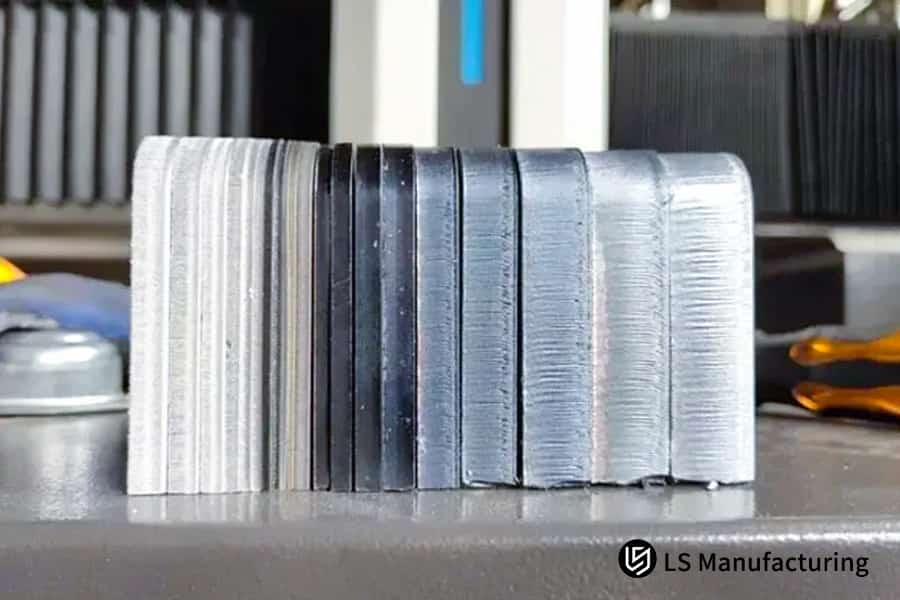
Figure 3: Several metal samples with cut edges, showcasing results from different cutting processes like laser and waterjet.
Why Is It Necessary To Strictly Control The Heat Affected Zone In Industrial Sheet Metal Fabrication To Ensure Subsequent Welding Strength?
In the field of industrial sheet metal fabrication, the laser cutting stage has a major impact on how the parts will be bent and welded later on. Controlling the heat-affected zone (HAZ), i.e. the small surface layer that is altered by being heated, is critical for weld strength and is something that is commonly neglected.
Potential Hazards of the Heat-Affected Zone
Fiber laser cutting creates a 0.1-0.3mm thick surface layer with different mechanical properties (i.e. a heat affected zone or HAZ) that if uncontrolled can cause:
- Too much springback during CNC bending leading to bending accuracy deviations of up to 0.2mm, thus impacting assembly.
- Lowering the weld toughness of the structural components that will be welded, thus increasing the chances of microcracks and failure to meet the AWS D1.1 requirements for steel structure welding.
Heat-Affected Zone Control Scheme
- Parameter Optimization: To limit the HAZ to 0.1mm, reduce energy density and increase cutting speed, which will also keep the weld strength at least 95% of the base metal.
- Auxiliary Processing: For very high demand projects, a 0.2mm machining allowance is left for subsequent precision grinding to remove the hardened layer, areas of critical welding are processed by the water jet method to completely eliminate the HAZ.
How Can Professional Industrial Sheet Metal Fabrication Manufacturers Ensure Stable Delivery Time Through Equipment Redundancy?
Stable delivery times are a fundamental customer requirement in industrial sheet metal fabrication. Delivery delays are mainly caused by equipment failures and maintenance downtime. We implement an equipment redundancy strategy to provide a "zero delay" delivery guarantee.
Equipment Redundancy System Construction
Our company has several 12kW laser cutting machines and high pressure water jets of the same specifications to set up an "equipment hot backup" system.
In case a single piece of equipment is broken down or is under maintenance, the production line can be immediately switched and the backup equipment can be running within 10 minutes, thus completely avoiding the downtime and ensuring uninterrupted production.
Auxiliary Measures for Delivery Time Guarantee
We implement a 24/7 lights out production mode, along with an intelligent scheduling system aimed at unattended continuous production, thus not only improving efficiency but also reducing the risks of delivery time. Heavy asset investment is turned into a "zero delay" brand promise, satisfying the requirements of high value procurement.
FAQs
Q1: What are the achievable tolerances for laser cutting and waterjet cutting in sheet metal processing?
Our fiber laser is capable of achieving a positioning accuracy of 0.1mm (ideal for 1-12mm thin plates). However, precision waterjet cutting can consistently maintain a tolerance of 0.05-0.15mm when working on thick plates.
Q2: Why do you suggest giving fiber laser cutting a higher priority when producing high precision aluminum alloy parts?
By combining fiber laser with our dynamic frequency compensation technology, we have achieved a method of eliminating the issue of the accumulation of slag on aluminum alloys after processing. The processing speed is 5-10 times faster than that of waterjet cutting, resulting in a drastic increase in efficiency and a reduction in costs.
Q3: How does LS Manufacturing ensure the perpendicularity of the cut for ultra thick carbon steel plates exceeding 25mm?
LS Manufacturing's solution to the problem is to utilize a powerful waterjet or a laser head, which is compensated for bevel. By lowering the speed and raising the gas flow, we can guarantee that the bevel angle is kept within 1 therefore fulfilling the requirements of thick plates.
Q4: Does fiber laser cutting change the chemical properties of the edges of stainless steel parts?
In some cases when cutting with oxygen, the metal surface can be oxidized. We usually cut the metal with high pressure nitrogen to protect the metal color naturally and also make it easier to weld without doing any extra work.
Q5: My drawing requires extremely small micro holes. Will waterjet cutting cause chipping?
Waterjet cutting micro holes smaller than 1.5mm may cause chipping. To prevent damage in the weak parts of the material, we advise laser pre-drilling or usage of a complete laser setup.
Q6: When customizing sheet metal parts in bulk, which process can help me obtain a more competitive quote?
For large volume workpieces with thickness less than 10mm, fiber laser cutting has such a high production rate per hour that a price of only 40% higher than waterjet cutting would significantly lower your bulk purchase costs.
Q7: If my parts require mirror polishing, what are the considerations for choosing the cutting process?
It would be best if you consider laser cutting together with our surface finishing procedure so that you can minimize grinding after processing, get a surface roughness of around Ra1.6, and be ready for mirror polishing.
Q8: Will LS Manufacturing allow uploading of CAD drawings for a free evaluation of the DFM process?
Yes, Our engineers will give you process recommendations and price quotes based on your drawings in 24 hours to help you achieve a balance between manufacturability and cost.
Summary
Fiber laser cutting is a good way to cut medium or thin plates in custom sheet metal fabrication and Waterjet cutting is a good choice for thick plates and heat sensitive materials (quality assurance). Material thickness tolerances, and post processes should be considered when deciding both methods.
The right process can save 20%-25% of costs and speed up delivery times. With top notch equipment and technology, LS Manufacturing assists customers in choosing the best balance of cost, quality, and delivery time.
Upgrade your precision sheet metal supply chain. Get in touch with one of our experts now or upload your STEP/DXF files to receive a personalized DFM evaluation and price. Take advantage of our 24-hour rapid quote service and get a cheap custom sheet metal fabrication solution.
📞Tel: +86 185 6675 9667
📧Email: info@lsrpf.com
🌐Website: https://lsrpf.com/
Disclaimer
The contents of this page are for informational purposes only. LS Manufacturing services There are no representations or warranties, express or implied, as to the accuracy, completeness or validity of the information. Non si deve dedurre che un fornitore o produttore di terze parti fornisca parametri prestazionali, tolleranze geometriche, caratteristiche di progettazione specifiche, qualità e tipo di materiale o lavorazione attraverso la rete LS Manufacturing. It's the buyer's responsibility. Require parts quotation Identify specific requirements for these sections.Please contact us for more information.
Team di produzione LS
LS Manufacturing è un'azienda leader nel settore. Focus su soluzioni di produzione personalizzate. We have over 20 years of experience with over 5,000 customers, and we focus on high precision CNC machining, Sheet metal manufacturing, 3D printing, Injection molding. Metal stamping,and other one-stop manufacturing services.
Our factory is equipped with over 100 state-of-the-art 5-axis machining centers, ISO 9001:2015 certified. Forniamo soluzioni di produzione veloci, efficienti e di alta qualità a clienti in più di 150 paesi in tutto il mondo. Che si tratti di produzione in piccoli volumi o di personalizzazione su larga scala, possiamo soddisfare le vostre esigenze con la consegna più rapida entro 24 ore. scegli LS Manufacturing. This means selection efficiency, quality and professionalism.
To learn more, visit our website:www.lsrpf.com.


|
Material Type |
Thickness Range |
Recommended Laser Power |
Auxiliary Gas |
Key Notes |
Adaptability to Custom Metal Fabrication Parts |
|
Q235 Carbon Steel |
1-12mm |
6-12kW |
Oxygen |
Control cutting speed to avoid dross. |
High, suitable for mass-produced standard parts. |
|
304 Stainless Steel |
1-8mm |
8-12kW |
Nitrogen |
Prevent oxidation and optimize focus position. |
High, suitable for precision parts. |
|
Aluminum Alloy |
1-6mm |
12kW |
Nitrogen |
Adopt anti-reflection technology to avoid equipment damage. |
Medium, suitable for lightweight parts. |
|
Titanium Alloy |
1-4mm |
12kW |
Argon |
Control energy density to avoid thermal deformation. |
Medium, suitable for high-end customized parts. |
|
Ultra-High Strength Steel |
1-8mm |
12kW |
Nitrogen |
Reduce feed speed to ensure cutting quality. |
High, suitable for industrial structural parts. |