English



Robotics sheet metal fabrication plays an essential role in industrial robots, AMRs, and medical devices. It is the main factor that defines the structural stability and operational efficiency of a robot.
It has been said that half of a robot's performance is determined by the quality of its chassis, so advanced sheet metal fabrication methods are undoubtedly the way to go for manufacturing high performance chassis.
With more and more applications of robots, OEMs are gravitating to lightweight, precise, and durable chassis. OEMs need to pay a lot of attention to choosing the fabrication services and partners that will help them stay competitive in the market.
Why Does Robotics Chassis Fabric Require Special Processes?
The robot chassis support the main components and should be light as well as accurate, so some specially targeted processes on them are unavoidable.
Lightweight Trend
Lightweight robot chassis design will be a key aspect of robot R&D for the coming years.
Making chassis structures more efficient and using novel lightweight and high strength materials are very powerful ways of reducing the overall weight, a battery that lasts longer and also a bigger payload capacity.
Industrial AMR chassis with this design can get a 20%-30% longer battery life and a 15% higher payload.
Precision Requirements
Precision sheet metal for robotics is a key factor in robot accuracy. For major components like LiDAR and camera mounts, micrometer accuracy level (0.05mm to 0.1mm) is needed. High precision sheet metal fabrication can provide the means for an accurate sensor installation, which is the basis for proper navigation and operation.
Materials Science
Aluminum robotics chassis manufacturers have entered the mainstream market mainly because aluminum alloys possess superior strength-to-weight ratios.
5052 and 6061 aluminum alloys have one third the weight of steel but their strength is comparable to steel, which means they can meet the goals for lightweighting and stability at the same time. Worldwide more than 80% of robot chassis are made of aluminum alloys.
- Note: The ISO 13485:2016 standard clearly states that manufacturing of medical robot chassis shall be at the same time highly precise and lightweight.
Top Supplier Selection Criteria
When selecting a proper robotics sheet metal fabrication supplier, you should thoroughly assess the suppliers from three main aspects: technology, R&D, and scale, to guarantee that the products you get are of high quality and delivered regularly.
- Technical abilities:
It is necessary that you check whether the supplier has key sheet metal fabrication service such as laser cutting, five axis bending, and robotic arm welding. These methods are necessary for the accurate and durable make of the chassis.
Laser cutting precision should be 0.03mm, and the five axis bending angle tolerance should be kept within 0.5.
- R&D Assistance:
Your next step to find out if the supply company provides rapid prototyping for robot chassis services. This enables you to swiftly modify your design solutions. A reliable vendor can make prototype delivery in 3-7 working days, which will reduce your research and development turnover time.
- OEM Production Scale:
You will be very concerned with the reliability of the OEM robotics metal parts service when you place large volume orders.IATF 16949:2016 stresses that tolerances should be consistent in mass production.
Find a supplier who is able to manufacture on a large scale, is able to guarantee the same tolerances and surface finishes throughout multiple batches, and is capable of delivering orders over 1,000 pieces on time.
Unsure if the supplier meets your needs? You can download the supplier evaluation form, check each item against the criteria, and quickly filter out high quality partners that meet your needs.
In Depth Analysis: Top 6 Global Leading Sheet Metal Fabrication Service Suppliers
Quick Comparison: Top 6 Robotics Sheet Metal Fabrication Partners
|
Supplier Name
|
Core Keyword Area
|
Core Advantages (Pros)
|
Relative Limitations (Cons)
|
Most Suitable Stage
|
Prototype Delivery Cycle
|
Batch Quotation (USD per unit)
|
|
LS Manufacturing
|
Custom Robotics Chassis
|
Vertical field expert, providing DFM weight reduction optimization and precision tolerance control.
|
The international brand awareness is growing rapidly.
|
One-stop service from prototype to medium and large batch production.
|
3-7 working days
|
80-150
|
|
ProtoLabs
|
Rapid Prototyping
|
Extremely fast delivery, shipping within 24 hours, and a fully automated online quotation system.
|
Extremely high price, and limited by automated processing equipment for complex customized structures.
|
Early prototype verification (EVT)
|
Within 24 hours
|
200-350
|
|
Xometry
|
OEM Metal Parts
|
Extensive resource integration, global processing network, enabling one-stop procurement of multiple processes.
|
Middleman model, making it difficult to control the consistency of quality.
|
Diversified scattered parts procurement
|
5-10 working days
|
100-200
|
|
Fictiv
|
Precision Sheet Metal
|
Digital workflow, highly transparent supply chain management and automatic DFM feedback.
|
Weak on-site production control capability (not a direct factory).
|
Agile development stage
|
4-8 working days
|
120-220
|
|
Maysteel
|
OEM Robotics Service
|
Large-scale production capacity, specialized in ultra-large industrial cabinets and chassis orders.
|
Low flexibility, insufficient support for small batches and rapid iteration.
|
Large-scale mass production (MP)
|
10-15 working days
|
60-120
|
|
Stratasys
|
Custom Chassis
|
Hybrid multi-process manufacturing, capable of combining 3D printed parts with sheet metal parts, suitable for special robots.
|
Low cost-effectiveness for pure sheet metal processing, and relatively scattered professionalism.
|
Scientific research and special customization
|
6-10 working days
|
180-300
|
1. LS Manufacturing - Experts in Balancing Precision and Customization
Selecting LS Manufacturing means that you get a vertical service focused on robotics sheet metal fabrication especially custom robotics chassis fabrication.We provide flexible manufacturing services from 1 to 1,000 units to meet your needs at different phases.
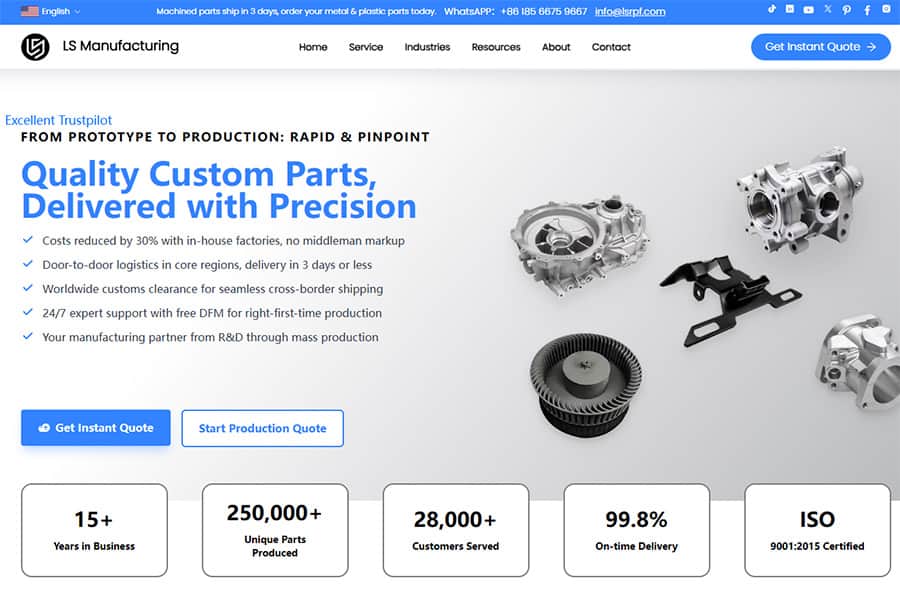
Figure 1: The homepage of LS Manufacturing, showcasing various fabricated metal parts on a light-gray background. The page highlights services like rapid prototyping, precision delivery, and features company statistics.
Main Benefits:
- Extensive Customization Support: You'll be given custom robot chassis structure optimization plans based on the exact shape and load of your robot.
- Superior Accuracy Assurance: For sensor brackets and precision transmission components, you can achieve precision sheet metal for robotics processes that are superior to industry standards, with tolerances controlled within ± 0.05mm.
- Fast Response Service: At the rapid prototyping for robot chassis stage, you will get detailed DFM engineering consultation, which will allow you to reach 15%-25% weight reduction goal before manufacturing.
Position:
LS Manufacturing is the go-to company for "high tech responsiveness + high cost effectiveness."By partnering with us, you can adequately manage your R&D and production expenditures while guaranteeing product accuracy.
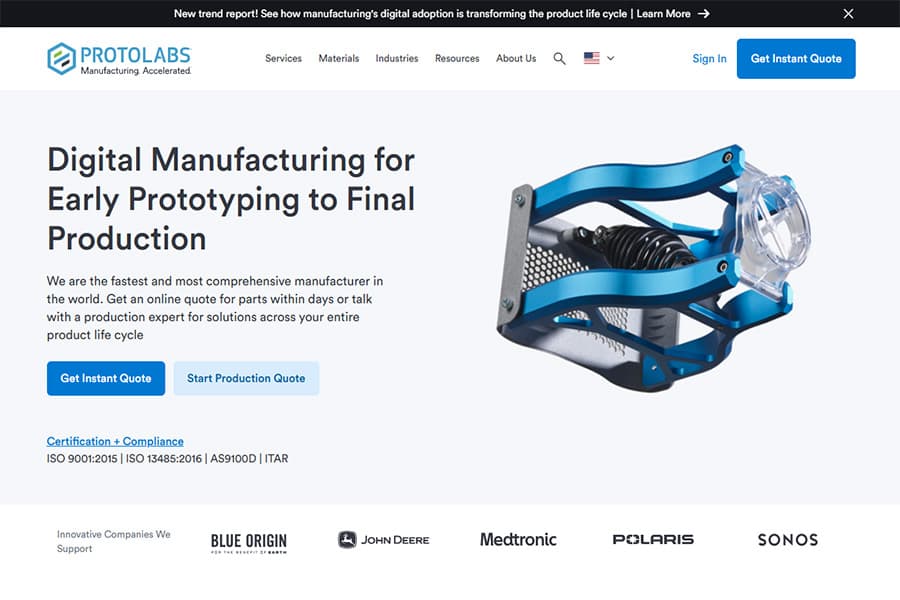
2. Proto Labs (USA) - The Ultimate Rapid Prototyping for Robot Chassis
Advantages:
This system is crafted to get your work done in a flash. Indeed, it can be paired with a totally automated online quotation system, hence you can get your orders delivered 24 hours and if you are working on very urgent projects, you can do the initial prototype verification with great ease.
Quite simply, it means that if your EVT-stage prototype is in a great hurry, by going for it, you will be able to verify the speed of the product in the market and also you will have less R&D.
Disadvantages:
It is the most expensive among all other options. In fact, it costs more than double or triple the industry average, with a single prototype costing around $200 to $350.
Also, the automated production machinery utilized is quite minimal for the realm of complicated custom robotics chassis fabrication and it hardly has the capability to fulfill the highly customized structural demands.
Comparison with LS Manufacturing:
It can produce products very quickly, on the other hand, LS Manufacturing can fulfill your structural needs that are complex and production expenses can be controlled.
If you are at the prototype stage and need to verify urgently, you should go for it, however, if you are looking to balance customization and cost, LS Manufacturing will be more in line with your requirements.
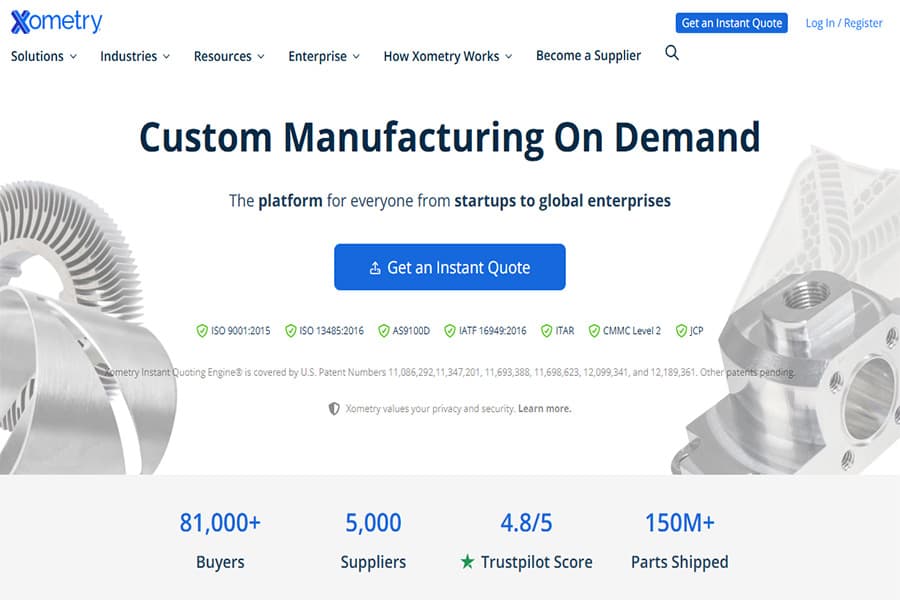
3. Xometry (US/Global) - All-round OEM robotics metal parts service network
Advantages:
Being platform based, it combines the production potential of over 4,000 manufacturers globally, almost all types of metal parts are covereds by these >4,000 manufacturing partners worldwide.
It offers a multi process or single process procurement at one stop shop which is a very good fit for those who have diversified component procurement needs.
Disadvantages:
The fact that it is an intermediary platform, makes it very hard to have high quality control that is consistent and stable. Different partners with different skill levels and no direct communication between you and the actual processors make the feedback process less efficient.
Comparing with LS Manufacturing:
It is more an aggregator of resources while LS Manufacturing is a direct manufacturer, which implies that the latter one can provide you better DFM technical support and quality traceability services. Furthermore, with LS Manufacturing you can have direct contact with the engineers for a rapid solution of the production problems.
Do you have bulk OEM parts procurement needs? Submit detailed requirements to receive free cost estimates and quickly compare quotes and delivery times from different suppliers to make a more suitable choice.
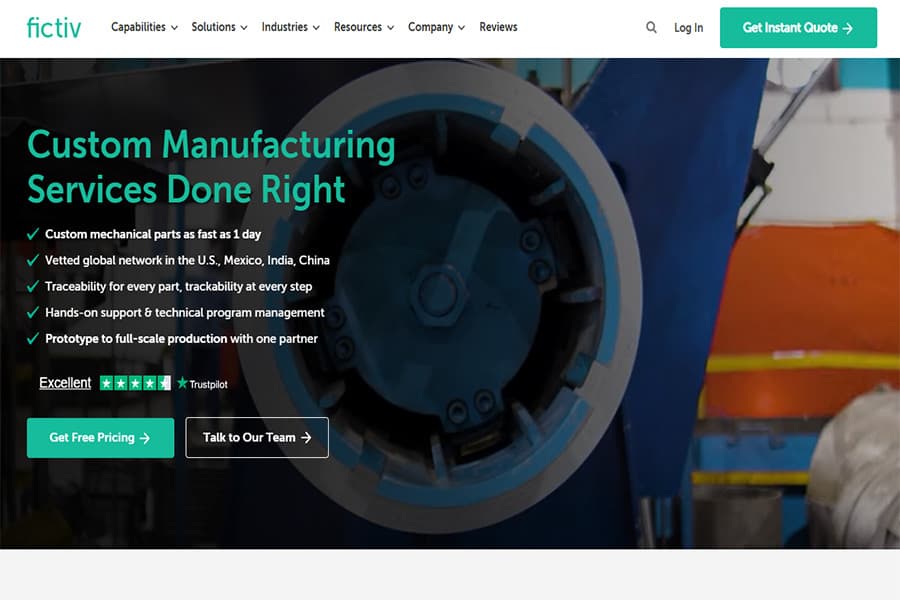
4. Fictiv (USA/Southeast Asia) - Agile Precision Sheet Metal for Robotics Service Provider
Pros:
It features a great DFM feedback loop that can automatically generate manufacturability design recommendations. With the highly transparent supply chain tracking, you can even check the production status at any time, thus making it fit for your fast development cycle.
Cons:
It uses a subcontractor model and does not own any factories, which means that for your highly customized robot chassis needs, production control on site will be much weaker. Hence, it will be really tough to ensure the precision and consistency necessary for complex structures.
Comparison with LS Manufacturing:
It is digitally more advanced while LS Manufacturing excels at deep process and material optimization for chassis structural components, which especially fits your requirement for lightweight and high precision chassis.
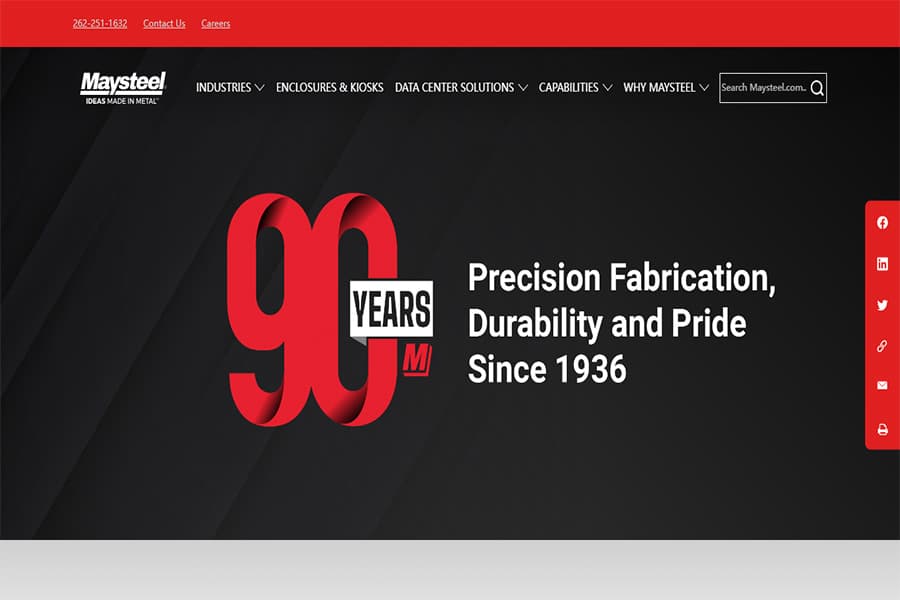
5. Maysteel (USA) - Traditional Large Scale OEM Giant
Advantages:
With a long industrial history, it has the capacity to accommodate large volume orders of tens of thousands of cabinets and chassis. The company's huge production capabilities are excellent, and reliability of delivery is very high. Hence, it fits your requirements for the mass production (MP) stage.
Disadvantages:
The drawback is that it takes time to respond and 10-15 business days are needed to deliver prototype samples. Such a long period cannot satisfy your fast iteration requirement of the rapid prototyping stage, and its low flexibility hardly adjusts to your small batch and customized orders dilemmas.
Comparison with LS Manufacturing:
This company is ideal for mature, little changing product models, whereas on the other hand, LS Manufacturing is more versatile, enabling you to have a one stop transition from R&D prototypes to medium-to-large-scale production, thus catering to your production needs at different stages timely.
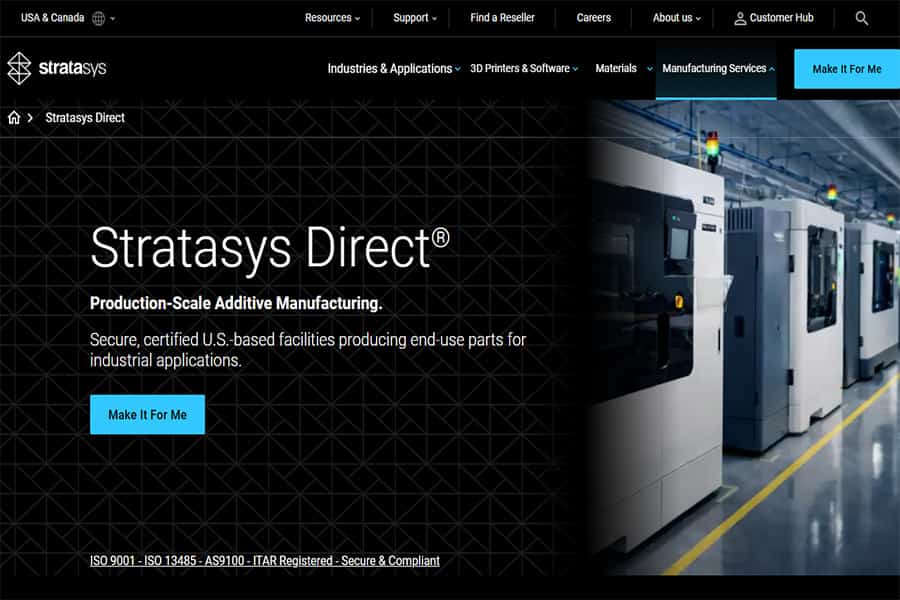
6. Stratasys (Direct Manufacturing) - High-End Custom Parts Expert
Pros:
They can provide multi process hybrid manufacturing services, which means you can get 3D printed parts combined with sheet metal parts so that you can accomplish integrated manufacturing of complex structures, which will be quite in line with your research and special robot customization needs.
Cons:
The company's pure sheet metal processing will be very costly, as the single piece prices are between $180-$300. Besides that, sheet metal processing is quite fragmented, so it cannot provide the specialized robot chassis services like LS Manufacturing can offer
Comparison with LS Manufacturing:
This company suits your experimental and special customization needs better, on the other hand, As a professional aluminum robotics chassis manufacturer, LS Manufacturing can provide you with more competitive industrial scale services and cost control, which will be appropriate for your mass production robot needs.
Vertical Industry Solutions: How To Optimize Your Lightweight Robot Chassis Design Procurement?
Refining your lightweight robot chassis design procurement is a great way for you to cut down on your expenses, enhance your products performance, and ramp up your delivery capability. Below are three main solutions that directly relate to your procurement wishes.
Optimizing Lightweight Materials and Structural Design
As your aluminum robotics chassis manufacturer, LS Manufacturing is able to offer you robot chassis design lightness evaluation services to give you a good start in your procurement.
You may decide on simply high strength aluminum alloys (like 6061-T6) combined with integrated bending technology to lessen the number of parts while still getting the best balance between rigidity and price. Our expert guidance will help you steer clear of procurement problems.
If you use integrated bending technology instead of welding for your standard chassis, youll be able to not only halve the number of your parts but also cut down your assembly time by 40% and material costs by 25%. So, it means that you are optimized both in performance and budget.
Implement a Tiered Procurement Strategy for Precision Tolerances
Considering the character of the precision sheet metal for robotics, ISO 10218-1:2025 stipulates that robot chassis need to be of precise tolerances in order to comply with the standard.
Instead of experiencing the cost premium of "high precision on all drawings", you can work with LS Manufacturing engineers to focus precision tolerances only on the locations of sensor mounting while retaining the 0.2mm standard tolerance for the non critical frames.
This will be a good practice to avoid expensive over engineering of the designs.
The advantages of this tiered approach are lessened machining efforts and faster manufacturing turnaround. Data reveal that the method can cut your chassis machining expenses by 15%-20% and shorten your production lead times by over 20%.
Integrate the Supply Chain from Prototype to Mass Production
Rapid prototyping for robot chassis can be a great tool to do Design for Manufacturability (DFM) checking at the R&D stage, thereby lowering production risks.
Afterwards, OEM robotics metal parts service can help you with surface treatment and pre-assembly integration, which will help you avoid supplier communication gaps and lower your communication costs.
Another way to put it is that this approach links the whole chain of chassis design, processing, and surface treatment through one system, dispensing with the old practice of coordinating many different suppliers. Just like a well organized assembly line, it steers clear of breaks and inefficiencies.
Delegating chassis processing, anodizing, and pre-assembly to one single supplier may lead to 30% time saving in integration, 25% increase in delivery efficiency, and highly consistent product quality.
Need a customized chassis procurement optimization plan? Submit your robot chassis parameters to receive one-on-one professional consultation and precisely address your procurement pain points.
How To Choose The Right Partner For Robotic Sheet Metal Fabrication?
Picking the right robotics sheet metal fabrication partner is critical for you since it not only affects the standard of the chassis you require but also how smoothly the project will run. Three core aspects below can guide you in making the right decision.
Evaluating the Technical Expertise and Customization Capability
As you pick a partner, make sure you check their track record in producing custom robotics chassis. Top notch suppliers should be equipped with core sheet metal fabrication service like laser cutting and CNC bending, and have considerable DFM (Design for Manufacturing) knowledge to handle your customization needs effectively.
Based on the internal space and load distribution of your robot, they should be able to offer you ideas for the structural optimization that can help you reduce your manufacturing risks.
Concentrate on examining the tolerance control and the lightweighting results of the supplier's chassis samples to see if they meet your requirements.
Evaluating Prototyping Efficiency and Production Consistency
You would want your potential partner to be able to provide quick and reliable rapid prototyping for robot chassis services so that your development period could be significantly shortened.
Upon mass production, their OEM robotics metal parts service should be capable of delivering identical tolerances and surface finishes in different batches so as to ensure production stability.
One of the ways to find out a supplier's prototyping speed and accuracy is by trial sampling. Past batch order delivery records will tell you whether the supplier can meet your mass production requirements.
Check Certifications and Quality Assurance Systems
The requirements for component reliability in the robotics industry are very high. It is necessary to check whether your supplier is certified ISO 9001 or above and whether they have test equipment such as coordinate measuring machine (CMM) and pressure testing which help ensure that the chassis you receive will operate stably for a long time.
|
Certification Type
|
Applicable Scenarios
|
Core Function
|
Recommendation Level
|
|
ISO 9001
|
General industrial robots
|
Ensure standardized production processes and controllable quality.
|
Essential
|
|
ISO 13485
|
Medical robots
|
Meet the high precision and safety requirements of medical equipment.
|
Essential
|
|
IATF 16949
|
Automotive robots
|
Adapt to the strict quality standards of the automotive industry.
|
Recommended
|
Have you decided on your cooperation direction? Submit your chassis design drawings to get a free quote and quickly advance your project.
FAQs
Q1: Why is aluminum alloy the preferred material for robot chassis manufacturing?
Working with an aluminum robotics chassis manufacturer is the best way to get a high strength-to-weight ratio of the material. Aluminum alloy contributes to a lighter chassis, at the same time, the chassis will be stiff enough, which is very important in the aspects of a robot's payload capacity enhancement and battery life increase.
Q2: What level of precision can your sheet metal fabrication service achieve?
Being a precision sheet metal supplier to the robotics industry, we use advanced laser cutting and CNC bending technology. Our process allows for the tolerance control of critical components within 0.05mm to 0.1mm, which is in line with your precision requirement.
Q3: How long does custom robotics chassis fabrication typically take?
It depends on what kind of and how much customization you want. Typically, LS Manufacturing's rapid prototyping for a robot chassis service delivers samples to R&D within 3-7 business days.
Q4: How can I optimize the design to reduce the procurement cost of lightweight chassis?
Simplifying the design is the first step in reducing procurement costs of a lightweight chassis, such as with fewer parts, less welding, and efficient integration of bending processes are all weight reduction measures and will also help lower your processing and materials costs.
Q5: Do you support the switch from small batch prototyping to large scale OEM production?
Absolutely LS Manufacturing's OEM robots metal parts manufacturing is a one stop shop that helps you smoothly switch from producing only single prototypes to manufacturing in large quantities while keeping the quality and process standards of the product.
Q6: What surface treatments are typically recommended for robot sheet metal parts?
Anodizing, powder coating, and antistatic coatings are the main surface treatment options that come to mind. Not only do these treatments help make the products more durable but, at the same time, they protect the internal precision electronic components from being affected by the environment.
Q7: How to balance heat dissipation and strength when designing a robot chassis?
At the time of robotics sheet metal fabrication we utilize DFM analysis to locate areas where heat dissipation holes can be introduced without affecting the mechanical properties besides we quite effectively combine the properties of metals for passive heat dissipation by thermal conduction and the use of ribs as reinforcements at stress points, thus stabilizing the structure.
Q8: Why should I choose LS Manufacturing instead of a regular sheet metal factory?
The experience that regular sheet metal factories have in the robotics industry is not enough to help them meet the core needs of your business. By contrast, LS Manufacturing not only makes robot chassis but also focuses on sensor integration, lightweight design, and precise tolerances to provide you with a complete end-to-end industry grade solution.
Summary
Robotics sheet metal fabrication is the main pillar of making high performance robots. Top notch lightweight robot chassis design can help you increase robot endurance, accuracy, and also make the robot more competitive.
Besides, such designs are crucial to cost reduction. As robot applications keep getting more complicated, it is more desirable to choose a partner who not only understands deeply the challenges of the industry but also provides a one stop support service other than simply a manufacturing factory.
You are advised to get DFM (Design for Manufacturing) advice during the very first design stage so that manufacturing risks can be avoided.
Begin your lightweight innovation journey today! Submit your chassis design files to us and try out our rapid prototyping for robot chassis service to rapidly convert your ideas into high performance physical chassis and help your product stand out.

📞Tel: +86 185 6675 9667
📧Email: info@lsrpf.com
🌐Website: https://lsrpf.com/
Disclaimer
The contents of this page are for informational purposes only. LS Manufacturing services There are no representations or warranties, express or implied, as to the accuracy, completeness or validity of the information. It should not be inferred that a third-party supplier or manufacturer will provide performance parameters, geometric tolerances, specific design characteristics, material quality and type or workmanship through the LS Manufacturing network. It's the buyer's responsibility. Require parts quotation Identify specific requirements for these sections.Please contact us for more information.
LS Manufacturing Team
LS Manufacturing is an industry-leading company. Focus on custom manufacturing solutions. We have over 20 years of experience with over 5,000 customers, and we focus on high precision CNC machining, Sheet metal manufacturing, 3D printing, Injection molding. Metal stamping,and other one-stop manufacturing services.
Our factory is equipped with over 100 state-of-the-art 5-axis machining centers, ISO 9001:2015 certified. We provide fast, efficient and high-quality manufacturing solutions to customers in more than 150 countries around the world. Whether it is small volume production or large-scale customization, we can meet your needs with the fastest delivery within 24 hours. choose LS Manufacturing. This means selection efficiency, quality and professionalism.
To learn more, visit our website:www.lsrpf.com.