English



Sheet metal fabrication services always pose a challenge to engineers in striking a balance between the repetition of performance and the failure of the material used in the fabrication. Carbon steel, which is inexpensive, starts rusting after six months, while the indiscriminate selection of stainless steel results in a cost increase of 30-50%. However, the parts also undergo severe deformation in mass production due to improper bend allowance.
Our solution to the problem is our in-depth DFM support that ensures a balance between cost and stability in intricate shapes, backed by the results of thousands of precise parts. Our solution also includes unique yield strength comparisons, cost analysis at different conditions, and a technical pathway that ensures dimensional accuracy to ±0.1mm by simulating cuts. Cost-effectiveness sheet metal fabrication starts with the understanding of the interaction between the metal and the process used in the fabrication. Here is our professional audit guide:
Sheet Metal Material Selection: Quick-Reference Guide
| Material | Key Properties & Best Use |
| Mild Steel (e.g., 1018) | Low cost, high strength, easy to weld and shape; coating required for corrosion resistance. Suitable for frames, brackets, and enclosures. |
| Stainless Steel (304/316) | Excellent corrosion resistance, high strength, and hygiene; more difficult to shape, more expensive. Suitable for food service, medical, marine, and architectural industries. |
| Aluminum (5052/6061) | Low weight, good corrosion resistance, easy to shape; lower strength than steel. Suitable for enclosures, heat sinks, aerospace, and transportation industries. |
| Galvanized Steel | Mild steel coated with zinc for corrosion resistance; zinc coating may be compromised by forming and/or welding. Suitable for outdoor enclosures, ductwork, and HVAC equipment. |
| Copper & Brass | Excellent electrical and thermal conductivity, antimicrobial properties; softer, more expensive. Suitable for electrical components, decorative trim, and heat exchangers. |
| Our Advisory Process | We assess your part's purpose, conditions, cost, and manufacturing process to determine the best possible material for your project. |
| Result: Optimized Performance | Confidence that your part will perform well in its environment. This could mean strength, resistance to corrosion, weight savings, or conductivity. |
| Result: Controlled Project Cost | Balances cost of materials with ease of fabrication and life maintenance to optimize sheet metal fabrication cost for your project. |
We help you solve the problem of selecting the right material for your part by identifying the best metal for your custom part. Our expertise in balancing properties of materials, fabrication, environmental factors, and cost ensures that your part will perform well and last longer. This is crucial in ensuring that your final product is a success.
Why Trust This Guide? Practical Experience From LS Manufacturing Experts
There are hundreds of articles on sheet metal fabrication services available online. What sets this one apart? Well, for starters, we're not theoreticians. We're fabricators. Our workplace is a real battlefield, where we fight daily against difficult materials, tight tolerances, and intricate shapes. What we're about to give you isn't theory. It's reality.
Materials selection is our bread and butter. For a bracket that goes into an airplane, it's a matter of life and death. For a medical device housing, it's a matter of biocompatibility. Over the past decade, shipping thousands of parts has given us a reality check on what works. What's the best material for resisting fatigue in a bracket that's subject to stress? What's the best bend radius for springback in a high-strength steel part?
Every one of these tips has been developed through direct experience—and a few early, expensive failures. We've used sources like NIST Materials Data and even information found on Wikipedia to inform our choices. Our philosophy is simple: to share our own experience and insights that we currently rely upon, to help you make informed and optimal decisions for your custom parts. Let’s build it right.
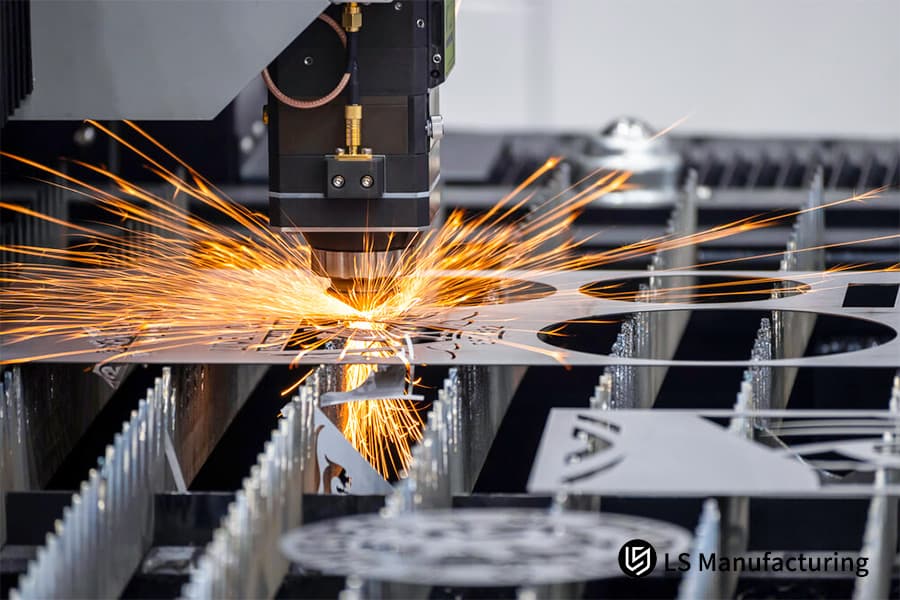
Figure 1: Cutting 304 stainless steel sheets with a fiber laser for architectural ventilation grille panels.
Why Is Selecting The Right Material Critical For Precision Sheet Metal Fabrication Services Efficiency?
Material selection is directly related to the feasibility, cost, and efficiency of production. A good material selection will balance performance and machinability, ensuring that delays and cost blowouts are not caused by poor machinability and unforeseen material properties. The foundation of efficient precision sheet metal fabrication services is data-driven material qualification:
Quantifying Machinability for Cost Control
Our basis for tooling and cycle time predictions are actual data rather than tables. For example, the optimal speed for cutting Stainless Steel 304 using a laser cutter (Vc) is 40% slower than the optimal speed for cutting Aluminum 6061 for the same material thickness. This has a direct impact on gas usage and machine time. We calculate this in advance to accurately provide fixed-cost bids for sheet metal fabrication services.
Predicting and Compensating for Material Behavior
The intrinsic nature of a material, including springback and work hardening, is the bane of the metal fabrication industry. High-strength steel, in particular, has significant springback, which if not compensated for in the sheet metal fabrication program, will result in parts not meeting angle tolerances. Our process uses actual SPC data from similar jobs to pre-compensate CNC programs for the CNC press brake. Predicting and compensating for the intrinsic nature of the material is a key part of our material efficiency approach, which can reduce the initial labor required to set up the machine by as much as 15%.
Extending Tool Life Through Strategic Selection
In addition, the cost of tool wear is significant. Materials with higher abrasiveness and toughness levels, such as certain grades of alloy steels, can cause tools to wear 300% faster than mild steel. We examine the interaction of the stock material and the tooling geometry and can offer recommendations for materials that balance performance with economy in the tools. This ensures there are no interruptions in production and ensures the quality of the entire part batch.
Mitigating Secondary Processing Risks
The choice of the original material can have a significant impact on the subsequent operations in the process. A poor surface finish may require costly polishing operations; an unstable alloy may cause distortion in the welding process. Our DFM analysis examines the entire process flow. Selecting a more stable temper or a better surface condition from the mill, although slightly more costly in the original material, can often save the cost of a secondary process and reduce the overall part's lead time by days.
This document goes beyond the realm of general advice by offering the specifics of the applied engineering that makes this possible. Our competitive advantage is the way in which potential areas of failure, such as tooling wear and rework of parts, are utilized as predictable and optimal outcomes. We don't simply process metal; we engineer the entire sheet metal fabrication process for guaranteed material efficiency and first-pass success.

How Can A Professional Sheet Metal Material Selection Guide Optimize Your Project Budget?
Effective budget management in manufacturing is not simply a matter of reducing costs; rather, it is the result of effective specification. A professional sheet metal material selection guide offers the analytical tools necessary to correlate the properties of materials with the demands of the application. This document offers the specifics of how such decisions made in the sheet metal design phase can be correlated with the bottom-line results.
| Decision Scenario | Material Comparison & Key Data | Direct Cost Impact | Primary Application Insight |
| Corrosion Protection | Galvanized Steel (SECC) vs. Cold Rolled Steel (SPCC): Provides corrosion resistance of 240h+ in salt spray tests, compared to SPCC's 120h. | Recommendation of SPCC for interior environments without harsh conditions translates to a saving of about 15% in cost, compared to specifying more expensive SECC. | Do not over-spend on a coating that may never be fully utilized in its performance. |
| Structural Efficiency | 1.2mm High Strength Stainless Steel vs. 2.0mm Mild Carbon Steel: Provides equivalent strength in a lighter build. | Reduces raw material weight by about 40%, resulting in a saving of about 10% in total part cost. | Take advantage of higher yield strength to optimize the sheet metal fabrication process. |
| Total Cost of Ownership (TCO) | Pre-finished Aluminium vs. Painting after fabrication: Eliminates the cost of painting. | While it is more expensive on a per-kg basis, it provides a saving of 100% in finishing costs, resulting in a saving of 3 to 5 days in lead times. | Consider integrated solutions that minimize parts to be handled in custom sheet metal fabrication services. |
| Manufacturability & Yield | Laser-Grade Steel vs. Standard Hot-Rolled: Offers consistent surface quality and flatness. | Reduces laser cutting slag and secondary deburring by up to 25%. | Offers component grades optimized for sheet metal component performance to eliminate costly hidden labor. |
This guide equips the reader with exacting, justifiable sheet metal fabrication material selections that address the most costly areas of a project: raw material weight, secondary processing, and yield. We offer the information and TCO analysis necessary to replace assumption-based decisions with quantified budget optimization. For projects where performance, quality, and cost efficiency are not negotiable, the level of analysis in this guide is the decisive factor in delivering a competitive and robust manufacturing outcome.
Which Factors Influence The Choice Of Sheet Metal Fabrication Materials For Aerospace Applications?
Space-grade parts require an uncompromising combination of minimum weight and maximum reliability, where the choice of materials is a determinant of structural integrity. Beyond choosing the right grade of materials, ensuring that it is genuine and controlling the production process to retain crucial properties is of utmost importance. This document outlines the procedural and technical controls that convert raw sheet metal fabrication materials into flight parts:
Ensuring Absolute Material Traceability and Pedigree
- Heat Number Verification: Verification of all mill certificates against purchase orders for absolute traceability.
- Process History Audit: Verification of supplier documentation for their thermal stress relief cycle prior to machining.
- Quality Integration: This creates a chain of custody for all of our custom metal fabrication services that is IATF16949 compliant.
Controlling Thermal Input to Preserve Metallurgy
- HAZ Minimization: Laser parameters are adjusted to ensure the Heat Affected Zone is minimized to <= 0.3mm in 7075 Aluminum.
- Distortion Management: Qualified pulsed welding processes, as well as heat treatment, are utilized in titanium assemblies.
- Outcome: The intrinsic qualities of the sheet metal fabrication materials are preserved as intended.
Synthesizing Design with Precision Manufacturing
- Performance-Based Selection: Titanium alloys are suggested for stiffness-critical brackets, as validated by FEA.
- Process-Specific Validation: Forming operations for complex aerospace sheet metal parts are validated via tooling tests.
- Goal: To ensure that the strength-to-weight ratios required by aerospace standards are met without compromise.
This methodology identifies the selection of materials as a system of verification, special processing, and validation. It is our documented expertise that allows for the satisfaction of rigorous aerospace standards, where each decision in precision metal fabrication is a promise of performance in safety-critical applications.
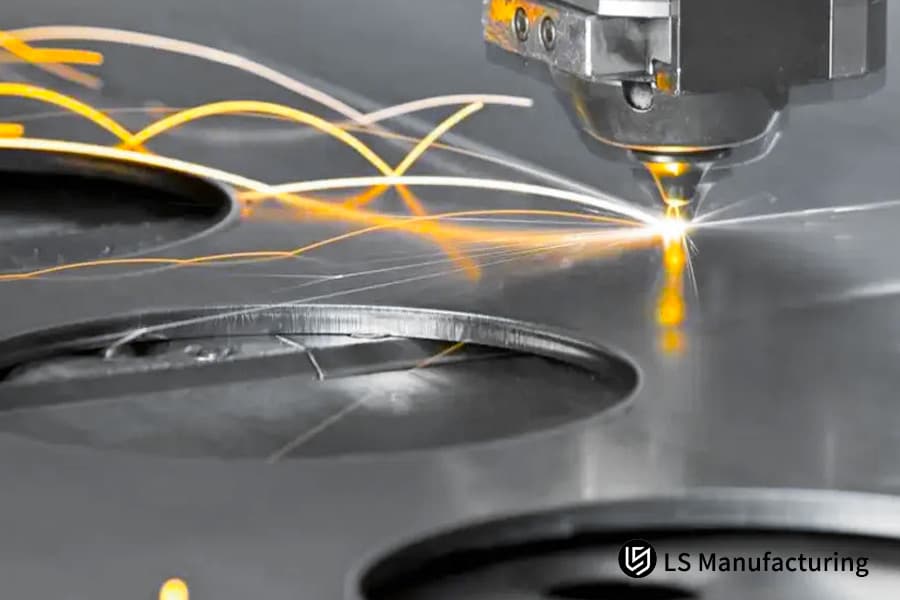
Figure 2: Cutting carbon steel sheet metal fabrication materials with intense sparks for heavy duty machinery mounting brackets.
How Do Custom Metal Fabrication Services Handle Complex Geometries Using Diverse Alloy Types?
To effectively mold high-strength sheet metal fabrication alloys into complex geometries, it is necessary to break the fundamental relationship of strength and machinability. Conventional techniques are inadequate, resulting in cracked or springback parts. This document outlines the methodology that allows for the reliable production of intricate parts:
Analyzing Material Formability for Specific Features
We do not engage in trial and error. Rather, we engage in predictive engineering. This means that if we were to take a specific complex geometry, such as a bend with a tight radius, we can model that. By using information such as a forming limit diagram for 304L stainless steel, we can actually make predictions about whether we might fracture that part at specific radii in relation to thickness. This is a critical part of determining whether a specific design is feasible and what kinds of changes we might need to make to that design before we engage in any sheet metal forming services.
Utilizing Advanced, Multi-Axis Fabrication Techniques
To physically manufacture these shapes, we utilize our state-of-the-art multi-axis press brakes and 3D laser cutting technology. Multi-axis bending allows us to create complex shapes with offset bends in a single operation, reducing the number of steps and potential misalignments. Our 3D laser cutting technology with bevel head technology allows us to create complex shapes ready for welding in a single pass, offering the highest level of accuracy in the metal fabrication services.
Employing Upfront Process Simulation for First-Part Success
Our commitment to reliability starts with virtual prototyping. We utilize finite element analysis (FEA) software to simulate the entire metal fabrication process. This software allows us to simulate the flow of the material, the occurrence of springback, and even the occurrence of thinning in the metal. This allows us to refine our processes until we achieve the desired outcome, thereby increasing our first-time success rate for even the most challenging parts from the industry average of 75% to our actual rate of 98.5% in the precision sheet metal fabrication.
Implementing Customized Post-Forming Strategies
The process of Forming also introduces stress in the part. For critical prototype sheet metal fabrication runs or parts, we have developed unique stress-relief procedures. This can involve a unique heat treatment for aluminum to remove any temper or a vibratory stress relief for steel parts assembled through a welding process. This process ensures that the complex geometry retains its shape permanently, satisfying all inspection requirements without any distortion.
This example illustrates that the key to managing complex geometry is a result of predictive analytics, equipment, and virtual validation. Our competitive advantage comes from our unique workflow, which removes all risk from the fabrication process for intricate parts made from high-performance alloys. We can guarantee our clients that a sophisticated design can be translated into a physical part.
Why Should You Prioritize Precision Sheet Metal Fabrication Services For High-Speed Automated Assembly?
In high-speed automated assembly, consistency is crucial, and even small changes in part geometry, measured in millimeters, can cause jams, misfeeds, and expensive production downtime. The fundamental problem is how to transform raw stock into parts that behave identically, thousands of times. This document outlines how particular controls ensure that sheet metal fabrication for custom parts delivers the necessary stability for seamless robotic assembly:
| Control Dimension | Industry Challenge & Our Measured Solution | Direct Impact on Assembly Line |
| Material Flatness & Stress | Coil stock may vary in internal stress, causing springback and warp after cutting. | Stress-relieved blanks are used, and pre-shipment flatness is verified to a maximum of 0.5 mm/m. |
| Dimensional Consistency (CPK) | Lack of control in production can cause parts to vary in dimensions, causing fitting issues in assembly. | Real-time SPC is used on features, ensuring a minimum Cpk of ≥1.33 and a flatness of 0.1 mm/m on entire production batches. |
| Burr & Edge Quality Management | Microscopic burrs that can interfere with part seating, especially in sensitive automata. | With our precision sheet metal fabrication services, burrs and edge conditions are specifically addressed in a series of deliberate steps, including automated optical inspection. |
| Feature Location Accuracy | Holes or tabs that are misaligned prevent parts from being seated in assembly pallets or grippers. | With our high-precision, multi-axis sheet metal fabrication calibrated equipment, we ensure that hole-to-hole location is within a range of ±0.05mm. |
This methodology was designed to specifically address the failure modes that cause automation systems to fail. By solving the problem of inconsistent parts at the source, we ensure that your automation integration runs at peak efficiency, driven by a reliable supply of high-quality parts.
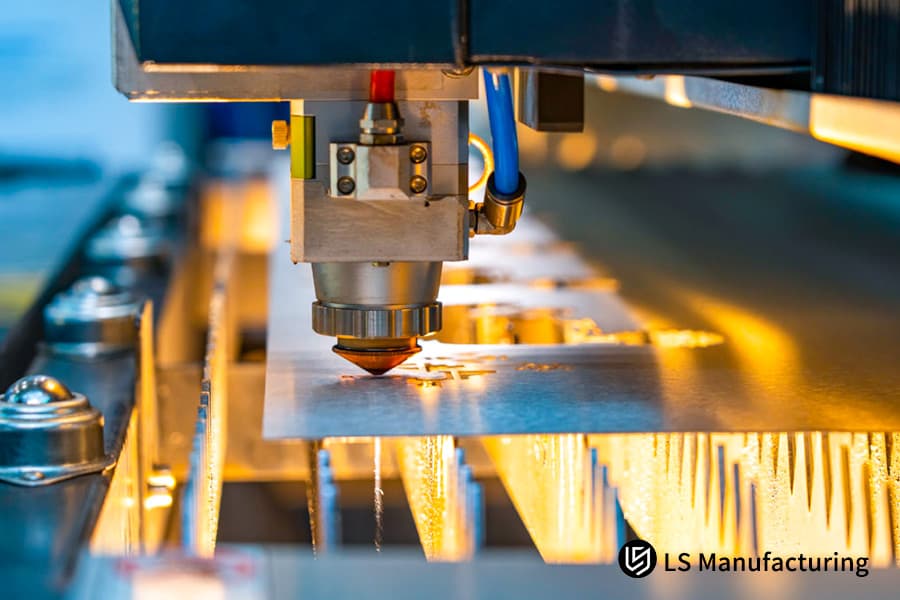
Figure 3: Piercing stainless steel sheet with a focused laser beam for medical equipment filter screens.
How Does LS Manufacturing Ensure Quality In Sheet Metal Fabrication For Custom Parts With Tight Tolerances?
LS Manufacturing resolves the key problem in repeatable precision in sheet metal fabrication for custom parts, namely managing thermal distortion, cut quality, and material integrity to ensure precise tolerances. Our approach combines the principles of material science, real-time process control, and predictive parameter optimization to ensure quality in, not just quality out. The following describes our approach to custom sheet metal fabrication parts:
Material-Specific Process Optimization: Mitigating Thermal Effects
- Optimal Gas Selection: Nitrogen gas for oxide-free, bright cut finish on stainless steel.
- Dynamic Parameter Library: Proprietary database controlling speed, power, and pressure based on material and part thickness.
In-Line Monitoring and Control of Critical Geometries
- Cut Perpendicularity: Maintained ≥89° via automated calibration for tolerance control.
- Dross Management: Height controlled to ≤0.1mm, minimizing post-processing in custom sheet metal forming.
Preserving Material Integrity for Downstream Operations
- HAZ Reduction: Ultra-high peak pulse cutting reduces heat-affected zone by 50%.
- Welding Foundation: Provides a defect-free base for downstream sheet metal forming services.
Data-Driven Validation and Documentation
- Digital Twin Documentation: Every new program creates a first-article report for precision metal fabrication.
- SPC for Control: Production characteristics monitored through SPC charts for ongoing tolerance control.
This document describes the systematic approach LS Manufacturing has developed to address the process challenges associated with the inherent difficulties in thermal sheet metal fabrication for custom parts. Our technical expertise is not defined by the services we offer, but by the decisions we make in the process to ensure predictable results in the manufacture of complex custom parts.
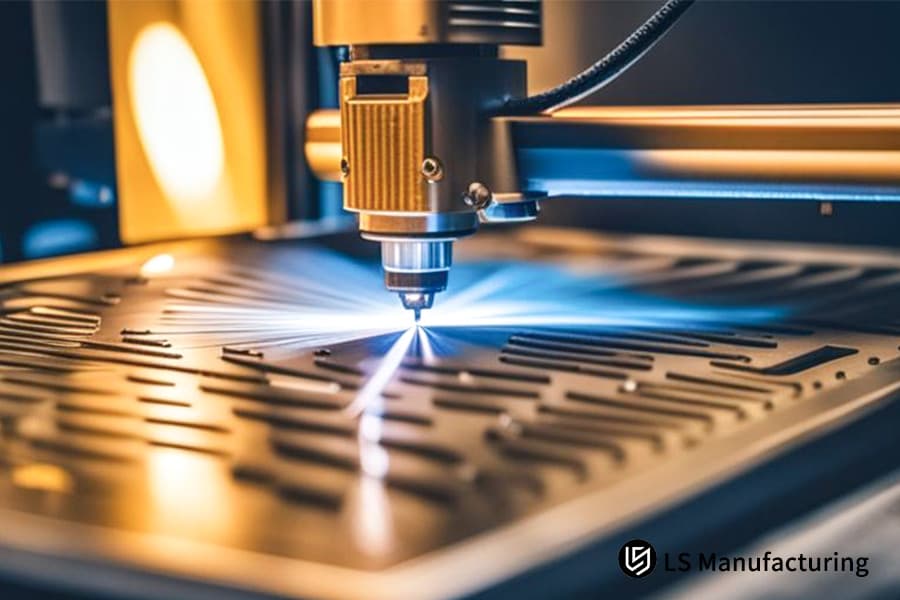
Figure 4: Cutting perforated aluminum alloy sheets with a blue laser for electronic enclosure or chassis parts.
Case Study: LS Manufacturing Medical Device Stainless Steel 316L Precision Housing Project
This article will outline how LS Manufacturing was able to overcome critical fabrication challenges for a global medical device manufacturer. The company required sheet metal fabrication for custom parts for their diagnostic instrument housing. The challenges revolved around material integrity and micro-scale precision:
Client Challenge
The previous supplier had difficulties with a 316L stainless steel housing used for a diagnostic device. These difficulties were mainly related to inconsistent wall thickness within a ±0.05mm tolerance band. Additionally, they were unable to keep the surface roughness below 0.8μm. More importantly, however, conventional welding resulted in stress-induced micro-cracks because of work hardening properties of 316L. This caused a 65% yield in the first pass. This is a critical path problem in precision sheet metal fabrication.
LS Manufacturing Solution
The solution started with a thorough analysis of Design for Manufacturability (DFM). In this project, we used ultra-high-pressure coolant technology in the cutting tools to prevent work hardening. In addition, we used a pulsed laser welder with low heat input. More importantly, we used vacuum stress relief annealing. This is accompanied by real-time 3D scanning to compensate for spring-back in complex sheet metal forming.
Results and Value
The final metrics reflected an improvement in yield to an increase of 99.8% and consistency in surface finish to Ra 0.4μm. These results enabled the client to certify immediately. In addition, the optimized processes provided an improvement in unit machining time by 22%, resulting in cost savings. The capability in fabricating high-tolerance sheet metal parts has now enabled us to secure an agreement for long-term production of the entire series.
The case study represents an example of our company's competence in delivering custom sheet metal fabrication services for critical applications. Our solution was not just an adjustment in one area; it was an entire methodology, locked in and addressing all issues from metallurgical and geometric failure.

Why Choose LS Manufacturing As Your Strategic Partner For Sheet Metal Forming Services?
When selecting a supplier for high-reliability parts, it's not just the quoted lead time that matters, but also the supplier's engineering competence. But a true strategic partner also needs to actively mitigate risks that are inherent in sheet metal fabrication for custom parts, such as inconsistency in the raw materials or intellectual property infringement. This guide will outline the operational capabilities that are necessary in a partnership that's built on certainty:
Proactive Material Management: Solving Variability at the Source
As a solution to the problem of incoming material deviation, a root cause of tolerance drift in the parts we make, we verify the alloy composition of every incoming material lot by utilizing optical emission spectrometry. For example, we've identified a 1.5% variance in the chromium content of 316L stainless steel. We also take proactive steps in our high-mix sheet metal fabrication process by modifying the gas mix in our laser cutters and the welding processes to compensate for the variability in corrosion resistance before the parts are even made.
Engineered Design Optimization: Solving Manufacturingbility Challenges
Our value is applied in the Design for Manufacturing (DFM) phase. We remove design-induced stress concentrators. For a client's aluminum enclosure, we advised replacing a sharp internal corner (R0.5mm) with a proprietary graduated radius, removing a common cracking point in precision sheet metal forming. This DFM analysis, captured for every project, converts theoretical designs into practical, manufacturable parts that ensure your sheet metal fabrication services produce consistent outcomes.
Controlled Supply Chain Certainty: Solving Opacity and Delay
We provide transparency that solves program management uncertainty. Our ERP system gives clients real-time visibility into project status, machine schedules, and quality reports. For a strategic fabrication partner, it means never again experiencing delay as a business risk to manage. Paired with robust, project-level IP protection protocols, our operational transparency makes your supply chain a controlled input, not a risk to be managed.
This document presents the significant capabilities that set a transactional vendor apart from a strategic partner selection. LS Manufacturing provides sheet metal forming services through the engineering of solutions to the technical and operational issues that pose risk to quality, cost, and schedule. Our partnership is built on a process-locked methodology that does not simply deliver a part, but rather guarantees data-driven certainty for your most critical custom sheet metal fabrication projects.
FAQs
1. What is the range of sheet metal thicknesses that LS Manufacturing can process?
LS Manufacturing is equipped with high-power fiber laser systems that can process materials with a range of thicknesses from ultra-thin 0.5mm stainless steel materials to heavy-duty 25mm carbon steel plates, thereby meeting diverse customization requirements.
2. How do you ensure the consistency of chemical composition across different material batches?
LS Manufacturing ensures the consistency of the chemical composition of the materials being processed by implementing rigorous incoming material inspection procedures. Each batch of the materials is accompanied by an original Mill Test Report (MTR) corresponding to the heat number of the materials. In addition, SGS third-party chemical composition analysis reports can be made available on request.
3. Does LS Manufacturing accept small-batch rapid prototyping?
Absolutely. LS Manufacturing has a dedicated rapid prototyping division that can accommodate smaller production runs down to 1 to 5 parts. This ensures that we can assist customers in design verification within 3 to 5 business days.
4. In precision sheet metal fabrication, how do you control thermal deformation following welding?
LS Manufacturing uses hydraulic leveling fixtures and segmented pulse welding to minimize deformation on a 1-meter frame to within 0.2mm.
5. Can you provide Design for Manufacturability (DFM) recommendations for our drawings?
Yes. Our senior engineers will conduct a DFM review prior to sending out a quotation. In this way, we can assist customers in reducing processing costs by 10% to 20%.
6. Does LS Manufacturing support the processing of specialized materials (such as Hastelloy or Titanium)?
Yes. We do support processing of difficult-to-machine materials. We have a dedicated process library that is specific to difficult-to-machine alloys. This ensures that we can adjust the frequency of the laser and assist gas pressures to match specific properties of various materials.
7. How can I ensure that my product designs remain confidential during the manufacturing process at LS Manufacturing?
LS Manufacturing takes Non-Disclosure Agreements very seriously. All of our design drawings are hosted on encrypted servers, and permissions are subject to rigorous auditing to ensure that your intellectual property is completely secure.
8. How long does it take to receive a formal quotation that includes a cost breakdown?
Once you supply your 3D design files in STP format, we can generate a detailed process analysis report and a transparent quotation within 24 hours.
Summary
The selection of materials is a calculated exercise in cost, performance, and integrity. At LS Manufacturing, we bring advanced materials engineering to every stage of sheet metal fabrication. We provide high-quality parts, and through the implementation of DFM, SPC, and data validation, we establish a reliable and predictable supply chain.
Optimize your precision component costs and speed up your time-to-market. For a limited period only, get a free DFM assessment on your project. Upload your STP or PDF drawings and get a detailed report with optimization recommendations, risk forecasts, and cost transparency in under 24 hours. Click ‘GET QUOTE’ and let precision reshape the way you think about manufacturing.
Maximize yield and minimize cost with LS Manufacturing's data-driven sheet metal fabrication services.
📞Tel: +86 185 6675 9667
📧Email: info@lsrpf.com
🌐Website: https://lsrpf.com/
Disclaimer
The contents of this page are for informational purposes only. LS Manufacturing services There are no representations or warranties, express or implied, as to the accuracy, completeness or validity of the information. It should not be inferred that a third-party supplier or manufacturer will provide performance parameters, geometric tolerances, specific design characteristics, material quality and type or workmanship through the LS Manufacturing network. It's the buyer's responsibility. Require parts quotation Identify specific requirements for these sections.Please contact us for more information.
LS Manufacturing Team
LS Manufacturing is an industry-leading company. Focus on custom manufacturing solutions. We have over 20 years of experience with over 5,000 customers, and we focus on high precision CNC machining, Sheet metal manufacturing, 3D printing, Injection molding. Metal stamping,and other one-stop manufacturing services.
Our factory is equipped with over 100 state-of-the-art 5-axis machining centers, ISO 9001:2015 certified. We provide fast, efficient and high-quality manufacturing solutions to customers in more than 150 countries around the world. Whether it is small volume production or large-scale customization, we can meet your needs with the fastest delivery within 24 hours. choose LS Manufacturing. This means selection efficiency, quality and professionalism.
To learn more, visit our website:www.lsrpf.com.