English



Part consolidation stamping service refers to an integrated manufacturing service that merges several separate metal parts into one single molded part using multi-station progressive dies. It a lot mitigates three major issues of traditional multi-part assembly, like higher assembly costs, excessive cumulative tolerances, and fatigue fracture under vibration. Actually, this method not only cuts assembly costs by about 30% to 50%, but also efficiently keeps critical dimensional tolerances within 0.01mm, which makes it a great choice for mass production of civilian and industrial-grade modules.
In this article, we will thoroughly examine the path of cost cutting and efficiency increasing in its implementation in technical principles, design rules, and mass production verification.
Part Consolidation Stamping Service Core Value Overview
The table below compares the core performance of component integration stamping with traditional processes, intuitively demonstrating the benefits of the process upgrade.
| Comparison Dimensions | Traditional Split Stamping + Post-Assembly | Part Consolidation Stamping Service | Optimization Scope |
| Number of Assembly Processes | 6-8 (Riveting/Welding/Manual) | 0 (Single Stroke Forming) | 100% Elimination of Post-Assembly Processes |
| Key Dimensional Tolerance | ±0.15mm (Multiple Parts Cumulative) | ±0.01mm (Single Stroke Control) | Accuracy Improvement 15x |
| Material Utilization | Approximately 55% | Over 82% | Improvement: Approximately 49% |
| Vibration Fatigue Life | 100 Hours to Critical Level | 300 Hours No Failure | Improvement: 200% |
| Overall Assembly Cost | Base Value: 100% | 50%-70% | Decrease 30%-50% |
Key Takeaways:
- Progressive dies can be employed to combine components resulting in direct removal of post-riveting and welding processes, which in turn, cuts down the total supply chain procurement and management costs by more than 30%.
- A thorough review of the Design for Manufacturing (DFM) can bring down the cumulative tolerance of a single part from 0.15mm to only 0.01mm after a single-stroke elastic compensation.
- It is through early adoption of supplier's progressive die stress simulation and balancing technology in product development phase that the mass production achieving a CPK of more than 1.33 could be realized.
Why Trust LS Manufacturing’s Expertise In Cost Reduction Through Part Consolidation In Metal Stamping Services?
LS Manufacturing has a decade of experience in component integration stamping R&D and mass production implementation, enabling us to regularly help our clients achieve lower assembly costs and better product performances.
We learned that early intervention in DFM optimization could cut the whole project return on investment cycle by 40%, from our working experiences in commercial water purifier bracket integration projects. Our mold engineering team has a deep average experience of 8+ years and has developed more than 200 multi-station integrated progressive dies, which cover diverse sectors, like household appliances, industrial electromechanical, and automotive parts.
Our thorough production control system from start to finish is very strict in following the ISO 9001 quality management standard and has set up 12 quality control points from raw material reception to finished product delivery to make sure every single batch performance is consistent.
In case of automotive and industrial-grade parts with very demanding specifications, our processing control totally adopts IATF 16949 standards, allowing end-to-end traceability of the key characteristics, thereby ensuring production consistency. Our internal test data indicate that integrated processes' optimization often means more than double the product vibration fatigue life.
Mature project experience and comprehensive system certifications are the core guarantees for the stable delivery of integrated stamping projects. If you are evaluating the process optimization potential of existing components, please contact us for a free cost accounting service, leveraging our professional metal stamping service experience to quickly determine cost reduction margins.

Why Choose Advanced Part Consolidation Stamping Service to Substantially Eliminate High Assembly Labor Costs?
Part consolidation stamping service, through progressive dies, can change several separate metal components into one single high complex stamped component, this way completely eliminating manual assembly, welding and riveting steps, and overall assembly costs can be cut more than 35% with this method.
Cost Funnel in Manual Assembly
During the traditional split-piece stamping + assembly process, costs keep coming at various steps. Fundamentally, costs fall into these three categories:
- Fastener Procurement Costs: Since the parts are split, standard parts like rivets, screws, and nuts are needed, which increase cost per part by 12%-18%.
- Tooling and Fixture Costs: Each production line needs a special fixture for a setup, which can cost as much as $12,000. Precision metal stamping, can be an option to completely remove this spending.
- Labor Costs: A single part assembly time is about 2.5 minutes, during large-scale production labor cost can be as high as 28%. Expert part consolidation stamping service can address these cost-related issues from the source and eliminate the waste.
Technical Feasibility Support for Multi-Component Integration
At the core of component integration is metal materials' ductility and formability. High strength low carbon steels, e.g. SPCC and SPCE, have good cold-forming capability and after several stretching and bending deformations, their mechanical properties remain stable. Multi-part integration is possible by using progressive die stamping technology which exploits this feature.
When high volume stamping is done, the property stability of the material is very crucial. This method may be also combined with custom metal forming service to provide totally new structural designs. Because of this, it becomes one of the key service directions of cost-saving suppliers.
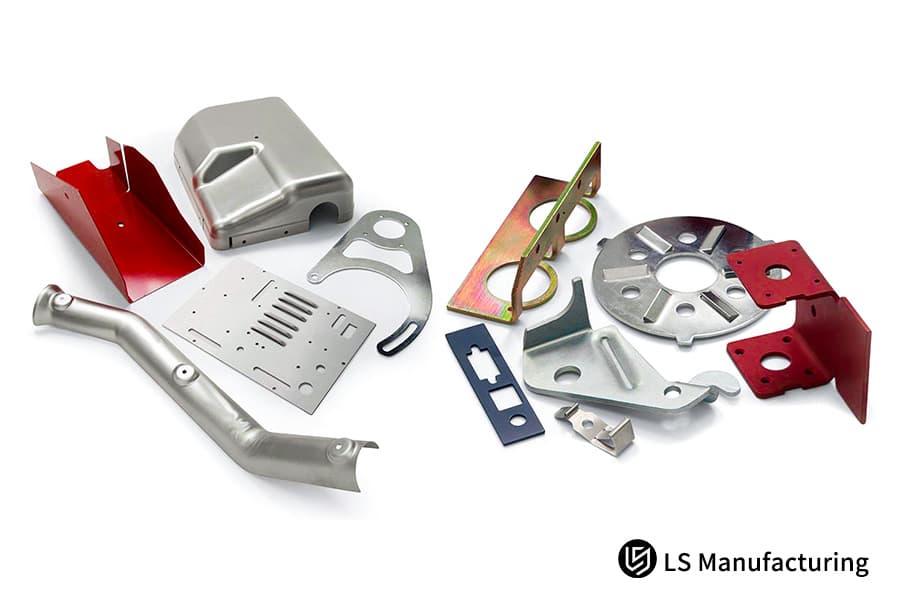
Figure 1: An array of stainless steel laser-cut parts, such as gears and frames, displayed on a white surface.
How Does Custom Metal Forming Stamping Tackle Complex Cumulative Tolerances in High Volume Production?
One of the most widely used metal forming techniques is custom metal forming stamping. To give you an idea of how it works, by completing multi-step continuous forming within a single progressive die, Kiyama metal forming stamping compresses the conventional cross-process cumulative tolerances into a single dynamic tolerance band within a single stroke, this way constantly keeping the critical dimensional tolerances of the finished product within 0.01mm.
The Root Cause of Cumulative Tolerances
When it comes to the assembly of multiple parts, the tolerances of the major forming surfaces of each individual part can add up and reach the extreme dimensional limits. For example, the individual tolerances of 5 independent parts are 0.03mm, and the cumulative tolerance after assembly can be as much as 0.15mm. This can cause assembly jamming or loose fit, with an increase in the defect rate and after-sales repair costs. Custom part stamping can be designed to avoid the problem of tolerance overlapping from the very beginning of the process.
Core Parameter Scheme for Springback Compensation
To overcome the issue of springback during sheet metal bending, we use a multi-pass progressive forming + final stamping compensation method. The main control steps are:
- Progressive pre-bending stations: The 90° bend is divided into 3 progressive forming passes. The angle deviation of each pass is limited within ±1°. Sheet metal stamping enables exact angle control.
- Micro-stamping station: At the final station, a firm stamping structure is arranged to forcibly adjust the springback amount.
- Dynamic tolerance monitoring: Through an online SPC system, the dimensional data is obtained constantly and the die compensation amount is automatically adjusted.
The table below shows the multi-step tolerance control parameters for t=2.0mm SECC sheet metal:
| Step No. | Forming Process | Single Step Tolerance | Cumulative Control Tolerance | Compensation Method |
| Step 6 | First Pre-bending | ±0.05mm | ±0.05mm | Punch Angle Pre-reduction 2° |
| Step 12 | Second Fine Bending | ±0.02mm | ±0.03mm | Constant Pressure Unloading Plate |
| Step 18 | Micro-punching | ±0.01mm | ±0.01mm | Rigid Shaping Forced Correction |
| Step 22 | Final Inspection | - | ±0.01mm | CCD Online Closed-Loop Calibration |
Deep draw stamping is also like a multi-stage progressive process. LS Manufacturing special test data reveals that the springback angle fluctuation of an SECC sheet, t=2.0mm, can be controlled within ±0.3° after 8 progressive bendings, which is way above the industry average ±1°. This solution is among the main technological challenges of skilled metal stamping service.
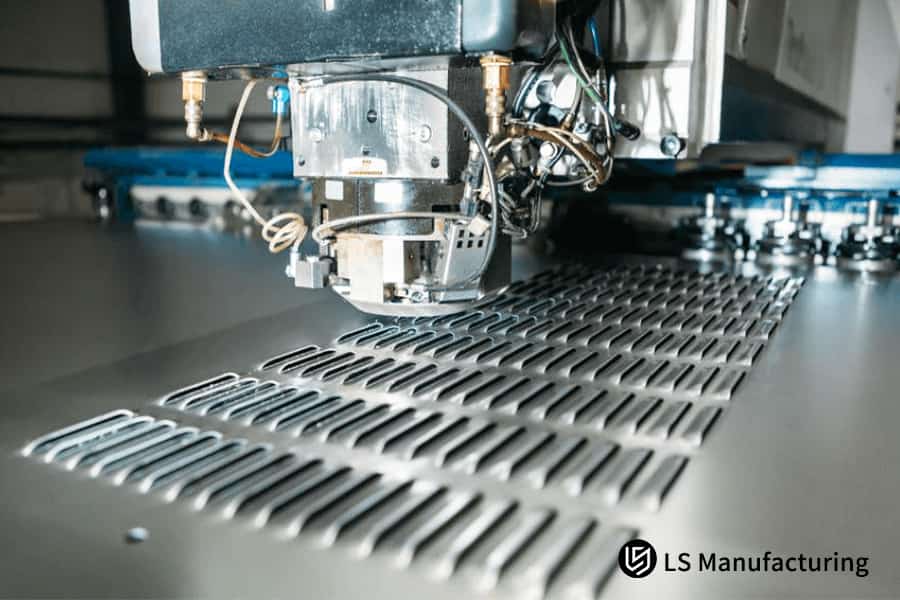
Figure 2: Laser beam cutting metal precisely, with sparks, illustrating dynamic heat regulation in manufacturing.
What Critical Stamping Design for Assembly Principles Prevent Material Thinning and Microcracking Under Heavy Deformation?
For stamping design for assembly, the thinning rate of the sheet metal must be accurately set for multiple thinning draw passes based on the metal forming limit diagram. This guarantees that the sheet metal thinning rate at areas of severe stretching and bending is below 20% which in principle, totally removes the possibility of cracking and work-hardening brittle fracture.
Molding Limits Core Control Parameters
To avert material failure owing to large deformation, three key parameters should be rigorously controlled during the design stage:
- Control of bending radius: For materials with a hardness HRC 45+, the minimum bending radius must be 1.5 times the material thickness. Complex geometry stamping necessitates even more rigorous radius control.
- Tensile coefficient ratio: The first tensile coefficient should be at least 0.55, and the tensile coefficient of each subsequent pass should increase by 0.05-0.08.
- Thinning rate control: The thinning rate of one pull should not be more than 12%, and the total thinning rate throughout the process should not be more than 20%.
Properly planned stamping design for assembly is essential for ensuring molding quality and can act as an effective measure against quality risks during mass production.
Methods to Design Stress Concentration Avoidance
Integrated parts geometries are becoming more and more sophisticated, and stress concentration commonly occurs in them at sharp corners and right angles, causing cracks and mold wear. Designers should consider using surfaces of progressive transition to replace sharp corners, and process fillets should be added to stress-based locations. This may result in a mold life that exceeds 1 million stamping cycles. However, a tight tolerance stamping takes micron-level precision of the transition surfaces.
The issue of die wear due to stress concentration at high speed stamping in production environments can be solved through custom metal forming services. Expert tooling manufacturers can at the same time enhance the matching of die structure and product design.
How Can Multi Station Stamping Die Design Successfully Synchronize Piercing and Progressive Bending Processes Simultaneously?
Multi-station stamping die is capable of producing very complex structural parts in a highly integrated way by arranging in a very ordered manner the punching, local stretching and multi-dimensional bending operations, which all take place on the same single layout strip. Besides, the stamping center of every stroke has to be perfectly aligned with the equipment load center.
Core Design Logic of Strip Layout
With the help of 3D Dynaform software for multiphysics finite element simulation, we optimize strip layout very thoroughly. The design simultaneously incorporates the forming sequence, load balance, and material utilization to guarantee that the forming force at each station will be evenly distributed while also excluding die overloading. Attending to the layout design of metal component stamping, one must take into account the spatial arrangement of many forming features.
Precisely manufactured multi-station stamping die is the main component of basic hardware that is necessary for achieving simultaneous multi-process molding, and they not only determine the extent of integration and the final product precision but also the quality of the consolidated stamped components that will have structural and precision dual stability.
Stable Ensuring Solutions for Simultaneous Multi-Process Molding
In doing composite molding, when facing strip twisting and poor feeding, three core structural safeguards are used:
- Dual Guide Pin Balancing Structure: Guide pins at stations 3 and 12 have a coaxiality of 0.02mm so the strip misalignment can be avoided. Close to automotive grade stamping needs even more precise guides.
- Nitrogen Spring Pressing System: On the unloading plate, a nitrogen spring with a total pressure of 35kN is attached, which helps in delivering a constant and uniform pressing force.
- Multi-directional Slider Mechanism: By combining lateral punching and bending sliders, multi-directional molding is possible to be finished within one single stroke.
Comparable stable assurance solutions are usually adopted in industrial metal stamping production lines. Being a specialized sheet metal stamping supplier, we offer totally transparent custom fabrication pricing, this way clients can see clearly their project investments.
LS Manufacturing Practical Troubleshooting Tips:
When progressive dies encounter feeding problems, first conduct the coaxiality check of the guide pins at stations 3 and 12. Calibration will be needed if the deviation is more than 0.02mm. Doing this can solve most of the feeding jamming problems (over 90%).
Precise layout design and a stable synchronization mechanism are the core of achieving efficient mass production with multi-station integrated dies. If you wish to learn more about the technical details, please contact us to obtain the component integration stamping technology white paper and master the complete forming solution.
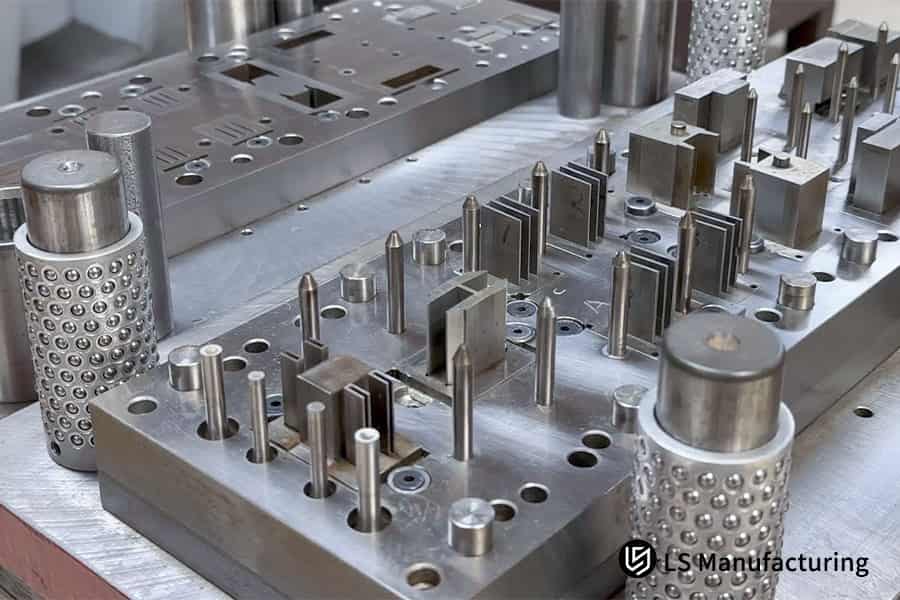
Figure 3: Chart showing laser cutting parameters vs. costs, proving the value of a low scrap rate service.
Why Is Selecting Part Integration Stamping Service Superior to Traditional Post Stamping Welding Processes?
Part integration stamping service can increase the overall mechanical fatigue strength and tensile load by more than 40% when compared with post-stamping welding processes, as it completely eliminates the risks of metallographic degradation and thermal distortion caused by the heat-affected zone (HAZ).
Typical Welding Performance Issues
Welding processes are capable of making the local temperatures rise to more than 1300℃ instantaneously, creating a HAZ. Because of this, the material hardness in that region may drop by 15%-20%, and residual stress can be produced. And, after some months of storage/use, the release of residual stress can mean unexpected deformation, while welded joints may be susceptible to fatigue fracture under vibration. Precision component stamping prevents the creation of HAZ.
Highly skilled part integration stamping service can easily overcome the issues that welding implements inherently have and lead to an all-around improvement in product performance.
Structural Strength Benefits of Integrated Molding
The metallographic structure in one-piece molded components is continuous, and they do not contain any weak points due to welding. And, the stiffness of thin plates can be increased manifold by the insertion of reinforcing ribs even without the increase in thickness of the material, because of this the load-bearing limit can be a lot enhanced. With the help of progressive metal stamping, reinforcing ribs can be made to undergo integral forming in a single stroke. Custom metal forming stamping is the way to go if you want to reduce manufacturing factory costs with this process.
The table below compares the core performance of the two processes:
| Performance Dimension | Traditional Stamping + Spot Welding Process | Part Integration Stamping Service | Improvement |
| Tensile Strength | Base Value 100% | 142% | Improvement 42% |
| Vibration Fatigue Life | 120 hours | 300 hours | Improvement 150% |
| Aging Deformation | ±0.2mm/month | No Deformation | 100% Eliminates Aging Deformation |
| Heat Affected Zone Hardness Reduction | 15%-20% | No Reduction | Completely Avoids Metallographic Deterioration |
Which Consolidated Stamped Components Offer the Maximum Material Utilization Rate and Lowest Unit Price Optimization?
Consolidated stamped components by using a combination of smart nesting and shared-edge shearing design can raise the raw material utilization rate from the traditional 55% to more than 82%, simultaneously lowering material procurement costs and Much squeezing the end ex-factory price of single parts down.
Core Techniques of Nesting Optimization
Fundamentally, enhancing material utilization is achieved by minimizing process waste. Typically, optimization techniques can be divided into three groups:
- Shared Edge Design: Parts with multiple contours are made to share shearing edges, thereby separation waste is reduced. Through complex part stamping, a higher utilization rate can be obtained by the exploitation of nested nesting.
- Pitch and Width Optimization: Tiny adjustments of the pitch by 0.1mm increments to the positioning of the stamped parts to maximize the utilized area.
- Nested Nesting Layout: When irregular parts nest in a complementary fashion, the leftover waste areas can be filled.
Highly consolidated stamped components be the main vehicle for realizing maximum material utilization.
Unit Cost Figure-out Logic
The fundamental element of the unit price of stamped parts is the raw material price, that means, increased utilization leads straightaway to a lower price. The reference expression for the pricing of unit finished products is:
Unit Price = (Material Cost + Process Cost) (1 + Management Fee Rate) + Mold Amortization / Order Quantity. With integrated processes, it is possible to slash process costs by up to 35%. Stamping of thin metal is even more largely reliant on material utilization.
This approach is also the crucial cost reduction channel for part consolidation stamping service and, plus custom metal forming service, can bring about fully-customized processes.
The table below shows the cost relationship between different layout schemes for SPCC cold-rolled steel strip:
| Layout Scheme | Material Utilization Rate | Unit Material Cost | Scrap Disposal Cost | Total Unit Finished Product Material Cost |
| Traditional Split Single Layout | 55% | $0.82 | $0.08 | $0.90 |
| Optimized Split Double Layout | 65% | $0.69 | $0.06 | $0.75 |
| Integrated Shared Edge | 82% | $0.55 | $0.03 | $0.58 |
Heavy gauge stamping has a higher material cost ratio, and the cost reduction effect brought about by the improved utilization rate is more significant. In summary, intelligent layout and shared edge design can significantly improve material utilization rate and directly reduce the unit product price. If you have clear mass production requirements, you can upload drawings to obtain an accurate quote, clearly showing the cost optimization potential.
Figure 4: A neat stack of laser-cut stainless steel parts in a workshop, showcasing manufacturing precision and consistency.
How Does ISO 9001 and IATF 16949 Compliance Ensure Exceptional Consistency Across Massive Stamped Part Batches?
A company providing professional metal stamping service and implemented with ISO 9001 and IATF 16949 quality management systems can reduce the defect rate (parts per million) to 50 in a stable manner by using real-time process SPC monitoring and mold wear early warning mechanisms.
Full-Process Quality Control on the Production Floor
Documenting quality control alone is not enough, the entire production process should be considered. Major control measures include:
- Online CCD Inspection: 100% online measurement of punch inner diameter and bending angle. Pieces which have a deviation from the limit of tolerance will be rejected automatically. For multi operation stamping, a decision should be made on the inspection of most critical features.
- First and Last Piece Coordinate Measuring: First and last piece inspections are carried out by a coordinate measuring machine which has an accuracy of 0.002mm.
- SPC Process Monitoring: Essential dimensional data is taken every 2 hours. An automated process adjustment is done if the CPK value is below 1.33.
Standardized metal stamping service is an essential element for the production of a consistent series of products. System certification besides the provision of the service is a way to achieve dual quality assurance.
Preventative Maintenance Mechanism for Die Life
The precision of the die is the main element that ensures the product consistency. We have set very high maintenance standards for vulnerable parts like tungsten carbide punches: micron-level sharpening and chip skipping checks are compulsory at every 100,000 stamping cycles to avoid in a proactive manner reduction in the precision caused by wear. The die maintenance interval for a single stroke stamping can be suitably lengthened.
The synergy of advanced custom metal forming stamping technology and a thorough quality system, on the part of an IATF 16949 certified manufacturer, makes the assurance of dimensional uniformity in a very large number of units produced possible, resulting in stable mass production.
How Did LS Manufacturing Redesign a Appliance Bracket to Terminate an Intense Assembly Crisis?
Customer Dilemma
A world-leading home appliance company, which created commercial water purifier racks in large quantities, had first designed a system made of one cold-rolled steel load-bearing main board, two side mounting brackets, and two reinforcing connectorsfive separate parts together fastened with 12 blind rivets and multi-point stainless steel spot welding.
With a yearly production volume of 1.2 million units, slow manual assembly kept the production running at a low pace and orders were delayed 15%. Upon frequent heat vibrations of 100 hours generated by the ultra-high frequency vibration testing, the riveted joints and heat-affected weld zones often cracked because of the fatigue stress, resulting in 4.2% of defective items and losses of $280,000 due to defects and rework.
LS Manufacturing Solution
The senior team of LS Manufacturing jumpstarted a complete DFM upgrade solution step after step using the original 3D drawings, that got to them within 24 hours.
- We used the Dynaform simulation software to mimic the material's rheological behavior under dynamic load five times, in this way five separate parts existing in the physical world were turned into a single integrated and three-dimensional irregularly shaped stamped part.
- We built our own high precision multi-station progressive die featuring 24 stations and a precision nitrogen spring pressure system, rendering punching, shallow drawing, lateral slider multi-angle bending (±0.5° angle precision control), and local reinforcing ribs imprinting within a single stroke possible.
- The whole die set is made of tungsten carbide punches and die inserts, which can be used for up to 1 million strokes. Online CCD measurement systems are installed at key stations for 100% closed-loop real-time monitoring of critical bending dimensions.
Results and Value
After decreasing the number of frames used in the water purifier from five to one through EL restructuring and high accuracy mass production, the first six assembly steps were completely eliminated, which led to a 42.6% drop in the total assembly labor and management costs. The integrated stamped parts have a continuous metallographic structure without stress points, which is why they passed the 300-hour ultra-high frequency vibration fatigue test without any problems.
Delivery defect rate dropped from 4.2% to below 28 ppm. At the same time, smart nesting design increased the material usage rate from 58% to 81.5%, decreasing the purchasing price of individual components by 23%. The overall mold investment stood at $185,000, and the customer recovered the investment after 110,000 units.
This project fully validates the core value of component integration technology in cost reduction, quality improvement, and efficiency enhancement. If you are also facing similar assembly bottlenecks and quality pain points, you can submit product drawings and mass production requirements, and we will customize an exclusive part consolidation stamping service solution for you to achieve the dual benefits of cost control and quality improvement.

FAQs
Q1: What is part consolidation in progressive die stamping services?
Part consolidation in progressive die stamping means combining several separate metal parts into one complex stamped part in a single stamping operation using custom made multi-station precision dies. So, it eliminates all the additional assembly operations happening after the process source.
Q2: How much assembly cost can I typically save by integrating my stamped components?
Mature part consolidation stamping services can wipe out the secondary welding,riveting, and manual assembling processes completely, generally leading to a 30% to 50% decrease in assembly costs overall. The exact saving in costs is directly proportional to the number of parts in the assembly.
Q3: Will consolidating multiple sheet metal parts together drastically increase tooling costs?
It is true that the purchase cost single multi-station progressive die can be up to 20% to 35% higher, but if you also factor in the savings on assembly tooling and labor, the full die purchase can be covered after a production volume of 50,000 units. The total advantages in large scale production are really quite marked.
Q4: What materials are best suited for high volume custom metal forming services?
Metals with high ductility like SPCC SECC 5052 aluminum alloy, and different types of low carbon deep-drawing steels, are the best choice for multi-bending integrated processes, which help prevent the formation of micro-cracks during the forming operation in a stable mass production environment.
Q5: How does LS Manufacturing control the tight bending tolerances of consolidated parts?
We manufacture consolidated parts in one-piece using high end progressive dies that incorporate micro-punching stations and inserts for precise springback compensation. With this, we have an online closed-loop monitoring system that together enable us to efficiently and consistently manage linear dimensional tolerances within 0.01mm even during high volume continuous production.
Q6: Can part consolidation replace structural assemblies that require high mechanical loading strength?
Yes, Definitely! Due to Really one-piece molded components have a continuous and uniform metallographic structure, That means they do not have the weak point of the weld heat-affected zone. This results in a significant enhancement of structural stiffness and fatigue limit, completely satisfying the requirements of high load conditions.
Q7: What is the typical minimum order quantity (MOQ) for an advanced metal stamping service?
Since the debugging and changeover operations of high speed progressive die production lines are quite expensive, as such, we think a commercial MOQ of 5000 pieces is appropriate to maximize both the material usage and overall economic benefits for unit price that is suited for mass production.
Q8: How can I request an explicit, custom DFM analysis and price quotation from your engineers?
You can directly upload native 3D CAD models (in STP or IGS format) along with detailed technical specifications. Our expert technical team will provide a comprehensive DFM analysis report, process optimization recommendations, and an accurate project quotation within 24 hours.
Summary
Component integration stamping technology is not only an effective way for manufacturing enterprises to reduce assembly costs and simplify supply chain management, but also a core means to improve product structural strength and dimensional stability. By leveraging its professional DFM optimization capabilities and high precision multi-station progressive die R&D technology, LS Manufacturing is able to help customers achieve integrated molding of complex geometries in a single stamping stroke, because of this enabling them to establish a dual advantage in cost and quality in the market.
If you are struggling with excessive assembly tolerances, structural fatigue fractures, and high assembly costs, then you don't have to waste time and money on inefficient multi-part assembly anymore. Contact LS Manufacturing's team of metal stamping experts today, upload your 3D design drawings, and we will give you a professional DFM feasibility assessment report and mass production project quotation within 24 hours, helping you rapidly reduce costs and enhance quality.
📞Tel: +86 185 6675 9667
📧Email: info@lsrpf.com
🌐Website: https://lsrpf.com/
Disclaimer
The contents of this page are for informational purposes only. LS Manufacturing services There are no representations or warranties, express or implied, as to the accuracy, completeness or validity of the information. It should not be inferred that a third-party supplier or manufacturer will provide performance parameters, geometric tolerances, specific design characteristics, material quality and type or workmanship through the LS Manufacturing network. It's the buyer's responsibility. Require parts quotation Identify specific requirements for these sections.Please contact us for more information.
LS Manufacturing Team
LS Manufacturing is an industry-leading company. Focus on custom manufacturing solutions. We have over 20 years of experience with over 5,000 customers, and we focus on high precision CNC machining, Sheet metal manufacturing, 3D printing, Injection molding. Metal stamping,and other one-stop manufacturing services.
Our factory is equipped with over 100 state-of-the-art 5-axis machining centers, ISO 9001:2015 certified. We provide fast, efficient and high-quality manufacturing solutions to customers in more than 150 countries around the world. Whether it is small volume production or large-scale customization, we can meet your needs with the fastest delivery within 24 hours. choose LS Manufacturing. This means selection efficiency, quality and professionalism.
To learn more, visit our website:www.lsrpf.com.