








Online Custom Insert Molding Services

  • Fast & Accurate Quotes – Submit your insert specs and 3D file for instant manufacturability analysis and competitive pricing
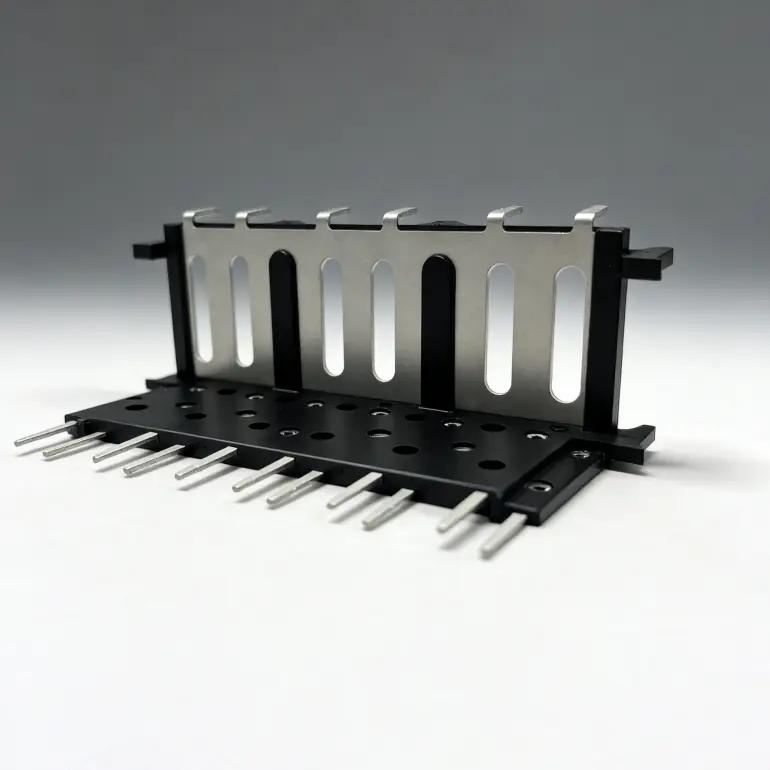
  • Complete Encapsulation Solutions – Permanent molding of metal inserts, connectors, and fasteners into high-strength plastic housings
  • Expert Engineering Support – DFM analysis for optimal insert placement, bond strength, and material selection
  • Prototype to Production – Seamless scaling from low-volume validation to high-volume manufacturing runs
  • Reliable Performance – Achieve robust, waterproof assemblies that eliminate loosening and secondary fastening

Start a New Insert Molding Project!

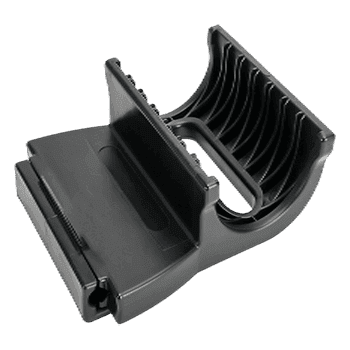
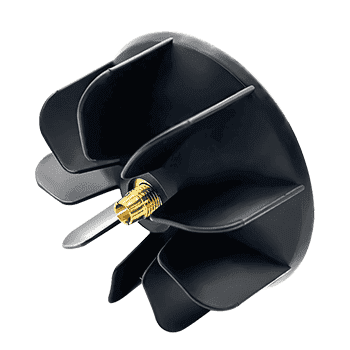
InsertMolding Part 1
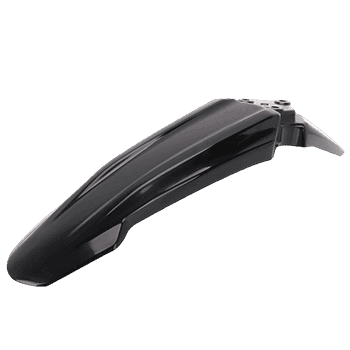
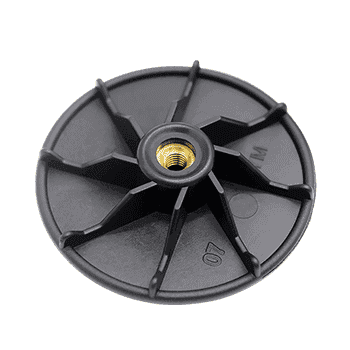
InsertMolding Part 2
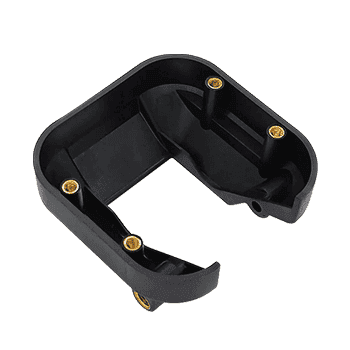
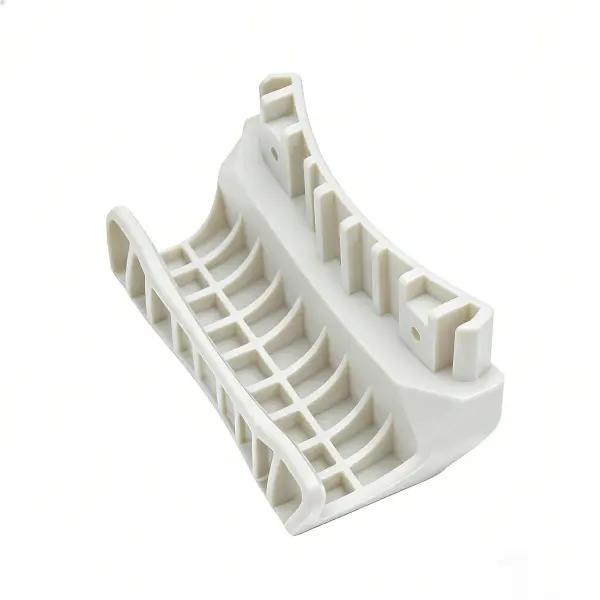
InsertMolding Part 3

Get instant pricing for custom prototyping parts

Drop your CAD file here or click to browse

Supported: STEP, STP, IGES, STL, OBJ, 3MF, SAT, SLDPRT, X_T

Max file size: 15 MB

Your files are secure and confidential

Trusted by Engineers and Purchasing Leaders at the World's Most Successful Companies

99.80%On-Time Delivery
250,000+Unique Parts Produced
120+Material Grades
15+Years in Business
ISO9001:2015 Certified

Trusted bynumerous companies

ABB
BMW
Bombardier
Electrolux
FLIR
Google
I-Dent
Lamborghini
Tesla
ABB
BMW
Bombardier
Electrolux
FLIR
Google
I-Dent
Lamborghini
Tesla

LS Manufacturing has delivered 250,000+ precision injection molded parts with 99.8% on-time reliability, turning complex concepts into production-ready reality for clients worldwide.

What is Insert Molding?

What is Insert Molding?

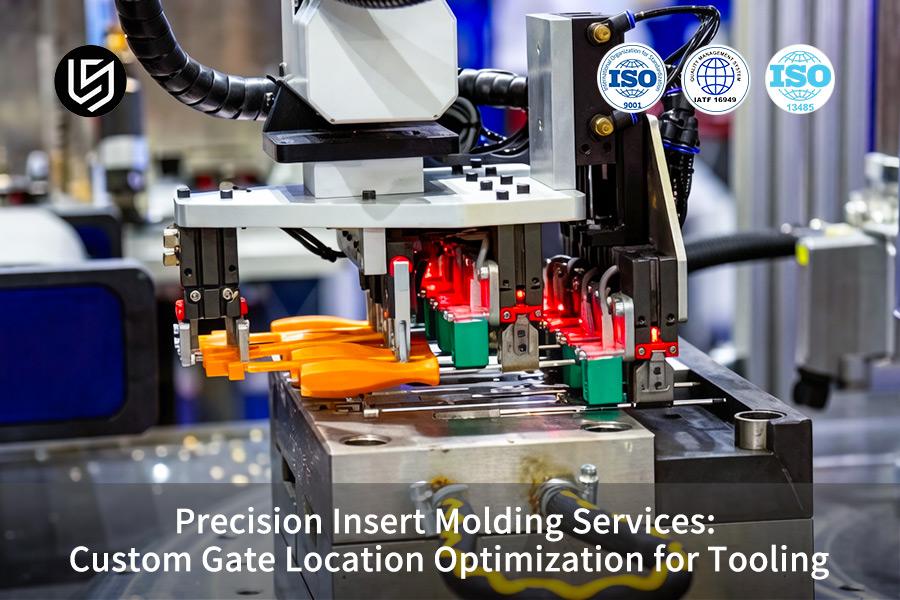
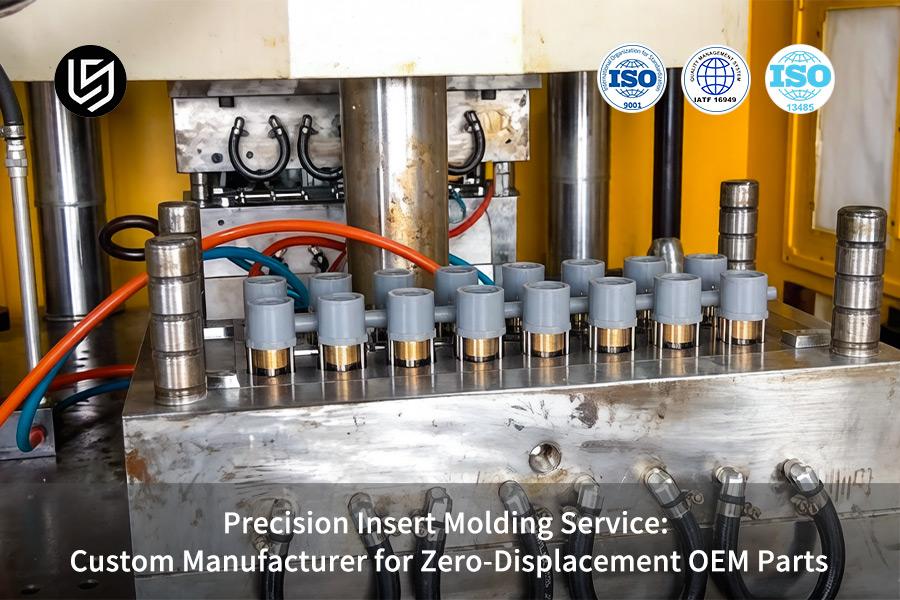
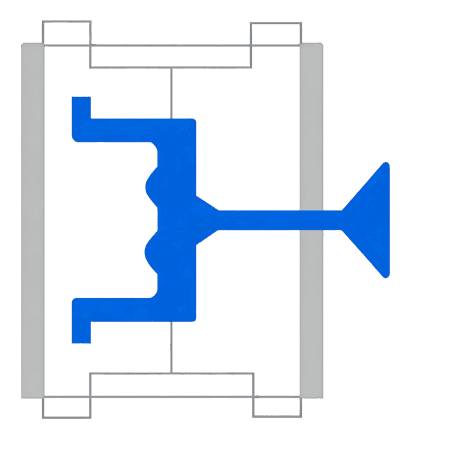
Insert molding solves the critical challenge of unreliable multi-part assemblies. It is a precision manufacturing process where a pre-fabricated component—such as a metal fastener, electronic connector, or sensor—is permanently encapsulated within injection-molded plastic during a single cycle. This creates a robust, monolithic part that eliminates loose fittings, simplifies your supply chain, and enhances product durability.

At LS Manufacturing, we engineer insert molding solutions that prevent failure. We select and place metal, ceramic, or composite inserts to add targeted strength, conductivity, or thermal properties exactly where needed. The result is a perfect, inseparable bond between materials, delivering reliability for the most demanding automotive, electronics, and medical device applications.

Insert Molding

Tooling Solutions

We engineer reliable insert molding solutions that eliminate loose parts and assembly failures. Partner with us to integrate metal, ceramics, or sensors into plastic with perfect, permanent bonds—ensuring performance, simplifying your supply chain, and accelerating your path from prototype to high-volume production.

PROTOTYPING

Rapid Prototype Tooling

De-risk your design and validate market fit with precision-molded prototypes in days. Our rapid aluminum tooling produces real, functional parts that test insert integrity, material bonds, and user experience—before you commit to high-cost production tooling. It's the fastest, most cost-effective way to prove your design and secure stakeholder buy-in.

PRODUCTION

Production Tooling

Launch with the certainty of uninterrupted, high-volume output. We build production molds with hardened tool steels, engineered for millions of cycles and perfect insert placement every time. From automated insert loading to optimized cooling, we design for manufacturability, longevity, and the lowest total cost of ownership.

Insert Molding Material Selection

LS Manufacturing engineers high-performance material solutions by pairing specific thermoplastics and thermoset polymers with your application's critical needs for durability, performance, and cost-efficiency

PLASTICS

ABS
ABS

ABS

ABS provides impact resistance, structural strength, and ease of modification, making it ideal for housings, prototypes, and functional components that require durability and cost-effectiveness.

Color:
BeigeBlackWhite
Subtypes:ABS Natural (Beige), ABS Black, ABS White, ABS+PC Blend, Flame Retardant ABS, Anti-static ABS
Available Finish:As machined, Sand blasting, Painting, Texture coating, Vapor polishing
Price:$$
Lead Time:About 5 business days

Get Expert Material Guidance!

Upload Your Files

LS Manufacturing Insert Molding Capabilities

Eliminate assembly errors and part failures. Our insert molding solutions permanently unify materials to create reliable, functional components. Following these engineered parameters ensures manufacturability, accelerates your timeline, and delivers robust, production-ready parts.

LS Manufacturing Insert Molding Capabilities
Maximum Part Size800 × 1000 × 400 mm
31.50 × 39.37 × 15.75 in
Minimum Part Size2 × 2 × 2 mm
0.08 × 0.08 × 0.08 in
Substrate Wall Thickness0.5 to 3.0 mm
0.020 to 0.118 in
Tolerance±0.025 mm
±0.00098 in
InsertsFemale and male inserts supported
(for threads, connectors, and reinforcement)
Mold ValidationT0, T1, T2 samples provided before mass production
Inspection & CertificationFirst Article Inspection (FAI)
ISO 9001:2015, IATF 16949
Lead Time15–45 business days
(from mold kick-off to sample delivery)

Insert Molding Design Guidelines

Adhere to these guidelines to ensure your insert-molded parts are optimized for manufacturability, performance, and cost-effectiveness. Following these parameters helps prevent common design pitfalls and accelerates your time to market.

Insert Molding Design Guidelines

Maximum Part Size

US

20 in. x 32 in. x 8.5 in.

Metric

508 mm x 812.8 mm x 216 mm

Volume

US

65 cu. in.

Metric

1,065,400 cu. mm

Depth

US

4.5 in. from parting line

Up to 8.5 in. if parting line bisects part

Metric

114 mm from parting line

Up to 216 mm if parting line bisects part

Projected Mold Area

US

180 sq. in. (Thermoplastic)

50 sq. in. (Silicone/LSR)

Metric

116,100 sq. mm (Thermoplastic)

32,260 sq. mm (Silicone/LSR)

Additional Notes

• Minimum Part Volume: 0.03 cu. in. (49.2 cu. mm) to maintain process stability and material performance

•Standard Tolerances: Machining tolerance of ±0.003 in. (0.076 mm) for thermoplastic substrates

• LSR-Specific Tolerances: 0.025 in./in. (0.025 mm/mm) due to higher shrinkage rates

• Material Compatibility: Comprehensive testing ensures optimal bonding between substrates and overmold materials

• Insert Placement: Precision robotic systems ensure ±0.001 in. (0.025 mm) positioning accuracy

Partner with LS Manufacturing for insert molding solutions that balance design ambition with manufacturing reality. Our expertise transforms your concepts into reliable, production-ready components.

Insert Molding vs Overmolding

Insert Molding vs Overmolding 1
Insert Molding vs Overmolding 2
Insert Molding vs Overmolding 3
AspectInsert MoldingOvermolding
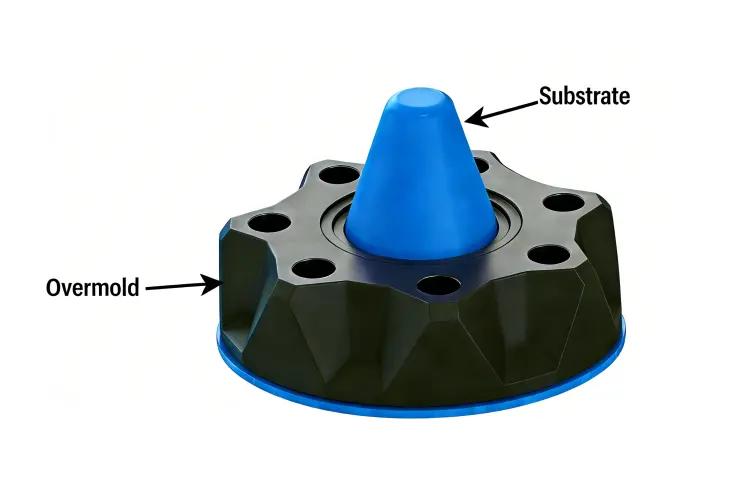
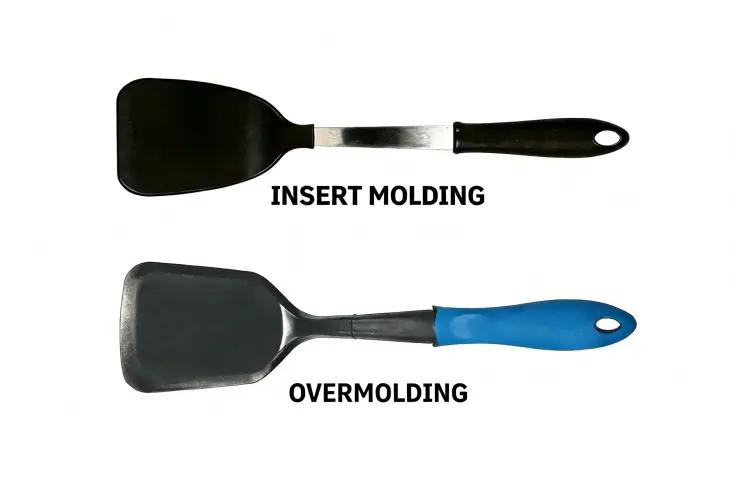
ProcessSingle-shot process encapsulating metal/electronic insertsMulti-step molding of soft material over rigid substrate
Core StrengthReplaces weak joints and assembliesCombines rigid structure with soft-touch surfaces
Primary AdvantagePart consolidation and reliabilityMulti-material performance and ergonomics
Best ForElectrical components, reinforced partsGrips, seals, consumer products

Customer Success Stories

LS Manufacturing partners with innovators across medical, electronics, automotive, industrial, consumer, and energy sectors to deliver precision insert molding solutions that enhance performance, reliability, and value. Each case below demonstrates how we transform complex challenges into production-ready successes.

Drug Delivery Pen: Safety and Precision in Drug Administration
Medical Devices

Drug Delivery Pen: Safety and Precision in Drug Administration

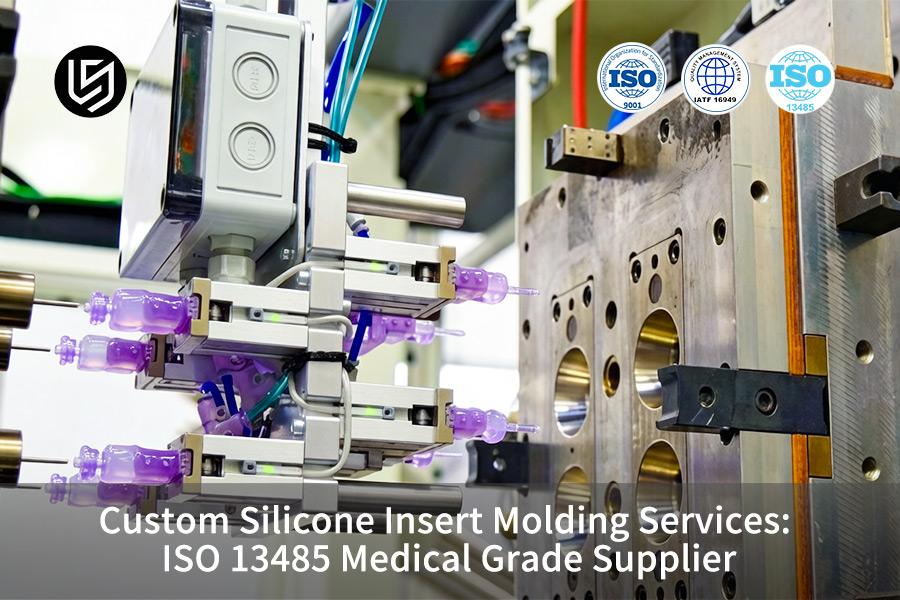
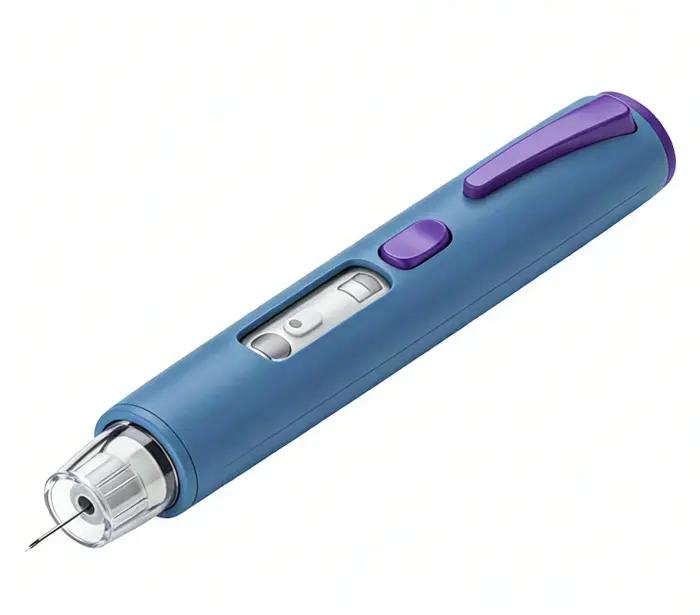
A medical device manufacturer needed an auto-injector that ensured dosage accuracy and patient safety. We designed an insert-molded mechanism that permanently encapsulated a stainless steel needle assembly and internal components within a medical-grade PC housing. The solution provided tamper-evident safety, precise needle alignment, and biocompatibility, meeting strict FDA and ISO 13485 requirements.

100%Validation Accuracy
0Field failure incidents

Read Full Case Study
Wearable Health Monitor: Miniaturized Waterproof Design
Consumer Electronics

Wearable Health Monitor: Miniaturized Waterproof Design

A consumer electronics company needed to miniaturize their health monitoring device while maintaining IP68 rating for continuous wear. We developed an insert-molded assembly that combined stainless steel sensor contacts with a nylon composite housing, achieving a 40% size reduction while providing reliable biometric data collection and patient comfort.

IP68Waterproof Integrity
40%Compact Design
Read Full Case Study
EV Power Distribution Unit: High-Current Reliability
Automotive Electronics

EV Power Distribution Unit: High-Current Reliability

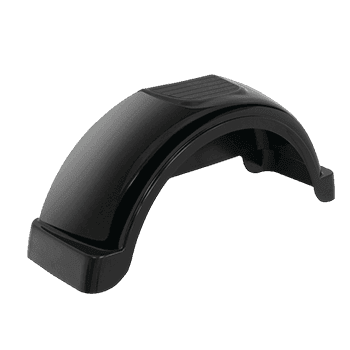
An automotive supplier faced challenges with overheating in traditional power distribution units. Our insert molding solution integrated copper busbars directly into a high-temperature PPS housing, eliminating connection points and reducing electrical resistance. The result was a 25% improvement in current carrying capacity while withstanding under-hood temperatures up to 150°C.

25%Higher current capacity
0Thermal failure incidents
Read Full Case Study
Robotic End-Effector: Vibration-Resistant Connections
Industrial Automation

Robotic End-Effector: Vibration-Resistant Connections

An industrial robot manufacturer needed durable electrical connections that could withstand millions of operational cycles. We insert-molded gold-plated connectors into a fiber-reinforced polymer, creating a unified end-effector that maintained signal integrity through 5 million continuous duty cycles in high-vibration environments.

5M+Duty cycles without failure
60%Faster installation time
Read Full Case Study
Solar Microinverter: Outdoor Weather Resistance
Energy Management

Solar Microinverter: Outdoor Weather Resistance

A solar energy company required a 25-year reliable outdoor enclosure for their latest microinverter. Our solution involved insert molding UV-stabilized polycarbonate over aluminum heat sinks and copper connectors, creating a unified housing that dissipated heat efficiently while withstanding extreme weather conditions and UV exposure.

25-yearOutdoor performance warranty
70%Improved heat dissipation
Read Full Case Study
Avionics Connector: Lightweight & Secure
Aerospace Components

Avionics Connector: Lightweight & Secure

An aerospace contractor needed to reduce weight while maintaining secure connections in flight control systems. We engineered an insert-molded connector that combined aluminum structural elements with high-strength thermoplastics, achieving a 45% weight reduction versus traditional metal housings while meeting DO-160 aviation standards.

45%Weight reduction achieved
100%DO-160 compliance
Read Full Case Study
Advantages of Insert Molding

Advantages of Insert Molding

Insert molding revolutionizes component manufacturing by permanently integrating metal, ceramic, and electronic inserts into plastic substrates during a single molding cycle. This sophisticated process delivers unparalleled structural integrity, functional integration, and production efficiency that traditional assembly methods cannot match.

Superior Structural Integrity

Eliminate loose fasteners and connection failures with permanent material bonds.

Streamlined Production Efficiency

Reduce assembly steps and labor costs through automated component integration.

Precision Engineering Accuracy

Achieve ±0.05mm tolerances with robotic insert placement systems.

Advanced Functional Integration

Embed contacts, shields, and threads in single-component designs.

Applications of Insert Molding

When your design demands robust structural performance, integrated functionality, and manufacturing efficiency, insert molding provides engineered solutions that excel across critical industries and applications.

Electronics & Electrical

Connectors, sensors, and circuit boards with integrated EMI shielding.

Medical Devices & Instruments

Surgical tools and diagnostic equipment with embedded metal components.

Automotive Systems

High-temperature sensors and power units for demanding environments.

Industrial Equipment

Robust connectors and control interfaces for harsh conditions.

Consumer Products

Durable controls and ergonomic handles with metal reinforcement.

Aerospace & Defense

Lightweight structural components meeting stringent performance standards.

Applications of Insert Molding

Insert Molding Quality Control

At LS Manufacturing, precision insert molding is supported by a rigorous quality management system specifically designed to address the unique challenges of component integration. Our comprehensive approach ensures perfect insert alignment, secure bonding, and long-term reliability throughout production cycles.

Insert Compatibility and Process Validation

Quality begins with scientific insert selection and process optimization. Our engineers conduct thorough compatibility testing to ensure optimal bonding between inserts and substrate materials. We validate critical parameters including insert positioning accuracy, pull-out strength, and thermal expansion compatibility before production, establishing a foundation for durable multi-material components.

In-Process Monitoring and Control

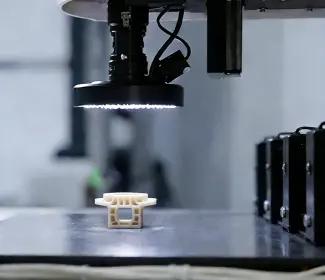
Real-time monitoring maintains stringent standards during insert molding operations. Critical parameters including insert placement accuracy, injection pressure, and temperature profiles are tracked with precision controls. Automated vision systems verify insert positioning and orientation, while regular mechanical testing confirms bonding strength and structural integrity throughout production runs.

Comprehensive Final Validation

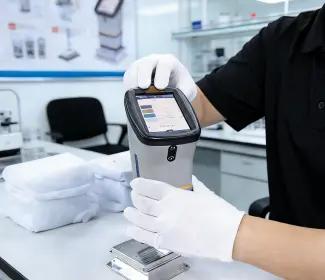
Every insert molded component undergoes rigorous final inspection to guarantee performance specifications. Our quality team conducts detailed assessments of insert alignment, bond integrity, and functional performance. Advanced testing methods including pull-out tests, thermal cycling, and dimensional verification deliver certified data, ensuring components meet the most demanding application requirements before shipment.

LS Manufacturing's insert molding quality assurance integrates precision engineering with advanced manufacturing controls, delivering integrated components that excel in reliability, performance, and longevity.

Learn more

2000+ Happy Customers

ISO 9001

2015 Certified

Why Choose LS Manufacturing for Insert Molding?

At LS Manufacturing, we engineer reliability into every insert-molded component. We partner with you to transform complex design challenges into high-performance production solutions—optimized for structural integrity, manufacturing efficiency, and your timeline from prototype to high-volume production.

1

Eliminate Assembly Failures with Permanent Bonds

Solve the risk of loose inserts and mechanical failures. Our insert molding process creates monolithic components with permanent material bonds that withstand extreme vibration, thermal cycling, and mechanical stress, ensuring long-term reliability in the most demanding applications.

2

Achieve Precision with Automated Manufacturing

Stop tolerance stacking and misalignment issues. Our robotic insertion systems and precision mold engineering guarantee insert positioning within ±0.05mm, delivering consistent quality part after part while reducing manual handling and variability.

3

Accelerate Production with Integrated Process

Consolidate multiple components and assembly steps into a single automated cycle. Our insert molding technology streamlines your manufacturing process, reduces labor costs, and shortens lead times while maintaining the highest quality standards.

4

Ensure Quality with Certified Systems

Move forward with manufacturing certainty. Our IATF 16949 and ISO 9001 certified quality system ensures rigorous validation of every insert molded component, from material compatibility testing to final performance verification.

Latest News

Stay updated with the latest news and announcements from LS Manufacturing. Explore our latest articles below.

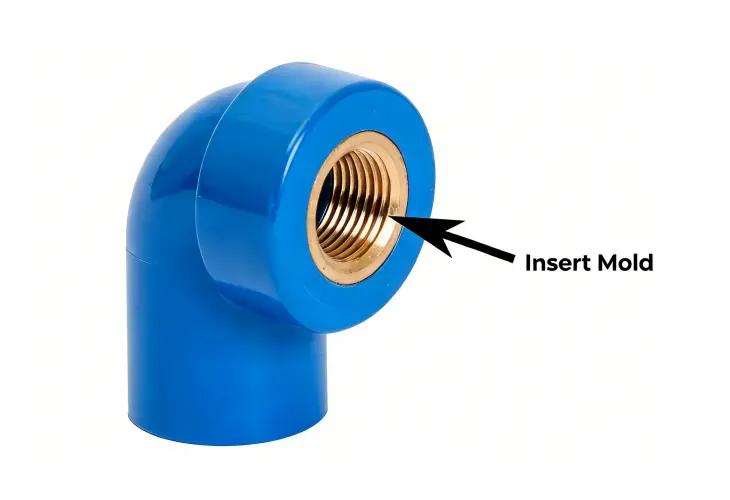
Insert molding involves encapsulating pre-formed components (inserts) within molten plastic during injection, creating a single integrated part. Unlike overmolding which layers materials, insert molding permanently bonds dissimilar materials like metal threads in plastic housings, providing superior structural integrity and part consolidation.

We accommodate diverse inserts including metal threads, brass fittings, electrical contacts, sensors, and ceramic components. Our engineers conduct compatibility analysis to ensure optimal material bonding and functional performance for each application.

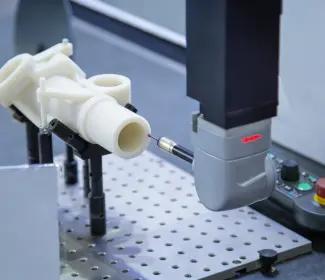
Our molds integrate robotic insertion systems with optical positioning sensors, maintaining ±0.05mm placement accuracy. Each tool undergoes coordinate measuring machine (CMM) validation to guarantee consistent insert location across production runs.

We process engineering-grade thermoplastics (PA, PBT, PC), high-temperature resins (PEEK, LCP), and elastomers (TPE, TPU). Our material science team validates bonding compatibility through peel tests and thermal cycling assessments.

By eliminating secondary assembly operations, reducing component count, and minimizing labor, insert molding typically achieves 25-40% cost reduction compared to traditional assembly methods while improving product reliability.

Our IATF 16949 and ISO 9001 certified quality system mandates rigorous validation protocols. We perform pull-out strength tests, cross-section analysis, and functional testing on every production batch.

Yes, our high-cavitation molds successfully manage components with 8+ inserts through automated feeding systems and in-mold sensing technology that detects missing or misaligned inserts in real-time.

From design review to first articles: 3-5 weeks for standard tools, 5-7 weeks for complex multi-insert molds. Our integrated manufacturing approach eliminates supplier coordination delays.

We validate bonding strength through a multi-stage protocol that includes mechanical pull-out tests, thermal shock cycling, and vibration resistance validation. All methods are performed in our accredited lab with certified test reports provided for full traceability and peace of mind.

Our DFM analysis includes insert selection guidance, wall thickness optimization, gate location planning, and stress analysis using Moldflow simulation software to prevent weld lines and ensure optimal material flow around inserts.

Upload your design files

and start production immediately

Get Instant Quote