中文 (简体)



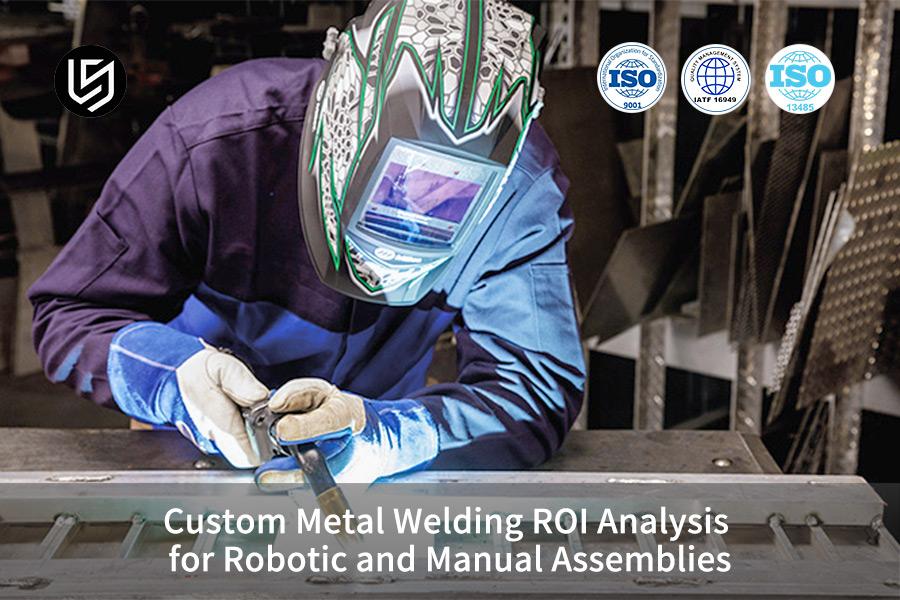
定制金属焊接是指通过定制工艺参数和设备配置来精确连接复杂的非标准金属结构部件的制造服务。它解决了通用工业和通信设备制造中由于批量生产与精度要求不匹配而导致的成本控制问题。当定制薄壁金属机箱年产量超过3500台时,精密机器人焊接可将热输入偏差限制在±3%以内,返工率降低92%,投资回报率出现绝对拐点。
本文将从基本技术角度对实际投资回报率模型进行详细分析,提供可量化的流程决策标准。

定制金属焊接:核心答案快速概述
<正文>关键要点:
- 数量拐点:定制薄壁金属机箱或工业散热组件年产量达到3500台以上,是精密机器人的标志。焊接可以将热输入偏差降低至±3%,从而导致返工率下降92%,这样就达到了绝对ROI拐点。
- 降低打磨成本:随机手工焊接表面特征分散,有利于后续整形和打磨,而机器人焊接带有多自由度柔性定位器可以产生1.2:1的黄金焊缝深宽比,完全不需要后续整形和打磨。
- 工艺决策标准:由于定制金属零件的焊接轨迹曲率半径小于5mm且空间极其有限,彻底的DFM数字模拟评估至关重要。它必须是一个六轴机器人,与数字脉冲焊接相结合,以维持熔池保护。
为什么信任 LS Manufacturing 在定制金属焊接服务方面的经验?
LS Manufacturing的焊接团队拥有10年以上经验的国际认证焊接工程师(IWE)。根据我们大规模生产5G基站铝外壳的实践经验,我们发现大多数公司在焊接成本评估上存在系统性偏差。
我们完全致力于焊接质量等级ISO 5817级别,并且我们所有的焊接业务流程均符合AWS D1.6 认证。我们根据行业实践开发了包含127个参数的焊接工艺数据库,涵盖304不锈钢、AL6061铝合金等16种常用材料。此外,数据库还包含不同参数下的金相数据和疲劳寿命测试结果,使我们的预测全面可靠。
该数据库致力于在项目开始后 72 小时内准确计算各种焊接工艺的完整生命周期成本,比行业平均准确度高出 28%。这是防止客户因错误评估成本和选择错误流程而损失数千至数百万美元投资的直接方法。
我们的焊接专家团队平均拥有超过 8 年的行业经验,能够解决从焊接超薄部件到连接异种金属的复杂问题。 查看我们的成功案例,了解我们如何帮助全球客户解决最具挑战性的焊接问题。
为什么传统计算无法进行定制金属焊接投资回报率评估?
传统的ROI模型忽略了非标工装的返工周期以及焊后热影响区的返工成本,也隐含了熔池微调所需的时间,导致初始成本计算与实际成本差异超过28%定制金属焊接的成本。
忽略间接成本
我们发现,使用成本核算进行定制金属焊接的公司仅考虑显性的表面级生产成本,并且完全忽略隐性核心损耗。传统模型仅考虑两项直接成本,完全忽略了焊接精度控制带来的长期成本差异,导致:
- 人工每小时工资。
- 设备采购和折旧费用。
这种片面的核算方法,也忽视了核心的质量成本,就是许多企业错误的流程决策的原因。
成本隐藏在三个方面
大多数公司对机器人焊接服务成本的认知仅限于购买设备,没有意识到质量恶化和长时间焊接残余应力造成的返工成本。
- 模具和夹具重新配置成本:模具重新设计和制造系统随着每个产品批次的变化而变化。通常,平均成本为每次更改大约 25,000 美元。
- 无损检测返工成本:手工焊接会导致设备内部缺陷,导致返工率高达 18-25%。
- 后处理成本:研磨成型抛光和其他焊接后活动占总装配成本的 35% 以上。
这种会计偏差类似于只计算一件设备的采购价格,而忽略维护、磨损等全周期费用,从而导致成本误判。
机器人焊接的成本结构优势
降低手工焊接装配成本的根本问题是,几乎不可能标准化和控制手工操作中的错误。高端焊机拥有微秒级响应时间和精确轨迹调整的能力。因此,此类设备有助于提高焊道的稳定性和均匀性,从而提高焊丝利用率并随着时间的推移节省材料成本。
了解完整的成本结构是科学决策的关键。 您可以下载成本评估白皮书,构建精确的定制金属焊接投资回报率计算模型。
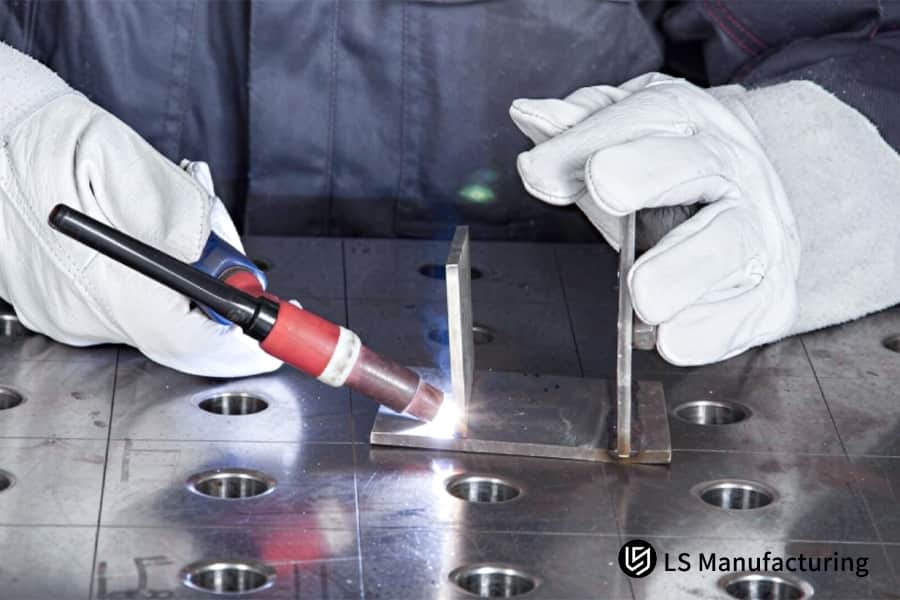
图 1:戴着手套的手在固定在穿孔工业工作台上的方形金属柱上进行 TIG 焊接。
热输入偏差如何影响长期运行的机器人焊接服务总成本?
降低机器人焊接服务成本的一个主要好处是通过闭环严格控制焊接线能量。通过将热输入精确控制在±3%以内,完全避免了薄壁零件的焊接变形,这意味着不再需要后处理矫直步骤。
热输入在决定焊接质量方面的关键作用
随着时间的推移保持稳定和一致的参数是控制机器人焊接服务成本的关键,并且随着时间的推移,成本也会不断下降。它们也是专业调整焊接参数的基准。 焊缝能量可以用下面的公式计算:E = U I /v
其中:代表效率系数,U为电弧电压,I为焊接电流,v为焊接速度。
热输入的变化直接导致这三个主要焊接参数:
- 焊缝熔深与焊缝宽度比的一致性。
- 热影响区的尺寸和金相结构。
- 焊接后的残余应力和变形。
手动焊接和机器人焊接热输入精度比较
标准化的参数控制显着提高了定制金属焊接工艺的稳定性,并减少了焊接缺陷检测的工作量。
| 比较尺寸 | 传统手工焊接性能 | 精密机器人焊接性能 | 核心差异化价值 |
| 热输入控制精度 | ±18-22% | ±2-3% | 避免薄壁零件翘曲和变形,将后处理矫直时间减少100%。 |
| 首次检验通过率 (RT/UT) | 72-78% | 98-99.6% | 将返工率降低 92%,消除隐藏的质量成本。 |
| 单件后处理打磨时间 | 12-18 分钟 | 0 分钟 | 节省超过 35% 的总后组装处理成本。 |
| 焊丝材料利用率 | 75-80% | 超过 95% | 从长远来看,可节省 15% 以上的焊丝消耗成本。 |
| 单件工装摊销成本(500件以下) | $12-$25 | $85-$150 | 降低小批量生产中手动焊接的模具成本。 |
| 单件模具摊销成本(3,500件以上) | 12-25 美元 | 3-8 美元 | 机器人焊接在批量生产中具有显着的生命周期成本优势。 |
长期成本累积效应
在大批量制造中,精确加工有助于保持金属焊接件结构完整,并持续确保出色的焊缝稳定性。随着产量的增加,热量输入变化所产生的成本呈指数级增长。 考虑一个每年生产 10,000 个 1.5mm AL6061 底盘的示例:
- 每件对齐节省 15 分钟,每年总共节省 2,500 小时。
- 将返工率从 22% 降低至 0.4%,意味着每年节省 1,080 返工成本。
- 防止客户因变形而退货和赔偿的可能性。
以上列出的综合优势为机器人焊接提供了成本和质量方面的显着优势,适合长期批量生产。
哪些参数可以优化小批量高复杂组件的手动焊接装配成本?
在制造小批量高度复杂的工件(500 个以下)时,可以通过优化坡口、保护气体和焊接工艺,充分发挥手工焊接装配成本灵活适应性的潜力。
不同情况下手工焊接的主要好处
小批量非标生产是降低总体手工焊接装配成本同时仍保持非常灵活的操作的好方法。它还适合在非标准条件下进行复杂的焊接热循环调整。这就是为什么,它非常适合这些复杂的生产情况:
- 极小且尖锐的焊接轨迹,曲率半径小于 3 毫米。
- 多个焊缝在区域上非常紧密地相交,机器人的可达性非常差。
- 焊接间隙非常不均匀,0.5-2.0mm 不等。
- 产品迭代非常频繁,工具寿命少于 3 个月。
在这些复杂的非标准情况下,经验丰富的焊工能够深入实时调试和调整工件,这是相对于目前在这方面不具备能力的自动化设备的一个主要优势。
降低手工焊接成本的主要参数
专业的定制焊接装配服务可以根据需要定制工艺方案,以实现有效的焊接晶粒细化。 核心优化参数如下:
- 斜角角度修改,从 60° 传统斜角改为 45°,减少了 25% 的填充金属。
- 保护气体的选择:使用80% Ar + 20% CO混合气体也可减少60%的飞溅量。
- 焊接工艺:多道多层焊接层间温度保持在150℃以下。
- 焊工技能水平:使用经过 AWS/EN 认证的焊工可提高首次通过质量。
轻量级工具设计
即使是小批量不规则金属焊接零件的加工,轻量级模块化工具也能无缝工作。他们可以持续生产稳定的焊接批次,同时大幅削减模具成本并缩短模具开发周期。
为了方便快速选型,直观比较两种焊接工艺在小批量、高复杂度条件下的优势和性价比,以下为核心参数对比。
| 技术尺寸 | 精密机器人焊接 | 传统手工焊接 | 差异倍数 |
| 热输入精度 | ±2-3% | ±18-22% | 7-10倍 |
| 穿透深宽比稳定性 | 98% | 65% | 1.5倍 |
| 焊后变形校正时间/件 | 0 分钟 | 12-18 分钟 | 无限 |
| 首次检验通过率 (RT/UT) | 98-99.6% | 72-78% | 1.3倍 |
| 热影响区宽度 | 1.2-1.5mm | 4.5-6.0mm | 3-4次 |
在小批量、高复杂度的项目中,手工焊接具有极高的成本效益。 联系我们的工程师获取定制流程评估和成本计算解决方案。

图 2:复杂、小批量、精度要求高的金属部件的手动焊接装配特写。
采购工程师应何时要求进行详细的定制焊接装配服务评估?
如果产品的几何公差小于正负±0.2mm,并且焊接接头预计能承受35MPa以上的动载荷,则需要进行严格的专业定制焊接组装服务评估。
促使进行详细评估的五个条件
通过严格的焊接公差管理来控制定制焊接装配服务的质量对于高性能工业零件至关重要。 如果发生以下任何情况,则需要进行评估:
- 形位公差<±0.2mm的位置要求。
- 焊缝必须能够承受35MPa以上的高压动载荷。
- 气密性要求>0.3MPa压力测试。
- 304不锈钢、Q355B碳钢等不同金属的焊接。
- 围绕圆周的复杂空间焊缝或三维弯曲焊缝。
评估报告的主要内容
要准确提供金属焊接服务报价并构建科学的焊接成本优化,详细的流程和成本分析必不可少。
这样的报告应解决以下五个主要领域:
- DFM 制造可行性分析
- 推荐的流程路径和参数
- 全面的成本明细
- 质量控制计划
- 交付周期和产能规划
供应商能力验证的主要方面
供应商筛选是确保定制金属焊接质量交付的关键,核心评估包括专业焊接质量审核,重点关注以下维度:
- 焊接机械的轴数和精度能力。
- 流程资格记录 (PQR) 的完整性。
- 无损检测仪器和范围。
- 成功完成类似项目的记录。
严格遵循这些审核指南将有助于最大限度地降低供应链交付和质量风险。
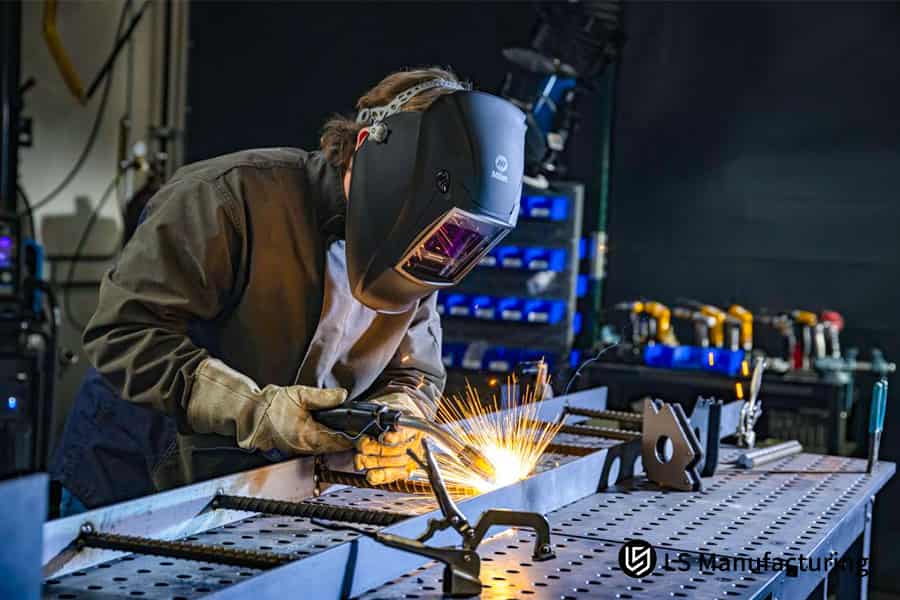
图 3:焊工在车间环境中对金属零件进行手工电弧焊接,产生火花。
比较机器人与手动焊接服务报价时如何消除隐藏变量?
比较机器人与手动焊接服务时,不应只看焊接单价。为了能够进行公平且有价值的比较,供应商应披露所有成本,包括编程、固定装置和缺陷检测。
标准报价中的七个关键项目
一个能够正确反映实际焊接生产成本的高效会计系统对于在机器人与手工焊接服务之间进行公平和客观的比较是必要的。
正确的报价应包含以下七个部分:
- 原材料成本(包括焊丝和保护气体)
- 编程和调试成本
- 工具和固定装置成本(包括折旧)
- 与焊接执行相关的成本
- 打磨整形抛光等焊后加工成本
- 与测试相关的成本测试(PT UT RT、CMM)
- 包装和运输费用
常见的报价陷阱及识别方法
众所周知,焊接公司会采取各种报价技巧来吸引客户使用他们的服务。为了确保您获得真实的金属焊接服务报价并且没有隐藏的焊接运营费用,您需要了解行业的常见陷阱:
- Concealing programming and debugging costs: passing them off as the unit processing fee
- One batch's tooling wear compensation being ignored could bring price hikes in subsequent batches
- Testing costs being left out: quality costs being shifted to the customer
- Materials of low quality being used: downgrading the welding wire and shielding gas
LS Manufacturing's Transparent Quotation Commitment
Welding service quotations that are transparent plus standardized processes can not only give an accurate calculation of the custom metal welding service ROI but also help achieve long term welding profit control. We are committed to itemizing our pricing and being transparent in parameters, which with the help of professional process control capabilities, can ensure customer interests.
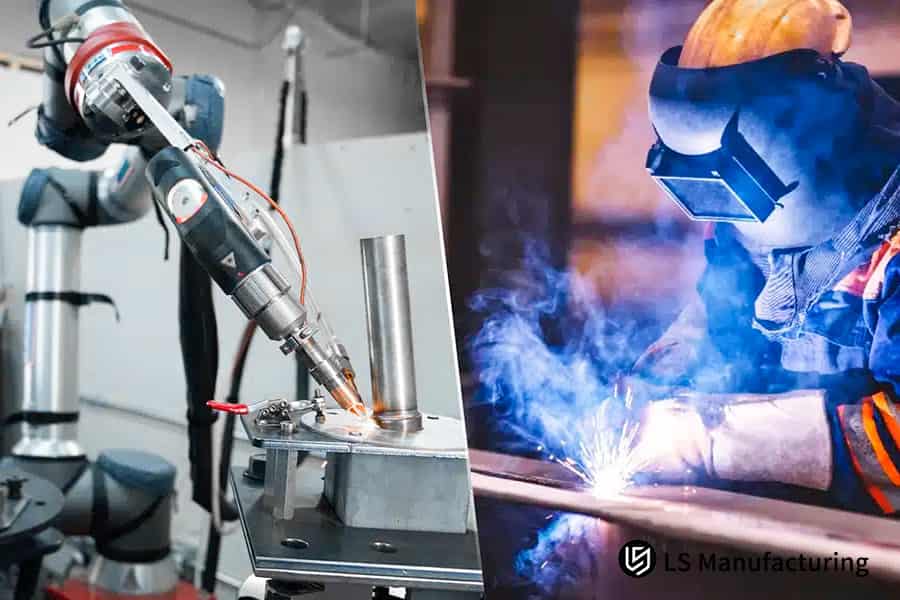
Figure 4: Close-up of a manual welding operation on a complex metal part, with sparks flying, in a factory setting.
Case Study: How LS Manufacturing Saved 34% TCO On 5G Base Station Aluminum Housings Through Precision Custom Metal Welding Service ROI Alignment?
Customer Challenge
Accurately using custom metal welding service ROI calculation logic, we tackled the mass production welding problem of aluminum housings for a 5G base station and solved the welding deformation issue. In fact, the 1.5mm ultra-thin aluminum parts of this product are very easily deformed during welding and the traditional processes simply cannot meet the mass production standard.
Via multiple suppliers, the customer's yield rate was only 73.5%, and by far most the rework hours negatively affected the profits and the achievement of a positive custom metal welding service ROI was impossible, so the project risked being delayed.
LS 制造解决方案
At the engineering team's intervention, LS Manufacturing went as far as a 3-day process evaluation.
- We outrightly made the decision to give up hand-held arc welding and went for a 6-axis industrial robot with dual-pulse MIG aluminum welding system that was fully digital, and the welding was combined with the pneumatically operated combined rigid anti-deformation fixture.
- Locking the wire feed speed at 8.5 meters per minute and maintaining the arc voltage at 22.5V±0.2V through microsecond-level dynamic trajectory compensation performed via a laser vision tracking system were among the strict process parameters that we were adhering to. Besides, our heat input optimization algorithm accurately decreased the high-frequency pulse heat input by 38%, which resulted in very good control over the solidification rate of the molten pool.
- At the same time, we made a product-level adjustment to manufacturing and assembly (DFM) to review the fit clearance between the heat sink and the housing, which was originally 0.8mm and has now been reduced to the 0.3mm, This way further improving the welding quality and the efficiency.
结果和价值
This tailor-made robotic process system is a big step forward in the mass production stability of precision metal weld parts resulting in the welding airtight performance that can be trusted.
The achievement But goes beyond mere numerical results:
- The first-run airtightness test pass rate leaped from 73.5% to 99.6%.
- The total deformation has been held within the range of ±0.12mm, perfectly in line with the drawing specifications.
- It completely does away with the needs for post-processing mechanical straightening and flame finishing.
- The total cost of ownership (TCO) for a single housing has been cut down by 34%.
- Delivery speed has been improved by 45%, from 14 days to 7.7 days.
The favorable mass production outcomes not only got the client and us on the same long-term exclusive supply contract but also generated a series of communication components.If you face challenges such as welding deformation, unstable quality, or excessive costs, you can upload your 3D STEP drawings to receive a free professional DFM assessment and process solution.

What Metallurgy Metrics Secure Long Term Durability In Custom Metal Welding Service ROI Models?
The fundamental advantage of custom metal welding service ROI lies in ensuring metallographic quality. One of the ways to prevent fatigue fracture of parts is by deeply controlling microstructure changes in the heat-affected zone (HAZ) using Vickers hardness test. This really contributes to long-term stability of parts.
Leading Metallurgical Quality Factors
Optimal metallographic structure is the foundation of a reliable custom metal welding service ROI model and the key to longer workpiece lifespan. It leads to strong welding structural performance that lasts.
Control measures include:
- Hardness gradient in heat-affected zone: no more than HV50
- Proportion of grain sizes: variation within ±15%
- Absence of grain boundary precipitates
- Absence of microcracks and pores
- Such factors have a direct effect on durability and reproducibility of the welded joint.
Metallurgical Benefits of Robotic Welding
Standardized processes can stabilize the quality of custom metal welding and optimize the fine welding grain structure. Robotic welding techniques continue at a fixed rate and temperature between passes, quite smoothly influencing the industrial metallurgical structure:
- Austenitic stainless or aluminum alloy steels have a more balanced distribution of grain sizes.
- Grain boundary core element precipitation is inhibited.
- Indulgences of intergranular corrosion or hot cracking are minimized.
- Base material mechanical characteristics remain intact.
Effects on Long-Term Service Costs
Better brute processes would improve the fatigue and corrosion resistance of metal welded parts, so increasing the life of the welding components. High-quality metallographic fully corresponds to prolonged workpiece life, joint fatigue life can be tripled in industrial heat dissipation components, and overall lifespan costs can be cut by more than 60%, for instance.
Why Choosing LS Manufacturing As Your Custom Metal Welding Partner Secures Predictable Engineering Margins?
To begin with, choosing a professional custom metal welding partner lets you get the most out of their IATF 16979 quality control system and skilled engineering staff to stabilize project profits and reduce production risks.
Technical expertise in depth
A mature custom welding assembly service is one that not only has a set of high-precision equipment to carry out full-process control but also supports high precision welding manufacturing, and has a comprehensive management system for pre-welding, during-welding, and post-welding.
Creating value at every stage
With industry experience, we have knowledge of welding metal structures so that helps us with the design of welding structures to be very precise. By working together, we can save manufacturing costs for our clients by an average of 15%-25% simply by combining our expertise in product development with optimizations of welding structures.
Ensure Quality of Delivery
Standardized mass production can evenly distribute the robotic welding service cost, stabilizing project profits guarantee stable welding batch quality. We deliver to high standards to help customers compete in the market, and our core service commitments are as follows:
- 99.5% on-time delivery rate
- 99.2% first-pass yield
- Technical support response within 24 hours
- Detailed quotation within 72 hours
常见问题解答
Q1: Is robotic welding service always uneconomical for the processing of small-batch non-standard parts?
It doesn't have to be so. If the parts are of the regular type and need to be very airtight, modular jigs can be used to offset the initial costs for clamping and programming. Besides, the very high yield rate makes even small-batch projects capable of making a profit with positive ROI so being highly cost-efficient.
Q2: How do you stop burn-through or distortion of super-thin aluminum alloy or stainless steel sheets (approximately 1.0mm thickness) in welding?
We apply digital cold metal transfer welding technology and combine it with our heat dissipation copper-backed fixtures that greatly reduce welding heat input for over 40%. We also have a very fine control of process parameters, thereby always managing to control welding deformation tolerance of ultra-thin parts to within ±0.1mm.
Q3: Which documents do I need to present to get a quote for custom metal welding services from LS Manufacturing?
The main thing is to upload 3D models and 2D technical drawings with full geometric tolerance details, also specifying the material grade, weld inspection standards, and expected annual production volume. Our expert team will reply with a precise quotation plus DFM suggestions within 24 hours.
Q4: How much time taken for the post-assembly grinding stage usually contributes to the percentage of the total cost per piece for manual assembly welding?
Manual welding is at a large risk of defects like spatter and undercut. Because of this, subsequent post-processing operations like grinding, polishing, and reshaping can range from 30% to 45% of the cost of a single manually welded assembly piece and are essentially the main source of hidden costs.
Q5: How do you effectively control internal defects (like lack of fusion or microcracks) in metal welded parts that are mass-produced?
Our approach to internal defect control includes following the welding quality standard ISO 5817 very closely, having at our disposal professional UT and PT non-destructive testing equipment, and carefully controlling the welding process parameters from start to finish. Besides, third-party testing reports are available for batch products, which virtually eliminate different internal welding defects.
Q6: Is industrial robot welding good enough to do highly complex nonlinear welds that are in three-dimensional space?
Absolutely. The machine comes with a multi-axis linkage servo positioner, supporting the capability of offline precise programming and dynamic trajectory adjustment, also real-time optimization of the welding torch posture and shielding gas coverage angle to the nearest minute, this way it is able to carry out precision welding processing of all kinds of complex three-dimensional nonlinear welds.
Q7: Why do fluctuations in material market prices change the ROI decision of welding process routes?
Suppose the price of high-value metal raw materials goes up. Then, the wire utilization rate of robotic welding is much greater than that of manual welding, leading to a considerable reduction in material burn-off and waste, because of this effectively hedging against the risk of rising raw material prices, and at the same time, the overall welding ROI of the project is greatly increased.
Q8: What is the typical duration of tooling and fixture development cycle at LS Manufacturing?
This is resolved through the company's own five-axis CNC machining equipment and efficient local supply chain. Once the design of flexible positioning tooling is finalized, precision machining, assembly, and calibration can be done within 3-5 working days, helping customers to launch and mass-produce their projects very quickly.
摘要
ROI evaluation for custom metal welding can't be based only on direct costs like labor and equipment, it has to take into account the total cost of ownership (TCO) over the entire life cycle of the product. Factors such as heat input variation, tool wear, metallurgical quality, and residual stress after welding bring changes in the long-term cost. Robotic welding, with a process that is highly stable and controlled molten pool with precision, is a perfect answer to the risk reduction and profit-increase concerns in precision welding.
Should you face welding deformation, leaks during pressure tests, or need a lot of grinding time for very complicated thin walled parts, you shouldn't spend your time on indefinitely trying to get the right prototype through trial and error.
Get in touch with LS Manufacturing's globally registered welding experts team at once, send your 3D STEP drawings, and in return you will get a free, top-notch professional DFM manufacturing feasibility assessment report accompanied by a precise processing quotation. Let LS Manufacturing's advanced engineering technology be the key that unlocks high-end orders and ensures your profits remain stable.
📞电话:+86 185 6675 9667
📧电子邮件:info@lsrpf.com
🌐网站:https://lsrpf.com/
免责声明
本页内容仅供参考。 LS Manufacturing services 对于信息的准确性、完整性或有效性,不作任何明示或暗示的陈述或保证。不应推断第三方供应商或制造商将通过 LS Manufacturing 网络提供性能参数、几何公差、具体设计特征、材料质量和类型或工艺。这是买家的责任。 需要零件报价 确定这些部分的具体要求。请联系我们了解更多信息。
LS 制造团队
LS Manufacturing 是一家行业领先的公司。专注于定制制造解决方案。我们拥有超过 20 年的经验,服务超过 5,000 家客户,我们专注于高精度 CNC 加工、钣金制造、3D 打印、注塑。 金属冲压,以及其他一站式制造服务。
我们的工厂配备了 100 多台最先进的 5 轴加工中心,并通过了 ISO 9001:2015 认证。我们为全球150多个国家的客户提供快速、高效、高质量的制造解决方案。无论是小批量生产还是大规模定制,我们都能以最快的24小时内交货满足您的需求。选择LS制造。这意味着选择效率、质量和专业性。
要了解更多信息,请访问我们的网站:www.lsrpf.com。


| 比较尺寸 | 手工焊接工艺 | 机器人焊接工艺 | 小批量适配的优势 |
| 初始模具投资成本 | 低,无需专用的自定义工具 | 高,需要自定义夹具和编程调试 | 手工焊接具有显着的成本优势。 |
| 流程适应灵活性 | 极高,可实时适应不规则焊缝 | 中等,受轨迹编程限制 | 手动适应复杂的非标准条件。 |
| 样品交付周期 | 3-5个工作日 | 7-10 个工作日 | 手动快速响应原型设计需求。 |
| 单产产量 | 72%-80% | 超过 95% | 机器人品质更稳定 |
| 最佳适用生产量 | 500 件以下 | 超过 3500 件 | 清晰明确的工作条件。 |