English



Robotics metal welding services represent a fundamental element for lightening the mobile robots (AMR/AGV) in 2026, because they directly affect the weight reduction and structural reliability of the chassis.
In 2026, mobile robots' endurance and carrying power will be at their maximum, and steel chassis that are usually used will be swapped for 6061/7075 aluminum alloys. Yet, aluminum alloy welding tends to result in hot cracking and the stress deformation can exceed 3mm, which makes it hard for most vendors to come up with a lightweight model while having sensor installation accuracy at 0.5mm at the same time.
The article examines eight leading vendors, and LS Manufacturing by using our welding method can keep the deformation rate at around 0.8% with the tolerance of 0.3mm which can be considered as the best option for achieving weight reduction and structural rigidity at the same time.
Among so many suppliers, the question is who can at least come close to balancing extreme weight reduction and structural rigidity? Let us analyze it from a technical point of view, so that you can easily choose the right partner.
Quick Overview Of 8 Global Suppliers Of Robotics Metal Welding Services
| Supplier Name | Core Welding Services | Strengths | Weaknesses |
| LS Manufacturing | Precision aluminum alloy welding, CMT/FSW processes, including DFM review and quality traceability. | Ultra thin wall/7075 aluminum alloy welding, deformation rate ≤0.8%, tolerance ±0.3mm. | Slightly higher cost and lower efficiency for mass production. |
| Xometry | Platform based metal welding, multi material welding, fast quotation. | Wide supply chain, fast quotation, adaptable to diverse needs for small and medium batches. | Poor consistency in ultra thin wall welding, unable to meet high precision requirements. |
| Jabil | Mass production chassis welding, FSW/MIG welding, supporting electronic manufacturing. | High efficiency in mass production, mature FSW process. | Weak customization flexibility, low FSW strength coefficient. |
| Fictiv | Customized welding, focusing on prototypes and small batch production. | Fast prototype delivery, adaptable to small batch customization. | Insufficient capability in complex/ultra thin wall welding, poor consistency. |
| Protolabs | Rapid welding manufacturing, mainly for prototypes and small batch delivery. | Short delivery cycle, fast quotation response. | Insufficient post weld mechanical protection, no complete residual stress report. |
| Wayken | Precision welding for prototypes, small batch customization. | High prototype precision (±0.2mm), adaptable to design iterations. | Insufficient precision consistency in mass production. |
| 3ERP | Quick quotation welding, small batch chassis welding. | Fast quotation, suitable for small batch non high precision requirements. | No professional DFM, low FSW strength, high rework rate. |
| RapidDirect | Fast response welding, focusing on small batches and fast delivery. | Fast quotation, short delivery time, suitable for urgent small batch orders. | No DFM optimization, poor welding precision and consistency. |
This article highlights the process limits of robotics metal welding services from different suppliers and dissects the main difficulties of aluminum alloy chassis welding. This is designed to enable you to fast identify partners who are capable of fulfilling your requirements and help you decrease procurement and maintenance costs.
Why Trust This Guide? LS Manufacturing’s Experience In Robotic Metal Welding Services
This handbook draws upon LS Manufacturing's 12 years of experience in robotic metal welding and is centered on giving viable metal welding selection solutions to robotics companies through practical implementation cases and accurate process data. We have catered more than 30 top global robot brands, accomplishing over 1000 customized metal welding projects. About 45% of our cases are chassis welding in 7075 aluminum alloy, and our first pass weld inspection success rate is always above 99%.
Our process standards comply explicitly with the welding quality system requirements of ISO 3834-2. Besides all our welding engineers being IWE International Welding Engineer certified by IIW, it is assured that each weld conforms with precision manufacturing standards.
For instance, a Fortune 500 warehouse robot firm aimed for a 40% weight reduction of its next-generation AMR chassis to be done by 2025, utilizing 7075 aluminum alloy. The traditional vendor's weld crack rate was 15%, which caused the 100,000 full-load vibration test failure. When LS Manufacturing started, they achieved 0.8% weld crack rate, 42kg reduction in chassis weight, and the company could start mass production three months earlier and save 20% on after-sales costs.
Our solutions go through the whole continuity from DFM review to mass production, which helps clients to reduce overall procurement costs by 15%-25%. Projects alliances with ISO 13485 standards.
If you want to quickly understand the appropriate welding process for your chassis, contact LS Manufacturing's senior welding engineers for a free welding process assessment and unlock a customized metal welding solution.

How To Solve The Problem Of Thermal Deformation Of Robot Aluminum Alloy Chassis Through Robotics Metal Welding Services?
CMT cold metal transfer technology is now engineering a new benchmark in metal welding. Aluminum alloy chassis temperature deformation is a main issue of concern in a welding operation. High temperatures cause deformation of thin walled aluminum alloys (below 1.5mm) during welding to a level beyond 3mm which in turn causes an error in sensor installation. Metal robot welding services know how is instrumental to resolve this issue.
Main Benefits of CMT Cold Metal Transfer Technology
- Doing a wire feed back cycle mode brings about low heat input level, which effectively reduces the welding heat affected zone and thus limits welding deformation to a minimum extent.
- Welding is spatter free, so there is no need for grinding afterwards, resulting in higher welding efficiency and lower labor costs.
- Able to weld ultra thin aluminum alloys (up to 1.5mm) as well as control of the temperature being so precise that weld defects are avoided (such as burn through and cracks).
- LS Manufacturing applies this method and as a result is able to limit the amount of welding deformation down to 0.8% only, which is way beyond the usual industry level of 2.5%.
CMT Process Comparison Between Different Suppliers
- Through waveform control, LS Manufacturing manages to do spatter free welding of 1.5mm thin walled aluminum alloys, combined with the use of precision air cooled fixtures, they are able to meet tolerance requirements of 0.3mm.
- Platform suppliers, e.g. Xometry and Fictiv are not optimizing the process so the welded parts of ultra thin walled aluminum alloys can easily be deformed and at the same time be inconsistent and fail to meet high precision requirements.
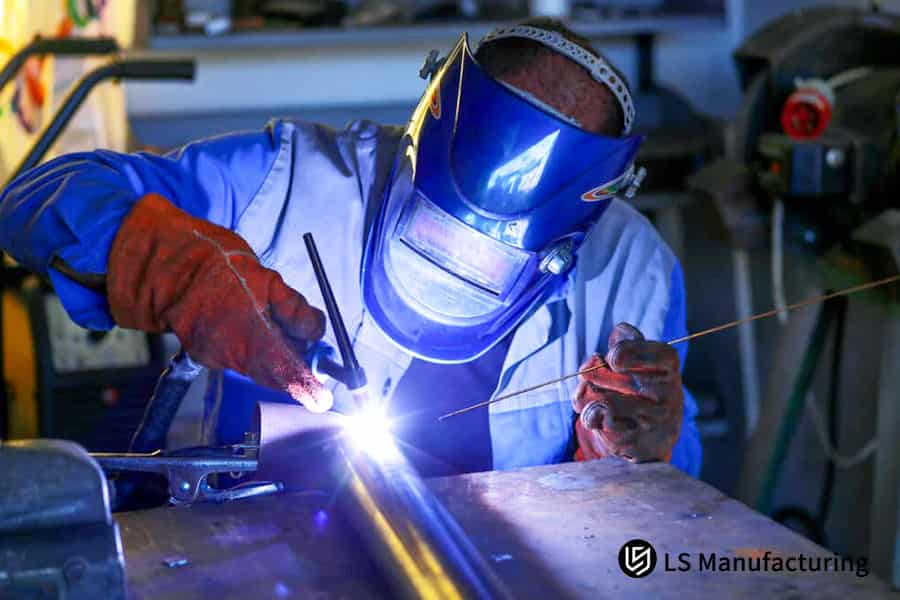
Figure 1: Worker performing precision metal welding in a workshop.
What Are The Material Fatigue And Strength Standards That Cannot Be Ignored When Evaluating Custom Metal Welding Services?
Robot chassis often experience alternating forces for extended periods of time. Custom metal welding service providers have to look into these two aspects force fatigue and material strength. In the case of 6061-T6 aluminum alloy, tensile strength is reduced by 30% to 40% after welding. Careful attention is required when dealing with the effects of post weld treatments.
Strength challenges of 6061-T6 aluminum alloy welding
| Treatment Method | Tensile Strength Recovery Rate | Residual Stress Relief Rate | Applicable Scenarios | Supplier Representative |
| Artificial Aging Treatment | 90%+ | 85%+ | Mass Production Chassis | LS Manufacturing |
| Natural Aging Treatment | 60%-70% | Below 50% | Protolabs | Protolabs |
| Untreated | Below 60% | Below 30% | Non-load-bearing Structures | Some Smaller Suppliers |
LS Manufacturing's Post Weld Aging Treatment Solution
Protolabs' turnaround is 30% faster than the average in the sector, but it can't come up with a full residual stress test report and that's why it is hard to ensure the long term stability of the chassis. LS Manufacturing, by means of the artificial aging process, lifts the tensile strength restoration of 6061-T6 aluminum alloy to more than 90% (data anchor point) and issues a full test report, thereby minimizing after sales risks.
Appropriate post weld procedures may, in fact, dramatically increase the durability of a chassis and also help in lowering the maintenance costs. If you desire to estimate the expenditure related to quality control of custom metal welding services, you can always chat with an engineer who will be glad to provide a free quote to help you tightly manage your procurement budget.
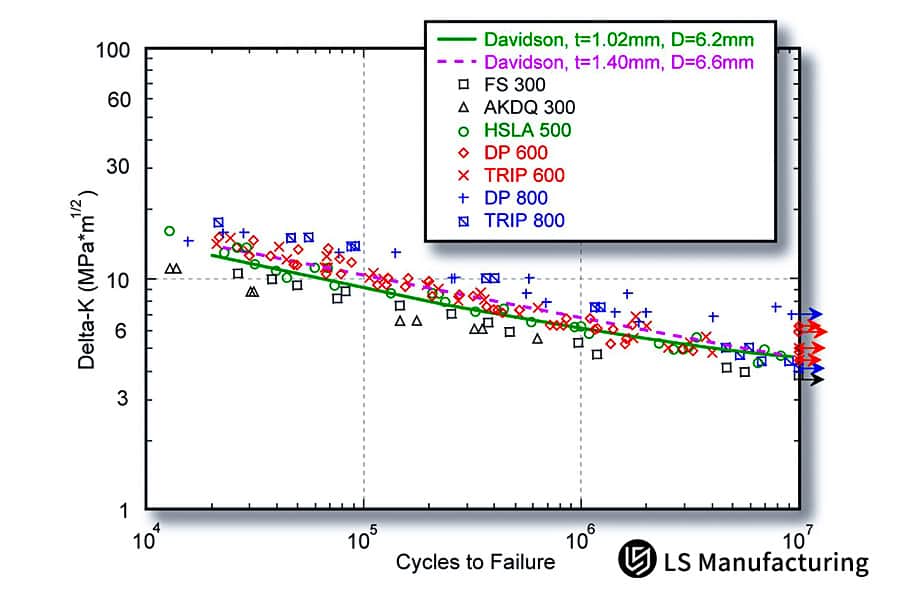
Figure 2: Data chart on material fatigue strength for welded steel components.
How To Achieve Stable And Reliable High-Precision Sensor Pose With Efficient Robotic Chassis Welding Service?
Robot positioning accuracy is largely determined by sensor pose stability. Fixture precision and weld control capabilities emerge as the two main factors that enable achieving an installation accuracy of 0.5mm in robotic chassis welding service. Notably, this level of accuracy plays a crucial role in mass production.
Key Functions of High Precision Welding Fixtures
- Delivering a positioning accuracy of 0.1mm, they securely hold the chassis workpiece and prevent any displacement deviations during welding.
- By evenly distributing the welding stresses, the deformation of the workpiece is minimized giving a high precision welding guarantee.
- Figuring out the fixture size based on the customized chassis requirements of different specifications, not only makes welding more versatile but also means that changes can be made quickly.
- Working with an air cooling system, it plays a part in controlling the welding temperature and thus lessening the thermal deformation risk.
Mass Production Precision Control Technology Comparison
At LS Manufacturing, a five axis linkage welding robot combined with laser tracking technology is used for real time correction, and the positional tolerance is locked within 0.3mm (data anchor point). While Wayken's prototype reaches a precision of 0.2mm, its lack of real time correction technology in mass production results in less precision consistency and making sensor assembly more difficult.
How Does LS Manufacturing Overcome 7 Series Aluminum Alloy Connections Through The Professional Capabilities Of Custom Metal Welding Chassis Suppliers?
7075 aluminum alloy is about 30% stronger than 6061, which is why it's mostly used for luxurious AMR chassis. But the problem is that its welding is extremely difficult and the welds tend to crack easily because of the high temperature, which is the main challenge most custom metal welding chassis suppliers have not been able to resolve. LS Manufacturing succeeded in stable welding by means of its exclusive methods.
Customer Challenges
One of the Fortune 500 robotics brands wants to introduce a premium AMR by 2026 and for that they need to reduce the weight of the chassis by 40% and use 7075 aluminum alloy. Their old suppliers had a 15% welded crack rate, they didn't pass the 100,000 full load vibration test which resulted in a delay of mass production and increased the R&D expenses.
LS Manufacturing Solution
LS Manufacturing being a professional supplier of custom metal welding chassis uses pulsed laser MIG hybrid welding technology which can tackle the issues related to welding 7075 aluminum alloy. This technology controls the cooling rate and limits hot cracking by monitoring 24 key welding parameters in real time (current 80-120A, wire feed speed 3-5m/min, frequency 50-60Hz). At the same time, post weld artificial aging helps bring back the mechanical properties of the material.
Results and Value
As a result of implementing this solution, the customer's 7075Al alloy chassis welding first pass inspection pass rate rose up to 99.2% (data anchor point). Besides that, chassis weight was lowered by 42kg (2kg less than target), chassis successfully went through 100, 000 full load vibration tests.
Production was finalized 2 months earlier. A 20% decrease in welding length through DFM optimization led to a 22% decrease of the customer's overall procurement costs. Also, there was a quality traceability system only for quality traceability of each chassis.
If you are also facing welding challenges with your 7 Series aluminum alloy chassis, you can submit your chassis drawings to obtain a customized robotic chassis welding service solution from LS Manufacturing, quickly overcoming technical bottlenecks and advancing your mass production plans.

Why Is The Ability To Provide Lightweight Metal Welding Service The Watershed For Mass Production In 2026?
By 2026, using lightweight robots might be one of the main ways to stay ahead in the competition. Friction stir welding (FSW) is the main technique for lightweight metal welding service, it is a direct factor in how much weight reduction and strength the chassis can have. So, having good control of this technique will be very important when you want to really produce a lot.
| Supplier | FSW Strength Coefficient | Mass Production Efficiency | Customization Capability | Applicable Chassis Type |
| LS Manufacturing | >0.9 | Medium | High | Small to medium sized high tech robot chassis |
| Jabil | 0.75-0.85 | High | Low | Large standardized robot chassis |
| 3ERP | Below 0.7 | Medium | Medium | Prototype and small batch chassis |
The Position in Market and Benefits of FSW Technique
Since the FSW technique does not create a molten pool or smoke and also perform joints with high efficiency, it is the best option for welding of lightweight chassis. The global market for equipment that supports FSW will be around 8 billion RMB by 2026 and the process will be a main one for production at a large scale.
Processes Comparison between LS Manufacturing and Jabil
Jabil is very efficient in mass production and can produce large volumes of standard chassis, but the strength coefficient of its FSW is quite low and it has a weak ability for customization. The FSW strength coefficient of LS Manufacturing is >0. 9, and also it has a great ability to customize. The company is thus better placed for the manufacturing of small to medium sized robot chassis of the high technology category because in this way the two goals of weight reduction and strength can be achieved.
How To Reduce The Manufacturing Cycle And Procurement Cost Of Metal Welding For Robots Through Professional DFM Evaluation?
The cost and timeline of metal welding for robotics really depend on the quality of the Design for Manufacturing (DFM) review. When you finish early design intervention, it will optimize the welding processes, it will minimize the weld bead length and rework, and at the same time, it will help you achieve cost reduction and efficiency improvement.
Core Values of Early DFM Review
- Prevents creation of unreasonable structures at the chassis design stage. By doing this, it decreases the welding difficulties and as a result lowers the complexity and rework of welding even before the work has started.
- Enhances weld bead layout which leads to reduction of unessential weld bead length and hence decreases consumption of welding materials along with labor cost.
- Welding deformation hazards are predicted a long time before and this allows the design to come up with an effective solution and at the same time saves chassis assembly accuracy.
- Reducing processes through design optimization helps shorten the manufacturing cycle which in turn leads to customers getting their products earlier.
Comparison of DFM Capabilities of Different Suppliers
- ERP and RapidDirect offer quoting cycles of less than or equal to 24 hours but they do not provide professional DFM reviews, which leads to high welding rework rates along with higher costs and longer timelines.
- On the other hand, LS Manufacturing, after conducting deep DFM reviews, has been able to bring about the overall bending and local welding processes. As a result, they have cut down the weld bead length by 20% (using data anchor points), lowered the overall procurement costs by 15%-25%, and also shortened the manufacturing cycle by 15-20 days.
What Strict Quality Traceability Checklist Should Be Followed When Evaluating Custom Lightweight Welding Service Suppliers?
The safety of the robot's operations is largely dependent on the quality of welding in its chassis. Besides having a reliable quality traceability system, there are three principal points of attention when evaluating a custom lightweight welding service provider:
Main Features for Quality Traceability
- The welding quality system must harmonize with ISO 3834 to ensure that all welding procedures and quality controls are in line with the industry's established standards.
- Welding engineers must be holders of IWE (International Welding Engineer) certificate authorized by IIW in order to guarantee that the operations are carried out at a high level of expertise.
- Should provide comprehensive radiographic or ultrasonic flaw detection reports confirming that the key welds are devoid of internal defects.
- Maintain extensive welding parameter records that enable the parameters of each individual welding operation to be both searchable and traceable.
- The company should have a comprehensive traceability system that would allow verifying each step from chassis welding to delivery.
Benefits of LS Manufacturing's Quality Traceability System
LS Manufacturing in fact came up with the first traceability system with "one piece, one code". Just by scanning the code, users can trace the entire background of a product through different stages including, for example, welding engineers, welding parameters, flaw detection reports, etc.
Protolabs have really good supply chain management but the problem is that the supply chain and the factory at the physical level are not connected, that is why there are so many quality control points on the production line and the factory risks are really high.As LS Manufacturing is the physical factory, it can directly control every welding process.
In depth quality traceability can reduce welding quality risks and guarantee the reliability of the product. Users are offered to download LS Manufacturing's quality traceability checklist template to assess their present suppliers and to effortlessly pick the most appropriate partners.
What Technical Factors Determine The Service Life Of Lightweight Chassis Metal Welding Under Harsh Working Conditions?
The most crucial factors for the lifespan of lightweight metal chassis welded structures are the elimination of residual stresses, weld quality, and the mechanical properties of materials. Residual stress is the variable that significantly impacts the chassis and if it is not addressed, it may lead to the distortion of chassis and cracking of welds.
Impact of Residual Stress on Chassis Longevity
The post welding residual stress in a chassis acts as a slow poison and causes continuous degradation of chassis (deformation, cracks) especially when the downtime is prolonged, thereby shortening its life span. In simple terms, residual stress in a chassis is almost like "latent danger".
LS Manufacturing's Approach to Residual Stress Relief
LS Manufacturing uses Vibration Resin Aging (VSR) process to release residual stresses which is 85% effective (point of reference). Along with artificial aging, the mechanical characteristics of the material are restored and the life of the chassis manufactured by the technique is more than 10 years. Jabil and Protocollabs natural aging lead less than 50% stress relief, and even the chassis inside have cracksthat require repairs and pose expenses.
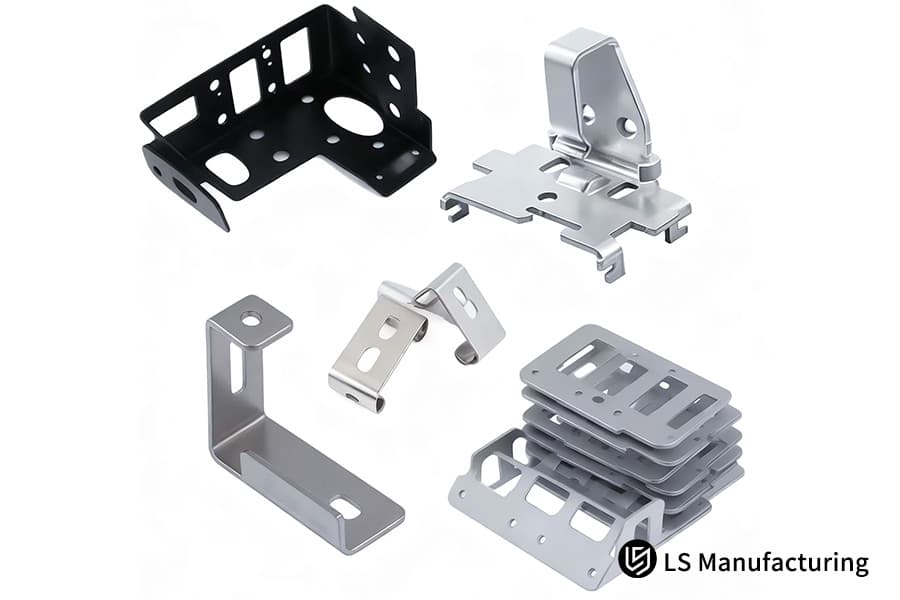
Figure 3: Laser-cut steel brackets and base plates for robotics applications.
Why Is LS Manufacturing Your Most Reliable Precision Welding Partner In 2026?
Choosing a reliable robotics metal welding services partner will only assist you with your very technical and cost of doing business issues.
The right choice would be LS Manufacturing due to its skilled methods, wide range of products, and rich experience. LS Manufacturing has at its disposal more than 50 welding robots and a top notch process R&D laboratory that can be used to rapidly fulfill the custom metal welding service requirements at any time. It can weld not only 1.5mm thin walled aluminum alloys but also 7075 aluminum alloys while keeping the deformation rate below 0.8% and the tolerance at 0.3mm.
We provide services upstream from the DFM review stage all the way to the mass production stage, averting over 30 world leading robot brands to achieve overall procurement costs reduction by 15%-25%, manufacturing cycle time shortening by 15-20 days, and maintaining a first pass weld inspection success rate at a level always exceeding 99%. Our company has become a top global robot brands' principal welding partner.
FAQs
Q1: Are you capable of welding ultra thin chassis with a thickness of less than 1.0mm?
Yes, we are capable of that. We employ ultra low heat input CMT welding in conjunction with precision air cooled fixtures which allows us to stably weld 0.8mm aluminum alloy without perforation, the welding deformation rate is 0.8%, fulfilling the high precision requirements.
Q2: Is 100% weld inspection included in your robotics metal welding services?
We can offer X-ray or ultrasonic testing if required, doing 100% inspection of core load bearing welds and producing a thorough report to confirm that the welds have no internal defects.
Q3: How do you maintain the dimensional consistency of customized welded chassis during mass production?
Besides laser tracking sensors + automated welding stations + high precision fixtures, we do real time correction with these, and that is how we ensure that the tolerance consistency of chassis feature positions in mass production is 0.3mm.
Q4: Is it possible for you to provide welding process qualification (PQR) support for customized needs?
We sure can. For special aluminum alloys like 6061 and 7075, we will do PQR/WPS qualification, then parameter optimization and lastly provide full qualification documentation.
Q5: What aluminum alloy type do you mainly recommend for welding lightweight chassis metal?
We generally recommend using 5052 aluminum alloy for welding since it is very easy to weld. If high strength is the concern, then the 6061 aluminum alloy is the way to go, and its mechanical properties can be recovered through aging treatment after welding.
Q6: Is the metal welding quotation from LS Manufacturing inclusive of a dedicated fixture development fee?
The fixture development charge is part of the first customized order. In case we establish a long term cooperation or the order volume reaches the target, we would consider sharing or fully refunding this fee.
Q7: Are you able to connect dissimilar metals (e.g. aluminum and stainless steel) on robot chassis?
Yes, by laser arc hybrid welding or special design of transition section, it is possible to join aluminum and stainless steel firmly, and the strength of the joint can be more than 85% of the base material.
Q8: Do you have enough welding capacity yearly to support our global mass production plan in 2026?
Certainly, we can support you. We currently operate 5 automated welding lines with a total annual capacity of over 60,000 sets. We are also capable of doubling our capacity in 3 months timeframe to cater to the global mass production requirements.
Summary
Robot lightweighting in 2026 will put a premium on the welding quality of aluminum alloy chassis as a competitive lever. Xometry Jabil etc. are great suppliers generally but when it comes to the specific field of ultralightweight and super precise components, LS Manufacturing with core CMT and FSW processes, deep DFM review, and full quality traceability is the best choice.
Do you worry about chassis weight reduction and welding precision challenges? Or maybe your current suppliers' capabilities do not satisfy 0.3mm tolerance level? Call LS Manufacturing Manufacturing's expert welding engineers to receive a complimentary welding DFM optimizatio report or initial quote assessment based on drawings, and leverage data to demonstrate why we qualify to be a core supplier for the world's leading robotics company in 2026.
📞Tel: +86 185 6675 9667
📧Email: info@lsrpf.com
🌐Website: https://lsrpf.com/
Disclaimer
The contents of this page are for informational purposes only. LS Manufacturing services There are no representations or warranties, express or implied, as to the accuracy, completeness or validity of the information. It should not be inferred that a third-party supplier or manufacturer will provide performance parameters, geometric tolerances, specific design characteristics, material quality and type or workmanship through the LS Manufacturing network. It's the buyer's responsibility. Require parts quotation Identify specific requirements for these sections.Please contact us for more information.
LS Manufacturing Team
LS Manufacturing is an industry-leading company. Focus on custom manufacturing solutions. We have over 20 years of experience with over 5,000 customers, and we focus on high precision CNC machining, Sheet metal manufacturing, 3D printing, Injection molding. Metal stamping,and other one-stop manufacturing services.
Our factory is equipped with over 100 state-of-the-art 5-axis machining centers, ISO 9001:2015 certified. We provide fast, efficient and high-quality manufacturing solutions to customers in more than 150 countries around the world. Whether it is small volume production or large-scale customization, we can meet your needs with the fastest delivery within 24 hours. choose LS Manufacturing. This means selection efficiency, quality and professionalism.
To learn more, visit our website:www.lsrpf.com.