English



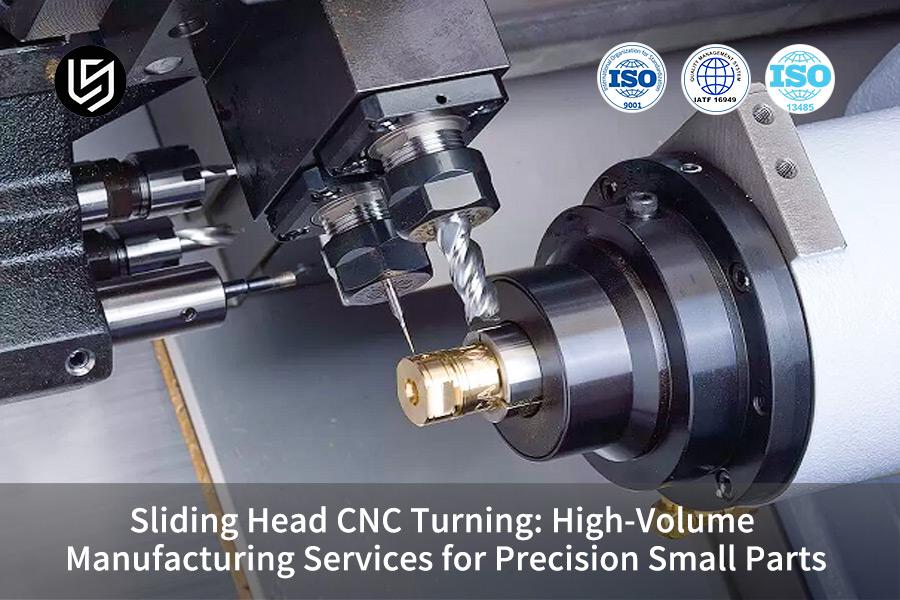
Sliding head CNC turning operation is used to solve the conundrum of efficiency and quality in the manufacturing process of small precision parts such as shafts and pins in bulk. This operation helps to eradicate the idle time associated with the conventional turning operation. This in turn helps to solve the problems associated with cycle time and quality issues. This is a direct solution to the problems.
We have solutions to these problems through the implementation of cutting-edge technology in process optimization, tool life optimization, and quality control. Our solution helps to achieve a consistent cycle time of 18 seconds per product with a CPK greater than 1.67. This helps to scale up the operation to meet the orders for millions of products, and we become your partners in bulk precision manufacturing.
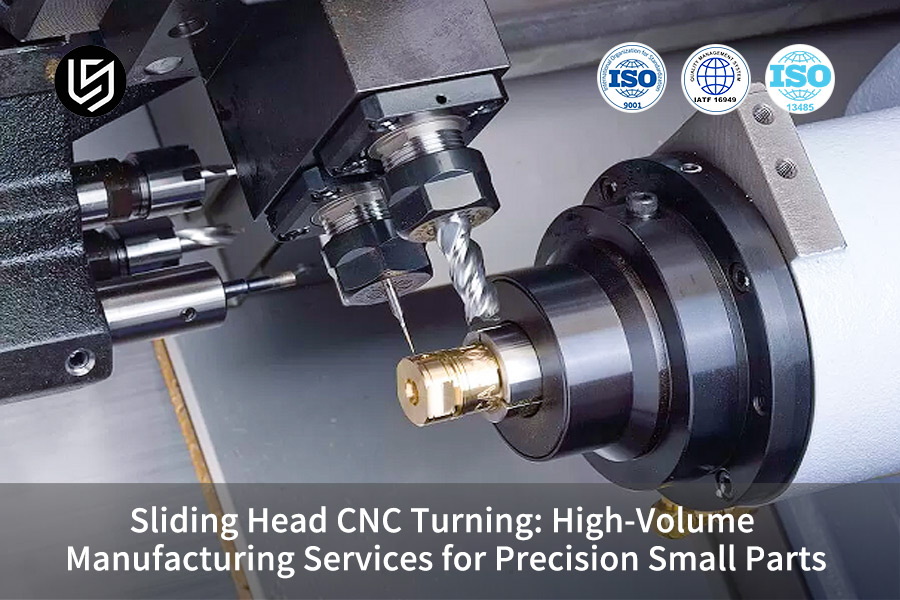
Sliding Head CNC Turning: Essential Guide
| Topic | Key Insight |
| Fundamental Strength | This process is utilized in the mass production of small, intricate, long, and slender parts in one operation. |
| Primary Advantage | The guide bushing provides maximum support at the cutting point, and we achieve the highest level of precision and finish on the turned diameters. |
| Design for Manufacture (DFM) | The parts require special design for the sliding head turning operation, as features are typically produced sequentially in the feed and cut material. |
| Secondary Operation Elimination | The ability to do milling, drilling, and cross-working with live tools and back-working allows for intricate parts to be fully machined in one chucking operation. |
| Material & Speed Efficiency | The use of bar stock material results in very fast cycle times and maximum material efficiency with minimal scrap. |
| Our Capability Focus | We have expertise in programming and fixturing for maximum efficiency using multi-axis live tooling and sub-spindle transfer for complete part completion. |
| Result: Unmatched Precision | Achieves outstanding concentricity, surface finish, and tolerances on small diameters that are difficult to hold on a conventional lathe. |
| Result: Volume Economics | Delivers lowest cost per piece and highest output for parts that are suited for high-volume production. |
| Application Fit | Benefits for connectors, pins, surgical parts, and other small complex parts that require precision and volume. |
We are the key to unlocking the true potential of sliding head turning machines for the machining of small parts in high volume and precision. With our knowledge and experience in programming, fixturing, and live tooling, we can achieve complete machining in a single setup, giving you the highest level of part consistency and finish, and the lowest cost per part for your machining requirements.
Why Trust This Guide? Practical Experience From LS Manufacturing Experts
You can readily find a multitude of articles online that talk about the process of sliding head turning. So why should you consider the information provided here as anything different from all the other information available on the internet about the same topic? Well, we're not theorists. Our experience is not based on theory. It is based on the hundreds of mission-critical miniature parts we make every day. Precision is not a goal; it is a prerequisite.
We have high standards in the process of production, which are based on the best practices in the Additive Manufacturing (AM) world for design innovation and Occupational Safety and Health Administration (OSHA) standards for operational safety. Each and every one of the millions of parts we have produced, from sensors for the aerospace world to pins for the medical world, has had its own lessons to teach, be it the speed to be used with 316L stainless steel, the coolant to be used with titanium, etc., etc.
Each and every one of the pieces of advice offered on this page is based on hard-won, first-hand experience. We have learned from our successes, and we have learned from our early, costly failures. Rest assured, however, that the information offered is not based on theory, but rather hard, shop floor experience, proven under the microscope of chips, cutting oils, and intense inspection. You can rest assured that what you are reading is the very same information we rely on day-in and day-out to ensure your high volume, precision small parts are manufactured correctly, every time.
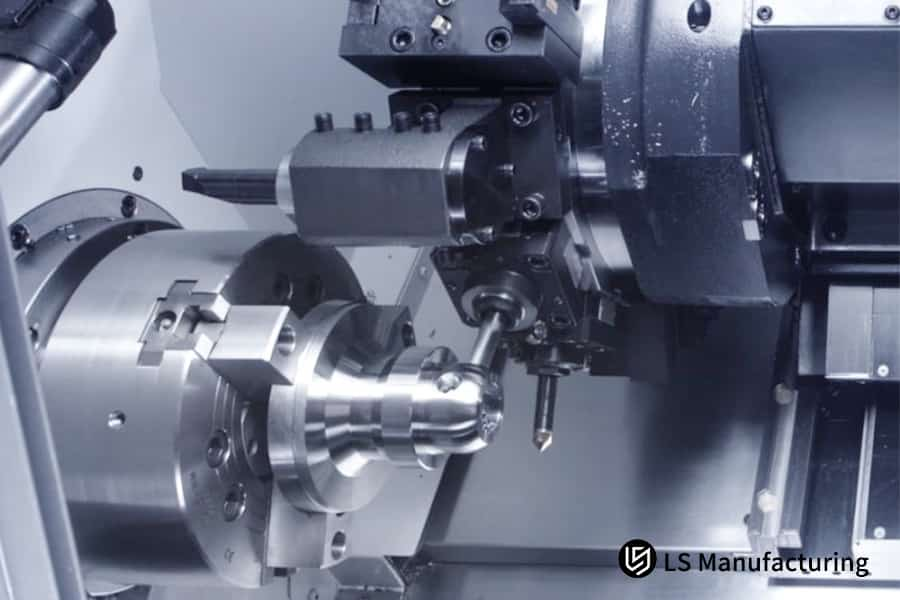
Figure 1: Machining high-tolerance small metal parts on a sliding-head lathe for mass production precision turning.
What Are The Core Efficiency Advantages Of Swiss-Type Lathes Over Traditional CNC Lathes In Mass Production?
High volume CNC turning of complex parts is a process that inherently poses efficiency and quality challenges in its production process. This document is intended to explain how sliding head CNC turning offers a deterministic process where all process steps are integrated into one single process. The fundamental value of sliding head CNC turning is based on its direct relationship with efficiency benefits.
| Comparison Dimension | Traditional CNC Turning Process | Sliding Head CNC Turning Solution | Measurable Outcome |
| Process Flow | Operations in sequence, e.g., turn, mill, drill, and so forth, over a number of machines, including manual transfers. | Combines all operations in a single operation, including synchronized axis movement and live tooling capability. | Reduces 2-3 secondary operations, removing more than 70% of non-cut time. |
| Cycle Time (CT) | Cycle time increased because of loading/unloading, positioning, and tool changes. | Machines in a single cycle with the guide bushing and sub-spindle for unmanned operation. | Achieves reductions in cycle time of 60-70% for complex parts (from 90s to under 30s). |
| Quality & Yield | Fixture repeatability limits accuracy, leading to errors in concentricity. | One-time chucking ensures all features are cut in one operation, micron-level accuracy guaranteed. | Raises First-Pass-Yield (FPY) levels from 92% to over 99%, cutting costs of scrap and rework. |
| Production Scalability | Labor-intensive process that demands operator attention for each loading/unloading sequence. | Unattended operation capability, including continuous bar feeding and ejection of finished parts. | Enables true high volume production with 40-60% greater material removal rates. |
This is a measure of the efficiency gain which is realized through the systematic elimination of interfaces in processes. This is a key requirement for the efficient precision CNC turning processes. This kind of analysis provides a framework which can be employed for the evaluation of systems where the key factors include unit cost and geometry. Our solution directly addresses all the above-mentioned problems through the provision of a production cell which ensures performance and quality for the most complex complex part machining processes.

How To Select The Optimal Swiss-Type Lathe Strategy And Tooling For Mass Production?
In order to achieve the objective of providing the best cost per part for mass production CNC turning, a holistic approach has to be taken to integrate and harmonize tooling, process, and machine automation. However, the fundamental problem to be solved is to optimize tool life and machine utilization simultaneously. This document outlines the approach taken to the solution of the problem:
Integrated Tooling Strategy for Extended Uptime
- Material-Specific Solution: For the case of stainless steel, the tooling strategy will be a data-driven solution using PVD Coated Carbide.
- Parameter Optimization: Parameters will be optimized to ensure tool life is maintained at a constant rate of 120 minutes, cutting at a rate of 120 m/min, and a feed rate of 0.08 mm/rev.
- Parallel Processing: By utilizing multiple tools to cut and drill simultaneously, the time taken to cut can be reduced by over 20%.
Systemic Configuration for Unattended Production
- Automated Handling: For larger quantities, we rely on automated magazines and high-pressure feeders.
- Continuous Operation: This allows for "lights out" operation for over 8 hours, thereby ensuring OEE of over 85% for high volume CNC turning operations.
- Process Stability: Our aim here is to provide a deterministic Swiss type CNC turning cell, which is independent of operator cycles.
Data-Driven Process Deployment
- Proven Database: This involves the implementation of a proven database of over 50 validated material/tool/parameter sets.
- Risk Mitigation: This helps to quickly lock in the optimum tooling strategy for mass production, thereby ensuring predictability from the very first batch for complex CNC turning operations.
Our high efficiency in precision CNC turning operations, particularly for larger quantities, has been engineered through the precise interaction of robust tooling, automated handling, and empirical data, thereby setting us apart through the provision of CNC turning cell solutions that guarantee cost-optimal operation for critical operations.
How To Optimize Costs By Increasing Material Utilization To Over 85% In Swiss-Type Lathe Machining?
Material cost can range from 40 percent up to 60 percent of the total cost of the part, especially when producing small parts in large quantities. This means that the reduction of waste becomes a critical factor in the cost of the part. This document is a specialized technique for the production of CNC turning small parts, aiming at minimizing the cost of the materials. It emphasizes the use of process control and strategic sourcing to achieve and sustain material utilization rates of more than 85 percent:
Precision Blanking via Optimized Parting Technology
The process begins with the concept of the "cutoff slug," or the amount of material that will be lost during the process. We utilize our proprietary "narrow groove" parting tooling within our Swiss type CNC turning process. We have the degree of control within our process to minimize the "cutoff" to the absolute minimum. This not only minimizes the amount of material that will be lost during the process, which is an integral component of cost optimization with expensive materials.
Strategic Raw Material Specification and Handling
In order to optimize our ability to utilize our materials, it is vital that the geometry of the raw material matches the geometry of the final part program. We offer our customers a comprehensive Material Utilization Analysis Report that offers recommendations for the cost-effective diameter and tolerances for the raw materials. This pre-process strategy ensures that our customers do not over-spend on the raw materials and optimize the amount of raw materials that can be utilized within our precision CNC turning process.
Integrated Software for Waste Minimization
Such efficiency is obtained through advanced computer programming, which simulates the entire process of CNC turning small parts, ensuring that the optimized process is followed at all times and eliminating the occurrence of air cuts and inefficiencies in the material stock removal process. This ensures that the high material utilization rate is obtained at all times through the help of the probing function, which provides compensation for the wear of the tools.
The capacity to obtain high material utilization rates of over 85% is not claimed but is obtained through a calculated approach that is based on integrating cutoffs of precise material specification with the help of data-driven CNC turning material selection and software validation to ensure that such efficiency is obtained. This is a definitive approach that is followed for cost optimization.
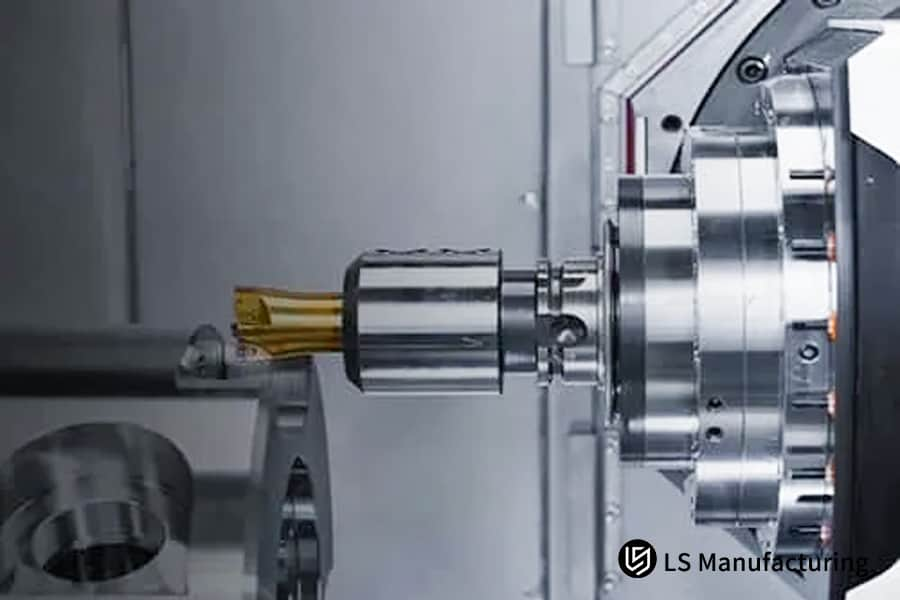
Figure 2: Turning precision metal alloy components for high-volume manufacturing in Swiss-type facilities.
How To Ensure Ultimate Stability Of Dimensions And Tolerances In Mass Production Of Millions Of Units?
The process of creating millions of parts with sub-10-micron consistency demands a shift from part inspection to in-process control. We have developed a methodology that includes real-time compensation, statistical governance, and environmental mastery for part dimensional stability:
Real-Time In-Process Compensation
- On-Machine Measurement: The dimensions of the parts will be measured in real-time using Renishaw probes to measure the key diameters at every 50 cycles.
- Closed-Loop Control: In this process, the dimensions of the parts will be controlled in advance to ensure that they are within 30% of the tolerance band, considering the critical precision small parts machining.
Proactive Process Governance via SPC
- Live Statistical Monitoring: The process of The process of mass production charts for SPC will display the values of the key characteristics in real-time.
- Predictive Intervention: Limits close to control limits will be used in this process to sustain CpK ≥ 1.67.
Environmental Mastery for Foundational Stability
- Thermal Control: The temperature-controlled environment at 20°C ±1°C eliminates thermal expansion as a critical variable in maintaining dimensional stability, particularly at the micron level.
- Stable Platform: This is supplemented by the use of rigid CNC turning centers and multi-axis CNC systems to provide unwavering stability in consistent high volume CNC turning operations.
Validated Outcomes and Scalable Replication
- Data-Backed Performance: This process regimen validates the standard deviation of a key characteristic of ≤0.002mm for batches of 100,000+ units.
- Systematized Solution: This process solution, as represented by in-process metrology, SPC for mass production, and thermal control, is a systematized solution to mass production stability.
- Thermal Control: The temperature-controlled environment at 20°C ±1°C eliminates thermal expansion as a critical variable in maintaining dimensional stability, particularly at the micron level.
- Stable Platform: This is supplemented by the use of rigid CNC turning centers and multi-axis CNC machines to provide unwavering stability in consistent high-volume CNC turning operations.
Validated Outcomes and Scalable Replication
- Data-Backed Performance: This process regimen validates the standard deviation of a key characteristic of ≤0.002mm for batches of 100,000+ units.
- Systematized Solution: This process solution, as represented by in-process metrology, SPC in mass production, and thermal control, is a systematized solution to mass production stability.
The documentation represented in this document, as evidenced by the content, is a tried and true method of engineering. It is focused on the technical "how," the integration of real-time data, statistics, and/or environmental controls, to solve the very real issue of dimensional stability at the micron-level in mass production, thus establishing a paradigm of technical competence and execution.
From Prototype To Mass Production, How Does The "Slip-On" Process Achieve Seamless Transition And Rapid Ramp-Up?
The transition between prototype and volume production can sometimes be a costly process due to delays and other quality issues. In this document, we outline our approach to a seamless and rapid transition process. By locking in production-identical processes in the prototype phase and using a disciplined approach to replication to achieve rapid ramp-up, we can achieve design validation and manufacturability simultaneously.
| Phase | Core Strategy | Key Actions & Metrics |
| Prototype Development | Process Lock-in for Producibility | To utilize the same CNC turning equipment, tools, and parameters (slightly conservative) to develop prototypes and thus validate the producibility of the design. |
| Ramp-up Execution | Scalable Process Replication | To replicate the validated 'process package' to the same machine cells and thus realize a 3 to 5 times capacity increase in 2 to 4 weeks without requalification. |
| Quality Assurance | Risk Mitigation Through Consistency | Eliminate transitional quality variance by maintaining process continuity, ensuring parts from the prototype to mass production are functionally identical. |
| Operational Outcome | Predictable Scaling | To realize deterministic and rapid scaling of the CNC turning. |
Such a methodology transforms the process of taking a prototype to mass production from a high-risk process to a predictable process. In doing so, it addresses the very real client need to achieve high-volume output with uncompromised part quality in a reduced time-to-market. Such a methodology provides a technically sound process for scaling CNC turning services in a highly competitive high-value production environment.
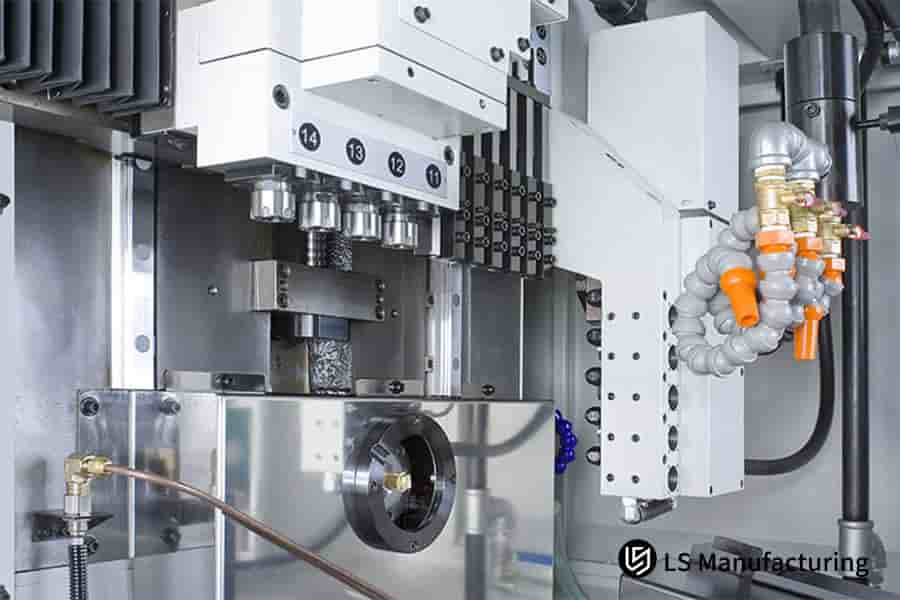
Figure 3: Sliding head CNC turning high-tolerance metal parts for mass production services.
LS Manufacturing Medical Industry: High-Precision Mass Customization For Endoscopic Surgical Blade Handles
This LS Manufacturing medical device case highlights a collaborative project with a world-leading medical device company to illustrate the capability that LS Manufacturing’s high-tech engineering provides in the seamless transfer of a critical component to high-volume production with high reliability via automated production cell and high-volume precision turning expertise:
Client Challenge
The component was a stainless steel endoscopic scalpel handle with a diameter of 2.5mm, comprising a complex spline design and numerous micro radial holes. The client had an existing process that was multi-stage in nature, producing only 85% first-pass quality while creating variable lead times and critically jeopardizing the security of their main product line, which was not meeting their stringent JIT delivery specifications. This called for a robust precision turning solution.
LS Manufacturing Solution
LS Manufacturing developed a dedicated, automated production cell utilizing a Tsugami Swiss Type Lathe machine tool. An important aspect of this development project was the design and implementation of a proprietary internal cooling system, combined with a drill reamer tool, which would allow for the spline portion of the component to be machined in one operation. Additionally, this system utilized an in-machine vision inspection system to allow for 100% inspection of the component dimensions and cosmetics, thus completing the precision turning process. The entire process fed real-time information directly into the client’s MES system, thus allowing for end-to-end digital traceability.
Results and Value
The developed process resulted in a reduced cycle time of 25 seconds per component and a first-pass yield rate of 99.5%+ (CpK > 2.0). The developed process directly enabled the client to achieve true Zero Inventory JIT supply, resulting in a 30% reduction in the overall cost of the component. The project resulted in LS becoming a strategic global supplier for the high-volume precision turning of critical medical components, thus showcasing our capabilities for high mix and rapid production volume supply.
This case represents the ability of LS Manufacturing to de-risk and scale the production of mission-critical CNC turning medical components. By addressing the real issues of yield, throughput, and traceability through integrated process innovation and automation, we can provide our customers with a trusted manufacturing partner in the achievement of supply chain resiliency and cost leadership in the marketplace.
Achieve unmatched precision and reliability for your high-volume, micro-scale components with our advanced sliding head CNC turning expertise.

How To Assess A Supplier's Capabilities For High-Volume Heart-Feeding Machines Delivery And Quality Management?
In order to make the correct selection of the supplier assessment for volume production must go beyond the physical plant and include a “forensic” evaluation of the entire system. This model will provide the definitive criteria to make the evaluation of the supplier conclusively, particularly with respect to volume production.
Production System Maturity
- OEE as a KPI: OEE >80% is documented, and this is a definitive indicator of a mature process that can be relied on to produce high-volume CNC turning.
- Lean Implementation: Evidence of single-piece flow and waste reduction confirms a focus on continuous flow and minimal lead time.
Quality Assurance Depth
- Beyond Certification: Adherence to IATF 16949 or ISO 13485 standards indicates a proactive, risk-based CNC turning quality system, not just basic compliance.
- Data-Backed Control: Historical SPC reports for similar parts, showing sustained CpK ≥1.67, provide tangible proof of process capability and stability.
Supply Chain Resilience
- Risk Mitigation: Verified alternative sources of critical materials like bar stock are essential and represent an integral component of an overall supplier evaluation process.
- Transparency Benchmark: Willingness to share real-time production information and allow quality system audits represents a benchmark of operational performance and potential partnership.
Technical and Scalable Capacity
- Engineering Partnership: Having internal technical expertise in complex CNC turning and tooling design is a major factor in addressing production issues through a collaborative problem resolution process.
- Proven Scalability: Having proven case studies in the success of rapid production scalability is a proven methodology in providing efficient production scalability.
It is this process that provides the rich and informed evaluation, where promises are replaced by processes. It is this process that identifies capable partners to eliminate the inherent risks in volume production by using processes, a quality management system, and transparent business practices to provide long-term supply chain excellence and security.
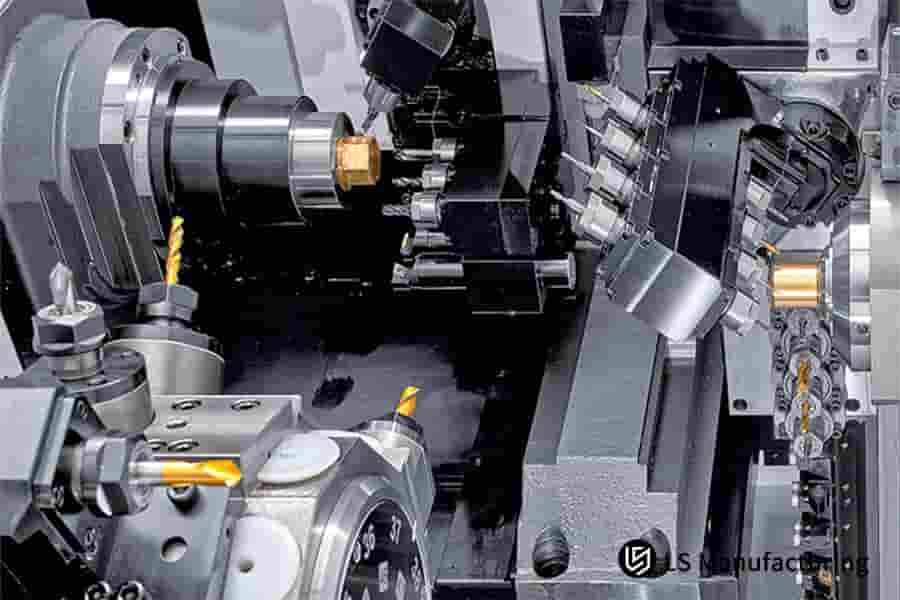
Figure 4: Operating a sliding-head CNC lathe to produce high-tolerance metal alloy miniature components for mass manufacturing services.
Why Is LS Manufacturing The Lowest-Risk Option In The Field Of Mass Production Of Precision Small Parts?
One risk decision our clients face is in determining a manufacturing partner for their critical and high-volume CNC turning parts. Our clients are not just selecting LS Manufacturing for our capabilities, but also for our process in mitigating risk and providing a deterministic solution for our clients, utilizing our total in-house capabilities and digital process control as a single source supplier:
Mitigating Technical Risk Through Comprehensive In-House Mastery
We are removing all risk of uncertainty in outsourcing by utilizing our mastery of the entire process spectrum, from custom precision turning of parts as small as Ø0.5mm and any complexity pertaining to other complex multi-axis milling and secondary operations, including our own in-house designed tooling and fixtures without any outside resources for unique application challenges and total integration of all processes from first piece to millionth piece.
Ensuring Process Stability with Data-Driven Digital Control
Our software, being part of the Manufacturing Execution System (MES), allows us to have complete real-time closed-loop process control. This means that we can monitor and analyze the entire process, from the lot of material itself to the condition of the equipment to the quality measurement to the operator. We can proactively control the process to make sure that there is no room for deviation. We can make sure that the millionth piece produced by our company is exactly the same in dimensions as the very first piece that we have ever made. That is the essence of having a low-risk volume manufacturing process.
Guaranteeing Supply Chain Certainty with Systemic Transparency
We can guarantee that there will be predictability in our supply chain. Whether it is for our material procurements, with dual source agreements that we have in place, or for our clients with our production dashboards in real-time, we can be transparent with all of what we do. And with our internal capacity, we can have complete certainty. That is the essence of being able to answer the question why choose LS Manufacturing.
Validating Capability with Documented Scalability
Our value is based on our ability to obtain repeatable success. We have documented our process from prototype validation of production intent equipment to achieving repeatable CpK > 1.67 on full-scale, high volume CNC turning. Scalability can be defined as a system designed with risk mitigation built-in from the very beginning.
This not only demonstrates our capability of executing our process, it also demonstrates our methodology. In addressing the very real risks of technical complexity, process variation, and supply chain variation with our integrated engineering and digital controls approach, we can offer a fundamentally low-risk volume manufacturing partnership that meets the criteria for program success.
FAQs
1. What types of parts are best suited for machining with Swiss-type lathes?
They are suitable for small diameter (usually φ1-32mm) rotating bodies or non-standard parts with large length-to-diameter ratio, complex structures, and those requiring multi-faceted machining, etc.
2. What are the minimum order quantity (MOQ) and typical lead time for mass production?
The MOQ in terms of economy is around 10,000 pieces or higher. The lead time from the time the order is confirmed to the time the first shipment is sent out is around 6-8 weeks, which includes the preparation of the material and the commissioning of the production line. Shipments after the first one can be arranged on a regular basis, weekly/monthly, etc.
3. What level of precision can you achieve in mass production?
The precision of the mass production is as follows: The diameter tolerance is ±0.005mm, the roundness is 0.003mm, and the surface roughness is 0.4μm. For special requirements, the precision of the diameter tolerance can be as high as ±0.002mm.
4. How do you control and optimize the unit cost for mass production?
We control and optimize the unit cost of the mass production through the method of systematic cost reduction by employing Value Engineering (VE) on various fronts, such as design, material, tools, and the improvement of the production cycle. Generally speaking, after the order volume has gone past 100,000 pieces, it is possible to optimize the unit cost by 15-25%.
5. Do you support customer-specified special materials or certifications?
Yes. We have vast experience in dealing with medical-grade stainless steels, titanium alloys, and nickel-based alloys. We can provide production and testing reports in accordance with various standards, including ISO 13485 and IATF 16949.
6. How do you protect the design intellectual property of our products?
The basis of our working relationship with you will be the signing of a legally binding NDA. We have a very stringent management system in place regarding the segregation of projects and data encryption, as well as access control to our production facilities, in order to maintain the confidentiality of your design.
7. What is the process for design changes during production?
We will assess the impact of the changes on costs, delivery time, and quality, and then present you with a plan regarding the implementation of the changes.
8. How do I begin an assessment for a large-scale production project?
Please send us your part drawing, annual demand, and performance requirements. Alternatively, you can directly get an instant quote by uploading your design files. Our engineering team will perform a detailed analysis on the manufacturing feasibility and provide a complete project plan in one week, including process routing, capacity planning, investment in molds, and tiered pricing.
Summary
The success of Swiss-type lathes in high-volume precision parts manufacturing can be explained by the fundamental characteristics of this machine tool: process concentration, continuous production, and extreme precision. However, converting this theoretical potential to a stable, economical, and precise delivery of millions of parts requires a manufacturing partner that combines process know-how, process control science, and information technology in depth. It is not the acquisition of a machine tool that we are discussing, but rather a deterministic delivery solution.
If you are having difficulties with the efficiency of mass production, costs, and quality stability of precision small parts, please upload your part drawings and requirements as soon as possible. Contact us now and we will provide you with a free "Feasibility and Cost Optimization Analysis Report for Mass Production of High-Precision Parts" within 48 hours.
Visit our digitalized Swiss-type production workshop to witness millions of pieces precisely manufactured every day.
📞Tel: +86 185 6675 9667
📧Email: info@lsrpf.com
🌐Website: https://lsrpf.com/
Disclaimer
The contents of this page are for informational purposes only. LS Manufacturing services There are no representations or warranties, express or implied, as to the accuracy, completeness or validity of the information. It should not be inferred that a third-party supplier or manufacturer will provide performance parameters, geometric tolerances, specific design characteristics, material quality and type or workmanship through the LS Manufacturing network. It's the buyer's responsibility. Require parts quotation Identify specific requirements for these sections.Please contact us for more information.
LS Manufacturing Team
LS Manufacturing is an industry-leading company. Focus on custom manufacturing solutions. We have over 20 years of experience with over 5,000 customers, and we focus on high precision CNC machining, Sheet metal manufacturing, 3D printing, Injection molding. Metal stamping,and other one-stop manufacturing services.
Our factory is equipped with over 100 state-of-the-art 5-axis machining centers, ISO 9001:2015 certified. We provide fast, efficient and high-quality manufacturing solutions to customers in more than 150 countries around the world. Whether it is small volume production or large-scale customization, we can meet your needs with the fastest delivery within 24 hours. choose LS Manufacturing. This means selection efficiency, quality and professionalism.
To learn more, visit our website:www.lsrpf.com.