English



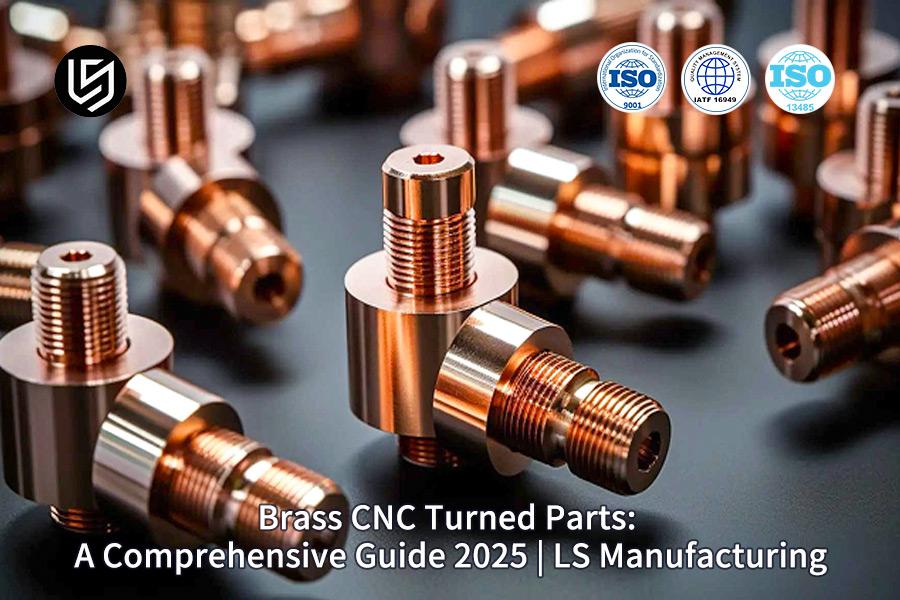
Brass CNC turned parts Widely used in various industries. However, many engineers and purchasing managers are often troubled by problems such as substandard dimensional accuracy, frequent production delays, uncontrollable costs, or suppliers' failure to provide effective technical support. These challenges often stem not from isolated failures in a single step, but from a lack of understanding of brass material properties and precision machining processes.
With decades of precision manufacturing experience, LS Manufacturing guides readers through how to leverage the latest technology, lean management, and deep collaboration to turn designs into precision, zero-defect, high-performance brass parts. Start with core fundamental materials science, then progressively delve deeper into each key element of achieving superior performance and value.
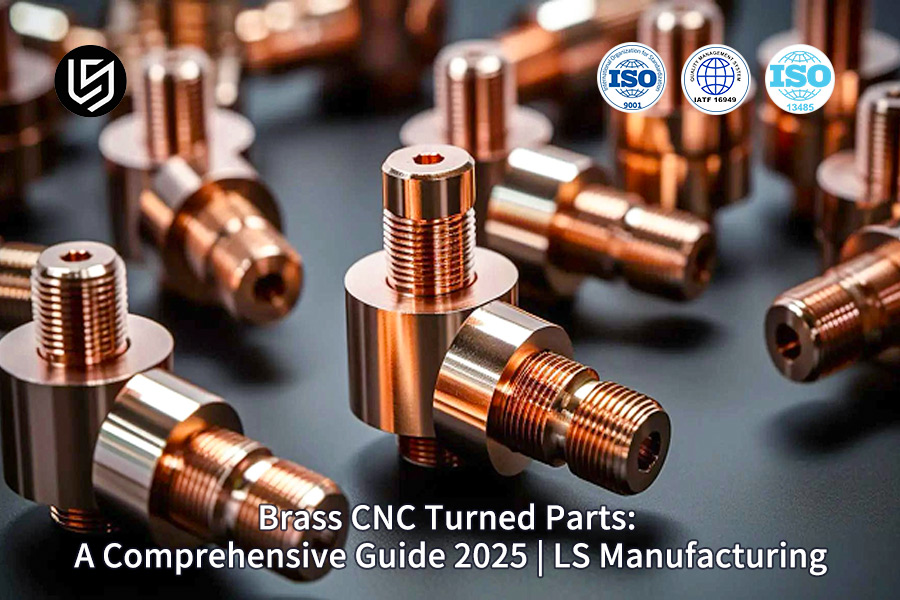
Quick Reference Sheet: Brass CNC Turned Parts
| Compare sizes | Brass CNC machining | Traditional processing/other materials (e.g. stainless steel) |
| Material utilization | Excellent machinability means smaller depths of cut, significantly reduced scrap and improved material utilization. | The material is relatively hard ; therefore, more chips are easily generated during processing, and the material waste rate is relatively high. |
| Processing cycle | Due to the extremely high cutting speeds and feed rates allowed, the output per unit time is very high and the delivery cycle is greatly shortened. | To protect the cutting tools, and for accuracy reasons, more conservative and lower cutting parameters are specified in most applications; therefore, efficiency is reduced. |
| Tool wear | Less tool wear results in longer tool life, reducing the cost of frequent tool changes and resulting downtime. | Most work hardening and other phenomena cause accelerated tool wear, increasing direct consumable costs and equipment setup time. |
| Secondary processing requirements | Excellent surface quality is achieved directly after processing, with little need for additional deburring, grinding or other secondary processing. | Additional surface preparation and/or finishing is often required to achieve the required accuracy and smoothness, which in turn complicates the process and increases cost. |
| energy consumption | High-speed and efficient cutting can reduce time consumption per unit part; therefore, overall energy consumption is less. | On the other hand, long machining cycles and high cutting resistance directly mean high energy consumption. |
From the precise matching of materials science and design for manufacturability, which forms the basis for efficient production, to precision turning process Each element is critical, from faithful implementation of design intent to end-to-end quality control to ensure product reliability . Choosing the right depth partner is an important core value that connects and optimizes all these aspects, ultimately guaranteeing superior cost and quality optimization for your projects.
Why Trust This Guide? Practical Experience From LS Manufacturing Experts
Having manufactured high-precision parts for 15 consecutive years, as a senior process engineer at LS Manufacturing, my team and I have accumulated deep expertise in precision machining. We have successfully manufactured products for leading medical device companies that comply with U.S. Environmental Protection Agency (US EPA) strict standards of sterile valves and other key components, as well as high-precision brass lens mounts that determine the imaging accuracy of advanced optical systems.
Producing 50,000 structurally complex parts gave us invaluable experience in overcoming various material and process difficulties, including tailoring optimal cutting parameters for brass to balance efficiency and surface finish, and bonding Additive manufacturing (AM) rapid prototyping technology, using CNC turning, to speed up product iteration and design verification for customers.
Each recommendation provided in this document comes from actual, direct experience solving real-world manufacturing challenges on behalf of leading customers around the world. We share not only technical specifications, but also a rigorously proven, quality-driven, systematic approach designed to help you avoid common pitfalls and efficiently obtain ideal brass turned parts .

Figure 1: Dynamic shot of the brass CNC lathe in operation, LS Manufacturing’s flying luminous shavings
Why Choose Brass As The Ideal Material For CNC Turning?
In particular, easy-to-machine brasses, such as C36000 and copper-zinc alloys (such as C26000) , become Brass turning The first choice for critical components in applications because its unique set of brass material properties best suits the combined mechanical and physical requirements. The excellent performance of these specific alloys in CNC machining of copper alloys lays a solid foundation for efficient manufacturing of high-precision, high-quality parts. To better understand their benefits, the table below briefly compares how these core features directly address manufacturing needs:
| module | core point | Key content |
| Material selection | Level optimization based on required performance | Ordinary environmentally friendly brass, high lead brass . etc. corresponding to different processability and applications. |
| design rules | Optimize manufacturability | Reasonable tolerance settings and no sharp corners are two key design details that affect cost and quality. |
| turning process | Precise programming and parameter control | Tool selection and cutting parameter optimization play an important role in ensuring accuracy and surface quality. |
| Quality control | Starting from the first piece, all the way to the final inspection | PSV 's precision measurement tools have been used for comprehensive dimensional and performance testing to achieve zero defects. |
| Surface treatment | Aesthetic and functional feature improvements | Treatments such as electroplating and passivation enhance corrosion resistance, wear resistance and improve aesthetics . |
| Partner value | Deep partner advantages | Suppliers with rich technical experience can provide customers with technical support from design to mass production . |
In a words, in copper alloy CNC machining The choice of brass in the process represents a shrewd compromise between performance and economy. It will directly reflect unparalleled brass turning efficiency, shorter production cycle and lower production cost. At the same time, the strength, corrosion resistance and electrical conductivity of brass ensure that the final part can operate stably under extreme conditions.

How To Achieve High Precision And Consistency Of Brass Parts Through CNC Turning?
Precision manufacturing requires CNC brass parts to have uncompromising accuracy and uniformity in all aspects. It is a systematic project that requires perfect equipment, process and quality coordination. as high-precision turning Experts in the field, we know that even micron-scale deviations can affect the performance of the final precision brass part . Here, we will explain how we ensure its excellent quality from three core aspects:
Process Optimization
Utilize advanced CAM systems for tool path optimization to reduce vibration with smooth transitions and continuous cutting paths. In addition, scientific cutting parameter specifications have been formulated for various brass materials such as C36000/C26000 : in the finishing stage, the feed rate is 0.02-0.05 mm/revolution , and the depth of cut is 0.2-0.5 mm ; special cutting fluid is used to stably achieve a surface finish of Ra0.4-0.8 μm . It is this process control that provides the basis for ensuring the dimensional stability of precision brass components .
Process Monitoring
All precision lathes in our shop are equipped with vibration monitoring and tool wear sensing systems. When the cutting force is abnormal or the tool is slightly worn, the system will automatically adjust the compensation parameters to ensure the stability of the machining process. At the same time, by using machine tool thermal deformation compensation technology, the positioning accuracy is always maintained at ±0.005 mm during the entire processing process. This active control of the process is important to us in ensuring batch consistency.
Quality Closed Loop
We have established a complete quality traceability system: the processing data of each CNC brass part is input into the MES system . Through SPC statistical process analysis, the CPK values of key dimensions are monitored in real time, and optimization is started immediately when trend deviations are found. A data-driven quality closed loop has been established to ensure that we achieve high-precision CNC turning process Continuous improvement in aspects.
Through three-point precision control, we always maintain the processing accuracy of brass parts within ±0.01mm and the surface roughness below Ra0.8μm. This systematic precision assurance system based on strict process discipline has made LS Manufacturing a trustworthy precision brass parts supplier, providing precision brass parts to leading customers in high-demand fields. Such as aerospace, medical equipment and other high-tech industries.
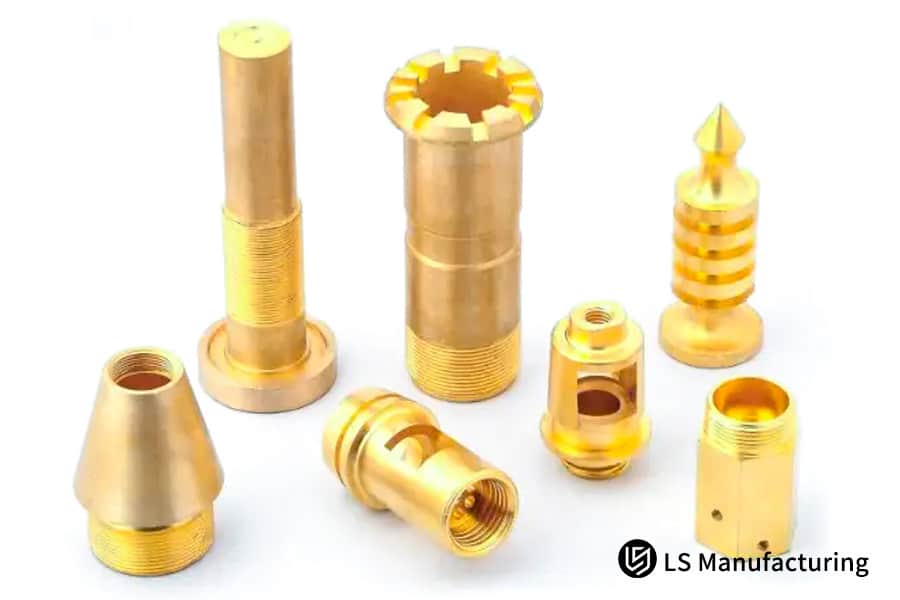
Figure 2: LS Manufacturing’s variety of precision machined copper alloy parts
What Are The Significant Cost And Efficiency Advantages Of CNC Machining Of Brass?
As manufacturing becomes more competitive, identifying effective processing methods is important for selecting the right materials to control overall project costs and speed up product launches. In this regard, when brass and advanced CNC machining technology When combined, the cost-effectiveness is unparalleled. Now we will take a look at some comparisons below to understand benefits of brass CNC machining How to directly bring economic benefits to enterprises
| Property category | Positive impact on CNC turning and applications |
| Excellent processability | It allows higher cutting speeds and feed rates, significantly improves machining efficiency and protects tool life. |
| Good strength and wear resistance | Ensures manufactured valves, gears and other components maintain long-term dimensional stability under pressure or movement. |
| good corrosion resistance | It can make the parts resistant to attack in various working media, such as water, oil and other chemical liquids , ensuring the service life and reliability of the parts. |
| High electrical and thermal conductivity | Ideal for electrical connectors and terminals to dissipate heat during processing. |
The benefits of CNC machining brass, simply put, come from the overall effect of "saving materials, time, tools, workmanship, electricity." This advantage is not only reflected in the direct processing cost of a single part, but also in faster market response due to shorter production cycles, stable and reliable quality, and lower overall management costs.
What Special Manufacturing Processes Does LS Manufacturing Use To Create Complex Brass Parts?
Some parts are easy to source in the precision manufacturing industry, but it’s those complex and difficult brass parts that really highlight the supplier’s capabilities. Brass processing services capabilities. After years of technology accumulation, LS has formed unique technical barriers in manufacturing brass CNC in deep hole processing, micro threads, thin-walled structures, etc. This ensures that high-precision and complex parts are delivered right the first time, which is a core strength of our precision manufacturing . Mainly include the following aspects:
Deep Hole Processing Technology
For deep hole processing with a depth-to-diameter ratio of more than 15 times, we use customized vibration-damping tool holders and high-pressure internal cooling technology. The coolant pressure can be as high as 8MPa to ensure good chip removal and prevent the hole wall from being entangled or scratched. This ensures that when processing Φ3mm×50mm deep holes in the hydraulic system, the hole diameter tolerance is within IT8 level and the inner wall roughness is better than Ra1.6 .
Complex Threads and Thin-Walled Structures
Multi-axis linkage milling and turning processing technology is used to avoid deformation when processing precision thin-walled brass parts, such as when cutting fine threads such as M1.6×0.35 or processing wall thicknesses below 0.5mm . Custom-made sector chucks are used with additional locally installed cooling units. When cutting alternately in sections, online measurement compensation is used to keep the ovality of the thin-walled sleeve within 0.01mm to ensure production consistency.
Irregular Shape Processing
For all non-rotating bodies or special-shaped complex brass parts with multi-angle inclined holes, the strategy adopted is "milling and turning combined with one clamping". We design special fixtures that integrate pneumatic positioning and in-situ detection functions to reduce repeated clamping errors. For example, there is a need for a medical valve body with seven sealing cones at different angles. use five-axis linkage , complete all processes in one clamping, and can keep the critical angle error within ±0.1° , fully demonstrating the technical advantages of processing special-shaped brass parts .
The uniqueness of the LS Manufacturing process is not a breakthrough in a single technology, but the systematic integration of precision molds, parameter optimization and process monitoring. Under such a problem-solving-oriented technical system, we are able to continue to provide customers with customized solutions for high-precision complex brass parts that exceed standards, and become a trustworthy partner in the high-end manufacturing field.

Figure 3: A striking low-angle view of the CNC brass turning process captured by LS Manufacturing
Customized Precision Brass Valve Core Case For Medical Device Industry
Precision brass plays a very critical role in determining the reliability and safety of the entire medical device. Every time we successfully implement our customized case Behind them all lies an extreme test of technical depth and quality commitment. Here’s a comprehensive description of how we helped a high-end medical device manufacturer solve its core component manufacturing challenges:
Customer Challenges
The customer required a miniature brass valve core for use in life support equipment with S-shaped microchannels inside. Dimensions are required to be within very tight tolerances: ±0.015mm . More importantly, the part surface needs to be medical-grade clean, have good biocompatibility, and be free of processing residues or microscopic defects. So far, this supplier has suffered from excessive tool wear and poor chip removal, resulting in loss of flow channel accuracy and surface scratches. The yield rate hovers around 60% , seriously threatening the progress of the project.
LS Manufacturing Solutions
Faced with this challenge, we quickly launched dedicated research efforts. We modified the runners with ultra-hard diamond-coated tools to resist wear and ensure stability. A unique compound coolant formula has been developed for effective lubrication and cleaning. use 5-axis CNC turning center As well as custom programming with variable speed cutting capabilities, successfully machining the complex internal and external features of the valve core in a single operation is the core of LS Manufacturing solution .
Results and Value
From risky project to strategic win-win through systematic process innovation, the mass production yield rate of this miniature brass valve core has been significantly increased from 60% to an industry-leading 99.8%. The stable and high-quality output shortens the customer's delivery cycle by 30% , thereby helping them successfully launch new products to the market in advance and seize market opportunities. More importantly, this successful cooperation laid a solid foundation of trust for both parties and established a long-term strategic partnership.
This custom case fully demonstrates that ordinary equipment and general processes cannot meet the arduous task of manufacturing such a complex brass valve core . Success depends on ability: show LS Manufacturing solutions Conduct in-depth process research and technology integration for specific problems, perfectly combine material properties, mold science and CNC technology to provide value that far exceeds customer expectations.
Click the button below to accurately realize your brass turned part design!

How To Ensure The Consistency Of Quality During Large-Volume Turning Orders Of Brass?
It requires precision manufacturing, but that's not the hardest thing - in small batch achieve high accuracy. The real challenge for mass production remains: in thousands of brass turned parts maintain stable quality . If mass production of parts is considered, even slight process fluctuations can lead to deviations. Every part of LS Manufacturing meets strict standards through a full-process quality management system to ensure absolutely stable quality for customers.
Source Code Control
Quality stability starts with raw materials. All of our brass rods undergo compositional analysis using a direct reading spectrometer to ensure that their mechanical and machining properties are within specifications. By doing so, batch-to-batch material quality differences can be eliminated at the source, thereby establishing a platform for long-term quality stability .
Process Control
In production, critical dimensions are monitored in real time by an SPC system. Data is collected using machine measurement probes or periodic sampling using a CMM. Then, CPK is automatically calculated. Once a trend away from the control line is detected, the system issues an early warning and engineers can immediately intervene by adjusting parameters. This makes it possible to preventively manage large-scale production processes and avoid defective products.
Closed Loop Management
All machined brass turned parts are subject to 100% final inspection. The key dimension data is linked to the production batch number, equipment number, operator and other information and entered into the MES system to form a complete quality file. Not only does it ensure zero defects in factory parts, but it also establishes traceability. If customers have any questions, they can quickly and accurately locate the data of the entire production process to achieve closed-loop quality management and continuous improvement.
This proven end-to-end quality control system internalizes stability at every manufacturing stage, from raw material inspection to final product verification. It provides a solid and reliable guarantee for customers' large-scale mass production needs, ensuring that strict standards are consistently met. As a result, every batch of brass turned parts delivered is guaranteed to be of highly consistent and exceptional quality.
How Can The Design Be Eeasily Changed To Make Brass Parts Easier To Manufacture?
Great brass parts start with a great, manufacturable design. Surprisingly, DFM Small disconnects in often lead to major problems in cost, delivery time and quality. At LS Manufacturing, we strive to be your technology partner during the brass part design phase, eliminating potential issues through proactive DFM analysis. The following key design optimization recommendations are designed to help you create the most effective brass part design :
- Smart fillets and edge treatments: Avoid sharp internal right angles and zero-radius root designs, which can create stress concentration points during machining that can increase tool wear and even cause parts to crack. We recommend a minimum fillet transition radius of 0.2mm for all internal corners. For example, changing a 90-degree right angle to an R0.5 radius fillet improves stress distribution, extends tool life, and enhances the structural integrity of the part—arguably one of the most important yet fundamental design optimizations .
- A sound tolerance strategy: Tolerances are one of the major cost drivers. A "stepped" tolerance strategy is recommended. This means that we only specify strict tolerances on critical dimensions that affect fit and function, in this case ±0.012mm , while less critical areas use economic tolerances , such as ±0.05mm . These function-based tolerance definitions can reduce the manufacturing cost of brass part designs by more than 20% without sacrificing performance.
- Simplified geometries with standardized features: Try to avoid unnecessary complex surfaces as well as non-standard threads. Holes that can be machined using standard drill bit sizes. For example, you can design a standard keyway instead of some kind of irregular groove; use M3 threads instead of non-standard threaded holes. This way we avoid the additional costs and extended delivery times of custom tooling, making DFM more user-friendly.
Brass part design introduces the concept of DFM . More than just providing drawings, manufacturability and cost efficiency along with high productivity will facilitate this process. Working with LSM from the beginning means hiring experienced manufacturing consultants. LS Manufacturing 's early involvement enables you to transform your ideas into stable, economical, high-quality products in an efficient way, thus guaranteeing the success of your project from the start.
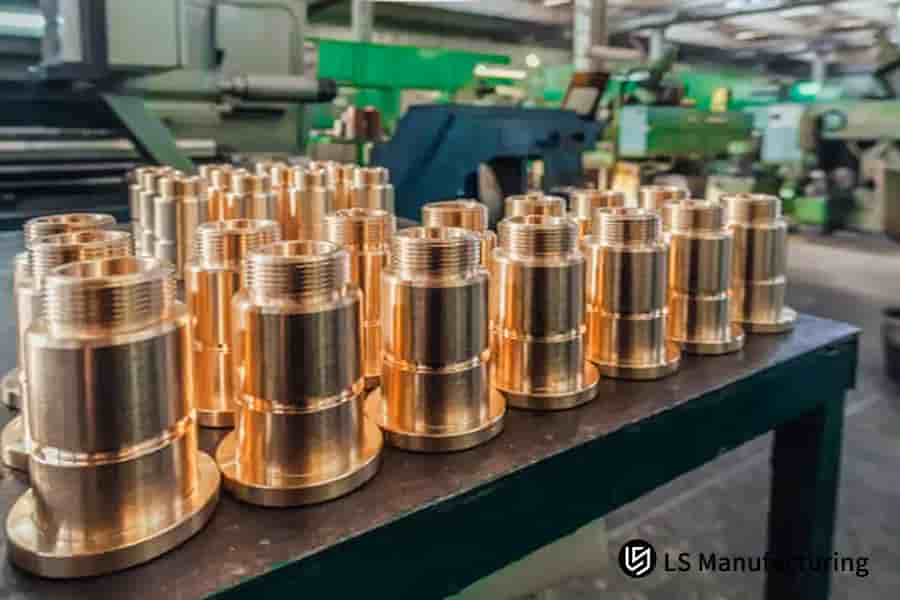
Figure 4: Various precision machined finished brass parts produced by LS Manufacturing
Why Should You Consider LS Manufacturing As Your Brass Machining Partner?
In the highly competitive precision manufacturing industry, finding a reliable partner is key to a successful project. With deep technical expertise and systematic service commitment, LS Manufacturing It has become the first choice of many industry leaders. By choosing us, you not only choose a supplier, but also an in-depth partner who shares risks with us. Here are our core strengths that create unique value for you:
- Technology-leading manufacturing capabilities: A state-of-the-art cluster of multi-axis milling and turning centers and Swiss-style lathes make up our brass CNC machine tools pillars of competence. All processing procedures of complex parts can be completed at one time, basically ensuring accuracy and efficiency. It is this mature process system that lays a solid foundation for the realization of high-quality brass parts .
- Strictly certified quality system: We have passed ISO 9001 quality management system and ISO 13485 certification for the medical industry. Such authoritative certification goes far beyond a certificate, but reflects the comprehensiveness of culture and the thoroughness of quality control. From raw material warehousing to shipment, every link is strictly operated according to standards. The system guarantee is put into operation to ensure that project risks are traceable and products are uniformly traceable.
- Impeccable Operations and Delivery Record: We understand how important on-time delivery is to our clients’ projects. The introduction of lean production scheduling through our ERP system enables us to report an even more satisfactory on-time delivery rate of 98.5% in 2024. Behind this number is our commitment to ensuring your production schedule runs smoothly.
- Supported by an experienced team of experts: Our engineering staff average over 10 years of precision machining experience. Additionally, during your design phase, they will act as your technical advisors, not just implementers. No matter how complex the LS Manufacturing brass CNC challenge is, they can provide professional DFM analysis , optimize the design and reduce costs from the source.
Choosing LS Manufacturing as a partner means providing strong support in terms of technology, quality, delivery, and service . We are committed to being the most reliable link in the supply chain through advanced LS Manufacturing brass CNC , internationally certified quality assurance, and a trustworthy delivery record - all of which come together to create competitive, quality products.
FAQs
1. What is the minimum acceptable machining tolerance for brass parts?
Operating under constant temperature conditions and with strict process control, imported CNC lathes enable our very precise brass machining services to achieve tolerances up to ±0.005 mm or 5 microns time and time again. This accuracy is sure to provide the dimensional consistency that the most demanding applications, including hydraulic spools and precision connectors, rely on.
2. What surface treatments are available and do they affect size?
We support all types of surface treatments including nickel plating, chemical passivation and electropolishing. In processes involving electroplating, dimensions are accurately pre-compensated based on empirical data so that critical dimensions of the finished product meet all drawing requirements while balancing corrosion resistance and accuracy.
3. Can you provide material certificates and factory inspection reports?
Of course, each batch of shipped parts is provided with complete quality certification documents, such as 3.1 certificates and full-size inspection reports , so that the quality of the product from raw materials to finished products is fully traceable.
4. What is the general delivery time for new product samples?
We have fast sampling channels. From order confirmation to shipment, we are able to control the delivery time of traditional brass parts with simple structures within 3-5 working days , helping to speed up your project.
5. How to protect my design drawings and intellectual property?
This is the bottom line of our cooperation: protecting your intellectual property. We sign a legally binding NDA agreement at the initial stage and then implement an in-house encrypted data management system that strictly limits access to drawings to keep your designs secure.
6. What is the minimum order quantity?
We offer highly flexible production solutions ranging from Single piece prototyping to mass production of tens of thousands of pieces. We can customize the MOQ according to your needs; there is no hard quantity threshold.
7. How to get a suitable quote?
All you need to do is provide detailed drawings of your parts and our team will get back to you with a transparent price list in a fraction of time, clearly listing materials, machining, finishing, and taxes. For complex components, you can also get a quote along with a free DFM analysis to optimize your manufacturing costs from the source.
8. How to ensure delivery and after-sales service for overseas orders?
We have mature international logistics experience. Supports multiple methods: DAP, DDP can be supported, and full logistics tracking is available. After delivery, we continue to provide timely technical support to ensure overseas customers enjoy a worry-free service experience.
Summary
Brass CNC turning Far from being a simple process, it is closely related to the characteristics of materials, sophisticated equipment and rich engineering experience. In this highly competitive market, finding a partner with the technical depth and commitment to quality will directly impact your product's performance, reliability, cost-effectiveness and time to market .
Now, we invite you to upload your part drawings and let LS Manufacturing's advanced engineering team provide you with a free DFM manufacturability fundamentals analysis based on extensive industry experience. accurate quote . Let us start with expertise to help your next project start efficiently and be implemented successfully.
📞Tel: +86 185 6675 9667
📧Email: info@lsrpf.com
🌐Website: https://lsrpf.com/
Disclaimer
The content on this page is for reference only. LS Manufacturing services No representations or warranties, express or implied, are made as to the accuracy, completeness or validity of the information. It should not be inferred that third party suppliers or manufacturers will provide performance parameters, geometric tolerances, specific design features, material quality and type or workmanship through the LS Manufacturing network. This is the buyer's responsibility. Need parts The quote identifies the specific requirements for these parts. Please contact us for more information .
LS Manufacturing Team
LS Manufacturing is an industry-leading company . Focus on custom manufacturing solutions. We have more than 20 years of experience working with more than 5,000 customers, specializing in high-precision CNC machining, Sheet metal manufacturing , 3D printing , Injection molding . metal stamping , and other one-stop manufacturing services.
Our factory is equipped with over 100 state-of-the-art 5-axis machining centers and is ISO 9001:2015 certified. We provide fast, efficient, high-quality manufacturing solutions to customers in more than 150 countries around the world. Whether it is small batch production or mass customization, we can meet your needs with delivery within the fastest 24 hours. Choose LS manufacturing. This means choosing efficiency, quality and professionalism.
To learn more, please visit our website: www.lsrpf.com .