English



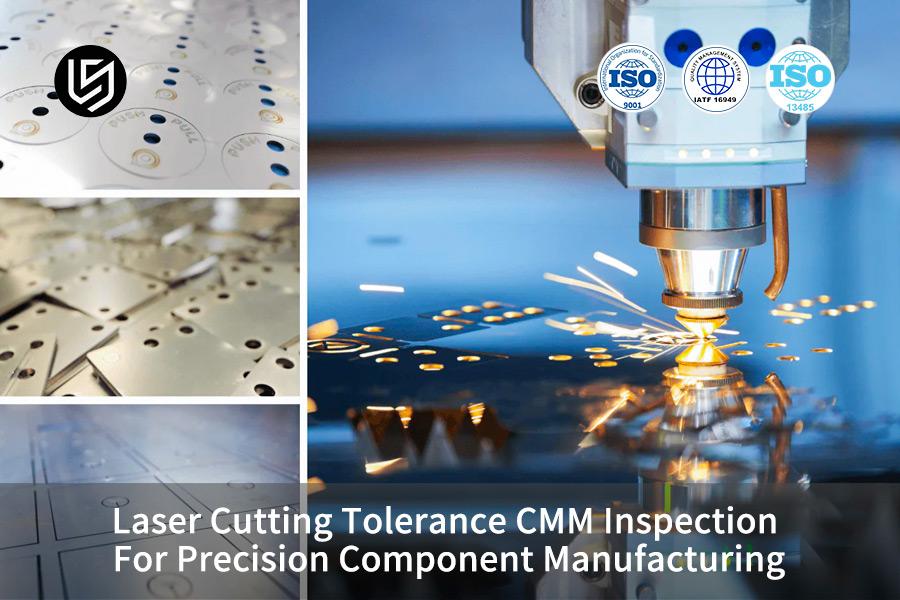
Laser cutting tolerance is a main feature of a piece of metal precision manufacturing. CMM-verified precision laser cutting services are the digitally closed-loop manufacturing solution that eliminates the issue of assembly failure due to uncontrolled three-dimensional geometric tolerances of traditional laser processing. LS Manufacturing, with the ISO 13485 certification system, is able to stably maintain the main machining tolerances within ±0.03mm and the heat-affected zone roughness Ra 1.6μm, so providing zero-defect precision parts delivery to global customers.
In the present article, we are going to deeply examine how to achieve the highest level of precision in laser cutting by taking into account the three aspects: process control, metrology technology, and design optimization.
Laser Cutting Tolerance and CMM Verification: A Quick Overview
| Technical Dimensions | Traditional Processing Solution | LS Manufacturing Solution | Customer Benefits |
| Tolerance Control | ±0.15-0.25mm | ±0.03-0.05mm | Assembly Yield Improvement: 7.3% |
| Inspection Methods | Manual Calipers / 2D Vision Machine | Fully Automated CMM 3D Inspection | Defect Detection Rate: 100% |
| Heat-Affected Zone | 0.3-0.5mm | ≤0.08mm | Material Mechanical Properties Retention: 95% |
| Process Capability | Cpk<1.0 | Cpk≥1.33 | Defect Rate Reduced to Parts Per Million |
Key Takeaways:
- The positional and contour accuracy of laser cutting is a three-dimensional geometric shape, requiring full-space multi-point fitting by a high-precision CMM. Traditional 2D vision machines cannot replace this. Accurate control of laser cutting spatial accuracy is a fundamental requirement for precision machining.
- The real-time integration of laser pulse frequency and duty cycle with SPC process control charts of CMM is a turning point in the industry, making it possible to keep the tolerance of civilian precision parts stable within 0.03mm.
- Thorough DFM audits (such as ensuring an aperture-to-thickness ratio 1.0) can help eliminate up to 70% of the risks of CMM dimensional deviations at the very source, thereby almost guaranteeing laser cutting structural stability.
Why Trust LS Manufacturing’s Precision Laser Cutting Services and CMM-Verified Precision Manufacturing Expertise?
LS Manufacturing has been a leading figure in precision laser processing for 20 years, providing high-end industrial clients all over the world with such services. Having utilized their expertise in aerospace projects, we have developed a digital metrology closed-loop system for precision laser cutting, which is considered a leader in the industry.
We have Hexagon bridge-type coordinate measuring machines capable of achieving a repeatability accuracy of 0.0018mm, and our lab is designed to maintain a constant level of temperature and humidity. Besides, the technical support team has extensive experience and knowledge of the industry, being involved in the creation of precision machining standards and also owning 15 laser cutting process patents.
Our CMM (Chemical Marking Machine) inspection system has successfully obtained the national metrological certification ISO 10360-2:2011. Leveraging a database comprising 100,000 materials and laser parameters, it is capable of rapidly tailoring the best processing solutions for various new materials.
From the point of view of the quality of the cut surfaces, the products meet the top industry standard, ASTM E2371-21. Also, all the parts we supply come with a full CMM inspection report and are because of this in complete conformity with the customers' design specifications and intended use requirements.
We possess an internationally standardized metrological system and rich industry experience, providing you with reliable precision machining assurance. Download the Precision Laser Cutting Service technical white paper now to master the core process details.

Why Do Standard Laser Cutting Tolerance Limits Fail During Final Assembly Lines?
Linear dimension tolerances on paper usually get lost in translation during actual assembly. The main culprit is the thermal stress deformation and edge tilting of laser cutting tolerance induced by the laser thermal processing. If the three-dimensional geometric tolerances of the heat-affected zone are not taken into account, then even if the static dimensions are acceptable, it is quite easy to fall into the trap of assembly lock-up or airtightness failure.
Microscopic Physical Effects of Laser Heat Conduction
- Energy Concentration Effect: A focused laser beam can have a power density between 10^6-10^9 W/cm², which can instantly raise the temperature of the material up to the point of vaporization.
- Thermal Gradient Effect: The temperature at the cutting edge plummets from the molten zone (1500℃) to normal temperature, so a substantial temperature gradient is formed.
- Phase Transformation Hardening Effect: Some materials such as stainless steel experience a martensitic phase transformation during swift cooling, which leads to volume expansion.
These microscopic thermal effects lead to unstable laser cutting tolerance. In other words, they play a very significant role in laser cutting thermal deformation.
Residual Internal Stress Release Mechanisms
- Tensile Stress Formation: The cooling and contraction of the molten zone is held back by the surrounding cold substrate, giving rise to tensile internal stress.
- Torsional Deformation: When the part gets separated from the mother plate, the internal stress redistribution gives rise to micron-level total distortion.
- Hole Roundness Distortion: Due to the non-uniform stress, round holes get deformed into elliptical ones, thereby hampering the assembly of bearings and fasteners.
The expert precision laser cutting service only are capable of systematically controlling these internal stress release events and improving the laser cutting edge finishing quality to the highest levels.
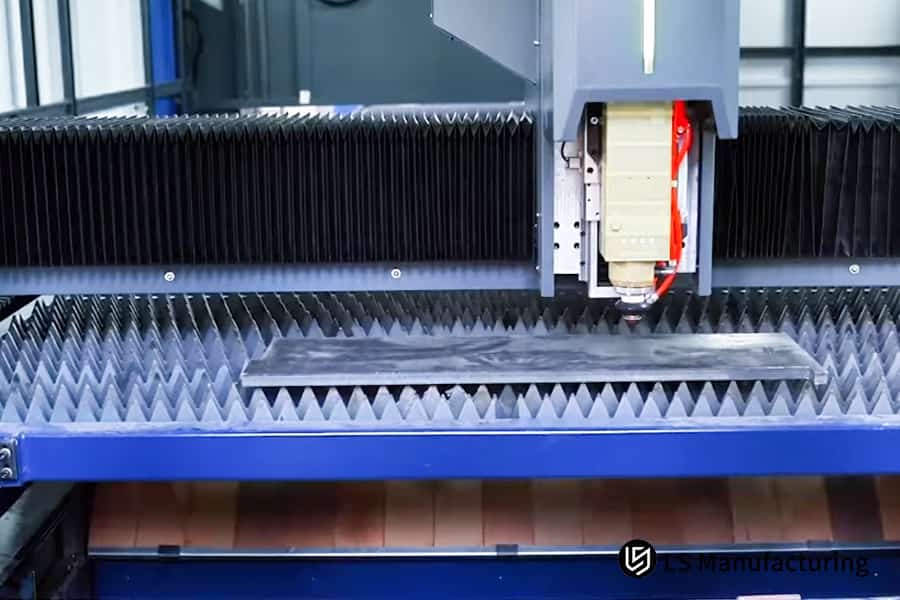
Figure 1: A laser cutting machine precisely cuts a metal sheet on a blue worktable in an industrial environment.
Can Automated CMM Inspection Laser Cutting Detect Hidden Geometric Dimensional Thermal Distortions?
CMM inspection laser cutting, using a very accurate physical probe and spatial coordinate calculation algorithm, is capable to locate 100% minute shape deformations even those due to high temperature laser cutting. It changes the conventional 2D blind zone measurement to a highly accurate 3D measurement, identifying cross-sectional discrepancies which traditional inspection misses.
CMM Probe Path Planning and Stylus Control
- Identification of Reference Surfaces: Initially three reference surfaces A, B, and C are defined and fixed as the reference coordinate system for all dimensional measurements.
- Path Optimization: The program is skillful enough to generate the shortest probe path automatically, which saves the measurement time and prevents collisions.
- Stylus Pressure Control: The stylus force is narrowly regulated to 0.1N to avoid further deformation of thin sheet workpieces.
This is the main technological edge of CMM inspection laser cutting over traditional inspection methods: it can precisely obtain the laser cutting hole accuracy deviations.
Application of Least Squares Method in Roundness Assessment
- Data Collection: Take evenly spaced 3D coordinates of at least 24 discrete points on the circumference.
- Mathematical Model: Find the circle that best represents the points by the least squares method.
- Deviation Measurement: Determine the roundness error by comparing the real points with the ideal circle.
This very accurate mathematical evaluation technique is an indispensable part of quality control in high precision laser cutting service, which is highly effective in maintaining laser cutting profile accuracy.
In simple terms, more measurement points and more data result in a very accurate fitted part profile that most closely matches the true part dimensions and shape.
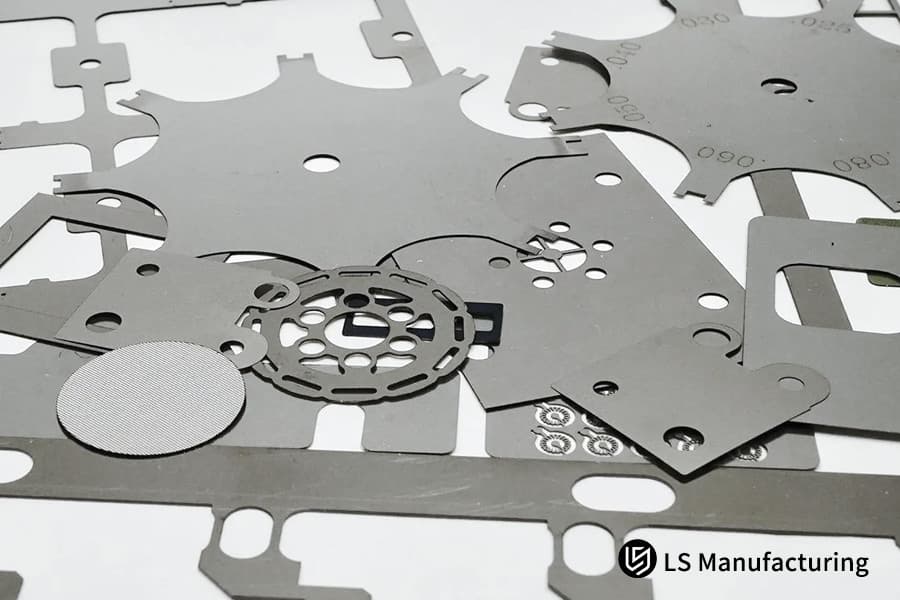
Figure 2: Various laser-cut parts ready for automated CMM inspection on a white surface to verify precision.
Which Laser Cutting Component Inspection Techniques Reliably Isolate Micron Scale Defects?
Laser cutting component inspection is basically the joint effort of very precise sensors and the digital metrology software. Using a scanning probe and a couple of smart algorithms, it is able to get rid of interfering factors like burrs and slags and precisely get the geometric dimensions of the part's reference surface.
LS Manufacturing Metrology Laboratory Operation Procedures
- Environment Control: To negate the effect of the temperature difference, the workpieces have to be put in a room with a constant temperature for a minimum of 4 hours before the inspection.
- Fixture Design: To avoid the deformation of thin plates resulting from the clamping force, the use of three-point support stress-free fixtures was decided upon.
- Probe Calibration: Before taking any measurements, the probe is calibrated with standard gauge blocks to verify the precision of the measurement.
Doing these processes by the book is what guarantees the validity and reproducibility of the laser cutting component inspection outcomes and continuously keeps the laser cutting surface flat.
Inspection Benchmark Definition for Complex Multi-hole Parts
- Primary Benchmark Selection: The surface with the largest area and best flatness is selected as Benchmark A.
- Secondary Benchmark Selection: Two mutually perpendicular edges are selected as Benchmarks B and C.
- Measurement Point Distribution: Eight measurement points are evenly distributed on the circumference of each hole, and nine measurement points are distributed on each plane.
This is also the basis for CMM laser cutting service to provide reliable quality assurance, comprehensively improving laser cutting batch consistency.
Standardizedinspection processes and high-precision equipment can accurately separate micron-level defects, ensuring stable part quality. Contact us for a free DFM assessment to optimize your laser cutting component inspection plan.
How Does a Professional CMM Laser Cutting Service Reduce Structural Variance In Manufacturing Batches?
The CMM laser cutting service integrates statistical process control (SPC) technology to really decrease the variation in dimensions of large volume custom parts. The system sends dimensional deviation data in real-time and changes the laser path and focus parameters dynamically to prevent defects of batch processing from happening at the source.
Process Capability Index (CPK) Management System
- Data Acquisition: A complete dimensional CMM inspection is conducted after every 20 products manufactured.
- Trend Analysis: The changes in dimension are monitored through SPC control charts which also issue warnings when fluctuations become abnormal.
- Process Adjustment: Laser parameters are auto-changed when the dimensional deviation is more than 1/3 of the control limit.
Employing a data-driven method, CMM laser cutting service not only accomplishes continuous process improvement but also guarantees the stability of laser cutting processes.
Fully Digital Tracking System
- Batch Identification: Every batch of products is distinguished by a unique QR code identifier.
- Data Association: Production parameters, testing data, and operator's information are attached to the QR code.
- Quality Traceability: With the QR code, customers can check all the quality-related data of that specific batch of products.
With a process capability index Cpk 1.33, it is possible to lower the defect rate of batch-customized parts up to 63 parts per million. Such an all-inclusive end-to-end control guarantees, in an efficacious way, the laser cutting dimensional stability, this way leading to high-precision mass production.
Different production control modes result in Greatly varied impacts on the batch stability of laser cutting. These table offers a visual representation of the differences in core parameters between conventional production and the CMM digital control mode, highlighting the batch quality control advantages of CMM laser cutting service.
| Control Mode | Dimensional Fluctuation Range | Process Capability Cpk Value | Batch Defect Rate | Process Compensation Timeliness |
| Traditional Manual Sampling Control | ±0.10mm~±0.15mm | <1.0 | Higher than 0.5% | Delayed adjustment, high batch rework rate |
| Conventional Instrument Sampling Control | ±0.06mm~±0.09mm | 1.0~1.2 | 0.1% to 0.3% | Timed adjustment, small deviations exist |
| Timed adjustment, small deviations exist | ±0.03mm~±0.05mm | ≥1.33 | Parts per million | Real-time dynamic compensation, zero batch deviation |
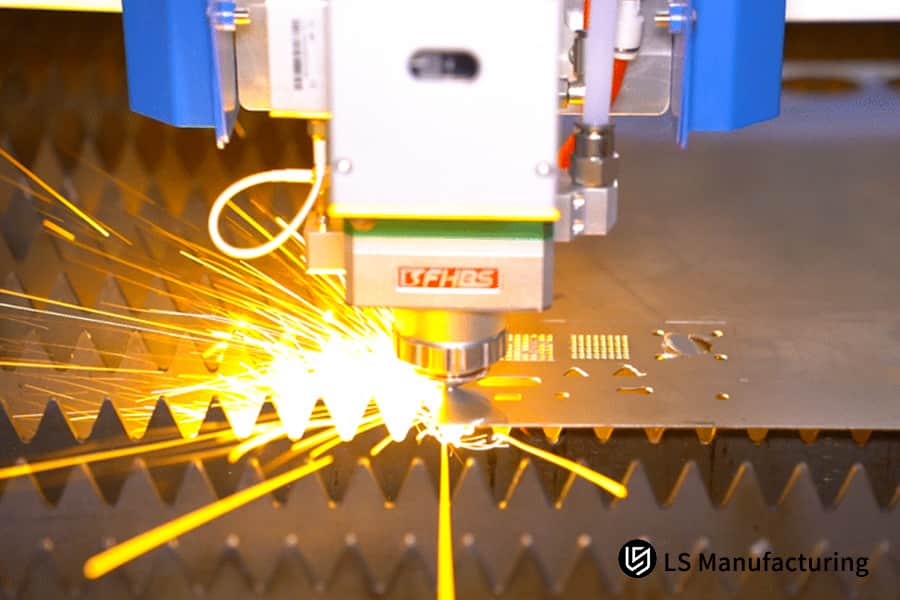
Figure 3: A laser cutting a steel plate, creating sparks, demonstrating high-precision industrial manufacturing.
Is Real Time CMM Verification For Laser Cut Parts Critical For Sourcing Quality Assurance?
CMM verification for laser cut parts is one of the leading quality inspection standards in the high-end manufacturing supply chain. This method not only eliminates the data isolation between product design and mass production but it also uses digital inspection techniques to make sure that entire batches of parts are exactly matching the original design standards.
Risks coming from supply chain of traditional manual sampling inspection
- Very high chance of missing defects: Manual sampling may only reveal about 30% of 3D geometric tolerance non-conformities.
- High chance of making the wrong decision: Different inspectors may give measurement results that deviate by more than 0.05mm.
- Traceability is quite tough: As manual recording gets very easily messed up, it is hard to trace back the problem when a quality issue arises.
Only through stringent CMM verification for laser cut parts can these risks be completely eliminated. This is the way to ensure the quality of batch laser cutting production.
LS Manufacturing Constant Temperature Laboratory Operation Procedure
- Sample Receiving: Samples are taken from the production line and sent directly to the constant temperature laboratory.
- Rapid Testing: CMM metrology of the full-size item is carried out within 2 hours.
- Result Feedback: The results of the testing are instantly communicated to the production workshop.
- Anomaly Handling: Any abnormalities are immediately stopped for adjustment to avoid batch defective products.
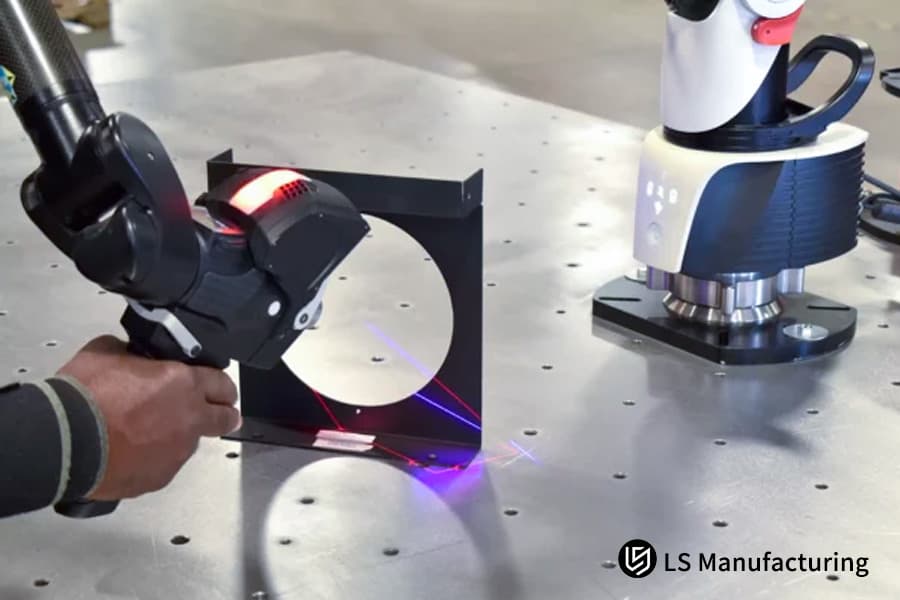
Figure 4: A technician uses a CMM device for in-line verification of a laser-cut part on a workbench.
What Custom Process Parameter Charts Determine Laser Cutting Tolerance Inspection Service Pricing?
The price of laser cutting tolerance inspection service is mainly determined by the strictness of the tolerances, the nature of the materials, and the density of the CMM measurement points. Making a better buying decision means not simply focusing on the processing price, but also giving importance to the quality assurance and the overall cost-effectiveness of the closed-loop inspection system.
Cost and Quality Comparison Table of Different Processing Solutions
| Comparison Items | Traditional Small Workshop Solution | LS Manufacturing Standard Solution | LS Manufacturing Precision Solution |
| Laser Type | Continuous Wave CO2 Laser | Fiber Laser | Ultrashort Pulse Fiber Laser |
| Linear Tolerance | ±0.15-0.25mm | ±0.05-0.08mm | ±0.03-0.05mm |
| Heat Affected Zone | 0.3-0.5mm | 0.1-0.15mm | ≤0.08mm |
| Inspection Method | Manual Caliper Sampling Inspection | 2D Vision Inspection | CMM 3D Inspection |
| Assembly Yield | 92.5% | 97.8% | 99.8% |
| Overall Cost | 1.0x | 1.2x | 1.5x |
| Hidden Losses | 0.8x | 0.2x | 0.05x |
| Total Cost of Ownership | 1.8x | 1.4x | 1.55x |
This comparison clearly demonstrates the significant impact of laser cutting tolerance inspection service on total cost of ownership, intuitively reflecting the differentiated advantages of laser cutting cost performance.
LS Manufacturing's exclusive cost calculation formula:
Final Quote = Basic Processing Fee + Material Cost + (Tolerance Coefficient Number of Measurement Points Inspection Time)
Tolerance coefficient is based on the level of tolerance required: ±0.05mm is 1.0, ±0.03mm is 1.8, and ±0.02mm is 3.2. This is our most open and fair pricing structure, derived from 12 years of production experience, and can meet different laser cutting project standards.
The difference in cost of laser cutting tolerance inspection service is in fact the difference in quality assurance. With LS Manufacturing's precision laser cutting service, the processing cost is only a little bit higher at the very first stage. Still, it will save customers from huge hidden losses brought about by batch rejection and downtime, a lot. Besides that, it will improve the reliability of laser cutting products overall.
The transparent pricing model allows you to clearly understand the cost structure, and high-certainty quality significantly reduces hidden losses. Submit your request now to receive an accurate quote for laser cutting tolerance inspection services, securing high-quality laser cutting manufacturing in one stop.
Which Design Optimization Rules Eliminate Laser Cutting Tolerance Drift Before Automated Coordinate Measurements?
Design for Manufacturing (DFM) optimization and design stage implementation of laser cutting tolerance drift elimination rules will help to eradicate disordered cuts tolerance drift problems at their source. Parameter standardization like aperture ratio, corner structure and layout spacing would much raise first time rate of CMM precision inspection of parts to level of parts conform to quality specification.
Critical Value of Analysis of Aperture-to-thickness ratio
- Critical ratio: local shear heats would accumulate very fast when aperture-to-thickness ratio is less than 1:1.
- Mechanism of deformation: Melting and re-solidification of the wall of the hole due to getting an excess of heat will lead to the formation of irregular protrusions.
- Solution: Minimum diameter of the hole for 2.0mm thick plates should be at least 2.0mm.
Compliance with these design rules can pave the way for the stability of laser cutting tolerance from the very source and because of this forego usual laser cutting size deviation issues.
Layout and Micro-Connection Process Optimization
- Micro-connection Location: Locate micro-connections on the non-functional edges of parts so that the functional surfaces are not compromised.
- Micro-connection Thickness: Thickness of the micro-connections should be tightly controlled within 0.1-0.2mm range so that the strength of the connection is guaranteed while at the same time facilitating separation.
- Layout Spacing: Keep the distance between parts at least 1.5 times the thickness of the plate to lessen the accumulation of thermal impact.
Progressive Deceleration Technique for Corners
- Principle of deceleration: When you are about to reach a corner you cut with a laser, slow down in a way so the collapse of the sharp corner will not take place.
- Power Adjustment: Laser power should be simultaneously reduced to keep the energy input steady.
- Result Validation: Use of the technology may cut down the roundness error at the corners by more than 60%.
Such design enhancement measures represent first level requirements for the realization of extremely high precision in laser cutting services of high precision, and also very effectively upgrade laser cutting corner accuracy.
Why Engineers Trust LS Manufacturing For Custom 316L Stainless Valve Plates With Zero Warp Defects?
LS Manufacturing has used high precision laser cutting service and three-dimensional spatial matrix inspection to fix a situation where 316L stainless steel valve plates (which have high hardness and are used in pumps and valves of industrial type) got deformed thermally to such extent that assembly leaked.
Client Problem:
A fluid control company was having serious quality issues when, as per order, 2.5mm thick 316L stainless steel valve plates were being made. It turned out that conventional laser processing could not keep the material heat accumulation under control. As a result, there were severe deviations in flatness and hole positions. This finally led to 100% airtightness leakage after assembly. Due to this issue, the client project was at a standstill and default risk was high.
After trying three different suppliers and still not solving the technical problems, the client finally decided to contact LS Manufacturing for a professional solution.
LS Manufacturing Solution
Our engineering department formed a dedicated technical team within 24 hours when they got a client help request. Drawing on our hands-on project experience, we instantly took three crucial steps:
- Process Overhaul: We forsook the old-style continuous wave cutting approach for multi-point intermittent high frequency pulse water cooled cutting method. By pushing the laser pulse frequency up to 20kHz and reducing the duty cycle to 15%, we managed to decrease the heat input during processing by 60%.
- Fixture Design: We created a special stress-free measurement fixture that uses a three-point vacuum adsorption method to hold the workpiece, because of this completely eliminating the deformation resulting from mechanical clamping force.
- Closed-Loop Control: A matrix 3D reverse calibration of the flow channel hole position was done using an automatic CMM inside a constant temperature chamber set at 20℃. Every 5 products cut, a CMM inspection was carried out and the machine tool's compensation trajectory was adjusted dynamically based on the inspection results.
Results and Value
After the process was optimized, all 8,000 valve plates were consistently held within a tolerance of ±0.035mm, the hole roundness error was less than 0.015mm, and the assembly airtightness pass rate hit 99.92%, which is greatly above the customer's set acceptance standards.
Besides helping the customer to finish the order on time and avoiding huge penalties, we remodeled their product design, which brought about a 12% reduction in production costs for them in the future. The customer later decided to cancel all their orders from the original supplier and made LS Manufacturing their single long-term strategic parts processor supplier in Greater China for all their needs.
Complete reports of CMM verification for laser cut parts accompany every delivered product, thereby assuring quality traceability.
We successfully solved the industry-wide problem of 316L valve plate thermal deformation, demonstrating our processing capabilities with data. Contact us now to customize a high precision laser cutting service solution with CMM verification for laser-cut parts.

FAQs
Q1: What is the minimum laser cutting tolerance that your precision laser cutting service can guarantee?
For stainless steel, carbon steel, and copper alloy sheets of 3mm thickness or less, it is highly likely that we can keep the dimensional and positional tolerances of the finished product within ±0.03mm. For special precision scenarios, we can also provide ultra-high precision laser cutting services with a tolerance of ±0.02mm.
Q2: How does CMM inspection laser cutting solve the measurement correlation issues on non-linear profiles?
A2: CMM uses a scanning probe to gather discrete points in three-dimensional space and then accurately matching and fitting them against the original manufacturer's CAD model. This way, it fully works out the problem of measurement deviation of irregular non-linear profiles, and at the same time, avoids the judgment ambiguity and data errors of traditional inspection.
Q3: Why does your high precision laser cutting service In particular focus on heat-affected zone controls?
A large heat-affected zone could bring phase transformation hardening and micro-warping of metal edges. Controlling heat input to a minimum is one way to adjust surface roughness, maintain the form and position tolerances and perpendicularity of parts, and to meet stringent CMM precision inspection standards.
Q4: Can your factory handle low-volume custom manufacturing with full laser cutting component inspection support?
We can process orders of all scales in our factory, from single-piece sampling and small-batch customization to large-scale mass production. At the same time, all orders feature complete laser cutting component inspection services and professional quality audit reports.
Q5: What technical data is included in your factory standard CMM laser cutting service quality report?
Generally, the quality inspection report covers data on part shape and position deviations, 2D/3D contour comparison color charts, hole diameter roundness fitting curves, and Cpk process capability data analysis charts for production stability verification.
Q6: How do variations in edge perpendicularity affect the total quote and price of customized profiles?
When the tolerance requirements for edge perpendicularity are tighter, the cutting speed will be reduced, more auxiliary gas will be used and the CMM high precision inspection will be more thorough. This way process inspection and costs will be increased finally the customized processing quote will be higher.
Q7: Why should procurement managers prioritize CMM verification for laser cut parts over cheap manual sorting?
Manual inspection is limited as it cannot detect 3D warping of parts. CMM full dimensional verification ensures that parts are ready for assembly upon delivery, this way avoiding large losses like bulk returns, downtime, and also enhances supply chain stability.
Q8: How can I get a comprehensive quote based on your laser cutting tolerance inspection service capabilities?
Simply upload drawings and submit processing requirements for a prompt quote. Within 24 hours, we provide a free DFM assessment report and thinly of a customized quote cost-effective and transparent for laser cutting tolerance inspection services is offered through that.
Summary
It is a big mistake to mistake the core of precision laser processing with the cutting speed. Instead, digital tolerance verification capabilities are what really matter. LS Manufacturing, by based on the highest-precision laser cutting services and a fully automated CMM inspection system, has entirely resolved all the problems of processing distortion and stress deformation that the industry faces.
Coming to know a technically skillful, data-driven metrology-grade manufacturer is the sane way to unlock the assembly efficiency and minimize the hidden costs of a modern supply chain system. Are you still stuck with the previous manufacturer's empty promises of high precision and the burden of high assembly defect rates?
Send your product design drawings (STEP, IGES, or DXF format) now via LS Manufacturing's official technical review portal. First, our senior engineering experts, guided by a thorough understanding of the manufacturing process, will deliver to you a manufacturability (DFM) analysis report within 24 hours. Next, and the totally transparent, factory-direct quote with zero hidden costs, they will stand at your disposal.Trust us when we say that we will protect your precision manufacturing supply chain by providing flawless CMM quality control data!
📞Tel: +86 185 6675 9667
📧Email: info@lsrpf.com
🌐Website: https://lsrpf.com/
Disclaimer
The contents of this page are for informational purposes only. LS Manufacturing services There are no representations or warranties, express or implied, as to the accuracy, completeness or validity of the information. It should not be inferred that a third-party supplier or manufacturer will provide performance parameters, geometric tolerances, specific design characteristics, material quality and type or workmanship through the LS Manufacturing network. It's the buyer's responsibility. Require parts quotation Identify specific requirements for these sections.Please contact us for more information.
LS Manufacturing Team
LS Manufacturing is an industry-leading company. Focus on custom manufacturing solutions. We have over 20 years of experience with over 5,000 customers, and we focus on high precision CNC machining, Sheet metal manufacturing, 3D printing, Injection molding. Metal stamping,and other one-stop manufacturing services.
Our factory is equipped with over 100 state-of-the-art 5-axis machining centers, ISO 9001:2015 certified. We provide fast, efficient and high-quality manufacturing solutions to customers in more than 150 countries around the world. Whether it is small volume production or large-scale customization, we can meet your needs with the fastest delivery within 24 hours. choose LS Manufacturing. This means selection efficiency, quality and professionalism.
To learn more, visit our website:www.lsrpf.com.