English



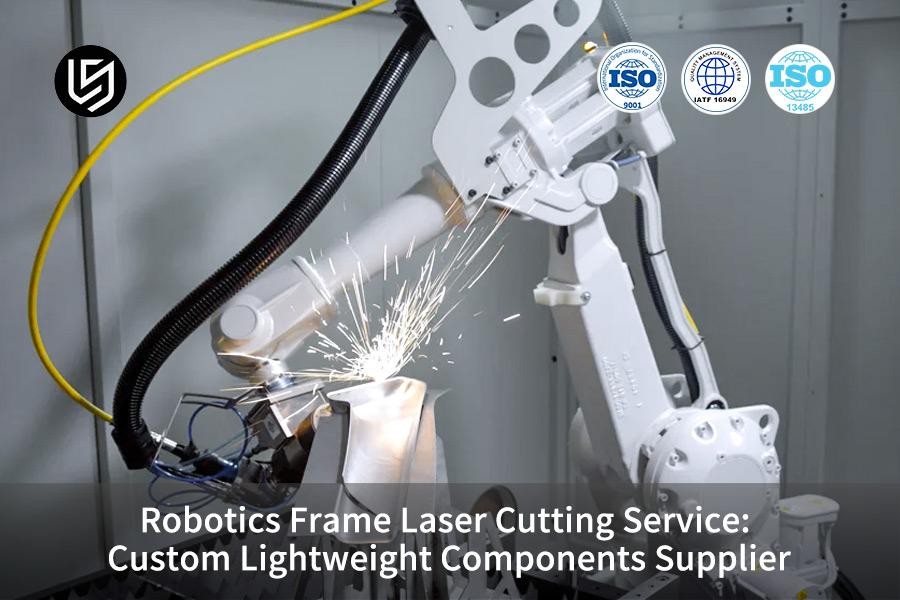
Laser cutting service for industrial automation faces the core challenge of achieving lightweight and structural rigidity. Many buyers face problems like large heat-affected zones, burrs, and deformation in thin-walled aluminum parts that result from conventional cutting. These problems directly affect assembly, which in turn affects robot accuracy and motor life. This is a common problem for many buyers due to conventional laser cutting that lacks specific knowledge and understanding.
The underlying reason for this is that conventional laser cutting ignores many important parameters for dynamic structures like stress relief and cut surface finish. For instance, verticality ≥ 89° is crucial for dynamic structures to withstand fatigue in high-vibration environments. This is achieved by combining high-power fiber laser cutting machines with our innovative approach to DFM optimization. This enables us to achieve cutting accuracy within ±0.05mm and reduce material waste by 30% for an optimum, high-performance frame.
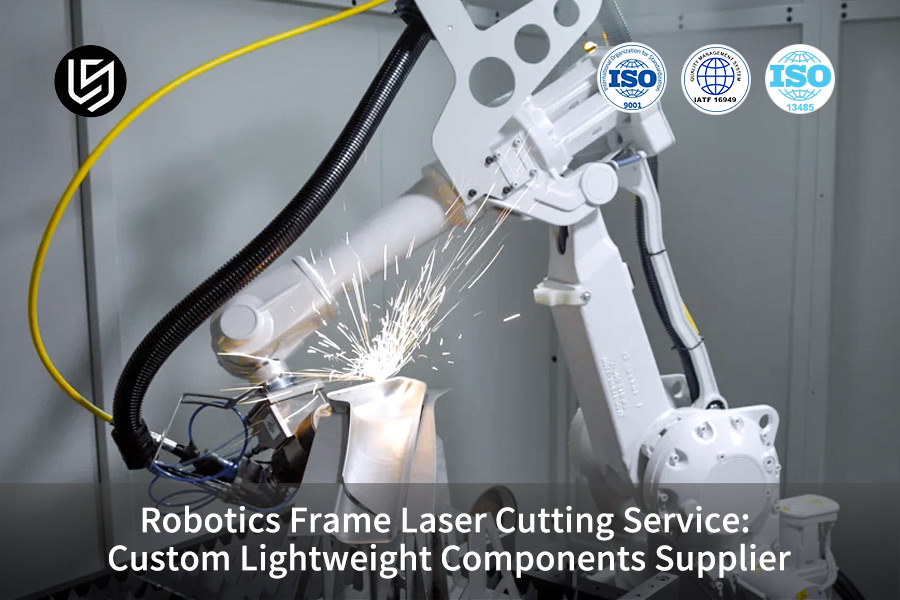
Robotics Frame Laser Cutting: Essential Guide
| Key Consideration | Technical Approach |
| Weight Optimization & Strength | Frames are made light and rigid with the use of high-strength materials and the ability to create complex lightening designs without compromising strength. |
| Precision Hole & Interface Machining | Mounting interfaces for motors, bearings, and panels require precise positioning accuracy. Laser cutting provides the accuracy needed for precise bolt pattern and interface features. |
| Design for Assembly (DFA) | Design of parts that assemble themselves or ‘self-fixture’ is done with the use of nesting software that optimizes laser cutting material and ensures precise machining of features such as tabs and slots. |
| Minimizing Post-Processing | Laser cutting provides clean edges with minimized burrs. Machine parameters are optimized to minimize or eliminate the need for secondary deburring operations. |
| Our Advanced Laser Capability | We utilize high-powered fiber lasers that can cut various thicknesses and materials with speed and accuracy. |
| Result: High Stiffness-to-Weight Ratio | Delivers frame parts that are maximally stiff for weight, resulting in faster and more responsive robots with the highest efficiency. |
| Result: Rapid Prototyping & Scaling | Enable rapid iteration of frame design and seamless scaling to production volumes, owing to the digital and tooling-free nature of laser cutting. |
We address the challenge of creating robust, lightweight, and accurate structural components for robotic frames laser cutting. Our laser cutting service produces designs that are ready to be assembled into components that minimize weight while optimizing stiffness, reducing assembly time, and accelerating development cycles. This is an end-to-end solution that ensures your robotic frames are developed to deliver optimal performance, efficiency, and reliability.
Why Trust This Guide? Practical Experience From LS Manufacturing Experts
You can easily find numerous articles discussing robotic frame manufacturing online. What makes our guide different and worthy of your attention? The answer is simple – we are not theorists, but experts in the field with over 15 years of experience in the workshop, dealing with the challenges of cutting high-strength alloys and complex geometries of collaborative robot frames.
We provide mission-critical components where precision is non-negotiable, from medical robotics to high-speed automation. With every project, we learn more, such as how to optimize parameters for various materials, how to manage thermal stress, and how to optimize for manufacturability. Our entire process is rigorously benchmarked against National Institute of Standards and Technology (NIST) and International Aerospace Quality Group (IAQG) quality standards.
Each and every tip that we give away from our blog is a hard-earned lesson from the factory floor, backed by success and early failures. It's knowledge that helps you achieve precision of up to ±0.05mm or reduce waste by up to 30%. It's knowledge that we ourselves use to get it right, so your robots are lighter, stronger, and more resilient.
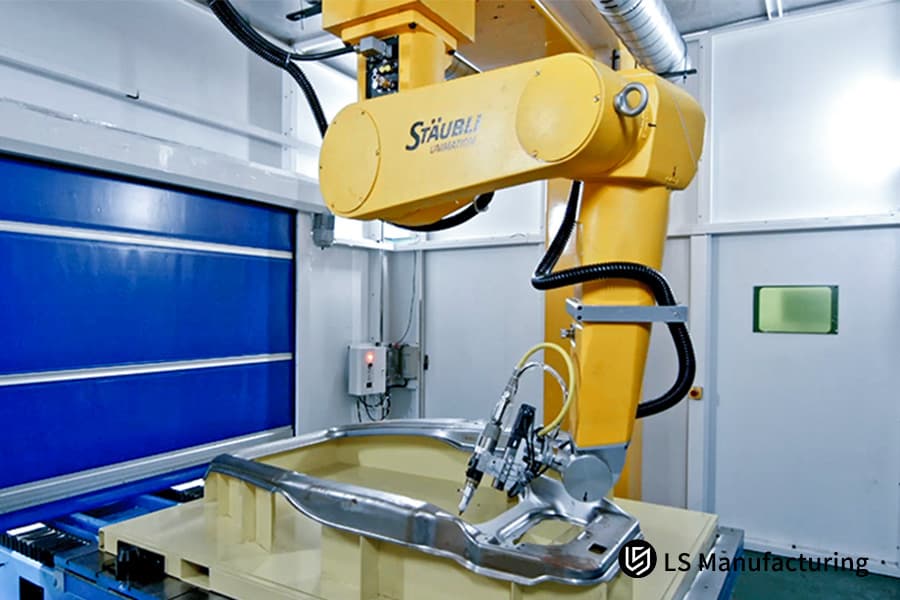
Figure 1: Cutting 304 stainless steel with a Stäubli robot for lightweight collaborative robot chassis components.
Why Should You Choose A Specialized Laser Cutting Service For Complex Robotics Assemblies?
For complex robotics assembly parts, laser cutting is used to overcome the key challenge of thermal distortion in thin-walled or highly perforated parts. The HAZ is carefully controlled at less than 0.1mm, which eliminates any dimensional stability issues that could occur. This is beneficial in terms of structural integrity for 24/7 operations, which in turn decreases the Total Cost of Ownership.
Mitigating Thermal Distortion Through Advanced Process Control
The heat input is precisely controlled with pulsed laser modes or with cooling. This precisely limits the HAZ of laser cutting service, which would otherwise cause warping of parts, especially in the case of high-density perforations used in robotics frames. A dimensionally stable skeleton is then fabricated through our experience in precision laser cutting.
Achieving Complex Geometry with Micron-Level Accuracy
Precision fiber laser cutting is capable of intricate details and micro-joining, which is otherwise impossible with other machining techniques. This is the core principle behind precision manufacturing of light, articulated frames. Improved edge finish also allows instant adhesive bonding or welding of parts with high strength without further processing.
Engineering for Manufacturability and Assembly (DFM/A)
Our expertise also takes into account the cutting process in relation to the assembly process. We evaluate the thermal impact of the cutting process in order to optimize nesting and cutting strategies for automated laser cutting cells, which eliminates cumulative stress in the parts. This guarantees that all parts of your robotic system will interface flawlessly, whether press-fit bearings or weld joints, in order to streamline your manufacturing process.
This document outlines our formal methodology that effectively deals with the multi-dimensional challenges associated with precision robotic fabrication processes. This is more than just cutting. We have developed a solution set that incorporates thermal management, precision execution, and manufacturability analysis. It is this degree of control that makes us unique. It is what we believe is our unique selling point that provides our competitive advantage in delivering robust high-performance robotic laser cutting.

How Does Robotics Laser Cutting Technology Improve The Dynamic Performance Of Automated Systems?
Better performance in the dynamics of automated systems is possible if the inertial properties of the system's components are minimized while at the same time the structure is kept intact. This is possible through the robotics laser cutting technology we use, which ensures that the components are ultra-clean, light, and have perfect stress distribution. This improves the acceleration and speed of the system in the following ways:
Optimizing Inertial Properties via Precision Weight Reduction
- Topology Optimization Execution: Execution of ideal paths for achieving lightweight structures.
- HAZ Control for Mass Distribution: Prevention of HAZ hardening for ideal inertial properties.
- Dynamic Optics for Complex Cuts: Achieving complex cuts for light structures using our high-precision laser cutting systems.
Eliminating Stress Concentrators with Burr-Free Edges
- Precision Parameter Calibration: Spatter-free cuts, which is part of our service in the laser cutting service.
- Systematic Process Refinement: Our laser cutting process optimization ensures that the edges are weld-ready, eliminating stress concentrations.
- Predictive Kerf Analysis: Compensation for the width of the cut in the CAD file to ensure that the final mass matches the dynamic performance simulations.
System-Level Performance Validation Through Co-Engineering
- Component-Level Testing: Inertial information like mass and moments of inertia provided for customer simulation models.
- Iterative Design Feedback: Design improvements suggested in line with the capabilities of the fiber laser systems to achieve improvements in dynamic performance.
- Integrated Quality Gates: In-process monitoring in the automated laser cutting process to ensure quality in the batch.
This is an outline of the methodology related to the integration of superior laser cutting and dynamic performance engineering. It is meant to offer measurable improvements in acceleration and stability through mass, geometry, and material integrity in the components themselves. This documentation is meant to be a competitive blueprint, moving the emphasis from the supply of components to co-engineered excellence in system kinematics.
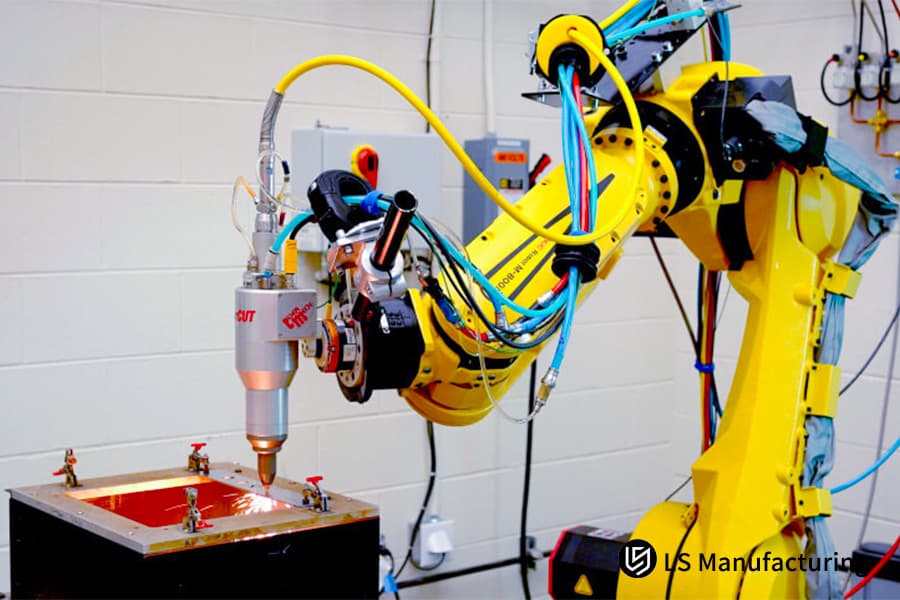
Figure 2: Slicing red anodized aluminum sheet with a robot for robotic gripper or end effector plates.
What Technical Advantages Define A High Quality Custom Laser Cutting Service For Structural Frames?
The integrity of the frame depends on the quality of the cut material, which is directly related to the fatigue life and rating capacity. High-quality custom laser cutting service is not limited to the contour cutting of the material but also includes the integration of material science, mechanical engineering, and manufacturability. This document includes the technical specifications of the high-quality laser cutting provider, which is the basis of the vendor evaluation criteria:
| Technical Dimension | Process Method / Control Parameter | Value to Structural Integrity |
| Cut Surface Quality | Using 99.999% high purity nitrogen assist gas, which enables Ra < 12.5μm on thick section cuts. | Minimizes micro-crack initiation sites, thereby increasing the fatigue life of the material. |
| Geometric Fidelity | Uttilization of auto-focus tracking technology with precision laser cutting optics that guarantee kerf tolerances of ±0.05mm. | Essentially guarantees perfect fit-up for welding, thereby eliminating any gaps that could cause stress concentrations in the final product. |
| Design Integration | DFM optimization audits that allow for the identification and correction of stress-concentrating features in customer-designed parts. | Eliminates failure risks in the design, thereby converting it into a reliable part. |
| Process Consistency | Uttilization of SPC (Statistical Process Control) for key laser cutting process parameters. | Guarantees consistent performance in all products, which is essential for quality assurance in production. |
This document describes the co-engineering methodology that addresses the problem of structural integrity and production reliability. Our service mitigates risk through the provision of excellent laser cutting quality, perfect fit-up through the precision laser cutting, and robust designs through DFM optimization. This is the key competitive advantage in high-value applications where performance and cost of ownership are more important than the cost of the individual pieces.
Why Are Laser Cut Robotics Frames Superior In Maintaining Long Term Structural Alignment?
Long-term structural alignment in robotics is, at its core, a problem of dimensional stability over thousands of cycles. Our approach solves this in that our methodology guarantees exceptional dimensional consistency in all parts, which removes any fit-up issues that cause stress. This is not done by inspection but by manufacturing process control:
Statistical Process Control (SPC) for Predictive Consistency
Using SPC in real time on parameters such as beam focus and cutting speed, we ensure that Cpk is always greater than 1.33 on all key features. This is not simply quality control but predictive control of the robotics laser cutting process. This is not batch manufacturing but rather manufacturing as a predictable process. The result is that all laser cut robotics frames in any large order are guaranteed statistically to be within that tight ±0.05mm tolerance range.
Thermal Management for Repeatable Accuracy
The dimensional drift caused due to the cutting process is reduced through our closed-loop cooling systems and optimized nesting patterns. This ensures that the first part and the thousandth part in the batch are cut in the same conditions. This stability in the precision laser cutting system is critical in maintaining the true position of the bolt circles and mounting interfaces, which is critical in sustaining the alignment.
Mitigating Internal Stress and Distortion
We employ a proprietary high-speed laser cutting process that limits the amount of heat introduced, hence minimizing the introduction of new internal material stress. This process ensures that there is no warping of the part after the cutting process is complete. This is the benefit of controlling the outcome of the laser micro-cutting process.
This document outlines the process-based solution to the challenge of achieving and maintaining part alignment. We address the fundamental cause of part alignment issues: cumulative dimensioning variation and stress. We do this through statistical process control in manufacturing and heat management. This is the value of our solution to mission-critical automation systems where precision is the key to ROI.
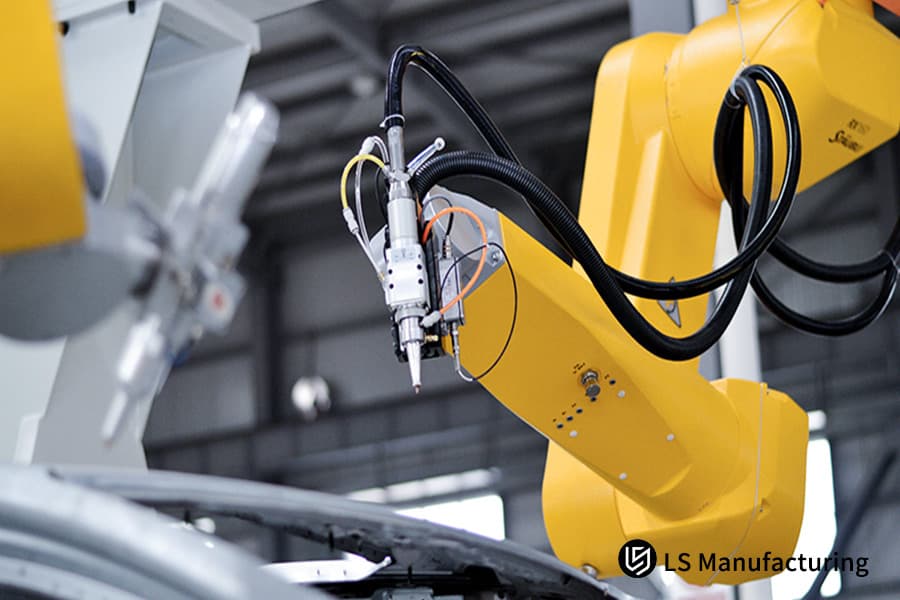
Figure 3: Cutting carbon steel plate with a robotic laser for heavy duty robot base or structural frames.
How Can Precision Laser Cutting Minimize Secondary Processing Costs For Custom Components?
Precision laser cutting reduces secondary costs through its ability to provide components in an already finished state, which can be used directly in fulfilling downstream requirements for coatings or other processes. This is achieved through its "cut-to-finish" process, which is ensured through precise edge quality and dimensional accuracy. This reduces the process to an efficient workflow with minimized costs:
Delivering Coating-Ready Edge Quality
- Optimized Gas-Assisted Cutting: Results in an oxide-free, smooth edge finish on alloys.
- Burr-Free Output: Yields surface roughness (Ra) that meets pretreatment requirements for coatings.
- Deburring Elimination: Our laser cutting service eliminates the need for deburring operations altogether.
Ensuring Dimensional Accuracy for Direct Assembly
- High-Precision Motion Systems: Possess geometrical tolerances of ±0.05mm or tighter.
- Predictive Kerf Compensation: Ensures accurate alignment of holes and complex shapes.
- Fit-for-Assembly: Enables direct press-fit or bolted assembly.
Streamlining the Manufacturing Sequence via Process Integration
- Design for Manufacturability (DFM) Input: Improves parts for suitability with our fiber laser cutting process.
- Unified Production Flow: Nests parts for cutting in one step with automated process.
- Reduced Touchpoints: This process minimizes damage in handling and quality variations in secondary processing.
The above methodology demonstrates the application of the engineered precision laser cutting process in eliminating non-value-added costs. The problem of secondary processing is eliminated with superior edge quality and accuracy as inherent qualities. The emphasis on first-part correctness provides the competitive advantage in eliminating the intricacies and time-to-market for custom laser cutting parts.
Which Materials Are Best Optimized By A Professional Lightweight Component Cutting Process?
Selecting the right material is one of the most important decisions in the process. However, the real challenge is maintaining the intrinsic qualities of the material during the process. The professional lightweight component cutting process is recognized by the ability to accommodate disparate material science. The process protects materials against thermal damage that compromises the strength of the materials. The parameter approach in the process is described in the document and demonstrates the laser cutting application in eliminating damage in handling and quality variations in secondary processing:
| Material Class | Key Process Adaptation | Technical Outcome & Value |
| High-Strength Aluminum (e.g., 7075-T6) | Using nitrogen as an assist gas and modulated pulse waves for control of the heat input. | Prevents over-aging and softening of the HAZ, such that at least 95% of the original base material’s tensile strength is retained in the material after the cutting process. |
| Carbon Fiber Reinforced Polymer (CFRP) | Using ultra-short pulses and fiber laser cutting parameters. | Prevents delamination and fraying of the composite material, such that the edge can be sealed without the need for an additional sealing process. |
| High-Strength/Stainless Steels | Using high-brightness lasers and peak power levels. | Prevents the formation of cracks in the material during the cutting process and maintains the corrosion resistance of the material. |
| Advanced Composites & Hybrid Stacks | Enable the ability to switch dynamic parameters during a toolpath with the ability to utilize the laser cutting process. | Prevents the degradation of the adhesive bond and the formation of burrs during the process. The process can be used to clean and cut hybrid materials such as metals and polymer-based composite materials. |
This analysis provides a material-specific solution for addressing the fundamental problem of material degradation during cutting. Our custom laser cutting service is driven by this material optimization principle. We are dedicated to ensuring that the final product is capable of performing at its highest potential. This is particularly true in regards to applications in both aerospace and robotics, where weight and pressure are key determinants in regards to performance and viability.
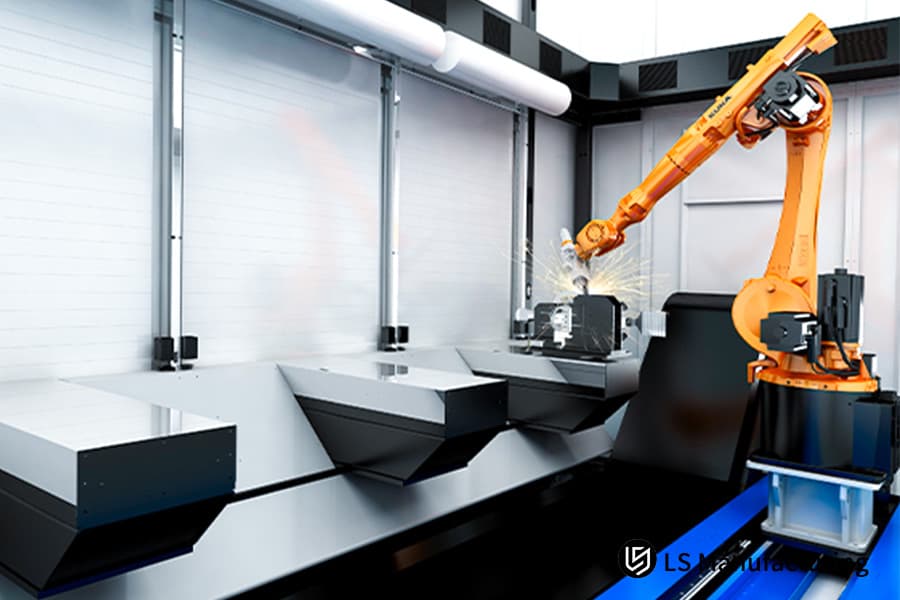
Figure 4: Processing aluminum alloy components with robotics laser cutting for custom automation system frame assembly.
Why Is A Specialized Aluminum Laser Cutting Service Critical For Mobile Robotics Development?
Due to its high reflectivity and heat conductivity, cutting aluminum with lasers is particularly difficult. This is because it impacts the cost of the final product. A specialized aluminum laser cutting service is critical for mobile robotics development because it specifically addresses these issues.
Overcoming High Reflectivity for Consistent Cutting
- Anti-Reflection (AR) Coated Optics: This protects the laser delivery system against back reflections that may cause instability in the system.
- Specialized Laser Sources: It uses lasers with specific wavelengths that are best suited for absorbing the aluminum laser cutting material.
- Stable Energy Coupling: This guarantees a clean and precise laser cutting of aluminum, eliminating any form of defect that may compromise the quality and, in turn, the strength of the cut-out parts.
Maximizing Yield and Minimizing Waste via Advanced Nesting
- Algorithmic Nesting Software: This guarantees a clean and precision laser cutting of the aluminum, eliminating any form of defect that may compromise the quality and, in turn, the strength of the cut-out parts.
- Common-Line Cutting: This minimizes any form of waste and kerf loss as the cutting paths are shared for adjacent parts.
- Direct Cost Impact: This optimized precision laser cutting technique will have a direct impact on the cost of the raw materials used.
Ensuring Repeatable Quality with Controlled Processing
- Parameter Libraries: Utilizes well-established parameters for different grades of aluminum and thickness values to prevent the possibility of burning or drossing.
- Active Gas Control: Utilizes high-pressure, high-purity assisting gases to remove the molten material and create dross-free edges.
- Process Monitoring: Utilizes SPC on key laser processing parameters to ensure that all products are processed to the same standard.
This document presents the technical methodology that addresses the fundamental issues involved in aluminum processing for high-end laser cutting applications. The methodology enables the consistent and cost-effective manufacturing of light frameworks, controlling for reflectivity, maximizing sheet yield, and ensuring repeatability. This engineered solution represents the ultimate competitive advantage for the creation of efficient and cost-effective mobile robotics platforms.
What Factors Should You Evaluate When Selecting A Leading Laser Cutting Component Supplier?
When considering the selection of a laser cutting component supplier, the conversation shifts from the equipment supplier to the systemic capabilities that can assure reliability in the supply chain and quality in the components provided. The key supplier would be able to demonstrate their quality by obtaining process control certification, stability in production, and engineering support. The key factors are identified in the current document as follows:
Certified Process Control and Quality Assurance Systems
It would be desirable to select a supplier who can demonstrate an ISO 9001 quality management system certification, in addition to digital SPC dashboards for real-time monitoring of critical laser cutting precision metrics such as kerf width and positional accuracy. This process control rigor would assure that all products, including all batches of dedicated aluminum laser cutting service, meet specifications every time.
Production Stability and Scalability Through Automation
Evaluate the existence of the 24/7 lights out manufacturing mode. This implies stability and scalability to meet high volume order demand. This is done via the implementation of automated material handling systems. Orders are therefore ensured to be on time and of high quality despite the order volume. The supplier is therefore an extension of your own process.
Technical Collaboration and Proactive Risk Mitigation
The ideal supplier offers more than just cutting. The supplier offers co-engineering via the analysis of the Design for Manufacturability of client designs. This implies that the supplier analyzes the client’s designs in order to eliminate any possible stress concentrator or problem that might occur during the process before the manufacture of the product even starts. This is supplier evaluation of manufacturability and is important in the optimization of the component.
This document outlines our approach to supplier evaluation, which is used as a strategic tool for measuring systems rather than abilities. This approach is designed to meet the needs of both supply chain risk management and component optimization with certified process control, automated production stability, and co-engineering partnerships. By using our evaluation criteria, our partnership is not just that of a vendor, but that of a strategic laser cutting engineering partner dedicated to your project's success.
LS Manufacturing: Laser Cutting For Ultra-Lightweight Alloy Frames In Collaborative Robotics
LS Manufacturing is dedicated to helping innovators overcome manufacturing hurdles that impact product performance. This document outlines how our low-heat laser cutting capabilities were used to eliminate a primary failure mode for a European cobot startup. This case study also represents our approach to using obstacles as opportunities for building strengths.
Client Challenge
The client’s cobot arm joint frame made of 6061-T6 aluminum alloy had complex weight reduction features that required positional tolerance machining of ±0.08mm. The previous process also caused micro-cracks on the edges around the holes due to thermal stresses. This led to a 15% failure rate in the field due to fatigue in the metal after just 500 hours of usage. This was a critical failure mode for the product’s reliability.
LS Manufacturing Solution
Our in-depth DFM audit revealed that the major problem area was heat input, which was overcome by the use of a proprietary pulsed laser cutting method, whereby the frequency and widths of the pulses are optimized to minimize heat input by 35%, thus eliminating temper from the piece. The use of a custom-designed fixture also overcame the problem of vibration, and inline vision inspection ensures that the components are of the correct dimension, thus allowing for burr-free laser cutting of thin-walled structures.
Results and Value
With the new process, the client has benefited in the sense that the weight of the components is now reduced by 18%, ensuring that the components are lighter but still possess the requisite strength. The quality of the edge is now of such standard that it is ready to be assembled, thus eliminating the need for the secondary machining process, which saved the client 25% of the total cost. The first 500 pieces of the order were completed in just 10 days, thus allowing the client to speed up their project in view of the high-accuracy laser cutting done by us.
This project demonstrates that true manufacturing partnership is not just about delivering a product that meets specifications but is also about delivering system value. LS Manufacturing’s mastery of advanced laser cutting processes and fixtures enables us to deliver a foundation of advantage to our clients wherein marginal differences in performance, reliability, and speed to market are critical.
Pass 5000-hour fatigue tests and cut 25% unit cost for your robot joints with LS Manufacturing's precision laser cutting.

FAQs
1. What level of laser cutting precision can LS Manufacturing achieve?
With the aid of our state-of-the-art multi-kilowatt fiber lasers and precise optical encoder feedback systems, we are able to provide precision accuracy up to ±0.05mm with regards to dimensions and ≤0.1mm with regards to our heat-affected zone (HAZ).
2. What are the maximum and minimum part dimensions you can handle?
Our cutting capacity is up to 6500mm x 2500mm. On the other end of the scale, we are capable of precision micro-holes as small as Φ0.5mm for a whole array of applications, from small robotics to heavy equipment.
3. Which lightweight materials do you support for cutting?
LS Manufacturing is an expert in the precision cutting of 5052, 6061, and 7075 aluminum alloys; carbon fiber sheets; titanium alloys; and a wide range of high-strength, thin-walled stainless steels.
4. How does LS Manufacturing ensure consistency for large-volume orders?
We are dedicated to SPC (Statistical Process Control) execution and supply Process Capability Reports (CPK) for every batch to make sure that every part will fit perfectly one after another on a production line.
5. Do you accept small-batch custom orders?
Of course, we understand very well the value of prototype development; LS Manufacturing also provides rapid prototyping capabilities down to one single piece with a turnaround time of only 24 to 48 hours.
6. Can LS Manufacturing provide design optimization suggestions (DFM)?
Definitely. Our engineering department carefully examines technical drawings during the quotation process to provide recommendations such as optimal cutting routes or minor design modifications that will not only reduce the cost but also increase the level of structural safety.
7. Do your laser cutting services include deburring?
Our standard service covers mechanical deburring and vibratory finishing - edges come out smooth, safe, ready for immediate surface treatment.
8. How can I obtain a formal quotation? What documents are required?
Send your technical drawings in STP, DXF, or PDF through our inquiry portal. State the material and quantity. Our team delivers a clear, line-by-line quote within four hours.
Summary
If the frame cut is off by a millimeter in robotics production, performance suffers. LS Manufacturing treats cutting as precision prefabrication. We use materials science, advanced laser ranges, and strict SPC to remove manufacturing variables. As your partner, we offer engineering tools that adjust to complex shapes - precision becomes real cost savings.
Want better robotic parts? Skip scrap and design errors that slow your launch. High-intent clients get free DFM reports. Upload STEP or DXF files now. Within 4 hours, you'll receive a full manufacturing plan with possibility checks, material reviews, and cost-cutting options. Upload and check it out - precision can change how your robotics project starts.
Boost your robot's dynamic performance and slash unit costs with LS Manufacturing's high-precision, fatigue-resistant laser cutting.
📞Tel: +86 185 6675 9667
📧Email: info@lsrpf.com
🌐Website: https://lsrpf.com/
Disclaimer
The contents of this page are for informational purposes only. LS Manufacturing services There are no representations or warranties, express or implied, as to the accuracy, completeness or validity of the information. It should not be inferred that a third-party supplier or manufacturer will provide performance parameters, geometric tolerances, specific design characteristics, material quality and type or workmanship through the LS Manufacturing network. It's the buyer's responsibility. Require parts quotation Identify specific requirements for these sections.Please contact us for more information.
LS Manufacturing Team
LS Manufacturing is an industry-leading company. Focus on custom manufacturing solutions. We have over 20 years of experience with over 5,000 customers, and we focus on high precision CNC machining, Sheet metal manufacturing, 3D printing, Injection molding. Metal stamping,and other one-stop manufacturing services.
Our factory is equipped with over 100 state-of-the-art 5-axis machining centers, ISO 9001:2015 certified. We provide fast, efficient and high-quality manufacturing solutions to customers in more than 150 countries around the world. Whether it is small volume production or large-scale customization, we can meet your needs with the fastest delivery within 24 hours. choose LS Manufacturing. This means selection efficiency, quality and professionalism.
To learn more, visit our website:www.lsrpf.com.