English



Custom OEM laser parts service is a fundamental approach to getting great returns on investment when moving production level from samples to mass manufacture. Accurate laser cutting cost analysis is the key to a maximum return on investment during this change. Large-quantity laser cutting not only entirely removes the high tooling cost that usually comes with stamping, but also reduces time quite a bit.
By using high-power fiber lasers in conjunction with advanced typesetting software, it is possible to minimize sheet metal waste while maintaining an extreme tolerance of ±0.1mm. This way, laser cutting for mass production is a most cost-effective solution for production volumes where conventional methods get very expensive and inefficient.
Quick Overview of Core Parameters for Cost Reduction in Laser Cutting Mass Production
| Cost Reduction Dimensions | Key Measures | Customer Benefits |
| Mold Investment | Zero molds, direct laser forming | Saves $15,000-$50,000 in upfront mold costs |
| Cost Inflection Point | Exclusive layout optimization raises the break-even point | Still competitive in the 30,000-50,000 piece range |
| Material Utilization | Intelligent common-edge cutting + fewer redundant holes | Scrap rate reduced by 18% |
Key Conclusions
- Eliminate mold costs: Utilizing custom laser parts services can completely eliminate the need for mold costs, which results in significant savings as the upfront engineering costs of traditional stamping will be avoided.
- Cost balance controlled at 30,000-50,000 parts: Innovative layout optimization is a secret of making the balance point between laser cutting of heavy plates and stamping higher, this allows laser cutting to become more economical for medium to high-volume production.
- Material reduction reaches 18%: The use of intelligent common-edge cutting and the removal of redundant holes lead to a major decrease of raw materials needed, because of this saving material costs.

Why Choose LS Manufacturing's Custom OEM Laser Parts Service?
With 15 years of experience in laser cutting manufacturing for medical, automotive, and industrial equipment, our cost-effective custom OEM laser parts service needs three core capabilities: high-power equipment, intelligent layout algorithms, and DFM pre-audit. Not having one of these elements will result in hidden costs during mass production.
ISO 9013:2018 Thermal cutting - Classification and dimensional tolerances clearly states Profile tolerances for precision thermal cutting should conform to the limits of the thinning class, the HAZ width shall be incorporated in the acceptance parameters.
We perform more than 300 DFM pre-audits, on average, a year to the letter, which not only saves our clients rework costs of $8,000-$15,000 but also ensures the quality of their products. We operate the 12kW-20kW machines with dynamic focusing technology that can tightly control tolerance for thick plates within 0.1mm, and we achieve high material utilization rates up to 93%.
We use the medical equipment chassis project as another example. Originally, there was a huge deflection of 3.5mm and 18.2% of defects. To solve these two problems, we implemented staggered pulse cutting and thermal imaging supervision so that the product deflection was 0.2mm, defectiveness was zero, and 32% cost savings and 65% time savings were achieved. This entire advanced solution can be repeated as batches.
Want to know if your design can reduce costs through laser mass production? Contact our engineers to obtain the Laser Mass Production Cost Comparison Table, which includes inflection point calculations and material utilization rate estimates for your benchmarking.
Why Is a Comprehensive Laser Cutting Cost Analysis Critical Before Scaling Your Custom OEM Laser Parts Service?
Conducting a laser cutting cost analysis at an early stage helps you understand the laser cutting price changes and prevents unnecessary budget overruns when you finally get started with a laser cutting service for custom OEM laser parts on a large scale. Merely looking at the processing time by hour does not reflect the changing effects of variables in factors affecting unit cost, like auxiliary gas, pierce time, and utilization of sheet metal. Laser cutting cost analysis needs to peel away the surface level pricing to reveal the real impact of gas usage and piercing time.
The Hidden Impacts of Gas Costs and Piercing Time
In mass production, the decisive impact of auxiliary gases and the total number of piercing points on the overall cost far exceeds expectations. Price differences in custom OEM laser parts service often lie hidden in these details.
- Gas Cost Proportion: For example, 3 mm needs 1.6 MPa high-pressure nitrogen to achieve an oxide-free cut surface and the gas cost amounts to 35-40% of the total processing cost.
- Piercing Time Reduction: LS Manufacturing implements dynamic thermal lens compensation technology, which cuts the piercing time of a single point from 0.8 s down to 0.15 s, directly removing ineffective time.
- Sheet Material Utilization: Utilization gains, say 1 percent, can mean the saving of 500-1,200 for the material cost when it comes to projects with tens of thousands of parts.
Cost Differences Based on Different Switching Strategies of Gas
The cost difference of various auxiliary gases is considerable and because of this OEM laser cutting guide recommend selection that best suits material thickness. The choice of laser cutting parameters directly leads to the difference in gas consumption efficiency:
- High-pressure nitrogen (≤6 mm): Price per Cylinder $85, no oxide-free silvery-white finish, gas cost accounts for 35-40%.
- Oxygen (6-25 mm): Price per Cylinder $45, cut surface with some oxidation can be considered to accept the gas cost, which accounts for 15-20%.
- Compressed air (≤3 mm): Price per Cylinder $12, slight build-up of slag on the cut surface, gas cost accounts for 8-12%.
Laser cutting cost analysis mainly is about quantifying everything, which is a changeover if you look only at equipment hourly rates. Laser cutting efficiency improvements usually start with proper gas management.
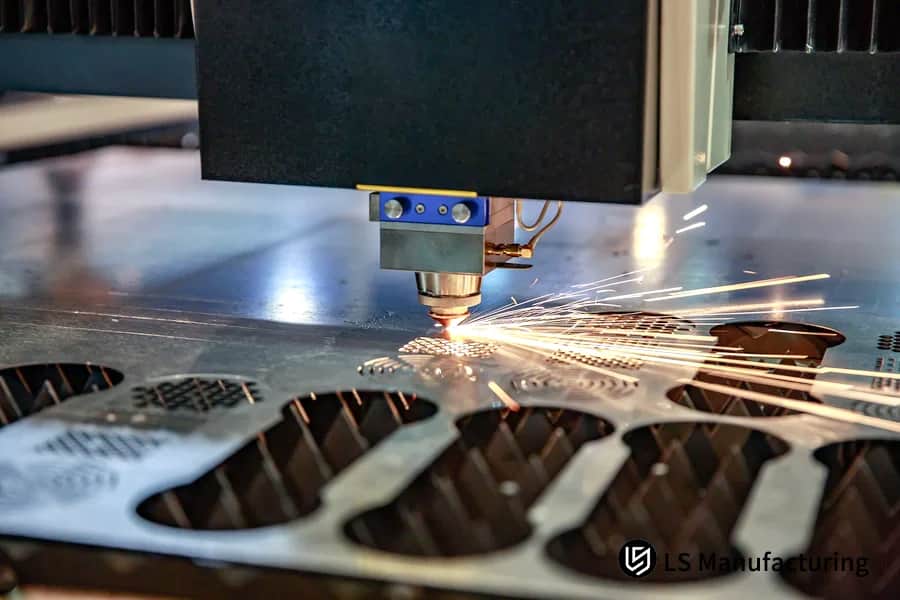
Figure 1: CNC laser cutting machine in action with sparks flying.
How Do Machine Choices Impact Your High Volume Laser Cutting Service Pricing Metrics?
Laser cutting prices for large volume orders vary with the characteristics including power and wavelength of the machines. Thin plates subjected to lower powered devices tend develop really rougher surfaces whereas fiber lasers operating in the 12kW to 20kW range from LS Manufacturing can reach very short per-piece times with tolerances kept very close. Equipment for high volume laser cutting service dictates the cost level.
Comparison of Fiber Laser vs. CO2 Laser Efficiency
Differences in how much time the two types require to cut one metre of a specific thickness make for very different efficiencies. A big part affecting the return on investment of custom OEM laser parts service machines is the power matching.
| Comparison Dimensions | Fiber Laser (1.06μm) | CO2 Laser (10.6μm) |
| Cutting Speed for 1.5-4mm Sheets | 12 m/min | 3.5 m/min |
| Photoelectric Conversion Efficiency | 35% | 10% |
| Power Consumption Cost per 10,000 Pieces | $0.12/piece | $0.30/piece |
| Capability for Thicker Sheets (over 12mm) | Requires Dynamic Focus Correction | Natural Advantage |
The photoelectric conversion efficiency of fiber laser reaches 35% (CO2 is only 10%), and the energy consumption per unit can be reduced by 60% during high output production. The high volume laser cutting service in the field of 1.5-4 mm thin plates has a fiber cutting speed that is 3 to 4 times faster than CO2.
Precision Control in Thick Plate Machining
To prevent damage brought by thermal expansion in plates larger than 12mm in thickness, LS Manufacturing has implemented a laser cutting focus system which constantly corrects itself and a nozzle servo that moves by just 0.05 mm for high accuracy. Focus shift is one of the most significant defects in the cutting process. So, laser cutting precision can be preserved only through constant monitoring and immediate correction mechanisms.
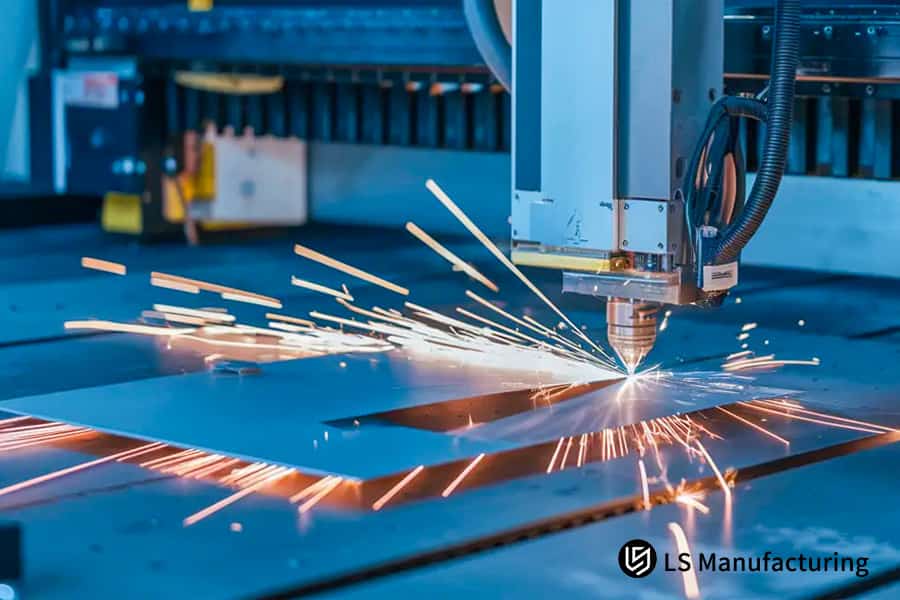
Figure 2: CNC laser cutting machine processing metal sheets.
What Parameters Define True Precision For Laser Cut OEM Components Under Rigorous Stress?
Not only does the dimensional tolerance of the component but also the microscopic morphology of the heat-affected zone (HAZ) determines the precision of laser cut OEM components under high load conditions. By adjusting the laser's pulse frequency, LS Manufacturing manages to prevent microscopic cracks in parts.
Fatigue Life of the Product under Influence of HAZ
The heat-affected zone and surface crystal refinement due to high-temperature machining of metal at 3000℃ are factors that govern the bending and fatigue life characteristics of parts after metal cutting. In the custom OEM laser parts department, microscopic-level control gets reflected in three different ways. Optical control of two-dimensional dimensions will not be sufficient for stress-intensive situations such as medical and automotive.
As per the Geometric Tolerances (GPS) ISO 1101:2017 standard: thermally cut parts cut surfaces must be the taper and right angle tolerance part of the geometric tolerant chain as otherwise the cumulative assembly tolerance will exceed the tolerance limit.
To comply strictly with the standard, one facet taper of a component is fixed within 0.02mm and high-frequency modulated pulse laser is used to cut the material to reduce HAZ depth below 0.08mm (6mm S355 steel). After the cutting, three critical points were solved:
- Unexpected variation in hardness: The hardness of the HAZ edge is about 40% to 60% higher than the base metal which will lead to cracks along the hardened layer at the time of bending.
- Facet perpendicularity: Taper was controlled within 0.02mm to ensure that no gaps occur at the joint.
- Structure modification: Through the application of high-frequency modulated pulse cutting, the HAZ area of 6mm S355 structural steel is limited to less than 0.08mm.
Comparison of the HAZ control parameters
Different processing modes lead to a big difference in the HAZ characteristics. The selection of laser cutting method directly determines the metal matrix:
- Continuous Laser (CW): HAZ width 0.25mm, edge hardness 380-420 Hv, and fatigue life only 65% of the base metal.
- Pulse Width Modulation (PWM): HAZ width 0.12m, edge hardness 290-330HV, and fatigue life 82% of the base metal.
- Laser Source (LS Manufacturing): HAZ width of only 0.08 mm, hardness from 240-Hv to 280-Hv, and a fatigue life of 94% that of the base metal.
A word of explanation: Every time the HAZ width increases by 0.05mm, the life of the product gets shorter in fatigue by about 10-15%. A laser cutting process choice is because of this a life or death matter for OEM automotive structural items which are subject to alternating stress.
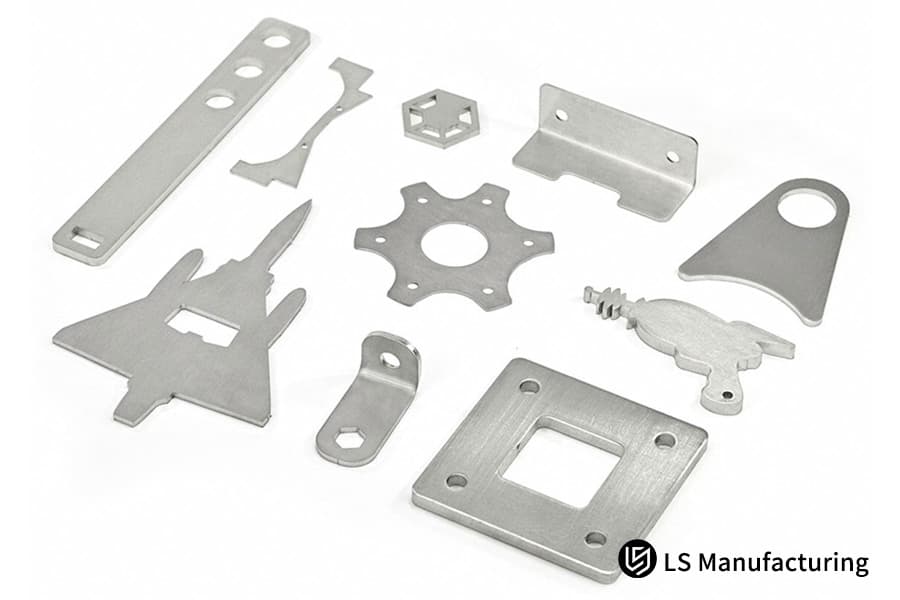
Figure 3: Precision machined parts with calipers and technical drawings.
When Does Laser Cutting Mass Production Become More Profitable Than Hard Tooling Alternatives?
The traditional literature has been consistently misjudging the inflection point about the cost of laser cutting mass production surpassing that of die stamping. LS Manufacturing's technique of using digital layout makes it much postpone stamping breaks-even point. The range of cost advantages provided laser cutting mass production is much larger than engineers expect.
Comparing Cost Inflection Point at Laser Cutting with Stamping
The mold for progressive die stamping with the fastest time per piece can cost for complex and irregular shaped parts about $15,000-$50,000, and the mold modification cycle usually takes 3-4 weeks. The actual turning point data for high volume laser cutting service is as follows:
- 1,000 pieces: laser total cost $4,200 compared with stamping ($22,000 mold included), laser is the best.
- 5,000 pieces: laser $18,500 versus stamping $29,000 laser is the preferable option.
- 15,000 pieces: laser $51,000 in opposition to stamping $56,000
- 35,000 pieces: lasercutting $115 500 stamping $102,000 stamping recommended.
- 50,000 pieces: laser cutting 165,000 versus stamping 135,000 stamping recommended.
Because of this to calculations using real projects data, products that require quite often the changes (more than twice a year) or have single batch quantities in the 3,000-35,000 range laser cutting delivers lower total unit cost on average.
Modification Cost and Process Flexibility Advantages
The custom OEM laser parts service illustrates three ways it is superior if modifications are frequent, the first and mainly reason is the freedom from the physical tool. Laser cutting flexibility is the core competitiveness of mold free processes:
- No Tooling Required: You only have to change the drawing file when a design is to be modified and there is no expense for tooling which could add up to a very big sum like $15,000-50,000.
- Elimination of Tool Wear Correction: After 50,000 cycles stamping dies are edge-ground, the cost of each maintenance is $800-2,000, laser cutting saves the money on that consumption.
- Fast Modification Iteration: Whereas mold-based methods require 3-4 weeks to make a change, laser only takes around 1-2 days. That makes it possible to do trial-and-error type products that require more than 2 changes a year.
This means that if you keep making design changes, laser will allow you to test and fail quickly but without the high loss whereas the modification in stamping always costs you dearly. In rapid changes and test cycles laser cutting advantages are unique and unrepeatable.
Unsure which range your quantity falls into? Download the Laser vs. Stamping Inflection Point Calculation Table, enter your quantity and part dimensions, and it will automatically generate a cost curve and recommended processes.
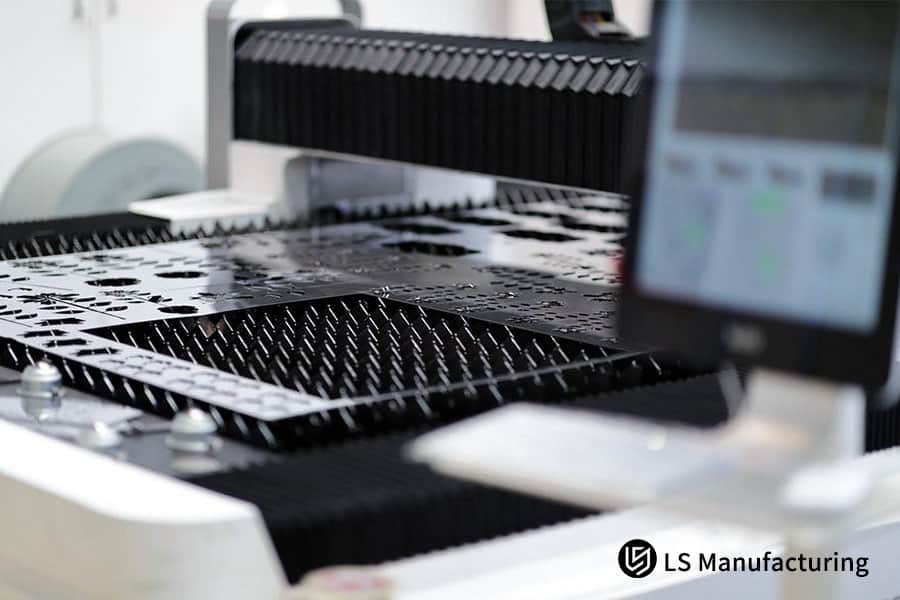
Figure 4: Industrial laser cutting machine processing metal sheets.
How To Optimize Nesting Vectors To Minimize Material Scrap For Laser Cutting Mass Production?
Every 1% increase in material utilization in high-volume laser cutting can potentially yield several thousand dollars in additional profit. LS Manufacturing employs two-dimensional vector nesting that keeps the scrap rate of sheet metals to a minimum. Laser cutting mass production through optimized nesting is the simplest and direct means of getting costs down.
Common Edge Cutting Limitations of Nesting Vectors
Laser parts OEM service nesting optimization is constrained by three limiting factors. Material cost is directly influenced by laser cutting accuracy:
- Common Edge Spacing: For the laser cutting of thin (<2 mm thick) sheet metal, common edge must be exactly laser spot diameter (0.25 mm, e.g.). Too little spacing will not only result in thermal overlap but will probably lead to failure as well. At the same time a bit too wide space would be a major source of material loss.
- Heat Management: Heat dissipation issues with adjacent parts being cut is avoided via skipping cutting paths and using a cutting sequence that ensures heat concentration from common edges is kept at a minimum.
- Enhanced Use: Engineering-grade nesting software has been a major driver to increase the utilization rate of a single cold-worked steel sheet of 1220×2440 mm from a regular one of 78% to currently as high as 93%.
Nesting Method Comparison Table (1.5mm SGCC Galvanized Steel Sheet)
| Nesting Method | Part Spacing | Material Utilization | Scrap Rate | Number of Parts Per Sheet |
| Traditional Rectangular Nesting | 5.0 mm | 72% | 28% | 84 |
| Manual Irregular Nesting | 3.0 mm | 81% | 19% | 96 |
| Intelligent Common-Edge Nesting | 0.25 mm | 93% | 7% | 112 |
On the whole, with intelligent common-edge nesting technology, the same sheet material can be used to make 33% more parts compared to manual nesting without any technology. The material cost alone can be saved up to 3,000-8,000 by this technique for such orders as tens of thousands of parts.The laser cutting optimization nesting algorithm is the technological engine for continuous cost reduction in the production process.
What Technical Factors Determine Edge Roughness For Heavy Gauge OEM Laser Cutting Components?
Laser cutting parts surface roughness has impact on if the parts need secondary post-cutting machinig. At LS Manufacturing, we control precisely the mixed gas ratio together with the focal depth to keep the cut surface almost slag-free which otherwise would have been the problem of the laser cut surface. For an supplier that can laser cut plates for heavy-duty OEM laser cutting components, this capability of heavy plates is nothing short of measuring the technical prowess of the supplier.
Solutions and Causes of Slag Accumulation on a Heavy Plate
The root cause of the problem of stripes and hard slag hanging on the lower edge due to insufficient gas flow during traditional processing of thick plates (>10mm carbon steel/stainless steel) is the poor discharge of slag. The solution for OEM laser cutting guide includes:
- Coaxial Mixed Gas Nozzle: Injection through a nozzle of a 95% nitrogen and 5% oxygen gas mixture is sufficient for the laser to increase the laser cutting speed of the plate by 25% and avoid edge burning in a case of cutting through heavy plates.
- Focal Depth Control: Laser defocus set to 1/3 of the depth inside the plate dynamically, to allow smooth molten slag ejection.
- Surface roughness standard: stable within Ra 6.3 μm, eliminating the need for grinding.
Parameters Comparison of Thick Plate Cutting
Fusion cutting parameters vary a lot on different plate sizes. Modification of the laser cutting condition directly impacts the surface roughness quality after cutting
- 10mm Carbon Steel: Oxygen assisted cutting, inner 1/3 of the focal plate, cutting speed 1.2 m/min, Surface roughness Ra 6.3μm.
- 12mm Stainless Steel: 95% N+5% O₂ Mixture, inner 1/3 of the focal plate, cutting speed 0.8 m/min, Surface roughness Ra 6.0μm.
- 16mm Carbon Steel: Oxygen assistance cutting, inner 1/3 of the focal plate, cutting speed 0.6 m/min, Surface roughness Ra 6.5μm
If your laser cutting service provider can offer to produce thick plate custom OEM laser parts service then it means you will be able to eliminate post-cutting machining for the parts you had to machine previously. Laser cutting depth is an essential indicator to look out for when choosing a supplier.
Why Is Early DFM Intervention Vital To Control Costs In Your OEM Laser Cutting Guide?
It is important to introduce Design for Manufacturability (DFM) analysis early on in the product design stage to prevent hidden costs in procurement. This part of the article presents methods that can dramatically cut the production cost per product by just optimizing the geometric features drawn. The DFM chapter of the OEM laser cutting guide is the most practical cost reduction tool.
Cost Issues When Using Non-Standard Sheet Metal and Apertures
DFM reviews of custom OEM laser parts service mainly highlight two typical cost areas where a company could get charged very high prices.
- Premium sheet metal for non-standard material: Replacing 3.2 mm non-standard material with 3.0 mm standard material readily available prevents a 15% material customization premium.
- Small aperture blind spot: For example, when a hole measuring 2 mm in diameter is to be made in a 6 mm thick metal piece, it is not possible to cut the hole conventionally with a circle. So a drilling process with pulse will be required which will be very time-consuming and cause lens damage.
DFM Cost Saving Before and After Optimization
Laser cutting optimization effects on three typical features by DFM review are given below.
- Sheet thickness: The change from 3.2 mm (non-standard) to 3.0 mm (standard) results in a saving of $0.45 per piece.
- Hole diameter/depth ratio: Replacing 0.33 (2 mm/6 mm by diameter) with marking and drilling results in saving $0.28 per piece.
- Hole location: Moving the hole from 1.5T to 2.5T will prevent scrap losses.
As the DFM guidelines, it is advised that small-diameter cases should be changed to marking and scribing which is followed by mechanical drilling or the shape should be altered to reduce the processing cycle per piece by 22% before the planning stage of production. Laser cutting improvement begins with DFM and continues through the entire production process.
Are there any hidden cost traps in your drawings? Upload your 3D CAD drawings and get a free DFM assessment report within 24 hours, including material substitution suggestions and hole optimization solutions.
Case Study: How LS Manufacturing Saved 32% In Production Costs For a Medical Equipment OEM Custom Chassis Panels Project?
Customer Challenges
One major medical imaging equipment maker had a need to produce in bulk, a back panel made of medical-grade 2.5 mm thick SUS316L stainless steel, for the manufacturing of its high-precision radiology machines. This panel was a back plate, 1200 mm x 800 mm in size, featuring a design of over 450 irregularly shaped closely arranged holes for heat dissipation and high-frequency circuits interfaces.
The original supplier's use of common high-energy CO2 laser cutters resulted in over-localized heating, causing massive lateral warping and a complete warpage of the panel (up to 3.5 mm). The customer was because of this faced with sealing problems in the subsequent assembly operation, with defects up to 18.2% and manual leveling taking too much time.
LS Manufacturing Solution
After the OEM laser cutting parts engineering group took over, they first did the recalculation using CAD and CMM of the interference vectors of hole arrays. The basic change of this specialized laser part service was mainly about:
- Multi-zone interleaved pulse laser cutting (ZIP): It is a single piece of circular shape cutting that is further improved to multi-zone interleaved pulse laser cutting (ZIP). This laser cutting technique evenly distributes heat to cold areas.
- 20 kW Ultra-High Power Fiber Laser coupled with streamlined gas nozzle: With the help of 1.7 MPa high-pressure high-purity nitrogen gas the workpiece is cooled and peeled simultaneously.
- Inline thermal imaging sensor: As soon as local temperature of the part exceeds 120℃, the laser automatically moves out of the heating zone at millimeter level.
Productivity and Quality Outcomes
Thanks to the innovations, the heat-affected zone and deformation of the panel are reduced to negligible levels. The warp distortion is also totally suppressed. The overall warpage is brought well below the standard by a margin of 0.2 mm. And, the manual straightening, which used to be a very laborious process, was eliminated. The rate of assembly defects was reduced from 18.2% to zero.
Elimination of grinding, straightening, and secondary quality inspection decreased the total lead time for the medical panel to 65%. The customer's manufacturing cost per device was cut directly by 32% thanks to this laser cutting achievement.
Is your project also facing challenges such as thermal deformation or high defect rates? Upload your 3D CAD drawings (STEP/IGS/DXF) and receive a free DFM assessment and accurate quote within 24 hours, replicating this success.

FAQs
Q1: What is the maximum thickness capability for your custom OEM laser parts service in aluminum and copper alloy?
Based on a 20kW ultra-high-power fiber laser workstation, we are able to perform stable cutting of aluminum alloy up to 30mm and copper alloy up to 16mm.The finished cut surface is clean, no oxidation and no slag. So, no secondary grinding is required, and the finished products can be adapted to subsequent processes like welding and assembly direct!
Q2: How does LS Manufacturing maintain tight dimensional tolerance during continuous laser cutting mass production runs?
The equipment is equipped with a dual drive linear motor gantry structure and a real-time grating ruler thermal feedback system, which can compensate for equipment thermal drift in the mass production process in real time, continuously maintain a high repeatability positioning accuracy of ± 0.03mm, and ensure batch size consistency with traceable data throughout the process.
Q3:Why should we prefer high-pressure nitrogen over oxygen for our high-volume laser cutting service orders?
High-pressure nitrogen as the inert protective gas allows complete isolation of the high-temperature oxidation reaction during cutting.This results in the cut surface being clean and free of oxides. Compared to the cutting with the oxygen, no pickling, oxide layer removal and other post-operations are required which leads to a massive reduction in the overall time and cost of production for mass production.
Q4: Can you handle mixed-nesting variants within a single production run to reduce?
Using our smart nesting algorithm, we can do mixed nesting, i. e.combining different part types on a sheet metal. This not only breaks the limits from single-part nesting, but it also increases the utilization of sheet metal so that you can expect less than 7% scrap rate, which effectively decreases the raw materials and production cost per piece.
Q5: What is the minimum hole diameter for drilling through-heavy gauge steel using your OEM laser cutting parts specifications?
We can consistently make high-precision drilling of medium-thick plates that match the ratio of thickness-to-diameter 1:1 as standard engineering principles. The drilled holes are perfectly round and have no shape deformation or overheating issues, so the hole wall accuracy conforms to the standard. So, neither reaming nor any other hole repairing or secondary finish process is required.
Q6: How do you remove microburrs on intricate geometry profiles when laser cutting high-precision OEM parts?
Using high-frequency pulse modulation cutting technique our machinery cuts complex contours and sharp-angled structures. It dynamically changes cutting power and speed to prevent concentrated heat generation. Doing this at source removes microburrs and slag from the cut surface that's why reduces deburring manually. This results in finished products' higher output.
Q7: Can we count on LS Manufacturing to carry out complementary DFM engineering optimization before generating an official production quotation?
All inquiries are accompanied by a professional engineering team to conduct 3D drawing DFM pre-approval, optimize perforation times, layout schemes, and material selection, avoid hidden costs caused by design, and rely on mature process configurations to provide customers with cost-effective customized mass production quotations. You can upload drawings for quick calculation.
Q8: What are the industry standards and quality certification that your production facility complies with?
Both quality certifications, ISO 9001:2015 and IATF 16949 has been passed strictly to our production facility. The whole mass production process has been equipped with optical inspection equipment for each process online for the strict control of the precision of each process. We can offer material certificates as well as test reports completely so that the quality can be traced throughout the whole production line.
Summary
Mass industrial production of laser cutting is closely linked to the overall lifecycle cost so that any technical indicator of the process is directly related to the return on investment. By redesigning the material utilization, i.e. using fiber lasers and by optimizing sheet metal utilization with intelligent edge-sharing, OEMs can avoid the pitfalls of rework and secondary processing by standardizing the materials and controlling the perforation and HAZ. A technological-driven manufacturing partner will be the key to converting the blueprint's geometry into a cost-effective competitive advantage. To maintain your project's profit margin, do not let inefficient manufacturing and waste eat away at it! Regardless of whether you are in the final design stage of a medical device or ready to replace stamped parts with a moldless mass production technique, LS Manufacturing engineers are always there for you to help with detailed processing possibilities and material suitability assessments.
Send us your CAD drawings - be it.DXF.STEP files or.DWG files that way we can give back a full laser cutting mass production quotation including a complete DFM layout, a material suitability check-up, and a very accurate costing within the next twenty-four hours.
📞Tel: +86 185 6675 9667
📧Email: info@lsrpf.com
🌐Website:https://lsrpf.com/
Disclaimer
The contents of this page are for informational purposes only.LS Manufacturing servicesThere are no representations or warranties, express or implied, as to the accuracy, completeness or validity of the information. It should not be inferred that a third-party supplier or manufacturer will provide performance parameters, geometric tolerances, specific design characteristics, material quality and type or workmanship through the LS Manufacturing network. It's the buyer's responsibility.Require partsquotation Identify specific requirements for these sections.Please contact us for more information.
LS Manufacturing Team
LS Manufacturing is an industry-leading company. Focus on custom manufacturing solutions. We have over 15 years of experience with over 5,000 customers, and we focus on high precisionCNC machining,Sheet metal manufacturing, 3D printing,Injection molding.Metal stamping,and other one-stop manufacturing services.
Our factory is equipped with over 100 state-of-the-art 5-axis machining centers, ISO 9001:2015 certified. We provide fast, efficient and high-quality manufacturing solutions to customers in more than 150 countries around the world. Whether it is small volume production or large-scale customization, we can meet your needs with the fastest delivery within 24 hours. choose LS Manufacturing. This means selection efficiency, quality and professionalism.
To learn more, visit our website:www.lsrpf.com