English



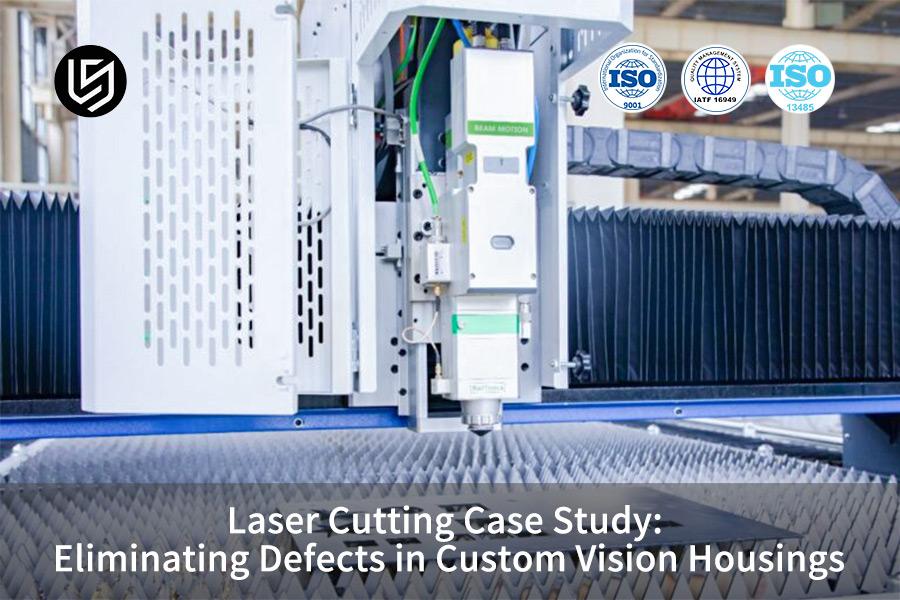
Eliminating laser cutting defects in Custom Vision Housings is not just about changing big parameters but also about getting very fine controls at the micro-level of the process. For example, combining the tightest laser focus inside the material control (negative focal length -1.8 mm to -2.2 mm) and effectively using high-pressure nitrogen gas (≥ 99.999%) of purity (≥18 Bar) will work fine with pulse waveform modulation at a duty cycle ≤35% to completely remove microcracks and sidewall dross, as well as control the HAZ depth to less than 0.05 mm, thereby satisfying the sub-millimeter precision requirement for optical sensor alignment.
Microcracks and sticky dross on sidewalls of custom vision housings come up often in laser cutting and buyers often reject such OEM laser cutting supplier for this reason alone, as these defects prevent precise alignment of the optical sensors. Available solutions rely mainly on adjusting the focal length, gas pressure, and speed at a macro level but ignore the root causes such as high-frequency pulse modulation parameters, dynamic compensation for highly reflective materials, and cutting kerf gas hydrodynamics. This article presents, with the help of LS Manufacturing processing data, very practical methods for waveform modulation, high-pressure nitrogen flow field optimization, and online machine vision monitoring, besides setting quantifiable process control standards.
Eliminating Laser Cutting Defects: Core Technology Overview
| Process Dimensions | Key Technical Parameters | Performance | Customer Benefits |
| Dross Removal | Negative focal length (-1.5~-2.5mm) + ≥18Bar high-purity nitrogen. | No sticky dross on sidewalls, Ra≤1.6μm | No need for secondary grinding, 15%-20% reduction in single-piece processing cost. |
| Thermal Deformation Control | Pulse micro-connection + point-by-point intermittent cutting. | HAZ depth≤0.05mm | Sensor mounting hole tolerance ±0.01mm, zero assembly misalignment. |
| Closed-Loop Quality Control | Coaxial online vision (sampling rate ≥1000Hz). | Dynamic parameter correction within 50ms | Batch defect rate <0.1%, no need for full inspection upon arrival. |
Key Conclusions
- The key point of tin removal: using a short focal length together with ≥18Bar of high-purity nitrogen to suddenly blow out high-viscosity molten aluminum that sticks, That means, resulting in the removal of tin deposits on the sidewalls.
- Prevention of thermal deformation: A combination of pulsed micro-connection and point-by-point intermittent cutting can limit the depth of the heat-affected zone to 0.05mm.
- Closed-Loop Quality Control: Real-time online camera spots unusual cutting sparks in less than 50ms, automatically adjusting the parameters to prevent the production of defective batches.
Why Trust the Cutting Quality Guaranteed by LS Manufacturing's Burr-free Laser Cutting Service?
Drawing on our operational knowledge from the ADAS camera housings mass production project for a major autonomous driving Tier 1 supplier, it was found that the gap between theoretical parameters and actual mass production is much more intricate than just focus and air pressure tuning, batch stability of more than 3000 pieces is the paramount point. The reliability of the burr-free laser cutting service comes from data closed-loop.
Based on ISO 9013:2018 Thermal Cutting, Classification and Dimensional Tolerances, precision laser cutting is defined as: Contour tolerance ≤0.1mm, HAZ depth must be within the corresponding thickness grade limit.
We've digitized and bound all significant parameters (focal position, air pressure, pulse duty cycle, cutting speed) to the equipment system to guarantee this standard is achieved. That way, the same program will be available for anyone to use and obtain the same quality. For three months of mass production, we ran destructive metallographic tests on more than 5,000 AL6061 housings during which HAZ depth was found continuously within the range of 0.025-0.035mm, much less than the customer's maximum limit of 0.05mm.
We don't only give you oral assurance of burr-free products, but the confidence of you being able to move to the next process immediately upon arrival, without any rework.
Data-driven stability is the cornerstone of zero-defect delivery. Contact our application engineers directly for a free mass production cost calculation and receive an assessment report including yield and delivery time within one business day.

Why Negative Focal Positions are Essential for Eliminating Laser Cutting Defects in Custom Vision Housings?
To eliminate slag buildup on aluminum alloy visual casings, the laser focus needs to be positioned inside the sheet metal or on its lower surface (negative focal length -1.8 mm to -2.2 mm), widening the molten pool at the bottom of the cut, and using high-pressure airflow to achieve slag-free discharge. The core of eliminating laser cutting defects lies in changing the geometry of the cut.
The Slag Removal Logic of the Inverted V-Shaped Kerf
When the laser beam is set at a negative focal length, the kerf presents an inverted V shape, narrower at the top and wider at the bottom. Such a form is key in determining the energy distribution in a high-speed laser cutting system:
- Expanding the molten pool space: Allowing enough passageways for the molten metal flowing at the bottom to prevent molten metal from stagnating and cooling, and this way the formation of slag.
- Optimizing airflow channels: High-pressure gas descending flowing along the inverted V shape seamlessly, without the kinetic energy getting trapped by the narrow top kerf.
- Reducing sidewall adhesion: Molten material gets more easily released from the kerf under the joint action of gravity and air flow.
This is In particular necessary in a custom vision housing fabrication process. Thin-gauge laser cutting operations are highly responsive to negative focal lengths, a deviation of more than 0.3 mm can result in the creation of slag.
Gas Dynamics and Surface Tension Breakthroughs
In pursuit of a cleaner cutting process, the team devised an advanced solution combining laser cutting and supersonic gas injection to prevent aluminum sidewall buildup. In particular, they used nitrogen of 99.999% purity with a high-pressure level ( ≥18 Bar). The core of advanced laser cutting technology lies in flow field control:
- Overcoming Surface Tension: The tension of molten aluminum is around 0.9 N/m, and the nitrogen flow in a supersonic jet (Mach number≥2) can shear the surface to a sufficient extent to break this tension.
- Preventing Turbulence: A nozzle with a conical design was employed to control the Reynolds number below the critical laminar flow range (Re < 2300), thereby avoiding turbulence that cause ripples on the cut surfaces.
- Achieving Ultra-Low Roughness: The combination of these three measures allows strict control of the sidewall roughness Ra to 1.6μm or lower.
The effectiveness of laser cutting dross removal is directly affected by airflow stability. We have pinpointed the relation between the negative focal length and air pressure using over 300 sets of orthogonal experiments. This result has been added to the database of industrial laser cutting equipment parameters.
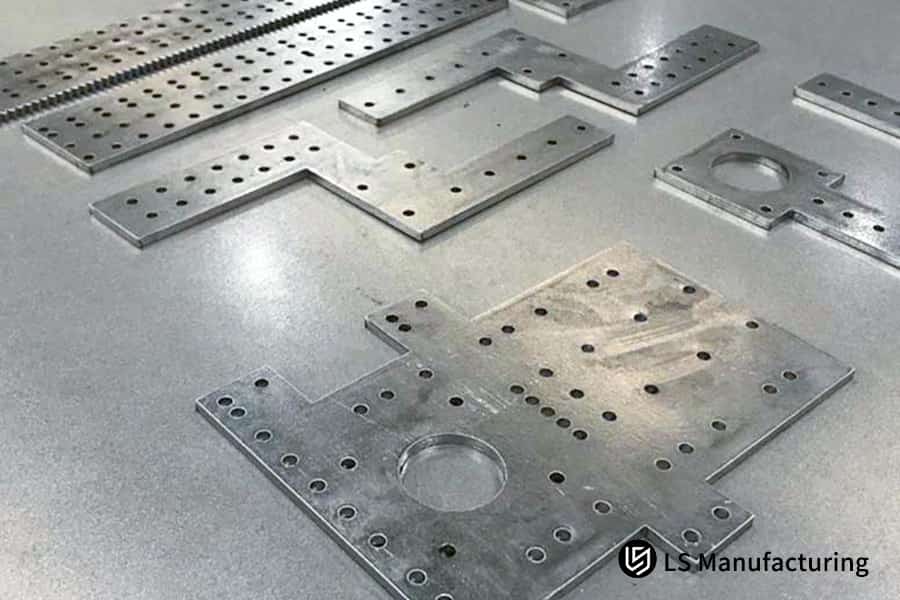
Figure 1: Precision perforated metal plates and brackets on industrial surface.
How to Choose a Micro-pulsed Laser Cutting Service to Avoid Heat Affected Zone Distortion on Thin-walled Housings?
Preventing thermal deformation of thin-walled housings generally involves using high-frequency modulated pulsed lasers (Duty Cycle ≤35%) so that only a small amount of heat is introduced. Precision laser cut housing service fundamentally depends on controlling the heat input accurately.
Pulse Mulltation Technology Principle
LS Manufacturing uses high-frequency pulse modulation technology (PWM) to control the duty cycle and peak power This way achieve microjoule heat input levels. The laser cutting with pulsed method is advantageous in three aspects:
- The vaporization thing going on right after the laser turns on: Peak power can be up to 6kW within the microseconds when the laser is on. This is enough for the metal to be vaporized straight away instead of being melted. Changing heat by conduction gets drastically reduced this way.
- Cooling interval: Flushing with nitrogen takes place very often during laser off time of a few tens of microseconds. Residual heat is eliminated and the temperature rise is prevented through this action.
- Picture it: Instead of heating a whole piece of metal by a hot iron that is kept at a constant temperature, it is like very quickly making dots with a needle that is extremely hot.
Micro-pulse laser cutting technique can reduce the heat-affected zone to one-tenth of that of traditional continuous wave.
Pulse vs. Continuous Wave Comparison
Test data shows that pulse processing is significantly superior to continuous wave mode in several key indicators:
| Processing Mode | Average Heat Input (J/mm) | HAZ Depth (mm) | Edge Condition | Hole Tolerance (mm) |
| Continuous Wave (CW) | 15.2 | 0.25 | Severe Yellowing | ±0.05 |
| Pulse Modulation (PWM) | 4.8 | 0.03 | Silvery White, Oxidation-Free | ±0.01 |
- HAZ Depth: Pulse processing can reach a depth of 0.03mm, whereas continuous wave processing can only achieve 0.25mm. The pulse processing depth is merely 12% of the continuous wave depth.
- Edge Condition: Laser pulsing leaves edges free of oxidation or yellowing Though continuous wave causes serious discoloration and needs to be followed by acid pickling.
- Hole Tolerance: Pulsed processing allows control tolerance to 0.01mm, whereas continuous wave can only 0.05mm.
When selecting a laser cutting service, it is essential to pay attention to its pulse capability, as this is fundamental to achieving burr-free laser cutting service. A precision laser cutting solution must include the ability to programmable pulse parameters.
Pulsed processing can control the HAZ within 0.03mm, with a hole tolerance of ±0.01mm. Click to download the AL6061/SUS304 Pulsed Cutting Parameter Comparison Table for complete duty cycle and peak power setting recommendations, you can also request a free sample.
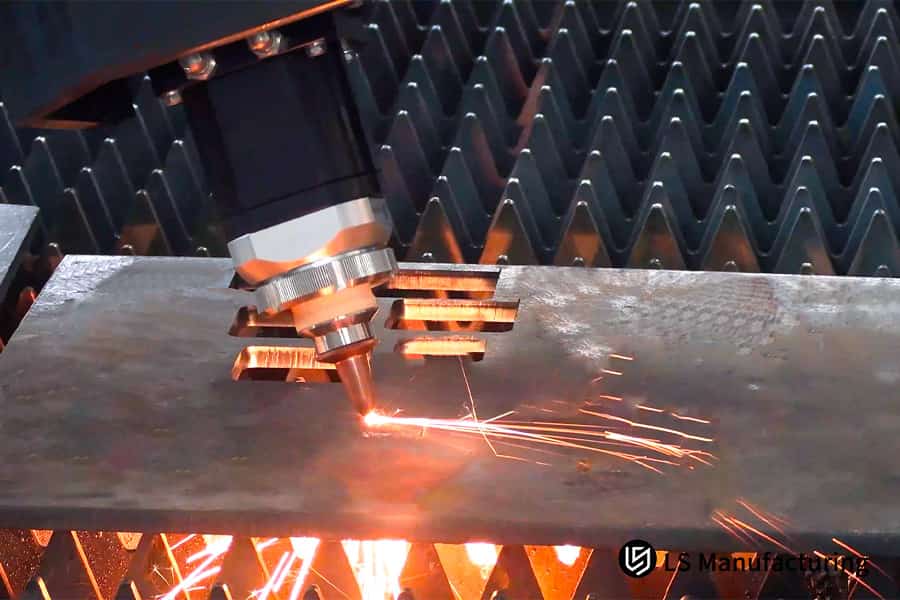
Figure 2: CNC laser cutter in action with sparks flying.
What Nesting and Anti-tilt Micro-joint Layouts are Required for a Reliable OEM Laser Cutting Supplier?
In order to prevent scratches on precisely cut pieces and the collision of nozzles, anti-tilt micro-joints with a bridge width of 0.4mm and dynamic path avoidance algorithms are necessary. OEM laser cutting supplier should have high-level design capabilities for mistake-proofing.
The Working Principle of Anti-Tilt Micro-Connections
Laser cutting of small, strangely shaped blind hole wastes with high pressure causes the wastes to flip, this way causing collisions of the laser heads or scratches of the surfaces. The micro-connection scheme of an automated laser cutting line is a big part determining the yield rates:
- Best Bridge Width Confirmation: A bridge width of 0.4mm which is a result of over 300 tests on irregularly shaped parts makes the LS Manufacturing bridge width 60% better than the standard 0.3mm one.
- Path "Over-cut" Strategy: By employing this strategy, most connections are cut at the critical corners, keeping only microscopic bridging points to make sure that the waste does not tilt.
- Scratch Depth: Workpieces without micro-connections exhibited scratches up to 0.15mm deep, using micro-connections, the scratches were totally removed.
Reservoir with Intelligent Path and Collision Avoidance
Nozzle collision detection systems and automatic torch lifting are integrated in the processing path. A multi-axis laser cutting system path planning should factor in the dynamic scrap behavior:
- A mechanism that automatically lifts the laser head: If the scrap is detected to be lifting or the workpiece is deformed, the laser head will be at a safe height to avoid collision damage to the cutting head.
- Real-time observation of a capacitive sensor: With a sensitivity of 0.05mm, it continuously detects the changes in the nozzle-to-workpiece distance and instantly initiates path adjustment if there is a deviation from the set value.
- Full planning for the laser head lifting path: The laser head remains in the lifted state throughout the empty movement path between parts, so avoiding any accidental contact with already machined precision surfaces.
Thanks to these implementations, we not only produce highly efficient precision laser cut housing service but also promise the fundamental eliminating laser cutting defects such as scratches and collision marks.
Why 99.999% Nitrogen Purity and Optimal Nozzle Fluid Dynamics Deliver a Burr-free Laser Cutting Service?
To produce a high quality result without burrs, one must use extremely pure nitrogen gas (99.999%) delivered through a dual-layer concentrated nozzle. This is so that oxygen cannot get in and a very even downflow field will be generated. The basic necessities for achieving a burr-free laser cutting service are gas purity and flow field control.
How Nitrogen Purity Affects Cutting Quality
If the nitrogen purity is below 99.5%, small amounts of oxygen will remain and cause the formation of an oxide layer on the edges of aluminum alloys or stainless steel. Among the laser cutting parameters, gas purity is chiefly responsible for edge quality:
- Higher Oxide Layer Hardness: The oxide layer made by 99.5% pure nitrogen has a hardness of 450 Vickers, which makes it difficult to remove slag, at 99.999% purity, the hardness is under 200 Vickers, and the airflow easily detaches slag.
- Difference in Cutting Surface Color: Going from grayish-black (99.5%) to silver-white (99.999%) is a direct indication of the extent of oxidation.
- Comparison of Post-processing Costs: 99.5% purity needs acid washing or polishing, which can increase the cost per piece by $0.5-$1.2. 99.999% purity pieces are ready for assembly without any post-processing costs.
| Nitrogen Purity | Residual Oxygen Concentration (ppm) | Cutting Surface Color | Secondary Slag Hardness (HV) | Post-processing Required |
| 99.5% | 5000 | Grayish-black | 450 | Yes, acid washing/polishing |
| 99.9% | 1000 | Light gray | 320 | Depends on the situation |
| 99.999% | <10 | Silver-white, no oxidation | <200 | No, can be directly assembled |
Nose Design and Flow Uniformity
LS Manufacturing relies on direct-drive double-layer red copper nozzles made of red copper to structurally guarantee airflow stability. The surface quality of a cut made with a laser depends directly on the coaxial nozzle design:
- Dual-layer airflow design: The inner circle delivers the high-pressure cutting air, whereas the outer circle supplies the protective air that isolates the outside air disturbances and at the same time, ensures a pure and a stable inner ring flow field.
- Coaxiality control: The coaxiality between the nozzle and the laser beam is kept within 0.02mm boundary, when combined with the constant nozzle spacing of 0.7mm, no turbulence will arise even under eccentric conditions.
- Cut surface texture consistency: The design given above is capable of enhancing the consistency of the cut surface texture by 70%, that's why stabilizing Ra below 1.6μm.
Laser cutting dross removal calls for the use of high-purity nitrogen, without this, the achievement of high-quality laser cutting service output is hardly possible.
Nitrogen purity determines whether the cut surface oxidizes and turns black, while nozzle design determines the smoothness of the cut surface. Upload your CAD drawings, and our engineers will provide a free gas matching solution and DFM optimization suggestions.
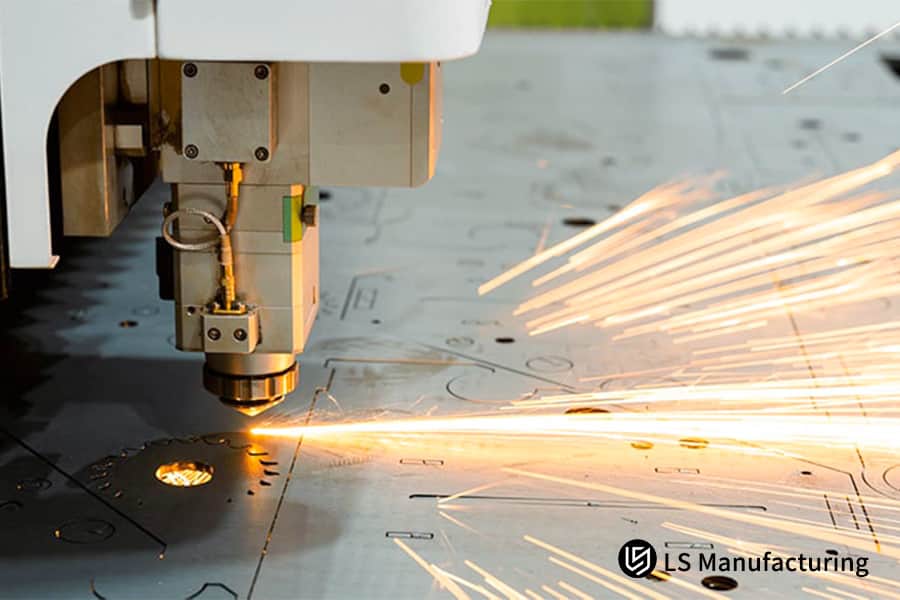
Figure 3: Close-up of laser cutting head with cooling nozzles.
How Coaxial Real-time Inline Vision Monitoring Reinforces the Laser Cutting Quality Control for B2B Procurement?
Mass production quality control necessitates equipping a coaxial real-time online vision monitoring system to capture cutting anomalies and rectify processing parameters instantly. This way, laser cutting quality control changes from post-production sampling to in-process control.
Real-time Monitoring and AI Anomaly Recognition
LS Manufacturing incorporates a coaxial high-speed camera and AI algorithms into its high-power fiber laser head, because of this, reaching millisecond-level anomaly capturing.
- Multimodal Signal Acquisition: The system is able to detect the IR radiation and spark jet pattern of the laser molten pool at a sampling speed of 1000Hz, this way producing more than 1000 suites of feature data per second.
- AI Anomaly Detection: In case the spark jet angle change exceeds 5 degrees, the molten pool area is changed abruptly by more than 15%, or the infrared spectrum deviation goes beyond the preset limits, then the AI makes the decision within 5ms.
- Typical False Alarm Rate: The system's false alarm rate is less than 0.3% after it was trained with 120,000 hours of production line data.
This matters a lot to OEM laser cutting supplier dealing with big-volume orders. Also, real-time laser cutting monitoring is a great way to collect a huge amount of data to optimize processes.
Closed-Loop Correction and Data Traceability
Once AI detects anomalies, the system is able to perform a closed-loop correction in less than 50ms and at the same time produce a fully documented traceability record.
- Automatic Parameter Correction: Given the type of anomaly the system will choose the appropriate correction strategy, e.g. it will adjust the feed speed if the pressure changes, it will issue a pause alarm if there is a nozzle blockage, and it will compensate for the Z-axis position when the focus drifts.
- Digital Quality Dashboard: It creates a full quality profile for each batch including molten pool curves, parameter logs, and correction records. Such profiles are indexed for efficient retrieval.
- Automotive-Grade Traceability: The data format follows the IATF 16949 audit requirements and can be easily exported as SPC control charts.
With highly customized products, like custom vision housing fabrication, this system may be instrumental in getting rid of scrap risk.
Fiber vs. CO2 Lasers: Which is the Best Precision Laser Cut Housing Service for AL6061 and SUS304 Materials?
For visual housings made of AL6061 aluminum alloy and SUS304 stainless steel, a fiber laser at the wavelength of 1.06 micrometers is better than a traditional CO2 laser for speed and edge steepness. Fiber lasers should be the first option for precision laser cut housing service.
The Crucial Influence of Wavelength and Absorption Rate
Fiber lasers of high power that use beam shaping technology have an inherent advantage with absorption rate. Wavelength absorption in laser cutting determines processing costs:
- Absorption Rate Difference: The fiber laser wavelength, 1.06μm, is only one-tenth that of CO2, but the absorption of fiber laser is about 30% for AL6061 while CO2 only about 7%, which is a difference of more than four times.
- Energy Utilization: Higher absorption means less energy is reflected back to the laser, almost doubling processing efficiency and at the same time, reducing the risk of damage to internal optical components from reflected light.
- Effect on Processing Costs: Higher absorption means lower electricity consumption. In general, the overall processing costs for fiber laser are about 20% less than that of CO2.
Key Performance Indicator Comparison
Horizontal data comparison shows that fiber lasers are comprehensively superior in the thin-plate processing field. The advantage of fiber laser cutting speed is particularly prominent in the thin-plate field:
| Performance Indicators | Fiber Laser (1.06μm) | CO2 Laser (10.6μm) |
| AL6061 Absorption Rate | ~30% | ~7% |
| 4mm SUS304 Kerf Width | 0.08mm | 0.22mm |
| 2mm AL6061 Maximum Cutting Speed | 15m/min | 8m/min |
| Relative Processing Cost (including consumables) | Baseline 100% | 125% |
| Intergranular Microcrack Depth | <0.01mm | 0.03-0.05mm |
Fiber lasers have a natural advantage in eliminating laser cutting defects.
For processing thin plates under 4mm, fiber laser kerf width is 0.08mm, speed is 15m/min, and cost is reduced by 20%. Provide material grade, plate thickness, and batch size, a detailed cost and lead time comparison for both fiber and CO2 solutions will be provided within one business day.
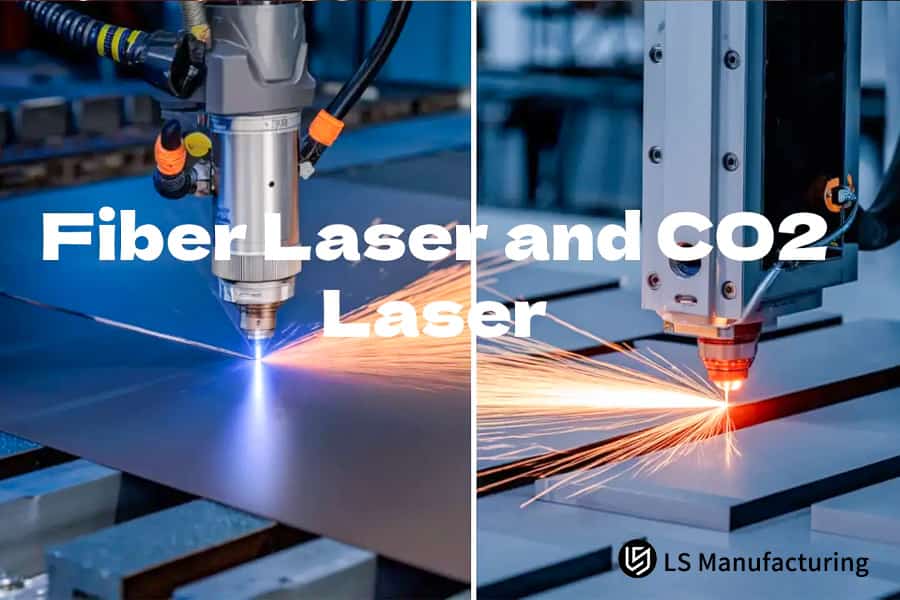
Figure 4: Fiber and CO2 laser cutting comparison with sparks.
What Equipment Maintenance Protocols Predict Lens Degradation and Protect Your Laser Cutting Quality Control?
Laser cutting quality control is intimately connected with conducting preventive maintenance regularly. For instance, one of the work practices that need to be done is keeping an account of the laser protective lens scattering rate (loss in transmittance ≤0.2%) and adjusting the coaxiality of the nozzle every 24 working hours. Forward-looking preventive maintenance is a must for laser cutting quality control.
Measurement of Thermal Lens Effect
Continuous operation at high-loads level results in the formation of thermal lens effect attributable to micron-level processing dust or air backflow on the focusing lens surface, causing an actual shift of focus.
- The focus drift consequences: Actual focus raising by 0.1-0.3mm results in reappearance of slag and sidewall scratches that are hardly detectable by operators.
- Data-driven monitoring techniques: LS Manufacturing employs optical power meters and collimators to measure the percentage of transmittance loss in protective lenses accurately to 0.01%
- Setting a threshold depends on the basis: Previously, large numbers of SUS304 housings were sent back for rework due to hidden lens loss exceeding the HAZ limit.
After that, the direct implementation of the ISO11145:2018 stipulations: The transmittance decay of laser-processed protective lenses should be ≤0.2%/24h operating cycle was the threshold that was fed into the system of the equipment automatic monitoring.
Maintenance Process Documentation
We have established a rule that nozzles of high-concentricity must be replaced every shift to ensure the stability of the process. A preventive maintenance plan is the basis of consistent cutting:
- Inspection at daily start-up: Wipe optical lenses, check if the air pressure, focus parameters, and program match, and note the initial transmittance baseline value.
- 24-Hour Transmittance: Lightly handle with a dedicated instrument to measure the transmittance loss of protective lenses, if it is more than 0.2%, change immediately, and after replacement recalibrate the focus position.
- Nozzle Replacement Every Shift: Change to high-concentricity nozzles (concentricity ≤0.01 mm), and use calibration tools to make sure the laser beam aligns with the nozzle's center.
This system is one of our core competitive advantages as an OEM laser cutting supplier. These measures are directly related to the long-term stability of laser cutting dross removal.
How Can a Reliable Laser Cutting Service Address Custom Geometric Challenges in Automotive Vision Sensor Enclosures?
To deal with the autonomous driving enclosures that feature stepped holes, 3D curved surfaces, and multi-angle heat dissipation slots, it is necessary to resort to five-axis linkage 3D fiber laser cutting and non-standard tooling fixtures. Laser cutting service will have to be capable of multi-dimensional mechanical motions.
Five-Axis Linkage and 3D Dynamic Focus Compensation
LS Manufacturing owns several five-axis linkage laser cutting centers that are installed with direct-drive rotary axes for surface processing of complex shapes.
- Capability of multi-angle drilling: Multi-angle drilling of the beautiful outer shell after stamping/casting can be performed with just one set of non-standard pneumatic tooling fixtures, This way multiple clamping operations are not necessary.
- 90° vertical holding: Three-dimensional dynamic focus compensation makes sure the laser head is always perpendicular to the part surface at 90°, so getting rid of the ellipticity deviation due to tilted cutting.
- Bottom edge quality: Vertical incidence is a measure of removing the problem of localized slag buildup at the bottom edge during tilted cutting, so decreasing the slag rate from the industry average of 8% to less than 0.3%.
Non-standard Tooling Adaptability Value
To different geometric features of workpieces, we offer personalized tooling solutions. A custom fixture design is instrumental in addressing the issues of laser cutting irregularly shaped parts:
- 3D curved surface clamping: Custom pneumatic clamping fixtures, with contour-following blocks made as the curved surface profile, ensure that the parts do not move or vibrate during machining.
- Deep Cavity Slag Removal Assist: For heat dissipation slots with a depth exceeding 5mm, a side-blowing auxiliary air nozzle is employed to bring in auxiliary airflow from the side for slag removal, thereby decreasing the slag adhesion rate of deep cavity slots from 12% to below 0.5%.
- Thin-Wall Support Solution: For thin-walled areas with a wall thickness less than 1mm, a temporary back support structure is added to prevent chatter deformation during cutting.
These devised strategies showcase very well the production flexibility of custom vision housing fabrication.
How LS Manufacturing Perfected an Aluminum AL6061 Custom Vision Housing Fabrication Project for an Autonomous Driving Leader
Customer Challenge
Initially, a system integrator of autonomous driving vehicles purchased a custom vision housing made of 2.5 mm thick AL6061 aluminum alloy from a previous supplier who used continuous wave laser with gasless flow field control. When processing 1.5 mm heat dissipation micro-holes no wire drawing occurred but instead, slag buildup was observed which resulted in a 0.28mm uneven HAZ depth. The housing underwent a 0.12mm runout, leading to image sensor distortion, and the yield rate was around 62%. This case illustrates the significance of choosing the right process for custom laser cutting projects.
LS Manufacturing Solution
- LS Manufacturing implemented a 10,000-watt-class beam-modulated fiber laser. We stopped using the CW mode and switched to a pulse-modulated waveform with a peak power of 6kW and a duty cycle of 30%, targeting at -2.0mm below the bottom surface of the sheet material.
- At the same time, local high-pressure cold nitrogen was utilized to clean the coaxial double-layer nozzles, keeping a constant gas pressure of 20Bar.
- Besides, a coaxial high-speed AI vision online quality control system having a sampling rate approximately ≥1000Hz was used throughout the line. Parameter optimization to online inspection, the turnkey laser cutting solution is comprehensively covered.
Results and Value
- After destructive metallographic examination, the HAZ depth was limited within 0.03mm, the surface roughness Ra of 1.2μm was attained, and slag buildup was completely removed.
- The total runout assembly warpage of the outer shell was ≤0.015mm.
- The assembly yield rate overall increased from 62% to 99.8%.
- The per unit procurement cost dropped from $12.8 to $9.7 (24% reduction).
- The delivery cycle was reduced by 20%. The reliability of production-level laser cutting was thoroughly demonstrated.
Yield jumped from 62% to 99.8%, and the unit cost decreased from $12.8 to $9.7. Upload your 3D CAD drawings (STEP/IGS format) directly and receive a customized process solution and quotation within 24 hours.

FAQs
Q1: Why should I work with an OEM laser cutting supplier who has 99.999% nitrogen gas capability for my custom vision housing project?
Using nitrogen gas that is 99.999% pure helps to avoid oxidation of the metal edges when aluminum/stainless steel are melted in the process, which leads to a silver-white surface of the cut metals without black scale. That means, there is no need for secondary pickling or polishing. To check the effect, you can upload your drawings for free samples, we are willing to supply comparative samples for evaluation.
Q2: How does LS Manufacturing deal with the issue of laser cutting dross removal at the time of cutting inside corners of complex geometry?
The CNC system has a corner deceleration look-ahead algorithm feature, which changes pulse frequency and power on the fly during cornering, with a response delay of ≤2ms, this way preventing heat build-up which is the biggest reason of burrs. This algorithm has been tested on thousands of irregularly shaped parts and the corner dross removal rate has been reduced to below 0.1%.
Q3: Is it possible to remove the micro-cracks when cutting ultra-high strength aluminum automotive enclosures with fiber laser?
Definitely. The ultra-high frequency micro-pulse technique drastically lowers single-shot heat input to the microjoule level, this way keeping metal grains intact and reducing intergranular microcracks probability almost to zero. Also, negative focal length technology totally removes any micro-cracking risk in high-strength aluminum materials.
Q4: Up to what thickness can you guarantee a burr-free laser cut service for SUS304 housing?
By using 22 Bar high-pressure laminar flow nitrogen and negative focal length technology, it can be achieved that no sticky slag adheres to SUS304 stainless steel with a thickness up to 8mm. For thinner sheets (less than 4mm), Ra can be as low as 1.2μm, while at 8mm it can still be maintained at about 1.6μm.
Q5: How does modular nesting software prevent scrap retention and part gouging defects during precision fabrication?
The software ensures that the scrap parts are locked and cannot flip by carving 0.4mm bridges between the parts, at the same time setting a full-lift path to avoid scratches. The bridge width of 0.4mm has been the result of over 300 tests and has an anti-ghosting capability that is 60% higher than the industry standard of 0.3mm.
Q6: On average, how much does the lead time change if one starts using LS Manufacturing's precision laser cut housing service?
Since the need for manual secondary deburring and rework is removed, the entire production cycle for large-volume customized vision housings can be 25%-35% shorter than that of the traditional factories. If you want a quote and a personalized lead time assessment, just click here, the first batch of samples is usually ready in 7-10 days.
Q7: Do you serve standard laser cutting quality control data sheets for the automotive certification IATF 16949?
Yes, every batch comes with a complete set of traceable SPC charts including online vision melt pool curves, three-coordinate aperture reports, and waveform parameter logs. These data can be exported to PDF/Excel format and directly used as part of the IATF 16949 audit documentation package.
Q8: What are the reasons for commercial-grade laser cutting services being unsuitable for the fabrication of high-end optical vision sensor?
As far as general-grade laser cutting services are concerned, they employ continuous wave + ordinary nitrogen that results in edge ripples and thermal deformation. These are not only visually unpleasing but also lead to the failure of coaxial sealing and alignment tests of high-end optical sensors. However, our pulse modulation and high-purity nitrogen methods allow us to achieve a HAZ≤0.05mm, and optical axis deviation is ensured to be < 0.01°.
Summary
Manufacturing precision vision housings calls for tight control of processes. Achieving zero-defect machining depends on combining technologies like negative focal length hydrodynamics, pulse waveform control (PWM), high-purity nitrogen gas flow management, and online AI vision dynamic feedback. Suppliers that have these parameters and the required hardware can ensure consistent quality in high-volume manufacturing and strike the production risks down to almost zero.
LS Manufacturing offers free Design for Manufacturing Feasibility (DFM) analysis and cost modeling. After optimizing the pulse modulation parameters and using nested bridging designs techniques, we solve the problem of thermal deformation and blind hole slag buildup in high-reflectivity aluminum alloys. Please click the right side of the page for a quote and to upload your 3D CAD (STEP/IGS) drawings. Our engineering team will devise a tailored technical processing solution within 24 hours.
📞Tel: +86 185 6675 9667
📧Email: info@lsrpf.com
🌐Website:https://lsrpf.com/
Disclaimer
The contents of this page are for informational purposes only.LS Manufacturing servicesThere are no representations or warranties, express or implied, as to the accuracy, completeness or validity of the information. It should not be inferred that a third-party supplier or manufacturer will provide performance parameters, geometric tolerances, specific design characteristics, material quality and type or workmanship through the LS Manufacturing network. It's the buyer's responsibility.Require partsquotation Identify specific requirements for these sections.Please contact us for more information.
LS Manufacturing Team
LS Manufacturing is an industry-leading company. Focus on custom manufacturing solutions. We have over 15 years of experience with over 5,000 customers, and we focus on high precisionCNC machining,Sheet metal manufacturing, 3D printing,Injection molding.Metal stamping,and other one-stop manufacturing services.
Our factory is equipped with over 100 state-of-the-art 5-axis machining centers, ISO 9001:2015 certified. We provide fast, efficient and high-quality manufacturing solutions to customers in more than 150 countries around the world. Whether it is small volume production or large-scale customization, we can meet your needs with the fastest delivery within 24 hours. choose LS Manufacturing. This means selection efficiency, quality and professionalism.
To learn more, visit our website:www.lsrpf.com