English



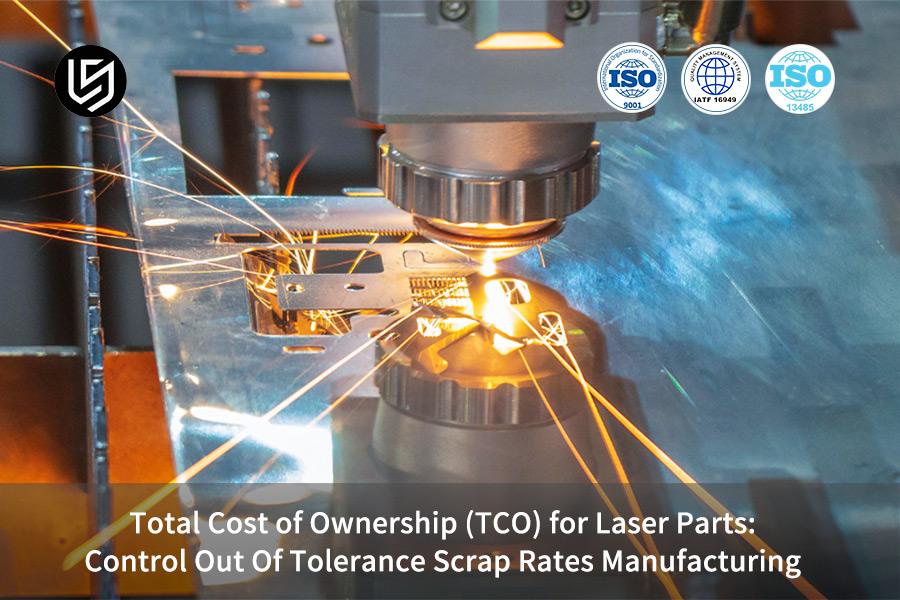
Laser cutting service is one of the main processing technologies used for industrial precision metal components. It not only resolves the shortcomings of the traditional stamping process like the high cost of mold changes and inability to achieve the required precision of complex contour machining, but it has a direct effect on the yield rate and the overall cost of the downstream assembly lines. By controlling the shape and the quality of the process through levels of the process, LS Manufacturing's high precision laser cutting solutions bring the scrap rate down to less than 0.05%, because of this, helping buyers to steer clear of the trap of superficially low prices and realize the best cost through the entire product life cycle.
Laser Cutting Total Cost (TCO) Overview
| Assessment Dimensions | Market-standard laser processing | LS Manufacturing high-precision solutions | Impact on TCO |
| Dimensional Tolerance Control | ±0.15mm, no batch consistency commitment | Stable control within ±0.05mm, full batch traceability. | Tolerance deviations directly lead to scrap and rework costs. |
| Mass Production Process Cpk | No SPC control, generally below 1.0 | Stable ≥1.33, key dimensions can reach 1.67. | Lower Cpk, higher hidden risk of batch deviations. |
| Final Assembly Scrap Rate | 2%-5% | ≤0.05% | For every 1% increase in scrap rate, overall TCO increases by approximately 8%. |
| Raw Material Stress Treatment | No standardized process, random sampling | 100% precision roller leveling, sheet-by-sheet verification. | Residual stress is the core cause of warpage deviations in mass production. |
| Heat Affected Zone (HAZ) | Width ≥0.3mm, significant edge oxidation. | ≤0.08mm, no significant oxide layer in cold cutting process. | The wider the HAZ, the higher the probability of material deformation and failure. |
Key Takeaways
- Why for assessing the overall expense of laser cutting should not be merely the rate per meter of processing given in the quotation but a Cpk (process capability index) kept at a level of 1.33 during uninterrupted series of mass production.
- The fundamental way to eliminate losses by assembly line downtime is to choose a supplier who has capabilities for scrap rate control laser cutting. Conducting 100% precise stress leveling at the feed end together with thermal load algorithms can bring the scrap rate down to less than 0.05%.
Why Trust LS Manufacturing’s Experience In Controlling Part Scrap Rates Through Laser Cutting Services?
Based on over a decade of experience in industrial-grade manufacturing, we provide customers with stable and reliable laser cutting services through end-to-end process control, fundamentally reducing supply chain risks caused by part scrap.
The process ability for LS Manufacturing has been proven by hundreds of mass production projects involving thousands of parts and one million pieces with very few scrap (very low) for the requirements of mainstream global industrial quality system. The practical experience gained from mass production projects of automotive structural parts suggests that most suppliers have excessive scrap in mass production not because of lack in hardware of equipment but lack of standardized process control along supply chain.
Our production system is designed and built to and follows ISO 9001 requirements for quality management, each operation has a documented procedure and data records for all critical steps.
To mass produce high-precision parts, we created a database of process parameter and included full-thickness machining solution of 12 world's most popular industrial metals, and our company famous special way to solve problem(when the sheet metal caused by successive dimension deviations in the same direction, don't readjust the laser parameters directly but find out residual stress of it as the first priority.).
Automation and automotive, being high requirement fields, enjoy our control process that meet the requirement of IATF 16949 completely and we are able to offer a full process capability analysis report.
Standardized control across the entire supply chain is the core support for a stable low scrap rate. You can send your CAD drawings to receive a free DFM feasibility analysis, we will customize a customized process solution for you based on scrap rate control laser cutting standards to proactively mitigate mass production quality risks.

Why Is a Lower Initial Per-Piece Quote An Illusion Of True Laser Cutting Total Cost Optimization?
Just because a vendor offers a low price per piece initially, it doesn't mean the procurement cost will be low. Hidden issues that result in scrapping, extra calibration, and delays due to assembly line getting stopped are major reasons for the laser cutting total cost going through the roof.
TCO (Total Cost of Ownership) Lifecycle Cost Breakdown
When your buying decision is just based on per-piece processing charges, many times you end up with hidden losses multiple times higher than the difference in quoted prices, which does not represent real cost optimization. We internally use expert laser cutting cost analysis techniques to manage our income and expenses and prevent any hidden losses.
Our internal method for figuring out the all-rounded TCO per piece is: All-rounded TCO per piece = Per-piece processing charge + (Per-piece material price Scrap rate) + (Line stoppage cost per hour Duration of stoppage / Batch output). This method is a proprietary accounting instrument of LS Manufacturing.
- Direct processing costs: They are the unit processing fees that suppliers quote, which make up only about 60%-70% of total TCO.
- Quality loss costs: They refer to the waste of materials that are out-of-spec and the labor and time costs for reworking.
- Supply chain delay costs: They are the assembly line downtime losses and the costs of breach of contract due to late delivery of orders.
Hidden dangers of cheapest quotations
Cheapest suppliers often skip raw material stress relief, process sampling, and normal equipment calibration, etc. processes, just making sure that the first piece is within dimension standards. In mass production, tolerance drift problems happen quite often. These suppliers usually do not have a complete SPC control system and are not able to offer continuous process capability data. At the customer's assembly stage, the risk of batch scrap often emerges.
The real TCO optimization of laser cutting services is a trade-off between process unit price, mass production yield, and supply chain stability, not just lowering the initial quote. In essence, maybe by cutting a few dollars per piece in processing fees, one ends up with losses several times the amount of downtime and rework on the assembly line.
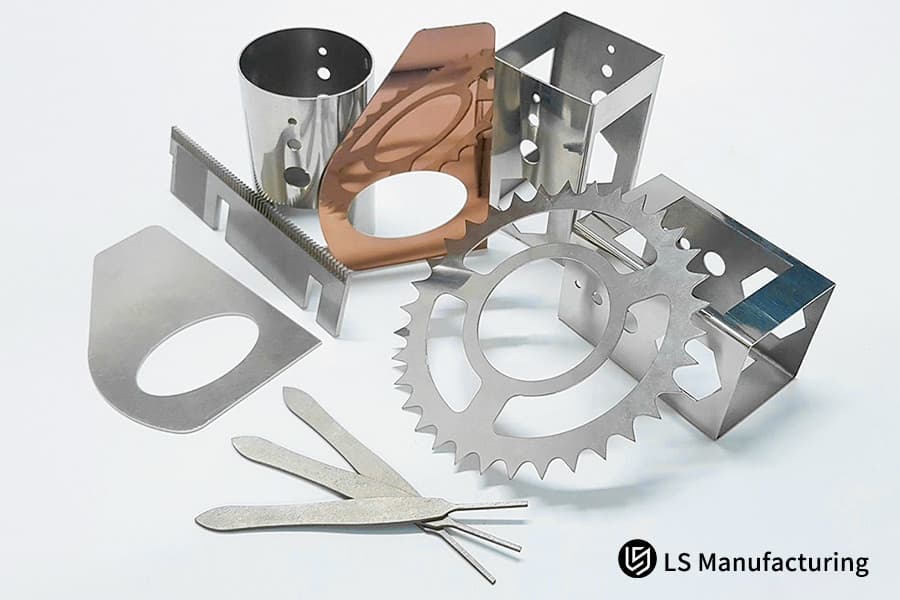
Figure 1: Various precision laser cut steel parts are displayed on a white background.
How Can Processing Heat Input Be Dynamically Regulated To Provide a Truly Precise Laser Cutting Service?
Controlling the width of the heat affected zone (HAZ) at the edge of the kerf below the industrial limit of 0.1mm by adjusting the laser frequency, duty cycle, and nozzle fluid dynamics is the secret to completely removing thermal deviations in laser cutting, resulting in a genuinely dependable precision laser cutting service.
Thermal Distortion Simulation and Multiphysics Prediction
Through multiphysics simulation software, LS Manufacturing's engineers can anticipate the level of thermal distortion resulting from the release of high-energy laser onto thin-walled parts, whose laser heat source can have a maximum temperature of over 1000°C. For various materials like stainless steel and carbon steel, we firstly depend on a professional laser cutting thermal control process system to simulate the diffusion range of the HAZ and pre-optimize the parameter scheme for different cutting parameters in advance.
The advanced thermal control process, because of this, is a key enabler of the manufacturing of high-quality laser cutting parts.
Process Path for Dynamic Heat Load Control
- Micro-connection Optimized Layout: Micro-connections at the micrometer level secure the part's position, this way preventing displacement due to the thermal stress release during cutting.
- Multi-point Staggered Cutting Path: The skip-cutting trajectory keeps the flat sheet from warping due to the localized heat concentration.
- Dynamic Nitrogen Ratio: High-pressure auxiliary nitrogen flow rate and pressure are adjusted in real-time based on the sheet thickness, this very effectively removes heat from the cutting zone.
In a nutshell, this is like constantly cooling a part that is continuously heating up while at the same time avoiding the part of the surface that is reaching high temperature, That's why, the inception of thermal deformation is less likely.
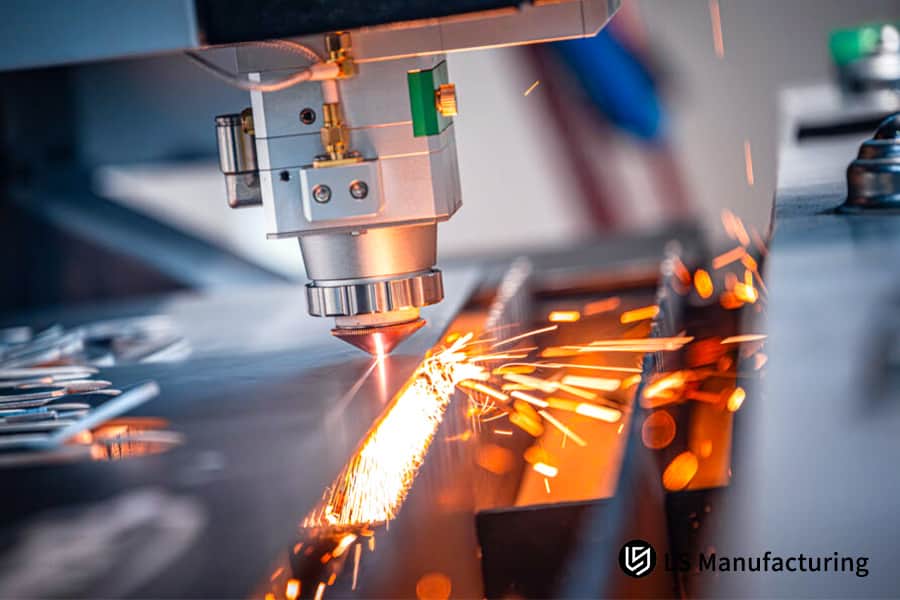
Figure 2: A laser cutting machine in action, cutting a metal plate with bright sparks flying.
How Does The Matrix Of Technical Parameters Versus Expenses Prove Our Low Scrap Laser Cutting Service Value?
Using vague adjectives cannot pinpoint real experts. The real worth of a low scrap laser cutting service can only be revealed by digitizing and matching the technical parameters that cause monetary losses on the cash register line.
Comparison Table of Laser Processing Solutions Technology and Cost
With the help of multi-dimensional parameter comparisons and following a standard laser cutting quality auditing system, we find that the high-precision solution, although it costs more initially, turns out to be quite economical when taking into account the whole lifecycle cost.
|
Comparison Dimensions |
Standard Laser Processing Plants on the Market |
LS Manufacturing High-Precision Industrial-Grade Solution |
|
Core Tolerance Stability |
±0.15mm, no batch consistency commitment. |
Stable control within ±0.05mm, full batch traceability. |
|
Mass Production Process Cpk |
No SPC control, generally below 1.0 |
Stable ≥1.33, key dimensions up to 1.67 |
|
Heat Affected Zone (HAZ) |
Control ≥0.3mm, significant edge oxidation |
≤0.08mm, no significant oxide layer in cold cutting process |
|
Sheet Internal Stress Treatment Process |
No standardized treatment, random sampling. |
100% precision roller leveling, flatness verification per sheet. |
|
Overall Scrap Rate at Assembly Line End |
2%-5% |
≤0.05% |
|
Final TCO Result |
High hidden costs, overall expenditure exceeds expectations. |
Overall TCO decreases by 25% |
In fact, if you decide to use LS Manufacturing's laser cutting service that produces less scrap, even though the unit price for the first one may be higher. It's true that the price can be lowered by 10%-15%, but when the customer account the scrap, rework, and deterioration losses that occur at the assembly stage, the customer's total cost comes down approximately by 25%.
Parameter comparisons can clearly demonstrate the cost differences between solutions. You can provide your existing procurement data, and we will calculate your full-cycle TCO reduction free of charge, helping you uncover potential cost reductions based on laser cutting service TCO optimization standards.
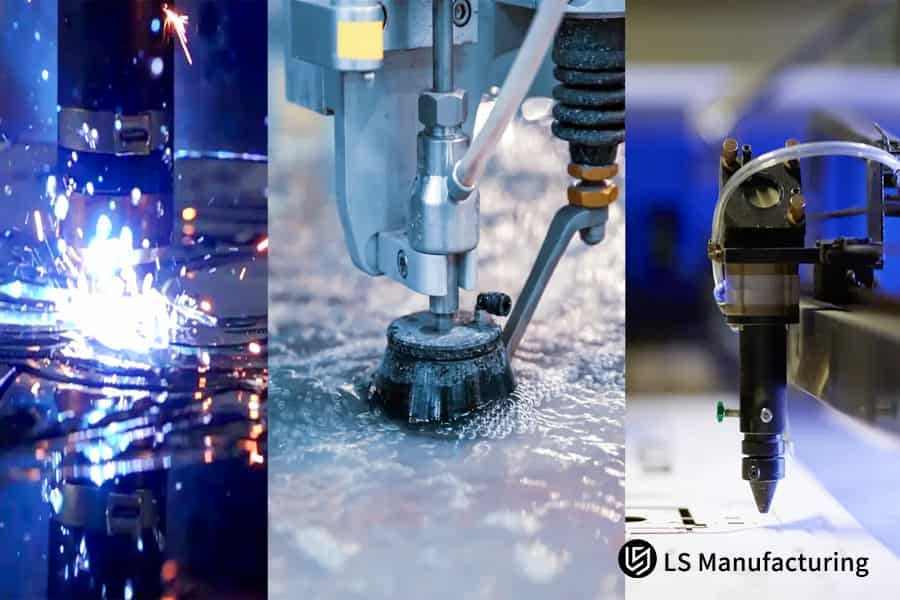
Figure 3: A laser cutting head focuses on a metal sheet, minimizing material waste.
Why Is Strict Incoming Raw Material Stress Leveling Critical For Implementing Scrap Rate Control Laser Cutting?
Heat generated from cold rolling the raw material sheet that causes the sheet to have a residual stress distribution is a source of local release of the residual stress and warping of the sheet when laser cutting. It is the hidden factor of the mass production deviations and is the essential element prerequisite for scrap rate control laser cutting.
Residual Stress Mechanism of Deviation
There is no doubt that cold-rolled and hot-rolled pickled sheets that are mainly used for civil and general industrial applications harbors uneven residual stresses. The combination of localized thermal stress and residual stress resulting in bending of the separated component from the base material of the part when it is a long and wide aspect ratio is the direct cause of the dimensional deviation. Laser cutting material calibration down to the very precise level will make it possible to avoid those deformation defects.
Also, this stress control operation is the main one in the line of steps to guarantee the regularity of mass production for various high-precision custom laser cut components.
Measured Data on Unleveled Bending Degree of Parts with Different Aspect Ratios
|
Part Aspect Ratio |
Maximum Unleveled Bending Degree |
Industry Acceptable Threshold |
|
3:1 |
0.4mm/m |
≤0.5mm/m |
|
6:1 |
0.9mm/m |
≤0.5mm/m |
|
8:1 |
1.5mm/m |
≤0.5mm/m |
|
10:1 |
2.1mm/m |
≤0.5mm/m |
Process Effects of Precision Roller Leveling
- Alternating Bending Stress Relief: By using multiple sets of rollers, the sheet metal is repeatedly bent in an alternating fashion until the residual internal stress originally caused by rolling is completely eliminated.
- Sheet-by-Sheet Flatness Verification: To verify sheet flatness level, each sheet is tested after leveling to ensure overall flatness is maintained within 0.3mm/m.
- Dust-proof and Rust-proof Storage: Leveled sheets are warehoused in a constant temperature and humidity environment to avoid secondary deformation and surface oxidation.
Briefly, it is a kind of "skeletal adjustment" of the sheet metal, which involves releasing internal stress ahead of time to prevent the sheet from becoming deformed and warped after the cutting operation is carried out.
How Does Implementing Cpk Evaluation Standards Actively Secure Stability In Laser Cutting Parts Manufacturing?
By means of incorporating statistical process control focused on Cpk (process capability index), the piece rejection rate can be maintained within tight limits consistently only during large production cycles involving tens of thousands of pieces, thereby guaranteeing the stability of the batch in laser cutting parts manufacturing.
SPC Full-Process Data Monitoring System
For the continuous producing of tens of thousands of customized hardware parts, we rely on digital measuring instruments and automated measurement stations for periodic sampling. Then, the data is inputted into the SPC system in real time for dynamically calculating the actual Cpk value. Upon reaching warning threshold data fluctuations, the system notifies the operators to carry out adjustment of the process to prevent batch defects generation and So, maintaining laser cutting batch stability standards on a comprehensive basis.
This entirely data driven management system of the full-process is the principal method being employed for the control of scrap rate in laser cutting.
Cpk Value Corresponding to Batch Out-of-Tolerance Probability Comparison Table
|
Cpk Value |
Number of Out-of-Tolerance Quantities per Million Units |
Mass Production Stability Level |
|
1.0 |
2700 Units |
Basic Acceptable |
|
1.33 |
63 Units |
Stable Level |
|
1.67 |
0.6 Units |
Excellent Level |
|
2.0 |
0.002 Units |
Ultimate Level |
Core Process Control Points for Cpk Improvement
- Laser Nozzle Coaxiality Calibration: The coaxiality deviation between the nozzle and the beam must be controlled within 0.01mm.
- Auxiliary Gas Purity Control: Use 99.999% high-purity nitrogen to avoid gas impurities that may affect the quality of the cutting surface.
- Servo Gap Micron-Level Adjustment: The servo motor feedback gap at the micron level should be controlled to ensure motion positioning accuracy.
Simply put, Cpk is like a "ranking" in the production process, the higher the score, the lower the probability of defective products and the more stable the quality of batch production.
Stable process capability is the core guarantee for supply chain security. You can download our Cpk process white paper to gain a deeper understanding of the quality control logic in laser cutting parts manufacturing and assess the quality risks in your current supply chain.
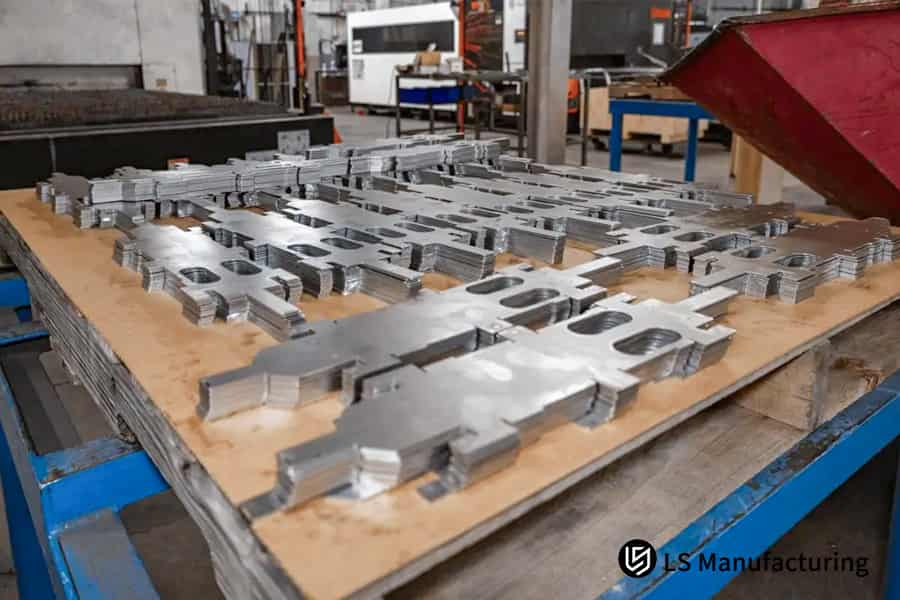
Figure 4: Stacks of laser cut metal parts on a pallet in an industrial facility.
How Do Advanced Nesting Algorithms Reduce Nesting Residual Stress To Keep Custom Laser Cut Components Precise?
Intelligent nesting is not just a matter of enhancing sheet material usage, the primary focus of this method is to minimize the consequences of nesting residual stress via thermal energy loading dispersion treatment. This guarantees the accurate processing result of custom laser cut components.
Thermal Distortion Risks Of Conventional Nesting
Standard nesting simply targets material utilization. At the same time, when parts are closely spaced, heat left over from the cutting of one piece will be directly transmitted to neighboring parts, leading to expansion of the material and dimensions of newly made parts deviating. In addition, deformation of the outer scrap will cause displacement of uncut semi-finished products, because of this increasing tolerances. Dedicated laser cutting thermal nesting algorithms still can effectively resolve this problem.
Using unsuitable nesting methods will drastically cut yield percentages to the point of making it impossible to have stable low-scratch laser cutting production standards.
Key Features of the Thermal Dispersion Nesting Algorithm:
- Cutting Trajectory Alteration: Laser beam hand-off to different parts of the sheet prevents single-spot continuous heating.
- Pre-stiffness Simulation: Determining the stiffness of the skeleton material helps avoid deformation that would cause the shift of semi-finished product.
- Uniform Heat Energy Input: Part laying-out is optimized by heat input uniformity, which in return, leads to heat input balancing and lowering total deformations.
In other words, this is like warming a cake evenly so that it is not burnt in certain spots and the center does not turn out sparse, in which way sheet deformation will be homogeneous.
Based on smart nesting algorithm innovation, one may readily get efficient and low-cost laser cutting service TCO optimization, so harmonizing quality and financial advantages.
Case Study: How Did LS Manufacturing Solve The High TCO Crisis For a Logistics Automation Brand?
One of the famous brands in the logistics automation equipment industry had a big problem when the parts of the chassis of shuttles that were out-of-tolerance were scrapped. We offered a full precision process solution that really worked and through these reduced-scrap laser cutting service, we demonstrated the real value of the solution by A lot reducing their total cost of ownership (TCO).
Customer Dilemma
The customer procured laser-cut chassis core components for the intelligent shuttle vehicle in high-strength steel HC420LA with the requirement that the tolerance was within ±0.06mm. Due to the lack of a mature laser cutting batch optimization solution, the original supplier was not able to control well thermal deformation, and SPC quality control was yet to be developed.
This led to a 4.2% scrap rate in the assembly line as the automatic precision bearing shaft holes often were misaligned causing the assembly line to go through repeated shutdowns and corrections. Based on the customer's calculation, other costs that are caused by a single batch of rework and line downtime are more than $12 000 which further leads to a 35% TCO overrun.
LS Manufacturing Solution
- Raw Material Pretreatment: The raw sheets of material are passed through a micron-level precision roller leveler that relieves stress and levels the sheets by 100%.
- Process Optimization: We have a self-developed heat load dispersion jump nesting algorithm that is used together with the 99.999% high-purity nitrogen cold cutting process.
- Process Control: We have installed digital display SPC workstations at the key control points for real-time monitoring and quality control of the dimensions.
Results and Value
After the project was implemented, the width of the heat-affected zone at the edge of parts is stably controlled within 0.08mm, and the real-time Cpk is stably maintained at 1.34, fully complying with the process requirements of the IATF 16949 system. The out-of-tolerance scrap rate of those customized core shuttle car components at the assembly line end which was 4.2% dropped to below 0.03% after three consecutive batches totaling over 15,000 pieces, the first-pass yield of assembly line bearings was 99.97%, totally eliminating the customer's secondary manual calibration cost.
In the end, the customer realized a system-level overall TCO reduction of 28% and also LS Manufacturing was recognized as a long-term strategic core supplier by this customer.
This mature process solution can be reused for similar precision structural parts. You can send your part drawings to receive a customized quote, and we will tailor a cost-reduction and quality-improvement solution for you based on scrap rate control laser cutting standards, replicating the same quality benefits.

Why Does Strict Regular Optical Maintenance And Alignment Keep Laser Cutting Total Cost From Drifting?
The small thermal lensing or the slight changes in the beam coaxiality of the key optical elements of the laser lead directly to the differences in cutting tolerances in the afternoon versus the morning, and these are also one of the main reasons that indirectly raise the total cost of laser cutting.
The Indirect Cost Consequences of Tolerance Drift
Usually, small processing plants tend to change the lenses only after the parts are visibly deformed and heavily covered with slag. Unfortunately, by that time, hundreds or even thousands of out-of-tolerance scraps would have been delivered to the client. Such kinds of unnoticeable tolerance drifts at the initial piece sampling inspection are almost impossible to detect and typically only become apparent after mass production.
Actually, customers have to deal with rework and downtime losses. Standardized laser cutting optical calibration works as a preventive measure against this hidden threat.
Standardized Optical Maintenance Specifications
- Periodic Beam Inspection: After every 48 hours of continuous operation, employ a beam quality analyzer to examine the laser beam M2 factor and focal space distribution.
- Pre-Shift Coaxiality Verification: Carry out 100% verification of coaxiality and precision nozzle jet flow testing before starting the first shift.
- Regular Consumable Replacement: At fixed time intervals, change protective lenses and focusing lenses to ensure that optical performance degradation does not adversely impact accuracy.
In essence, a regular checkup of the laser equipment is like a "health maintenance plan" during which small problems can be spotted early and major malfunctions that lead to downtime and scrap can be avoided.
Standardized equipment maintenance is the foundation for stable batch accuracy. You can contact our engineering team for a one-on-one consultation to learn about our end-to-end accuracy assurance solutions for custom laser cut components, tailored to your mass production needs.
Why Do Global Engineering Buyers Rely On Our Premium Laser Cutting Service For Long-Term Supply Stability?
In the field of mass production of industrial components, having a skilled manufacturing partner who understands how to convert engineering ideas into real assembly advantages and supply chain security is very important. The decision to select a dependable laser cutting service is crucial for securing supply stability over the long term.
Our complete set of engineering skills and an extensive quality system are the main factors why worldwide engineering purchasers keep us in mind as a long-term partner.
In Humen Dongguan LS Manufacturing continues to exploit its well established industrial support advantages to provide clients with prototyping and mass production solutions promptly. After getting familiar with IATF 16949 and ISO 9001 standards, we have set up a full-fledged quality management system. With the launch of a thorough laser cutting supply assurance system, we are in a position to offer our customers a complimentary DFM (Design for Manufacturing) feasibility evaluation while still at the prototyping phase.
Opting for us means that, besides metal parts, clients receive system-level quality assurance for automated production lines that operate with zero tolerance, zero delays, and zero rework, so completely eliminating supply chain quality risks.
FAQs
Q1: How do you identify whether a laser cutting quote includes comprehensive TCO optimization?
One way of knowing if the laser cutting quote is truly optimized for the total cost of ownership (TCO) is that it not only mentions the base machine time charge but also explicitly lists the costs of material de-stress and leveling, the heat-affected zone control parameters, the ratio of full inspection sampling, and the Cpk stability guarantee covering all the lifecycle cost elements.
Q2: What physically parameters set the off-die scrap rate during continuous laser processing?
The key parameters include the M2 factor of the beam (controlled within 1.1), the nitrogen pressure of the nozzle (1.2-1.5MPa), and whether the width of the edge heat affected zone is strictly limited to below 0.1mm, which directly determines the level of scrap rate.
Q3: Will LS Manufacturing be able to achieve the tolerances on laser parts within plus or minus ±0.05 mm?
This relates to the quantity of high volume carbon steel orders.Yes, by importing high precision high power fiber laser machine and adopting dynamic kerf compensation algorithm and real time SPC monitor, we can keep the accuracy tolerance in tolerance control requirement of ±0.05mm for mass production.
Q4: Why does material thickness simultaneously affect the total cost and tolerance performance of laser cutting?
Beyond Really the thicker the sheet metal is, the bigger the laser power and gas consumption are, leading to a significant increase in heat input, more sophisticated jump-patterning algorithms must be used so that thermal distortion does not exceed tolerances, this way raising the costs of processing and control.
Q5: How does your low-scratching laser cutting service help clients avoid costly assembly line downtime?
We keep production tolerances very tight so that the parts that go to the customers' production lines can be assembled 100% smoothly without any problem. This way, there is no risk that the automated assembly lines will be stopped because of dimension errors.
Q6: What kind of certificates should a top-quality laser parts manufacturer for B2B have to show that they meet industrial standards?
At a minimum, they should be certified for ISO 9001 system. If they deliver specially tailored components to specific industries having high demands, then strictly following IATF 16949 or the appropriate industry Cpk process specifications is needed for production control.
Q7: How are micro-joints in high-tech nesting helpful in saving manufacturing costs while still ensuring the parts are highly precise?
Micro-joints arranged at micron level, if done properly, prevent the thin and small parts from being displaced and deflecting during cutting by the high-pressure gas blowing. So, this leads to very high precision and the parts won't warp or clash. This way, possibility of scrap is very low.
Q8: What is the minimum order quantity (MOQ) for a precision laser cutting service which leads to an explicitly optimized TCO?
When it comes to the high-precision orders which require thorough SPC management and complete stress relief, 500 pieces is the most economical production starting point we can recommend. This batch size offers excellent per-piece TCO cost savings. You can even upload your drawings directly to us to get the exact quote.
Summary
Controlling the total cost of ownership (TCO) for laser-cut parts of large-volume remains a complex and long-term commitment to an efficient and integrated engineering system that identifies all causes of raw material stress, uses methods of thermal distortion reduction during operations and continuously monitors dynamic Cpk data throughout the whole process. Suppliers simply offering a low price and no technological and quality management skills, usually make parts with an internal 2%-5% scrap rate, ultimately causing great delays and losses to buyers in the supply chain.
You should not cover the high rework costs for parts out of tolerance at the assembly line level. LS Manufacturing is a very experienced Industrial manufacturer established in high-precision manufacturing region of China. The company has equipped itself with very high-power industrial fiber laser cutting clusters and a full set of precision roller stress-relieving and leveling equipment. The entire industrial customization project team of LS Manufacturing is entirely capable of compromising between low scrapping rate and high Cpk stability and process capability, so providing with system-level TCO locked from the source.
We would be glad if you can contact our expert team immediately and send your 2D/3D CAD drawings (supporting STEP/DXF formats) to our official email address. Within 24 hours, we shall return a professional and in-depth technical quotation to you with process feasibility analysis and thermal deformation prevention strategies that will help you embark on a real cost-lean transformation.
📞Tel: +86 185 6675 9667
📧Email: info@lsrpf.com
🌐Website: https://lsrpf.com/
Disclaimer
The contents of this page are for informational purposes only. LS Manufacturing services There are no representations or warranties, express or implied, as to the accuracy, completeness or validity of the information. It should not be inferred that a third-party supplier or manufacturer will provide performance parameters, geometric tolerances, specific design characteristics, material quality and type or workmanship through the LS Manufacturing network. It's the buyer's responsibility. Require parts quotation Identify specific requirements for these sections.Please contact us for more information.
LS Manufacturing Team
LS Manufacturing is an industry-leading company. Focus on custom manufacturing solutions. We have over 20 years of experience with over 5,000 customers, and we focus on high precision CNC machining, Sheet metal manufacturing, 3D printing, Injection molding. Metal stamping,and other one-stop manufacturing services.
Our factory is equipped with over 100 state-of-the-art 5-axis machining centers, ISO 9001:2015 certified. We provide fast, efficient and high-quality manufacturing solutions to customers in more than 150 countries around the world. Whether it is small volume production or large-scale customization, we can meet your needs with the fastest delivery within 24 hours. choose LS Manufacturing. This means selection efficiency, quality and professionalism.
To learn more, visit our website:www.lsrpf.com.