English



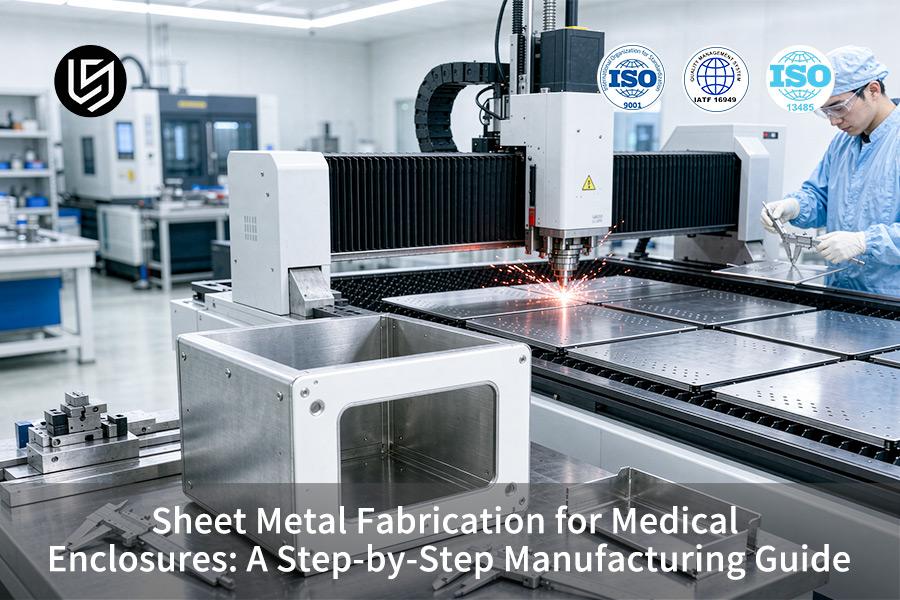
TL;DR: Medical enclosure sheet metal fabrication (Diagnostic Housing Fabrication) is a controlled process of forming flat stock into cleanable housings. Passivation (chemical treatment that restores the chromium oxide layer) protects against oxidation of free iron – a corrosion hazard identified by inspectors – through forming tolerances within ±0.01 mm range.
Junior engineers entering healthcare products design tend to link hygiene compliance with super-tight tolerances, which leads to unnecessary prototype delays. Cleanability is ensured by surface finish and joint geometry, and therefore passivation documentation resolves audit issues rather than tighter drawings. Four forming operations, two material types, and one inspection list below. Simply put, engineers starting to work in the medical industry can identify when formed sheets meet hygienic requirements and when machined housings come in play.
Key Takeaways
- Sheet Metal for Medical Enclosures Definition: Sheet metal construction for medical equipment enclosures uses bio-compatible alloy sheet to form sealed and sterilizable equipment enclosures. A forming methodology defines the process, not material removal.
- Critical Location Tolerance: General tolerance according to ISO 2768-1:1989 applies to general profiles, while critical interfaces require a narrower tolerance range.
- Chain of Process Steps: Chain comprises of seven steps – design for manufacture analysis, laser profiling, press brake forming, and insertion of PEM fasteners. TIG welding, chemical passivation, and CMM testing (coordinate measuring machine) finish the chain.
- Defect prevention: An overbend allowance compensates for spring back, the elastic movement causing widening of bend angles in cold-worked materials.
End-to-End Medical Sheet Metal Workflow
CAD / DFM Engineering Review
A DFM review checks bend deduction (flat-pattern length one bend consumes) and relief checks (short slots at bend corners), which stop flange collision and edge tearing before cutting starts.
Fiber Laser Blanking & CNC Punching
A fiber laser cuts flat blanks, and CNC punching forms feature holes. Contour accuracy stays within ±0.05 mm.
CNC Press Brake Forming
A CNC press brake shapes panels over several passes. Springback compensation of 1.5°–2.5° offsets elastic rebound and holds target angles.
Hardware Insertion
A press installs PEM self-clinching studs and standoffs, which give circuit boards and brackets captive mounting points.
TIG / Spot Enclosure Welding
High-purity argon shielding guards weld pools against oxidation. Seam dressing grinds beads flush and removes dirt-trapping crevices.
Chemical Passivation / Coating
A nitric acid bath meeting ASTM A967 (standard passivation practice for stainless steel) rebuilds chromium oxide film. Treated panels then resist neutral salt spray under ASTM B117 (standard salt spray practice).
Final CMM & Hygiene Inspection
A coordinate measuring machine verifies dimensions per ISO 2768-f (fine tolerance class). Critical mating fits reach ±0.01 mm, and inspectors reject micro-porosity or burrs. Simply put, surface cleanliness and dimensional results share one acceptance gate.
Why Trust This Beginner's Guide?
Gloria, LS Manufacturing's rapid prototyping and rapid manufacturing expert, brings 15+ years of precision engineering experience to medical enclosure work. DFM (design for manufacturability, shaping parts around real factory limits) frames every recommendation. Junior engineers can follow Gloria's engineering insights on LinkedIn for educational manufacturing breakdowns.
LS Manufacturing's Chief Technical Engineering Group validated each forming step against project data, with every tolerance callout governed by ASME Y14.5-2018 (geometric dimensioning and tolerancing standard). One revision therefore sets every fit window. Data source: LS Manufacturing 2025–2026 medical enclosure test log (Project #MED-2026-084, sample size >800).
ISO 17025 (competence standard for testing and calibration laboratories) anchors CMM calibration traceability behind each reported fit. Procurement teams can judge which enclosure geometries pass hygiene review and which need machined housings. In practice, one auditable chain links every process claim.
Last Updated: September 2026
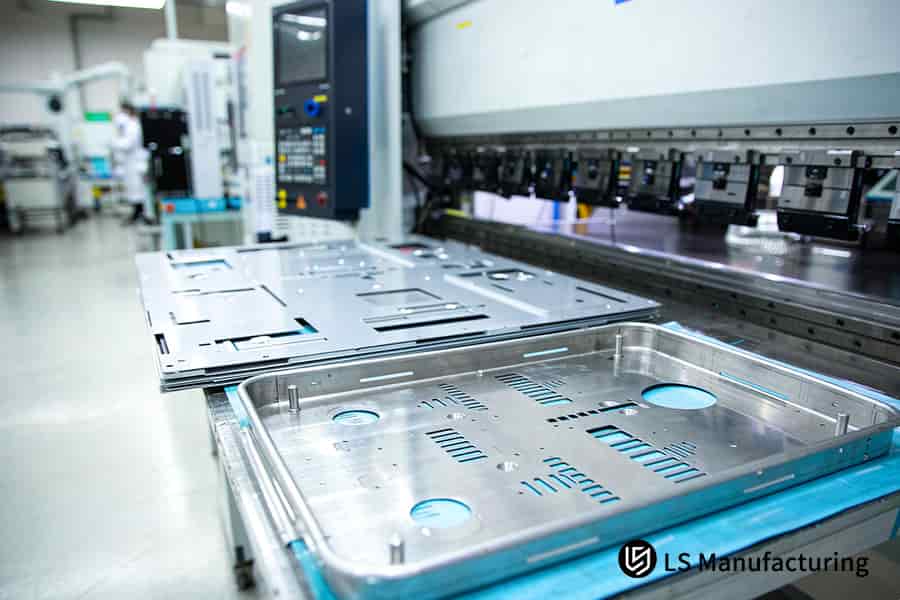
Figure 1: Press brake bending shapes stainless steel panels with relief notches offsetting springback 1.5°–2.5° for enclosures.
What Is Medical Sheet Metal And How Does It Function?
Medical sheet metal is formed alloy sheet built into sealed, sterilizable enclosures meeting hygiene, biocompatibility, and shielding rules. What is medical sheet metal? Formed housings shield diagnostic electronics and survive chemical disinfection. Cold stamping, laser cutting, and CNC die bending shape panels while bulk material properties stay unchanged. Medical enclosure sheet metal fabrication holds ±0.05 mm on general profiles and ±0.01 mm on critical mating fits. Blood analyzers and imaging equipment housings suit formed sheet, where frequent chemical disinfection is routine. Thin-wall three-dimensional flow cavities favor injection molding instead.
Load-Bearing and Shielding Functions
One continuous metal skin forms a Faraday cage (a conductive shell routing external fields to ground), which matters because diagnostic boards read microvolt-level signals. Sheet metal welding processes such as TIG welding close joints while keeping conductivity continuous.
Formed panels carry internal electronics and absorb external impact.
Hygiene Constraints and Fit Boundaries
Medical device enclosure standards forbid burrs, blind corners, and open porosity. Wipe-down protocols push fluid into any crevice a cloth cannot reach, so bacteria collect in unfilled lap joints.
Junior engineers often assume a visibly smooth panel satisfies a hygiene audit. Wiping forces fluid into lap seams, so a swab drawn along each seam reveals contamination. Sheet metal grain direction rules limit bend orientation, since bending across grain opens surface fissures. In simple terms, cleanability decides which surfaces earn a tight fit window.
What to Remember
- Medical sheet metal turns flat alloy stock into sealed housings without altering bulk material.
- Hygiene audits check seam geometry, not visual smoothness.
Related keywords: medical sheet metal definition / hygienic enclosure sheet metal / medical enclosure forming basics

How Is The Sheet Metal Fabrication Process Explained?
Sheet metal fabrication process explained is a fixed sequence of mechanical forming steps converting flat metal into three-dimensional structural shells, which answers how a flat sheet becomes a finished enclosure. Fiber laser cutting and punching open the sequence, and a CNC press brake bends each panel in a V-shaped die. Hardware insertion and inert-gas welding then close the shell. Medical enclosure sheet metal fabrication holds ±0.05 mm on general profiles, a band covering structural stiffness for most benchtop instruments. Deep-drawn curved shells stay outside forming economy, since dedicated tooling raises piece cost.
DFM Review Through Seam Welding
Groover, Fundamentals of Modern Manufacturing (a standard manufacturing textbook), lists five steps:
- DFM review: A flat pattern (a part's unfolded outline) is checked for bend deduction, bend radius ≥ 1.0× thickness, and hole-to-bend clearance; sheet metal gauge thickness rules govern tearing risk.
- Cutting and blanking (cutting a flat outline before forming): A fiber laser cuts panels and vent grids.
- Press brake forming: A CNC press brake bends each panel over multiple passes into chassis walls.
- Hardware insertion: A pneumatic press drives PEM studs and standoffs into pre-pierced holes, anchoring PCBs.
- Seam welding and dressing: TIG welding (tungsten inert gas welding) or spot welding closes joints, and seam dressing grinds beads flush.
Process Limits and Bend Defect Risks
Common sheet metal bending defects — cracking, angular drift, and hole distortion — start at the outer bend fiber, where tensile strain exceeds material ductility. Junior engineers often blame tooling instead. A test coupon bent at the chosen radius and inspected for cracks reveals whether a layout survives.
Sheet metal complex geometry forming hits a different wall: deep-drawn large-radius shells need dedicated dies, formed panels suit flat-faced benchtop instruments better. In short, geometry sets the forming route before any tooling exists.
Key Points
- A flat pattern review sets bend radius and hole clearance before cutting starts.
- Deep-drawn curved shells fall outside economic sheet forming.
Related keywords: sheet metal forming sequence / medical enclosure fabrication steps / sheet metal bending limits
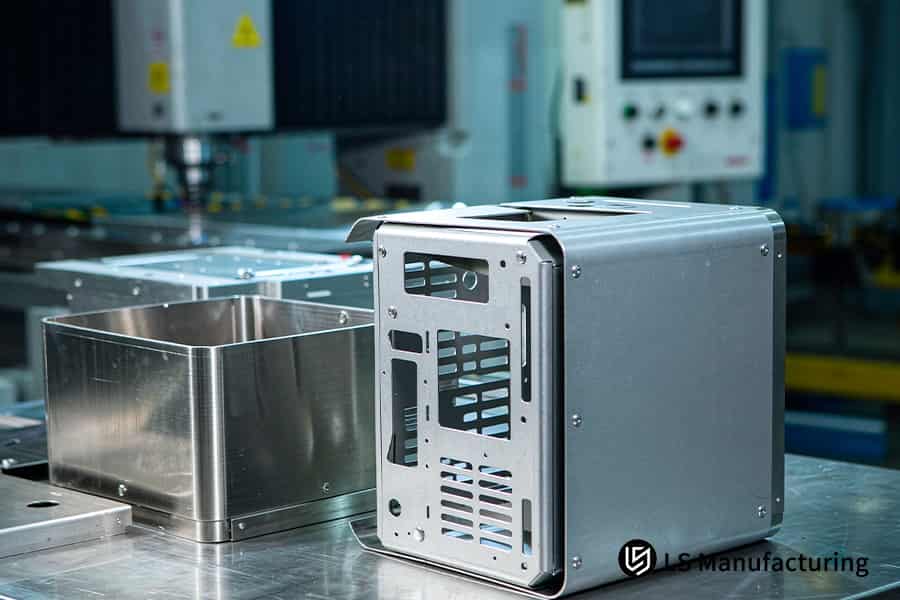
Figure 2: Sealed stainless steel enclosure panels and covers hold mating fits at ±0.01 mm for clinical service.
Why Do Common Sheet Metal Bending Defects Occur?
Common sheet metal bending defects are cracks, angular drift, and edge distortion appearing when cold bending strains sheet metal beyond its forming limit. Outer bend fibers carry tension while inner fibers carry compression, and anisotropy (ductility that varies with grain direction) concentrates strain along rolling lines, which is why bend lines run across rolling direction. Tensile strain past ultimate strength opens micro-cracks, and residual elastic strain releases after unloading as springback. Machinery's Handbook (30th ed., a machine-shop reference manual) sets springback compensation at 1.5°–2.5° for cold-rolled sheet under standard shop conditions. Prior cold forming consumes ductility, so over-work-hardened lots accept no fixed compensation angle. Injection molding holds compound curves without springback, because molten polymer fills a closed cavity instead of being bent.
Strain Distribution Across a Bend
Outer fibers stretch during bending while inner fibers compress, and strain peaks at a bend's outer surface. Sheet metal minimum bend radius (smallest inner radius before outer fibers crack) keeps peak strain below available ductility. Thicker stock raises strain at equal radius. Harder tempers need a larger radius, because less ductility remains for redistribution.
Why Compensation Angles Miss
Junior engineers often treat springback as machine inaccuracy, yet springback is elastic recovery set by yield strength over elastic modulus. No press setting removes springback; an overbend angle cancels rebound instead. A test coupon bent at production settings, then measured after unloading, gives an exact angle to add. Work hardening (strength gained and ductility lost during earlier forming) shifts rebound, so re-measured coupons stay necessary for degraded lots.
Where Medical Enclosures Meet the Limit
Medical enclosure sheet metal fabrication adds a hygiene constraint: wipe-down protocols push fluid into any crack, so corner tears fail review even when dimensions pass. Sheet metal fabrication process explained as a five-stage chain places bending where cracks start. Sheet metal bending springback then decides whether gasketed seams stay flush. Stated plainly, defect control starts at bend geometry, not at press calibration.
Bottom Line
- Bend radius and grain direction set cracking risk before any tooling exists.
- Springback compensation needs coupon measurement, not a fixed press setting.
Related keywords: sheet metal bend cracking causes / springback compensation basics / medical enclosure bend limits
Analysis of Common Defects and Engineering Prevention Table
Four bend failure modes dominate medical enclosure work, and each one traces to a distinct stress state. Machinery's Handbook (30th ed., sheet metal forming chapter) supplies every listed range. One side-by-side reading shows which countermeasure answers which failure cause.
| Defect Type | Physical Mechanism | Engineering Symptom | Countermeasure |
| Bending Springback | Elastic strain releases during unloading | Final bend angle sits 1°–3° above target | CNC press angle compensation, preset 1.5°–2.5° overbend |
| Corner Tearing | Tensile shear concentrates at adjacent bend roots | Longitudinal micro-cracks appear at bend intersections | Add bend relief notch, width ≥ 1.0× thickness |
| Hole Distortion | Mounting holes inside plastic zone undergo tensile extrusion | Bolt counterbores turn oval or elongate | Keep hole edge ≥ 2.5× thickness from bend tangent |
| Surface Indentation | Soft sheet presses into hard V-die shoulders | Linear scratch marks appear on cosmetic faces | Use polyurethane film or large-radius V-die |
Relief notch width ≥ 1.0× thickness keeps medical enclosure seams flat and sealed, so bend defect control stays a drawing-stage task.
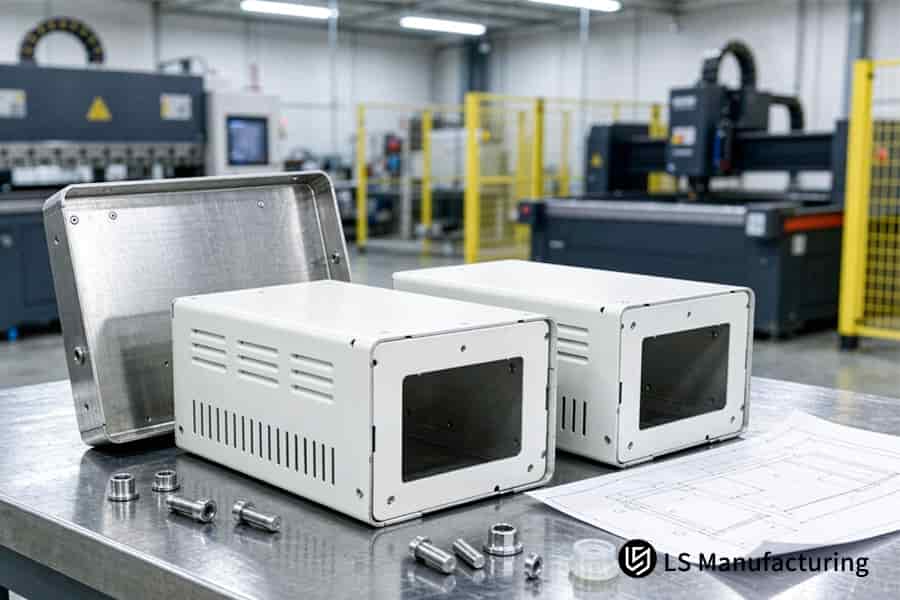
Figure 3: Vent slots and pressed hardware anchor stainless steel enclosure panels within ±0.05 mm for diagnostic assembly.
Which Is Better Stainless Steel VS Aluminum Enclosures?
Medical sheet metal enclosures are formed housings built from one of two alloy families: austenitic stainless grades 304 and 316, or aluminium grades 5052 and 6061. Stainless steel vs aluminum enclosures differ in the surface film each metal grows, since a chromium-rich passive film blocks acid and alkali attack while aluminium oxide conducts ground current. Either alloy family holds ±0.05 mm on general profiles per ISO 2768-1:1989 general tolerances. Fixed sterilisation units and surgical consoles favour stainless steel. Portable cart monitors favour aluminium, where battery runtime and handling weight govern design. Compound curvature falls outside economic forming in either alloy.
Surface Films and Corrosion Behaviour
Sheet metal corrosion resistance starts with the oxide film, not with base alloy strength. Stainless steel rebuilds a chromium-rich film after cutting, so passivation restores protection. Aluminium forms aluminium oxide instantly, and anodising per ISO 7599 (anodic oxidation coatings for aluminium) thickens one film for abrasion resistance. Alkaline detergents attack aluminium oxide, so coated panels need pH checks. Stainless steel tolerates chlorine disinfectants better, since grade 316 resists pitting.
Stiffness, Mass and Heat Paths
What is medical sheet metal deciding here? Chassis walls carry board heat and impact load. Aluminium spreads heat faster and lowers handling mass, so portable monitors use aluminium skins. Heat-sensitive imaging boards favour aluminium chassis skins, since walls act as heat spreaders. Stainless steel resists denting at equal thickness, fixed sterilisation cabinets keep stainless panels. Either alloy family reaches one ±0.05 mm band, so mass and stiffness decide selection.
Selection Boundaries and One Common Misreading
Medical device enclosure standards set cleaning-agent compatibility, not an alloy ranking. Junior engineers often assume stainless steel passes hygiene review automatically and aluminium fails that review. Wiping protocols attack surface films, a coated aluminium panel survives neutral detergents while unpassivated stainless steel rusts. Sheet metal alloy selection follows cleaning chemistry first and device mass second. In plain terms, cleaning chemistry picks the alloy, and chassis mass picks the thickness.
Key Distinctions
- Surface films decide corrosion behaviour, not the base alloy name.
- Cleaning chemistry ranks materials before stiffness or mass does.
Related keywords: medical enclosure alloy choice / stainless versus aluminium housings / medical chassis material basics
Comparison of Material Fundamentals
Four dimensions separate stainless steel from aluminium in medical enclosure work: film formation, cleaning-agent resistance, stiffness, and device class. Material selection follows cleaning chemistry first and device mass second. Junior engineers can read one matrix and match each alloy family to one disinfection protocol.
| Dimension | Medical-grade stainless steel (304 / 316) | Medical-grade aluminium (5052 / 6061) |
| Working principle and micro-mechanism | Spontaneous chromium oxide film blocks media penetration | Dense alumina film forms and conducts ground current |
| Service environment and corrosion resistance | Withstands frequent wiping with formaldehyde and sodium hypochlorite | Resists standard detergents; needs anodic protection in damp alkaline service |
| Mechanical stiffness and formability | High yield strength, larger springback, fast work hardening | One-third density, high ductility, easy vent-grid punching |
| Typical medical applications | Endoscopy host chassis, dialysis machine base, steriliser housings | Portable ultrasound housings, vehicle ECG monitor shells, cart frames |
Stated plainly, stainless steel suits high-intensity disinfection environments, and aluminium at one-third of stainless steel density suits mobile cart systems.
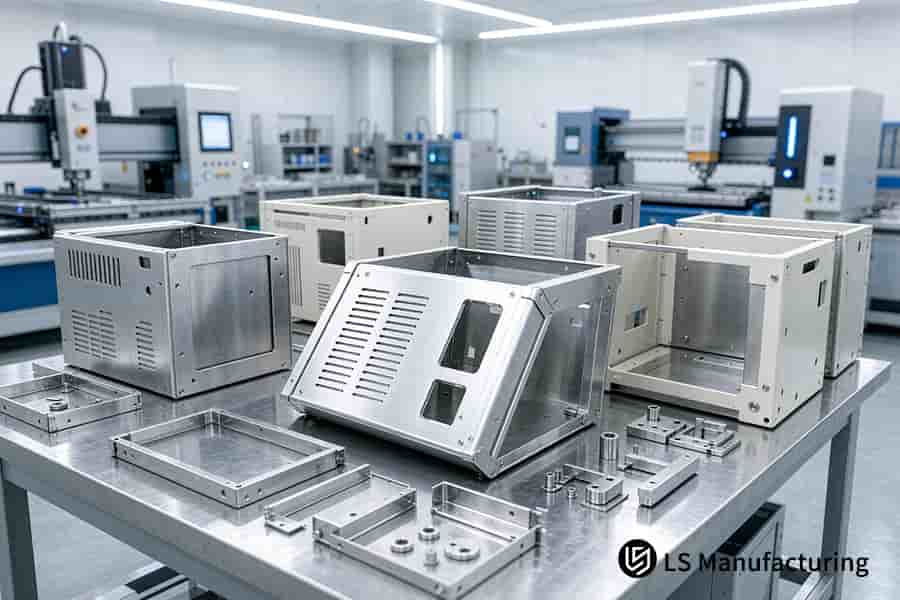
Figure 4: Formed panels enclose diagnostic electronics in stainless steel housings holding ±0.05 mm for medical analyzer production.
How Does Passivation Protect Stainless Steel Enclosures?
Passivation is a chemical post-treatment stripping free iron (unalloyed iron that tooling smears onto surfaces) from stainless steel and rebuilding a chromium-rich oxide film (Cr₂O₃). How does passivation protect stainless steel? A nitric or citric acid bath dissolves iron deposits left by blanking and welding, and the surface regrows an oxide film only a few nanometers thick. Chlorine disinfectants attack exposed iron first, so operating-theatre instrument housings gain the most. Acid chemistry cannot close structural weld cracks, and polymer housings carry no free iron.
Free Iron and Micro-Galvanic Cells
Blanking and die friction press carbon-steel particles into formed panels, and deposited iron forms micro-galvanic cells against surrounding stainless steel. Pitting corrosion (localized attack digging small pits) starts at cell sites, and wipe-down fluid later collects in pits. Junior engineers searching what is medical sheet metal meet iron contamination early, since cutting introduces deposits before service.
Acid Bath and Verification Routes
A sheet metal passivation process runs as one immersion step, and a nitric or citric bath dissolves deposits while leaving base chromium intact, since acid attacks free iron faster than alloyed chromium. ASTM A967 governs nitric and citric formulations. Two verification routes follow:
- Copper sulfate test (a drop test marking free iron through copper plating) gives a fast result.
- Water immersion reads rust staining after dwell.
Where Passivation Stops
A common misreading treats passivation as weld repair, yet acid cannot fill cracks, and creviced panels still fail hygiene review once wiping forces fluid into unfilled joints. Sheet metal corrosion resistance rests on surface chemistry and joint geometry together.
A copper sulfate drop on a weld zone marks residual iron within seconds.
Medical device enclosure standards cite passivation records as acceptance evidence, junior engineers can read one record and tell whether a housing cleared verification. Simply stated, passivation protects surfaces, and weld geometry protects structure.
What to Note
- Passivation strips free iron and regrows a chromium oxide film.
- Test records, not visual checks, decide passivation acceptance.
Related keywords: stainless steel passivation basics / medical enclosure corrosion control / chromium oxide film mechanism
What Medical Device Enclosure Standards Govern Production?
Medical device enclosure standards are admission rules governing electrical safety, ingress protection, and biological compatibility of equipment housings. IEC 60529 (ingress protection code rating dust and water sealing) defines physical sealing, and IEC 60601-1 (general safety standard for medical electrical equipment) defines insulation plus fire resistance, liquid ingress and electric shock stay excluded. Medical enclosure sheet metal fabrication meets gasket compression through ±0.01 mm seam fits. Standard coverage spans a diagnostic device's full life cycle, yet human drops generate transient loads outside every named standard. Passivation records support biocompatibility evidence files.
Electrical Safety and Sealing Scope
IEC 60601-1 sets insulation, creepage distance, and flame resistance for housings enclosing live circuits. IEC 60529 (ingress protection code) rates sealing through two digits, and foam gaskets need seam compression within ±0.01 mm to hold one rating.
One IP code tells junior engineers whether disinfection reaches internal boards.
Shielding Physics and Tooling Routes
Shielding physics separates sheet metal vs injection molding enclosures, since one continuous metal skin forms a Faraday cage without conductive paint. IEC 60601-1-2 (collateral standard for electromagnetic disturbance) sets emission and immunity limits for diagnostic equipment.
Enclosure choice also follows sheet metal forming limits (geometry reachable by bending), since curvature needs dedicated dies while flat panels reuse shared tooling.
Evidence Files and Standard Boundaries
Medical device enclosure standards require documented evidence, so one risk management file per ISO 14971:2019 (risk management standard for medical devices) records each mitigation.
Junior engineers often assume certification covers physical abuse, yet standards set electrical and sealing limits, and drops generate transient loads outside standard scope. Biocompatibility files cite sheet metal surface finishing records. One gasket pressure reading checks seam contact. In plain terms, standards govern electricity, sealing, and documented evidence.
Core Points
- Standards govern electricity, sealing, and documented evidence.
- Handling abuse stays outside standard scope.
Related keywords: medical enclosure compliance basics / iec 60601 enclosure rules / ip rating medical housings
How Sheet Metal DFM Optimization Works In Practice: A Medical Enclosure Example From LS Manufacturing
Sheet metal DFM optimization is a drawing-stage review that reshapes bend geometry before cutting starts. sheet metal dfm principles put geometry control ahead of tooling spend. One startup IVD (in vitro diagnostic) team commissioned a benchtop blood chemistry analyzer enclosure with sharp corners, dense vent perforations, and holes crowded against bend zones. Early in-house prototypes showed twisted edges and uneven assembly gaps, since strain follows hole rows into bend roots. Raising bend radius to wall thickness and cutting relief notches clears distortion paths before tooling exists. Revised drawings held critical assembly interfaces within ±0.05 mm per ISO 2768-m (medium tolerance class).
Application Scenario
Benchtop diagnostic instruments, including blood chemistry analyzers, use formed stainless housings carrying dense vent arrays. One IVD layout placed vent holes inside bend deformation zones. Junior engineers often read vent patterns as cosmetic, yet hole position decides strain paths. Assembly gaps near ±0.05 mm also govern gasket compression.
Principle in Practice
Plastic strain flows along least resistance, so sharp corners concentrate strain until outer fibers crack. Sheet metal bend relief rules set notch depth at 2.0 mm, which separates adjacent bend roots. Overbend compensation sits inside a 1.5°–2.5° springback band. Without relief notches, strain crosses neighbouring bends and angular drift exceeds ISO 2768-m.
Measured Results
Defect rate across one enclosure lot fell from 14.2% to 4.1%, and build cycle shortened 16.5%. Rework grinding dropped, so finishing labour shrank. Frozen bend geometry decides batch consistency, so junior engineers can audit hole clearance before tooling exists. Put simply, relief notches and hole clearance keep distortion out of medical enclosure seams.
Data source: LS Manufacturing 2025–2026 medical enclosure test log (Project #MED-2026-084, sample size >800).

FAQs
1. What is the typical tolerance achieved in sheet metal medical enclosures?
Forming tolerance is one permitted size window around nominal, and bent sheet holds a wider window than machined features. Medical sheet metal tolerances grade ±0.05 mm on general profiles per ISO 2768-1:1989, and mating fits reach ±0.01 mm at LS Manufacturing. Junior engineers can read one drawing callout and judge whether a formed panel or a machined housing fits one requirement.
2. Why should sharp inner bend radii be avoided in medical sheet metal?
Inner bend radius is one curved distance inside a bend, and smaller radii push outer fiber strain past available ductility. Sheet metal bending rules set minimum radius at ≥ 1.0× stock thickness per Machinery's Handbook (30th ed.), since tighter radii crack fibers and trap bacteria. Assembly crews can measure one bend radius against stock thickness, and in essence radius alone decides cracking risk.
3. How does passivation differ from conventional anodizing?
Passivation and anodizing are surface conversion treatments, and each process grows an oxide film instead of applying coating. Passivated stainless steel withstands 500 h per ASTM B117 salt spray, and anodizing (electrochemical oxide growth on aluminium) builds one porous wear layer. Quality auditors can match one test report to one alloy family and avoid swapping passivation records with anodizing records.
4. When should an engineer choose sheet metal over plastic injection molding?
Sheet metal is forming from flat stock, and injection molding fills one closed cavity with molten polymer. Formed panels hold ±0.01 mm seam fits per IEC 60529, and sheet metal enclosure applications suit low annual volumes without dedicated dies. Design reviewers can read one annual volume plus one shielding requirement and judge which route answers both.
Summary
Engineers planning medical enclosure geometry can trace tolerance allocation across multi-stage bends ahead of tooling commitment. Alloy selection and passivation notes stay open for continued study through LS Manufacturing's knowledge base at lsrpf.com. Written inquiries on flat-pattern topology or material selection reach LS Manufacturing's engineering team at info@lsrpf.com, and +86 185 6675 9667 connects callers directly.
Further Reading: Sheet Metal VS CNC Machining For Aluminum Electronics Housings: Cost & Precision