English



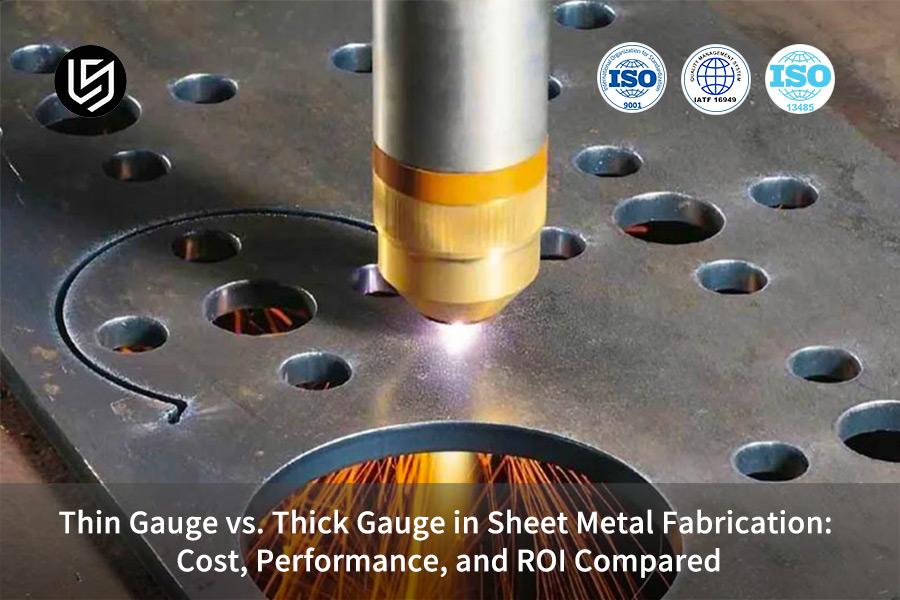
Sheet metal fabrication service is a process that includes cutting, bending, and welding of metal sheets of different thicknesses. It is one of the ways to deal with the difficulty of finding housings for precision equipment by balancing warpage and structural strength after one has made a selection. The metal used for CNC control cabinet and medical equipment housing is 16-gauge sheet metal even though it is a compromise on cost, performance, and ROI.
When it comes to buying high precision robot assembly and medical equipment control cabinets, most companies will be in two minds: 20-24 gauge thin sheets are more likely to warp due to stress release while 7-14 gauge thick sheets are too heavy and have a high rate of bending cracking, because of this lowering the overall ROI. Work hardening, springback compensation, and welding thermal stress are processes which will affect the tolerances but suppliers do not consider these aspects. This article examines the performance boundaries and cost solutions of these two types of sheets after looking at yield strength, total cycle time, and DFM stress release.
Thin vs Thick Gauge Sheet Metal Fabrication: Key Parameter Overview
| Comparison Dimensions | Thin Sheet (16-24 Gauge) | Thick Sheet (7-14 Gauge) | Optimal Selection Reference |
| Bending Springback Angle | 5°-8° | 1°-2° | Accuracy requirements ≤±0.5° thick sheet preferred |
| Welding Heat Deformation Risk | High, prone to warping | Low, sufficient rigidity | Continuous weld length > 200mm thick sheet preferred |
| Unit Raw Material Cost | High unit price, lightweight | Low unit price, heavy weight | Thin sheet preferred for lightweight requirements |
| Assembly Tolerance Stability | Susceptible to stress fluctuations | Good dimensional consistency | Thick sheet preferred for large-volume, repair-free assembly |
| Typical Application Scenarios | Shell shielding, electronic panels | Load-bearing frames, structural brackets | Thick and thin sheet combinations achieve performance-cost balance |
Key Takeaways
- Simply welds the cabinet shells: 16 Gauge (1.5mm) is best suited is suitable for control cabinet shells with small size injection molds. Choose 18 Gauge (1.25mm) if the part has large size injection molds.
- Springback correction markers: stainless steel with 22-gauge will produce a springback angle of 5 degree-7 degree.The assembly design should have an extension of no less than 1.2 times of the stress relief slots.
- Watershed: Welding heat input has to be controlled below 0.8 kJ/mm for structural members with the thickness over 0.125" (11 Gage) to prohibit weld grain coarsening.
Why You Should Trust LS Manufacturing’s Thin vs. Thick Selection Guide for Sheet Metal Fabrication Services?
The thickness of the sheet metal used in precision sheet metal making has a direct impact on the amount of product that can be produced and the reliability of the product over a long period. The wrong choice of thickness usually leads to rework costs that are 2.7 times the initial purchase cost. From our experience in mass production projects for control cabinets of medical equipment, sheet metal thickness mismatch alone can cause a 28% decrease in the first-pass yield.
As the ISO 13920-BF standard, Dimensional and geometric tolerances of welded structural components must be classified as their function to ensure assembly interchangeability.
To adhere strictly to this standard, our DFM team works closely with the project from the very beginning by breaking down tolerance requirements for each process step based on measured material parameters and process compensations. We even took three months to perform 12 sets of comparative bending and welding tests on stainless steel of different gauges, which helped us to compile a springback database and a set of stress correction coefficients that encompass 17 commonly used materials. This allows us to predict accurately the forming risks due to different sheet thicknesses.
Our manufacturing system is certified under the ISO 13485 medical quality management system, and all parameters have been confirmed through mass production rather than theoretical calculations.
Scientific plate thickness selection is the first step in reducing project costs and improving efficiency. You can download our compiled "Sheet Metal Gauge Selection White Paper" to quickly grasp the selection logic and avoidance points in different scenarios, providing complete data references for early-stage project evaluation.

Why Do Conventional Pricing Models Consistently Miscalculate Sheet Metal Gauge Selection Costs?
In the process of sheet metal gauge selection, the 24 gauge thin sheets are cheaper when it comes to raw material procurement because they weigh less per piece. But, thin sheets are more susceptible to edge warping when exposed to high-frequency laser thermal cutting, which causes a decrease in layout utilization. Besides that, the laser welding after-burn-through costs can even go up by more than 35%, which shall reduce the overall processing return on investment.
Comparison of Cost Structure for Different Thicknesses of Cold-Rolled Steel Sheets
Sheet Metal Thickness Cost Comparison (SPCC Cold-Rolled Steel)
| Sheet Specifications | Nominal Thickness (mm) | Raw Material Unit Price (USD/kg) | Layout Utilization | Welding Time Coefficient | Single Piece Overall Cost Index |
| 24 Gauge | 0.6 | 0.95 | 72% | 1.35 | 1.05 |
| 20 Gauge | 0.9 | 0.92 | 81% | 1.15 | 0.98 |
| 16 Gauge | 1.5 | 0.88 | 88% | 1.00 | 1.00 |
| 11 Gauge | 3.0 | 0.85 | 90% | 1.20 | 1.22 |
| 7 Gauge | 4.5 | 0.82 | 92% | 1.45 | 1.45 |
- Thin sheet metals layout forces a bigger anti-blowout overlap area (Web Size) so material usage goes down by over 15% compared to thicker metals. This is by far the easiest hidden cost item in sheet metal thickness cost accounting to miss, and it directly lowers the material usage level of sheet metal fabrication.
- Thin sheet metal welding typically involves less line energy and wider spot welding intervals, which equates to a unit welding time that is 35%-50% higher than with thick sheets.
- With 24-gauge thin sheets, additional leveling and stiffening rib forming operations are necessary, which drives up auxiliary time per piece by 20%. This is the fundamental cause of the greater total cost of thin gauge fabrication service.
Cost Optimization Logic for Precision Electronic Enclosures
- Switching to 16-gauge gauges rather than 22-gauge gauges results in a raw material weight increase but it obviates the need for anti-warping of the corner using stiffening ribs and leveling processes.
- The enhanced structural rigidity of thicker sheets decreases the investment in welding anti-deformation fixtures, which leads to lower cost amortization during mass production. Appropriate sheet metal gauge selection can much enhance sheet metal fabrication process efficiency.
- Real measurements indicate that the 16-gauge solution for precision electronic enclosures cuts down the total procurement cost per unit by 18%.
In other words, it's the same as purchasing packaging paper, thin paper is cheaper per unit but more prone to damage, because of this, more cushioning material is required, which results in a higher total cost than the use of slightly thicker paper.
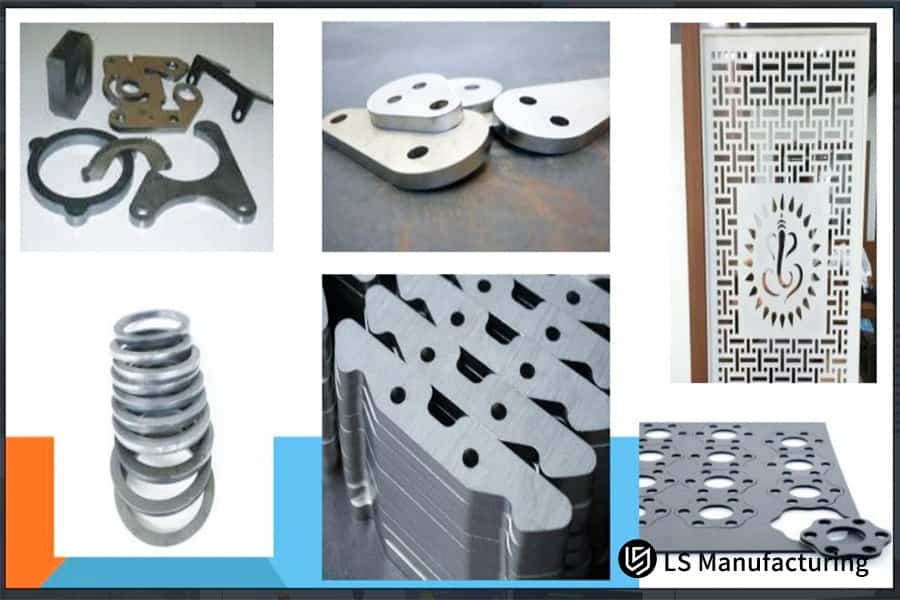
Figure 1: Comparison chart of various sheet metal gauges from thin to thick.
How To Mitigate Severe Structural Warpage During Precision Thin Gauge Fabrication Service?
In thin gauge fabrication service, avoiding warping of thin sheet metal parts is closely related to the prevention of stress concentration at the bending line and the edge distance of the hole. Using the DFM specification (where the distance from the hole wall to the bending radius edge is more than twice the sheet thickness) and providing pre-formed reinforcing ribs in the main areas vulnerable to deformation can limit the change of shape of a 20-gauge stainless steel enclosure from going beyond 0.15mm.
Bending process parameter specifications
- The V-groove width of the lower die should be selected in the range of 6t to 8t so as not to cause an excessive tensile stress on the outside of the metal sheet by a V-groove that is too narrow. In fact, this is the main criteria for carrying out the forming process in thin gauge fabrication service and also a sheet metal fabrication bending parameter.
- The bending speed should be limited to a maximum of 10mm/s so as not to result in the buildup of residual stress due to the forming at the high speed.
- Multi-pass continuous bending should be executed in a symmetrical order to counterbalance the total deformation caused by stress build-up on one side. This rule holds true for thin vs thick gauge sheet metal fabrication as well.
Welding stress control scheme
- Change the laser spot welding (Stitch Welding) version to the continuous full welding one to lower the total heat input.
- Set the weld spacing at 15-20 times the sheet thickness to have the optimal balance between connection strength and thermal deformation control. The detailed parameters related to this can be obtained from the corresponding specifications in the sheet metal thickness guide. This is a major adjustment item for sheet metal welding parameters.
- Under this system, the overall level of thermal shrinkage of the 24 Gauge aluminum alloy 5052 housing is down by 60%, which is enough to the high-precision, gapless assembly of slide rails.
In a very simple manner, this can be compared to the act of sticking a paper shell. The paper will fold when heated if the glue is applied continuously. The strength of the connection and the flatness of the plate surface are kept with segmented spot application.
What Are The Dynamic Springback Correction Guidelines For Custom Gauge Sheet Metal Service?
During custom gauge sheet metal service, springback resulting from stamping and bending operations might cause the assembly dimensions of medical device to be off. For 22 Gauge high-strength stainless steel, LS Manufacturing achieves the final forming angle tolerance within ±0.5° by pre-setting a 6° over-bending compensation with a five-axis CNC bending machine.
Comparison of Bending Springback Parameters for Different Material Thicknesses
| Material | Sheet Size | Yield Strength (MPa) | Springback Angle Range | Recommended Over-bending Compensation |
| SPCC Low Carbon Steel | 12 Gauge | 235 | 1°-2° | 1.5° |
| SPCC Low Carbon Steel | 24 Gauge | 270 | 3°-4° | 3.5° |
| 304 Stainless Steel | 22 Gauge | 410 | 5°-8° | 6.5° |
| 5052 Aluminum Alloy | 20 Gauge | 195 | 2°-3° | 2.5° |
Differences in Bending Forming Between Thin and Thick Plates
- Thick plates have a higher proportion of plastic deformation zone, and springback is mainly dominated by elastic recovery with small angular fluctuation range. This is the basic judgment basis for springback compensation in custom gauge sheet metal service, and also the core performance of sheet metal fabrication springback mechanism.
- For very thin metal plates, the effect of strain hardening will be more prominent, the yield strength keeps increasing with the forming process, and as a result the changes in the springback angle will be bigger.
- Under the same bending pressure, the springback angle of 24 Gauge stainless steel is more than 4 times that of 12 Gauge low carbon steel. Precise sheet metal gauge selection is a prerequisite for springback control.
Application of Intelligent Bending Compensation Technology
- Integrating intelligent bending compensation technology (ATC) with real-time pressure sensing for the correction of the bending depth in real time.
- It is capable of revising the sizing error resulted by changes in yield strength of different batches of sheet metal so that it can respond to small-batch flexible customization issues and in fact, really enhance the size consistency of thin vs thick gauge sheet metal fabrication. It can also guarantee that sheet metal fabrication dimensional accuracy will be in line with standards.
- During mass production, the rate of angular dimension compliance with standards can be increased to 99.7% as compared with 82% achieved through traditional processes.
Springback control directly determines the assembly accuracy of precision products. You can submit product drawings to obtain a free thin vs thick gauge sheet metal fabrication springback risk assessment, with senior engineers providing targeted bending compensation and process optimization suggestions.
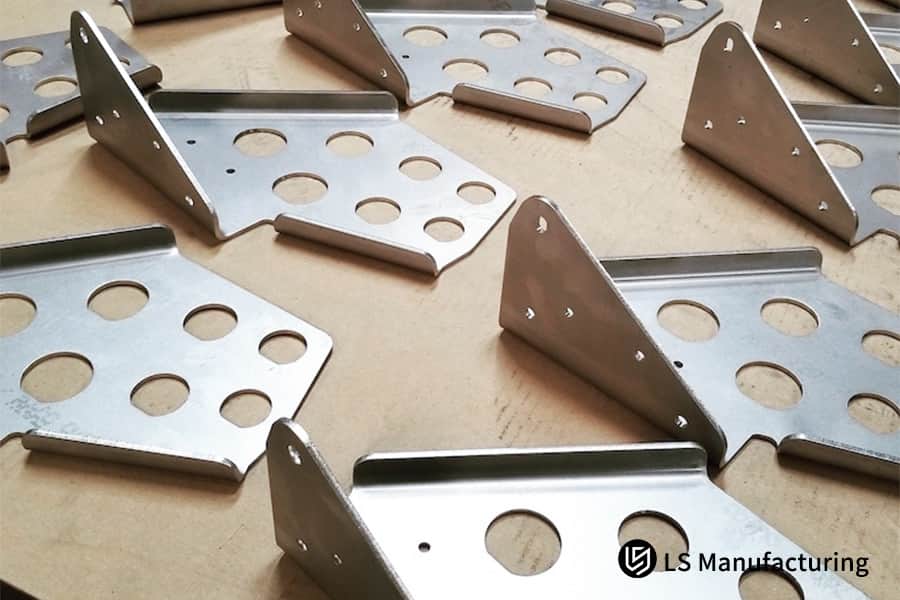
Figure 2: Precision sheet metal brackets with various hole patterns.
Why Does a Lower Gauge Chart Number Require Significantly Larger Bend Radii To Avoid Structural Micro-Cracking?
Sheet metal thickness guide says that with plates of 7-14 Gauge thickness, if the inner bending radius is less than 1 times the plate thickness, the tensile stress on the outer layer of the plate will be higher than the material's tensile strength limit, which will lead to the formation of micro-cracks along the bending ridge. LS Manufacturing uses the thick plate rule of Rmin 1.5t to maintain the long-term fatigue life of the heavy structural components.
Micro-Mechanical Thick Plate Bending Cracking
- In the bending thick plates, with the increase of the plate thickness, the elongation of the outer fibers increases, and it is very likely to go beyond the limit of the material's elongation after fracture. Related critical values can be obtained in the sheet metal thickness guide, which represents a typical case of sheet metal fabrication fracture mechanism.
- Grain boundary defects are most likely places where the fracture may start in the cleavage fracture mechanism, and the fracture surface along the bending ridge accounts for the major feature.
- When micro-cracks are subjected to alternating loads by opening and closing of the cracks, the crack growth is accelerated, finally resulting in the occurrence of the sudden fracture of the structural components. Scientific sheet metal gauge selection can be one measure to reduce this risk to the minimum.
Grain Direction and Layout Optimization Methods
- If in making the metal sheet grain is in the direction parallel to the bending line, then the likelihood of cracks formation in the thick sheets is on average more than 3 times.
- Multi-layout algorithms to enable the bending line to form an angle of 45° or 90° with the grain direction can really decrease the probability of cracking. This is the standard sheet metal fabrication optimization that up to now has been the practice of sheet metal fabrication engineers, making a full use of the grain orientation features of sheet metal fabrication.
- With taking this optimization, the fatigue life of the engineering machinery brackets can be increased by as much as 300%.
The bottom line is that this is similar to bending a wooden board, bending along the grain direction is more susceptible to cracks, while bending across the grain direction is able to withstand larger deformations.
How To Benchmark Long-Term Sheet Metal Fabrication ROI For Medical Device Frame Enclosures?
The most fundamental aspect of figuring out the sheet metal fabrication ROI of medical equipment cabinets is rationally selecting the thickness of sheet metal: 11-gauge sheets as the main load-bearing frame ensuring seismic resistance, plus 20-gauge thin sheets as external covering panels, can cut the total weight by 25%, because of this lowering air logistics costs.
Breakdown of Life Cycle Cost
- Initial Manufacturing Cost: This includes the cost of raw materials processing surface treatment, and testing, which together comprise 40% of the total life cycle cost. This manufacturing cost component is the fundamental input in sheet metal fabrication ROI calculation and one of the main elements of sheet metal fabrication lifecycle cost.
- Logistics and Warehousing Costs: A 10% reduction in the total weight of goods often means an approximate 12% decrease in international air freight charges.
- Operation and Maintenance Costs: Structures made lighter by reducing thickness can also decrease equipment loads, which leads to a reduction in the need for maintenance over a long period. This aspect is often neglected when doing traditional sheet metal thickness cost estimations.
Approaches to Calculate the Benefits of Wall Thickness Optimization
- Use Finite Element Analysis (FEA) software to simulate various load scenarios and find opportunities for reducing thickness in non-load-bearing sections while still maintaining structural integrity and stiffness.
- Processing time of thin-plate sandwich structures is actually longer. Still, the resulting savings in transportation and energy costs are sufficient to cover the initial disadvantage within 12 months. Professional sheet metal fabrication companies can provide thorough calculation models and assistance that covers the implementation of solutions for weight optimization in sheet metal fabrication.
- For expensive medical equipment, the use of a combination of both thick and thin sheet metal fabrication can increase the total lifecycle Return on Investment (ROI) by over 22%.
Lifecycle cost optimization can significantly improve the long-term profitability of projects. You can provide the equipment's weight and transportation scenario parameters, and we will calculate the lifecycle ROI for different sheet metal thickness cost options free of charge to find the optimal wall thickness combination.
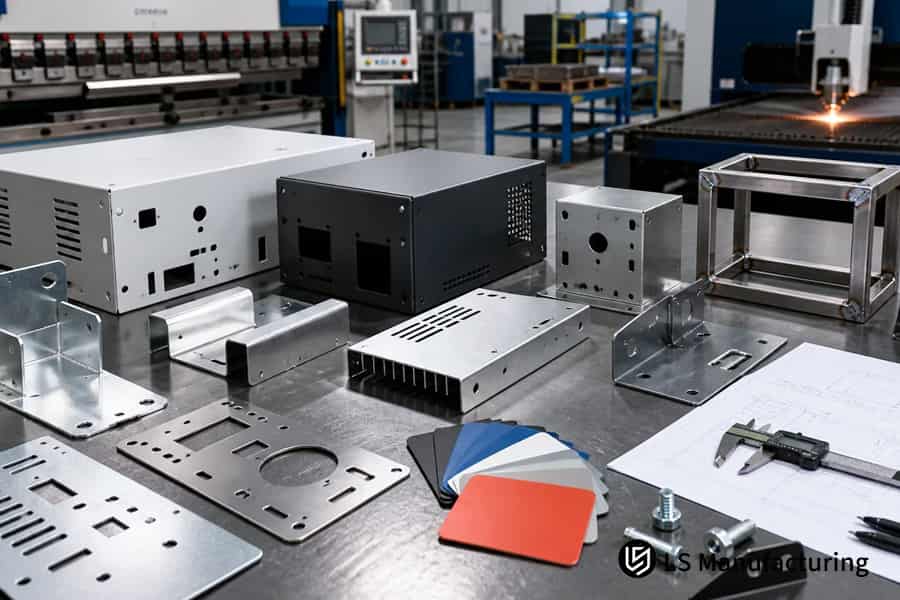
Figure 3: Various sheet metal enclosures and brackets on a workbench.
What Strict Welding Methodology Updates Are Vital For Heavy Machinery Parts Utilizing 7 To 14 Thick Gauge Blanks?
At sheet metal fabrication service for heavy-duty sheet metal parts, In particular for heavy engineer structural parts over 11 Gauge, a multi-pass pulsed MIG welding process using a V-groove beveling is necessary plus preheating at 150℃ to avoid welding defects such as lack of fusion and intergranular corrosion.
Welding Groove and Preheating Specifications for Thick Plates
Many purchasers, when designing heavy structural components with the factory, stress most about structural failures resulting from internal weld defects.
As the ISO 5817:2023 clearly states in its rules: welds in load-bearing structures must be free from defects like lack of fusion and cracks.
To implement this standard to the letter, we have made this process specifications:
- Structural components made of carbon steel and stainless steel with a thickness more than 3mm require a 30°-45° V-groove metalcoating to be machined before welding to allow sufficient penetration. This is a basic process requirement for qualified sheet metal fabrication service that meets the general specifications of sheet metal fabrication beveling standard.
- For steel having a carbon equivalent of more than 0.4%, preheating to 100-150℃ before welding is necessary to slow down the cooling rate and prevent hardening.
- We operate a fully automated robotic laser beveling machine for processing, which can limit the beveling angle error to ±1°. The specific beveling angles may be consulted from the corresponding recommended values in the sheet metal thickness guide.
Solution for Welding Quality Non-Destructive Testing
- We check all load-bearing welds by radiographic testing (RT) or ultrasonic testing (UT) to guarantee 100% penetration.
- Metallographic examination is carried out on critical stress areas to confirm that the weld grains do not exhibit abnormal coarsening. This is a vital quality control practice in high-end custom gauge sheet metal service, thoroughly implementing sheet metal fabrication nondestructive testing standards.
- Our thick plate welding first-pass yield rate is continually beyond 99.2%, which is Really higher than the industry average of 92%.
At its simplest, this is the one example is joining thick wooden boards, before gluing, the edges have to be bevelled to make sure the internal surfaces are fully joined adherence and to ward off the risk of delamination. There has also to be an inspection that no one internal gaps exist.
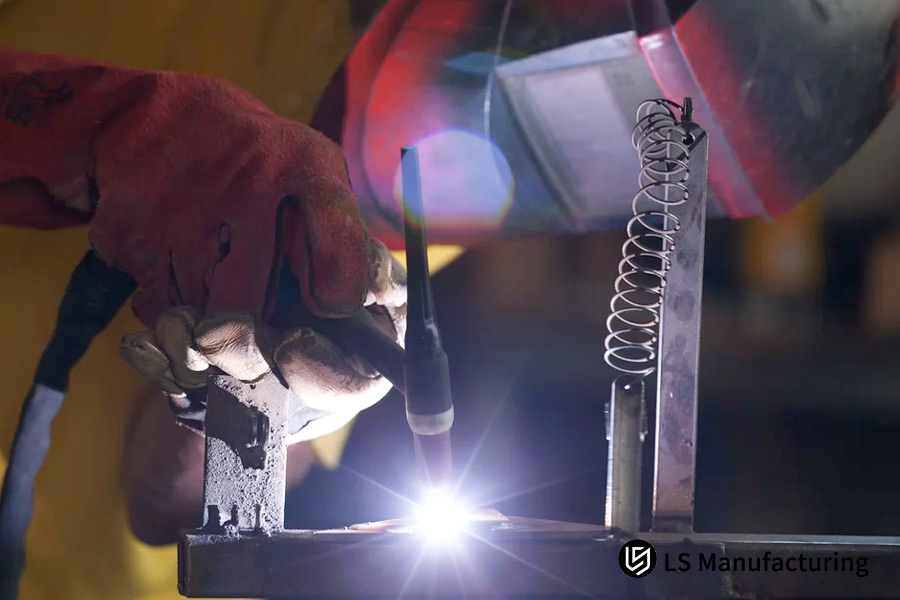
Figure 4: Worker welding a metal structure with bright sparks.
How To Eliminate Tolerance Stack-Up Bottlenecks During The Final Assembly Of Interlocking Enclosures?
In custom gauge sheet metal service, not to mention various thickness tolerance of sheet metal (normally 0.2mm) leads to mismatch of assembly holes when dealing with multi-layer stacked parts. LS Manufacturing unveils a 3D tolerance full-dynamic simulation software to be used at the prototyping stage to fix the interlocking and meshing gaps, guaranteeing 100% error-free assembly of mass-produced custom chassis at the final assembly line.
Comparison of Standard Thickness Tolerances for Commonly Used Metal Sheets
| Material | Standard | Sheet Size | Thickness Tolerance (mm) | Tolerance Percentage |
| Low Carbon Steel | Manufacturer's Standard | 16 Gauge | ±0.10 | 6.6% |
| Low Carbon Steel | Manufacturer's Standard | 11 Gauge | ±0.15 | 5.0% |
| Aluminum Alloy | Brown & Sharpe | 16 Gauge | ±0.08 | 6.2% |
| Stainless Steel | ASTM A480 | 20 Gauge | ±0.12 | 10.3% |
Core Sources of Tolerance Accumulation
- Sheet metal thickness tolerance can cause a direct impact on bending height and volume change of the stacked parts. This is the main issue for tolerance design in preparation for custom gauge sheet metals and why of sheet metal fabrication tolerance stackup.
- Tiny deviations on every layer will pile up when you are putting together multiple parts. Eventually, this leads to misaligned holes and failure in assembly.
- Fixed tolerance design of the old-fashioned kind overlooks material changes and causes the whole lot to be outside the limits of tolerance, which is a problem for batch production basically. Sheet metal thickness guide includes reference to typical values of tolerance ranges.
Dynamic Tolerance Design Method
- At the project initiation stage, DFM team converted fixed tolerance zones into dynamic tolerance designs that consider material fluctuations.
- The use of 3D tolerance simulation software made it possible to foresee assembly clearances under different sheet thickness deviations and mating dimensions were adjusted in advance.
- The new method brought about not only a raise in the first-pass yield of the chassis assembly from 85% to 100% but also completely removed the need for on-site rework, has efficiently improved overall sheet metal fabrication ROI, and has greatly up sheet metal fabrication assembly yield.
Case Study: How LS Manufacturing Optimized 12 Gauge Stainless Steel Laser Cutting and Bending for an EV Battery Medical Cooling Enclosure?
Customer Challenges
During the development of a smart trackless AGV chassis, the R&D team ran into a technical roadblock for the purchase of power battery bracket assemblies.
This was because the original supplier only used 11-gauge stainless steel for laser cutting and traditional bending methods but did not consider the springback angle of the high-hardness stainless steel (which was actually about 6.5°). As a result, since the holes got increasingly misaligned in a large batch of structural parts, the first-pass yield for the overall assembly got down to less than 72%.
On top of that, the welds that had a lot of tensile stress were not heat-treated, so when the 50G acceleration impact test was carried out, fatigue microcracks appeared at the edges of the welds, this way causing the project to be at risk of delay and penalties.
LS Manufacturing Solution
LS Manufacturing senior DFM engineers' intervention led to a comprehensive technical overhaul.
- Using a tensile test machine, the team determined the real yield strength and hardness (HRC 32) of this stainless steel batch, and this way the bending deduction was recalculated. Accurate metal sheet fabrication material testing anchored the process essentials.
- In an advanced fully automated five-axis CNC bending machine, a custom-built Wila pneumatic compensation lower die was installed, which changed the inner bending angle from R1.5 to R4.5 thereby freeing the tensile stress on the bend's outer layer.
- Welding was improved by incorporating high-power robotic fine cold laser welding plus an argon-filled double-sided shielding process. This limited the heat input per welding pass to no more than 0.5 kJ/mm, so avoiding grain growth in the heat affected zone.
Results and Value
Following two microscopic metallographic inspections and 100% laser 3D scanning (CMM) dimensional confirmations, 500 sets of cold-formed thick plate structural parts were found with zero defects in assembly, besides all dimensions remained locked within ±0.10mm, way beyond 0.38mm industry standard, thanks to strict sheet metal fabrication inspection standards.
Battery bracket aced military-grade 100-hour triaxial high-frequency random vibration and fracture limit tests in the first go. The overall product assembly time was cut down by 40%, and the whole supply chain return on investment increased by 32% resulting in the customer immediately making an additional long-term strategic supply order.
The forming of complex thick plate precision structural components requires optimization of the entire process. You can upload detailed drawings and technical requirements to get a customized solution and accurate quote, maximizing the ROI of your sheet metal fabrication project.

FAQs
Q1: In the precision sheet metal processing stage of medical equipment prototype development, what are the key differences in core structure performance between thin and thick sheet metal products?
Thin sheets (16-24 Gauge) achieve their bending stiffness by the geometric cross-section formed by bending, so, they are very susceptive to local instability. Then again, thick sheets (7-14 Gauge) are able to carry heavy loads due to their yield strength and thickness, they have much greater fatigue limits and mechanical impact resistance compared to thin sheets.
Q2: What effects do changes in the material have on the physical thickness in the standard sheet metal thickness tables?
The same gauge number will mean different actual physical thicknesses for different materials. For instance, the nominal thickness of 16 Gauge carbon steel is 0.0598" (1.52mm), whereas aluminum alloy of the same grade is only 0.0508" (1.29mm). Clear absolute tolerance zones should be specified when ordering.
Q3: What is the underlying cause of a high spoil rate when processing 24-gauge ultra-thin sheet metal panels through traditional TIG welding?
24-gauge (about 0.6mm) ultra-thin sheets have very low local heat capacity. The arc energy of traditional TIG welding easily surpasses the melting point, which leads to perforation or grain coarsening and distortion. That means, pulsed micro-beam plasma welding or cold laser welding methods are required.
Q4: When manufacturing customized electronic product components that are frame-like, which sheet metal thickness offers the best overall cost-effectiveness?
For total life-cycle cost, 16-gauge (about 1.5mm) is the break-even point of stainless steel and carbon steel chassis in the aspect of cost-effectiveness. It is rigid enough to remove the need for anti-deformation fixture costs and at the same time it is very efficient for CNC high-speed cutting.
Q5: Can suppliers provide customized sheet metal services that achieve precision tolerance of 0.05mm for 11-gauge steel sheets?
Standard single-bending operations will not be able to deliver this level of precision. For instance, running key assembly surfaces and pin holes through a secondary precision milling process with a CNC gantry milling machine after laser cutting can control the core tolerance of an 11 Gauge structural component within ±0.02mm. Submit your drawings if you want a solution and a quotation.
Q6: What specific activities should be carried out to enhance investment returns when ordering custom pre-punched thin sheets from professional manufacturers?
In fact, carrying out the punching and layout operations in parallel right at the stage of raw material coil leveling can very much eliminate the waiting time for individual parts to be punched on the subsequent high-power laser cutting machine. This can actually result in batch stamping efficiency being increased by 45%, and simultaneously mass production per-piece costs being optimized effectively.
Q7: What is the standard of the minimum inner bending radius when processing O-state fully annealed aluminum alloy thin sheets so that springback deformation can be avoided after forming?
Since O-state fully annealed aluminum alloys are free from the work-hardening residual stress, they exhibit a springback rate close to 0°. So, the minimum inner bending radius is able to be narrowed down to 1.0 times the sheet thickness. That makes them perfect for precision customization of complex curved shell products.
Q8: Why do high-end engineering projects worldwide not get the direct off-the-shelf sheet metal shells of general standard specifications?
The heat dissipation ducts and precise sensor clearances of non-standard motherboards will not be accommodated by general standardized shells. This results in on-site rework and polishing times being tripled. So, a full-process DFM customization service is a must to secure a high ROI for long-term flexible manufacturing.
Summary
Choosing just the right sheet metal gauge in a precise manner involves the systematic integration of engineering and material properties, processes, and total lifecycle costs. Randomly referring to the general parameters without proper calculations might cause defects like warping, cracking, and tolerance challenges at the time of mass production. For years, LS Manufacturing has been engaged in multi-field processing, helping customers technically from the outset stress simulation of drawings to actual inspection before shipment and making sure that design is carried out accurately.
Not considering proper sheet thickness tolerance design might lead to the loss of the very first delivery profit in new projects. In case you are looking for 7-14 Gauge heavy-duty plate machining or 20-24 Gauge high-precision thin plate welding with the help of our experts, LS Manufacturing's technical team will be at your disposal.
Just a 3-minute effort after which you will have uploaded your 3D assembly drawings(.STEP,.IGS, or.DXF) and tolerance control specifications to our secure inquiry system, and among other things, you will receive a price quotation within 24 hours besides a free of charge DFM assemblability and bending crack risk evaluation report that the engineers with 10 years of experience are signing.
📞Tel: +86 185 6675 9667
📧Email: info@lsrpf.com
🌐Website:https://lsrpf.com/
Disclaimer
The contents of this page are for informational purposes only.LS Manufacturing servicesThere are no representations or warranties, express or implied, as to the accuracy, completeness or validity of the information. It should not be inferred that a third-party supplier or manufacturer will provide performance parameters, geometric tolerances, specific design characteristics, material quality and type or workmanship through the LS Manufacturing network. It's the buyer's responsibility.Require partsquotation Identify specific requirements for these sections.Please contact us for more information.
LS Manufacturing Team
LS Manufacturing is an industry-leading company. Focus on custom manufacturing solutions. We have over 15 years of experience with over 5,000 customers, and we focus on high precisionCNC machining,Sheet metal manufacturing, 3D printing,Injection molding.Metal stamping,and other one-stop manufacturing services.
Our factory is equipped with over 100 state-of-the-art 5-axis machining centers, ISO 9001:2015 certified. We provide fast, efficient and high-quality manufacturing solutions to customers in more than 150 countries around the world. Whether it is small volume production or large-scale customization, we can meet your needs with the fastest delivery within 24 hours. choose LS Manufacturing. This means selection efficiency, quality and professionalism.
To learn more, visit our website:www.lsrpf.com