English



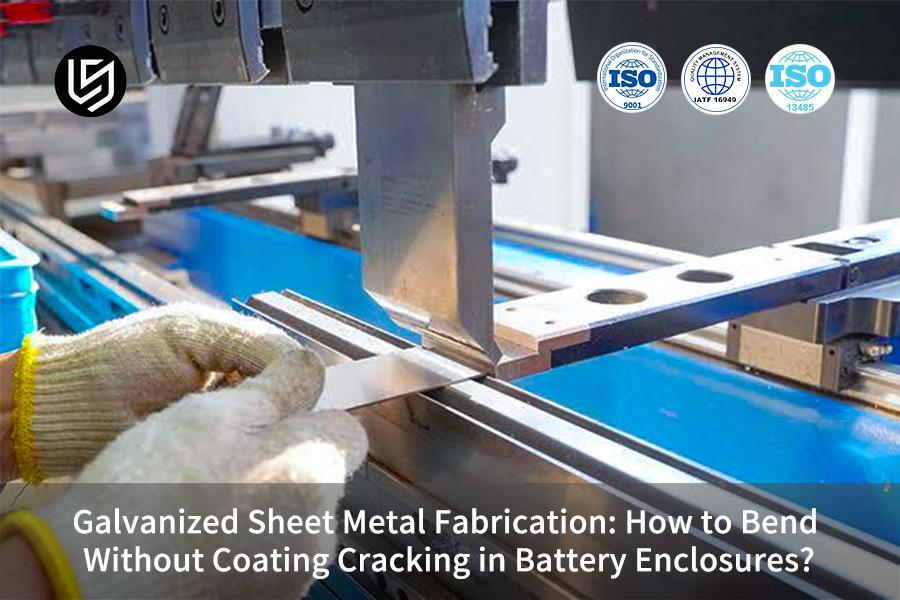
Sheet metal fabrication service is a metalworking process that involves the transformation of flat sheets of metal into predetermined shapes. It typically includes a series of cutting, bending, and assembling processes. See for more this combination may cover a need for taking care of HVAC (ventilation, heating, and air conditioning) together with full electrical wiring and some light fixtures (or total lighting) plus mixed power and telecom/data outlets and fire alarms and sprinklers and security. So interior partitions for that area would be non-load bearing partitions.
Sheet metal forming technology refers to the cold plastic deformation of metal sheets by various working forces to change the shape and size of the material. In this article, sheet metal major bending process is considered one of the most usual metal forming technologies.
Quick Overview of Core Galvanized Sheet Bending Parameters
| Process Dimension | Industry Standard | LS Manufacturing Optimized Parameters | Reduction in Cracking Risk | Compatible Sheet Thickness |
| Inner Bend Radius (R) | R ≥ 1.0T | R ≥ 1.5T | 40% | 1.5–2.5 mm |
| Bend Line vs. Rolling Direction Angle | Random (0°–45°) | Perpendicular (90° ± 5°) | >45% | Full thickness range |
| Laser HAZ Removal | Burr removal only | Grinding to 0.2 mm depth | 60% | Sheets ≥ 2.0 mm |
| Lower Die V-Opening Width | Fixed (V = 8T) | Variable (V = 9T–11T + R) | 65% | Sheets 1.5–3.0 mm |
| Tooling Surface Roughness | Ra 0.8 μm | Super-fine polish (Ra 0.2 μm) | 70% | High-aesthetic requirement parts |
Key Takeaways
- To reduce the chances of coating cracking by over 45%, the bend line should be at a right angle (90°) to the rolling direction.
- First of all, grinding after laser edge cutting is a must to completely get rid of the brittle, hard martensitic Heat-Affected Zone (HAZ) that is ≥0.15 mm from the edge.
- For electro-galvanized or light Zinc-Aluminum-Magnesium (ZAM) coatings, the inside radius of the bend (R) must be very strictly kept to the process limit of R≥1.5T.
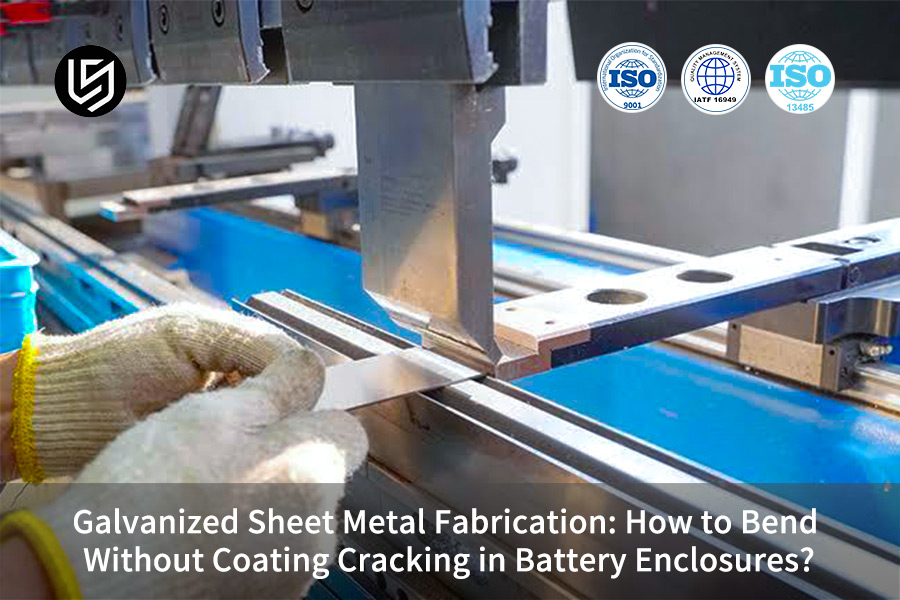
Why Trust LS Manufacturing's Sheet Metal Fabrication Service For Battery Enclosures?
Expert sheet metal fabrication is key in maintaining the quality of bent battery enclosures. LS Manufacturing is well equipped with comprehensive capabilitiesfrom process R&D to large-scale productionfacilitating regular supply of very tightly sealed structural parts without any coating cracking.
From my three months of elemental testing on galvanized sheet bending plus our team's joint experience in more than a dozen new energy projects, the biggest reason for zinc layer cracking is often not the bending process itself but missing the correct blanking and nesting steps beforehand. Most suppliers pay attention only to the bending machine tonnage while neglecting microscopic factors like grain orientation, heat-affected zones, etc. which will eventually cause failures of batch airtightness tests.
The ASTM B117 standard states, salt spray testing necessitates uninterrupted exposure of the sample to determine the corrosion resistance of a metal coating.
We strictly follow this standard, and that means, each batch of bent samples is subjected to a 720-hour neutral salt spray test to confirm that no red rust is present at the bend area, so complying with the corrosion resistance requirement for battery enclosures used outdoors over a long time. All the factory process parameters have been checked and approved for mass production, which also guarantees the consistency of the results.
Proper zinc layer protection is essential for the long-term reliability of battery enclosures. You can contact our engineering team to obtain the complete process white paper, access the full parameter matrix for preventing bending cracks, and gain in-depth insight into the sheet metal fabrication solutions tailored to your project.
Why Does The Zinc Layer Peel During Galvanized Sheet Metal Bending Processes?
The main cause of zinc layer peeling when galvanized sheet metal bending is due to different tangential flow rates of the zinc layer and the steel substrate, as a result, when the tensile strain exceeds the fracture elongation capacity of 15%-25% on the outer surface, the interfacial shear forces lead to microscopic coating delamination or cracks.
Different Stress-Strain among Galvanizing Processes
- Hot-Dip Galvanizing (HDG): Coating thickness is 8-15 μm. Because of the iron-zinc alloy brittle interlayer, this type of coating is prone to intergranular cracks in galvanized sheet metal bending.
- Electro-Galvanizing (EG): Coating thickness is 3-5 μm Due to the uniform microstructure and absence of the brittle intermediate phase, this type has the best ductility and is the most fitting for the demanding forming of precision sheet metal fabrication.
- Zinc-Aluminum-Magnesium (ZAM): Aluminum and magnesium in the coating give highly effective cut-edge self-healing properties yet its formability is slightly less than that of electro-galvanized steel.
Failure Limits Per the Coating and Sheet Thickness
- 50 g/m² coating (single-sided): The strain limit to shear failure is 22% when a 2.0 mm sheet is bent by 90°.
- 90 g/m² coating (single-sided): Under the same circumstances, the strain limit to shear failure is 18%, i.e. the material becomes more prone to micro cracking.
- High-strength sheets with thickness 2.0 mm: These can develop thermal blistering and grain boundary sliding during bending. This way,in high tolerance sheet metal fabrication, It helps to allow for a larger bend radius (R-angle) compensation.
Internal test data shows that when HDG sheets with a 90 g/m² single-sided coating are bent at a radius of R=1.0T, the coating peeling rate is 2.3 times that of sheets with a 50 g/m² coating. This way, gears with thick coatings and high corrosion resistance must follow bend radius limits strictly.
Comparison of Bending Performance for Various Galvanized Coatings
| Coating Type | Single-side Coating Weight | Typical Thickness | Minimum Bend Radius (R) for 90° | Bend Neutral Salt Spray (No Red Rust) Duration |
| Electro-galvanized (EG) | 20–60 g/m² | 3–5 μm | 1.0T | 72–144 hours |
| Hot-dip Galvanized (HDG) | 60–120 g/m² | 8–15 μm | 1.5T | 360–720 hours |
| Zinc-Aluminum-Magnesium (ZAM) | 60–90 g/m² | 8–12 μm | 1.5T | 720–1440 hours |
| Zinc-Nickel Alloy | 10–30 g/m² | 2–4 μm | 0.8T | 144–288 hours |
Figure 1: Close-up of a worker's gloved hands positioning a galvanized metal sheet on a bending machine.
How Can a Custom Sheet Metal Fabrication Supplier Calculation Optimize V-die Parameters?
Professional custom sheet metal fabrication supplier is very careful in optimizing V-die parameters. For instance, LS Manufacturing has replaced the traditional V=8T formula with a floating compensation method V=(9T~11T)+R, which has got rid of zinc coating damage caused by compressive stress.
Matching Matrix for V-die Opening Parameters vs. Sheet Thickness
This table indicates the matching parameters for V-die openings for sheet thickness, it is a main quantitative reference for custom sheet metal fabrication supplier in optimizing bending processes for automotive sheet metal components.
| Sheet Thickness | Standard V-Opening (V=8T) | Optimized V-Opening Range | Punch Tip Radius | Zinc Coating Flaking Rate (Mass Production) |
| 1.5mm | 12mm | 13.5–16.5mm | R2.0 | <0.1% |
| 2.0mm | 16mm | 18–22mm | R3.0 | <0.1% |
| 2.5mm | 20mm | 22.5–27.5mm | R3.5 | <0.2% |
| 3.0mm | 24mm | 27–33mm | R4.5 | <0.3% |
Die Structure Optimization to Prevent Crack
- Optimizing the edge radius of V-opening: Changing the standard R0.5 edge by grinding to R2.0 transforms sliding friction to rolling resistance and thereby makes scratches 65% less probable.
- Two layers of polyurethane flexible pad: It buffers local compressive stress and, when used with a 10T V-groove, can achieve the effect of coating crack prevention bending.
- Comparison of different high-compressive stress cases: Only 12% zinc coating flaking rate is observed with the V=6T layout that is because of this appropriate for producing standard industrial sheet metal structural elements for which the appearance and corrosion resistance are not primary concern.
In case symmetrical scratches occur on the zinc coating on both sides of the V-opening during mass production, mainly inspect the V-opening edge chamfer for wear. Regrinding the radius fixes the problem without the need for a complete die replacement and the result is 80% less expenditure on maintenance.
Proper V-die parameters are crucial for protecting the zinc coating. If you are unsure whether your current die parameters suit the workpiece, contact us for a free DFM assessment, and our custom sheet metal fabrication experts will optimize the forming process for you.
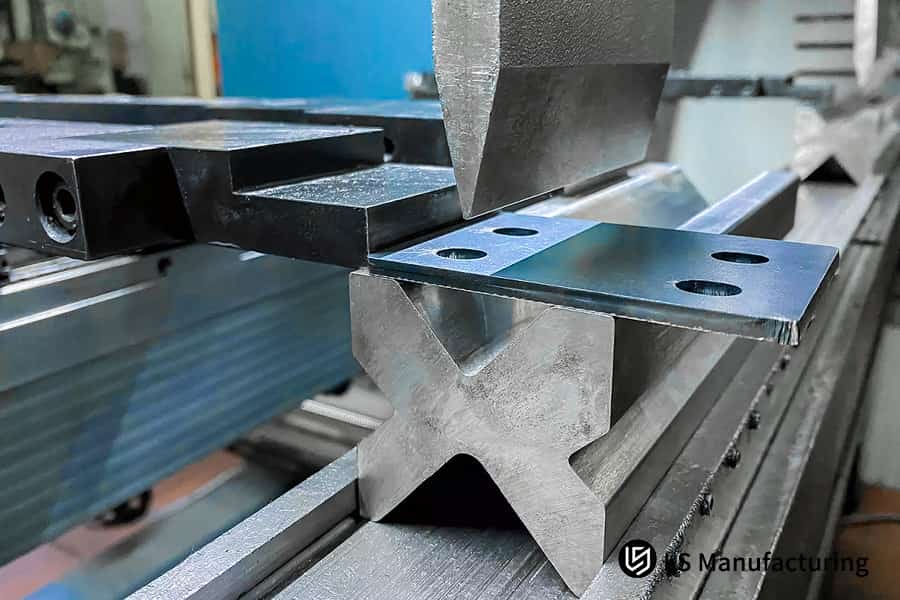
Figure 2: Close-up of a press brake machine bending a galvanized steel component with an X-shaped support.
Why Must Your Battery Enclosure Fabrication Avoid Rolling Grain Alignment?
Battery enclosure fabrication must avoid aligning bend lines parallel to the rolling grain, parallel alignment often leads to continuous cracking. Maintaining a 90° ± 5° angle between the bend line and the rolling grain maximizes the material's shear toughness.
Impact of Rolling Direction on Stress Limits
A comparison of material properties based on bending direction follows, this serves as a core reference for nesting design in battery enclosure fabrication and a fundamental process guideline for battery-grade sheet metal fabrication.
| Angle between bend line and rolling direction | Yield Strength | Elongation at Break | Coating Cracking Probability | Recommended Grade |
| 0° (Parallel) | 280 MPa | 18% | >45% | Not recommended |
| 30° | 265 MPa | 22% | 25% | Acceptable for non-primary bends |
| 45° | 250 MPa | 26% | 12% | Suitable for secondary bends |
| 90° (Perpendicular) | 230 MPa | 30% | <5% | Mandatory for primary bends |
Optimization Strategies for Nesting in Complex Multi-directional Bending
- 45° Nesting Method: A uniform 45° layout is adopted to balance bending performance in all directions when it is impossible to have all bends aligned perpendicular to the rolling direction.
- Material Utilization Compromise: Approximately 3% of material utilization is compromised to get a 20% increase in the total coating pass rate.
- Secondary Bending Bends Priority: The main bend of the long side of the battery casing must be rolled perpendicularly. This is a basic rule for ensuring coating qualification rate in galvanized component manufacturing and also applies to the batch production control of mass-production sheet metal fabrication.
Once the nesting is finished, forming simulation verification must be done to make sure that coating strain at all bend locations is still within safe limits.
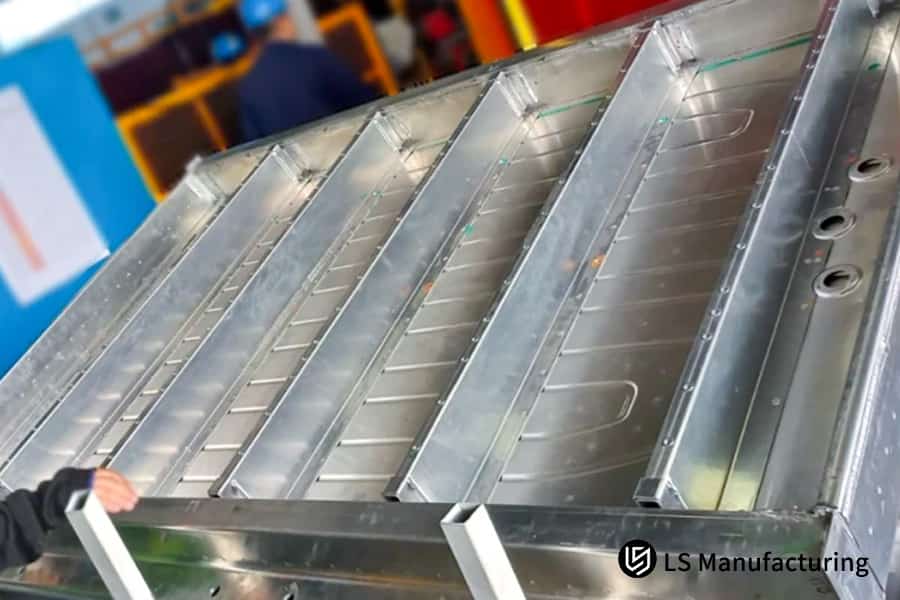
Figure 3: Stainless steel battery enclosure frames arranged on a workbench in a manufacturing facility.
How To Neutralize Laser-Cut Hardened Zones In Sheet Metal Fabrication Service Projects?
Sheet metal fabrication service need to take laser cut hardened areas into consideration, the Heat-Affected Zone (HAZ) at the edge is 0.15 mm wide and can be as hard as HV450. If these zones aren't trimmed or ground after the operation, they're quite likely to cause tearing of the edge through the thickness during bending.
Variation in Cut-Edge Quality Based on the Cutting Method
- Precision Blanking: Thanks to the absence of a HAZ and a fine grain structure, the cut edge quality is highest with the least chance of bending cracks. But, tooling costs are elevated, and the time taken for changeovers is lengthy.
- Oxygen Laser Cutting: The cutting process creates a thick oxide layer on the edge and the HAZ is wider than 0.2 mm, the material is very brittle after the cutting. Because of this, it is not a good option for galvanized parts that require bending.
- High-pressure nitrogen laser cutting: Generates a thin oxide layer and a Heat-Affected Zone (HAZ) in a range of 0.15 mm length. This is the current standard method of blanking galvanized sheet metal and is most often used in the factory blanks for precision sheet metal fabrication.
Standardized Process Specifications for HAZ Removal
- Bending stress concentration zones with cut edges: Should be ground to a depth of 0.2 mm with either an automatic deburring machine or manual methods, this is an essential step in the preparation process in coating crack prevention bending.
- Straight-edge zones that are not bending: Just deburring is enough, the thin oxide layer can be left to maintain a balance between processing efficiency and cost.
- Quality control standards: Bottom-line hardness after grinding should be under HV220 so that edge brittle tearing does not occur during bending, because of this supporting high-volume sheet metal fabrication batch quality stability requirements.
Internal test results show that when the residual HAZ is over 0.18 mm, the probability of edge cracking during bending is tripled. That's why, It helps to follow the requirements of grinding depth when producing precision parts.
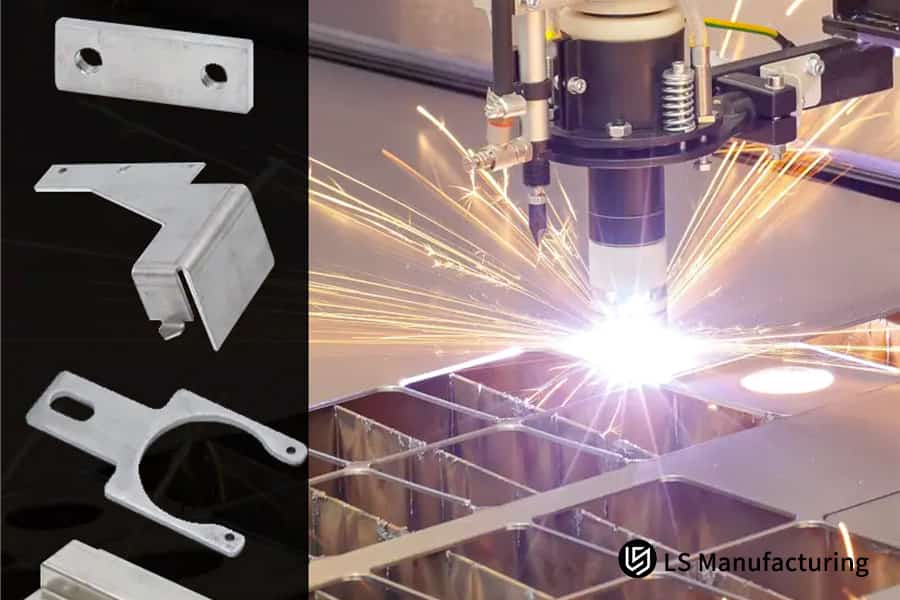
Figure 4: CNC laser cutting machine in action with sparks flying.
Can Non-Marking Dynamic Dies Achieve Zero Coating Defect In Galvanized Battery Enclosure Bending?
Non-marking dies make possible galvanized battery enclosure bending with zero coating defects. Hard steel dies have both indent and zinc flaking issues, making the change either to dynamic lower dies or a 0.5mm fluoroplastic protective film can entirely eliminate zinc coating detachment.
Comparison of friction and stress models for the two die types
- Fixed V-die: Dominantly sliding friction, a die surface roughness of Ra 0.8 tends to scratch the zinc layer leading to the risk of coating flaking.
- Rotating non-marking lower die (Rolla-V): Dominantly involves rolling contact with approximately zero sliding friction, this is the main tooling solution for zero coating defects in galvanized battery enclosure bending.
- Fluoroplastic protective film solution: Modification costs are less than those of dynamic dies, fit for small-to-medium batch production of high-precision parts and can meet flexible manufacturing requirements of small batch sheet metal fabrication.
Process parameters that are the basis of non-marking forming
- Die surface treatment: Nano-level ultra-precision polishing to Ra 0.2μm to reduce scratching of the zinc layer by microscopic surface asperities.
- Lubrication strategy: Extreme-pressure, plant-based drawing lubricant without drying residues that would interfere with process of subsequent coating.
- Precision assurance: Dynamic dies bend angle accuracy to ±0.5° can fully meet assembly tolerance for battery enclosures in galvanized steel forming services.
Based on our real-life experience with commercial EV battery explosion-proof enclosure projects, dynamic dies coupled with ultra-precision polished surfaces have completely removed concerns of high-end customers about cosmetic defects and even salt spray pitting corrosion.
Non-marking forming technology significantly improves product aesthetics and corrosion resistance. If you would like to understand the investment and ROI of upgrading to non-marking dies, please contact our engineering team for a free cost analysis and to find the optimal galvanized battery enclosure bending solution for your project.
What Are The ASTM A780 Repair Thresholds For High-Standard Galvanized Component Manufacturing?
When it comes to galvanized component manufacturing of high standards, we follow ASTM A780 standard very closely for coating repair limits and perform micron-level fusion zinc-rich coating repairs (with 95% solids content in zinc) on-site.
Grading and Determination Criteria for Plating Defects
- Sub-micron interference fringes - No exposure of base material, acceptable as is without additional repair.
- Peeling off layer of zinc only - Still no exposure of base material. Can be repaired by a zinc spray. This is a common defect that is repairable and occurs mostly in heavy-duty sheet metal manufacturing.
- Long deep cracks in the base material - Base material is exposed and it is a defect that needs to be scrapped.
- A cross-hatch adhesion test is done after repair and a Grade 0 rating is needed to consider repair acceptable.
Standardized restoration process
ISO 1461 states that the spot thickness of the hot-dip galvanized repair coating must not be less than the minimum thickness that was specified for the original coating.
In our repair work, we take great care of the final total coating thickness so that the resistance to corrosion of the repaired material is the same or better as that of the original one. Usually, this is how the work is carried out:
- Surface preparation: Pneumatic wire brushing of stainless steel is hard enough to raise the surface slightly and at the same time, it removes any loose zinc and oily surfaces.
- Zinc layering: Spraying is done in 3 passes to ensure the surface is covered completely with no area missed.
- Cold fusion curing and check for acceptance: Final total coating thickness after repair must be ≥85μm and the part must be able to pass the adhesion test before it can be released for sale. This is a very important step in quality control for custom sheet metal fabrication supplier.
Why Choose LS Manufacturing As Your Premium Galvanized Steel Forming Service Partner?
High-quality galvanized steel forming service is through a stable and precise batch reproduction in the 0.1mm range through 150T-400T servo press brake machines.
Main Hardware and Digital Solutions
- Servo Bending Machine Cluster: spans the range of tonnage from 150T to 400T and is equipped with WILA crowning systems. This cluster with an angular precision at ±0.5° is the core hardware basis of galvanized steel forming service.
- Intelligent Thickness Feedback: It changes the ram depth automatically to changing input material thickness of 0.05mm so that over-bending leading to micro-cracking is eliminated.
- Continuous Pressure Monitoring: Operation is stopped automatically if force bending anomalies are found so that batch-wide quality defects are prevented.
End-to-End Product and Delivery Integrity
- 100% Poka-yoke (error-proofing) visual checks and flaw detection are performed in the whole process, the factory defect rate is very low and of industrial-grade PPM levels.
- Print-to-Assembly Delivery: Workpieces can be used for assembly directly after delivery so no rework or adjustments are necessary on the part of the customer.
- Vertical Industry Focus: We built a high-standard sheet metal fabrication delivery system covering the whole end-to-end process for customers dealing with high-reliability productslike the service robots and electric vehicles.
- All shipped part are provided with material certificates and inspection reports so that third-party re-inspection and traceability are supported.
How LS Manufacturing Prevented Sealing Failure in a Custom Galvanized Battery Enclosure Bending Project for Commercial EV Battery Packs?
LS Manufacturing helped a commercial electric vehicle (EV) client with a full process optimization project to make galvanized battery enclosure bending. The effort totally resolved the leakage problems due to bending battery enclosures. Also, the project validation cycle was drastically reduced.
Customer Challenge
The R&D team of a commercial EV company was prototyping explosion-proof power battery enclosures made of 2.5mm DX54D+Z galvanized steel. They found micro-cracks hidden inside the bend radii that were supplied by their previous vendor. When sprayed with high-pressure water, all units leaked (IP69K), which is a common issue in EV-grade sheet metal fabrication. As a result, the new vehicle launch was delayed.
LS Manufacturing Solution
First, the manufacturing engineering team created a perfect DFM (Design for Manufacturability) plan within 24 hours after getting the blueprints:
- Changed to a 90° staggered layout of precision nesting and trimming strategy. After the fast 5-axis fiber laser cutting, a grinding operation with the help of flexible lattice abrasive wheel was introduced to eliminate the 0.2mm heat-affected zone (HAZ) and related thermal hardening.
- For the bending part, a nano-polished, full-radius (R2.5) elongated arc punch with a conventional V=22 reversible polyurethane mark-free die was used, as a countermeasure to the punch indentation, a protective strip was applied to reduce the localized surface stress by 70%.
- The bending sequence and the blank-holding force parameters were optimized at the same time to avoid the secondary bending operations from damaging the forming areas again.
Results and Value
The first 150 pieces of custom structural components met the tight profile tolerance of 0.15mm. Besides, the test results showed that no red rust was detected after 720 hours of continuous 5% salt spray testing and micro-cracks were 0% during flaw detection. These led to the establishment of a process model that can be replicated for large-scale sheet metal fabrication. The client got back vehicle safety certification within only two weeks 60% shorter than prototyping lead time with local European or American alternatives. Also, the customer eventually placed an order of 5,000 units.
If your project is facing challenges such as leakage at battery casing bends or failure to meet salt spray test standards, you can submit your 3D drawings via our expert review channel. Receive a tailored DFM analysis and quote to find a galvanized steel forming solution that meets your specific needs.

FAQs
Q1: What bending radius is the absolute minimum to avoid the galvanized coating cracking when bending galvanized sheet for battery casings of new energy?
For the normal battery pack sheet metal of 1.5mm-2.5mm thickness, the inner bending radius (R) has to meet the requirement R≥1.5T (one and a half times the sheet thickness) at a minimum. When dealing with high-strength structural steel, this radius has to be increased over 2.0T to have a good effect on reducing the coating cracking risk.
Q2: Which one is better bending performance of electro-galvanized (EG) steel or hot-dip galvanized (HDG) steel when making battery enclosures?
The answer is yes. EG steel has a quite uniform coating thickness (usually 35 μm) and the iron-zinc alloy complex, brittle interlayer of HDG steel is totally absent in it. As a result, bending ductility in it is very high, and this is why it is a great choice for battery enclosure forming with high accuracy.
Q3: How can the buildup of zinc nodules and dross on the die surface be avoided in the mass production of galvanized battery enclosures?
Using a high-frequency polishing mold (Ra<0.2) and adding a Teflon flexible anti-indentation isolation strip, along with a sulfur-free, low-viscosity, volatile stamping lubricant, can completely prevent zinc powder from adhering and maintain a stable molding surface quality.
Q4: To limit processing costs, is it okay for a custom sheet metal fabrication supplier to not do the grinding step after fiber laser cutting?
It would be a big mistake to leave out this step. The laser-cut edge results in a very hard and brittle martensitic microstructure which is most likely to cause stress-induced tearing when bending. That's why secondary grinding is a very important step to ensure perfectly sealed enclosures and must not be left out.
Q5: What factors do high-standard galvanized component manufacturers consider when deciding if micro-cracks need to be repaired or lead to scrapping the part?
It is a must to comply with AWS and ASTM A780 standards. Mechanical scratches that are highly visible or coating delamination can be repaired by spraying high-purity zinc, But any micro-crack, which is going through to the base material, leads to scrapping the part without further processing.
Q6: What methods are used to limit bending springback to achieve angular accuracy in the manufacturing of galvanized steel structural components?
A single forming operation is capable of achieving ±0.5° accuracy by use of press brakes that are fitted with digital precision angle compensation modules (for example, WILA crowning systems) and entering the material's specific elasto-plastic rheological curve during the prototype phase. That means, mass production runs will have excellent consistency.
Q7: Is forming Zinc-Aluminum-Magnesium (ZAM) coated sheets included in your sheet metal fabrication service?
Yes. ZAM sheets provide the best self-healing corrosion resistance even when the edges are cut. We are very familiar with this environmentally friendly material and have been able to make the stable processes mature by supplying more than 450,000 formed structural components for the automotive and energy storage sectors.
Q8: Is it possible to get a tailor-made DFM evaluation aimed at eliminating coating cracking due to forming before placing an order?
Of course. Any client who is making a formal inquiry can get a free DFM evaluation report signed by senior engineers and based on forming simulations only by uploading drawings. It will let you determine and prevent possible technical and delivery risks before going ahead with mold making or material cutting.
Summary
Producing a galvanized enclosure with a perfect, crack-free coating is not just a matter of running press brakes at high tonnage, it's actually a thoughtful blend of several factors like optimized nesting, the removal of laser hardened zones, and accurately set up tooling without any marking. Thanks to the precision hardware know-how of the Dongguan team and effective quantitative parameter control, we have kept battery enclosure defect rates yet to the level of industrial PPM, so allowing clients to pass stringent system tests with great speed.
Hidden micro-cracks in coating should not be the cause of mass production delays of your next-generation new energy battery packs. If you have complex enclosure designs with multi-directional radii or you are struggling with airtightness leakage, you can send your 3D models to our review team. We will carry out a professional, thorough DFM (Design for Manufacturability) analysis of your project which includes spring-back compensation, tooling selection and zinc-layer protection strategies and deliver it to you within 24 hours. We will do this analysis free of charge to ensure smooth and efficient implementation of your project.
📞Tel: +86 185 6675 9667
📧Email: info@lsrpf.com
🌐Website:https://lsrpf.com/
Disclaimer
The contents of this page are for informational purposes only.LS Manufacturing servicesThere are no representations or warranties, express or implied, as to the accuracy, completeness or validity of the information. It should not be inferred that a third-party supplier or manufacturer will provide performance parameters, geometric tolerances, specific design characteristics, material quality and type or workmanship through the LS Manufacturing network. It's the buyer's responsibility.Require partsquotation Identify specific requirements for these sections.Please contact us for more information.
LS Manufacturing Team
LS Manufacturing is an industry-leading company. Focus on custom manufacturing solutions. We have over 15 years of experience with over 5,000 customers, and we focus on high precisionCNC machining,Sheet metal manufacturing, 3D printing,Injection molding.Metal stamping,and other one-stop manufacturing services.
Our factory is equipped with over 100 state-of-the-art 5-axis machining centers, ISO 9001:2015 certified. We provide fast, efficient and high-quality manufacturing solutions to customers in more than 150 countries around the world. Whether it is small volume production or large-scale customization, we can meet your needs with the fastest delivery within 24 hours. choose LS Manufacturing. This means selection efficiency, quality and professionalism.
To learn more, visit our website:www.lsrpf.com