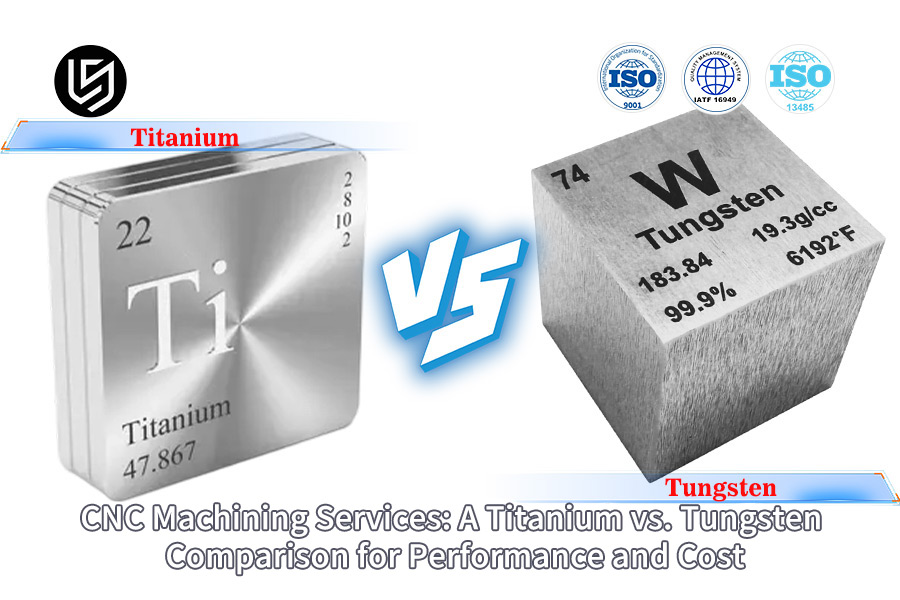
CNC 加工服务:钛与钨的性能和成本比较

blog avatar

作者:

Gloria

已发布
Jan 08 2026
  • CNC加工

跟着我们

titanium-vs-tungsten-whats-the-difference

数控加工服务对于指导钛与钨的选择至关重要,这是一项关键的技术和经济决策。它涉及多维权衡:钛的强度重量比和耐腐蚀性与钨的密度和热弹性。这种选择还必须平衡材料特性与加工挑战(例如钛的粘性和钨的硬度),这直接影响模具、生产时间表和项目总成本。

问题源于传统的思维方式,忽略了评估成本和性能所需的整个框架。人们担心材料成本过高,而制造成本变量过少。因此,拥有成本出乎意料地高。本文将借鉴 LS Manufacturing 过去二十年有关难切削材料的知识,并为材料选择标准创建基于科学的解决方案,实现成本与性能的最佳平衡。

CNC 加工服务:钛与钨的性能和成本比较

钛与钨:快速参考表

<正文>

数控加工为飞机和生物医学应用带来更好的强度重量和耐腐蚀品质。 它为切削工具和防护设备提供了极高的硬度和密度,尽管它又重又脆,因此也相对不太适合其他用途。选择的材料取决于是否必须做得更轻、性能更好,或者提供更高的密度和耐磨性。

为什么信任本指南? LS制造专家的实践经验

本手册是根据超过 15 年在关键机器零件加工方面的实践经验编写而成的,因此是有效的,因为使用钛和钨加工的零件多得数不胜数。 总共加工了 50,000 多个零件,这些零件性质复杂,因为材料的选择不可能是学术性的。

所提供的技能组合专门针对以钛和钨权衡为代表的领域。 涉及与航空航天结构相关的钛加工,其特点是强度重量特性作为绝对要求,而加工钨的组件形式则涉及其密度和热特性相关特性的绝对能力,正是在这个直接知识技能领域,我们作为供应商为您提供规格表中未包含的任何领域的实用指导。

为了确保我们的建议达到最大程度的保真度,我们系统涉及的材料流程严格遵守由受人尊敬的实体制定的行业批准的规范,例如美国表面处理协会 (NASF)铝协会 (AAC)。这样做的理由是确保我们了解行业内最新的技术最佳实践,从而使我们能够提供最佳质量的推荐结果。

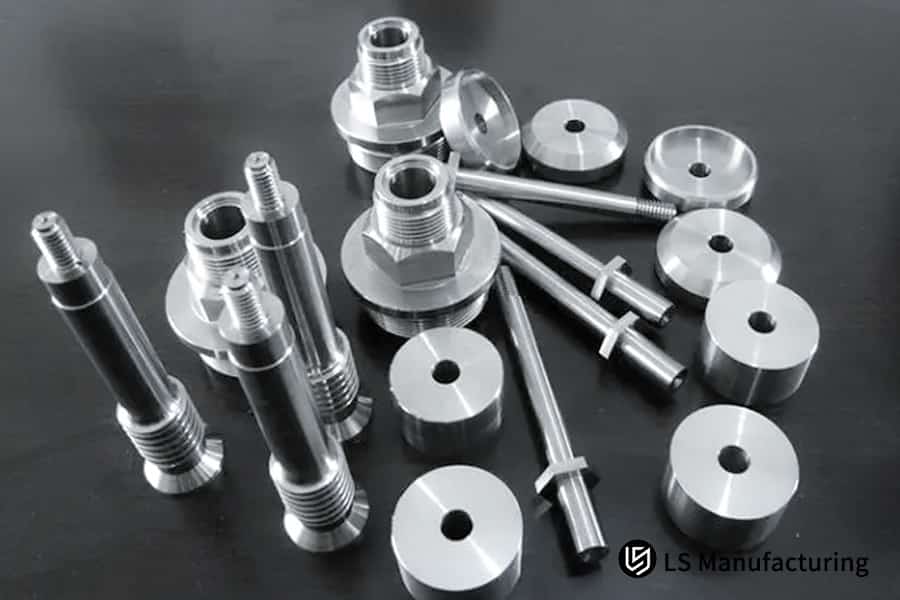
LS 数控钛和碳化钨的最佳材料选择制造

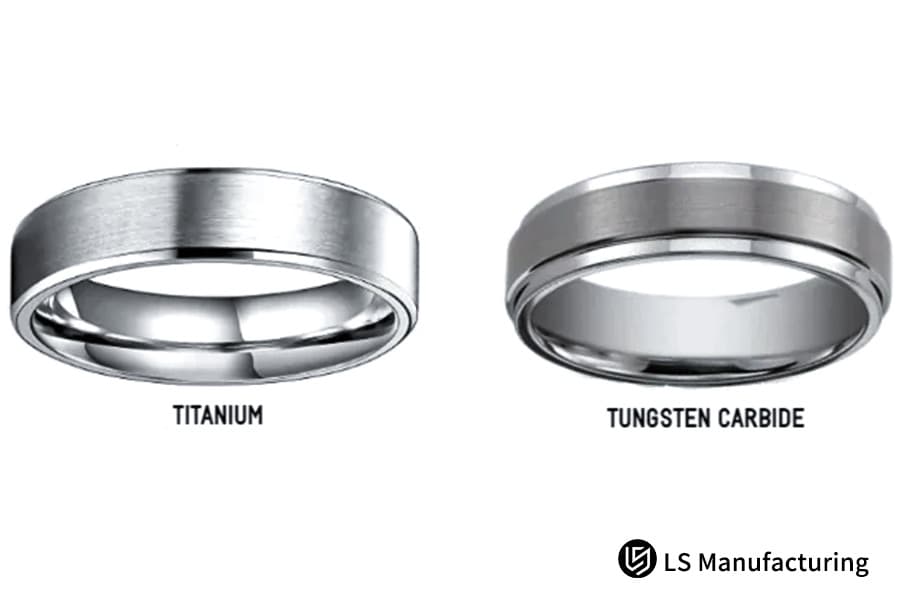
图 1:LS Manufacturing 选择钛和碳化钨加工的最佳材料

数控加工中钛合金和钨合金的核心区别是什么?

数控加工中的钛与钨​ 通常基于材料比较钛的优点包括优异的强度重量比、高耐腐蚀性。钛的缺点是容易磨损。钨的优点包括密度大、熔点非常高。这种材料比较​直接影响加工策略、刀具选择和总体生产成本。

参数 钛金 钨丝
密度 (g/cm3)​ 4.5 19.3
熔点 (°C)​ 1,668 3,422
拉伸强度(MPa) 900-1,200 1,000-1,500
硬度 (HV) 250-350 300-500
导热系数(W/m·K) 6.7 173
可加工性 困难 极其困难
成本(原材料) 非常高
耐腐蚀 非常好
粗细​ 浅色 非常重
应用程序 航空航天、医疗、海洋 切割工具、装甲、电气
<正文> <块引用>

总而言之,钛与钨加工的关键是选择不同的方法。 由于钛的加工硬化特性,我们必须使用锋利的切削工具和足够的冷却系统。 针对钨的硬度和高耐磨性的特点,我们必须使用特殊的硬质合金刀具和较低的切削速度。通过这个材料比较,我们可以看到,我们必须根据具体的应用条件和加工条件来选择合适的材料。

获取报价

数控加工时如何选择钛和钨?

如何选择钛钨​用于数控加工需要根据具体应用系统地材料选择要求材料选择的过程涉及平衡力学、环境铁艺和成本。选择正确的材料会影响制造过程中零件的功能。

属性

钛 (Ti-6Al-4V)

钨(纯)

密度

4.5 克/cm3

19.3 克/cm3

熔点

1,668°C

3,422°C

硬度(维氏)

150-200 HV

343 HV

拉伸强度

950-1100 MPa

1510-1650 MPa

热导率

低(6.7 W/m·K)

中等(173 W/m·K)

可加工性评级

中 (50%)

低 (40%)

<正文> <块引用>

总而言之,如何选择钛钨​取决于应用需求的优先顺序。这还包括对涉及使用钛来实现轻量化和耐腐蚀性的应用的重点,以及涉及高温和密度的应用。

数控加工如何平衡钛和钨的成本?

具有成本效益的数控加工需要充分考虑材料加工。价值工程分析用于在初始投资和未来绩效之间提供经济平衡,从而实现最低的生命周期成本

  • 材料选择策略:基于较高的强度重量比,建议在飞机上使用钛合金。它价格昂贵,但由于重量较轻,可节省大量燃料。因此,在飞机的某些部分它是最经济的。
  • 加工优化:钨合金更适合生产高温模具,而耐磨性是一个严重的问题。尽管由于所涉及的材料和加工过程,该过程的初始化成本较高,但从经济平衡来看,该过程更为可行。
  • 生命周期成本分析:数控加工的成本效益根据产品的生命周期进行评估。原材料的耐用性、通过数控加工加工原材料的能力以及生命周期成本后的产品回收均被考虑在内。
<块引用>

对于成功且经济高效的 CNC 加工,关键在于采用整体方法,其中制造商应确保材料特性与要求相平衡。他们可以通过专注于通过价值工程和生命周期成本分析实现经济平衡来制造高性能产品

LS Manufacturing 选择经济高效的 CNC 加工材料指南

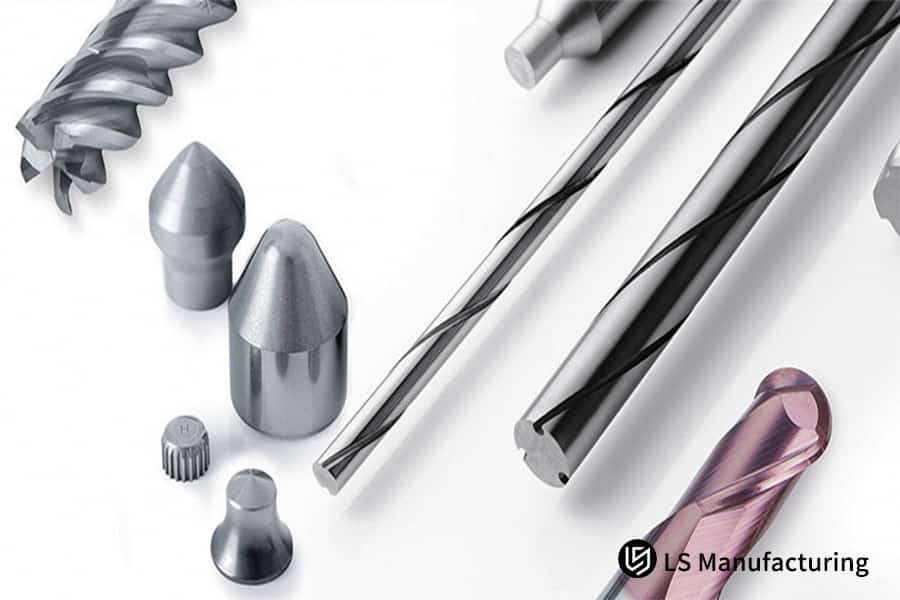
图 2:LS Manufacturing CNC 制造经济材料选择指南

钛和钨材料的关键性能参数如何影响零件设计?

钛钨属性每种材料都不同,其性能参数影响着设计。工程师必须了解以下参数的重要性,以便充分利用材料进行设计。每种材料都有自己的优点。

  1. 钛合金设计注意事项:尽管其屈服强度评估值为900MPa,密度评估为4.5g/cm3,但钛合金仍应可利用其轻量化设计特性,这不会影响其性能结构,因为它对于航空航天产品来说是一个有吸引力的特性,要求其重量轻且具有更长的使用寿命。
  2. 钨合金设计应用:由于与钨材料的所有其他性能相比,它具有最高的密度19g/cm3和最高的导热率,因此基于最高的质量浓度以改善散热,因此具有最多的应用。 钛钨特性对该材料的应用具有以下好处:防辐射、重量轻、耐热模具
  3. 性能参数集成:材料选择对设计的影响远远超出任何机械性能,必须考虑可制造性和光洁度要求。 工程师必须检查可加工性、可焊性和膨胀系数,以确定所需材料是否满足这两个要求。
<块引用>

在设计中选择使用钛合金和钨合金时必须始终小心谨慎。这是因为每个性能参数都需要深入分析才能获得最佳设计优势。 钛钨性能设计影响方面的知识将在考虑设计中最具挑战性的需求的新的和创新的设计中进行。

钨合金数控加工需要哪些特殊工艺技术?

钨加工​带来了独特的挑战,需要专门的方法来实现精度和效率。该材料卓越的硬度和高熔点需要专门的特殊工艺和全面的技术支持来克服制造限制并提供高质量的组件。

  • 先进刀具解决方案:钨加工中,切削刀具必须具备承受材料硬度的能力。这一要求产生了对PCD 工具的需求。与标准硬质合金刀具相比,它确保了刀具的硬度水平更高。
  • 冷却和润滑系统:高压冷却系统被认为是钨加工工艺中的一项突出的专业技术。 在冷却系统中,冷却液以高于 1000 psi 的压力压入加工区域。 此过程有助于散热和去除切屑。通过使用此工艺,可以防止加工硬化。
  • 工艺参数优化:由于技术支持包括低速、高进给和浅切削深度下的工艺参数优化,因此工艺参数优化有助于最大限度地减少加工操作过程中产生的热量。因此,可以实现高效的钨加工操作和更长的刀具寿命。
<块引用>

要在材料上成功进行钨数控加工,必须有一个总体计划,其中涉及使用先进设备提供的知识。 特殊工艺系统的执行将确保该行业能够应对材料性质带来的挑战。

如何克服钛合金数控加工中的加工硬化问题?

在使用 CNC 技术进行加工的过程中,与 钛 CNC 加工相关的加工硬化过程带来了一些挑战。与钛相关的加工硬化会影响材料,从而对工具造成严重磨损。

  1. 温度控制策略:温度控制对于成功进行钛 CNC 加工且不引起加工硬化至关重要。由于导电性不足,在加工过程中刀具边缘会出现热点。因此,控制温度会低于临界温度,防止加工过程中出现加工硬化。
  2. 先进润滑解决方案:微量润滑 (MQL) 技术的重要成果之一是减少了钛金属生产过程中涉及的加工硬化过程的影响。其结果是提高表面质量​,减少刀具磨损并延长刀具寿命。
  3. 工艺参数优化:涉及变分参数的切削工艺对于钛 CNC 加工至关重要,这样才能取得成功。通过允许切削速度、进给率和切削深度的变化,可以消除过热,从而保证成功的表面光洁度,表面粗糙度测量为Ra 0.4微米,而不必担心加工硬化。
<块引用>

鉴于钛数控加工中遇到的加工硬化挑战,采取包括温度管理、实施当前润滑实践和优化机器参数在内的整体策略非常重要。考虑到上述所有因素后,在不影响效率的情况下,很容易在加工中获得改善的表面质量

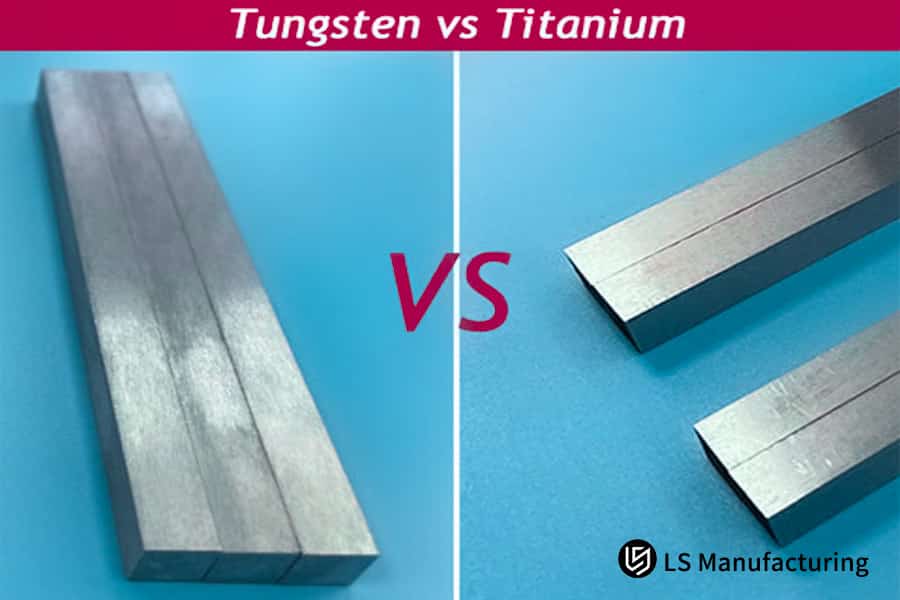
titanium vs tungsten

Figure 3: CNC machining material comparison titanium VS tungsten by LS Manufacturing

How To Schieve The Optimal Cost-Performance Ratio When Selecting Titanium-Tungsten Materials?

Optimal material selection​ between titanium and tungsten requires a systematic approach that balances multiple competing factors. In the best possible cost-effectiveness scenario, there would need to be an overall investigation of the factors in an attempt to unlock the maximum possible potential of the respective material while incurring the lowest possible costs.

Multi-Criteria Decision Framework

Establishing a multi-objective decision model is essential for optimal material selection. The structure of the decision involves a wide array of qualitative as well as quantitative criteria such as strength requirements, resistance to the environment, workability, as well as overall future costs. Based on the criteria for making a decision in the model, the engineers can use the allocation of certain weights to the decision variables to obtain the decision analysis for the selection of the two materials in question.

Quality Function Deployment (QFD) Analysis

QFD methodology provides a structured approach to translate customer needs into technical specifications for optimal material selection. This method helps in attaining the technological requirements for the utilization of the material based on the requirements of the customers. The technological analysis consists of the aspects associated with the parameters that include strength to weight ratio, heat resistance, corrosion resistance, and durability.

Total Cost of Ownership (TCO) Evaluation

Optimal material selection is even more than just accounting for initial material cost and must address all factors in the complete product life cycle. In fact, total cost of ownership analysis, and even what is labeled as full life cycle cost approaches, include factors such as material cost, processing and machining expense, maintenance costs, and product disposal or recycling. For extreme conditions of use, the extended lifetime and improved reliability offered by high-end materials such as titanium and tungsten alloys will be well justified from a cost viewpoint.

<块引用>

Achieving optimal material selection​ requires a holistic approach that integrates technical performance, economic viability, and operational efficiency. A manufacturer, by means of suitable applications of decision-making techniques such as QFD analysis, will thus be in a position to devise appropriate comparisons among titanium alloys, tungsten alloys, etc., to arrive at a better value.

What Key Cost Factors Need To Be Considered When Selecting Materials For CNC Machining?

CNC machining materialsselection requires a comprehensive evaluation of multiple cost factors​ to determine the optimal total cost​ for manufacturing projects. Beyond the initial material purchase price, manufacturers must account for processing efficiency, tool wear, and waste management to achieve true cost-effectiveness.

Material Acquisition Costs

According to the cost of acquisition for this material would form the basis for calculation in the CNC machining materials. The material considered; for example, different alloys and material grades would have large variations regarding market costs. Other materials such as titanium and Inconel would give a higher cost than that given for materials such as aluminum and steel. Additionally, material form factors (bars, plates, blocks) and quantity discounts impact the per-unit cost, making bulk purchasing strategies an important consideration in total cost​ optimization.

Processing Efficiency Factors

Machinability directly influences production time and labor costs, representing a critical cost factor​ in material selection. The materials that possess desirable properties for chip removal and are not tough will require low speeds for cutting and will be machined easily. Those materials that are difficult to machine will be machined using lower feeds. It is to be noted that there are four grades for machinability.

Tooling and Equipment Wear

The rate at which tools are replaced is a cause of high cost factors in the CNC machining materials. Hard material translates to high wear and tear of tools, thus leading to high replacements and regrinding of tools. This not only adds direct tooling costs but also contributes to machine downtime for tool replacement, impacting overall production throughput and increasing the total cost​ per part.

Waste Management and Scrap Rates

Material use efficiency could also be an important determinant of the total cost influencing CNC machining materials. This is because of the fact that the underlying logic behind this would be to have a large amount of waste generated by materials with complex shapes. An equally valid standpoint to be taken into consideration, on the other hand, would be the recycling value of materials used in the manufacture of chips, as well as the dumping fee for hazardous materials.

<块引用>

Successful CNC machining materials​ selection requires a holistic approach that balances all cost factors​ to achieve the optimal total cost. Since all the factors associated with costs for material procurement, processing ability, tools for material processing, and even the disposal of waste material are taken together into consideration, certain important factors have emerged for material selection.

Comparing titanium and tungsten for CNC machining selection by LS Manufacturing

Figure 4: Precision titanium CNC machined parts on black background by LS Manufacturing

LS Manufacturing Aerospace Division: Engine Turbine Blade Material Optimization Project

LS Manufacturing successfully addressed a critical aerospace challenge by innovatively optimizing the material and structure of engine turbine blades. This breakthrough achieved a perfect balance between heat resistance and weight reduction, delivering exceptional performance improvements and significant cost savings for next-generation propulsion systems.

Client Challenge

The aerospace engine manufacturer was facing some problems in producing the turbine blades of this engine. Traditional nickel alloys are not suitable for weight reduction, and the laser sintering manufacturing process for pure tungsten alloys is costly. The client wanted an apt substitute to manufacture acceptable engine turbine blades concerning strength, weight reduction, and economic factors.

LS Manufacturing Solution

The breakthrough solution was proposed by LS manufacturing by the use of titanium aluminum matrix composites as the material alternative. Optimum machining parameters developed solely for this material were employed by them to address the required structural strength with optimum weight apart from employing five-axis simultaneous machining technology for this purpose. This solution proposed by the company is optimum in that it encompasses the best possible compromise between the structural strength and the weight of the material.

Results and Value

The result of the project has shown no less than excellence in all areas. The process of weight reduction for the turbine blades of the engine was improved by 35% while 20% improvement was achieved for the higher operating temperature. In addition to the above improvement, a reduction of 40% in the cost per unit from the processes employed was achieved in conjunction with the result of the above development from LS Manufacturing, obtaining the Technology Innovation Award from the client due to the capability of LS Manufacturing in aerospace component optimization.

<块引用>

In the area of innovation that arose as a result of the LS Manufacturing process in the optimization of material for the turbine blades in the engine, the requirements of the aerospace industry for their client were adequately met. LS Manufacturing efficiently utilized the optimal machinability of the new material for the greatest possible benefit to us, making them a significant player in the aerospace parts manufacturing industry.

Looking for the best value for performance to price for titanium and tungsten materials? Click here to receive your free processing evaluation.

GET OOTE

Analysis Of Application Trends Of Advanced Materials In High-End Manufacturing

Advanced materials transform high-value manufacturing, taking into account the trend which increases very quickly with the innovation driven by the amazing properties of advanced materials. New technology advancement in connection with the materials area is setting up the future development potential for manufacturing these materials.

Titanium Matrix Composites

In the area of advanced materials, the development of titanium matrix composites is one such significant achievement in terms of the intriguing property characteristics for higher-temperature and specific strength. The material has witnessed huge applications in the aviation sector as well as the biomedical field. The growing application trends​ in these sectors demonstrate the material's potential for future development​ in demanding environments.

Nano-Tungsten Alloys

Nano-tungsten alloys are emerging as a promising category of advanced materials​ with enhanced mechanical properties and thermal stability. Their unique microstructure enables improved wear resistance and dimensional stability under extreme conditions. These application trends​ are particularly relevant in defense, energy, and industrial tooling sectors, indicating strong potential for future development​ in high-performance applications.

Material Integration Technologies

The application of such different advanced materials in hybrid manufacturing technology would fall under one category, which might be prominent in the future. Hybrid manufacturing could be defined as the ability to combine different properties of materials in a single product. This would be highly beneficial in the future development of different technologies.

Sustainability and Recyclability

Environment is one of the most important considerations for application trends within the context of applications for a region that concerns advanced materials. The problem associated with recyclable composites and environmentally responsible production technology is the most important factor within the context of material selection.

<块引用>

The evolution in advanced materials also experiences a continuous shift in the high-value manufacturing segment from innovation application trends to further advancements in the future. With the increasing advancement in material technology, there is also a development of new opportunities regarding applications for achieving efficiency and sustainability.

FAQs

1. In what way are the processing costs of a titanium alloy different from those of a tungsten alloy?

The processing cost of the tungsten alloy, being 2 to 3 times the material and the titanium alloy costs, despite the above consideration, is dependent on product complexity.

2. In what respect is titanium more economical than tungsten when working in high temperatures?

In the temperature range below 500℃, the proposed material for the target is titanium alloy. In the temperature range above 500℃, the tungsten alloy needs to be used. Free-of-charge analysis of operating conditions

3. Which of them is more suited to prototyping for small batches?

In the design process, the first prototype design will be made using the titanium alloy material since the material is less expensive than the other materials.

4. How to measure the impact of material variation on the total cost?

Material, processing, and maintenance costs are just a few of the expenses considered when the use of our complete lifecycle cost analysis solution is involved.

5. How do you guarantee the delivery time of specialized materials?

We have also partnered with material suppliers to ensure that there is a supply of materials that are available in standard specifications as we await the delivery of materials in special specifications. This process takes 4 weeks.

6. Would it be possible for you to provide sample performance test reports?

In our company, we can issue to our clients a complete material certification and test report.

7. Which process validations are needed when treating new materials?

Three levels of validation are available to us, such as trial process validation, metallographic validation, and performance validation to ensure authenticity and accuracy in the new process.

8. In the machining difficult-to-cut materials, what are the methods to avoid the dangers of low quality?

To take out the defects, a quality control process was developed, and SPC, or statistical process control, was applied in pursuit of a quality level in stability.

摘要

By integrating state-of-art material selection methods along with material processing technology, it becomes possible to exploit the full capabilities of materials such as titanium and tungsten. In order to exploit the full benefits of their expertise in processing difficult-to-machine material work pieces, the company provides its clients with full turn-key solutions.

Please do not hesitate to contact us at LS Manufacturing if you require materials and we will be more than happy to perform a free material analysis and process plan on your project. Our team of experts will evaluate your project requirement based on your cost-performance analysis of materials and will devise a strategic process for you.

Obtain customized selection and processing solutions for titanium and tungsten materials, precisely balancing performance and cost!

<节类=“ybc-p”>
GET OUOTE
<节类=“ybc-p”>

📞电话:+86 185 6675 9667
📧邮箱:info@longshengmfg.com
🌐网站:https://lsrpf.com/

免责声明

本页内容仅供参考。 LS Manufacturing services 对于信息的准确性、完整性或有效性,不作任何明示或暗示的陈述或保证。不应推断第三方供应商或制造商将通过 LS Manufacturing 网络提供性能参数、几何公差、具体设计特征、材料质量和类型或工艺。这是买家的责任。 需要零件报价 确定这些部分的具体要求。请联系我们了解更多信息

LS 制造团队

LS Manufacturing 是一家行业领先的公司。专注于定制制造解决方案。我们拥有超过 20 年的经验,服务过 5,000 多家客户,专注于高精度 CNC 加工、钣金制造、3D 打印、注塑成型金属冲压,以及其他一站式制造服务。
我们的工厂配备了 100 多台最先进的 5 轴加工中心,并通过了 ISO 9001:2015 认证。我们为全球150多个国家的客户提供快速、高效、高质量的制造解决方案。无论是小批量生产还是大规模定制,我们都能以最快的24小时内交货满足您的需求。选择LS制造。这意味着选择效率、质量和专业性。
要了解更多信息,请访问我们的网站:www.lsrpf.com

订阅指南

Get a personalized quote now and unlock the manufacturing potential of your products. Click to contact us!

blog avatar

Gloria

快速原型制作和快速制造专家

专业从事数控加工、3D打印、聚氨酯浇注、快速模具制造、注塑成型、金属铸造、钣金加工和挤压成型。

Comment

0 comments

    Got thoughts or experiences to share? We'd love to hear from you!

    Featured Blogs

    empty image
    No data

    选择标准

    钛金

    关键应用

    密度

    4.5 g/cm³(轻质)

    19.3 g/cm³(非常稠密)

    航空航天与配重

    熔点

    1,668°C

    3,422°C(最高金属)

    喷气发动机与火箭喷嘴

    硬度

    ~6 莫氏

    8.5-9 莫氏硬度(硬质合金)

    结构零件与切削工具

    拉伸强度

    高达 1,000 MPa

    550-620 MPa

    高强度组件

    耐腐蚀性

    优秀(氧化层)

    良好(酸含量较低)

    海洋与工业

    可加工性

    好(特殊工具)

    差(EDM/钻石)

    复杂形状与简单形式