中文 (简体)



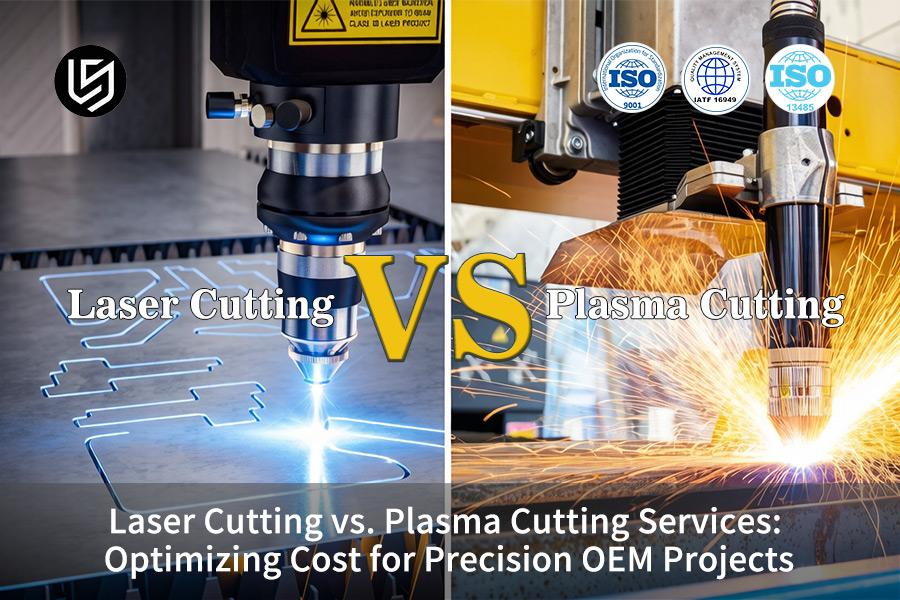
激光切割与等离子切割服务对于 OEM 项目的盈利能力至关重要,因为采购始于如何计算等离子切割成本,但发现很难权衡精度和 TOC。在20mm以上的板材或薄型精密零件中,错误的决策会导致尺寸问题,虽然等离子一开始更具成本效益,但其较宽的热影响区和斜角通过二次加工使成本增加30%以上。
通过 LS Manufacturing,我们为 OEM 提供超越基本金属切割的优化切割成本,利用12,000W 高功率激光与精细等离子的实时性能直接比较,以消除任何工艺谬误。通过本指南,您将了解每种技术背后的确切成本动态,并正面解决质量与预算的问题。
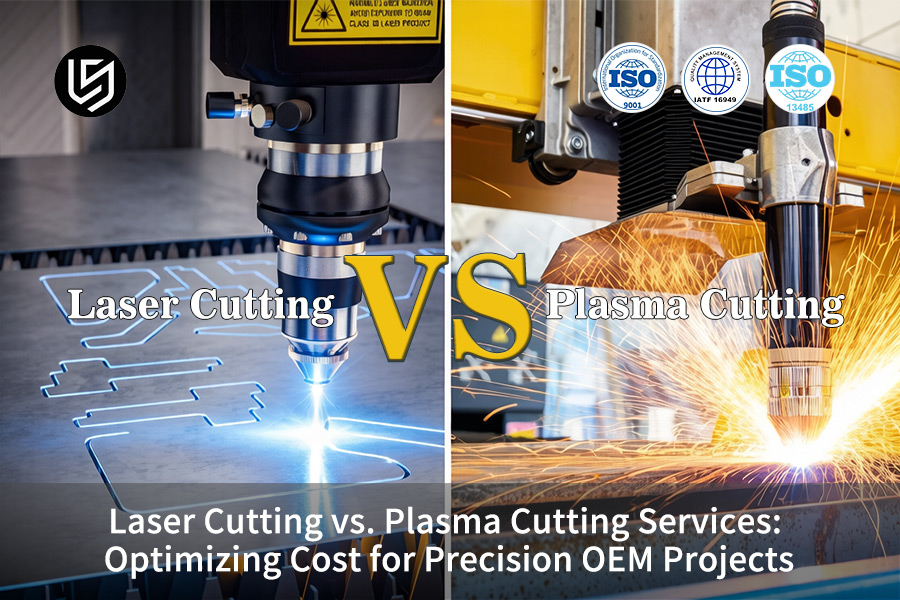
激光与等离子切割:OEM 成本优化指南
<正文>我们选择最佳的切割工艺,将您的项目成本降至最低。 我们将利用我们关于如何最大限度地提高效率和最大限度地减少浪费以获得最佳技术的知识来解决您的工艺选择困境,无论是激光切割还是等离子切割。根据我们的建议,您将在质量、交货时间和预算方面取得最佳平衡,以满足您的 OEM 制造要求。
为什么信任本指南? LS制造专家的实践经验
可以在网上找到许多关于激光切割和等离子切割的文章。但是这篇文章为什么值得你关注呢?我们是言行一致的专业人士。所有建议都经过测试并证明可以产生结果并符合行业标准,包括 TWI Global 提供的建议。
我们的专业知识位于切割精度至关重要的领域。每次操作都必须产生一个功能齐全的组件,无论是航空航天机身还是医疗设备的底盘。我们的经验还包括增材制造 (AM)的基材制备,使我们能够充分了解激光切割的精度需要在哪里以及等离子切割何时成为有价值的替代方案,从而帮助我们避免不必要的工程和质量风险。
这里讨论的所有方法都已被证明可以完美工作。我们知道如何避免与等离子切割斜角二次加工相关的额外成本,同时确保在使用20mm铝激光切割时获得无可挑剔的结果。我们提供所有来之不易的信息,以便您可以节省资源。
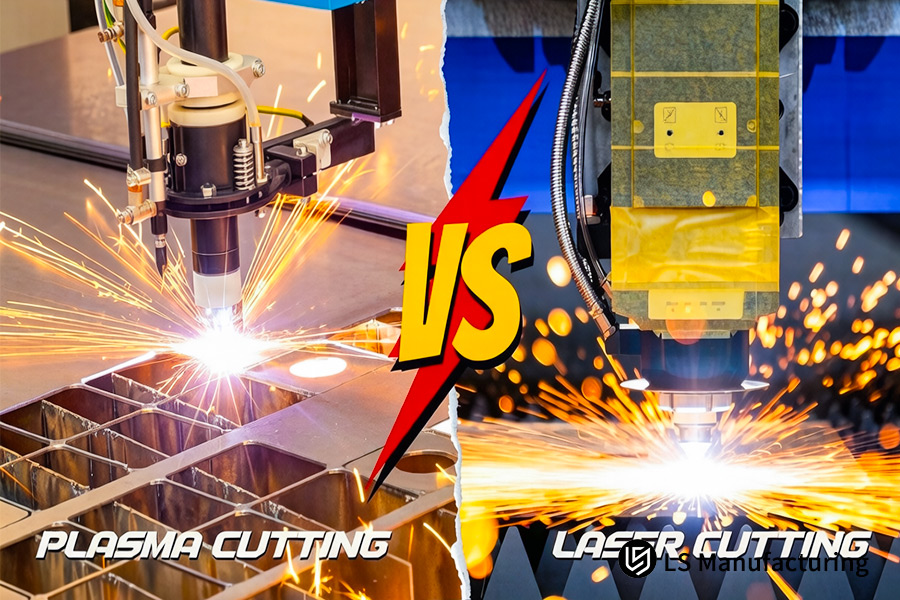
图 1:激光切割与等离子切割相比,可以在食品加工设备的不锈钢上实现干净的切割。
为什么 LS Manufacturing 是激光切割领域的领导者? 2026 年项目的等离子切割服务?
LS Manufacturing 解决了行业变化性的关键问题,即由于昂贵的二次装配而导致总拥有成本更高。 LS Manufacturing 在激光切割与等离子切割服务领域的优势源于对制造过程的整体、不可知论方法。 LS制造技术保证所有零件的±0.05mm精度,确保OEM金属切削服务中零件的互换性:
特定材料的工艺优化
LS Manufacturing 背离通用机器参数。在每种情况下,都会考虑材料的反射率、导热率和熔点等属性来构建模型,从而确定将任务分配给 高功率激光切割或精细等离子体,具体取决于材料的特性。
数据驱动的流程协同和控制
工具的使用策略和动态变化的参数是由算法决定的。例如,如果切割不锈钢,则红外传感控制激光束的能量和频率,以补偿热变形效应。这种高速激光切割技术与等离子精密控制相结合将提供所需的公差水平。
闭环质量验证协议
可互换性已被证明,而不仅仅是假设。所有批次均经过两步工艺验证测试。传感器在加工过程中测量切割形状,CMM 采样测试与传感器读数在统计上相关联,从而开发出持续改进的质量反馈系统。这验证了产品的精密激光切割部件,并使±0.05mm公差成为可测量的事实。
以下论文通过单独迁移过去的功能来解释我们的工程和设计方法。我们激光切割与等离子切割服务的竞争优势在于生产定制激光切割组件,并且具有经过数据验证的可互换性。这解决了隐藏的装配成本,并为使用LS制造技术的OEM金属切割服务建立了新的基准。

智能工程如何通过减少二次加工来优化 OEM 的切割成本?
与切割零件相关的实际成本远高于加工本身的报价,隐藏在磨削等二次加工中。以下案例研究概述了一种工程方法,通过使用高精度激光器消除任何后处理操作,优化 OEM 生产的切割成本。通过我们的成本价值分析,很明显:
解构“隐藏”成本驱动因素:系统审计
- 流程图和成本归因:我们进行整个流程图练习,跟踪制造过程从开始到结束的每个步骤。 与二次磨削相关的成本与初次切割过程相关的成本分开。
- 材料和规格分析:确定技术根本原因,例如与 10mm 碳钢等离子切割相关的厚氧化层(氧化皮)和热影响区 (HAZ) 需要大量清洁,以确保油漆或焊接用途的公差和表面光洁度。
战略技术替代:从热粗加工到精密切口
- 等离子体到激光的迁移路径:设计了一种工艺设计策略,将当前的400A等离子体系统转变为15kW光纤激光系统。关键测量点是切口宽度,与使用热切割方法时的3-4mm相比,切口宽度已优化为0.15mm。
- 实现直接组装:对精密零件实施激光切割可大幅提高边缘垂直度并减少热影响区。由此产生的激光切割部件质量通常直接满足最终组装规格,这是先进激光切割技术的核心优势。
- 克服的技术挑战:为了实现高速高质量切割 10 毫米钢材,必须优化气体动力学和光束调制,以避免与熔渣相关的缺陷。
整体流程优化,节省净成本
- 嵌套编程提高产量:除了切割之外,我们还优化了零件的嵌套,以节省材料成本。由于切口较窄,因此单位材料可以节省更多成本。
- 综合质量门:高同心度切割被证实是拟议工艺中事实上的第一步,并且涉及取消研磨站。它是精密激光切割技术不可或缺的组成部分。
量化结果:数据驱动的验证
- 比较成本模型:直接比较“等离子切割+研磨”和“高精度激光切割”。事实证明,后者激光切割成本要高10%。
- 总成本计算:通过等离子切割技术的应用确定工艺的总成本后,将“现有”成本与无需打磨的激光切割材料进行比较。
- 验证结果:激光切割解决方案的成品价格为降低 18%,从而最终证明了我们成本价值分析的有用性。投资回报率是根据制造总成本计算的。
本报告展示了精确的工程工作流程,从识别驱动程序和激光切割参数选择开始,一直到流程优化和经济合理性。所提供的竞争优势是经过验证的技术拆卸流程和经济的制造流程重新设计流程,从而为 OEM 带来最低的成品零件成本。通过改进工艺,消除了 OEM 切割工艺的隐性成本。
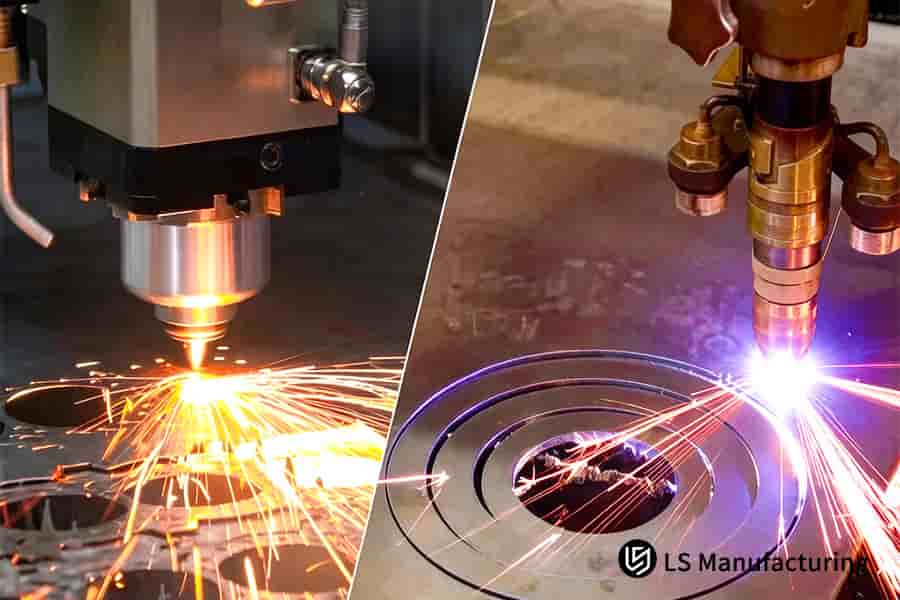
图 2:激光切割与等离子切割塑造航空航天组件的轻质铝支架。
为什么工程师应该优先考虑高耐受性医疗外壳的精密 OEM 切割服务?
高耐受性医用外壳的制造要求切割清洁度和尺寸一致性零偏差。传统的制造方法经常会引入热变形,从而损害关键特性。本文档详细介绍了利用专用精密 OEM 切割服务的技术要求,概述了一种本质上支持严格监管合规性的生产方法。它的价值在于将特定的过程控制直接与医疗级制造所必需的结果联系起来。
| 关键因素 | OEM 项目激光切割 | OEM 项目等离子切割 |
| 切割精度 | 出色的精度,高达±0.1毫米公差 - 非常适合精细的细节工作。 | 对于一般制造工作来说足够准确,但对于非常精细的细节来说不够准确。 |
| 边缘质量 | 优质方形边缘,通常可用于焊接。 | 斜边,需要进一步处理以去除多余的材料。 |
| 材料厚度 | 激光更适合厚度不超过 25mm(取决于材料)的较薄和中等厚度。 | 激光切割 6mm 以上的厚板效果较差。 |
| 运营成本 | 较大的前期资本要求,降低薄板的运营成本激光切割材料。 | 前期资本要求较小,较厚的板材运营成本较高。 |
| 我们的流程选择 | 我们建议使用激光用于需要高精度和精细细节的零件,而无需后切割处理。 | 我们建议使用等离子用于较大的结构部件,其中高效切割厚板是优先考虑的事项。 |
| 结果:优化单位成本 | 我们的激光切割建议为需要精度和精细细节的零件提供了最大价值。 | 我们建议的等离子切割在切割较大、较简单的零件时最为有效。 |
专注于精密 OEM 切割服务的原因在于对热引起的微变形的可测量控制。反过来,该策略通过避免任何后切割步骤、确保组件适合并满足流程可追溯性的要求来满足客户需求。这种技术推理是专为要求苛刻的情况而定制的,当精密激光切割和可靠的医疗级制造变得至关重要时。
加工 20 毫米重型板材时,激光切割成本与等离子切割相比如何?
选择一种有效的技术来切割 20mm 板材不仅仅是一个经济问题;更是一个问题。这是相当重要的,因为切割质量会影响组件的整体性能以及与整个项目相关的费用。 区分等离子切割与高功率激光切割的主要因素是切割质量,它会影响制造过程的每个阶段。因此,以下解释旨在帮助您在激光切割成本与等离子切割成本之间做出正确选择:
量化割缝质量差异
这一切都始于切割产生的斜角。虽然厚板制造中的切割会产生约1.5°的角度,但我们的高功率激光切割技术将确保斜角不超过0.5°。如果您要使用这些元件进行焊接,这种垂直度控制至关重要。
DFM 干预降低装配风险
执行DFM 分析时我们考虑的主要标准之一是高精度。作为避免制造带有孔或螺纹簇的零件时出现装配问题的有效方法,我们在加工前进行精密激光切割。因此,可以避免由于热量而可能发生的任何变形。
分析总拥有成本 (TCO)
虽然使用定制激光切割服务的每小时成本可能略高于其他选项,但 TCO 将倾向于选择使用激光器,因为所获得的高精度消除了执行任何额外过程的需要,例如铣削和铰孔。此外,自动激光切割取得的出色成果使焊接操作更加轻松,检查时间更少,从而提高效率并节省隐性费用。
<块引用>凭借设备的高技术能力,证明了使用多轴激光切割技术在经济性地制作精密零件方面的优势。 立即联系我们的激光切割专家,确保您的厚板零件具有卓越的边缘质量、DFM 优势并长期节省成本。
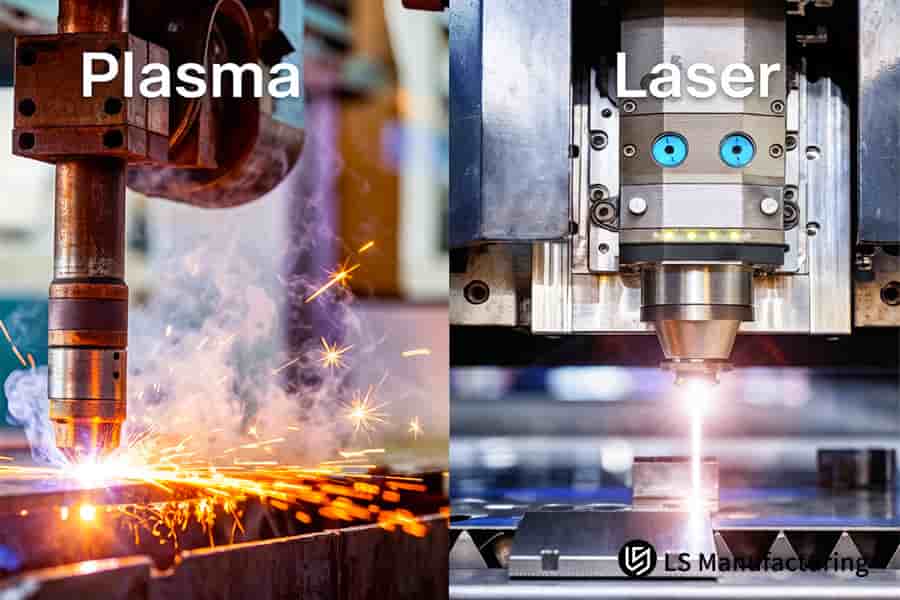
图 3:等离子和激光切割在用于工业机械制造的金属板上生成复杂的几何形状。
定制激光切割服务能否应对铜和黄铜等高反射材料的挑战?
对纯铜和黄铜等材料进行激光加工是一项艰巨的任务,因为这些材料具有非常高的反射率,可能会导致设备故障,从而导致切割不合格。本报告概述了用于实现可靠且高效的反光材料切割的具体工程方法。在这里,我们展示了如何将技术障碍转化为有价值的过程:
工程系统完整性确保安全操作
- 核心防护:利用光纤激光工艺,防止背反射保护能量波可能造成的损坏。
- 工艺稳定性: 利用定制光束传输系统以及能够控制有色金属反射能力的切割头。
动态参数优化以实现一致的质量
- 合金特定协议: 针对导热性引起的问题,为每种独特合金开发单独的脉冲整形方法。
- 结果: 高速激光提供一致的功率输出,实现无毛刺的干净切割切割。
可量化的产出和特定行业的合规性
- 记录验证: 在生产过程后提供详细文档,包括表面粗糙度 (Ra) 测量。
- 应用重点:我们对表面完整性的关注为我们的精密 OEM 切割服务做出了重大贡献,以满足电力电子和航空航天工业领域的验证要求。
我们通过部署受保护的系统和动态脉冲激光切割协议来解决切割反光金属的核心挑战,提供可靠、高完整性的结果。这将我们的定制激光切割服务定位为技术上稳健的解决方案,提供高价值组件所必需的清洁激光切割表面处理和有记录的质量。我们的受控非接触式激光切割方法可确保先进制造的确定性结果。
为什么等离子切割成本优化是大型结构部件的最佳策略?
在梁和底座等大型结构零件中,当精度比坚固性更重要时,等离子切割成本优化是迄今为止最有利的方法。本文探讨了仔细选择工艺和使用嵌套切割可以最大限度地减少浪费和降低每个零件的成本的方法。对切割工艺的讨论专门针对重工业市场,而不是工业激光切割的应用。
| 宽高 | 能力与成果 |
| 主要技术 | 高精度激光切割加上高压氮气,营造无氧化环境。 |
| 热管理 | 光纤激光切割期间激光的频率和占空比立即变化,HAZ 保持在50µm以内。 |
| 剪切质量 | 此方法可确保干净、无渣的切割,表面粗糙度 (Ra) 小于1.6μm,这对于确保适当的密封形成和生物相容性非常重要。 |
| 几何保真度 | 有限的热变形使得复杂的安装孔图案能够与±5μm同轴定位精度创建。 |
| 流程保证 | 现代数控激光切割技术利用实时检测技术来确保切割时几何形状的100%过程控制阶段。 |
| 监管影响 | 由于该流程可靠且准确,因此简化了监管审批要求,FDA 审核也将更快。 |
Plasma cutting cost optimization is a highly precise engineering solution for the issue faced by the customer when it comes to the management of large-budget projects. The matter of optimum material usage by means of nesting and fast plasma cutting makes the justification of the chosen technology quite precise from an engineering point of view, without any costly precision tube laser cutting.
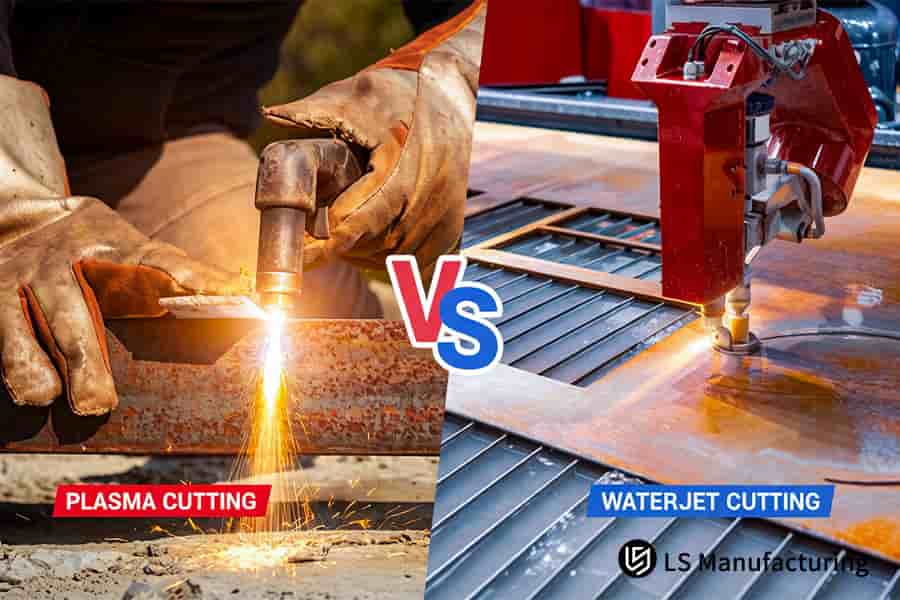
Figure 4: Laser cutting vs plasma cutting services produce precise edges on thick carbon steel for heavy vehicle frames.
How Do OEM Metal Cutting Services From LS Manufacturing Ensure 100 Percent Material Traceability?
For industries like aerospace and nuclear power, a lack of full material traceability is one of the main compliance and liability risks. This paper describes how we have set up an interlocked process chain for our OEM metal cutting services to ensure that there is full traceability from start to finish. Here are the concrete steps by which we translate a compliance issue into a distinct competitive advantage for us:
Verification at Point of Entry: Positive Material Identification (PMI)
All incoming materials must be tested for PMI using the Spectrometer system before acceptance. The test determines the alloy type and its chemical composition, compared to the mill certificate. It is the first digital proof in the life cycle of each component to ensure material integrity and lay the groundwork for precise part manufacturing.
In-Process Data Logging and Binding
The critical parameters of the process are automatically recorded during manufacturing. In case of multi-axis laser cutting for complex parts, the relevant information is collected through dynamic laser cutting systems, linking the batch numbers to the information on cutting power, speed, and gases used.
Comprehensive Certification and Documentation Delivery
The ultimate step in this process is the generation of an exhaustive Material Test Report 3.1b and FAI report that includes complete dimensional data. This document set is the very foundation of our quality assurance protocol and constitutes the official paperwork required for the audit process of the client. This is essential for the approval of mission-critical laser cutting for precision parts.
<块引用>In terms of the traceability protocol employed in our company, the core issue that needs to be addressed is the fear of non-compliance audit due to a lack of manufacturing documentation. The problem is tackled by incorporating the real material information together with the manufacturing information into the documentation for each component made. This means that we will have sufficient documentation for the certification of each piece made by the certified laser cutting process.
Why Is Laser Cutting For Precision Parts The Key To Accelerating Your Product Time To Market?
It should also be noted that the time involved in carrying out the longest phase is that of iteration of the prototype component. Thus, laser cutting for precision parts without requiring any tooling is an absolute necessity in order to enable quicker iterations, which would ultimately lead to fast product development. Below are described some of the ways in which high precision laser cutting as well as engineering assistance can have a huge effect on development cycle times:
Eliminating Tooling with Digital Prototyping
- Rapid Turnaround: Use advanced laser cutting to create "soft tools" that allow development of digital prototypes in 48 hours.
- Client Benefit: Rapid prototyping allows tests to be carried out regarding fit, form, and function in less than one week before the end of the project.
Design for Manufacturing (DFM) to Ensure First-Pass Success
- Proactive Intervention: Checking design features and suggesting changes such as replacing welding with direct laser切割。
- Measurable Outcome: Such an improvement, coupled with laser-cutting precision, increases first-assembly success rate to 99.8% without any need for rework and downtime.
Integrated Service for Seamless Progression
- Unified Workflow: Providing an integrated service from CAD file all the way to final part manufacturing with processes such as cutting, bending, and finishing.
- Efficiency Driver: Such a holistic approach eliminates the communication issues associated with coordinating multiple contractors, which is one of the major sources of LS Manufacturing efficiency.
The issue of delays due to unavailability of prototyping and assembly processes is solved by tool-free manufacturing and proactive design for manufacturability. This integrated process of high-efficiency laser cutting guarantees that our design is transformed into a validated part seamlessly, thus becoming the ideal risk management strategy and first mover advantage.
Case Study: LS Manufacturing Aerospace Titanium Structural Joint Precision Custom Solution
This is an example of the innovative process solution that helped LS Manufacturing overcome the critical challenge faced while manufacturing an expensive aerospace component. We used our custom laser cutting technique to overcome the limitations of regular thermal cutting methods and transformed the production limitation into a production benchmark for quality:
客户挑战
One of the OEMs of international aircraft faced difficulties manufacturing custom Ti-6Al-4V reinforcements. The brackets were getting subjected to thermal oxidation and cracks up to 0.8 mm in depth using plasma cutting processes. Fatigue testing showed that such components could not function beyond 60% of their useful lifespan. This made it necessary to develop a high-stability laser cutting process.
LS 制造解决方案
The shift occurred towards the ultra-precise laser cutting technique utilizing a highly powerful laser accompanied by the highly purified argon gas as assist gas. The critical innovation involved in this approach was a special cryogenic cooling work table, which aimed to extract the heat from the part itself. Alongside a specialized DFM-oriented feed rate strategy, this controlled laser cutting technique helped to eliminate the Heat Affected Zone (HAZ) to below 0.05mm.
结果和价值
The re-engineered brackets successfully passed through 1,000,000 cycles of fatigue loading test without showing any signs of micrometrical cracks, thus verifying the calculated lifecycle of the parts. This successful outcome of the reliable laser cutting ensured that our customer could resume operations in their production facility two weeks ahead of the rescheduled date. Additionally, the high-quality cuts resulted in the absence of oxide layers and did not require any subsequent cleaning procedures, saving 15% off the cost per unit.
<块引用>This project is an example of our unique ability at LS Manufacturing to utilize process knowledge in solving difficult manufacturing problems. By providing both the component and the technology, we were able to remove risks from a key path forward, reduce costs, and create a new performance standard. That's what technical authority looks like at LS Manufacturing.
For assemblies where micron-level drift is not an option, our laser cutting service delivers verified consistency. Contact us to discuss your volume and tolerance requirements.

常见问题解答
1. Why choose LS Manufacturing for my precision OEM cutting services?
In addition to providing ±0.05mm tolerances, we ensure that our products come with pre-DFM analysis and total material traceability, thus making sure that your precision components are perfectly compatible during assembly from day one.
2. What is the main factor in a laser cutting vs. plasma cutting cost comparison for thin metals?
Laser cutting for metal sheets that are thinner than 6mm proves to be more than five times faster than plasma cutting. Additionally, it ensures a better edge quality of the part cut out, thus making the cost per unit piece more affordable.
3. How do you achieve cost optimization for plasma cutting in heavy-duty projects?
We utilize intelligent nesting algorithms to boost material utilization rates to over 90%, and we pair this with automated material handling systems to reduce the labor cost allocation per hour of operation.
4. Can LS Manufacturing provide high-precision laser cutting for complex aerospace alloys?
Yes, we have customized parameter sets for titanium alloys and superalloys made from nickel. This helps us achieve proper HAZ control and retain the mechanical characteristics of the material.
5. How quickly can I receive an accurate quotation for my custom laser cutting services?
Please send us your STEP or DXF files; our engineers will provide you with a precise quote within 12 hours.
6. Does LS Manufacturing provide secondary services following metal cutting?
LS Manufacturing provides a complete solution that involves fine deburring, surface passivation, CNC tapping, and anodizing of the metal components.
7. Why is laser cutting for precision parts superior to waterjet cutting for thin aluminum?
Laser cutting involves no mechanical cutting forces; therefore, when processing extremely thin and deformation-prone aluminum sheets, it maintains superior flatness tolerances (±0.1mm/m) while offering higher operational efficiency.
8. How do you handle material price fluctuations within your long-term OEM cutting services?
We lock in base material prices through direct procurement agreements with major steel mills. Furthermore, within our quotations, we utilize transparent market-index-linked formulas to share the risk with our clients, thereby ensuring a stable and reliable long-term supply.
摘要
In precision manufacturing, choosing between laser and plasma cutting is a strategic decision involving material mechanics, tolerances, and total cost. LS Manufacturing delivers true cost advantages through digital HAZ control, nesting algorithms that maximize material use, and proactive DFM analysis that eliminates rework risk. Whether you’re prototyping or scaling to mass production, partnering with LS Manufacturing injects predictable profitability into your supply chain.
Stop worrying about persistently high rework rates or delayed price quotes. Your precision designs deserve to be realized with micron-level manufacturing accuracy. Click the "Get Instant Manufacturing Quote" button below right now to upload your design drawings. LS Manufacturing laser cutting team of senior engineers stands ready to provide you with a complimentary, personalized process comparison report, helping you secure the most competitive direct-from-manufacturer solution within just 24 hours.
📞电话:+86 185 6675 9667
📧电子邮件:info@lsrpf.com
🌐网站:https://lsrpf.com/
免责声明
本页内容仅供参考。 LS Manufacturing services 对于信息的准确性、完整性或有效性,不作任何明示或暗示的陈述或保证。不应推断第三方供应商或制造商将通过 LS Manufacturing 网络提供性能参数、几何公差、具体设计特征、材料质量和类型或工艺。这是买家的责任。 需要零件报价 确定这些部分的具体要求。请联系我们了解更多信息。
LS 制造团队
LS Manufacturing 是一家行业领先的公司。专注于定制制造解决方案。我们拥有超过 20 年的经验,服务超过 5,000 家客户,我们专注于高精度 CNC 加工、钣金制造、3D 打印、注塑。 金属冲压,以及其他一站式制造服务。
我们的工厂配备了 100 多台最先进的 5 轴加工中心,并通过了 ISO 9001:2015 认证。我们为全球150多个国家的客户提供快速、高效、高质量的制造解决方案。无论是小批量生产还是大规模定制,我们都能以最快的24小时内交货满足您的需求。选择LS制造。这意味着选择效率、质量和专业性。
要了解更多信息,请访问我们的网站:www.lsrpf.com。


| 参数 | 优化策略和可衡量结果 |
| 主要流程选择 | 通过在二次操作中应用高清等离子切割(公差±1毫米),从而将加工成本降低高达40%,而自动激光切割。 |
| 材质利用率 | 利用排样软件优化材料利用率,从而确保在大板切割作业中材料利用率保持在90%以上。 |
| 运营效率 | Parallel cutting through the application of multi-torch automated plasma cutting technology results in the possibility of doing several identical pieces at the same time and saving time spent on working with one unit per piece. |
| Economic Model | It is possible to build an economic model through the efficient pricing structure that provides volume discounts, offering significant savings per piece. |
| Integrated Service Scope | We offer this service as an integrated part of our comprehensive scope of OEM metal cutting services that combine plasma cutting with other techniques like 3D laser cutting in order to provide various other services. |