English



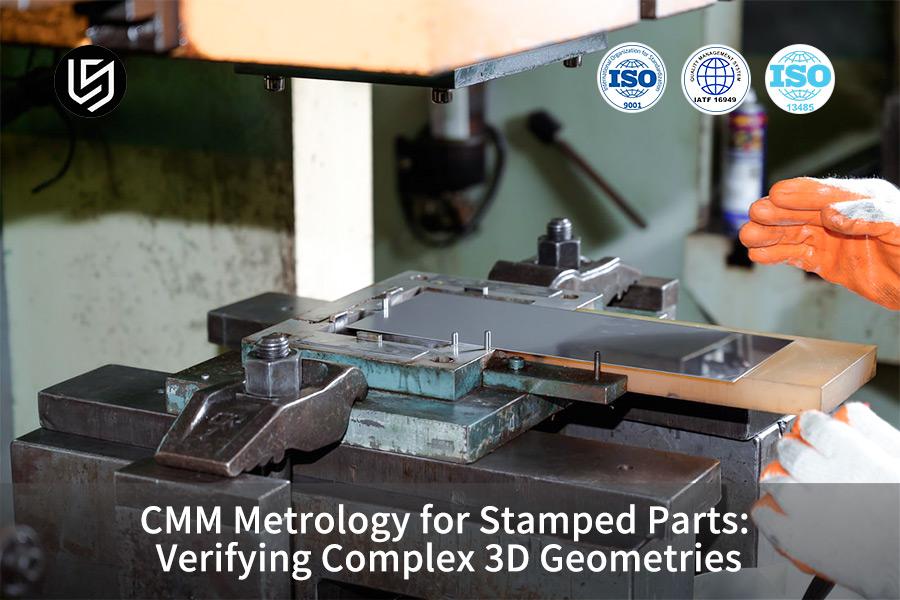
Metal stamping service with CMM measurement scheme is the core technical means to verify the geometric accuracy of complex 3D stamping parts, it solves the industrycommon pain of traditional measuring instrument couldnot measure the micronlevel surface deformation of thin wallmade parts and cannot systematic evaluation of geometric tolerance. CMM inspection, with multireference digital alignment and dual mode of scanning fusion, can control the geometric tolerances of complex stamped parts within ±0.015mm, because of this it will completely eliminate the interference no risk of tooling during mass production.
In new energy vehicle connector, medical precision spring, the problem of springback and residual stress distortion has been long-standing in high price increase return rework cost. This article will analyze the basic technical logic of CMM inspection, provide all solutions on quality control in mass production practice.
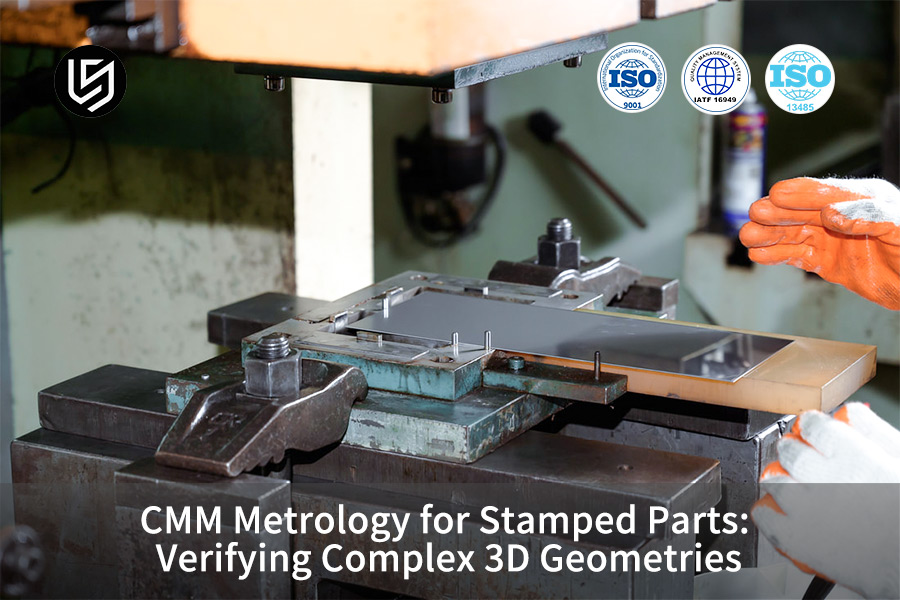
Complex Stamped Part Inspection: Key Conclusions Overview
| Comparison Dimensions | Traditional Calipers / Go/No-Go Gauges | Single-Point Trigger CMM | Blue Light 3D Scanning | Dual-Baseline Fusion CMM Solution |
| Measurement Dimensions | 2D Linear Dimensions | 3D Discrete Points | 3D Surface Scanning | 3D Full Feature Fusion |
| GD&T Assessment Capability | Not Supported | Limited Support | Not Supported | Full Type Support |
| Thin-Wall Part Measurement Accuracy | ±0.1 mm or higher | ±0.02 mm | ±0.05 mm | ±0.003 mm |
| Single Part Data Volume | <20 sets | <200 sets | >1 million sets | Point Cloud + Full Key Feature Data |
| Springback Deformation Recognition Capability | Completely Unrecognizable | Local Recognition | Global Recognition | Global Precise Quantization |
Key Takeaways:
- By eliminating the fixture measurement artifacts, the Multi-level Data Target Point Best-fit Alignment Algorithm can increase the repeatability of 3D surface measurement of thin-walled parts by more than 40%.
- Together, first article inspection stamping and progressive die compensation can cut trial molding by more than 3 times, thereby a lot reducing the mass production ramp-up cycle for Tier 1 customers by half.
Why Trust LS Manufacturing’s Expertise in Complex Stamped Part Inspection?
LS Manufacturing has been involved in precision stamping metrology for more than 15 years. All their inspection processes meet international standards, ensuring that the high-precision inspection results are stable and traceable. Through a three-month period of practical testing on a medical-grade spring project, the company found that advanced metrology capabilities a lot influence the maximum achievable mass production yield for high-end stamped parts.
One of the main concerns of many high-end buyers when selecting metrology service providers is the lack of international credibility and the inability to pass OEM audits.
International standard ISO 10360-2 states that "the error in dimensional measurement by coordinate measuring machines shall be calibrated and their traceability shall be ensured, to maintain the consistency of measurement results worldwide."
To follow this standard rigorously, our metrology lab carries out third-party calibration twice annually. Besides, all our CMMs are installed with temperature compensation modules so that the measurement data can be used directly for PPAP inspections by worldwide customers. At the same time, we have built a database containing records of inspections of nearly one thousand complex stamped parts, allowing us to promptly find the best inspection alternatives for similar processes.
A standardized metrology system and rich project experience are the core prerequisites for stable quality of high-end stamped parts. For more information on the implementation results of similar projects, please contact us to obtain a complete case study collection on complex stamped part inspection, providing a direct reference to actual inspection accuracy and cost reduction results.

Why Is Multi-Datum Alignment Critical For a Complex Stamped Part Inspection?
Complex stamped parts can experience a great deal of springback and residual stress. Measurement data will undergo a fatal drift if the part's orientation is being fine-tuned without multi-datum constraint alignment. LS Manufacturing combines multi-point RPS with a CAD nominal model for the best-fit digital iterative alignment, which can bring back the stress-free geometric orientation of the part as per the actual assembly conditions.
Core Differences between RPS Alignment and Conventional 3-2-1 Alignment
Conventional 3-2-1 alignment depends on three major reference planes and because of this it is only suitable for rigid parts. Stamped thin-walled flexible parts that undergo this method will have the springback deformation misallocated to the key hole features and it will not be able to supply accurate data for stamping springback control.
RPS multi-point alignment's main advantages are:
- Selecting better references: Six key assembly reference points that correspond to real assembly constraints are chosen.
- Distributing errors uniformly: Iterating through matrices causes deformation to be spread out globally, thereby avoiding the situation in which local deviations are amplified.
- Higher reproducibility: Minor changes in the part's placement orientation will no longer cause variations in the final measurement results.
These reasoning is the heart of making sure that complex stamped parts inspection data are dependable and also it works as a digital basis for later stamping die compensation.
Measurement Results based on the Six-point Positioning Principle
Per the six-point positioning principle, LS Manufacturing imposes six degrees of freedom constraints on the main locating pins and the support surfaces of the stamping die and uses matrix iteration between the CAD physical coordinate system and the part's digital point cloud. When a stainless steel spring with a surface hardness of > HV 380 and a thickness of 0.2 mm was inspected, the error of the three-coordinate overlap could be converged to within 0.003 mm by using this method. It is a fundamental prerequisite for controlling metal stamping service at the micron-level and it can provide the starting measurement point for GD&T assessment. This also completely removes the customers' concerns about the repeatability of measurements.
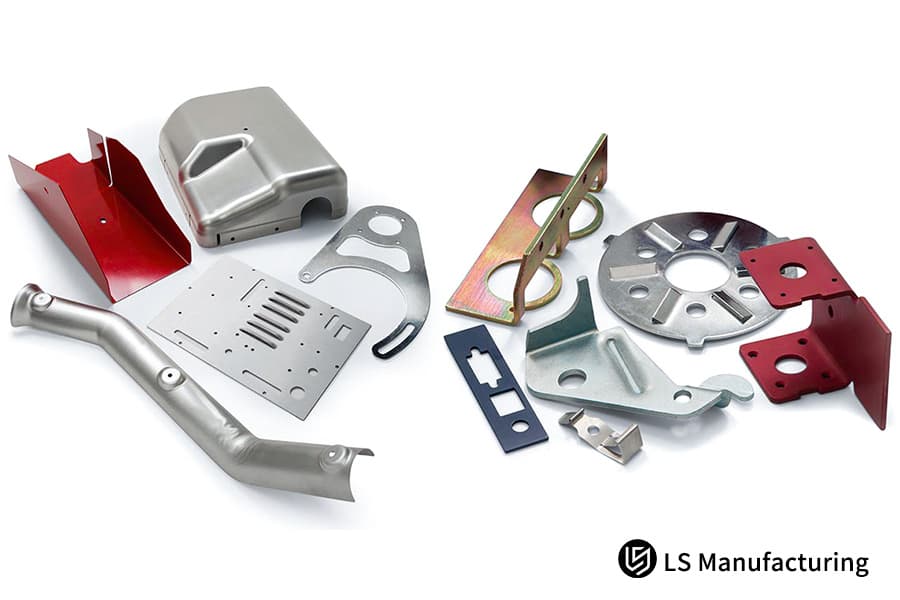
Figure 1: Various sheet metal stamped parts including brackets, discs, and housings.
How Can Tactile Scanning Optimize Your Stamped Part Quality Control?
Contact continuous scanning uses a constant force probe that physically touches metal surfaces in motion to identify 3D spatial locations of feature holes, grooves, and geometric changes with very high density. Data coverage is more than 10 times higher than point-to-point detection, the method so establishes the technological basis of fine stamped part quality control.
Micro-Force Control Technology for Active Probes
Stamped parts are generally finished with metal edges that have high-hardness shear burrs. Simple single-point triggering procedures perform poorly when it comes to slippage errors which are likely with them. So, it is hard to fulfill the data acquisition criteria for the measurement of high-precision stamping features. One of the great features of the LS Manufacturing advanced CMM system is the active scanning probe.
Some of its main benefits are:
- Constant micro-force control: Continuous force measurement is kept constant at 0.02 N, This way scratches on flexible coatings and deformation of thin-walled parts are prevented.
- High-density data acquisition: It automatically obtains 120 X, Y, and Z coordinate points per second, thereby completely covering the details of all features.
- Edge adaptation capability: This function is able to prevent probe slippage errors that are produced by shearing burrs effectively.
In position to these factors, a high-precision stamped part quality control system is supported by a lot of data density for stamping surface profiling.
Ruby Ball Radius Dynamic Compensation Mechanism
In the stamping punch stretching deformation region, the system adjusts the 3D contact normal vector of the probe ruby ball radius automatically, which is the way such professional CMM inspection services show their technical value. It addresses and eliminates the measurement distortion issue caused by the thinning of the radius angle, This way the stamping dimensional accuracy assessment reliability is highly improved and invalid mold rework is minimized.
If your parts have issues with inaccurate detection of minor features, you can submit drawings to receive a free DFM assessment. We will provide targeted suggestions for stamped part quality control optimization.
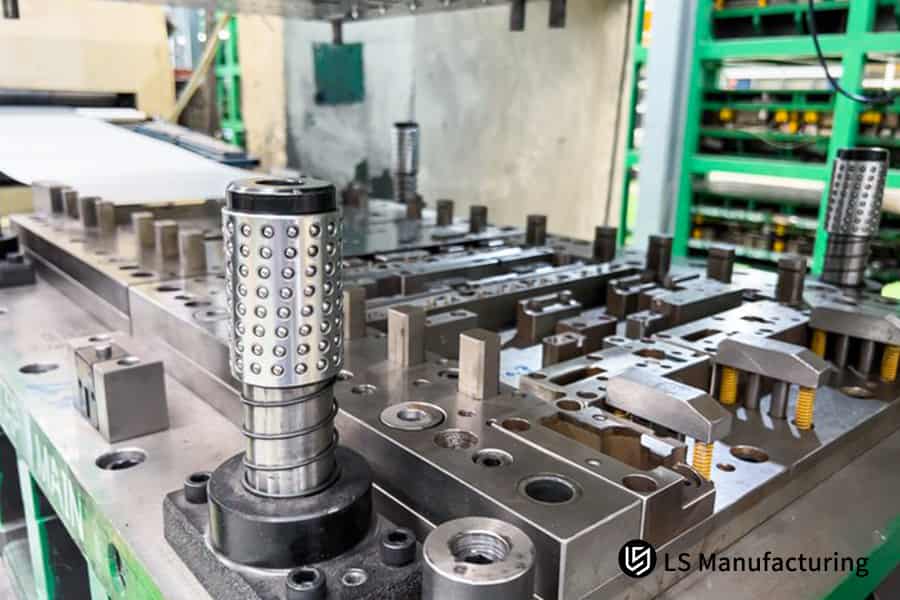
Figure 2: CMM tactile scanning probe measuring a machined metal component.
What Role Does Optical CMM Play In a Professional Metal Stamping Service?
Blue light non-contact gratings instantly capture millions of surface points of a part, and on top of that, the differential color map shows distortions in parts. When combined with contact CMMs, this becomes a closed-loop quality system and is a major part of the professional metal stamping service.
Principle of Narrow-Wavelength Blue Light Anti-Interference Technology
Once the metal stamped parts surface is cleaned, it is very reflective. Normal 3D scanning would easily create noisy point clouds, which are not able to support stable stamping point cloud matching calculations. LS Manufacturing employs a high-end blue light 3D scanning equipment with a fixed wavelength of =450 nm, which can effectively eliminate light interference from the environment and enhance the quality of point clouds on very reflective surfaces.
The impact of Application Effect of Dynamic Light Intensity Compensation
As for the curved highlight areas and down-hole shadow areas, the system offers a point-by-point light intensity gain. This technique can produce a 3D color difference map with 5 million point clouds in only 15 seconds, and it has a spatial resolution of 0.02 mm. This is a key instrument for the quick identification of alterations in the high-end metrology of metal parts and for the visual capture of localized corner collapses caused by uneven hardness in the sheet metal that helps in stamping batch consistency control.
Comparison of Core Parameters for Three Types of CMM Inspection Technologies
| Core Parameters | Single-point Triggered CMM | Active Contact Scanning CMM | Blue Light Optical CMM |
| Dimensional Measurement Accuracy | ±0.01 mm | ±0.003 mm | ±0.02 mm |
| Number of Data Points per Part | <200 | 5000-20000 | Approximately 5 million |
| Typical Inspection Time | 15 minutes | 25 minutes | 15 seconds |
| GD&T Assessment Capability | Basic Support | Full Type Support | Contour Only |
| High-Reflectivity Surface Adaptability | Fully Adaptable | Fully Adaptable | Requires Light Intensity Compensation |
How To Streamline First Article Inspection Stamping For High-Precision Components?
First Article Inspection (FAI) is the fundamental method to check whether a part meets the required specifications and to verify the mold design. LS Manufacturing transforms the first article inspection stamping procedure by digitally capturing the geometric tolerances measured by the coordinate measuring machine and integrating them back to the CAD mold software, because of this removing the ineffective trial molding and rework at the source.
Core Logic of CMM Data-Driven Reverse Die Repair
During FAI (Fixed Injection), besides measuring the nominal dimensions as per the drawing, one should also carry out the wall thickness measurement of the continuously stretched thinning area. The key steps are:
- Full-dimensional coverage: Detecting at the same time both the nominal dimensions as per the drawing and the wall thickness of the stretched thinning area.
- Deformation trend output: Cross-section deformation distribution report is automatically produced.
- Die compensation guidance: Suggestions for punch radius correction are given directly.
Such a closed-loop system represents the engine of first article inspection stamping reverse die optimization and at the same time it is a data-driven means of supplying directions for stamping tool life prolongation adjustment.
The punch radius correction amount to springback amount approximately equals 1:0.8, this way the correction first time yield rate can be increased to over 90% which is a very substantial reduction in the number of trial molds.
Significance of the Digital FAI Workstation
Whenever a coordinate measuring machine finds that the wall thickness at the root of the connector stretching is below 85% of the nominal thickness (critical cracking point), the software will automatically send a warning. Using this information, the process team made a minor (0.05 mm) punch radius modification during the sample test phase. In doing so, they helped to lay down solid stamping process quality assurance right from the beginning, and they also made a great leap in improving stamping thin-wall forming debugging efficiency. This led to a more than 15-day reduction in the mold development cycle and at the same time, the sample was able to successfully pass the overseas customer's FAI audit on the first attempt.
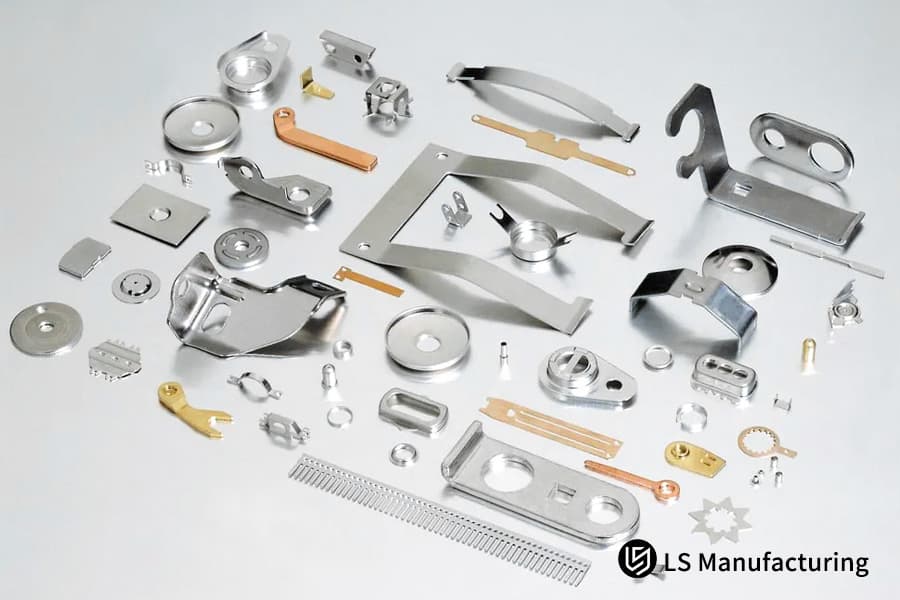
Figure 3: Stamping tooling with integrated CMM probes for first article inspection.
How Does GD&T Evaluation Ensure Reliable Complex Stamped Part Inspection Results?
Geometric dimensions and geometric tolerances (GD&T) represent the common language of industrial procurement. One cannot use calipers to measure the positional and contour accuracy of stamped parts, the accurate measurement of their dimensions takes three-dimensional calibration (CMM). This accounts for the most important complex stamped part inspection.
Calculation Logic for Positional Accuracy at MMC Conditions
ISO 1101, an international standard, reads, "rules for marking and evaluating geometric tolerances require complete verification of the tolerance zone in a three-dimensional coordinate system."
Stanced spring precision with multiple holes and bends: the positional accuracy of circular holes can decide the degree to which automated assembly works efficiently.
Working with LS Manufacturing that uses advanced coordinate measuring machine (CMM) software to support positional tolerance checking under maximum material condition (MMC). Its core values include:
- Calculating automatically for extra tolerances due to aperture deviations.
- Producing quality release criteria that correspond to real assembly logic.
- Preventing too hard misjudgments and overall procurement cost controlling.
The evaluation method above is the fundamental reason for that complex stamped part inspection is professional, further making stamping GD&T confirmation of assembly scenarios closely related.
Verification of Freeform Surface Contour Accuracy
Through the comparison of the measured point cloud with the CAD model, the contour accuracy of complex surfaces can be fully verified by the system. The CAD model is not only used as a reference for inspections but also determines globally the part's deformation, it can be used to prevent omissions of deviations, intuitively modeling direct displays of deviations and at the same time, it acts as a main reference for production part approval service (PPAP) audits' consistency in quality verification. In addition, it supports the mold springback compensation, and the stamping control precision of contour accuracy is also improved.
To calculate part inspection costs, please provide drawings and tolerance requirements, and we will provide a comprehensive cost estimate for complex stamped part inspection free of charge.
Why Is Dynamic Sampling Critical For Mass Production Part Approval Service?
According to the Production Part Approval Process (PPAP), a stable Process Capability Index (Cpk) must be maintained from start to finish of the production cycle. Real-time data-driven dynamic sampling decisions are made feasible by the embedding of CMM automated inspection within the stamping production line at LS Manufacturing, which is a vital step to support production part approval service.
The Preventative Logic of SPC Closed-Loop
Imagine a stamping press running at an incredibly high speed of 200 cycles per minute. The wear on the punch or the thinning of the oil film will result in a unidirectional drift at the micron level. Only after the production is done and the sampling inspection finds the defective products that traditional methods can help. Dynamic sampling together with SPC makes it possible to take preventative actions. This way the production part approval service's long-term stability requirements are met, scrap risk is minimized, and in fact, real-time data for stamping tool wear condition can be obtained.
Dynamic Sampling Early Warning Trigger Rules
LS Manufacturing is raising the quality of closed loop systems for dynamic sampling of the three coordinates to Tier 1 customer car manufacturers. The early warning rules of the system are:
- Control charts for X-bar R are generated and updated live to reveal dimensional drift trend.
- The Level 1 warning goes off when there are 7 consecutive identical deviations leading to a call for more samples.
- Level 2 warning is given through the Cpk value nearing the decision point of 1.33, leading to changes in mold.
The three levels of the warning system give the possibility for complete stamped part quality control over the life cycle and also ensure stable processing even at a high level of stamping.
Correspondence between Process Capability Index (Cpk) Levels and Quality Risk
| Cpk Value Range | Capability Level | Defect Rate (PPM) | Mass Production Stability | Customer Acceptance |
| <1.0 | Insufficient | >66807 | Poor | Unacceptable |
| 1.0-1.33 | Average | 66807-2700 | Average | Temporarily Acceptable |
| 1.33-1.67 | Good | 2700-0.57 | Stable | Standard Requirements |
| >1.67 | Excellent | <0.57 | Extremely Stable | Exceeds Expectations |
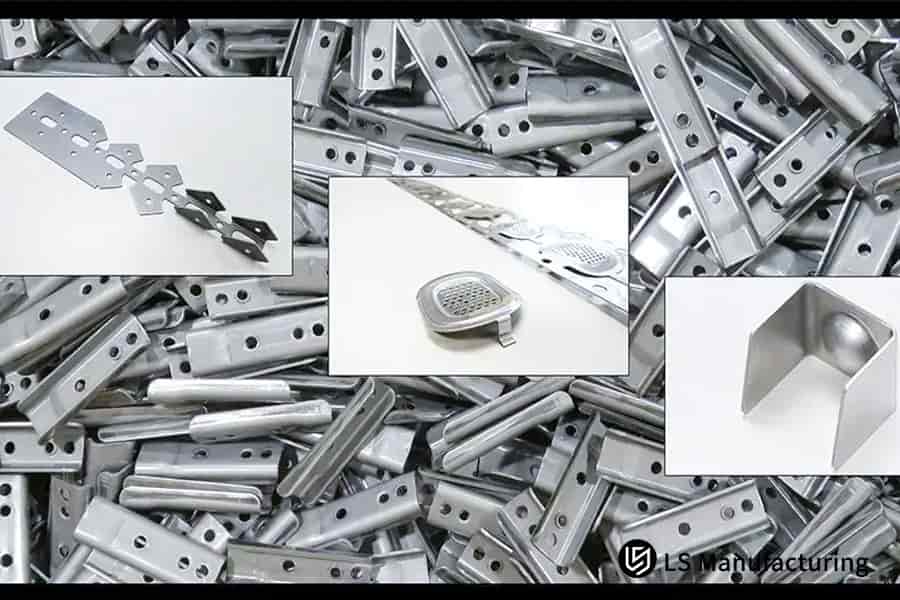
Figure 4: High volume batch of identical stamped metal components on a workbench.
What Advanced CMM Fixtures Prevent Deformation During Metrology Service For Metal Parts?
Thin-walled flexible metal parts often get artificially deformed by clamping force, which causes distortion of coordinate measuring machine (CMM) data. Pneumatic micro-force fixtures and contour supports manufactured by LS Manufacturing guarantee that the measurement state and the free state are the same, which is a main technical aspect of professional metrology service for metal parts.
3D Printed Profiling Fixture Design Logic
General-purpose rigid fixtures for precision beryllium copper springs (< 0.3 mm thickness) often means elastic deformation of more than 0.1 mm, which results in CMM data invalidation and the inability to meet the requirements of high-precision stamping fixture design. We 3D print flexible profiling fixtures with aerospace-grade polyurethane using CAD models and a special lattice structure, which reduces the local deformation by 30% while maintaining the rigidity, and because of this allowing the parts to be embedded without stress.
Precision Control of Pneumatic Micro-Force Clamping
The clamping system is composed of micron-level pneumatic fingers that can be adjusted to very small increments and can accurately control the clamping force within 0.1 N. The system only offers positioning constraints and does not disturb the balance of residual stresses. By this means, the coordinates output by the CMM inspection service truly represent the part's geometry and the hardware support for stress-free measurement in stamping is provided.
Comparison of the Influence of Different Inspection Fixtures on the Deformation of 0.2mm Thin-Walled Parts
| Fixture Type | Clamping Force Range | Typical Deformation | Stress Concentration Risk | Applicable Part Type |
| General Hard Fixture | >5 N | >0.1 mm | High | Rigid Thick Plate Parts |
| Ordinary Pneumatic Fixture | 1-3 N | 0.03-0.08 | Medium | Ordinary Stamping Parts |
| Polyurethane Contouring Fixture | <0.1 N | <0.005 mm | Extremely Low | Thin-Walled Flexible Parts |
| Non-Contact Support Fixture | 0 N | 0 mm | None | Extremely Thin Precision Parts |
How To Achieve Comprehensive Stamping Process Quality Assurance On The Shop Floor?
Top-notch quality control can't just happen in the lab, it has to be ready for the tough conditions on the stamping workshop floor. LS Manufacturing's workshop-level high-protection fully automatic CMM unit is an effective quality assurance tool for large-scale production and full-process stamping process quality assurance.
Real-Time Temperature Compensation Technology System
Conventionally, high-precision coordinate measuring machine takes an environment of 20±0.5℃ constantly for operation. Though, temperature in stamping workshop fluctuates greatly, with operation of stamping press. LS Manufacturing's shop-floor CMM system solves such a problem through temperature compensation system at multi-points:
- 16 highly sensitive temperature sensors are installed on machine body, grating ruler, and workpiece surface.
- Coefficient of linear expansion is automatically corrected every 2 seconds, so that abnormal deformations caused by temperature changes are removed in real time.
- Compensation algorithm can be applied not only to steel but also copper and other stamping materials about the coefficients of thermal expansion of these different materials.
Such compensation system is a technical basis for stamping process quality assurance on shop-floor and stamping shop-floor metrology to reach laboratory level accuracy.
Environmental adaptability of the high-protection detection unit
The fully enclosed positive pressure dust cover helps to isolate from aerosol and oil fume, and detection accuracy remains at a stable level of 3.5μm even if it is at the shop floor. This unit is also able to be directly connected to the production line, enabling immediate inspection of complex stamped parts right after the exit of parts from the line, thereby shortening the sampling inspection cycle, meeting high-frequency sampling inspection requirements of high-end customers, and providing a mature solution for stamping real-time inspection implementation.
If you would like to learn more about the implementation methods of mass production quality control, please contact us to obtain the stamping process quality assurance white paper.
LS Manufacturing Precision Automotive Terminal: Solving a ±0.015 mm True Position Custom Defect
Customer Dilemma
The global Tier 1 supplier was working on developing stamped interconnectors for new energy vehicle batteries. They use ±1.5 mm high-elasticity copper and after an 8-station progressive die stamping, the residual thermal stress made the four mounting holes at the ends deviate in position by 0.05 mm to 0.08 mm, which is way beyond the 0.015 mm drawing requirement. The welding robot kept blind inserting the wrong sots which resulted in seizure of the production line and possible delay claims. The original supplier's work in blind die trials for four weeks and the 500 kg copper scrap without the desired positioning shows that low-end service providers are very weak in stamping precision control.
LS Manufacturing Solution
- Our technical team started the digital first article inspection stamping process, an active continuous scanning probe capturing 3D free-form surface point clouds of the tensile deformation area while a constant micro-force of 0.02 N was applied. At the same time, surface oil spill interference was filtered out.
- At the same time, the best-fit digital alignment algorithm of multi-level Datum target points was used to perform matrix iteration between the measured data and the native CAD nominal model.
- The CMM software color difference mapping clearly indicated the uneven unloading stress in the third bending process caused a 0.042 mm upward tilt at the tail end of the part in the Z-axis direction, which is the start of the chain reaction resulting in the positional deviation.
- With this accurate data, the process group inserted a reverse elastic pre-compensation block in the fifth step of the progressive die method, eliminating the springback totally and proved the stamping die tuning mode based on data as the productive one.
Results and Value
Following process iteration, 100 samples excelled in the three-coordinate automated production part approval service test: the positional accuracy of the four key holes was between 0.008 mm and 0.011 mm, with a Cpk of 1.67, way above the industry benchmark of 1.33. The new mold development period was reduced by 18 days, so the mass production deadline was met on time.
Upon receipt of the test report with ISO 10360 traceability standard, the customer was very pleased and transferred the entire order immediately.
If you are facing similar dimensional deviation issues, you can upload your 3D CAD drawings to obtain a customized solution and accurate quote. Our technical team will provide feedback within 24 hours.

FAQs
Q1. For the high-precision inspection of thin-walled stamped parts, how does LS Manufacturing ensure the stable accuracy and compliance of its CMM inspection service with standards?
We closely monitor and adjust the laboratory temperature to be at 20±0.5℃. In addition, 0.02 N micro-force sensors with 3D-printed polyurethane contour jigs are used to make sure thin-walled workpieces are held in a stress-free condition during the acquisition of spatial coordinates.
Q2. What is the maximum dimensional range of metal sheet parts your metrology service is capable of handling?
We have a fixed coordinate measuring machine with a measuring capacity of 2500×1500×1000 mm, and when combined with a portable blue light 3D scanning arm, it is capable of covering an entire size spectrum between micro-electronic terminals and large automotive body panels.
Q3. Are your production part approval services capable of producing automated PDF inspection reports that comply with automotive IATF 16949 standards?
Really, the inspection software we use can export an entire PDF report automatically. This report can include GD&T deviations, SPC trend charts, and Cpk assessments. Also, it can be easily passed through PPAP review and complies with international automotive standards.
Q4. What methods does your company use to inspect complex stamping parts whose drawings do not contain 3D CAD data?
With the Blu-ray 3D scanning system, the engineering team has the capability to perform reverse engineering of spatial point clouds from physically-qualified samples and is able to reconstruct a highly accurate CAD digital model for defining nominal tolerance values for subsequent inspections. You can upload drawings or samples to obtain a quotation, and we will quickly match and test the landing plan.
Q5. When comparing with low-cost suppliers who only use basic hand tools, what are the main benefits of relying on your metal stamping service?
Simple hand tools are not able to measure spatial geometric tolerances. Our Metal Stamping Service that is equipped with the most advanced technologies is capable of verifying complex 3D geometric features with the help of automated Blu-ray metrology complemented with high-precision contact probing, and this solution works very fast (in seconds) and frees batch assembly from interference defects.
Q6. Which international metrological standards does your company pursue in the performance of high-end calibration to ascertain the testing authority?
Strict compliance to international metrological standards ISO 10360 and ISO 15530 is a prerequisite for all our coordinate measuring machines and calibration processes. Our data is fully traceable and gives objective and impartial 3D spatial accuracy data to industrial customers worldwide.
Q7. If orders are urgent, how soon can your engineering staff deliver a comprehensive first-article inspection report of the stamping?
Through utilizing fully automated offline programming pipelines, coordinate measuring machines, and measurement simulation software, we can digitally inspect a full-size sample within 24 hours of the first batch of trial stamping and prepare for the issuance of a formal FAI quality release report with minimum delay.
Q8. What ways does your quality assurance system for stamping process combine the unpredictability of physical characteristics of raw materials batches?
We don't continue with post-inspection model but switch to dynamic sampling by near-line automated coordinate measuring machine (CMM) units in workshops, relay dimensional drift data to the server in real time. When fluctuations in the hardness of a new batch of coil material cause springback tendencies, the system will prompt for mold fine-tuning before the parts exceed tolerances.
Summary
Traditional two-point measurement methods simply cannot fulfill the high-precision assembly requirements for complex stamped parts anymore. LS Manufacturing's CMM multi-level datum alignment solution that is further strengthened by dual-mode scanning technology, is capable of recording deformation at micron-level and using that information to reverse-optimize the progressive die processes, thereby preemptively preventing quality issues and ensuring the undisturbed delivery of precision parts.
Do you suffer from out-of-spec sample shapes through the line, repeated attempts of progressive die changes, or expensive compensation to deformations in mass production? LS Manufacturing, located in Humen Dongguan is happy to offer you complete metal stamping outsourcing services including the use of the latest metrology technologies. Apart from material forming compensation and compliant testing reports, LS Manufacturing also stands for FAI audit and PPAP mass production delivery.
Say goodbye to manufacturing defects, starting with professional assessment: Upload your native 3D CAD drawings (supports STEP/IGES/X_T formats). Our R&D and metrology team will provide a free DFM assessment and accurate project quotation within 24 hours, using industry-leading technical capabilities to safeguard your high-end supply chain.
📞Tel: +86 185 6675 9667
📧Email: info@lsrpf.com
🌐Website: https://lsrpf.com/
Disclaimer
The contents of this page are for informational purposes only. LS Manufacturing services There are no representations or warranties, express or implied, as to the accuracy, completeness or validity of the information. It should not be inferred that a third-party supplier or manufacturer will provide performance parameters, geometric tolerances, specific design characteristics, material quality and type or workmanship through the LS Manufacturing network. It's the buyer's responsibility. Require parts quotation Identify specific requirements for these sections.Please contact us for more information.
LS Manufacturing Team
LS Manufacturing is an industry-leading company. Focus on custom manufacturing solutions. We have over 20 years of experience with over 5,000 customers, and we focus on high precision CNC machining, Sheet metal manufacturing, 3D printing, Injection molding. Metal stamping,and other one-stop manufacturing services.
Our factory is equipped with over 100 state-of-the-art 5-axis machining centers, ISO 9001:2015 certified. We provide fast, efficient and high-quality manufacturing solutions to customers in more than 150 countries around the world. Whether it is small volume production or large-scale customization, we can meet your needs with the fastest delivery within 24 hours. choose LS Manufacturing. This means selection efficiency, quality and professionalism.
To learn more, visit our website:www.lsrpf.com