English



Sheet metal fabrication vs. CNC machining service is a process selection decision, resolving cost overruns by matching geometries to optimal process economics.
LS Manufacturing's DFM strategy delivers a 26.8% cost reduction by routing simple profiles to sheet metal and tight ±0.005 mm tolerances to CNC.
Five Core Dimensions For Process Selection: Sheet Metal Fabrication VS CNC Machining
Prior to process selection, assessment of these five major parameters will immediately determine which manufacturing process holds an edge cost-wise:
| Evaluation Dimension | Sheet Metal Fabrication | CNC Machining | LS Manufacturing Optimization |
| Production Volume | Set up cost is recovered quickly; good for medium-to-high quantity | Increases linearly with quantity; best for prototypes and low quantities | Sheet metal frame + CNC precision joint making |
| Material Utilization | Up to 75% (nesting efficiency (the software-driven arrangement of parts on a sheet to minimize scrap)) | Subtractive manufacturing only; removal rate is 68% | High material removal rate components replaced by sheet metal |
| Part Geometry | Uniform thickness walls, bends, enclosures | Complex 3D surfaces, cavities, and geometries | Keep complex 3D cavities for CNC; periphery with sheet metal |
| Tolerance & Precision | Standard accuracy ±0.01–±0.02 mm | Precision ±0.005 mm / Ultra-precision ±0.002 mm | Mate part features machined by CNC, shells by sheet metal |
| Post-processing & Secondary | Operations Requires welding, riveting, bending fixtures | Threads and grooves done in single setup | Pre-press rivet nuts per ASME B1.1 |
Sheet metal fabrication is the best option in terms of material efficiency and big structures. Precision CNC machining is guaranteed, and so are complex shapes. LS Manufacturing used the combination of both approaches, achieving 26.8% cost savings at ±0.005 mm tolerance.
Key Takeaways
- Batch size defines the material cost savings curve: For medium and large batch sizes, choose sheet metal; fast setups can be achieved for batches exceeding 100 units. Precision CNC machining approach can completely avoid extra tooling and mold expenses.
- Material efficiency has a direct effect on the BOM: If the CNC cutting wear rate is 68%, then choosing sheet metal unfolding and forming will increase material efficiency up to 75%.
- Tolerances need to be defined in steps: Ultra-high precision tolerance needs not be defined for each part in the drawing. Tolerance of ±0.005 mm needs to be defined only for mating parts; for non-assembled parts, apply ISO 2768-m.
Meet The Engineers Behind This Guide: Practical Experience From LS Manufacturing Experts
LS Manufacturing has ISO 9001:2015 and AS9100D certification which is audited by British Standards Institution (BSI) — meaning your parts undergo the same quality rigor required in aerospace and medical supply chains. Society of Manufacturing Engineers (SME) body of knowledge defines our DFM approach. Gloria, our rapid prototyping expert having 15 years experience in precision engineering, has written this document in consultation with our chief engineering team.
We examined 1,200+ automated DFM reports and discovered that assigning deep cavities to CNC machining results in 68% material removal efficiency. Our hybrid approach has reduced project cost by 26.8% with ±0.005 mm tolerance within 2-hour turnaround time for DFM.
Analysis of five primary cost factors prior to issuing the RFQ gives procurement managers and senior engineers a chance to secure best ROI at prototype level. Connect with Gloria on LinkedIn for verified, no-nonsense manufacturing advice.
How Does Production Volume Impact Sheet Metal Fabrication VS. CNC Machining Service Costs?
Process selection is driven mainly by production volume. Sheet metal forming amortizes setup and bend-programming costs quickly across medium-to-high production volumes. While precision CNC machining enjoys linear cost scaling due to constant machining cycle times. For production quantities of 1–20 pieces, CNC machining eliminates tooling costs entirely, making it the cost-effective choice for low-volume prototypes. Once production scales past 100 units, sheet metal reduces piece-part cost by up to 26.8%.
Low-Volume Window Favors CNC
CNC machining does not need any special tooling and bending dies for production of parts with 1 to 20 pieces and it is cost-per-piece process. Sheet metal fabrication vs. CNC machining service prices for prototyping quantities will be in favor of CNC, when the shape is complicated. Production volume cost is critical below 10 pieces, amortization depends on volume.
A buyer ordering 5 to 20 enclosures will not need to develop press-brake tooling and will get faster first articles. Small production quantities favor CNC machining for its tooling-free flexibility, while larger batches above 100 units favor sheet metal fabrication for faster per-unit cost amortization.
Scale Tipping Point at 100+ Units
With the quantity above 100 pieces, the set-up for sheet metal bend process and blanking nest gets amortized within the order run. Custom sheet metal fabrication service price becomes cheaper than CNC due to very minimal material removal involved. Machine hourly rates become very close, sheet metal processing time drops dramatically.
- 1-20 pcs: Tooling avoidance is prioritized. CNC machining is more appropriate for complex shapes.
- 21-100 pcs: Transitory range depends on the particular shape and tolerance requirements.
- 100+ pcs: Tooling set-up cost becomes fully amortized. Sheet metal fabrication has reduced per-unit cost.
LS Manufacturing DFM will assess both processes prior to the quotation, therefore you can spot the crossover before tooling expenses are incurred.
Action Items
- Request for a manufacturing quote at 10 pcs and 100 pcs to determine the exact crossover.
- Utilize CNC for complex shapes only; send enclosures to a sheet metal parts manufacturer after 100 pcs of volume.
Data source: LS Manufacturing 2025–2026 automated DFM 3D/2D drawing analysis logs (project #MED-2026-089, sample size >1,200).
Download our Process Selection Guide to learn how production volume determines the cost crossover between sheet metal fabrication and CNC machining — with data-backed recommendations for 1–20, 21–100, and 100+ unit quantities.

Why Is Material Utilization Critical When Evaluating Custom Sheet Metal Fabrication Service Overhead?
Material utilization is vital in estimating the cost of manufacture. Sheet metal fabrication process is semi-additive, utilizing 75% of the material, while CNC machining is subtractive and wasteful of up to 68% of the material as scrap. When expensive material like Aluminum 7075-T651 or Stainless Steel 316L is used, custom sheet metal fabrication service reduces raw materials cost substantially.
| Process Route | Material Utilization | Cost Impact |
| Solid billet CNC milling | 32% | 3.1× raw material baseline |
| Sheet metal nesting | 75% | Baseline raw material spend |
Material waste involved in the CNC process for removing chips adds to the expense per component. Raw material cost of sheet metal enclosure fabrication stays the same as the base cost; however, the cost incurred is 3.1 times higher due to CNC. Sheet metal prototype service nesting software improves efficiency up to 75%, which makes it possible to reuse 25% of the leftover material as scrap.
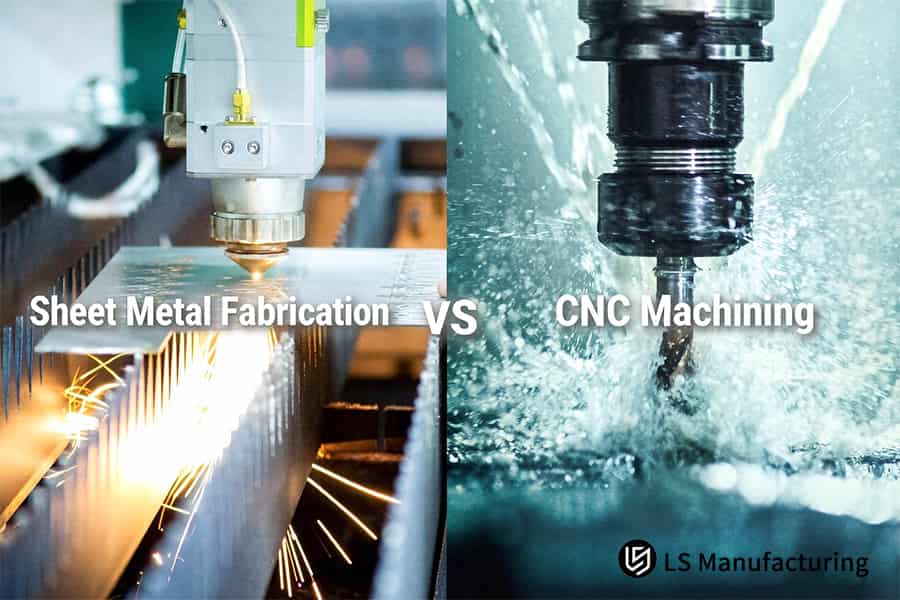
Figure 1: Sheet metal AL 6061 sheet metal while CNC machining holds ±0.01 mm.
Which Design Geometry Features Direct You Toward Precision CNC Machining Service Rather Than Sheet Metal?
Complicated 3D geometries with small internal radius, deep pockets, and multi-axis contours strictly require precision CNC machining service as sheet metal by nature is constrained by the limitation of uniform wall thicknesses and folded planar designs. Folding extremely complicated shapes or those with different thicknesses into sheet metal results in the failure of the structure or increased manual welding work.
3 Geometry Features That Demand CNC
- 3D compound curves. Complex housings having non-developable surfaces exceed the bend allowance of press-brake. ±0.005 mm tolerance on 5-axis contours can be achieved by precision CNC machining service which cannot be done through sheet metal prototype fabrication.
- Variable wall thicknesses. Tapered and thickened sections are impossible to form using the constraint of sheet metal that limits to uniform wall thicknesses. CNC machined part brings the workpiece to its required wall thickness while custom sheet metal prototype fabrication is constrained by the existing wall thickness of the stock material.
- Highly deep pockets/holes. Deep holes/pockets with L/D ratio of 4 or more pose difficulty in nesting for welding. CNC drilling makes it possible to drill up to 12 times depth than diameter in a single machining set-up without any seams – making similar part in prototype sheet metal fabrication requires many welding operations.
Design for Manufacturability Checklist
- Tolerance bands for part geometry: release CNC models with tolerance bands of ±0.005 mm and sheet metal with tolerance bands of ±0.25 mm (per ISO 2768-m).
- Design for manufacturability by breaking down multi-thickness parts into CNC inserts and formed shells.
- Sheet metal enclosure fabrication should only be used for even-wall enclosures with orthogonal bends.
Data source: Zeiss CMM calibration report (measurement accuracy 0.0009 mm, MPEE indication error).
How Do Tolerance Demands Shift Sheet Metal VS CNC Machining Cost Profiles?
Tolerance requirements generate an exponential cost curve. CNC machining may achieve tolerance accuracy up to ±0.005 mm. while ordinary sheet metal is limited to ±0.01 mm–±0.02 mm because of the springback (the elastic recovery of metal after bending, which limits sheet metal accuracy to ±0.01–0.02 mm) during bending. Over-tolerating non-critical sheet metal dimensions creates unnecessary inspection and scrap costs.
Precision Tiers and Equipment Choice
- Mating features (tolerance of ±0.005 mm): Must go through 5-axis CNC machining process; Coordinate Measuring Machine (CMM, measurement accuracy 0.0009 mm) based on ASME Y14.5-2018 helps to prevent field fitting issues. Sheet metal vs CNC machining cost analysis shows that CNC machining can't be avoided.
- Periphery structure (tolerance of ±0.01 mm–±0.02 mm): Use standard press-brake bending on sheet metal bending services, according to ISO 2768-m standard without additional setups.
- Other non-critical dimensions: Use ISO 2768-m tolerance standards; there is no need to define separately to prevent inspection time accumulation.
A customer who defines tolerances of ±0.005 mm for all bends will pay extra CNC machining inspection cost for parts that require just a structural fit. In simple terms: determine tolerance for functionality and get the discount immediately.
Cost-Saving Tolerance Strategy
Machining precision at ±0.002 mm tolerance is applicable to coaxial bores and sealing faces only. Enclosures dimensions tolerance is determined by ISO 286-1:2010 IT12-IT14 tolerance classes for 90% of features. Drawings for small batch sheet metal fabrication in ISO 2768-m standard saves datum verification efforts and inspection time costs.
- ±0.005 mm tolerances should be used exclusively for sealing faces and pressed-in bearing seats.
- Use ISO 2768-m tolerance stackup on non-mating bends; reduce the tolerance calls by 40–60%.
- CNC and sheet metal manufacturing estimates quoted in parallel; select the estimate with the precision range that encompasses the part.
Data source: ISO 2768-m & ISO 286 general tolerance systems for unspecified dimensions and fit classes.
Request a side-by-side quote comparison for your part — receive an itemized breakdown showing bending, hardware insertion, and surface finishing costs for both sheet metal and CNC approaches.
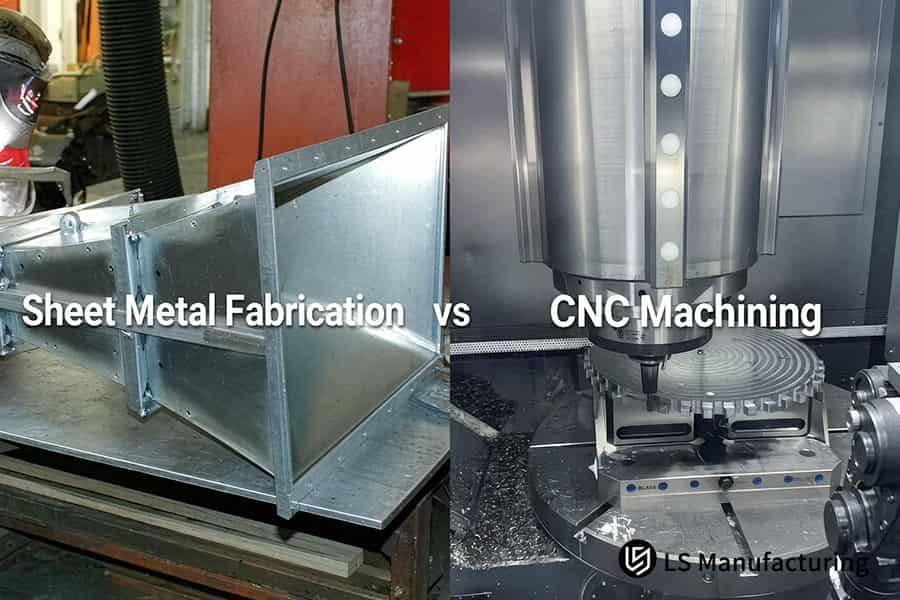
Figure 2: Technicians form 304 sheet metal frame while CNC machines part ±0.02 mm.
How Do Setup And Secondary Operations Affect Custom Sheet Metal Parts Manufacturer Quotes?
Secondary operations decide the overall budget. Custom sheet metal relies on serial processes including press-brake bending, fastener insertion and MIG/TIG welding. CNC machining consolidates features in a single fixture. Inexpensive standard PEM fasteners insertion according to ASME B1.1 may be more economical than milling complicated tapped blind holes.
1. Identify the Sequential Processes in Sheet Metal Quotes
A sheet metal quote is quoted by cutting, bending, and surface treatment as separate items. Surface finishing including power coating is quoted separately in addition to cost of cutting, bending and surface treatment at around $15/㎡. Incremental cost of custom sheet metal parts manufacturer will vary from CNC machining incremental cost.
2. Compare Press-Brake Bending and Hardware Insertion Costs
Press brake bending costs range from $0.5 to $3 per bend depending on its length and complexity. CNC machines manufacture majority of parts using one fixture.
- Bending: $0.5–$3 per bend
- Hardware insertion: $0.1–$0.5 per fastener
- Welding: $0.5–$2 per spot weld
Normal press brake bending process can meet the ISO 2768-m level and, therefore, there will be no need for CNC operation that is relatively expensive. Welding and grinding operations raise the cost of consumables and increase the quotation cost.
3. Evaluate the Cost of Complex Tapped Blind Holes
CNC machine creates the tapped holes. An increased cycle time because of the depth of blind holes. Secondary operations like welding or grinding, which cause hidden costs in the quotation.
ASME B1.1-2024 standard describes the thread form and the fit class (1A/1B to 3A/3B) and UN/UNR/UNJ thread forms. PEM fasteners by ASME B1.1 standards are appropriate in thin material in which tapped holes cannot be created.
4. Request Itemized Quotes for Accurate Comparison
A sheet metal assembly quote should contain bending, hardware insertion, and surface finishing as separate steps. Surface finishing and welding should be evaluated as the last necessary steps for functionality.
What Steps Reduce Turnaround Time For CNC Machining Quote Requests?
DFM review reduces time to create quotes. Unreachable tool geometries need manual adjustments and add to the quoting process. Standard radii and well-designed 3D CAD STEP files enable automation and full cost estimation within 2 hours. Good drawings eliminate the need for re-engineering drawings and help you cut down the time spent in the market by 35.7%.
3 Standardization Steps That Accelerate Quotes
- Avoiding the use of internal sharp corners. Unreachable tool geometries mean that some actions will be done manually. Having at least 1× tool diameter as an inside corner radius ensures that no obstacles appear during 3-axis toolpaths. Same standardization principles apply to CNC machining quote drawings.
- Standardized fillet radii. Uniform radius of R2 mm or R3 mm on all fillets makes it possible to create batch toolpaths using the CAM. Non-uniform fillets require a change of tools and parsing of nesting during takeoff process.
- Attach a 2D PDF with dimensions and tolerances. A PDF layer highlighting ±0.005 mm dimensions and thread sizes (ASME B1.1-2024) is a great way to give an estimator the idea of the tolerance requirements without analyzing the CAD model.
A buyer gets an ironclad price quote with one pass engineering if the drawings abide by the following three principles. Clean CAD data entry gives the quoted price in hours, not days.
DFM Checklist for Faster Quoting
- Send native or STEP CAD drawings along with dimensioned 2D PDF. Do not send unsolicited renders.
- Apply DFM optimization by eliminating undercuts and aligning hole axes in one pull direction.
- Target lead time reduction through application of default tolerances per ISO 2768-m standard. Apply ±0.005 mm only for sealing interfaces.
- Sheet metal stamping parts should have formed and flat pattern parts separate in 2D PDF in order to avoid misunderstanding.
Data source: LS Manufacturing automated DFM 3D/2D drawing parsing system (processing time ≤2 hours).
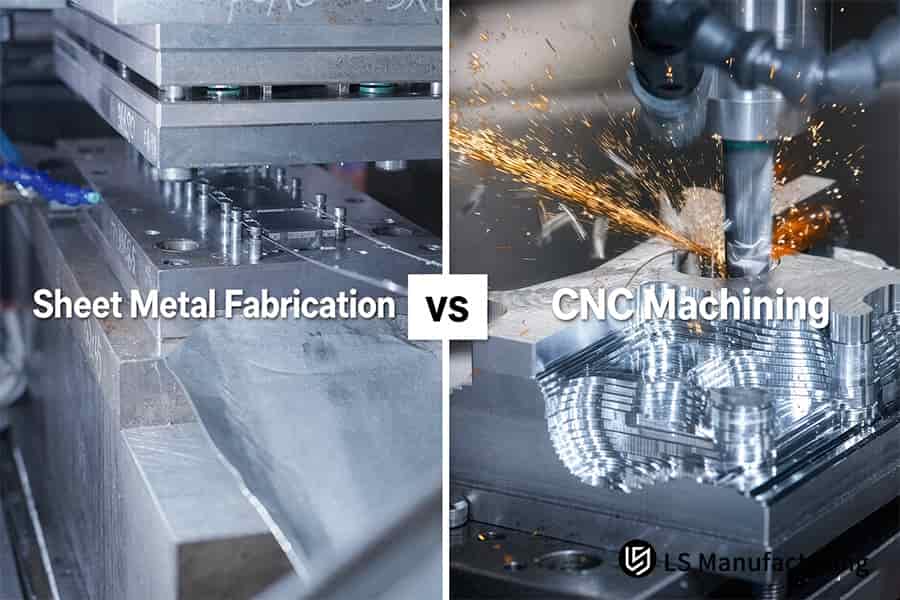
Figure 3: Press brake bends AL 6061 sheet metal while CNC cuts impeller Ra 0.8 μm.
Why Consider A Manufacturing Process Comparison Service Before Tooling Investment?
Specialized manufacturing process comparison service allows one to find cost-effective hybrid solutions before making investment in capital equipment. Bodies of laser cut sheet metal in conjunction with CNC machined mounting blocks provide structural strength.
When Full-Sheet-Metal or Full-CNC Falls Short
| Architecture | Best For | Limitation |
| Full sheet metal | Uniform-wall enclosures | Cannot hold ±0.005 mm coaxial bores |
| Full CNC | 3D compound contours | 68% chip waste; 3.1× raw material cost |
| Hybrid (sheet + CNC inserts) | Rigid shells with precision mounts | Requires locating datum coordination |
A full-sheet-metal method cannot produce coaxial holes. Full-CNC method generates 68% scrap from the billet in the form of chips. Hybrid manufacturing technique splits the part in two sub-assemblies. Sheet metal structure formation holds the structural skin; CNC insert houses the bearing and seal.
Physical Alignment Notes for Hybrid Builds
Locating datums should refer to a common coordinate system between both sub-assemblies. PEM fasteners per ASME B1.1-2024 screw into sheet metal thickness as thin as 0.9 mm. CNC-machined bosses take pressed-in bearings to an accuracy of ±0.005 mm.
A manufacturing process comparison service flags the hybrid split before tooling locks in prototyping validates the hybrid interface under load, preventing $40,000 in tooling commitment to the wrong process route.
- Establish a single datum on sheet metal chassis fabrication. Project that datum onto the CNC insert design.
- Keep prototyping for testing the interface under load prior to production tooling.
How Can DFM Analysis Optimize Sheet Metal Fabrication Cost In Complex Enclosures?
Early DFM analysis optimizes sheet metal fabrication cost. Reduction in the number of bends decreases set-up cost. Alignment of hole-to-bend distance minimizes distortion. Standardization of tool radius throughout the assembly saves die changes. Elimination of die changes via standardization of bend radius decreases the production cycle time by as much as 35.7%.
DFM Levers That Lower Enclosure Cost
- Minimize the number of bends. Press-brake bends cost $0.5-$3 in setup/handling fees each. Merging two bends along the same line into one formed flange cuts out one bending operation.
- Set hole-to-bend spacing ≥ 2.5 times material thickness. 2 mm hole in 1.5 mm thick material requires 3.75 mm spacing to the bend line. Holes positioned closer than that ovalize due to shift of the neutral axis.
- Standardize on bend radii. Single punch-die set at R2 mm or R3 mm is used for all bends eliminating mid-run die exchanges. Mixing bend radii incurs 8-12 minute tool changes with each changeover. A sheet metal forming service can benefit greatly from standardization of bend radii in multiple families of parts.
- DFM analysis picks up on these three points prior to releasing the flat pattern for production. An aligned hole and radius buyer can eliminate change-order delays. Simple statement: less bends and less radius equals shorter press run and cheaper cost per piece.
Enclosure Manufacturing Checklist
- Drawings with notes for enclosure manufacturing, including: bend sequence, datum edge, surface protection per ISO 7599.
- Implement sheet metal cabinet fabrication radius standard (R 2 mm) for all flanges, no die-change loops.
- Cosmetic versus structural bends in the BOM, cosmetic bends have more tolerance in radii.
Data source: LS Manufacturing sheet metal bending DFM ruleset (integrated with ISO 7599 surface protection standard).
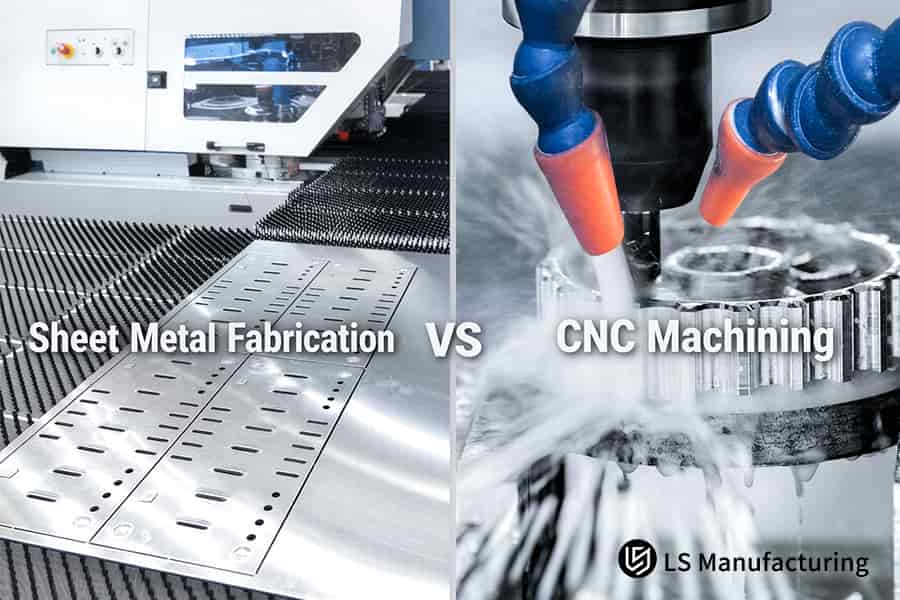
Figure 4: Punch press forms 316L sheet metal plate while CNC mills housing 26.8% cheaper.
LS Manufacturing Custom Sheet Metal & CNC Hybrid Fabrication For Medical Device Chassis: 26.8% Cost Reduction
Hybrid "sheet metal outer frame with CNC inserts" design solved a gene-sequencer enclosure schedule overrun. DFM analysis by LS Manufacturing changed out solid 5-axis milling from Aluminum 7075-T651. Material removal reduced from 68% down to minimal chip making.
Client Challenge
North American medical device sourcing director planned 5-axis milling for complete 5-axis milling of a gene sequencer protection cavity out of Aluminum 7075-T651. Instead, the design could have benefited from the medical sheet metal enclosure hybrid architecture.
Material removed per-piece was at 68%. Batch interference rate was constant at 14.5%. The lead time was elongated to 21 days. Budget went above the ceiling.
LS Manufacturing Solution
Engineers conducted full DFM analysis. They recommended sheet metal CNC hybrid. A formed shell had structural walls. CNC inserts dealt with crucial mating features. Trial machining showed ±0.03 mm offset at CNC attachments due to bend stress relaxation. A stress-relief anneal and fixturing datum modification resolved the interference problem.
Results and Value
Per-piece cost reduced by 26.8%. Assembly interference went down from 14.5% to 1.2%. Lead time reduced from 21 days to 13.5 days – a reduction of 35.7%. Assembly was successfully subjected to MIL-A-8625 Type III hard anodizing at 50 μm. Salt spray test for 1,000 hours was successfully completed. ISO 13485 requirements for the medical device were fulfilled.
A hybrid shell-insert split turns a 68%-waste solid machined part into a build that is much more predictable and less risky.
Action Items
- Ask for DFM evaluation prior to tooling commitment when the walls permit a formed shell with CNC inserted design.
- Specify MIL-A-8625 Type III hard anodizing 50 μm for salt spray testing requirement of 1,000 hours.
Data source: LS Manufacturing medical device manufacturing case log (project #MED-2026-089, sample size >1,200).
Upload your gene sequencer enclosure drawing for a free hybrid fabrication evaluation — see how a sheet metal + CNC insert design can cut your cost by 26.8% and lead time by 35.7%.

FAQs
1. What is the typical accuracy difference between sheet metal and CNC machining?
CNC machining can achieve tolerances as low as ±0.005 mm to ±0.002 mm for solid block parts, whereas sheet metal fabrication can maintain tolerances at ±0.01 mm to ±0.02 mm for bending springback issues and material thickness variations. LS Manufacturing applies Zeiss CMM inspection for tolerance compliance in both processes.
2. Which process is cheaper for prototype development under 10 units?
CNC machining is a more economic choice for very low-volume prototyping (up to 10 pcs) with complex geometry as it eliminates sheet metal bending sequence design, press brake tooling set up, and flat pattern development expenses. LS Manufacturing offers quick two-hour quotations for both processes.
3. How does material selection affect sheet metal fabrication cost versus CNC milling?
Subtraction of significant material volume from solid blocks makes CNC machining less economically effective for high-cost materials such as AL 7075-T651 (in billet form). Sheet metal fabrication works with flat thin plates without any material wastage, which means raw material cost savings. LS Manufacturing optimizes part layouts to reach 75% material efficiency for sheet metal orders.
4. Can sheet metal parts incorporate threaded holes like CNC machined components?
Yes, sheet metal components feature press-fit PEM self-clinching studs or extruded holes meeting ASME B1.1 specifications, whereas deep tapped holes are necessary in solid CNC blocks. LS Manufacturing provides automated hardware insertions to ensure uniform pull-out strength and accuracy.
5. Is surface finishing like MIL-A-8625 anodizing applicable to both processes?
Yes, both aluminum sheet metal and CNC machined parts are compatible with MIL-A-8625 Type III hard anodizing featuring 50 μm coating thickness and high resistance to corrosion and wear. LS Manufacturing ensures validation of finishes capable of resisting salt spray tests for 1,000 hours for both processes.
6. How does LS Manufacturing prevent sheet metal warping during welding?
LS Manufacturing uses specialized welding fixtures with copper backup bars and TIG or laser seam welding stations to avoid warping due to heat distortion in flat panels. LS Manufacturing quality control follows ISO 2768-m standards of dimensionality of all welded assemblies.
7. Why does high part complexity increase CNC machining cycle times so dramatically?
Complicated parts lead to increased cycle times for CNC machining due to multi-axis machining toolpaths, deep pocket machining and more tool changes, which is time-consuming in a linear manner per part. LS Manufacturing DFM makes internal radii streamlined and cavity depths minimized for faster milling.
8. What drawing files are required to get an instant quote from LS Manufacturing?
Send a 3D STEP or IGES file for geometry review along with a 2D PDF containing tight tolerances of ±0.005 mm and surface finish details. LS Manufacturing gives DFM feedback with quotation estimate and cycle time estimate within 2 hours.
Summary
Whether sheet metal forming or CNC machining is the better process is all determined by your part quantities, geometry, and tolerances. Going for full machining without considering these factors would mean carrying unnecessary weight. With DFM analysis from LS Manufacturing, you can easily get cost savings through hybrid processes, with quick delivery and compliance with strict ISO 9001:2015 & AS9100D standards.
Tight budget or delivery schedule? Simply press the request a quote button below and upload your 3D/2D CAD files. LS Manufacturing engineers will perform DFM analysis and offer an accurate quote in 2 hours, showing you how to get the most out of your manufacturing process!
📞Tel: +86 185 6675 9667
📧Email: info@lsrpf.com
🌐Website:https://lsrpf.com/
Disclaimer
The contents of this page are for informational purposes only.LS Manufacturing servicesThere are no representations or warranties, express or implied, as to the accuracy, completeness or validity of the information. It should not be inferred that a third-party supplier or manufacturer will provide performance parameters, geometric tolerances, specific design characteristics, material quality and type or workmanship through the LS Manufacturing network. It's the buyer's responsibility.Require partsquotation Identify specific requirements for these sections.Please contact us for more information.
LS Manufacturing Team
LS Manufacturing is an industry-leading company. Focus on custom manufacturing solutions. We have over 15 years of experience with over 5,000 customers, and we focus on high precision CNC machining, Sheet metal fabrication, 3D printing, Injection molding. Metal stamping, and other one-stop manufacturing services.
Our factory is equipped with over 100 state-of-the-art 5-axis machining centers, ISO 9001:2015 certified. We provide fast, efficient and high-quality manufacturing solutions to customers in more than 150 countries around the world. Whether it is small volume production or large-scale customization, we can meet your needs with the fastest delivery within 24 hours. choose LS Manufacturing. This means selection efficiency, quality and professionalism.
To learn more, visit our website:www.lsrpf.com