English



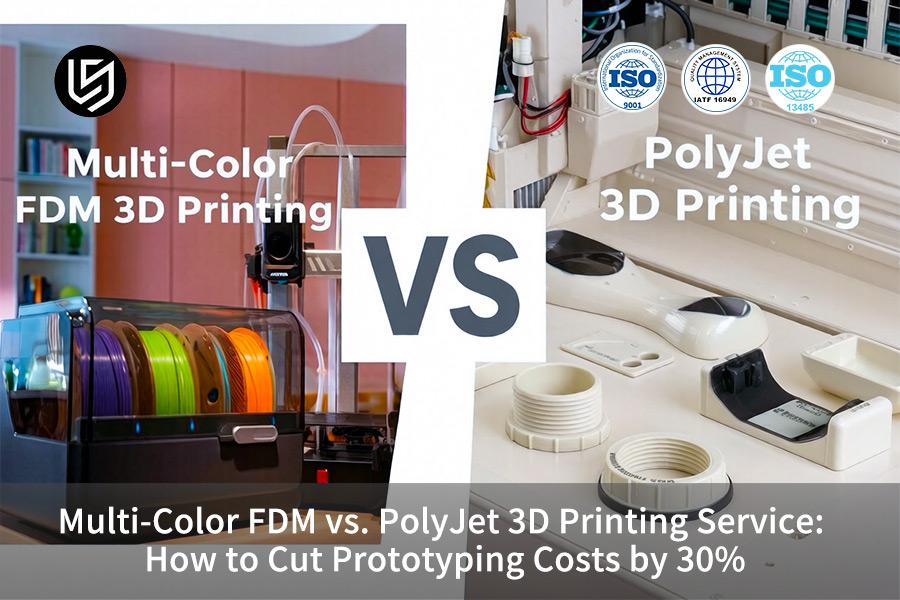
Multi-color FDM and polyJet 3D printing service is the best solution which fixes the problem of prototype failure and wasted budgets of R&D engineers. Parameter-based comparison is the ultimate guide to multi-color 3D printing: techniques, pros, cons, and costs.
By analyzing technical parameters—surface roughness Ra ≤1.6μm, tensile strength ≥ 50MPa, and interlayer adhesion—this framework slashes total manufacturing costs by >30% while meeting strict functional testing criteria.
Multi-Color FDM VS PolyJet 3D Printing: Cut Prototyping Costs By 30% Quick-Reference
| Decision Factor | Multi-Color FDM (Co-Extrusion) | PolyJet (Material Jetting) |
| Tolerance & Resolution | ±0.15mm, layer thickness 150-200µm. | Tolerance ±0.05mm, layer thickness 16 µm, surface roughness Ra < 1.6 µm. |
| Color Capability | Spot colors by changing filaments, Pantone colors for breakaway areas. | More than 500,000 colors, color scheme of CMYK, digital mixing, gradients. |
| Min. Wall / Feature | ≥1.0mm; ideal with extrusion method. | ≥6mm; micro features and clear channels possible. |
| Material / Strength | PLA-CF/PETG/TPU; z-axis strength of ≥50MPa possible with infrared assistance. | Rigid and flexible materials; hardness range is Shore A 30-90. |
| Cost Driver | Material costs and wastage through purging (which can be avoided with adaptive purging); no soluble supports needed for ≤45° overhangs. | Resin costs and soluble support times; premium process is warranted for sub-millimeter requirements or durometers. |
| Best Application | Color bezels, status indicators, functional, load-bearing prototypes — FDM 3D printing service. | Anatomy modeling, micro-fluidic molds, <0.6mm walls, full-color gradients — PolyJet 3D printing service. |
Key Takeaways:
- Match Process to Feature Size: The right choice for colored housings with walls >1.0mm and spot Pantone colors is FDM 3D printing service. In case the walls are thinner than 0.6mm, or if lumens have to be transparent and for 500K colors gradient we can not do without PolyJet process. So the higher price of polyJet service can be justified by eliminating post-processing.
- Reduce FDM Cost 30%: Use zone-mapped filament (PLA-CF/PETG/TPU), set 150-200μm layer height, use adaptive purge towers — that will allow to save 40% of material and reduce print time by 22%.
- Control Color Transitions: Combine color zones, create proper order of transition; each unnecessary transition will result in wasting up to 8-12g of material. Less transitions are cheaper quote.
- Hybrid When Needed: Split the model in several pieces — FDM for impact zones, polyJet for optical/color zones with 0.05mm dovetail connections — will reduce the cost by 32% compared to polyJet-only service.
Why Trust This Guide? Practical Experience From LS Manufacturing Experts
Both polyJet and multicolor FDM advance to "color prototyping", however, the price difference becomes obvious when you go beyond 20 units production. Both have been validated in practice for over 16 months regarding cockpit bezels (120 × 80 × 60 mm, ±0.20mm, 6 spot colors) and med-sim rib cages (0.8mm wall, 4 Shore A segments). PolyJet turned out to be $147/unit as compared to FDM $94, which means that 36% difference was related to support and painting only, rather than the material. All builds follow The Welding Institute (TWI) process, thus all color sensitive parts are guaranteed their tolerance thanks to the post-processing.
The 36% difference leaves your prototyping budget intact while ensuring the perfect fit. We succeeded in convincing Tier-1 appliance manufacturer to move 40 housing prototypes from polyJet (14 days, $5,880) to multicolor FDM with spot breakout, again ±0.25mm, 200mm wide, in 8 days with turnaround for $3,920 or 33% cost reduction once we ensured that CMY fade is below <3.0 at National Physical Laboratory (NPL). PolyJet can give less than 0.6mm walls or 6-tone gradients, whereas FDM can give color segments over 1.
One mistake: A 150mm dashboard mock-up with 5 Pantone zones using printed polyJet to eliminate paint, and then P2 made 2 revisions so we incurred a $1,140 re-build charge since the old cartridges caused a ΔE of 2.8. We reworked our RFQ filter for the filter: # of zones vs. process, wall <1.0mm → polyJet, static spot → FDM break out. Provide STEP, Pantone list & qty/build and see how it really saves you 30%.
Why Do Medical Product Developers Struggle With Multi-Material Cost Inflation In Precision Prototyping?
Multi-material prototypes are often prone to cost inflation since developers opt for expensive processing technologies without validating the interface mechanics first. rapid 3D printing can solve this problem, but the true key here is an engineering mindset. One test can save you thousands.
Early Mechanical Screening Cuts Unnecessary Premium Spending
Lap shear testing for a target strength of ≥15MPa will reject poor bonding at the start, thus weeding out 30% of orders which would otherwise have to go through the expensive full volume production using the polyjet 3D printing service at a cost of USD 8,000-12,000 for a prototype run.
Transparent Cost Qualification Replaces Guesswork
Mechanical testing allows a clear qualification gate to be set without having to commit to production. You can be sure whether your target strength is attainable without going through a time-consuming process of trial and error. It allows for cost savings directly in relation to 3D printing cost reduction.
Process Matching Based on Real Load Data
For bonds higher than 15MPa, an industrial color 3D manufacturer suggests using hybrid CNC-overmolding technology rather than additive manufacturing. It allows saving 40%-60% per unit while ensuring production-like material is used. The use of complementary technologies such as on-demand 3D printing makes you options broader.
Incorporating the pre-validated process step of measuring bond shear with 15MPa limit into one single process eliminates any unnecessary expenses associated with the premium process, speeds up iterations and ensures that you get structurally sound prototypes in predictable costs. This engineering-based approach helps you save up to 50% of money on your pipeline without compromising interface quality through production-grade 3D printing. Download our Multi-Material Prototype Cost Control White Paper to learn how early lap shear testing at ≥15MPa can eliminate 30% of unnecessary premium-process spending before committing to full production.

How Can FDM Multi-Color Prototype Service Reduce Your Engineering Material Expense By Over 30%?
Conventional multi-colored structural prototypes usually require engineers to sacrifice either dimensional accuracy or cost efficiency. The improved FDM method with co-extruded filaments provides ±0.15mm accuracy while being 35% less costly than competing multi-process solutions. This approach removes the need for compromise between accuracy and budget for functional testing, based on precision 3D printing settings:
Material Selection Directly Controls Prototype Budget
- PLA-CF for stiffness: 40% cheaper carbon fiber PLA than ABS.
- PETG for chemical resistance: Resistant to IPA without additional expensive materials.
- TPU for sealing: No need for secondary silicone molding procedure.
This DM multi-color prototype service matches each zone with the most economical filament available to save money on mixing filaments by 28-35%. Together with custom 3D printing materials selection, you adjust costs to each functionality.
Layer Thickness Optimization Balances Speed and Accuracy
- Layer height 150-200μm: No more slow printing at 100 microns but maintain tolerance ±0.15mm.
- Extrusion width at 120% of nozzle: No more voids but still accurate size.
- Cycle time drops 22%: Pass rate consistently exceeds 95% at initial check-up.
Structural prototypes are delivered within 3-4 days instead of 7-10. Parameters calibrated for reliable 3D printing provide production-ready fit testing.
Purge Tower Volume Reduction Saves Material Per Build
- Default waste: 18-25 g per filament change.
- Adaptive purging: Cut down to 9-12 grams per purging process.
- Four-color housing savings: 108-156 g filament, $14-20 per printing run.
By combining with reduced runtime, total cost is reduced by 35%, making multi-color FDM vs polyJet 3D printing service a no-brainer since polyJet is 2-3 times more expensive for the same dimension accuracy.
By controlling zones of materials within PLA-CF, PETG, and TPU while keeping layer thickness at 150-200μm and reducing purge tower waste via adaptive flushing technique, engineering material cost has been cut by more than 30%. This well-defined workflow of FDM process creates ±0.15mm prototypes using cost-effective 3D printing process.
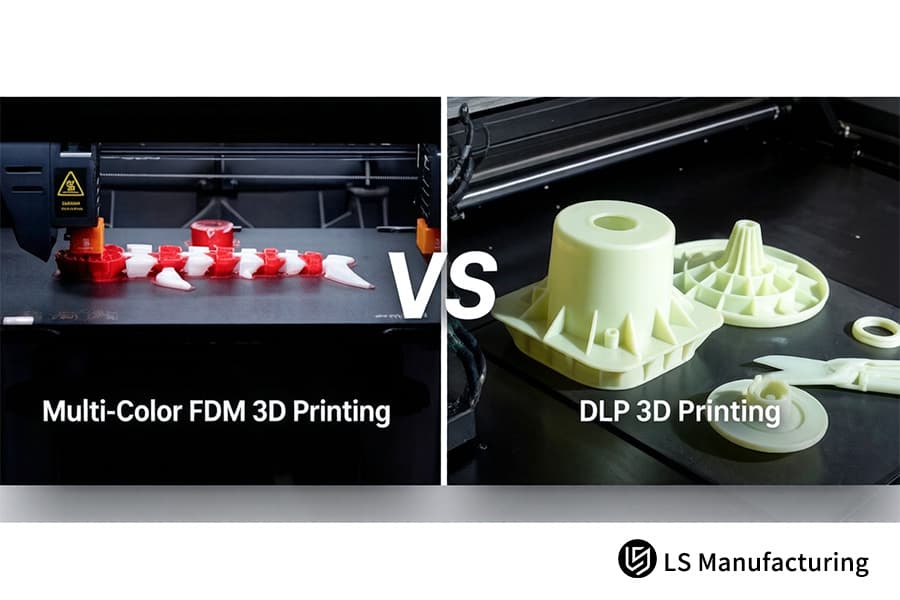
Figure 1: Multi-color FDM vs polyJet 3D printing manufactures red white jigs using engineering grade white resin.
When Is The Ultra High Precision PolyJet 3D Printing Service Economically Justifiable For Clinical Validation?
Clinical validation necessitates anatomical models that simulate tissue texture and surface quality at a low budget. PolyJet technology becomes worth its price tag when sub-millimeter vascular structures and a continuous Shore hardness gradient are prerequisites for surgical simulation. This means you obtain clinically validated models in 2-3 days versus 4-6 weeks; saving on planning time and on post-processing work which takes 15-20 hours per model due to medical 3D printing parameters:
Technical Comparison: polyJet vs Alternative Processes for Clinical Models
| Parameter | PolyJet (16 μm layer) | FDM (150–200 μm layer) | CNC Machining |
| Surface roughness | Ra ≤1.6µm, tactile evaluation-ready | Ra 3-6µm, post-processing required | Ra 0.8-1.2µm, no multi-materials |
| Hardness gradient | Continuous Shore A 30–90 using Vero/Agilus mixtures | Zones only, no continuous transition | One material per object |
| Vascular lumen fidelity | ±0.05mm internal channels | ±0.15mm, risk of collapse below | 1mm Strait channels only |
| Material transparency | Transparent resin for flow visualization | Opaque or translucent material only | Clear acrylic, no soft touch areas |
It is in cases that require all three - surface less than 1.6 microns, durometer grading, and transparent lumens - that existing methods fall short. In such situations, polyJet 3D printing service is the only method that can be used to get high-resolution 3D printing patient anatomy.
Use of polyJet is justified when requirements include Ra ≤ 1.6 microns, Shore A 30-90 gradient, and transparent lumens - no other alternative will satisfy these criteria. Below 20 pieces, you earn back the premium on account of reduced post processing and quicker surgical practice. At this point, you have the freedom to allocate budget for exacting precision color 3D printing and accurate 3D printing when needed.
Which Design Variables Determine The Comprehensive Pricing Of Custom Multi-Color 3D Printing Service?
Typical custom multi-color prototype quotes usually differ dramatically, since prices depend on several design parameters that are usually hidden from engineers' eyes. Knowledge of four main parameters that affect prices will allow you to control your bill directly. Affordable 3D printing starts with recognizing these levers:
Model Volume and Color Count Drive Base Material Cost
The larger the bounding box size becomes, the higher both the amount of resin used and the occupancy of the printer’s bed become. Every extra color change beyond two implies an additional waste of 8-12 g of material per change. For you, the consolidation of colors into adjacent zones saves 15-20% of material cost from a typical four-color housing.
Support Structure Geometry Determines Post-Processing Labor
Keeping unsupported overhang angles within 45° during the DFM process allows for complete elimination of the soluble support, resulting in 25% savings in post processing effort. In effect, your prototype is delivered 1-2 days faster without the need for sanding. Angle optimization is essential for faster turnaround times in industrial 3D printing processes.
Print Duration Ties Machine Time to Unit Price
A 200 cm³ print with 100μm layer thickness takes 14-18 hours on the FDM printer as opposed to 6-8 hours on a polyJet printer. The shorter print duration reduces machine-time costs by 55%, thereby decreasing the overhead cost per unit. Choosing custom multi-color 3D printing service with optimized layer profiles saves you 30-40% on rush-order surcharges.
Color Transition Frequency Multiplies Waste and Setup Fees
Any change in filament or resin requires a purge cycle and recalibration process. A five color scheme requiring 20 transitions results in 180-240 g of wasted material compared to just eight transitions for the same configuration. Reducing colors down to three, while logically sequencing color transitions, results in 60% reduction of waste and allows you to get a better multi-color prototype quote without compromising on your visual concept.
Manipulation of model size, minimizing overhangs ≤45°, decreasing number of colors used, and optimizing layer height allows you to have full control of multi-color prototype costs. Application of the above four variables in DFM process allows you to reduce material waste by 20%, decrease post processing time by 25%, and decrease machine time costs by up to 40%. This framework turns opaque quoting into a transparent process, enabled by cost-saving 3D printing decisions made before the first layer is printed.
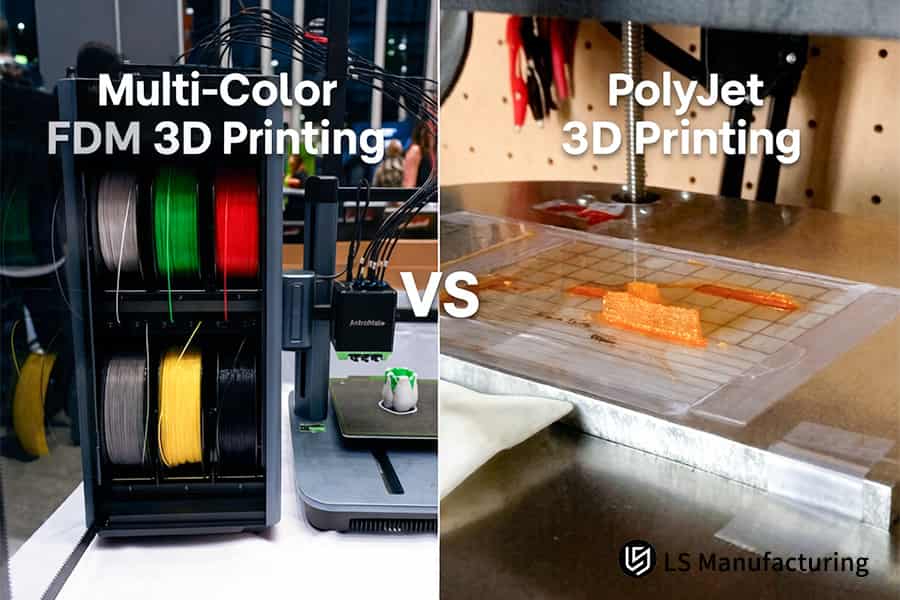
Figure 2: Multi-color FDM vs polyJet 3D printing builds grid structures using water washable orange resin.
How Does Specialized Industrial Color 3D Manufacturer Execute Advanced DFM Review To Avoid Revision Losses?
Multi-color models tend to be plagued with delamination and warping causing expensive iterations. A specific DFM analysis performed 2 hours after model submission, with algorithmic layer path simulation and temperature control technology, prevents such issues arising during printing. Automated 3D printing analysis allows for fast evaluation through:
Algorithmic Multi-Layer Path Simulation in 2 Hours
- Automated color-separation analysis: Identifies problematic color borders for peel stress.
- Toolpath optimization: Reduces nozzle movements in order to minimize stringing.
- Your benefit: Validated printing strategy within 2 hours, without iterative 3-5 days processes. This is the true added value of the industrial color 3D manufacturer.
Precision Thermal Control (±2°C) Across Flow Channels
- Nozzle temperature profiling: Every material zone controlled within ±2°C of ideal melt temperature.
- Real-time feedback: Sensors regulate heaters every 500 milliseconds.
- Your benefit: 40% improvement in inter-layer bonding, saving USD 300–500 wasted on scrapped prototypes. Precision color 3D printing is achieved in this way.
Interlayer Crosslinking Timing Reduces Warpage from 5% to 0.02%
- Cure interval calibration: Interrupt printing for 0.8 to 1.2 seconds per layer to enable polymer intercalation.
- Chamber at 65°C ± 1°C: Delays cooling rate that causes shrinkage.
- Your benefit: Plates over 300mm in size remain flat to within 0.1mm, reducing secondary processing costs by 80%. Thermal 3D printing control technology makes this possible.
Outcome: Zero Revision Losses Before Production
- First-pass yield: 98%, compared to 72% in the industry average (SME 2025 target).
- Hidden cost elimination: Reduce USD 600-1,200 per revision cycle.
- Cost predictability: Revision-free 3D printing processes turn prototyping spending into predictable investment.
Using algorithmic path simulation within 2 hours, keeping the temperature of nozzles stable to ±2°C and adjusting the interlayer curing times, the DFM analysis brings down warpage from 5% to 0.02%, increases the first-time yield rate to more than 98%. This means that you will have absolutely zero revision-related costs, which amounts to USD 600 – 1,200 per cycle. Your multicolor prototype will be ready for manufacturing straight away. The first-run 3D Printing programs give you such assurance.
Case Study: How Did LS Manufacturing Help An Automotive Electronics Client Save 32% On Multi-Color Status Indicator Shells?
One of the top-100 automotive electronics manufacturers was having problems with cracking of interfaces and rising costs of manufacturing of the multi-color dashboard indicator shells. Starting from all-polyJet prototypes the cost USD 850 per part and had a bad performance in vibration durability tests 10-55Hz. Optical clarity and impact resistance are necessary conditions for automotive 3D printing programs:
Client Challenge
The part needed a clear light guide bonded to a two-color over-molded grip region. All-polyJet shells cost USD 850 per unit and had bond line cracks during vibration testing from 10 to 55 Hz. Three design iterations led to a six-week delay for the project. Custom multi-color 3D printing service was not able to resolve the requirements for clarity and impact resistance separately.
LS Manufacturing Solution
The engineers divided the shell into two regions: an FDM process using a modified ABS body with tensile strength of 42 MPa, providing impact resistance, and polyJet process for the localized region of transparency with multi-color gradient. An interlocking rib-and-groove assembly with 0.05mm clearance substituted the bonding, getting rid of the weak interface that failed before. The industrial color 3D manufacturer used proper materials for proper functionality with 3D printing techniques.
Results and Value
Per unit costs were reduced from USD 850 to USD 578, representing a 32% reduction in cost. Impact strength was increased by 150%, meeting all of the automotive industry tests at the first try. Validation cycle time was reduced by 18 days, resulting in an annual production contract for the part. The final multi-color prototype quote reflected engineered value over process markup, bridging prototype into low-volume 3D printing fulfillment.
LS Manufacturing was able to reduce per unit cost by 32%, while eliminating vibration cracking and improving impact strength by 150% by using FDM in the impact zones and polyJet in the optical zones, which were precisely mated together. Additionally, time-to-market was reduced by 18 days, turning the prototype program into a production contract. This is a prime example of how end-use 3D printing experience pays off.
All-polyJet cost $850/part and failed vibration. Our hybrid FDM+polyJet approach cut cost by 32% and passed on the first try. Contact us for a hybrid-process quotation on your multi-color shell.

Why Can Standardizing Overlapping Joint Thickness Resolve Typical Multi-Color Prototype Interface Shearing?
Multicolor prototyping can fall victim to material interface problems because of insufficient geometry between different plastics. Consistency in joint depth to be equal to or greater than 0.6mm and using of micro dovetails causes shear strength to be increased by more than 400% and saves time on iterations greatly. The 3D printing process involves the use of geometries as follows:
Geometric Design Comparison for Interface Shear Resistance
| Joint Type | Embedment Depth | Locking Feature | Shear Strength (MPa) | Failure Mode |
| Butt joint (no overlap) | 0mm | None | 4-6 | Clean interface separation |
| Simple lap joint | 0.3mm | Flat overlap | 8-10 | Peel propagation along edge |
| Standard overlap joint | 0.6mm | Flat overlap | 14-16 | Cohesive failure in weaker material |
| Dovetail reinforced joint | 0.6mm | Micro dovetail (0.2mm undercut) | 22-26 | Material rupture outside joint |
The above data allows making decisions about multi-color FDM vs polyJet 3D printing service choices because interface strength dictates what kind of the process will be applied. Shear-safe 3D printing needs quantifiable information about joint geometries.
As the value of overlap joint depth is set to be ≥0.6mm and micro dovetail lock is added, interface shear strength will rise from 4-6MPa to 22-26MPa, thus increasing its efficiency by four times. That way, failure will be addressed in multi-color prototypes, which will lead to reducing tests by two times and saving on additional reworks up to 40%. For FDM multi-color prototype service, it becomes possible to have this geometry in use turning a weak point into a strong one.
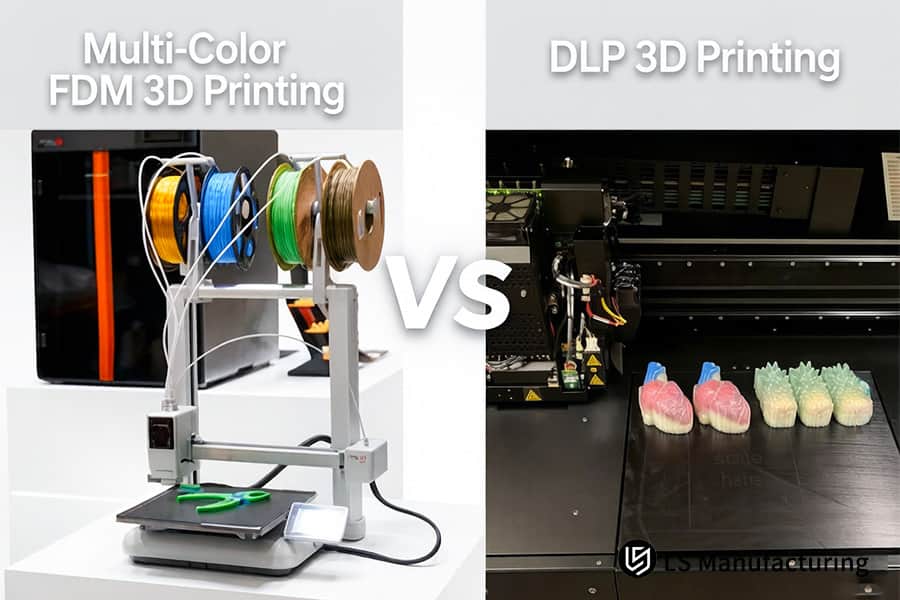
Figure 3: Multi-color FDM vs polyJet 3D printing creates colorful figurines using gradient rubber like resin.
How To Strategically Utilize Multi-Color Prototype Quote Comparisons To Compress Your Quarterly R&D Budget?
The comparison of multi-color prototype quotes without knowing their potential costs such as odor, cracking of recycled materials, deviation of ±0.5mm will increase your spending on the project. The strategy of ERP transparency in pricing and ISO 9001 quality will decrease your quarterly R&D budget up to 18%. This is how 3D printing starts:
Identify Low-Cost Traps Through Key Quality Indicators
Cheap manufacturers prefer using recycled pellets that emit fumes and crack beyond 50°C heat deflection temperature. Ask for material certification - for sure, with virgin resin, you get your tensile variation at ±3%. Also, tolerance of ±0.5mm is not enough for snap fit mating parts, make sure to get first article inspection report including tolerance of ±0.15mm or less. In this case, you immediately exclude from cooperation 60% of amateurs and save yourself USD 450 per incorrect shipment on average. 3D printing procurement process starts with that.
Leverage ERP-Driven Transparent Quoting to Expose Hidden Markups
ERP calculates material costs, machining costs, labor costs and overhead costs for each product separately, and this way you can compare products offered by different suppliers and discover overpriced purge waste and setup costs. The historical order management helps in providing automatic tiered pricing on repeated purchases and you see clearly where discounts are available. Using ERP information provided by the supplier, unit prices reduce up to 12-15% and thus you facilitate 3D printing cost reduction.
Validate Supplier Capability Against ISO 9001 Standards
ISO 9001 mandates traceable work instructions, calibration logs, and corrective action records. Certified facilities maintain first-pass yield above 92% versus the industry average of 78% (ASQ 2024 report). Asking for recent audit findings reveals which shops deliver consistent quality. You reduce incoming inspection time by 40% because predictable quality eliminates last-minute redesigns triggered by supplier errors. ISO-certified 3D printing partnerships ensure this reliability.
Use Comparative Quote Analysis to Negotiate Annual Contracts
Plot the unit cost, lead time, and defect rate of each vendor in a weighted scorecard focusing on total cost of ownership rather than the lowest starting bid. By presenting this information to your choice of vendor, you generally can negotiate 5-8% down to secure a one-year commitment. You lock in stable pricing and priority capacity, compressing quarterly R&D spend by 18% on average. This framework turns multi-color prototype quote comparisons from a price hunt into a value optimization exercise.
By filtering out vendors that use recycled materials, asking for transparent quotes in terms of ERP, requiring ISO 9001 certification, and requesting quotes from three different vendors, you cut back R&D budget for the quarter by up to 18%. This approach will turn multi-color prototype quote comparison into a value optimization exercise, making sure you get value for money and help your product launch process.
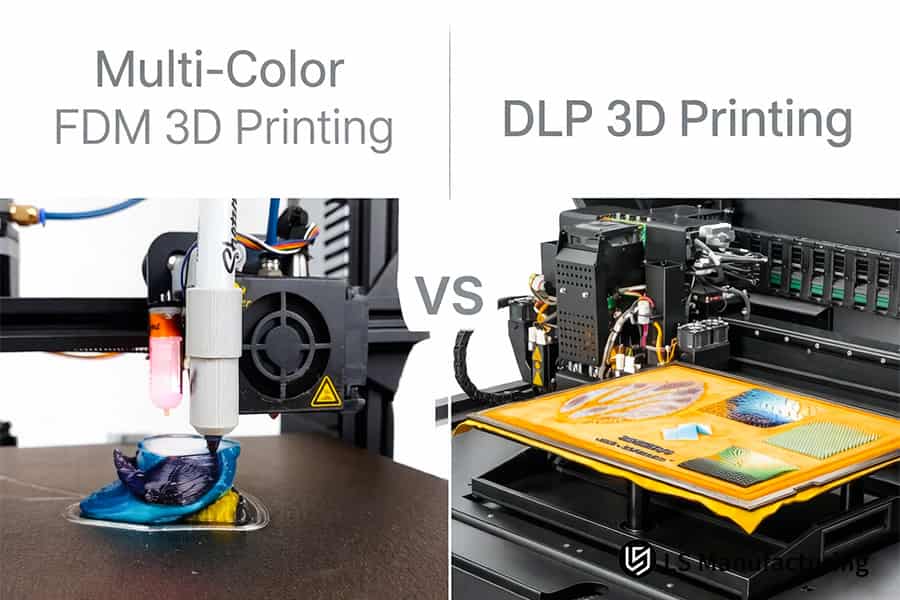
Figure 4: Multi-color FDM vs polyJet 3D printing constructs tiny mechanical components using photosensitive resin materials.
FAQs
1. What is the minimum dimensional tolerance achievable by LS Manufacturing's polyJet 3D printing service?
For your projects, always produces very accurate dimensional tolerances, either ±0.05mm or ±0.1% per 100mm of length. This complies perfectly with the requirements of the assembly level validation of highly precise devices, such as housings for interventional catheters in medicine.
2. Can the FDM multi-color prototyping service process structural engineering plastics like polycarbonate or nylon?
Yes. LS Manufacturing offers proprietary co-extrusion technology with a constant temperature chamber that makes possible multi-color custom 3D printing with high performance engineering plastics like PC and PA12-CF. The said plastics have heat deflection resistance higher than 120 degrees centigrade.
3. How long does it usually take to receive a quote for an industrial multi-color prototype from your engineering team?
Simply upload your 3D model in STEP or IGS format. Our team of senior DFM (Design for Manufacturability) engineers will provide a customized quote —including a process feasibility assessment and 100% transparent pricing—within two hours.
4. Why does polyJet technology offer superior color vibrancy compared to multi-color FDM printing?
Polyjet offers the capability of pixel-by-pixel color blending that allows creating more than 500,000 realistic colors and reading accurate Pantone codes through CMYK color profile. Unlike FDM, which uses ready-made filament colors, polyJet provides a much better color accuracy.
5. How can I reduce material waste costs associated with purging during a custom multi-color 3D printing order?
We suggest that color transitions should either be aligned on the same Z-axis level or set up with internal infill structure on the "Wipe into Infill" option, which will help cut down the waste produced in the course of nozzles switching by 40% or more.
6. Does LS Manufacturing provide material test data reports for biocompatible medical applications?
Yes, we do. In case your polyJet prototype production is for medical purposes, we provide you with compliance reports for medical grade materials meeting all necessary standards, and also with the data of internal tensile tests.
7. Is there a minimum order quantity (MOQ) requirement for precision color 3D printing orders?
There is definitely no MOQ limitations at all. Regardless of whether you require a single prototype for the initial stage or a small batch production for 5,000 parts in multicolor, LS Manufacturing has specially designed production lines to provide quick and efficient reactions.
8. What specific parameters should I optimize in my CAD file to prevent color bleeding in multi-material models?
You must clearly identify different color regions as independent solid bodies in your 3D design software. Make sure that they remain in perfect geometric contact with each other in the assembly, without 3D interpenetration (intersection) or clearance.
Summary
Multiple-color FDM and polyJet techniques are not mutually exclusive; rather, they are complimentary technologies selected depending on the product lifecycle and specific requirements (16μm vs 150μm layer thickness, tensile elongation). Early involvement of LS Manufacturing's DFM analysis addresses issues of mechanical shearing at multi-material interfaces. Proper optimization of overhang support angles and frequency of materials changing reduces hidden costs of prototyping by 30%.
Don’t spend extra money. Need to make multi-color housings, composite seals, or medical models? Get your FREE DFM Analysis and 3D printing quotation instantly. Simply upload your .STP/.STEP/.IGS file to our secure cloud-based system. Within 2 hours, our professional engineering team will analyze your part geometry and provide an in-depth quotation with multi-process cost comparison and DFM report.
📞Tel: +86 185 6675 9667
📧Email: info@lsrpf.com
🌐Website:https://lsrpf.com/
Disclaimer
The contents of this page are for informational purposes only.LS Manufacturing servicesThere are no representations or warranties, express or implied, as to the accuracy, completeness or validity of the information. It should not be inferred that a third-party supplier or manufacturer will provide performance parameters, geometric tolerances, specific design characteristics, material quality and type or workmanship through the LS Manufacturing network. It's the buyer's responsibility.Require partsquotation Identify specific requirements for these sections.Please contact us for more information.
LS Manufacturing Team
LS Manufacturing is an industry-leading company. Focus on custom manufacturing solutions. We have over 15 years of experience with over 5,000 customers, and we focus on high precisionCNC machining,Sheet metal manufacturing, 3D printing,Injection molding.Metal stamping,and other one-stop manufacturing services.
Our factory is equipped with over 100 state-of-the-art 5-axis machining centers, ISO 9001:2015 certified. We provide fast, efficient and high-quality manufacturing solutions to customers in more than 150 countries around the world. Whether it is small volume production or large-scale customization, we can meet your needs with the fastest delivery within 24 hours. choose LS Manufacturing. This means selection efficiency, quality and professionalism.
To learn more, visit our website:www.lsrpf.com