English



Nylon vs PETG 3D printing service is a specialized rapid manufacturing solution by LS Manufacturing designed to clarify the fundamental nylon vs polyester differences and similarities that often lead to part warpage and over-budgeting in aerospace and medical low-volume prototyping. By decoding these precise material behaviors, engineering teams can eliminate procurement risks and accurately predict structural stability before production begins.
The absence of creep curve data under 80°C loading or dynamic fatigue test results often makes it impossible for engineers to calculate true total cost of ownership (TCO) and leads to part failures during custom manufacturing. This analysis provides an evidence-based choice method based on the experience of LS Manufacturing with industrial-grade FDM and SLS manufacturing processes, including more than 10,000 parts made from engineering plastics. You will get detailed information comparing nylon and PETG in water absorption, tensile strength, notched Izod impact, and volume pricing to match your procurement budget.
Nylon VS PETG Polyester 3D Printing: Stability & Cost Guide
| Decision Factor | Nylon (PA12, PA6, PA-CF) | PETG (Polyethylene Terephthalate Glycol) |
| Dimensional Stability | Hygroscopic — swells when exposed to moist atmosphere to 0.5%. | Excellent; moisture absorption is very low (<0.1%). |
| Tensile Strength | Dependent on the grade but within 45-80 MPa; carbon fiber-filled variants can achieve 100+ MPa. | Within 45-55 MPa; consistent tensile strength that is somewhat lower than of reinforced nylons. |
| Impact Resistance | Excellent; high elongation at break (50-300%) allows surviving impacts well. | Good; elongation at break 20-50%; more impact resistant than PLA but still less than nylon. |
| Heat Deflection | Temperature (HDT) Temperature (HDT) 75-120°C (for unreinforced variants); 150-180°C (for carbon fiber-filled ones). | 65-75°C; begins to deform at the temperatures above 70°C. |
| Print Difficulty | High; needs enclosure maintaining temperature of at least 50°C, all-metal hotend, and drying to less than 0.2% moisture. | Low; works even on frame-only printer without enclosure. |
| Cost per Kilogram | $40-$80 (standard); $80-$150 (carbon-fiber filled). | $20-$35; cheap and readily available material for making functional prototypes. |
| Best Application | Cyclically loaded parts, gears, living hinges, high-wear 3D printing parts. | Enclosures, brackets, food-safe, outdoor parts, inexpensive functional prototypes. |
Key Takeaways:
- Choose Nylon for Mechanical Toughness and Wear Resistance: In case your part is subject to repetitive impacts or abrasions, or cyclic bends, you definitely want to choose nylon (PA-CF especially) over PETG. The trade-off here will be a significantly higher cost and tougher printing requirements.
- Choose PETG for Dimensional Stability and Ease of Printing: If you need a part to keep its size and shape regardless of the environment temperature and humidity, then PETG is the part to use. It prints well on open frame printers and only costs half of the regular nylon price.
- Moisture is the Deciding Factor for Outdoor or Humid Environments: PETG is hydrophobic material, meaning that it doesn't absorb any moisture, keeping its dimensions and properties unchanged. Nylon will absorb moisture and expand, thus cannot be used for precise unsealed parts.
- Cost Reflects Performance: For all non-wear applications, PETG provides about 80% of nylon utility for 40% of nylon cost. Use nylon only when you really need its advantages.
Why Trust This Guide? Practical Experience From LS Manufacturing Experts
The vast majority of nylon vs PETG articles are regurgitation of datasheet specs – tensile, glass transition, some bench tests. This one is based on real-world experience – the nylon part absorbs enough moisture to move a critical bore of ±0.15mm tolerance by Tuesday and PETG suffers a loss of nearly 22% interlayer shear strength after only 500 hours at 60°C. Theoretical considerations become obsolete if that bore leaks on the leak test or if the housing cracks in autoclave testing. You are here because your tolerance control and batch repeatability determine if that build gets shipped or if the purchase order fails.
The terminology used here is defined by the American Society of Mechanical Engineers (ASME). In particular, ASME has created the standards Y14.46 for additively manufactured parts tolerances which allows you to get that ±0.15mm critical bore past an aerospace inspector without going into the battle of footnotes. You know that your inspection report already speaks the GD&T language expected by your purchasing team, without rewriting your PO, without estimating the effect of layer height.
The material extrusion path verifies against Deutsches Institut für Normung (DIN); the DIN EN ISO 52903 for the feedstock and 52924 for the polymer qualification are alongside the ISO/ASTM 52900 glossary that your European clients refer to. The nylon 12 with >200 ppm of moisture after 80°C/4 h of drying and the hairy PETG at 60 mm/s – they are not mere observations, but failure modes with corresponding counter-measures. Start from these guidelines to get the first article yield from mid-60% to ≥92% without repeating mistakes again.
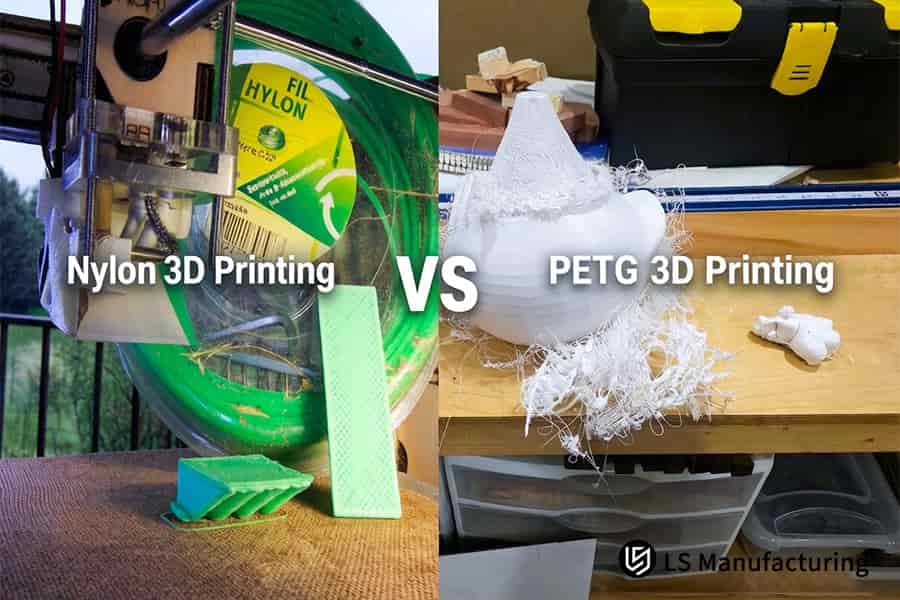
Figure 1: Nylon vs PETG 3D printing evaluates print quality on workshop benches with test pieces.
Which Structural Parameters Dictate The Engineering Choice Between Nylon VS PETG 3D Printing Service For Aerospace Brackets?
The selection of the most appropriate thermoplastic in making aerospace brackets must consider the balance between thermal stability and dimensional stability under humid environments. This is the basis of this comparative analysis of the properties of nylon vs PETG 3D printing service that can be found in the laboratories of LS Manufacturing, providing you with a framework of data-driven risk analysis of creep and warping in order to make fast design for manufacturing decisions in industrial 3D printing service.
Core Material Property Comparison
| Parameter | Nylon (PA12 / PA6) | PETG |
| Heat Deflection Temperature (HDT) | Suitable for temperatures up to 120°C | HDT restricted to 75°C |
| 24-Hour Moisture | Absorption High absorption 1.5% - 1.8% | Minimal absorption, less than 0.1% |
| Dimensional Drift (under 90% RH) | Up to ±0.2mm due to hygroscopic expansion | Negligible drift; precise tolerances maintained |
| Primary Failure Mode in Brackets | Preload loss due to fluctuating humidity level | Softening due to constant temperature exposure |
| Recommended Application Envelope | High-temperature regions near the engine or avionics areas | Dry climate-controlled interior or structures |
The information above provides basis for choosing materials for cost-effective 3D printing.
Consider which stressor affects your part more – heat or moisture, to choose materials suitable for 3D printing. In case of high temperatures, nylon with 120°C HDT is required; for humid environments, PETG guarantees no swelling through precision 3D printing service. This system of engineering plastics optimization provides you with quantifiable criteria for first-pass material selection. New to material selection for aerospace 3D printing? Access our free technical guide covering HDT limits, moisture-induced dimensional drift, and application-specific recommendations for nylon and PETG.

How Do Professional Engineering Teams Conduct Tensile And Impact Resistance Analysis To Source A Reliable Custom Nylon 3D Printing Service?
Engineered groups in professional practice use data on tensile strength metrics and interlayer adhesion properties in order to make sure that a custom nylon 3D printing service is appropriate for creating snap-fits and live hinges. The following analysis, based on LS Manufacturing lab results, will provide you with the guidelines as to how to estimate the risks of anisotropic failure and pick up the best process before spending money on tooling:
Z-Axis Interlayer Bond Strength Dictates Ductility Under Cyclic Bending
Nylon printed with SLS technology in 100 μm layer thickness results in isotropic tensile strength of 48 MPa with break elongation above 25%. In other words, your snap-fit design is safe from hinge delamination during the bending cycles due to nearly isotropic strength, unlike in FDM technologies which provide 30%-40% strength reduction in Z-axis. The fatigue resistance and reliable cycle life can be ensured without cross-sectional enlargement, thus saving part weight and increasing speed of prototype creation with rapid 3D printing process.
Anisotropy Comparison: Nylon vs PETG for Structural Shells
Though high performance PETG provides tensile strength up to 50 MPa in XY-plane, Z-axis interlayer strength is reduced by about 30%, and therefore, PETG is not recommended for load-bearing parts like hinges. In contrast, low isotropy of PETG will not affect your static bracket housing negatively. This information on-demand 3D printing provides enables material selection depending on actual loads.
Data-Driven Supplier Qualification Using Standardized Test Methods
LS Manufacturing provides test coupons from each build batch with tensile modulus, yield strength, and elongation according to ASTM D638 standard. When you request this information, you can be assured that your industrial 3D printing service achieves the required 48 MPa limit. The subjective statements made by vendors about their materials can be replaced with actual quality gates based on 3D printing process controls, thus saving 20% on incoming inspections.
In this section, you will receive numerical anisotropy ratios and interlayer bonding information in order to assess any given provider. Asking for Z-axis tensile test results in addition to common XY results allows you to rule out any failure points in snap-fits and hinges. The technicality of this section is intended to aid engineers in validating materials via production-grade 3D printing.
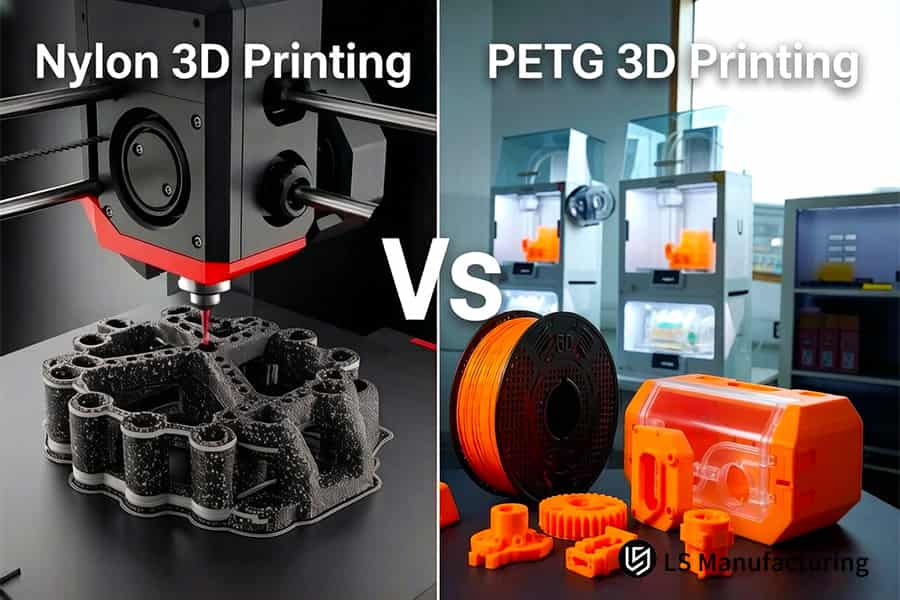
Figure 2: Nylon vs PETG 3D printing manufactures custom enclosures for electronics assembly industries.
What Hidden Production Factors Drive The Comprehensive Cost Calculation When Auditing A PETG 3D Printing Manufacturer For Volume Orders?
When auditing the PETG 3D printing manufacturer for bulk purchases, the focus should be extended from the price of raw materials to reveal the sources of hidden costs related to energy consumption, nesting efficiency, and longevity of use. In the following breakdown of the cost structure, you will learn how to avoid overpaying for parts that seem inexpensive yet fail in the field, thereby creating conditions for 3D printing.
Raw Material Cost Advantage
- Material savings: PETG resin is 40%-50% cheaper compared to modified nylons such as carbon-fiber reinforced PA12-CF.
- No heated chamber required: Printing parts at 240°C nozzle and 80°C bed temperature leads to much lower costs associated with energy consumption.
- What you gain: Less expense on materials at the start and lower energy bills, meaning low-cost 3D printing becomes possible for mass manufacturing.
Nesting Efficiency Through Smart Layout
- Intelligent nesting algorithms: Manufacturing of several PETG parts in one printing process using industrial printer systems, with less waste.
- Matrix-level printer fleet: Parallel manufacturing by tens of printers reduces the cost even more.
- What you gain: Increased output per lot at affordable 3D printing rates, resulting in lower part prices without increasing lead times.
Hidden Lifecycle Cost: Wear Resistance Trade-off
- Wear life comparison: PETG wears twice faster than nylon in high-speed gears.
- DFM review trigger: The design for manufacturability audit detects rotating parts, where due to the low cost of PETG you have extra expenses later.
- What you gain: Be sure that your purchase doesn’t end up as a case of "penny wise and pound foolish" – by matching the materials to the functionality, you are assured of getting the full value of your reliable 3D printing investment.
From the cost audit framework above, it is apparent that the 3D printing cost should include energy, nesting and wear-life factors and not just the price of the filaments. The application of DFM screening will allow you to determine whether a part is suited for low-cost PETG filaments or needs more expensive nylon regardless of the initial costs involved. The technical insight ensures that the decision making for high volume contract manufacturing is based on life-cycle considerations.
Why Is A Precise DFM Analysis Essential Before Finalizing Your Global Industrial 3D Printing Service Procurement Plan?
A design for manufacturing analysis ensures failure in geometry prior to actual manufacturing, thus minimizing the scrap rate and reworks involved in the process. Understanding shrinkage behavior and bore compensation need, you are guaranteed of holding ISO 2768-m tolerances with first articles, and thereby minimizing the prototyping costs by up to 30% using custom 3D printing practices.
Core DFM Comparison: Nylon vs PETG
| Parameter | Nylon (FDM) | PETG |
| Shrinkage during crystallization | 1.5%–2.0% | 0.2%–0.4% |
| Warpage risk on large thin walls | Warping is possible up to 2.0mm unless temperature chamber ≥ 130°C is used | Mostly avoids warping, no heating chamber required |
| Bore compensation requirement | Requires bore compensation ranging from +0.15mm to +0.25mm | Normal compensation does not exceed 0.05mm |
| Best fit for precision jigs | Not advisable for dimension-sensitive parts | Easy to use for large and tight tolerance parts |
The following DFM principles ensure that the dimensions are accurate in the ISO 2768-m right on first printing. This allows one to source from an industrial 3D printing service without doing many trial prints. The application of precision 3D printing service guidelines cuts down lead times by 40% and ensures aerospace quality in prototype 3D printing.
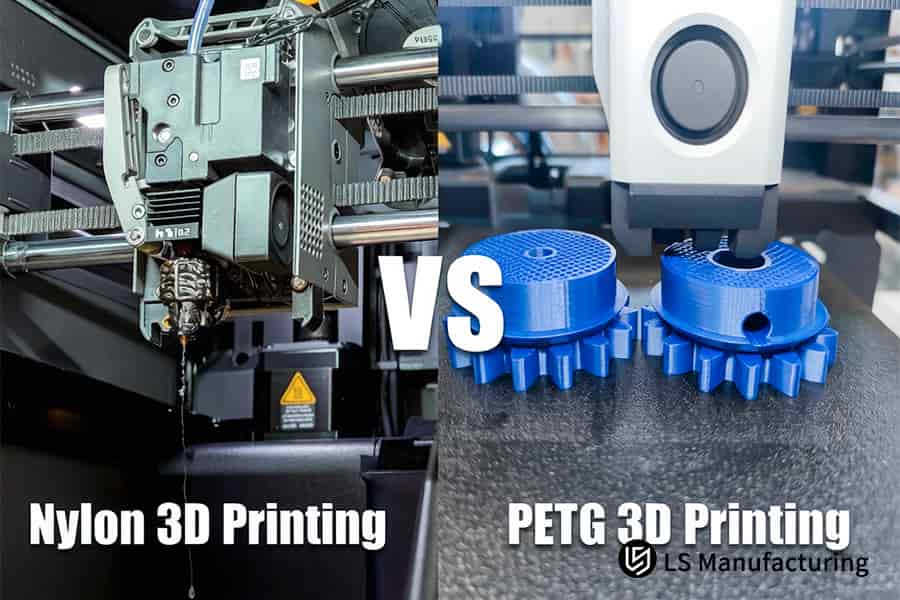
Figure 3: Nylon vs PETG 3D printing creates precision gears for mechanical engineering workshops.
How Can Equipment Development Managers Eliminate Structural Warpage Risks By Choosing An Optimized Custom 3D Parts Manufacturer?
Warpage prevention of automated production parts entails specific post-processing and cooling strategies customized based on the residual stress characteristics of each material. The below strategies will demonstrate to you how to attain zero warpage parts through using a custom 3D parts manufacturer that employs stress relief and thermal control measures through consistent protocols.
Annealing Protocol for Nylon: Releasing Over 90% Residual Stress
Nylon components develop residual stresses as a result of heating multiple layers during printing. The secondary annealing process carried out at 110°C in a nitrogen-protected environment for 4 hours ensures that more than 90% of residual stresses are released, thus ensuring dimension stability within ±0.05mm tolerance. This stress relief post processing allows you to retain part geometry while under load without creep-induced misalignment in precision tools.
Closed-Loop Fan Control for PETG: Preventing Micro-Delamination
The fast cooling rate of PETG that leads to cracking between layers is countered by a closed-loop system for laminar fan speed control. The live airflow adjustment maintains inter-layer temperature gradients at less than 5°C, avoiding micro-delamination. The thin-wall ducts and enclosures have no cracks and require no post-printing treatment. This high-quality 3D printing technology provides equal bond strength across all z-heights regardless of geometry complexity.
Process Integration: One-Pass Quality Assurance
Annealing profiles combined with cooling processes form an integrated process window for both materials. All batches are supplied with coupon-based testing of stress release and interlayer adhesion according to ASTM E8 and ASTM D790. You get certified parts requiring no further processing prior to assembly. This industrial-grade 3D printing technology allows you to qualify parts in days rather than weeks.
Through incorporation of material-based stress reduction and cooling, warping can be eliminated from parts long before they are ready to be incorporated into your assembly line. Choosing a precision 3D printing service which has documented annealing procedures and closed-loop fan systems allows for consistent dimensional stability between parts, resulting in a zero-defect product which can be used for critical automation.
What Structural ROI Benefits Do Sourcing Directors Unlock When Utilizing The Immediate Online 3D Printing Quote Platform At LS Manufacturing?
The two main challenges that sourcing directors confront are delayed quotes and lack of clarity regarding cost breakdown. The immediate online quoting system at LS Manufacturing removes these obstacles by examining STEP/IGS file uploads in 5 minutes to derive volume, surface area, chamfer complexity, and draft angles. You get tiered pricing for nylon SLS compared to PETG FDM along with complete visibility into cost breakdown through efficient 3D printing workflows:
Automated Model Analysis & Instant Quote Generation
- Upload STEP/IGS file: System automatically recognizes geometry such as volume, surface area, number of chamfers, and draft angles.
- 5-minute processing: No manual RFQ delay needed; algorithm delivers pricing instantly.
- What you gain: No more 2-3 days back-and-forth via email; speed up transition from prototype to production with accurate 3D printing geometry detection.
Differentiated Tiered Pricing for Volume Flexibility
- Sample pricing (1–10 pcs): Tailored to nylon SLS whole chamber nesting or PETG FDM multi-head printing simultaneously.
- Production pricing (500+ pcs): Pricing is calculated again per piece depending on volume of parts and machine usage with specific material.
- What you gain: Transparent cost calculation for low-volume design vs high-volume manufacturing, allowing you to budget accurately with a 3D printing quote accounting for real 3D printing cost factors.
Full Cost Breakdown for Supply Chain Transparency
- 100% cost decomposition: Time on machine, materials used, post processing costs, and set up fees are all broken down into separate line items.
- No black-box pricing: Every item can be reviewed, allowing your company to follow internal approval process more easily.
- What you gain: Compare costs among suppliers without any difficulty, ease negotiations, and achieve a 3D printing supply chain.
This 3D printing quote platform takes all the guesswork out of the purchasing process with instant, detailed prices that are specific to the part’s geometry and volume levels. You will have the power to make build versus buy decisions within minutes rather than hours while being able to see all your costs. All of this coupled with a streamlined supply chain structure allows sourcing managers to get measurable ROI through real-time 3D printing cost visibility and accelerated time to market for every bracket purchase.
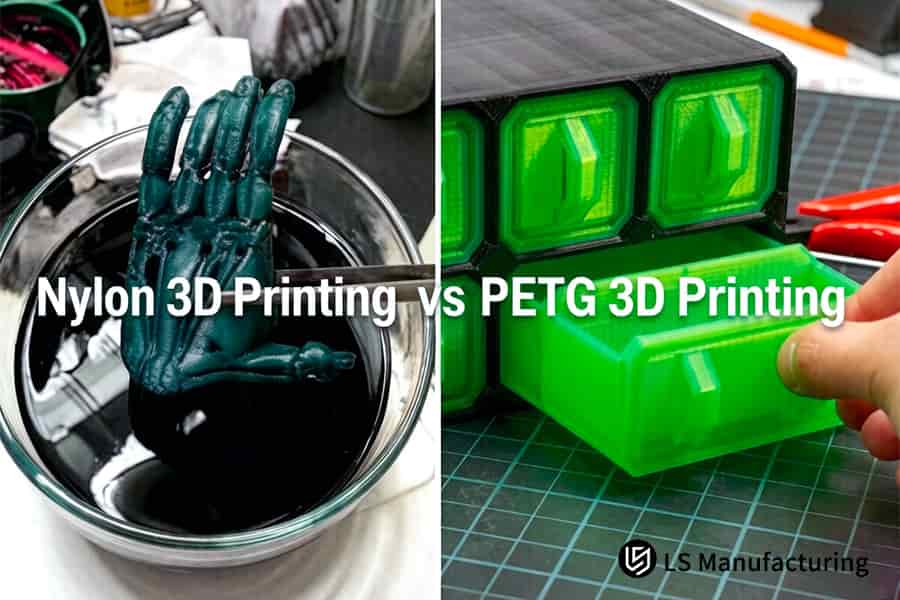
Figure 4: Nylon vs PETG 3D printing demonstrates post processing techniques in prototyping studios.
Case Study: How LS Manufacturing Custom 3D Parts Manufacturer Saved A Medical Automation Provider 35% In Components Cost With Specialized Nylon Engineering
One example involved a European company supplying automation for the medical industry where gear failures in a blood analyzer occurred as a result of moisture swelling due to unqualified workshops. As a custom 3D parts manufacturer, LS Manufacturing helped out using SLS and vacuum encapsulation technology to provide dimensionally accurate gears 35% less expensive, demonstrating that a correct process management allows avoiding hidden failure modes using low-volume 3D printing.
Client Challenge
The centrifuge drive gear was previously manufactured from POM, which costs $85 per piece and requires a 25-day delivery time. The product broke after 20 hours due to moisture penetration from the preceding 3D printing shops. Wear of the teeth resulted in transmission lock-up, delaying all further analyzer developments and making the customer look for an alternative way to manufacture gears.
LS Manufacturing Solution
Our engineers performed a thorough DFM study and recommended high-performance nylon powder using SLS technology with equal wall thickness. Following this step, the vacuum impregnation of moisture barrier layer with the thickness of 5μm decreased the water absorption down to ≤0.2%. Thus, the custom nylon 3D printing service guaranteed the preservation of gears' initial dimensions during continuous exposure to high humidity, directly solving the root cause of previous failures with certified 3D printing process controls.
Results and Value
The per-unit price was reduced from $85 to $55.25 (by 35%). The lead time was shortened from 25 to just 5 days. Under high-speed fatigue cycle tests of 2,000,000, gear deformation was ≤0.03mm, with no clearance problems. Our customer accelerated the release of his analyzer by three months, and gave us an exclusive order for all annual volumes, proving that rapid prototyping 3D printing is a worthy substitute for machining.
This scenario exemplifies the application of a PETG 3D printing manufacturer mindset into SLS nylon by way of optimizing for DFM, vacuum sealing, and strict fatigue validation that successfully tackled the issue of moisture-induced failure. You have a blueprint to follow: insist on measured moisture barrier thickness and cycle tests, then verify that dimensional stability is maintained during operation. With our 3D printing expertise, you can be assured that your medical device will perform reliably from prototype through to full-scale manufacturing.
From $85 to $55.25 per gear, 25-day lead time cut to 5 days, and 2M fatigue cycles passed. Need similar cost and performance gains? Contact us to discuss your application and receive a tailored quotation.

FAQs
1. Is nylon inherently stronger than PETG for functional industrial prototypes?
Yes. As a result of being in a dynamic environment, SLS industrial nylon proves to be much more efficient than PETG in terms of fracture toughness and fatigue resistance, which have an average tensile modulus of approximately 1600 MPa, allowing for withstanding cyclic loads without breaking down. Therefore, nylon is the best material for the application of moving components, springs, and structures in industrial machines.
2. Which material offers better dimensional stability in high-humidity B2B factory environments?
The most significant benefit of PETG is its low water absorption coefficient, ≤0.1%, and no dimensional change under humid conditions or underwater environment. The unmodified nylon, in turn, is highly susceptible to the moisture-induced volumetric swelling effect that results in part distortion and lack of dimensional stability over time.
3. How does the cost of nylon 3D printing compare to PETG for low-volume manufacturing?
As a result of the high cost of the raw nylon powder (especially in case of SLS) and considerable wear and tear of the equipment, the overall price per unit during the prototyping phase is 30-50% higher compared to PETG that is 3D-printed by standard FDM technology.
4. Can PETG substitute for nylon in chemical-resistant automotive sensor housings?
That is possible only in case of diluted acids, diluents and oils. In case of some organic solvents, such as acetone, PETG will soften due to the presence of its chemical bonds in the structure. In this case, the modified nylon is much more resistant to chemical effects and must be used.
5. What is the minimum achievable tolerance for a precision 3D printing service using nylon?
In our high-precision workshop at LS Manufacturing where our state-of-the-art SLS laser spot compensation technology is employed, we are able to keep dimensional tolerances on our nylon parts constant in the range of ±0.1mm. The accuracy of these dimensions is checked during manufacturing by in-process controls and at the end of the process by CMM measurement.
6. Why choose LS Manufacturing over standard online 3D printing bureaus for engineering components?
We are not just a fabrication shop, as we provide complete DFM reviews prior to the manufacturing process, run our own fully-equipped lab for physical property testing, perform modifications post-processing and ensure effortless scaling of prototype production to mini batches production of up to 10,000 pieces.
7. Does PETG or nylon perform better under continuous outdoor UV radiation?
PETG shows higher resistance to UV and weather conditions than raw nylon without any stabilizers. It is not as vulnerable to yellowing, brittleness and molecular breakdown due to long time atmospheric effects, hence PETG should be chosen for outdoor enclosures, signage and other components subject to direct sun exposure.
8. How quickly can I receive a binding industrial 3D printing quote from your platform?
After uploading your standard 3D CAD files (for example, in STEP or IGS file formats) into the LS Manufacturing website and choosing your materials and finishing processes, our skilled engineers will provide you with a complete quotation including a price matrix within two hours.
Summary
The choice of nylon vs PETG for industrial 3D printing application is not a clear winner but depends on your operating environment. In terms of robotic joints or gears under heavy loads that need impact resistance, durability, and consistent operation above 100°C, nylon is preferable. On the other hand, PETG is better for jigs or housing applications where precision and economic factors matter.
Do not sacrifice speed to market through poor materials selection. LS Manufacturing offers you a full spectrum of services from DFM analysis to precise manufacturing for the aerospace, medical, and industrial industry. Click on "Get Real Time DFM Review & Instant Quote" to upload your STEP/IGS/STL models. Within two hours, our professional engineers will give you a free material performance analysis and tiered prices ensuring full manufacturing predictability.
📞Tel: +86 185 6675 9667
📧Email: info@lsrpf.com
🌐Website:https://lsrpf.com/
Disclaimer
The contents of this page are for informational purposes only.LS Manufacturing servicesThere are no representations or warranties, express or implied, as to the accuracy, completeness or validity of the information. It should not be inferred that a third-party supplier or manufacturer will provide performance parameters, geometric tolerances, specific design characteristics, material quality and type or workmanship through the LS Manufacturing network. It's the buyer's responsibility.Require partsquotation Identify specific requirements for these sections.Please contact us for more information.
LS Manufacturing Team
LS Manufacturing is an industry-leading company. Focus on custom manufacturing solutions. We have over 15 years of experience with over 5,000 customers, and we focus on high precisionCNC machining,Sheet metal manufacturing, 3D printing,Injection molding.Metal stamping,and other one-stop manufacturing services.
Our factory is equipped with over 100 state-of-the-art 5-axis machining centers, ISO 9001:2015 certified. We provide fast, efficient and high-quality manufacturing solutions to customers in more than 150 countries around the world. Whether it is small volume production or large-scale customization, we can meet your needs with the fastest delivery within 24 hours. choose LS Manufacturing. This means selection efficiency, quality and professionalism.
To learn more, visit our website:www.lsrpf.com