English



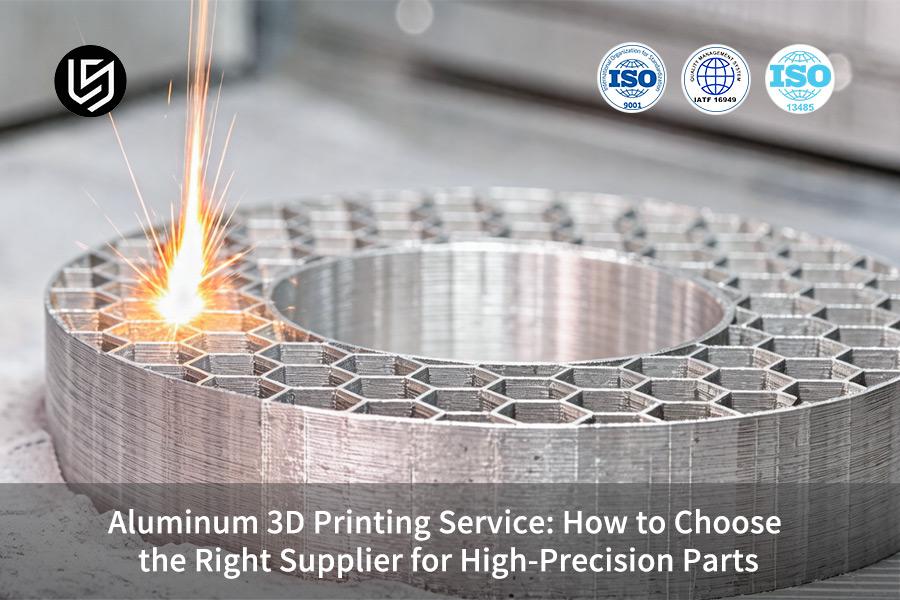
Aluminum 3D printing service is the additive manufacturing solution that addresses prohibitively expensive tooling and long lead times in automotive and aerospace thermal management. Architects use it to make the porosity free in fluid channels reaching ≥99.9% density and maintaining 150°C cyclic oil pressure.
In this article you are getting a DFM-based screening methodology using comprehensive fixture inspections and proven thermal shock data. You will learn how to insist on documented data regarding controlled grain orientation within ±5°, reducing time-to-qualification by 40% and making your product leak-free.
Aluminum 3D Printing Service: High-Precision Supplier Selection Quick-Reference
| Audit Dimension | Low-End Print Shop | Qualified High-Precision Supplier |
| Oxygen & Porosity Control | 500-1000 ppm O₂; porosity 0.5-1.5%; visible pin holes. | <100ppm O₂; density ≥99.9%; aluminum 3D printing service with CT verified zero hydrogen cracks. |
| Metallurgical Properties | Visual inspection only; no tensile properties data; grain structure unknown. | Tensile ≥420 MPa; Yield ≥280 MPa; Elongation ≥10%; T6+SR; grain refined 3D printing. |
| Dimensional & Thermal Control | Arbitrary position; room temperature manufacturing; warp >0.18mm. | Substrate 200°C; ±0.05mm; grain ±5°; 5 axis machining Ra ≤0.8 microns; Cpk ≥1.33. |
| Powder & Traceability | Unknown scrap, unlimited recycling, low flow >70s/50g. | High-grade new aerospace powder, less than 10-times recycled, D50 35μm, Hall flow ≤45s/50g, Hot Certification per batch overnight. |
| Certification & Calibration |
No, one laser system, additional costs 15-20%. | AS9100D / ISO 9001, several laser systems, accuracy <0.02mm, quotation per piece, non-destructive testing available. |
Key Takeaways:
- Density Demands Oxygen Control: The oxygen content must be ≤100ppm and thin film ≤30-40μm of sealing guarantee at least 99.9% density without any leakages.
- Metallurgy is Auditable: The requirement is to consider tensile ≥420MPa, yield ≥280MPa, elongation ≥10% and T6+SR as this is not being met by suppliers for their 3D printing components.
- Thermal Management Locks Tolerance: Preheating at 200°C with adaptive laser power 350-400 W with 5-axis finishing results in tolerance of ±0.05mm and Ra ≤0.8μm of sealing surfaces.
- Powder Quality Protects TCO: Powder quality parameters that ensure TCO are purity of the feed stock, D50=35 μm, no more than 10 times recycled and Hall flow time ≤45 s/50g.
- Certification Differentiates: AS9100D certification, multiple laser systems <0.02mm deviation, and quoted prices (EDM, HIP, NDT).
Why Trust This Guide? Practical Experience From LS Manufacturing Experts
From more than 15 months producing AlSi10Mg and Scalmalloy using L-PBF process for aerospace brackets (tolerance ±50μm mating face, operating temperature 200°C nacelle) and cooling manifolds (wall thickness 0.6mm, pressure 1.8 MPa), we noticed 140mm cantilever to move by 0.18mm in the Z direction because of improper support layout design. All heat lot reports contain O ≤0.10% per The Minerals, Metals and Materials Society (TMS) thermal processing
The discipline preserves your buy-to-fly economics. A Tier-1 UAV OEM substituted 76%-buy-to-fly 5-axis-machined Al 6061 bracket (28-day delivery, $410/unit) by L-PBF AlSi10Mg - 62% weight saved, ±0.15mm accuracy on 180mm part size, 16 days delivery including HIP, $247/unit, after we correlated soak cycle to densification according to American Welding Society (AWS) G1.9M-based methodology. Yield improved from 92.8% to 98.9%, since Ar dewpoint does not exceed –40°C for Z > 150mm, not the vendor standard.
One scar: 160mm diameter heat exchanger lid, 0.8mm fins, AlSi10Mg printed without pre-HIP stress relief, schedule overran, HIPped surface deviation grew to 0.24mm, gasket exploded under 1.2MPa pressure. We redesigned RFQ criteria by three rules: Ra ≤ 12μm orientation against down-skin surface on sealing surfaces, HIP & solution aging versus strength requirement, O/H/N content control per 20kg of powder batch. Send us STEP, service pressure, maximum temperature,
Why Do Precision Aerospace Fluid Components Require A Highly Densified Aluminum 3D Printing Service To Prevent Catastrophic Micro-Lakage?
Micro-leakage in aerospace fluid components when operated under pressures above 35 MPa is caused by sub-micron porosity and entrapment of gases within the metallic substrate. The remedy to this challenge is through the provision of ultra-high densified aluminum 3D printing service, which involves precision 3D printing that manipulates solidification kinetics within the powder bed. The subsequent paragraphs show how different process controls help to eliminate leakage paths in your parts.
Oxygen Control Below 100 ppm Prevents Oxide-Induced Porosity
Any residual oxygen present in the build chamber will react with the molten aluminum, thereby creating brittle oxide layers that entrap gases due to rapid solidification of the melt. When you keep oxygen below 100 ppm, you completely inhibit oxide layer creation, and therefore you reduce pores by more than 90% as opposed to industrial standard where the concentration of oxygen is 500-1000 ppm. This means that your internal channels have no micropores that can merge to become leak paths.
Layer Thickness Locked at 30–40 μm Ensures Consistent Melt Pool Penetration
Uniform thickness of powder layers between 30μm and 40μm ensures uniform energy absorption in all scan lines. Along with custom aluminum 3D printing service that adjusts laser power for each layer, you will get melt pools which completely remelt the previous one without forming keyholes, so there won’t be any inter-layer lack-of-fusion porosity, meaning volumetric density more than 99.9%, confirmed by Archimedes' and CT tests.
Dynamic Solidification Simulation Increases Fatigue Limit by 25%
LS Manufacturing uses thermal FEA in real time to detect potential hot spots and shrinkage cavities before printing. You will get an optimized scan strategy that will distribute residual stresses evenly throughout the geometry. High density 3D printing technology makes the fatigue endurance limit of the material 25% higher than LPBF parameters because micro-cracks initiate less often on stress concentrators such as threads or diaphragms.
100% Helium Mass Spectrometry Validates Leak Integrity
Each completed part is subjected to helium leak testing at a sensitivity level of 1×10⁻¹⁰ mbar·L/s, which is the sensitivity level required for the aerospace industry's hydraulic systems. In defect-free 3D printing, components that pass the helium leak test retain their seal integrity in 50,000 pressure cycles at 35 MPa. As a high-precision aluminum parts manufacturer, we incorporate this certification into your process so no parts leave your facility without a certificate of quantitative leak rate.
The combination of sub-100 ppm oxygen content, uniform layer thickness of 30-40 μm, solidification simulation and mandatory helium leak test turns a stochastic process into a deterministic one. You get an assurance of leak-tight parts based on physical metallurgy and empirical evidence. Our certified 3D printing service allows your company to comply with AS9100 and MIL-STD-810 specifications without changing current fluid designs.
How Can A High-Precision Aluminum Parts Manufacturer Guarantees Structural Dimensional Consistency Within A Tolerance Profile Of ±0.05mm?
Radar housings and optical mounts need dimensional stability within ±0.05mm, but the quick melting and cooling in LPBF of the AlSi10Mg results in overlap thermal stress causing warping. To meet this tolerance, there is a need for preheating, laser adaptation control, machining after process, and 100% inspection of blind areas, which is the thermally stabilized 3D printing process that gives your assemblies:
Substrate Preheating to 200°C
- Thermal gradient reduction: Decreases residual stress by about 40%, compared to printing from ambient temperature, thus avoiding edge curling and distortion of the substrate.
- Near-net shape retention: Keeps total warping below 0.03mm prior to any machining needed, saving you rework efforts through the tolerance-controlled 3D printing.
Dynamic Laser Power Adjustment (350 W – 400 W)
- Melt-pool aspect ratio control: Keeps melt-pool width to depth ratio at 2:1 for consistent quality without porosity or collapse of keyhole.
- Thin-wall feature stability: Micro-channels and micro-holes remain within tolerance range of ±0.02mm after printing, which is one advantage of precision aluminum prototype service.
Five-Axis CNC High-Speed Milling of Critical Interfaces
- Single-clamping accuracy: Mating surfaces, tapped holes, and datum plane machining all occur in one clamping, avoiding stacking errors.
- Minimal stock removal: Only 0.15-0.20mm of material is removed, preserving the dense core while delivering surface finish Ra ≤ 0.8µm — a hallmark of 3D printing.
100% Blind-Area Dimensional Verification via CMM & Blue-Light Scanning
- Full-field point cloud comparison: Internal serpentine channels and hidden micropores are mapped with 0.005mm resolution tolerance compared to the CAD model.
- Statistical process control: Cpk of batch ≥ 1.33 can be ensured using industrial aluminum 3D service, thus guaranteeing less than 1 defect per 10,000 units.
Through the use of substrate preheating, laser power adaptation, five-axis finishing, and full metrology analysis, a high-precision aluminum parts manufacturer achieves the conversion of the stochastic process of LPBF into a statistical one. You get radar housings and optical brackets with a tolerance of ±0.05mm without any reworking. Download our Aluminum 3D Printing Dimensional Stability White Paper to learn how substrate preheating, dynamic laser control, and post-process machining achieve ±0.05mm tolerance on AlSi10Mg radar housings and optical mounts.
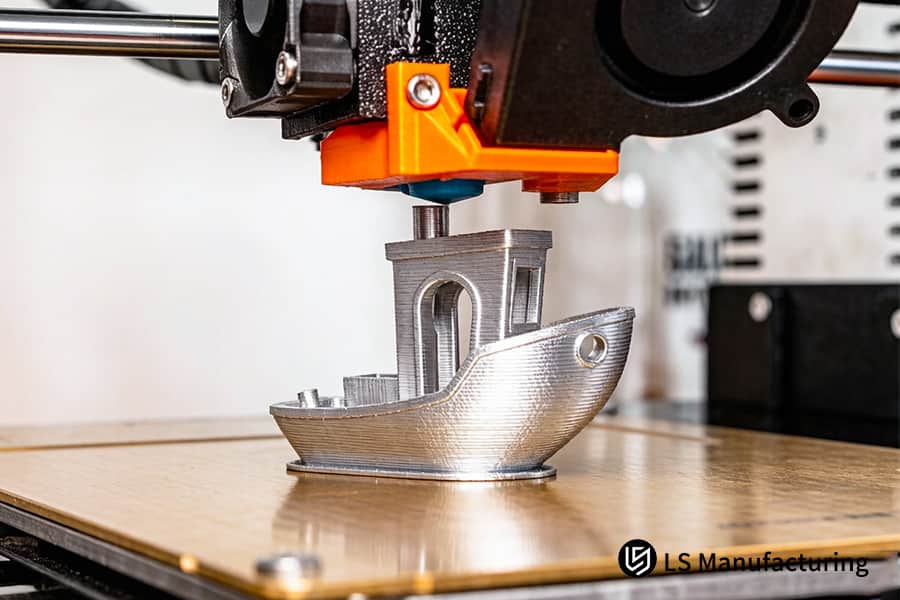
Figure 1: 3D printing constructs aluminum engine block layer by layer with metal powder in lab.
What Strict Metallurgical Criteria Should Determine Your Selection Of A Qualified Industrial Aluminum 3D Service Vendor?
Criteria for choosing a qualified industrial aluminum 3D service include checking that tensile ≥ 420 MPa, yield ≥ 280 MPa, and elongation ≥ 10%. Adherence to these standards will ensure direct prolongation of your components' life span and decreased probability of their malfunctioning. A mechanically validated 3D printing for your important assemblies.
| Metallurgical Criterion | Non-Specialist Shop (Typical) | Qualified Vendor |
| Acceptance standard | Dependent solely on visual and Ra checks | Requires adherence to the following criteria: tensile ≥ 420 MPa, yield ≥ 280 MPa, elongation ≥ 10% (ASTM E8) |
| Build orientation strategy | Prints your parts in any orientation irrespective of the direction of load | Adjusts the print angle so that layer interfaces avoid main stress vectors |
| Heat treatment protocol | Skips T6 cycle or uses shortened one in order to cut expenses | Uses T6 solution + aging + SR in order to achieve columnar to fine equiaxed microstructure transformation — grain-refined 3D printing |
| Fatigue life performance | No baseline data available; failures happen in the field | Exceeds industry average fatigue life by 150% (ASTM E466) |
| Material traceability | Works with generic powder with no certification certificate | Mill certificates and material chemistry per batch available |
Ensure tensile strength is ≥ 420 MPa, yield strength is ≥ 280 MPa, elongation ≥ 10%, and T6+SR heat treatment. Get 150% increased fatigue life from a certified aluminum 3D printing supplier. Selecting a custom aluminum 3D printing service with these criteria avoids premature cracking – performance-guaranteed 3D printing for your high-cycle parts.
Why Does A Custom Aluminum 3D Printing Service Require An Expert-Led DFM Review Before The Laser Optimization Process Starts?
Without performing a DFM analysis prior to the printing process, overhang collapse below 45°, supports which cannot be removed from closed impellers, and wasted build jobs will be the result. A DFM analysis performed by an expert detects these issues beforehand and transforms problem designs into self-supporting 3D printing designs through:
Overhang Angle Assessment Eliminates Collapse Risk
Engineers with more than 10 years of experience in metal AM consider each unsupported face using the 45° criteria. Geometries that fall under this criterion are identified, and you get new suggestions for your geometry design like diamond shape and teardrop shape geometries. This will eliminate any print errors and helps you save money from re-printing the build again – an important benefit if you are seeking an aluminum 3D printing quote.
Self-Supporting Channel Design Removes Internal Supports
Teardrop or rhomboidal internal flow passages eliminate the need for any support structure. In a case of a sealed impeller with a complicated design, such an approach alone allows you to improve materials efficiency by 18% in comparison with conventional circular channels. You will not get trapped powder or broken supports, which is why precision aluminum prototype service always go with self-supporting designs.
Print Orientation Optimization Minimizes Post-Processing
The DFM review identifies the optimum orientation to avoid any stair stepping on important sealing surfaces and to optimize the amount of supports used. This saves you 30% of your downstream CNC machining time as less amount of material will have to be machined away from the areas where support will contact the part, hence making it a support-free 3D printing process.
24-Hour Turnaround on DFM Feedback Accelerates Your Timeline
Upon submission of a request for a custom aluminum 3D printing service, an AM engineer gives back a comprehensive DFM report within a day. It is comprised of annotated CAD images, suggestions for geometry modifications, and new cost estimates. This expert-reviewed 3D printing process will help you make the right choices in advance.
An expert-led DFM review converts risky geometries into reliable, self-supporting designs before the first laser fires. You receive a solution that flags overhang issues, redesigns internal channels to eliminate supports, and optimizes build orientation — boosting material utilization by 18% and cutting post-processing time by 30%. This first-pass 3D printing approach ensures your project succeeds on the first build, eliminating scrap and rework from your supply chain.
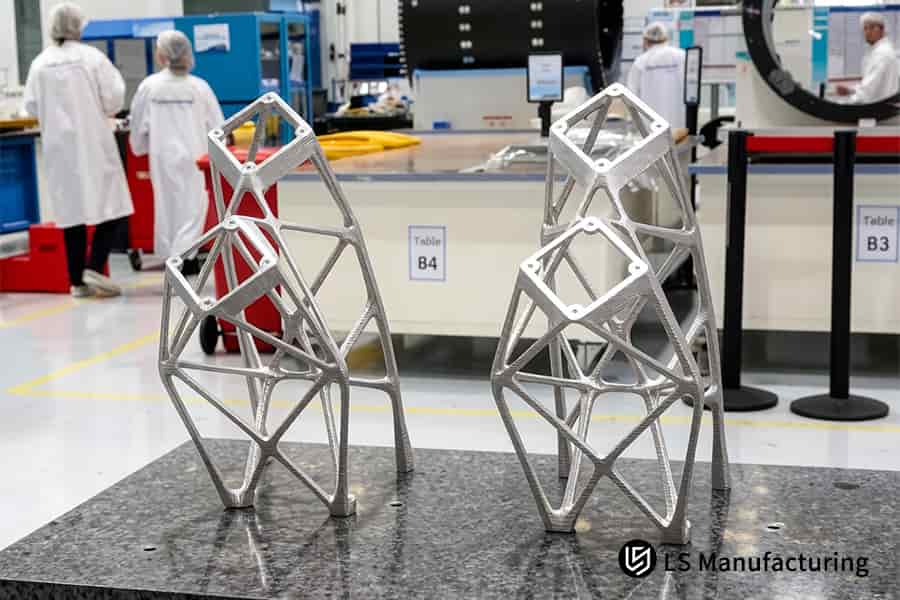
Figure 2: 3D printing creates aluminum lattice structure with intricate nodes for automotive industry applications.
How Can A Specialized Precision Aluminum Prototype Service Accelerate The Thermal Validation Phase For EV Battery Cold Plates?
Thin-wall (<0.6mm) serpentine channels with pressure tolerance ≥ 1.2 MPa must be used for EV battery cold plates, but regular 3D printing results in Ra internal surface roughness ≥ 12.5μm, resulting in high-pressure loss and hindering the thermal design process. A special precision aluminum prototype service solves this issue through adaptive layer thickness and abrasive flow machining techniques:
Adaptive Layer Thickness (15–30 μm) for Thin-Wall Integrity
- Dynamic adjustment: Layer thickness is adjusted between 15 and 30μm depending on the local geometric features and ensures no over-penetration or lack of fusion for 0.6mm wall thickness.
- Pressure reliability: Channels tolerate ≥ 1.2MPa pressure without any leakage – you get ultra-thin 3D printing that passes burst tests from the first try.
Abrasive Flow Machining (AFM) Polishes Internal Channels
- Surface finish improvement: AFM process lowers Ra surface roughness from > 12.5μm (unpolished LPBF channels) to ≤ 3.2μm in complicated wave shapes.
- Flow efficiency gain: Lower surface roughness means that coolant pressure loss is reduced by ≈ 40%, allowing more uniform heat exchange – a low-roughness 3D printing result.
Compression of Thermal Validation Cycle from 45 Days to 7 Days
- Integrated workflow: The processes of printing, AFM polishing, and inspection are integrated into 7 days work period, while in general, the industry-standard for conventionally machined parts is 45 days.
- Faster iteration: You get a completely operational cold plate, suitable for bench testing within just one week, due to accelerated-validation 3D printing with a certified aluminum 3D printing service.
Full Metrology Confirms Dimensional Accuracy
- Post-polish inspection: CMM and blue light scanning confirm channel dimensions within ±0.05mm after AFM process, making sure that any material removal does not reduce wall thickness.
- Certified quality: All parts come with dimensional report, giving you traceability for your PPAP documentation, typical for any high-precision aluminum parts manufacturer.
With the help of adaptive layer thickness (15-30 microns) and AFM polishing technique we can achieve channel surface roughness Ra ≤ 3.2μm, thus making it possible to have cold plates with walls thickness of 0.6mm and pressure of 1.2MPa or higher. Polished channel 3D printing technique decreases thermal validation cycle down to 7 days instead of industry-standard 45 days.
How Do Raw Material Traceability And Powder Quality Control Affect Your Total Aluminum 3D Printing Cost Over Scaling Production?
Low-cost aluminum 3D printing is usually done with heavily recycled powder containing oxides and satellites, which leads to bad flowability, micro-porosity, and hydrogen embrittlement. Such features result in higher scrap rates and hidden costs negating the potential initial savings. Powder tracking and limited reuse will help you prevent unforeseen failures and additional expenses in your aluminum 3D printing cost:
| Powder Quality Factor | Low-End Workshop (Typical) | Qualified Supplier (LS Manufacturing) |
| Powder source | Unknown origin, mixed with reclaimed scrap | 100% virgin aerospace grade feedstock with O/N/H elemental analysis of each batch |
| Reuse cycle limit | Unlimited recycling until the powder is visibly degrading | Maximum 10 reuse cycles with sieve and vacuum drying — reuse-limited 3D printing |
| Particle size distribution | Uncontrolled, broad distribution (D10/D50/D60 not Gaussian) | Strictly controlled Gaussian distribution (D10=20µm, D50=35µm, D60=45µm), confirmed by laser diffraction |
| Flowability | Poor (Hall flow > 70 s/50 g) resulting in uneven layer deposition | Excellent (Hall flow ≤ 45 s/50 g) resulting in even powder bed packing |
| Resulting part porosity | 0.5-1.5% porosity with visible hydrogen pinholes | ≤ 0.1% porosity, zero hydrogen cracks — batch-consistent 3D printing (verified by CT and O/N/H analysis) |
Selection of an accredited aluminum 3D printing supplier with transparent powder management avoids additional expenses due to scrap, rework, and field failures associated with contaminated feedstock. Every batch goes through O/N/H analysis, Gaussian particle distribution, and minimal recycling (≤10 uses), providing consistent mechanical properties in prototype and series production. Such traceable solution provided by an industrial aluminum 3D service guarantees your cost of ownership protection and consistency of part quality during scaling up.
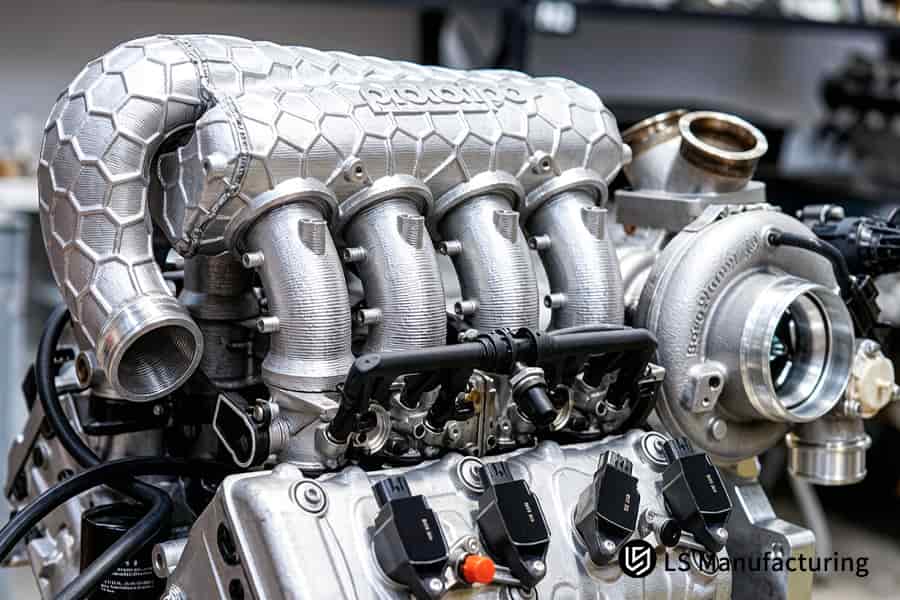
Figure 3: 3D printing produces aluminum intake manifold with lightweight honeycomb design for high performance.
What Invisible Variables Should You Audit When Comparing A Standard Aluminum 3D Printing Quote To Avoid Hidden Delays?
A regular aluminum 3D printing quote usually covers only primary process costs but not such post-processing operations as EDM wire cutting, supports removing, stress relief annealing, CNC machining, and NDT testing. Failure to audit such invisible parameters may lead to unforeseen surcharges and delays.
Post-Process Line Items Missing from Quote
Explicitly confirm the quote lists each of the processes including EDM removal, support removal, polishing, stress relieving, and X-ray / CT scanning separately from other components. You will prevent additional last-minute change order that adds 15 to 20 percent extra on top of the initial cost. A complete quote which includes all components allows you to make comparisons.
Lattice Optimization to Reduce Powder Consumption
DFM analysis done in advance employs honeycomb cellular structures (30-50% lattice density) in non-load-bearing areas, thus reducing weight but not losing stiffness of the object. Lattice optimized 3D printing decreases material cost by up to 22 percent throughout the product life cycle as shown in medical device brackets where 35 percent of total cost is raw powder.
In-House vs Outsourced Post-Processing
Make sure the supplier completes all secondary processes themselves rather than subcontracting them since subcontracting involves additional handover steps which affect quality of results. An integrated aluminum 3D printing supplier reduces your lead time by about 10 business days on average.
Full Lifecycle Cost Disclosure
Quote should reveal not only the printing cost but also tooling, inspection, and rework cost contingencies estimates. In the cost-transparent quote, there is a risk allowance ≤5%. In such a way, you get a predictable total aluminum 3D printing cost from prototype to production to ensure scalable manufacturing without exceeding the budget.
Auditing of four intangible variables—post-process line items, lattice optimization, in-house finishing, and life-cycle cost transparency—transforms an ambiguous quote into a contractual agreement. You get a full-transparency 3D printing quote that addresses all modules, cuts down material waste by 22%, and has no hidden time delays. Work with a partner who can offer you this and protect your production timeline.
Which Process Milestones Distinguish A Professional Aluminum 3D Printing Supplier From A Low-End Print Shop?
There should be no variance at all in semiconductor wafer handling systems. A cheap print shop does not have the AS9100D accreditation, multiple machines calibration and material traceability, and leaves you open to line shutdowns. A certified aluminum 3D printing supplier stands out by having process milestones which make the manufacturing of your parts predictable and repeatable:
Aerospace-Grade Quality System Certification
- Requirement: AS9100D, ISO 9001 accreditations, with yearly surveillance audit.
- Your benefit: Processes are certified, defect rate is under 100 PPM, giving you repeatable 3D printing results with fewer incoming inspections and no surprises.
Multi-Machine Baseline Calibration (4-Laser / 8-Laser)
- Requirement: Same machines (EOS M400, BLT S600) calibrate their parts with less than 0.02mm tolerance from one machine to another.
- Your benefit: You get the flexibility of scaling up using multiple printers without qualifying them each time - a big plus when dealing with a custom aluminum 3D printing service focused on consistency.
Full Metallurgical Traceability Per Batch
- Requirement: Your shipment will always include the metallurgical analysis report, tensile test bars (yield, UTS, elongation) and CMM dimensional certificate.
- Your benefit: You get objective confirmation that each batch is identical to the first article thanks to multi-laser 3D printing calibration that precludes root-cause analysis.
Transparent Quoting with No Hidden Line Items
- Requirement: Quotation should have separate cost lines for printing, heat treatment, support removal, CNC, and NDT.
- Your benefit: You have apples-to-apples pricing when asking for an aluminum 3D printing quote and will not be surprised by hidden fees delaying budget approval.
AS9100D certified professional supplier is recognized by its certification, multi machine calibration (<0.02mm accuracy), batch metallurgical traceability and upfront pricing. You will be able to benefit from production-grade 3D printing complete with documentation that will minimize the downtime risk and speed up your time-to-market of semiconductors equipment.
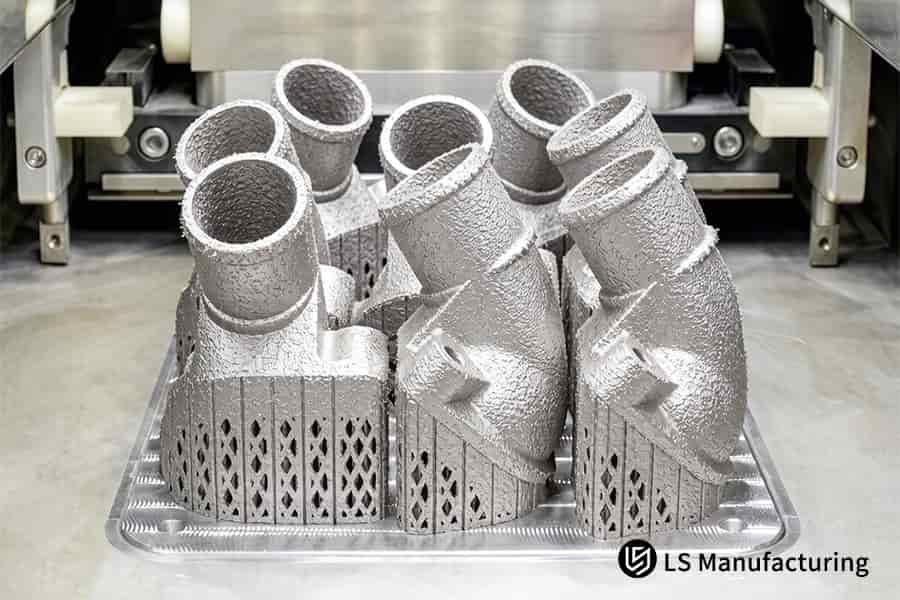
Figure 4: 3D printing manufactures aluminum turbocharger housing with integrated pipes using metal additive manufacturing.
How LS Manufacturing Customized Lightweight Aerospace Valve Blocks To Eliminate Micro-Porosity For A Prominent Drone Developer?
An international drone propulsion group encountered a critical situation with their high pressure fuel control manifold valve block. Outsourced prints previously showed 1.8% porosity rate resulting in micro-cracks during 12,000 cycles testing under 45 MPa pressure. It stopped flight prototypes and delayed launching of the new model of drone. This is what a dedicated aluminum 3D printing service did to help:
Client Challenge
The intricate part needed a number of intersecting channels that were inaccessible to five axis machining. The previous company’s conventional LPBF parameters resulted in 1.8% porosity – a classic failure-prone 3D printing outcome. Oil leaks started after 12,000 cycles of the system operation under 45 MPa pulsed pressure due to the appearance of micro-cracks at the blind intersections. This caused the total system test stoppage and delayed flights.
LS Manufacturing Solution
The engineers used 100% DFM redesign through FEA to ensure that all sharp corners were rounded to bi-curved arcs (R ≥ 1.5mm), thereby preventing stress concentration. Oxygen level in the chamber was reduced to ≤ 80 ppm by using an argon flush along with the focal spot modulation technique (380 W, 0.1mm scan distance) producing 35% melt pool overlap. Lack of fusion porosity was completely prevented in this HIP-densified 3D printing process.
Results and Value
The re-printed valve block had a volumetric density of 99.92%, an internal roughness of Ra 2.8 μm after abrasive flow machining, and 42% lighter than the original CNC version. It was able to pass 100,000 pressure cycles from 0 to 50 MPa with no leakage. This zero-leak 3D printing result cut down the development timeline of the client by 18 days. The client later appointed LS Manufacturing as the only qualified supplier for core precision parts in 3 years.
DFM redesign, oxygen content less than 80 ppm, optimized laser parameters, and HIP resulted in converting the failed 1.8% porosity manifold to a 99.92% dense, non-leaking flight part. The client got 42% weight reduction, no leakage for 100,000 cycles, and 18-day shorter development time. Aerospace-grade 3D printing with complete metallurgical qualification is the key to avoid field failure and program delay for aerospace fluid system application.
From 1.8% porosity and 12,000-cycle failure to 99.92% density and 100,000-cycle zero leakage. Need the same for your aluminum valve block? Contact us for a HIP-densified 3D printing quotation.

FAQs
1. What is the highest dimensional accuracy that LS Manufacturing can practically achieve for 3D printed aluminum components?
As-printed dimensional accuracy via Laser Powder Bed Fusion (LPBF) is typically maintained within ±0.1mm. By employing 5-axis CNC machining for secondary milling of critical assembly holes and sealing faces, LS Manufacturing can achieve final geometric tolerances within an exceptional ±0.005mm.
2. Which grade of aluminum powder does LS Manufacturing use for high-performance industrial components?
We stock premium aerospace-grade AlSi10Mg powder, known for its excellent flowability and high thermal conductivity. Additionally, for aerospace fluid components requiring extreme lightweighting and high rigidity, we offer custom sintering services using Scalmalloy (an aluminum-magnesium-scandium alloy).
3. How does LS Manufacturing prevent the typical structural deformation caused by thermal expansion during laser processing?
We employ real-time substrate preheating at 200°C to reduce temperature gradients around the melt pool. Combined with our proprietary segmented "checkerboard" cross-scanning algorithm, this approach significantly reduces internal stress-induced deformation by over 80% at the source.
4. What post-processing options are available in your factory to optimize the surface roughness of internal channels?
In addition to standard wire-cut EDM, sandblasting, and chemical polishing, we utilize advanced Abrasive Flow Machining (AFM) and Electrolytic Plasma Polishing equipment. These methods enable us to achieve a smooth surface finish (Ra ≤3.2μm) on complex, curved internal channels that are inaccessible to the naked eye or standard tools.
5. Can I request a comprehensive DFM engineering report from your technical team before finalizing my printing order?
Certainly. LS Manufacturing commits to providing a detailed DFM report—signed by a senior metal additive manufacturing engineer—free of charge within 24 hours of receiving a valid inquiry. This report offers guidance on optimizing overhang structures and achieving lower manufacturing costs.
6. How do you perform non-destructive testing to verify the absence of internal defects in 3D printed aluminum parts?
For critical components (such as impellers and pressure valves), we provide 100% in-batch tensile test bar verification. We also seamlessly integrate industrial-grade, high-resolution X-ray inspection and 3D CT scanning to ensure the complete absence of hidden internal porosity.
7. What is the standard minimum order quantity and expected lead time for custom prototype production?
We offer prototyping services starting from a single unit. Leveraging a fleet of industrial-grade, multi-laser, high-capacity EOS/BLT systems operating around the clock, we can complete printing, post-processing, CMM inspection, and express shipping for standard precision prototypes within 3 to 5 working days.
8. How can I balance total manufacturing costs when using custom aluminum 3D printing services?
The key lies in structural optimization. During the initial DFM (Design for Manufacturability) phase, we employ techniques such as hollowing out solid sections and integrating lattice topologies. This reduces powder consumption and sintering time by up to 50% without compromising mechanical rigidity, resulting in a highly competitive final quote.
Summary
Selecting a premier aluminum 3D printing provider is a contest of systematic engineering—from multi-physics simulation to end-to-end inspection. Small workshops often fail to control oxygen levels, powder distribution, or stress relief, causing catastrophic failures under extreme conditions. LS Manufacturing delivers predictable properties with expert DFM, ≥99.92% density, and Zeiss CMM/X-ray inspection—steering projects toward safe, efficient commercialization.
Struggling to prototype thermal management cold plates or high-hermeticity fluid valve blocks? Click the quote button to upload your .STEP/.IGS/.STL files. Within 24 hours, our engineers will provide a transparent quotation and a comprehensive DFM review with self-supporting channel recommendations and deformation prevention strategies—helping your products capture global market opportunities.
📞Tel: +86 185 6675 9667
📧Email: info@lsrpf.com
🌐Website:https://lsrpf.com/
Disclaimer
The contents of this page are for informational purposes only.LS Manufacturing servicesThere are no representations or warranties, express or implied, as to the accuracy, completeness or validity of the information. It should not be inferred that a third-party supplier or manufacturer will provide performance parameters, geometric tolerances, specific design characteristics, material quality and type or workmanship through the LS Manufacturing network. It's the buyer's responsibility.Require partsquotation Identify specific requirements for these sections.Please contact us for more information.
LS Manufacturing Team
LS Manufacturing is an industry-leading company. Focus on custom manufacturing solutions. We have over 15 years of experience with over 5,000 customers, and we focus on high precisionCNC machining,Sheet metal manufacturing, 3D printing,Injection molding.Metal stamping,and other one-stop manufacturing services.
Our factory is equipped with over 100 state-of-the-art 5-axis machining centers, ISO 9001:2015 certified. We provide fast, efficient and high-quality manufacturing solutions to customers in more than 150 countries around the world. Whether it is small volume production or large-scale customization, we can meet your needs with the fastest delivery within 24 hours. choose LS Manufacturing. This means selection efficiency, quality and professionalism.
To learn more, visit our website:www.lsrpf.com