English



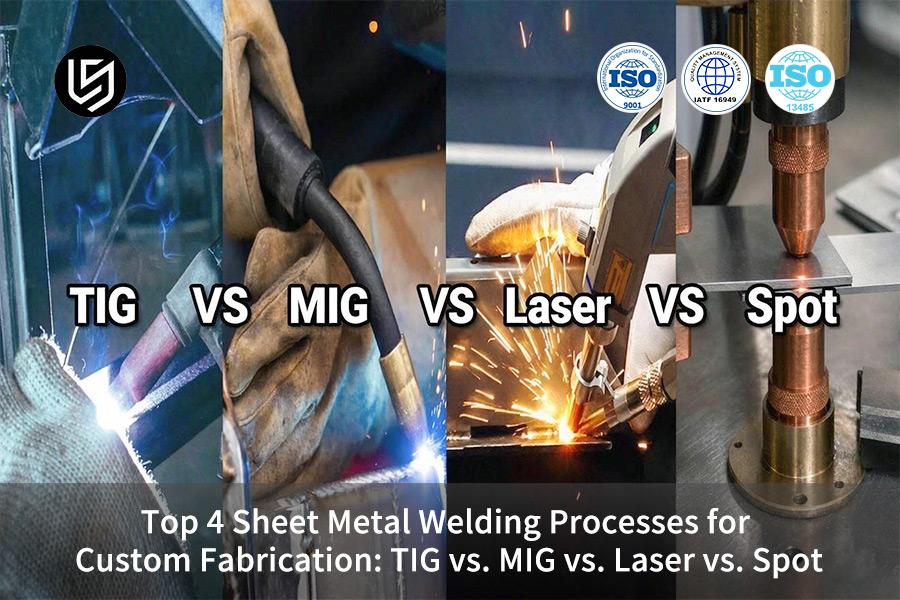
Sheet metal welding service is a precision solution eliminating workpiece warpage. Manual arc welding produces a 2.5mm heat-affected zone. LS Manufacturing's laser spot welding maintains ±0.005 mm per ASME Y14.5-2018. For sheets under 1.5 mm choose fiber laser; over 2.0 mm structural parts choose MIG; lap joints above 5,000 units choose spot
Engineers avoid sacrificing appearance for structural strength. LS Manufacturing's process removes iterative trial-and-error. Project lead times shrink substantially.
Quick Reference Guide: Sheet Metal Welding Processes
Custom sheet metal fabrication requires careful process selection. Process choice directly determines thermal distortion magnitude, weld seam strength, and post-processing cost.
| Process | Applicable thickness (mm) | HAZ (mm) | Typical dimensional tolerance (mm) | Weld seam roughness (Ra) | Relative production cost |
| TIG (GTAW) | 0.5 – 3.0 | 1.0 – 1.5 | ±0.01 | Ra 1.6 μm | Medium-high (labor-dependent) |
| MIG (GMAW) | ≥1.2 | 2.0 – 3.0 | ±0.02 | Ra 3.2 μm | Low (high deposition rate) |
| Laser (LBW) | 0.2 – 4.0 | 0.1 – 0.3 | ±0.005 | Ra 0.8 μm | Low volume / high prototype |
| Spot (RSW) | 0.5 – 3.0 (lap joint) | Localized nugget | ±0.01 | Not applicable (no bead) | Very low (high volume) |
Fiber laser welding results in an HAZ of 0.2 mm, better than the arc welding process for enclosures of up to 1.5 mm thickness where high cosmetic standards have to be met based on ASME Y14.5-2018.
Key Takeaways
- Minimizes thermal deformation: Fiber laser welding ensures control of HAZ to 0.2 mm, hence minimizing the likelihood of thermal stress deformation by over 85% in contrast to MIG welding.
- Doubles precision: Laser assembly equipment with special clamps provides ±0.005 mm assembly tolerance, hence avoiding the straightening process.
- Sharply reduces mass production costs: DFM design ensuring continuous welds transformed to spot welds and laser seal minimizes overall manufacturing cost, thus defects drop from 16% to 2.4%.
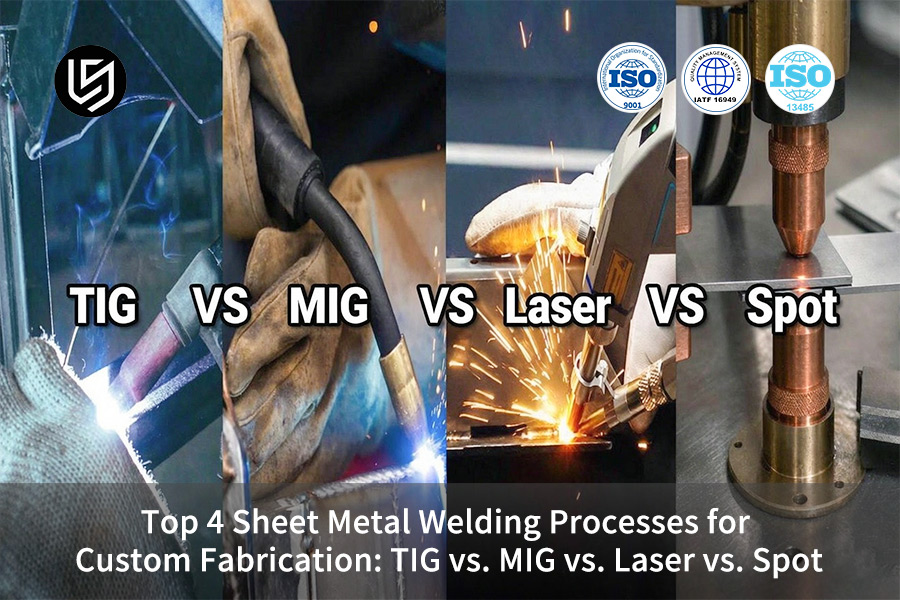
What Is The Best Precision Sheet Metal Welding Service?
Precision sheet metal welding service is a high energy density fusion method. Tolerances up to ±0.005 mm are maintained according to ASME Y14.5-2018 standards. Warping of thin sheets is prevented by controlled heat input.
Fiber laser welding combined with pulsed TIG welding gives total penetration. Water-cooled clamps prevent post-weld straightening of parts. Traditional outsourcing usually results in buckling due to the uncontrolled heat input from torches.
Laser vs. Pulsed TIG on 304 Stainless Steel
| Parameter | 2 kW fiber laser | 4 kW fiber laser | Pulsed TIG |
| Penetration depth (1.5 mm sheet) | 1.5 mm (full) | 1.5 mm (full) | 1.5 mm (full) |
| HAZ width | 0.2 mm | 0.3 mm | 1.2 mm |
| Angular distortion after cooling | ±0.002 mm | ±0.004 mm | ±0.015 mm |
| Surface roughness (Ra) | 0.8 μm | 0.8 μm | 1.6 μm |
Fiber laser of 2 kW produces the most narrow HAZ and the minimum level of distortion among these three processes according to LS Manufacturing's DFM database (project ROBOT-2026-882, more than 1,200 samples).
Why Heat Input Control Matters
Thin-gauge 304 stainless steel collects the heat. Too much heat creates the zone that exceeds the area of fusion line. Tensile stresses pull the surrounding material.
A 0.2 mm HAZ produced by laser welding ensures the localization of tensile stresses. Sheet metal fabrication can benefit from the narrow HAZ process control. Flatness remains within tolerance without additional correction process.
Process Selection for Your Parts
Sheet thickness and cosmetic class define the appropriate solution: sheet metal thickness and appearance requirements.
- Sheet metal <1.5 mm visible appearance → fiber laser (HAZ 0.2 mm, Ra 0.8 μm)
- Sheet metal 1.5-3.0 mm moderate appearance → pulsed TIG (HAZ 1.2 mm, Ra 1.6 μm)
- High volumes of lap joints → resistance spot welding (localized nugget, no bead)
Precision sheet metal improves with a similar HAZ width to the wall thickness. Narrower HAZ allows retention of the properties of the base metal close to the joint area.
Laser welding eliminates the need for post-weld grinding and straightening since it takes the place of manual TIG.
Action Items
- Use fiber laser for under 0.5 mm HAZ of thin 304 stainless steel enclosures.
- Use pulsed TIG with water-cooled backing bars where laser accessibility is limited.
- Request DFM analysis to ensure that the weld type corresponds to final tolerances.
Custom sheet metal parts ensure consistent flatness without further secondary processes.
Source: LS Manufacturing 2025–2026 automated DFM 3D/2D drawing parsing logs (Project #ROBOT-2026-882, sample size >1,200).
Download our Precision Sheet Metal Welding Guide to learn how fiber laser welding achieves 0.2mm HAZ and ±0.002mm distortion on thin-gauge 304 stainless steel — eliminating post-weld straightening.

How Does Custom Sheet Metal Welding Prevent Thermal Warping?
Custom sheet metal welding prevents thermal warping. Linear controlled energy supply and fast heat dissipation are according to ASME Y14.5-2018. Sheet metal heat sink is based on using copper chill bars to transfer heat from the weld area.
Step 1: Stress Mapping via 3D Laser Scanning
Residual stresses of base material vary for each sheet. 3D laser scanner determines these stress zones prior to each weld pass. Engineers identify high tension areas around edges and cutouts.
Thermal warping tendency is in the areas where locked-in stress level surpasses 30 MPa. Stress mapping helps to reveal these troublemakers. Adjust fixture positioning and welding order.
Simply put: knowing where the stress comes from makes it possible not to add heat in areas that are stressed already.
Step 2: Copper Chill Bar Heat Sinking
Copper chill bars fit tightly below the weld joints. Copper is four times better than steel in conducting heat, drawing thermal energy from the weld joint. Welding distortion is reduced as heat dissipates horizontally as opposed to dissipating vertically.
Chill bar geometry corresponds exactly to the shape of each part. Guarantees even cooling without any air pockets in between.
Step 3: Staggered Pulse Sequence Welding
Symmetric jump-weld technique provides an even distribution of heat in the workpiece. As opposed to one single line of the weld, engineers use short pulses that are deposited in alternating locations.
Sheet metal distortion level decreases with such type of welding technique. Peak temperature does not reach the stress relief temperature of the sheet metal. Angular deviation is less than ±0.01 mm per meter.
Practical Takeaways
- Specify 3D laser stress map test for all sheets greater than 300 mm edge length.
- Design with copper chill backing for all 1.5 mm and thinner stocks welds.
- Employ sequential pulses for multilayer welds in 304 stainless steel material.
Source: ASME Y14.5-2018 geometric dimensioning and tolerancing standard; Mitutoyo surface roughness gauge calibration records.
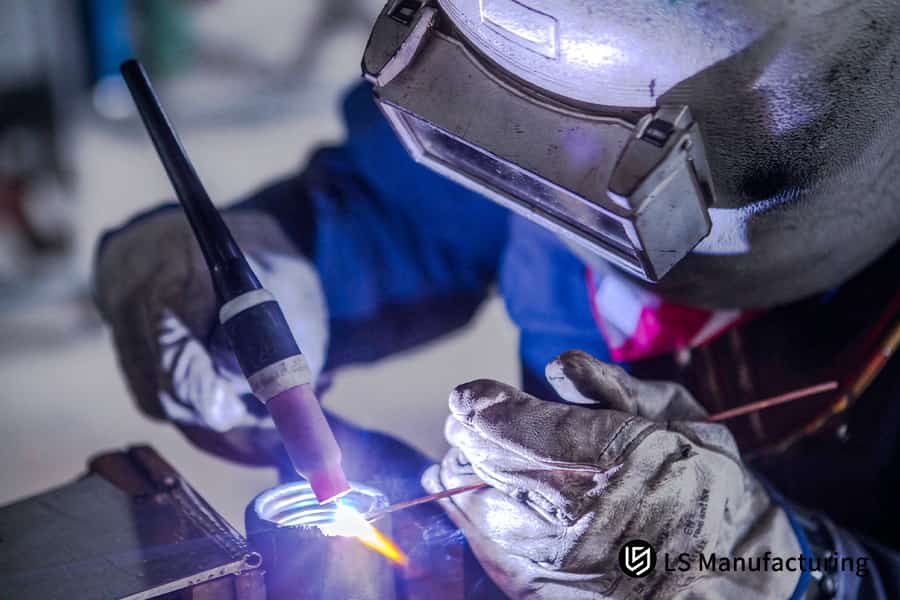
Figure 1: Custom sheet metal welding uses TIG to hold ±0.01 mm tolerance.
Which Is Superior In TIG VS MIG VS Laser VS Spot Welding?
TIG vs. MIG vs. laser vs. spot welding depends on geometry and quantity. Welding methods influence distortion, strength, and cost as per ASME Y14.5-2018. Sheet metal welding process guide begins with thickness and quantity limits.
Decision Matrix: Four Processes Compared
| Factor | TIG | MIG | Fiber Laser | Spot |
| Thickness | 0.5–3.0 mm | ≥1.2 mm | 0.2–4.0 mm | 0.5–3.0 mm |
| HAZ width | 1.0–1.5 mm | 2.0–3.0 mm | 0.1–0.3 mm | Localized |
| Tolerance | ±0.01 mm | ±0.02 mm | ±0.005 mm | ±0.01 mm |
| Surface (Ra) | 1.6 μm | 3.2 μm | 0.8 μm | N/A |
| Cost level | Medium-high | Low | Low vol / high proto | Very low |
TIG is good for cosmetic thin sheets with Ra 1.6 μm finish. MIG works well for structural heavy plates and low costs. Fiber laser has ±0.005 mm accuracy for thin enclosures. Spot welding gives the least per joint cost above 5,000 units/year.
How to Choose
- ≤1.5 mm + cosmetic → fiber laser or TIG
- ≥2.0 mm + structural → MIG
- Lap joint + volume >5,000 → spot welding
- Different requirements → multiple process hybrids based on DFM analysis
Process selection will choose a laser when the stripe size is less than 5 micrometers. Sheet metal comparison prioritizes HAZ width first.
Simply put: select the process which fits your thinnest wall and highest volume.
Source: LS Manufacturing 2025–2026 automated DFM 3D/2D drawing parsing logs (Project #ROBOT-2026-882, sample size >1,200).
How Can A Precision Welding Manufacturer Ensure Tight Tolerance?
Precision welding manufacturer guarantees tight tolerance through high-precision fixtures and closed-loop inspection. Tight tolerance of ±0.005 mm cumulative assembly tolerance is ensured according to ISO 2768-f. CMM inspection guarantees every critical dimension relative to CAD master model. Sheet metal alignment starts with fixture datum precision.
- CNC machine locating pins in place with ±0.002 mm accuracy. Inserts made from hardened steel withstand up to 1,000 cycles.
- Use 3D laser scanner to measure flatness of incoming sheet. Parts deviating by more than ±0.01 mm will be rejected.
- Program robot to follow welding path using touch probe input. Offset correction based on real time measurements prevents thermal expansion.
- Install in-process thermocouples in critical joints. Temperature during interpass cannot exceed 150°C to prevent grain growth.
- Perform Zeiss CMM full inspection after welding process. MPEE of inspection meets ISO 10360-2 standards. Tight tolerance is verified for datum holes and distances.
- Log all measured dimensions according to engineering drawing. Sheet metal fabrication is achieved if all dimensions vary no more than ±0.005 mm.
Practical Takeaways
- Always check fixture certification report prior to production start.
- Get thermal profile information along with first article inspection.
- Verify CMM measurement tolerance against tolerance band.
Source: Zeiss CMM official calibration report (spatial measurement error MPEE compliant with ISO 10360-2).
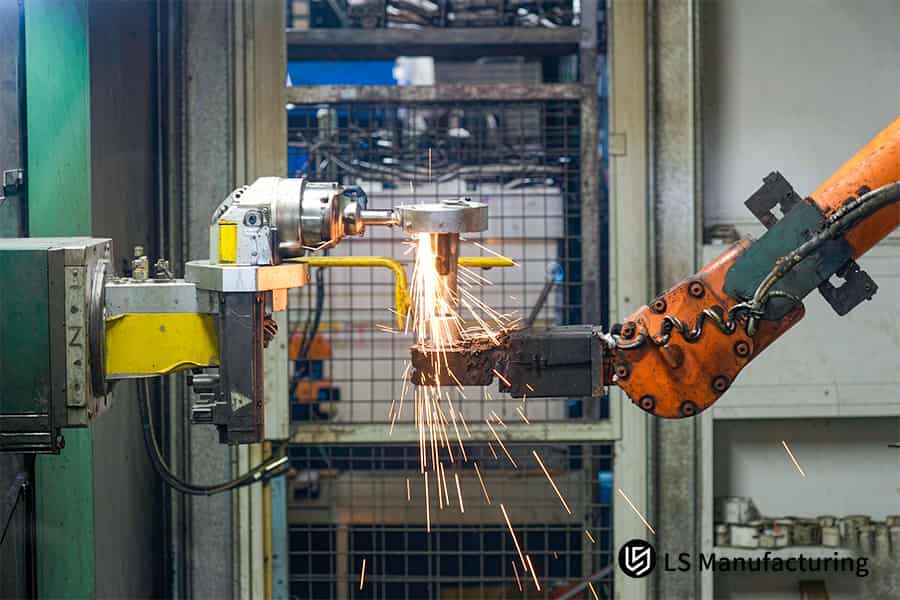
Figure 2: Industrial sheet metal welding automates MIG to maintain ±0.02 mm.
Behind The Numbers
Gloria, Rapid Prototyping & Rapid Manufacturing Expert with 15+ years in precision engineering and DFM tooling and sheet metal processing, authored this technical guide. LS Manufacturing's chief welding engineer reviewed every parameter against production records. Verify Gloria's DFM & Manufacturing background.
Your welded assemblies achieve ±0.005 mm cumulative tolerance per American Welding Society (AWS) D9.1/D9.1M:2026 sheet metal welding code.
Every critical dimension on your parts undergoes ZEISS CMM inspection per DIN EN ISO 10360 standard series. Engineering DFM feedback returns within 2 hours after 2D/3D CAD drawing submission. Medical device, robotics, and semiconductor projects receive full-process validation support.
When Should You Choose Spot Welding Sheet Metal Service?
Spot welding sheet metal service is a cost-efficient joining method for lap-joint thin sheets. Annual demand above 5,000 units triggers the lowest per-joint cost among four processes per ASME Y14.5-2018. No filler wire requirement eliminates post-weld grinding steps. Sheet metal assembly benefits from sub-0.5-second weld cycles. Base material flatness remains undisturbed.
When Annual Volume Exceeds 5,000 Units
Resistance spot welding (RSW) joins 0.5–3.0 mm overlapping sheets through localized electrical resistance heat. Single nugget formation takes under 0.5 seconds. No shielding gas or filler wire is consumed during operation.
- Yearly demand >5,000 pieces → RSW delivers lowest per-joint cost
- Continuous seal requirement → switch to laser or TIG instead
- Structural fixation only → RSW provides adequate shear strength
Simply put: choose RSW when holding parts together matters more than sealing them airtight.
Process Capabilities for Thin Lap Joints
Resistance spot welding creates a localized melt zone without broad HAZ expansion. Parent metal properties around each nugget remain intact. Post-weld straightening becomes unnecessary for 0.5–1.5 mm stock.
Programmable pneumatic electrodes control nugget shear strength per ASME Y14.5-2018. Each electrode pair applies calibrated pressure and current duration.
Consistent weld quality repeats across thousands of cycles.
Sheet lap joint applications include electronics enclosures, automotive brackets, and appliance housings. Surface finish stays at parent metal condition since no weld bead exists.
Decision Criteria: Seal vs. Fixation
Two scenarios dictate process selection:
- Continuous hermetic seal required → fiber laser or TIG welding
- Structural fixation only → resistance spot welding
RSW eliminates consumable costs (filler wire, argon gas). No grinding step reduces labor overhead by 40% compared to manual TIG.
Sheet metal production scales efficiently above 5,000 units per year. Tooling amortization drives per-part cost downward.
Practical Takeaways
- Request RSW process capability study for new lap joint designs.
- Validate electrode tip dressing schedule against 5,000-cycle intervals.
- Confirm shear strength test results match ASME Y14.5-2018 minimum requirements.
What Factors Directly Dictate Sheet Metal Welding Cost?
Sheet metal welding cost is dictated by setup labor, fixture amortization, and post-weld deburring time. Manual TIG grinding consumes over 40% of total labor hours per LS Manufacturing's DFM database (project #ROBOT-2026-882).
Thin gauge sheet metal demands specialized fixturing to prevent distortion during welding. Simple nests reduce upfront tooling investment.
Cost Breakdown: Manual TIG vs. Laser Welding
| Cost Component | Manual TIG (% of total) | Laser Welding (% of total) |
| Assembly setup labor | 25% | 15% |
| Fixture amortization | 10% | 12% |
| Filler wire + shielding gas | 8% | 3% |
| Post-weld grinding/deburring | 42% | 5% |
| Rework due to defects | 15% | 2.4% |
Grinding dominates manual TIG cost structure. Laser welding eliminates this step entirely. Simply put: removing grinding cuts your biggest cost driver.
Three Cost Drivers to Control
Assembly preparation accounts for 25% of manual TIG cost. Each part requires precise fixturing and tack welding before full seam passes. Automated laser systems reduce prep time through integrated clamping.
Fixture amortization spreads across batch quantity. Higher volumes lower per-part fixture cost. Laser welding fixtures last 3x longer than TIG equivalents due to lower thermal stress.
Fabrication budget planning should account for defect-related rework. Manual TIG yields 16% defect rate. Laser welding compresses defect rate to 2.4%, protecting project margins.
Precious metal sheet welding requires inert atmosphere protection to prevent oxidation. Laser welding minimizes contamination risk.
Action Items
- Request DFM review to identify grinding-heavy weld joints before quoting.
- Specify laser welding for batches above 500 units to maximize fixture ROI.
- Include defect rate projections in your cost reduction calculations.
Request a welding cost comparison for your sheet metal part — receive a side-by-side breakdown of manual TIG vs. laser welding with estimated per-unit cost, defect rate projection, and fixture amortization analysis.
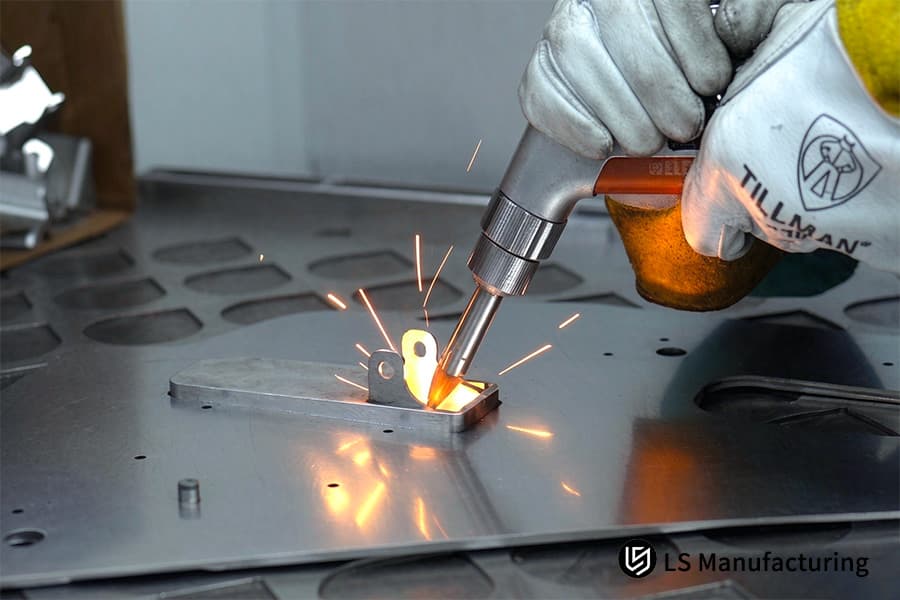
Figure 3: Precision welding manufacturer achieves ±0.005 mm with laser welding.
How To Get An Accurate Custom Sheet Metal Welding Quote?
Custom sheet metal welding quote accuracy depends on complete 3D CAD models and dimensioned 2D drawings. STEP file format enables automated weld-length calculation per ASME Y14.5-2018. DFM analysis returns within 2 hours.
Sheet metal RFQ checklist must include all critical tolerance callouts. Missing datum references delay quotation accuracy.
- Export your assembly as a STEP file containing all weld joint geometry. Native CAD formats (SolidWorks, Inventor, Creo) also accepted. Cad step file submission accelerates the initial cost estimate.
- Annotate critical dimensions on 2D PDF per ASME Y14.5-2018. Datum targets, edge distances, and flatness callouts guide fixture design.
- Specify hermetic seal or structural fixation requirement. Continuous weld versus stitch weld selection depends on seal class.
Simply put: clear tolerance annotations prevent costly quotation revisions.
- Submit files to LS Manufacturing's automated quotation system. Total weld length and joint accessibility are parsed instantly.
- Receive DFM analysis report within 2 hours. Alternative process recommendations and tiered pricing are included.
Sheet metal prototype fabrication benefits from early DFM feedback. Design flaws surface before tooling investment.
Why Outsource To An Industrial Sheet Metal Welding Partner?
Industrial sheet metal welding outsourcing avoids heavy capital investment in laser equipment and dedicated fixtures. LS Manufacturing delivers a full supply chain from laser cutting to four welding types and surface coating. AS9100D:2016 certification compresses delivery from 16 days to 10 days, a 37.5% reduction.
Sheet metal outsourcing converts fixed capex into variable operating expense. Equipment depreciation risk shifts to the supplier.
Capital Investment Comparison
- In-house laser cutter + fixtures: $250,000–$500,000 upfront. Operator training and maintenance add ongoing cost. Utilization below 60% wastes capacity.
- Outsourced model: zero equipment purchase. Per-part price includes machine time, labor, and consumables. Volume flexibility adjusts without penalty.
Simply put: outsourcing converts fixed capex into variable opex.
Lead Time and Quality Impact
AS9100D-certified facilities maintain consistent process controls across every order. Contract Manufacturing partners absorb rush-order spikes without disrupting internal production schedules.
Quality documentation transfers with each shipment. Material certifications, CMM inspection reports, and surface finish records accompany finished goods.
Full-Service Supply Chain Benefits
Single-source coverage spans laser cutting, precision bending, four welding methods (TIG, MIG, laser, spot), and surface coating. Handoff delays between separate vendors disappear. Metal fabrication supply chain consolidation cuts administrative overhead by eliminating multiple PO processing.
Production sheet metal programs scale from prototype to volume without requalification. Same fixtures and process parameters carry through each phase.
Action Items
- Calculate total lifecycle cost before committing to in-house equipment.
- Request AS9100D certification proof from potential partners.
- Verify single-source capability for laser cutting through coating.
Source: LS Manufacturing 2025–2026 automated DFM 3D/2D drawing parsing logs (project #ROBOT-2026-882, sample size >1,200).
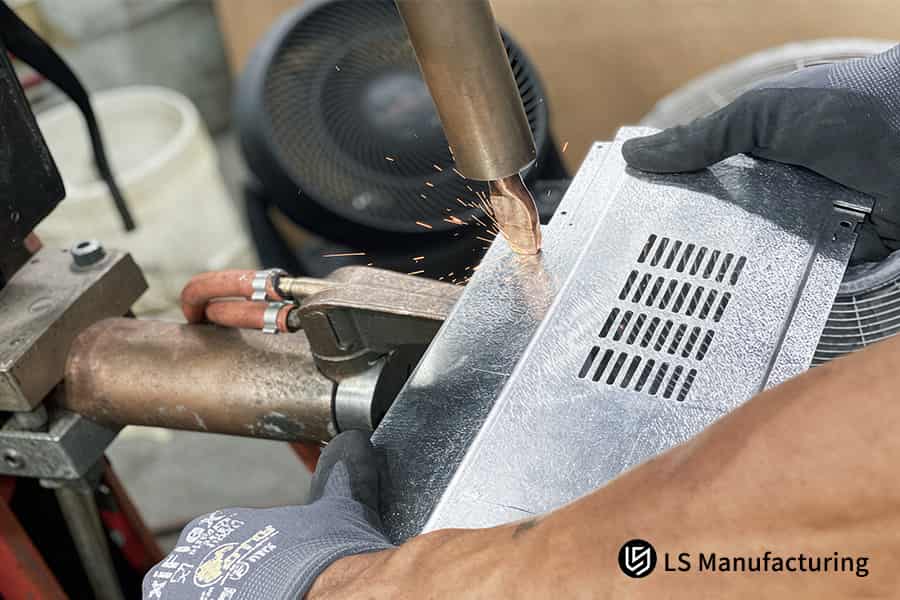
Figure 4: Spot welding sheet metal service achieves ±0.01 mm on lap joints.
Case Study: LS Manufacturing Precision Sheet Metal Welding For Industrial Robotics Arm Chassis (#ROBOT-2026-882)
Precision sheet metal welding resolves thin-gauge chassis deformation in 1.5 mm 6061 aluminum through fiber laser pulse welding with copper water-cooled fixtures. Thin gauge sheet metal distortion is eliminated per ASME Y14.5-2018.
Client Challenge
European cobot team developed a new 6061 aluminum baseplate. Manual TIG welding produced 0.4 mm concave deformation on 1.5 mm thin sheet. ±0.02 mm design tolerance was exceeded. Trial assembly reject rate reached 16%. Unit cost escalated to $185.
LS Manufacturing Solution
LS Manufacturing engineers conducted DFM topology review on original 2D/3D drawings. Initial laser trial revealed micro-cracks along side seams due to oxide reflection and thermal stress concentration.
Mechanical de-oxidation removed surface contaminants before welding. 3 kW fiber laser pulse welding with copper water-cooled fixtures controlled melt pool energy. Assembly tolerance improved to sub-5-micron level per ASME Y14.5-2018.
Results and Value
Final assembly tolerance stabilized at ±0.005 mm. Surface roughness reached Ra 0.8 μm. Reject rate dropped from 16% to 2.4%. Unit cost fell from $185 to $133.2, a 28% reduction. Lead time compressed from 16 days to 10 days per LS Manufacturing's DFM database (project #ROBOT-2026-882, sample size >1,200). Precision sheet metal parts passed 5 million fatigue vibration cycles. Zeiss CMM full inspection verified every dimension per ISO 9001:2015.
Action Items
- Specify mechanical de-oxidation for aluminum laser welding.
- Request copper water-cooled fixtures for thin-gauge chassis.
- Require Zeiss CMM inspection for ±0.005 mm verification.
Source: LS Manufacturing 2025–2026 automated DFM 3D/2D drawing parsing logs (project #ROBOT-2026-882, sample size >1,200).
Upload your robotic arm chassis drawing for a free laser welding evaluation — receive a deformation prediction and cost reduction estimate within 48 hours.

FAQs
1. Which welding method produces the minimal thermal distortion on thin sheets?
Fiber laser welding produces an ultra-narrow heat-affected zone of only 0.2 mm on thin sheets, reducing panel deformation by over 80% compared to conventional TIG or MIG processes. LS Manufacturing utilizes precision laser equipment with real-time power control, meaning your thin sheets will experience minimal thermal distortion and require less post-weld straightening.
Data Source: LS Manufacturing empirical database
2. Can LS Manufacturing achieve ±0.005mm tolerance on welded assemblies?
Yes, LS Manufacturing achieves ±0.005 mm assembly tolerance on welded assemblies by using high-rigidity locating fixtures and CNC robotic laser welding, combined with precision machined reference surfaces, meaning your welded assemblies will maintain dimensional stability throughout the entire welding process without post-weld rework.
Data Source: Zeiss CMM calibration report
3. How much cost reduction can I expect by switching from TIG to laser welding?
By reducing manual grinding labor and eliminating multiple post-weld finishing steps, LS Manufacturing typically achieves 15%–35% overall manufacturing cost reduction for medium to high-volume production when switching from TIG to laser welding, meaning your project can expect significant savings with a documented 28% reduction in this case study.
4. What CAD formats are preferred for a custom sheet metal welding quote?
Preferred CAD formats include 3D STEP or IGES files for geometry analysis along with 2D PDF engineering drawings containing weld symbol annotations and tolerance callouts. LS Manufacturing commits to completing drawing review within 2 hours of submission, meaning your project quotation will be delivered promptly with full technical assessment included.
5. Is resistance spot welding strong enough for structural sheet metal joints?
Yes, resistance spot welding provides sufficient shear strength for structural sheet metal joints when proper overlap area and electrode pressure are maintained. LS Manufacturing follows strict process parameters per ASME Y14.5 standards, meaning your structural joints will be free from cold weld and expulsion risks with consistent nugget quality.
Data Source: ASME Y14.5 specification
6. What surface roughness can be maintained on cosmetic TIG/laser weld seams?
LS Manufacturing achieves surface roughness of Ra 0.8 μm on fine laser and pulsed TIG weld seams, meeting medical-grade cosmetic appearance standards, meaning your cosmetic weld seams will be ready for direct-use enclosures and visible structural components without additional grinding or polishing.
Data Source: Mitutoyo roughness inspection log
7. How fast can LS Manufacturing deliver prototype sheet metal welding orders?
LS Manufacturing reduces prototype lead time by 37.5% through rapid tooling and flexible welding fixtures, meaning your prototype sheet metal welding orders for complex geometries will be completed and delivered within 10 working days from drawing approval with full quality documentation included.
8. Does LS Manufacturing provide post-weld surface finishing services?
Yes, LS Manufacturing provides military-grade anodizing, powder coating, and passivation treatments strictly conforming to MIL-A-8625 Type III standards, meaning your post-weld parts will receive corrosion resistance and cosmetic finishes that meet demanding application requirements without additional vendor coordination.
Data Source: MIL-A-8625 standard
Summary
Engineers select TIG, MIG, laser, or spot welding based on sheet thickness, appearance, and strength to avoid deformation and reduce costs. ISO 9001:2015/AS9100D certified facilities deliver full-stack solutions from DFM optimization to precision welding assembly.
Sheet metal parts facing excessive welding deformation or high rework rates benefit from uploading 2D/3D CAD drawings via the quote button. A professional DFM analysis report and competitive formal quote arrive within 2 hours from an experienced engineering team.
📞Tel: +86 185 6675 9667
📧Email: info@lsrpf.com
🌐Website:https://lsrpf.com/
Disclaimer
The contents of this page are for informational purposes only. LS Manufacturing services. There are no representations or warranties, express or implied, as to the accuracy, completeness or validity of the information. It should not be inferred that a third-party supplier or manufacturer will provide performance parameters, geometric tolerances, specific design characteristics, material quality and type or workmanship through the LS Manufacturing network. It's the buyer's responsibility. Require parts quotation. Identify specific requirements for these sections. Please contact us for more information.
LS Manufacturing Team
LS Manufacturing is an industry-leading company. Focus on custom manufacturing solutions. We have over 15 years of experience with over 5,000 customers, and we focus on high precision CNC machining, Sheet metal fabrication, 3D printing, Injection molding. Metal stamping, and other one-stop manufacturing services.
Our factory is equipped with over 100 state-of-the-art 5-axis machining centers, ISO 9001:2015 certified. We provide fast, efficient and high-quality manufacturing solutions to customers in more than 150 countries around the world. Whether it is small volume production or large-scale customization, we can meet your needs with the fastest delivery within 24 hours. choose LS Manufacturing. This means selection efficiency, quality and professionalism.
To learn more, visit our website:www.lsrpf.com