English



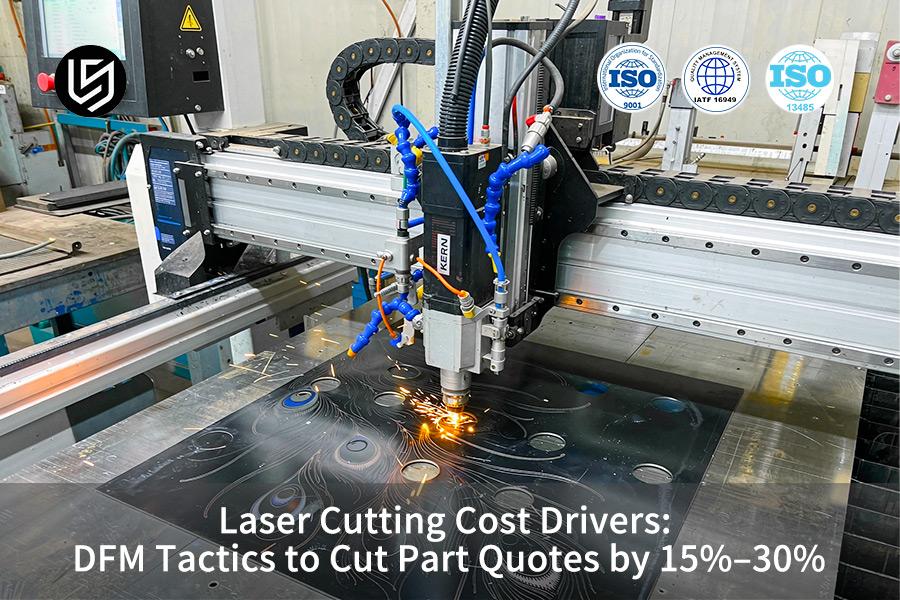
Laser cutting cost drivers are pierce time, nesting waste, and tolerance bands, which DFM (Design for Manufacturability) removes through shared edges.
DFM review cut unit price by nearly a quarter on LS Manufacturing project #AUTO-2026-8841, a robotic arm bracket programme. Procurement teams keep saved margin across repeat orders.
Quick Reference Guide: Cost VS. Process Design Balance Table
Sheet metal geometry is fixed prior to laser cutting. Redundancy of design in relation to the laser process window ensures no cost overrun. Overspecification of tolerance bands increases the machine hour cost.
| Dimension | Conventional design | Precision design (LS Manufacturing) | No-DFM design (legacy case) |
| Forming tolerance | ±0.02 mm | ±0.008 mm | ±0.05 mm |
| Cut-edge roughness | Ra 3.2 μm | Ra 1.6 μm | >Ra 6.3 μm with dross |
| Hole-to-thickness ratio | 1.2:1, stable piercing, no distortion | 1.5:1, high-frequency pierce, no mark | <0.8:1, severe burn-through, burst risk |
| Nesting spacing | ≥1.5T, automated nesting | 0 mm shared kerf, 2.0 mm micro-joint bridge | Random manual nesting, >5.0 mm |
| Relative machine-hour cost | 100%, standard baseline | 112%, high-frequency nitrogen cut | 148%, repeat pierce, idle travel |
Sheet thickness combined with the 1.5:1 precision-grade hole-to-sheet ratio and ±0.008 mm tolerance eliminates further secondary deburring and reworking machine hours.
Download the one-page laser cutting DFM checklist — the hole-to-thickness ratio, tolerance band, and nesting spacing rules from the table above — and score your next drawing before it reaches any supplier.
Key Takeaways: Core Technologies and Procurement Principles
- Eliminating Redundant Perforation for Speed Improvement: Edge-sharing cuts and continuous outlines eliminate duplicate piercing operations. Buyers pay by the length of cut rather than brake and accelerate.
- Strictly Controlling Aspect Ratio Issues: Diameters greater than sheet thickness release any melt downward, while adequate spacing between webs prevents heat-affected micro-distortion at final cut edge. Scrap rate stays in low single digits each batch.
- Standardized Board Thickness Cost Reduction Principle: A single chassis configuration operates on two gauge designations, while dense placement raises usable sheet area from just over three-fifths to better than four-fifths. Procurement department spends much less on skeletons per purchase order.
- Balancing Fit Tolerance Requirements: Assembly datum faces have microns of band tolerance, and blanking datum faces have general tolerance classes. Quote lines do not charge for slow-finishing time.
Why Is Laser Cutting Expensive For Unoptimized Parts?
Laser cutting cost structure is tri-fold in nature: machine-hour redundancy cost, material utilization inefficiency, and deburring labor already done for free. Unoptimized drawings increase the cutting time required for each part by 35%+ and raise the billing hour cost even more, as the travel and repeated piercing charges are incurred on an hourly basis. Automated geometry parsing removes redundant lead-in paths during drawing input.
The Hidden Costs of Piercing and Travel Moves
Each pierce point makes the fiber laser head slow down, pierce and then accelerate again. People wondering why is laser cutting expensive need to review the piercing points number, since densely packed piercings increase the deceleration cycle.
- Transform holes below 3 mm diameter to slots where possible.
- Maintain nitrogen assistance at 10 – 14 bar to keep the laser cutting cost per hour stable.
Simply put: fewer pierce starts equate to fewer billed seconds per sheet. Turret punching technology cannot create overlapping cuts, as each punch tool requires clearance for each impact. Every sheet metal laser cutting quote must include the number of pierces per part.
Scrap Rates Generated by Irregular Geometries
Non-uniform geometry creates gaps that cannot be filled with any nesting algorithm. Inefficient nesting can lead to about 39% of scrap, hence, the customer is paying for the steel going out as the skeleton. Laser cutting cost drivers rank nesting waste just behind machine time.
- Create mirror image of asymmetrical parts where concave zones are facing each other.
- Use a common cut line for adjacent geometries.
Dross category together with perpendicularity in ISO 9013:2017 determine whether cut edges require grinding. Suppliers running a custom laser cutting service make their dross assumption known by quoting based on net area.
Data source: LS Manufacturing 2025–2026 measured database (cutting runtime log analysis, sample size >1,200).

How Do Piercing Points Impact Your Cutting Quotes?
Piercing cost is the thermal dwell cost plus the assist gas cost for each piercing event that a laser beam requires to pierce through a metal sheet, and each closed internal contour costs additional $0.05-$0.15 (LS Manufacturing Internal Labor Hour Database Statistics (2025–2026, Sample >1,200 Items) ) per piece of direct processing cost. Heating up through dense hole patterns takes circularity beyond ±0.05 mm zone, which distinguishes uncontrolled work from controlled DFM. Fly cutting without stops eliminates the dwell cycle completely.
Buyers learning how to reduce cutting quotes should consider closed inner contours first. On medium-thick plate, every closed contour requires a full-thickness piercing. Dense perforated panels multiply assist-gas volume across the sheet, so nozzle life drops as accumulated heat attacks the orifice.
Cutting micro joints (connecting neighboring holes to make the beam pass only once through the joint) connects several profiles into one cutting sequence. Idle dwelling seconds are removed from the cutting cycle, so billing by the hour results in extra cut length. Laser cutting price per part decreases with each removed breakthrough. Plasma cutting cannot retain hole circularity on dense patterns due to larger width and heat affected zones that distort small patterns.
A sheet metal laser cutting quote can be negotiated when customers ask about the pierce count per piece in quotation line. Holes combined in one common cutting line are deleted where possible.
Laser cutting DFM guidelines recommend shared sides over separate closed loops. Slots substitute for tight round holes in dense patterns.
A prototype laser cutting service with geometry optimization is used as a preliminary cost estimation before making a decision for mass production. From a customer’s point of view, a series of one path results in less breakthroughs per sheet.
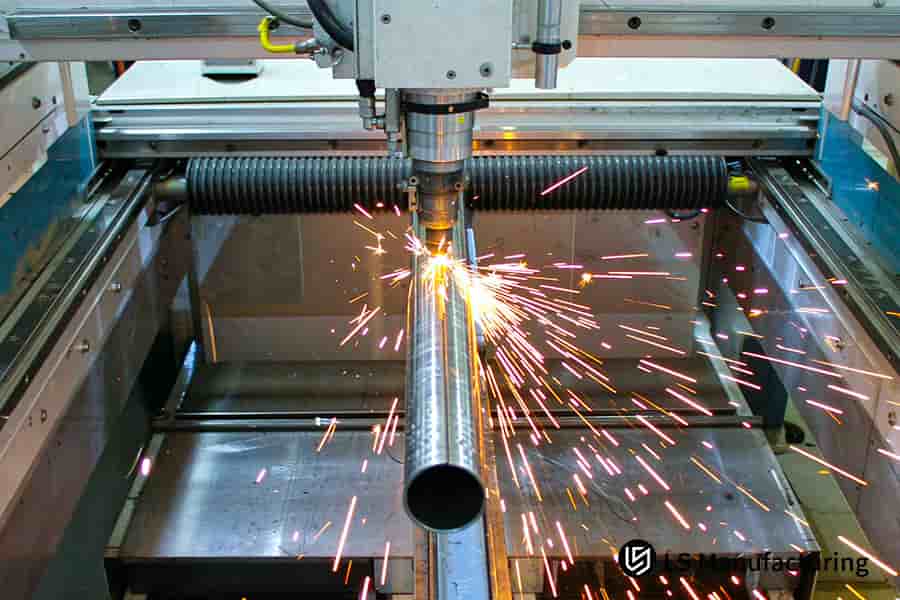
Figure 1: Sparks fly as head cuts 3 mm metal tube explaining why is laser cutting expensive.
Which DFM Tactics Maximize Sheet Metal Nesting Efficiency?
Sheet metal nesting efficiency optimization is a case of geometrical restructuring with the technique raising the rate of material usage from 61% to 84%. Absence of common straight sides in the case of non-standard profiles requires at least 1.5T distance between the sheets. Scrap from the grid pattern will remain on the sheet.
Common-Line Cutting vs. Standard Spacing Metrics
Common-line cutting combines two adjacent silhouettes in a torch cutting path, thus making one cut cover both edges. Customers seeking sheet metal nesting cost optimization should consider nesting similar parts having only one straight silhouette.
| Nesting mode | Material utilization | Inter-part clearance | Scrap form |
| Rectangular common-line nesting | 84% | 0 mm shared kerf (2.0 mm micro-joint bridge) | Skeleton frame |
| Free-form irregular nesting | 61% | ≥1.5T, 3 mm at 2 mm plate | Grid web waste |
Common outlines eliminate waste from grid system, and sheet metal laser cutting cost is more affordable per part. Simply put, paid steel becomes sellable parts instead of skeleton waste.
Slope Tweaks On Non-Mating Edges
An edge slope does not serve any purpose regarding bracket assembly, so the minimal modification makes possible to use two outlines with one cutting line. Laser cutting DFM guidelines best practices allow to modify non-mating edges.
Custom laser cutting service cost decreases as nesting program combines outlines freely. Combine rectangular outlines in pairs so that each outline would have its own counterpart.
ISO 2768-1:1989 general tolerances apply to non-critical outlines, which means that the slope change will be within limits of tolerance specified in the drawing. Buyers who seek for a laser cutting quote online should provide marked drawings.
What Are The Real Limits Of Precision Laser Cutting Tolerances?
Precision laser cutting tolerances are the actual dimension of tolerance that the spot of a fiber laser can maintain in stable heat conduction, ranging from ±0.02 mm at normal grade and ±0.008 mm at mating faces. ISO 2768-m (ISO 2768-1:1989) is used as the outside boundary for non-critical linear edges. Ultra-tight callout throughout the entire drawing results in 50% slower feed rate.
Tolerance Grades And Feed-Rate Trade-Offs
Dimensional bands segregate into three practical grades. Buyers viewing laser cutting tolerance chart can witness the segregation:
- Conventional grade: full feed rate, conventional assist gas, no cost surcharge.
- Precision grade: slowed feed rate, controlled kerf (cut width), only mating bores.
- Ultra-precision grade: ±0.004 mm, low-frequency pulse trim, significant surcharge.
Billable hours correlate well with cut speed rather than material surface area. Mating pins and bearing seats go under fine cut, as slip fit requires mating bores.
Where Precision Callouts Belong
Tolerance systems designed on laser cutting DFM guidelines prohibit precision callouts to non-mating parts. Mating pins, dowel holes, and bearing seats get the narrower band while brackets and vents remain conventional.
Unrestricted ultra-precision callouts necessitate slow-pulse finishing. Buyers wondering why is laser cutting expensive discover that tolerance callouts determine the pricing and not the material. Quote becomes 2x higher when pulse frequency lowers.
Metal laser cutting service price quotations encompass the entire drawing. From the customer's standpoint, critical bores that are annotated ensure that the assembly is precise while unannotated edges remain inexpensive.
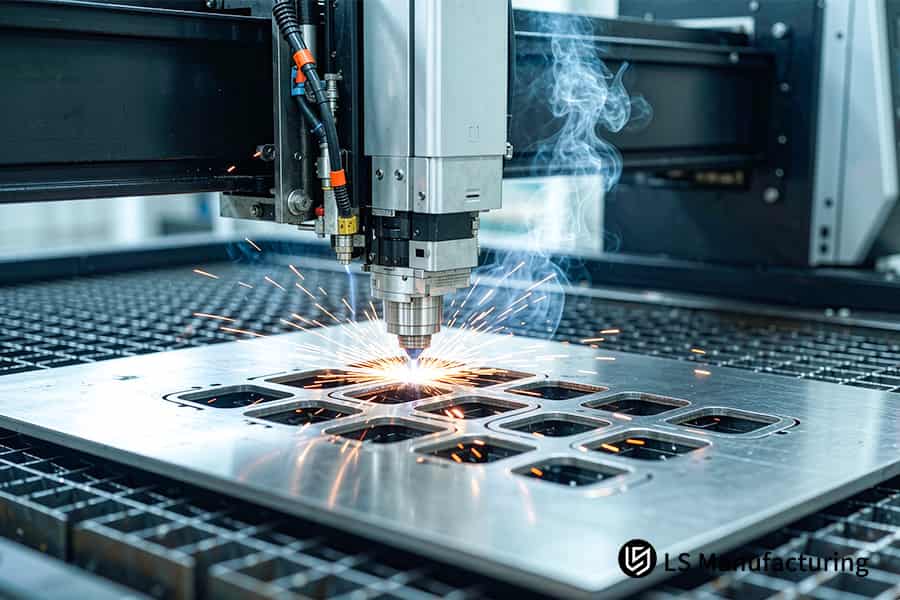
Figure 2: Piercing a dense hole pattern in 3.0 mm SUS304; DFM hole sizing helped cut this bracket's quote by 24.2%.
Behind The Numbers: LS Manufacturing Precision Engineering
Gloria, Rapid Prototyping & Rapid Manufacturing expert, with 15+ years experience in precision machining and sheet metal DFM analysis ensures you identify potential problems during the trial stage of laser cutting projects. Verify Gloria's DFM & Manufacturing background.
AS9100D control plans specify all pierce parameters behind quoted cutting information. ASME B1.1 thread specifications standardize fastener hardware based on enclosure, so changing taps affects your routing. Trial cuts in the first round on German fiber laser machines identify pierce numbers and nesting errors before production. Review of ISO 9001:2015 at LS Manufacturing conducted by their chief engineering team makes your inspection team's work audit-proof.
Automated 2D/3D CAD file parsing delivers process feasibility analysis for each submitted drawing, with pierce numbers and nesting solutions quantified upfront. Your next sourcing round begins with quantified pierce numbers, nesting solutions, and tolerances. Submit one 3D or 2D CAD file, and your engineering team will benchmark suppliers
How Can You Optimize Hole Geometries To Reduce Laser Time?
Hole geometry optimization is done by setting the size of each hole to be ≥1.2 times the sheet thickness in regular jobs and 1.5 times in precision jobs, as this eliminates slag back-blow and heat distortion delays. Holes below 1.0T generate one-part scrap in the mid-teens percentage range, because back-slag reaches the nozzle lens. ISO 2768-1:1989 medium class controls the other linear dimensions.
Rules for Diameter-to-Thickness Ratios
Laser cutting hole sizes above 1.2T vent melt downward and keep nozzle lenses clean.
- Specify every through hole size at ≥1.2T, or a minimum of 14.4 mm on 12 mm plate.
- Substitute fastener holes <1.0T with punches with centre marks or pilot slots.
A mechanical punch requires one die per diameter, so that thicker-plate designs use laser piercing for various hole sizes. Simply put: larger holes ensure clean nozzle lenses, and clean lenses mean no downtime costs. Buyers seeking advice on how to reduce cutting quotes will be able to send drawings with hole sizes marked.
Secondary Tapping vs. Direct Laser Piercing
Laser cutting DFM guidelines designate clearance holes for direct piercing and threaded holes for post-piercing tapping. Buyers requesting a fast laser cutting service should specify thread sizes, not minor diameters.
- First cut a simple pilot hole, then tap the threads after cutting.
- Use direct piercing only for clearance holes because tapping is needed for thread flanks.
Cycle time decreases 28% once the tapping process is taken off the laser bed. Every sheet metal laser cutting quote should include pierce starts per piece, so the buyer can realize the cycle savings.
Data source: ISO 2768-1:1989 General tolerances — Part 1: Tolerances for linear and angular dimensions without individual tolerance indications, medium (m) class.
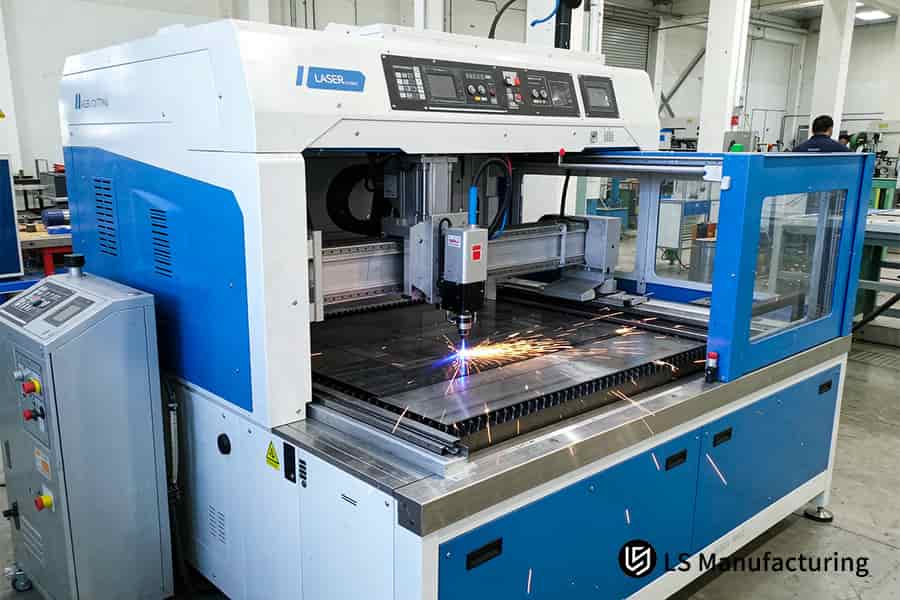
Figure 3: Large machine processes panel for sheet metal laser cutting quote at 84% utilization.
Which Material Selections Keep Laser Cutting Service Costs Low?
Material-level cost control is the technique of specifying sheet metal of standard gauge for either O₂ or N₂ assist that reduces raw material cost 12% via one callout, which resides on a separate line from machining hours. Flat stock of AL 5052-H32 and SUS304 standard cold-rolled stays constant throughout the nest. Buyers eliminate gauge changeovers and send parts directly to bending.
Sheet Grades And Assist-Gas Pairing
When shopping for an aluminum laser cutting service, buyers must make one gas selection for each sheet type.
| Sheet category | Assist gas | Cutting efficiency |
| Carbon steel, 6 mm standard gauge | O₂ | Exothermic reaction, fastest feed |
| SUS304 cold-rolled, 1.5 mm | N₂ | Oxide-free edge, no post-grind |
| AL 5052-H32 cold-rolled, ASTM B209 | N₂ | Reflective surface, power headroom |
| Unannealed coil, non-standard gauge | Either | Warp, head-crash stoppage |
Laser cutting cost drivers prioritize gauge count over assist-gas selection. One gauge across an assembly removes gas swaps and nozzle re-tunes. In plain language, one material selection is enough for the job.
Standard Gauge Consolidation Rules
SUS304 (JIS austenitic stainless steel, comparable to ASTM 304) accounts for the majority of enclosure panels, hence stainless steel laser cutting is done as one batch. AL 5052-H32 (aluminum-magnesium alloy, 1/4 hard temper).
Unannealed coil stock distributes rolling stress irregularly, causing the warp to push the sheet up into the nozzle. Plasma cutting process warps thin stainless steel, due to the increase in the heat-affected zone (HAZ, the metal affected next to the cut).
Custom laser cutting service cost decreases when one gauge works for all parts. Hybrid designs benefit from sheet metal nesting cost optimization because one gauge allows sharing the sheet by profiles.
Why Do Secondary Operations Drive Up Laser Cutting Quotes?
A secondary operation surcharge is additional expense in grinding for vibratory finishing, hand-polishing, and welding fixtures, and drawings with no 0.1 mm burr allowance result in secondary operations charges. ASME Y14.5-2018 describes feature controls used in such descriptions. Conventional quality cut surfaces will have edge finishing required on all outlines, costing buyers the finishing work that is not needed in assembly.
Dross (re-solidified metal from the melt on the bottom side of the cut surface) is produced when the assist gas pressure goes below the pierce gas pressure. For the question of why is laser cutting expensive by buyers, there is dross cleaning as an additional cost item.
Sharpness of the edge determines the next surcharge level. Edges with 90° corners require a 0.5 mm × 45° break prior to coating, and grinding is billed by the hour. Quotes for laser cutting deburring service disappear once drawing includes cut edges.
Assembly alignment has the biggest unseen fixture cost. Tab-and-slot alignment system (tabs that interlock with slots) is self-locating with ±0.2 mm accuracy; hence no weld jig is needed. Alignment through geometry makes custom laser cutting service cost without tooling economical.
Drawing notes are the key factor that determines the final labour figure. Customers trying to find out how to reduce cutting quotes should put down three drawing notes for each change: burr allowance, edge break, and self-locating feature.
Laser cutting design tips that were published are more in favor of symmetric tabs than separate brackets. In other words: three drawing notes save grinding time and jig making from one quote. Shearing cannot guarantee ±0.2 mm slot tolerance as the metal gets deformed instead of being melted by the blade.
Data source: Dimensioning and tolerancing mating features in accordance with ASME Y14.5-2018.
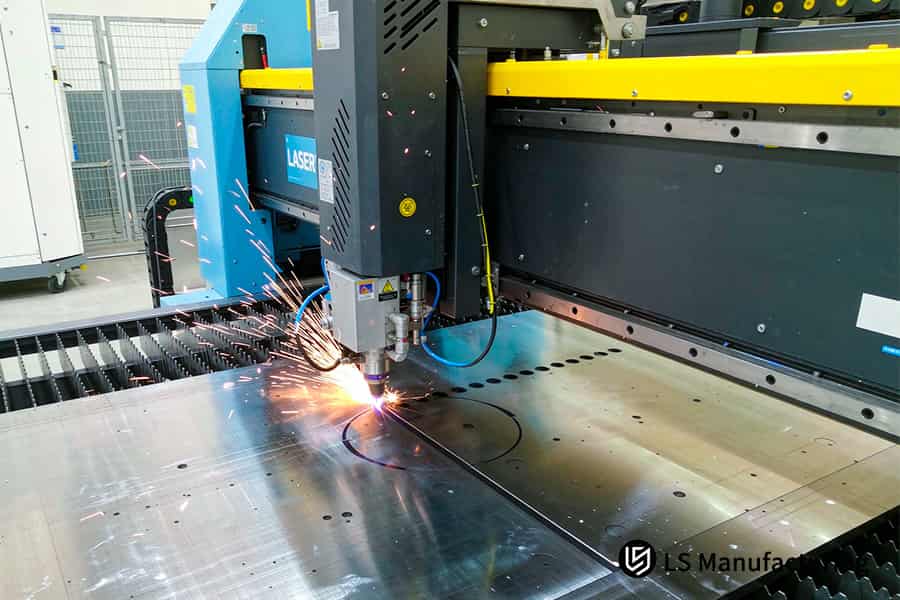
Figure 4: Head cuts outline controlling custom laser cutting service cost at 2.0 mm.
When Should You Switch To Standard Thicknesses And Hardware?
Standardized design conversion is the process of reducing an assembly to 1–2 sheet thicknesses plus one thread size; it decreases the procurement cycle to 7 days from 12. ASME B1.1 and ISO 261 determine one coarse pitch for each thread size through standardizing. Consolidated notes ensure bending setups on one tooling; therefore, customers save two loading cycles per enclosure.
Gauge Consolidation Steps
Three gauges (1.2 mm, 1.5 mm, 2.0 mm) break up one enclosure assembly into three loadings, hence customers buy three set-ups. Laser cutting cost drivers make gauge changeover more important than hole number for 2.0 mm gauge.
- Use 2.0 mm gauges for frame and mounting plates.
- Use 1.5 mm gauges for covers and vent plates.
- Combine all other pieces into two gauges.
Two gauges mean reduction in laser cutting setup cost, because one clamp height will accommodate two sheet thicknesses. In simple words, two gauges mean one setup instead of three.
Thread Form Unification
Unified Inch Screw Threads (UN, UNR, and UNJ threads) are covered by ASME B1.1, and M6×1.0 coarse metric pitch is covered by ISO 261. Only one thread form is required instead of several ones. Different thread sizes require one tap change per diameter.
Precision laser cutting tolerances are still possible at 2.0 mm stock, because there is only one gauge for which kerf adjustment stays unchanged. Any sheet metal laser cutting quote must include number of gauges and thread sizes as separate lines.
Single-form M6 x 1.0 tap calls reduce laser cutting lead time, because only one tap remains mounted. Buyer needs one form of a thread to receive all the hardware in one box.
Data source: ASME B1.1 Unified Inch Screw Threads (UN, UNR, and UNJ Thread Forms); ISO 261 general purpose metric screw threads.
LS Manufacturing Precision Laser Cutting Service For Industrial Robotics Sensor Brackets: 24.2% Cost Reduction Via DFM
DFM-led laser cutting revision is a pre-production review of part geometry and tolerances. Result of such review reduced sensor bracket cost by 24.2%, from $18.60 to $14.10 due to correct hole diameter sizes and revised tolerances. Project AUTO-2026-8841 is about robotic arm end-of-arm tooling. Robotics assembly buyers gain lower bracket cost with keyway fit intact.
Client Challenge
Project #AUTO-2026-8841 bracket drawings called for 28 holes at 2.2 mm in 3.0 mm SUS304, a 0.73:1 ratio where slag clogging is likely. Nesting clearance of 6.0 mm created waste and extended delivery through a second week. The as-received drawing generated 28 pierce starts per bracket — one for each 2.2 mm hole.
LS Manufacturing Solution
Process engineers relaxed non-mating zones tolerance to ±0.02 mm, easily within the ISO 2768-m range. Precision-grade tolerance range was set by the keyway centered in the part. Instead of holes, laser dots were applied, followed by reaming. Test cuts relieved stresses, raising edges 0.12 mm. Intermittent micro joints plus optimization of pulse duty cycle brought the edges back to flat.
Results
Cycle time improved from 190 s to 115 s. Rejects per batch went from 14.5% to 2.8%. First batch shipment came in 7 days, reducing the lead time by 41.7%. Ra 1.6 μm laser cut edges saved manual grinding. Measurement data from Zeiss CMM (Coordinate Measuring Machine) and FAIR documentation qualified parts for Tier-1 inspection. Precision laser cutting service output could be directly fed to robotic assembly.
"Brackets came smooth and burr-free; arm end assembly did not involve edge finishing. Brackets arrived smooth and burr-free; the arm-end assembly required no edge finishing, and the first batch passed incoming inspection with zero rejects." — Incoming quality inspector, automotive assembly line integrator, project #AUTO-2026-8841
Data source: LS Manufacturing automated sheet metal shop production log (project #AUTO-2026-8841, batch sample 850 pieces).
See the same DFM rules applied to your bracket or enclosure: request a side-by-side comparison of your current drawing against an optimized version, with pierce count and nested material utilization shown next to each other.

FAQs
1. Can laser cutting consistently achieve ±0.008mm tolerances on thick plates?
Tolerances depend on plate thickness, with LS Manufacturing maintaining groove width tolerances of ±0.008 mm for plates ≤3.0 mm. Tolerances of ±0.02 mm apply to the rest of dimensions, which is five times narrower than the ±0.1 mm permitted by ISO 2768-m in 3–6 mm thickness range due to heat dispersion increasing kerf width with plate thickness. Inspection teams verify keyways with one CMM pass, as brackets of #AUTO-2026-8841 did not require hand-fitting before robotic assembly.
Data Source: ISO 2768-1:1989 General tolerances — Part 1, medium (m) class.
2. How does material reflectivity affect custom laser cutting service costs?
Copper and aluminum reflect almost all energy back into the laser resonator, requiring a decrease in processing speed by 25%. Reflectance tests in accordance, which makes procurement managers retain derated machine hours, as LS Manufacturing uses high-frequency laser fiber with gas anti-reflection system.
3. What is the optimal hole diameter for 4.0mm stainless steel parts?
Diameter of holes on 4.0 mm stainless steel must be no less than 4.8 mm (1.2:1 ratio), or 6.0 mm (1.5:1). According to ASTM A480, 4.0 mm thick plate is oversize, and LS Manufacturing premarks positions with a fiber dot and performs final sizing by secondary CNC machining. Assembly department gets holes without heat-affected zones.
Data Source: LS Manufacturing 2025–2026 measured database.
4. Will common-line nesting compromise the edge quality of finished parts?
No, since lead-in direction and micro-joint anchor points secure common-line edges measured using the ASME B46.1 evaluation method, the collinear edges achieve Ra 3.2 μm. LS Manufacturing designs each shared-line cut to produce one good edge at a time, and travel between nesting decreases by 15%. Quality controllers do not need to grind shared-line edges, because dross remains on the skeleton frame.
5. Why does nitrogen assist gas cost more than standard oxygen cutting?
Every laser cutting quote comparison starts with the assist-gas choice, since nitrogen displaces oxygen at the cut line and leaves stainless steel sections free of oxide scale at Ra 1.6 μm. According to ASTM A380, pickling is a way to remove the oxide scale, but it is not required with nitrogen-assisted laser cutting. While nitrogen increases the cost of laser cutting per piece due to increased gas volume, the schedule excludes pickling.
6. Can LS Manufacturing automatically detect DFM flaws in my CAD file?
Yes, LS Manufacturing checks the ratio of hole diameter to thickness, slots distance, and tight tolerance callouts in uploaded CAD files within 2 hours. ISO 16792 digital product data requires no further export, and encrypted upload allows keeping customers' geometries in one secured system. Tooling budget stays unaffected, because the report quantifies savings without changing existing tooling budgets.
7. How to prevent sheet metal parts from warping during intense laser nesting?
High density nests allow the release of rolling stresses in cold rolled sheet, and large panels rise towards the cutter head midway through the cycle. LS Manufacturing employs skip step cooling circuits and stress-releasing micro grooves in addition to which panels meet flatness class H of ISO 2768-2. OEM assembly lines receive flat brackets, as #AUTO-2026-8841 panels met fixture assembly without straightening.
Data source: Zeiss CMM coordinate measuring machine calibration data records.
8. What edge condition should I specify to avoid high post-processing labor fees?
ISO 13715 edge callouts enable one drawing to include “slight micron level burrs permitted”, eliminating full contour deburring labour charges. LS Manufacturing delivers all finished orders with passivated edges without any charge for chamfering starting from single panel orders. No warranty claim for sharp edge damage has ever been opened, and buyers seeking laser cutting companies must include passivation.
Book a one-on-one drawing review with a sheet metal engineer — send your 3D or 2D file and receive mating-bore tolerance recommendations plus tiered pricing for your actual batch size.
Summary
Pierce loss, nesting utilization, and machining tolerance have a common physical link, and solving the physical link prior to drawing release eliminates wasted manufacturing time. Programs of automobiles, robotics, and instrumentation then reduce the cost of machining of parts by 15% to 30%, with the brackets program falling on the upper range, and ISO 9001:2015 and AS9100D Certification provides proof of process control for quality auditors.
One 3D/2D CAD upload returns a DFM analysis quote within 2 hours, complete with tolerance assessment, nesting cost options, and tiered pricing. Procurement teams then compare every supplier against one drawing, one tolerance plan, and one price breakdown.
📞Tel: +86 185 6675 9667
📧Email: info@lsrpf.com
🌐Website: https://lsrpf.com/
Disclaimer
The contents of this page are for informational purposes only. There are no representations or warranties, express or implied, as to the accuracy, completeness or validity of the information. It should not be inferred that a third-party supplier or manufacturer will provide performance parameters, geometric tolerances, specific design characteristics, material quality and type or workmanship through the LS Manufacturing network. It's the buyer's responsibility. Require parts quotation. Identify specific requirements for sections. Please contact us for more information.
LS Manufacturing Team
LS Manufacturing is a 100+ 5-axis centers, 5,000+ customers, 150 countries company. Focus on custom manufacturing solutions. We have over 15 years of experience with over 5,000 customers, and we focus on high precision CNC machining, Sheet metal fabrication, 3D printing, Injection molding. Metal stamping, and other one-stop manufacturing services.
Our factory is equipped with over 100 state-of-the-art 5-axis machining centers, ISO 9001:2015 certified. We provide fast, efficient and high-quality manufacturing solutions to customers in more than 150 countries around the world. Whether it is small volume production or large-scale customization, we can meet your needs with the fastest delivery within 24 hours. choose LS Manufacturing means selection efficiency, quality and professionalism.
To learn more, visit our website: www.lsrpf.com