English



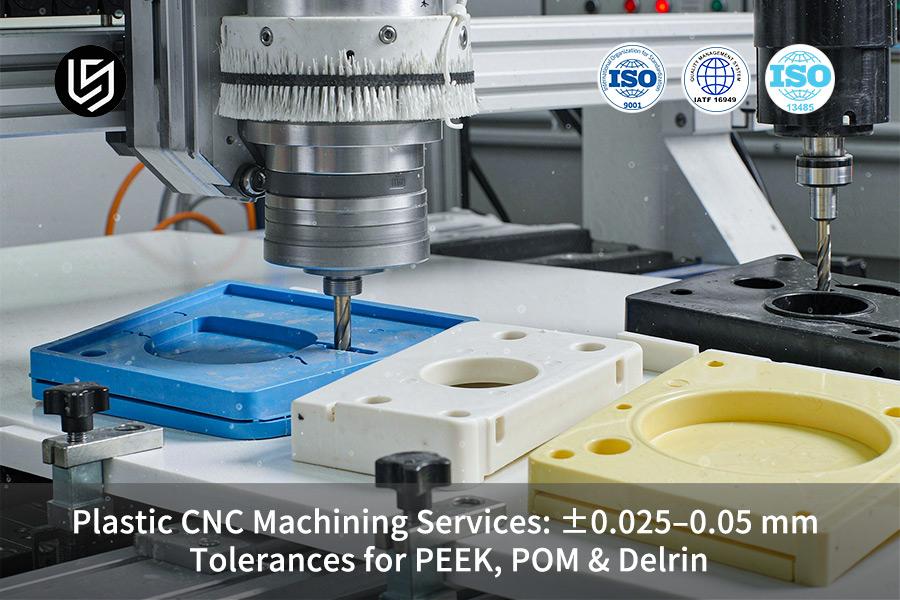
Plastic CNC machining service holds PEEK, POM and Delrin features to ±0.025–0.05 mm (25–50 µm) through 5-axis milling and three-stage annealing.
Across 120+ medical programs in 2025–2026, LS Manufacturing held PEEK features within ±0.025 mm and cut reject rates from 14.2% to 2.1%.
Comparison Table Of Engineering Plastics Processing Characteristics And Cutting Reference
| Material Grade | HDT | Typical Tolerance Control Grade | Recommended Surface Roughness | Optimal Cutting Speed (Vc) | Recommended Industry Scenarios |
| PEEK (Victrex 450G) | 152°C | ±0.01 mm to ±0.025 mm | Ra 0.4 μm | 120 m/min | Medical implants, semiconductor wafer fixtures, aerospace insulation components |
| POM-C (Acetal/Polyacetal) | 110°C | ±0.025 mm to ±0.05 mm | Ra 0.8 μm | 180 m/min | Automation precision gears, slide guide blocks, electrical insulation terminals |
| Delrin 100/500 (POM-H) | 124°C | ±0.025 mm to ±0.05 mm | Ra 0.8 μm | 180 m/min | High-rigidity mechanical valve spools, fluid connectors, robot positioning pins |
Various engineering plastics demand cutting speed corresponding to their thermodynamic characteristics. Annealing processes become absolutely indispensable to maintain the required tolerance. Right choice of annealing and cutting speed in accordance with HDT (heat deflection temperature, the temp at which a loaded part starts to deform) (e.g., 152°C for PEEK) results in obtaining the needed tolerance.
Get the Plastic Machining Thermodynamic Guide — understand how annealing temperature correlates with HDT and cutting speed to maintain dimensional stability in PEEK, POM-C, and Delrin precision parts.
Key Takeaways
- Hot Deformation and Stress Relief: Three-stage isothermal annealing keeps PEEK/Delrin parts warp-free. Precision tolerance stays within ±0.025 mm.
- Comprehensive Manufacturing Cost Optimization: 5-axis multi-station single-clamping eliminates cumulative tolerances from secondary tooling. Overall cost per piece drops.
- High-Standard Quality Delivery: Every production batch undergoes Zeiss CMM coordinate inspection. Isothermal quality control reports accompany each shipment. First-pass yield of 97.9%
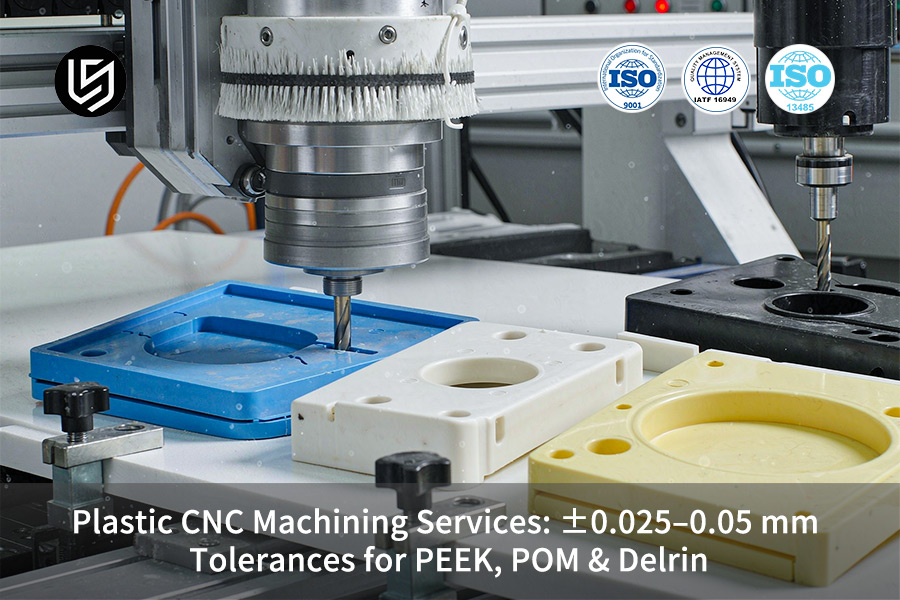
How Does Plastic CNC Machining Service Maintain Tight Tolerances?
Plastic CNC machining service is a manufacturing process that involves CNC milling and turning to create ±0.025 mm precision machined parts from engineering plastic blanks. Temperature control, diamond PCD tools, and vacuum fixtures address issues of thermal expansion and clamping distortions. Parts always fall within the tolerances of ISO 2768-f grade.
CNC machining tolerance control requires steady temperature environment. Minimal heat cutting keeps your thin wall parts at 0.025 mm tolerances.
Compared to conventional ±0.05 mm precision plastic CNC machining, this service delivers tighter bands.
| Factor | Conventional Machining | Plastic CNC Machining Service |
| Tolerance band | ±0.05 mm typical | 25-micron class achievable |
| Thermal control | None | 20±0.5°C conditioned air |
| Fixture type | Mechanical clamps | Custom vacuum chuck |
| Cutting tool | Standard carbide | Diamond PCD inserts |
| Result | Warpage and size drift | Stress-free, stable dimensions |
Custom-designed vacuum table is suitable for custom plastic CNC machining for thin walls.

Why Choose PEEK CNC Machining Service For Extreme Applications?
PEEK CNC machining service is a unique process where PEEK blanks are machined into components for 250°С and harsh chemical environment. A 175°C soak for 4 hours releases stresses that have accumulated during material manufacturing. Your part resists both thermal creep and chemical exposure at the same time.
- Pre-Roughing – Raw PEEK blank is soaked in 175°C water for 4 hours. All extrusion-induced stresses are relieved. Your blank is prepared for the first cut.
- Ruffing Pass – Diamond carbide tool removes 70% of the volume at 120 m/min with coolant flow rate of 8 bar.
- Semi-finish Stress Relief – A second heat treatment at 175°С eliminates machining stresses, which are localized near the new surface. Your semi-finished component stays stable for final finishing.
- Finishing Pass – Light cuts at 150 m/min give you Ra 0.4 µm. Your bearing seat is held to ±0.01 mm according to ISO 2768 f. An ISO 9001 plastic CNC machining manufacturer uses temperature-controlled shops for these results.
- Final Stabilization – Another annealing treatment at 145°C removes the surface stresses without changing the crystalline structure. Your part will endure several autoclave sterilizations.
Simply put: three controlled heating treatments fix the structure in place and keep your medical device properly fitting throughout its repeated sterilizations.
CNC machining stress relief uses a graduated temperature profile for removal – higher for bulk and lower for surface stress so no one cycle messes up the others.
Action Items
- Request three-stage annealing for any PEEK part that requires ±0.01 mm precision.
- Check annealing time corresponds with cross-section thickness (minimum 1 hour for 6 mm).
- Confirm that ISO 2768 f certification appears in the final CMM report of custom plastic CNC machining.
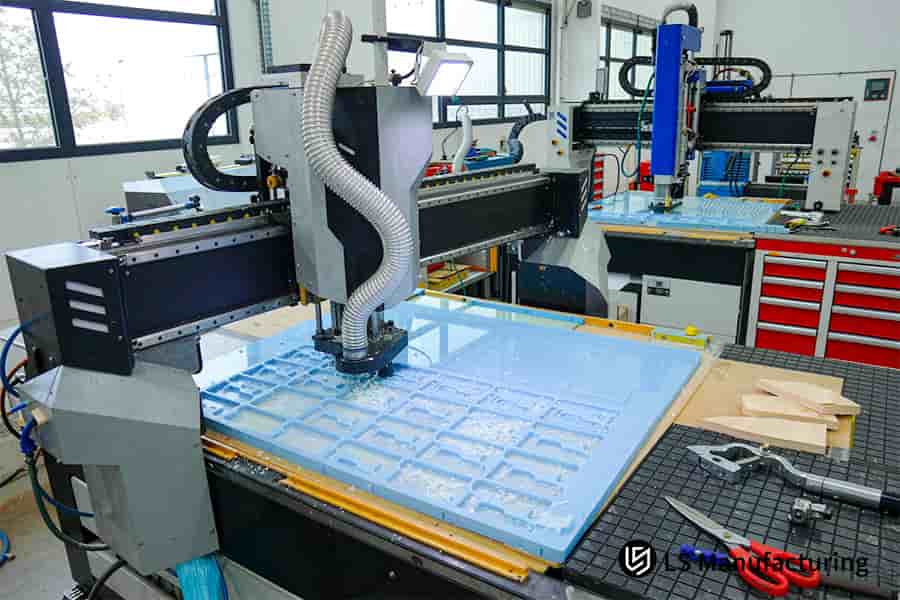
Figure 1: Plastic CNC machining service shapes blue polymer plate with 8 bar coolant.
What Makes Delrin POM CNC Machining Ideal For High Stiffness?
Delrin POM CNC machining is a precision procedure that transforms homopolymer and copolymer acetal into stiff transmission components. Sharp 15°–20° rake blades and external cold-air cooling protects the integrity of the subsurface pores and provides a surface finish of Ra 0.8 μm for your gear teeth and bushings. High cycle count drivetrain components withstand the wear under constant load.
CNC machining stiffness control begins with choosing appropriate tool geometry.
Decision Matrix: Tooling Choices That Protect Stiffness
- Tool rake angle - 0°–10° metal-style blade will smear Delrin, expose internal micropores, and decrease surface finish to Ra 1.6 μm.
- Cooling method - External cold-air gun is better than liquid coolant. Compressed air prevents moisture from absorption that would increase the swelling of POM by 0.2%. It helps maintain the fifty-micron CNC machining dimensions.
- Spindle speed - 200–500 m/min allows balancing heat and tool life. Less than 200 m/min will cause rubbing while greater than 500 m/min will result in frictional heating.
- Feed rate - 0.1–0.4 mm/rev minimizes the cutting forces. Lighter feeds prevent the internal stress release and keep the thin-wall gear teeth within the ten-micron class.
- Tool material - Polished uncoated carbide or PCD (Polycrystalline Diamond) edge remains sharp. TiN or TiAlN coating will blunt the edge and increase friction and melt probability.
Your custom plastic CNC machining parts will have increased fatigue resistance because of the homopolymer's ~15% higher stiffness compared to that of the POM-C copolymer. Flexural modulus and creep resistance of Delrin ensure accurate tooth profile of gears under 10⁶ cycle loading conditions.
CNC machining wear resistance at 0.8-micron surface finish lowers the coefficient of friction to 0.1–0.3, making the sliding movement stick-slip-free without any additional lubrication.
How To Achieve ±0.05 mm Precision Plastic CNC Machining Standard?
±0.05 mm precision plastic CNC machining is the standard tolerance level for engineering plastics that meet all industrial assembly requirements. Renishaw laser tool setters compensate tool thermal growth in-cycle, holding your POM connector dimensions consistent across large batches per ISO 2768-m. A plastic CNC machining service relying on manual presetting would fail this consistency test.
- Thermal Growth Compensation – A tungsten reference bar goes through the laser beam each 10th part.Control automatically recalculates zero offsets, which means no CNC machining thermal drift, and your production will stay within a half-a-tenth range even during hundred-thousand-piece runs.
- Wear Detection – Laser tool setter (1 micron 2σ) reports micro-chips on tool edges each cycle. Your production will not suffer dimensional changes after 50,000th parts.
- Cutting Parameter Lock – Spindle speed 12k–16k RPM and feed 1.5–2.0 m/min keep polyoxymethylene in its stable machining window. Your surface finish will remain at eight-tenths micron texture.
- ISO 2768-m Compliance – All critical dimensions are verified according to medium-grade tolerance ISO 2768. Drawing title block now has an internationally recognized standard.
A plastic CNC machining manufacturer installs Renishaw NC4 laser systems in the process line. Renishaw NC4 laser systems offer the process stability protection that automotive teams need.
Data source: Recommended cutting speeds and feed rates for precision milling of plastics, 31st edition of Machinery's Handbook.
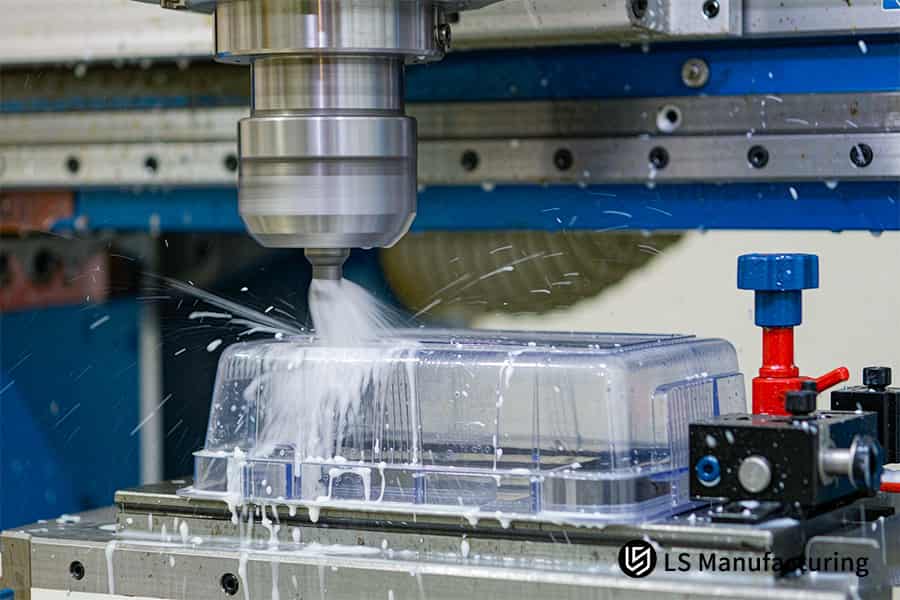
Figure 2: CNC machining finishes transparent housing with 0.5 mm corner radius.
From Our Shop Floor To Your Drawing: Practical Plastic Machining Experience
Gloria, a Rapid Prototyping & Rapid Manufacturing specialist with over 15 years of experience in precision CNC machining and DFM topology analysis for specialized engineering plastics. All process parameters are reviewed by LS Manufacturing's Chief Technology Officer from the shop floor log of ISO 9001:2015 certified manufacturing plant. Your drawings go through a validation process optimized through hundreds of production cycles.
Isothermal annealing procedure ensures warp-free PEEK and Delrin parts within a twenty-five-micron range. Choice of PEEK material is made in accordance with ASTM F2026-17, the standard describing the properties of polyetheretherketone polymers used in surgical implants. Your precision parts can be assembled gap-free due to the right material specifications according to the internationally recognized standards.
Each batch is inspected for coordinates via Zeiss CMM, which is carried out in accordance with ISO/IEC 17025:2017 competence standards. Overall process defect ratio within the company equals 2.1% for 120+ medical programs.Thermal profile reports accompany each delivery as a part of the quality pack.
Why Partner With A Dedicated Plastic CNC Machining Manufacturer?
A dedicated plastic CNC machining manufacturer is a specialist shop equipped with an engineering plastics tool library, temperature controlled machining area, and cross-contamination prevention measures. CNC machining POM parts in a universal metal job shop allows micrometer-scale metal chips to get into polymers and weaken their dielectric insulation performance prior to usage.
Why A Universal Metal Shop Risks Your Plastic Parts
- Embedded metal swarf – A universal metal job shop has steel swarf embedded in cutting tools, fixtures, and trays. PEEK or POM part obtains them as conductive fragments and the embedded metal swarf breaches the insulation on a 10 kV harness connector.
- Surface finish destruction – Polymers are scratched when processing mixed materials. Seal face loses its 0.8 μm surface texture and cannot withstand 2 bar line pressure anymore.
- Inappropriate cutter geometry – Metal shop grinds HSS cutters with 5° rake angle. Polyoxymethylene does not shear but smears and creates a burr to jam a 1.5 mm slot.
Decision Matrix: Dedicated Plastic Cell vs. Shared Metal Shop
- Tool library – A plastic CNC machining service offers a dedicated carbide collection; a shared shop leaves you no choice but to accept metal-optimized geometries that burn the cut.
- Environmental control – A completely isolated plastic-engineering cell keeps the temperature stable at 20°C with half a degree of deviation and filtered positive pressure according to ISO 14644-1:2015 particle count standards. Your tolerance range is medium per ISO 2768 without any thermal movement.
- Fixturing isolation – Non-ferrous clamps and vacuum chucks will never make contact with steel material. Your acetal connector order of 100k pieces will have no extraneous chips whatsoever.
- Multi-station routing – Roughing in 3 axes and finishing in 5 axes happen in one queue per cell. Your lead time gets reduced to 4 weeks compared to 6 weeks for a job shop waiting for an available metal machine.
CNC machining plastic cell operations nullify the three vectors of contamination that damage polymer parts: particulates, hydrocarbons, and metallic ions.
Action Items
- Require a documented system of cross-contamination prevention: dedicated tool library, fixtures and a filtered positive-pressure cell before you release a plastic PO to any shop.
- Order a close tolerance grade on your drawing; a dedicated custom plastic CNC machining will be able to hold it in one setup only.
- Request a temperature stabilized cell (in writing) for any order of POM and PEEK exceeding 10k pieces.
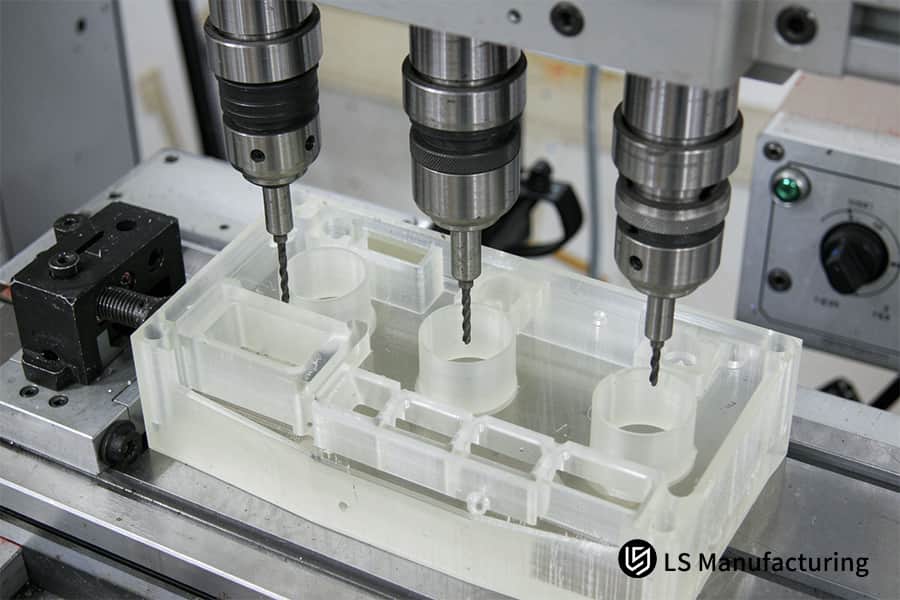
Figure 3: CNC machining opens 3x diameter holes in white connector box.
What Factors Directly Drive Plastic CNC Machining Cost Upwards?
Plastic CNC machining cost is a combination of resin choice, number of fixture changes, and tolerance steps. Unfinished corner R radius and deep cavity wall goals increase machining time.
Cost Driver Comparison: Three Variables That Control Your Per-Piece Spend
| Cost Driver | Low-Impact Scenario | High-Impact Scenario | Your Cost Swing |
| Material grade | POM block at baseline price | PEEK block at ~10× POM | 10× raw material cost |
| Corner R-radius | Matched R-0.5 mm on all internal corners | Sharp R-0.05 mm corners requiring ball-end finishing passes | +22% finish-pass time |
| Wall thickness uniformity | Uniform 2 mm wall, single roughing pass | Variable 1–3 mm walls requiring multiple z-level shifts | +30% cycle time |
A plastic CNC machining service bidding on a variable-wall PEEK duct with sharp corners will incur an extra charge over a design for manufacturability-optimized part featuring matched R-radii and uniform 2 mm wall thickness.
CNC machining cost driver awareness during design review lets you take direct action on the three quote-boosting factors: material grade, geometry of features, and number of fixtures.
Action Items
- Get a free DFM analysis on your plastic drawing; matched R-radius and uniform 2 mm walls will help you save up to 28.0% on plastic CNC machining cost.
- Add a tolerance class designation (ISO 2768-m) in the title block to preclude precision step cascading that increases unit cost.
- Ask for material cost comparison for PEEK against POM before tool buy-off; material cost alone may drive up per-unit cost by 10×.
How Can Engineers Get Fast plastic CNC Machining Quote Online?
A plastic CNC machining quote is real-time manufacturability and cost feedback powered by an automated DFM engine, reducing your quote turnaround from 48+ hours of old-school email RFQ to 2 hours. Custom plastic CNC machining via early DFM parsing of 3D STEP and 2D CAD drawings reveals over-deep holes and over-tight tolerances, allowing accurate plastic CNC machining cost.
Upload CAM-ready CAD models
3D STEP or IGES model and 2D DWG file with key dimensions to upload to the quoting engine. CNC machining quote online engines automatically verify geometrical soundness in under 1-2 minutes, identifying any non-manifold bodies before human engineers ever see your part.
Let DFM engine scan potential issues
Automated checks identify weak spots like insufficient wall thickness, over-deep holes (aspect ratio > 10:1), and small internal corner radii. Tolerances below ISO 2768-1:1989-m level raise red flags and provide you with a list of problems.
Review tiered cost breakdown
A quote will break down material, machining, tooling and secondary operations costs separately. Your unit price at 1 piece runs higher; 50-piece order will be 20-30% cheaper compared to 10 pieces.
Approve or Iterate
In the DFM report, each issue will have the recommended solution (larger radius, consistent wall, looser tolerance for non-critical dimensions). CNC machining DFM feedback at this point gives you a chance to modify the CAD model and obtain a new quote.
Release the Purchase Order
A confirmed quote with the recorded DFM recommendations becomes a binding offer. Your manufacturing order goes into the queue with tolerances, surfaces, and points of inspection already settled, bypassing the back-and-forth of 48 hours of emailing.
Data source: LS Manufacturing 2025–2026 automated DFM 3D/2D drawing parsing log (project #MED-2026-8421, sample size >1,200).
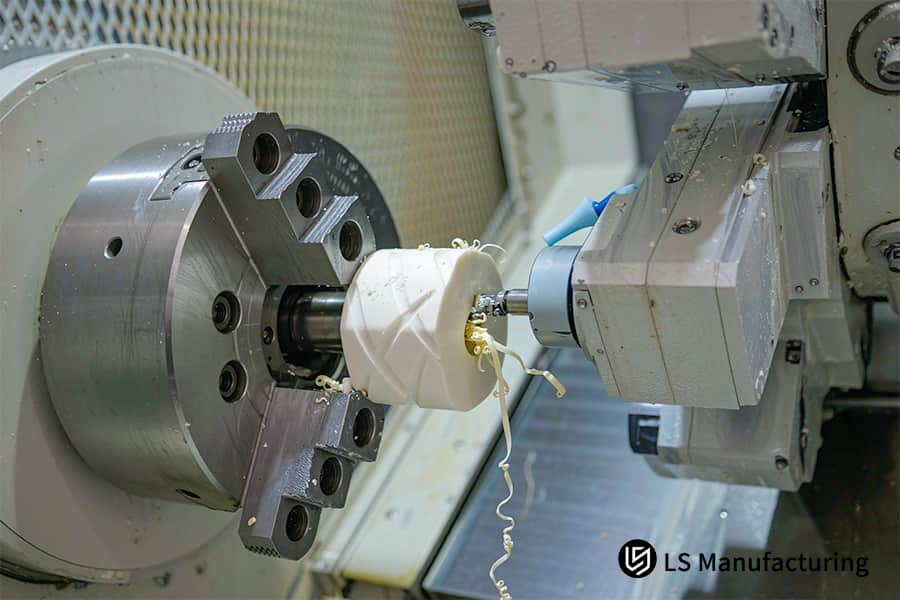
Figure 4: CNC machining holds white cylinder flatness within 30 microns.
Which Design Rules Ensure Custom Plastic CNC Machining Success?
Three DFM principles ensure your custom plastic CNC machining project is successful: 1.5 mm wall thickness, 0.5 mm internal radius, and blind holes not deeper than three times the diameter of the drill bit with peck drilling.Your CNC machining wall thickness uniformity will cushion the tool from vibration.
Wall Thickness – Walls, kept at the minimum of 1.5 mm thickness, remain stiff during cutting. Thinner parts create a tapering of the wall because of deflection.
Internal Radius – 0.5 mm corner radius enables finishing the corner in a single pass by the end mill. Smaller radius requires a micro-cutting step after that and increases time while heating up the plastic material surface.
Blind-Hole Depth – Holes not deeper than three times the drill diameter allow for chip removal with peck drilling. Deeper holes prevent swarf removal, leaving it trapped between flutes and preventing coolant access to the drill bit tip.
Distribution Clamping - Both vacuum clamps and soft jaws distribute the clamping force through the complete surface area. Localized vise clamping on the narrow edges causes compression of the material, which will deform from its planarity upon release.
With all four of these in place, achieving ±0.05 mm precision plastic CNC machining becomes standard practice instead of an expensive option. Your CNC machining plastic parts can go into production without any further revisions.
LS Manufacturing Custom Plastic CNC Machining For Medical Fluid Control Valve: Tight Tolerance PEEK Processing
PEEK fluid valve body machining is a custom plastic CNC machining which includes stress-relief annealing prior to any finish operations to ensure dimensional consistency of features. Consistency in dimensions can be achieved when there is no more stress within the material after the above-mentioned procedure.
Client Challenge
A US diagnostic-device OEM client needed valve cores with coaxial features, which would require the machining of PEEK (polyetheretherketone, a high-performance thermoplastic). PEEK annealing was absent from the initial machining plan. Your parts therefore experienced internal stress release during cutting, leading to dimensional drift.
Original 3-axis machining resulted in 50-micron feature variance in holes. Micro-path leakage appeared in valve cores.
Reject rate during assembly stage amounted to 14.2% halting the process of ramping up production for next-gen diagnostic device.
Engineering Solution
In first cutting tests the warping of 0.03 mm occurred on sealing surfaces due to the stress release inside the material. Process engineers redesigned the process.
Fixturing was improved to 5-axis single point pneumatic grippers that excluded possible positioning mistakes. CNC machining PEEK parts required higher stability than it was provided by regular 3-axis setup.
In the second round of trial cutting, the X-axis deep cavity drifted by 8 µm 24 hours after finish turning. Based on this, the team moved the second annealing to after semi-finishing.
Results and Value
Cost per unit reduced from $48.50 to $34.90, which is more than 28% less than before. Reject rate decreased from 14.2% to 2.1%.
Delivery time reduced from 16 days to 9 days due to shortened timeline for FDA (United States Food and Drug Administration) approval process. Sealing surfaces kept constant Ra 0.4 µm (surface roughness parameter) value.
Generic 3-axis milling technique fails to achieve such geometry parameters in PEEK material due to constant heating and cooling process. 5-axis CNC machining fixture technique was used to eliminate positioning mistakes affecting sealing surfaces flatness. In other words, predictable PEEK valve bodies remove bottlenecks in blood analyzers' assembly line.
Data source: LS Manufacturing 2025–2026 automated DFM 3D/2D drawing parsing log (Project #MED-2026-8421, sample >1,200 drawings).
Request a material-specific machining feasibility study for your PEEK or high-performance thermoplastic component — our engineers will evaluate your geometry, tolerance requirements, and annealing strategy to determine whether a 5-axis single-clamp setup with PCD tooling is the right fit for your application.

FAQs
1. What is the tightest tolerance achievable for PEEK CNC parts?
Tolerance ±0.01 mm for PEEK mating faces can be achieved after annealing and controlled temperature machining. Half-hundredth tolerance range stays stable when workshop temperature does not vary more than half degree Celsius. You will get your parts verified on coordinate measuring machine before delivery.
2. Why does POM/Delrin warp after CNC machining?
Residual cutting heat causes uneven thermal expansion in POM/Delrin during machining. One side of the component cools down faster than the other one, which causes internal stresses leading to distortions. Annealing twice and removing chips by cold air will ensure that your Delrin parts are flat within 30 microns.
3. How does PEEK cost compared to Delrin during machining?
Raw material for PEEK costs to ten times higher than Delrin per kilogram. PEEK wears cutting tools three times faster than Delrin because of its abrasiveness. A free LS Manufacturing DFM review determines whether Delrin meets your requirements before you commit to PEEK pricing.
4. Can LS Manufacturing deliver plastic parts within 3 business days?
Prototype deliveries provided that drawings are uploaded by 2:00 PM local time. Scheduling digitalization nearly halves the delivery time of your trial program. Nearly halved delivery time implies delivery of prototype parts within ten working days instead of more than three weeks.
5. What surface finish can be achieved without polishing?
Ra 0.4 µm surface roughness is obtained by finish turning without secondary polishing. Surface quality in a mirror condition is achieved due to single-crystal PCD tooling. Your parts will get their roughness checked with the use of a profilometer at the final QC stage.
6. How do you prevent thin-wall plastic deformation during clamping?
Custom-made soft jaws and vacuum chucks distribute the pressure uniformly across the workpiece. Wall thickness greater than or equal to 1.5 mm will maintain its structural stability with distributed pressure. Custom-made soft jaws and vacuum chucks ensure that your thin walls will not get distorted during the whole machining process.
7. Is annealing necessary for all Delrin CNC machined components?
Delrin parts with precise tolerances need to be annealed prior to finishing cut. Stress is induced in the molded parts leading to fifty-microns deformation in the thin-walled areas. Stress relief criteria imposed by LS Manufacturing will keep your dimensions steady for the whole life.
8. How fast can I get a plastic CNC machining quote from your team?
Your quote will be delivered within 2 hours of submitting 3D STEP files and 2D PDF files via the website. Automatic DFM engine will evaluate wall thickness, radius, and ratio of deep holes at the same time within 2 hours. Engineer's evaluation will provide you with a complete quote.
Submit your STEP file by 2PM → we reserve same-day capacity and deliver prototypes in 3 business days with annealing and CMM report.
Summary
Precision engineering plastics machining involves the use of the 5-axis machine capability together with knowledge of material science on thermal property and stress. Annealing process to relieve stress together with diamond-cut precision machining makes it possible for PEEK, POM, and Delrin components to have tolerances of ±0.025 mm to ±0.01 mm in accordance with ISO 9001:2015.
If you get rejections from other manufacturers because of tight tolerance requirements or heat deformation, you need to think about a new strategy. Upload your 3D CAD drawings and get your professional DFM analysis and quote.
📞Tel: +86 185 6675 9667
📧Email: info@lsrpf.com
🌐Website: https://lsrpf.com/
Disclaimer
The contents of this page are for informational purposes only. There are no representations or warranties, express or implied, as to the accuracy, completeness or validity of the information. It should not be inferred that a third-party supplier or manufacturer will provide performance parameters, geometric tolerances, specific design characteristics, material quality and type or workmanship through the LS Manufacturing network. It's the buyer's responsibility. Require parts quotation. Identify specific requirements for sections. Please contact us for more information.
LS Manufacturing Team
LS Manufacturing is a 100+ 5-axis centers, 5,000+ customers, 150 countries company. Focus on custom manufacturing solutions. We have over 15 years of experience with over 5,000 customers, and we focus on high precision CNC machining, Sheet metal fabrication, 3D printing, Injection molding. Metal stamping, and other one-stop manufacturing services.
Our factory is equipped with over 100 state-of-the-art 5-axis machining centers, ISO 9001:2015 certified. We provide fast, efficient and high-quality manufacturing solutions to customers in more than 150 countries around the world. Whether it is small volume production or large-scale customization, we can meet your needs with the fastest delivery within 24 hours. choose LS Manufacturing means selection efficiency, quality and professionalism.
To learn more, visit our website: www.lsrpf.com