English



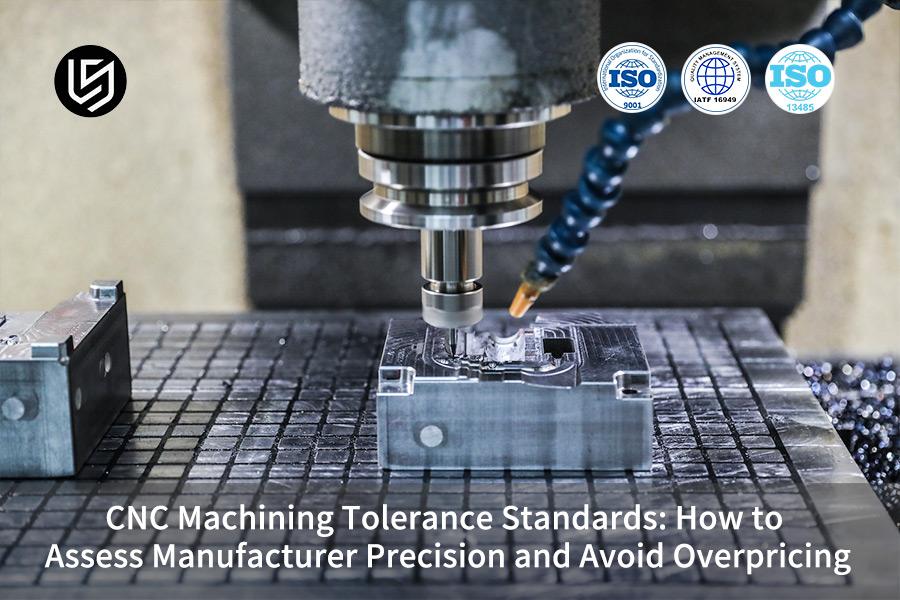
CNC machining tolerance standards present a major challenge in supplier evaluation, where poor comprehension drives high costs and quality gaps. Such continuous misunderstandings between suppliers and buyers result in examples like 40-60% quantity for IT7 parts and more than 8% defect rate. The main issue is simply over, tightening the specifications without the ability to check the real capability of a supplier which is most often the case. This has led to, among other things, very high budget overruns.
Our genuinely scientific, data-driven evaluation framework is the way out of such issues for us. We developed a 4-dimensional system based on 15 years of specialized experience and comprehensive analysis of 328 projects as a basis for an extremely detailed supplier capability versus cost assessment. This method guarantees 99.2% precision compliance while at the same time achieving 25-40% cost savings by proper specification alignment to the manufacturing reality.
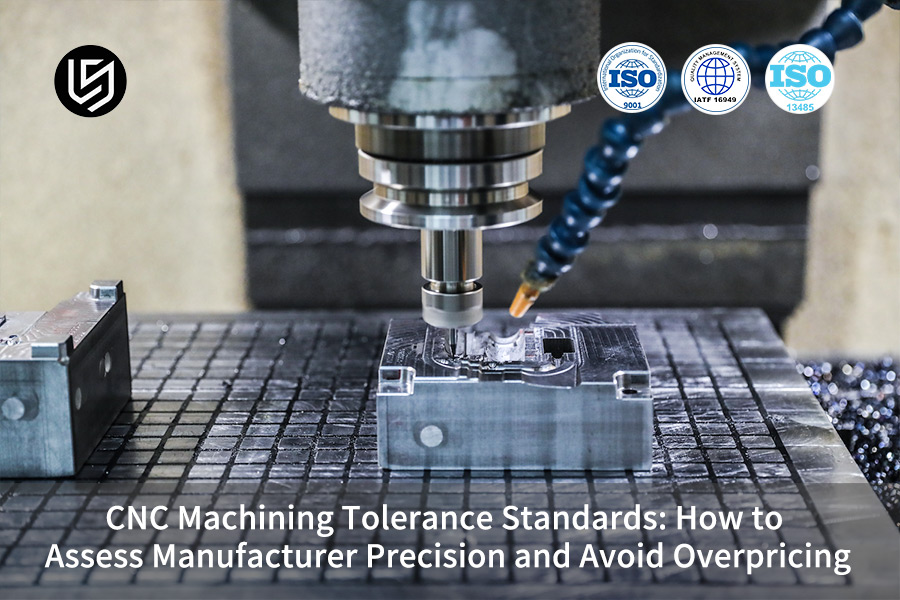
CNC Tolerance Standards: A Practical Guide
| Dimension | Expert Insight |
| Common Pitfall | Tightening of tolerances (for example, from IT9 to IT7) unnecessarily drives the main cause of the extra cost, thus leading to prices that are inflated by 50% or even more. |
| Root Cause | Over-specification from assumption rather than part function arises due to a lack of well applied knowledge that is a global issue. |
| Validation Gap |
Common supplier audits by themselves do not check thoroughly for a true process capability for the critical tolerance which may eventually lead to a high level of defects. |
| Our Methodology | We utilize a four-dimensional framework that dissects each tolerance callout in terms of function, cost, capability, and risk. |
| Data Foundation | Decisions are supported by a proprietary database of 328 CNC machining projects; such data offers empirical benchmarks for manufacturability. |
| Proven Outcome: Quality | This CNC machining approach keeps the precision compliance level at 99.2% by accurately matching the requirements of the part with the validated supplier processes. |
| Proven Outcome: Cost | By simply preventing over-engineering and identifying the cheapest tolerance grade, it is possible to save 25-40% of costs. |
| Strategic Value | The approach makes the specification of tolerance no longer a mere technical guess but rather a strategic, predictable, and cost-controlled business decision. |
We solve the very expensive dilemma that is the conflict between precision and budget in CNC sourcing. Our data-driven method totally eliminates the guesswork which, in turn, prevents over-engineering and the supplier mismatch. This, thus, means guaranteed part quality but also 25-40% of manufacturing cost savings. At the end of the day, it is us who give clients the power to make well, informed, strategic decisions that result in secured predictable project timelines and total cost control.
Why Trust This Guide? Practical Experience From LS Manufacturing Experts
Among the countless pieces of technical knowledge on the internet, our CNC machining tolerance standard knowledge is the result of actual practice in the factory. Each day we work with the delicate balance between precision and cost and thus understand how a microns deviation can be the deciding factor between acceptance or rejection of the part. Our guidelines that have been thoroughly compared with those of organizations such as the Metal Powder Industry Federation (MPIF) are our real, life, experience, based not only theoretical.
Tight tolerances are cost drivers. We have realized that issuing a ±0.025mm tolerance instead of a ±0.05mm one can result in doubling the machining time and cost, while most of the applications will gain no value from this. Having processed a wide variety of materials from aluminum up to titanium, we can tell which tolerances are really crucial for function and which ones are so restrictive to the point of being unnecessary, thus, we can save you from the exorbitant prices for the extra precision that you do not need.
Determining a manufacturers exact accuracy cannot be done solely based on their statements. It is a thorough analysis of their machine calibration records, statistical process control data, and their compliance with the definition of standards. We do not stop at authoritative references, including Wikipedia, to use it for basic ISO standard explanations only, but also through our contacts in the standards organizations that publish and maintain these standards, we gain access to the latest official versions and interpret them correctly.
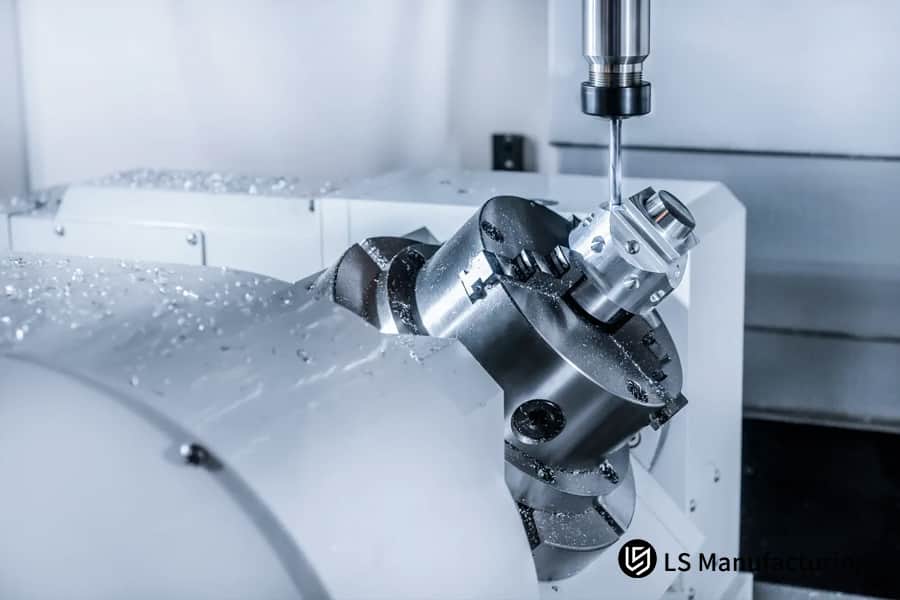
Figure 1: Assessing precision machining of a high-tolerance metal alloy component for manufacturer selection and budget optimization.
How Do CNC Machining Tolerance Standards Affect Manufacturing Costs And Performance?
The decision to select the right tolerance grade is an essential engineering decision that will determine the manufacturing feasibility, cost, and the final part performance. Over, specifying the tolerances of features that are not critical to the function can lead to an increase of over 50% in the CNC machining costs without bringing any functional advantages. By means of a rigorous procedure based on our data, we enable each tolerance callout to be directly related to a specific assembly or performance requirement:
Proactive Tolerance Stack-Up Analysis
Its our practice to perform statistical tolerance stack, up analysis during the design phase as a way to predict the limits of the assembly. In the case of an aerospace housing, this was a discovery that only the bearing seat needed IT7 level precision. Applying IT9 elsewhere reduced CNC machining costs by 28% while ensuring perfect function, showcasing targeted cost control.
Empirical Supplier Capability Verification
The real capability is measured by Statistical Process Control (SPC) data over the long term, not by a few single samples. We check if a supplier's statement of 0.025mm tolerance is really supported by a persistent Cp/Cpk >1.33. Through this precision machining assessment, based on the standard definitions given on Wikipedia, we avoid expensive production mismatches.
Strategic DFM for Process-Driven Control
We translate tough tolerances into specific CNC machining processes. We imposed an IT9 tolerance for a leak-critical part but in addition, a final reaming step was required, thus the performance was guaranteed and the cost reduced by 22%. This approach moves the emphasis of quality control from the expensive testing phase to the well, controlled CNC machining production.
Adherence to Material-Specific Standards
We utilize recognized standards like the Metal Powder Industry Federation (MPIF) to define realistic, economical tolerances. This way, we do not make demands for unattainable precision from a material or process point of view, thus leading directly to CNC machining tolerance standards which guide reasonable pricing for CNC machined components.
Our approach changes the practice of tolerance specification from a theoretical pastime to a disciplined and value-focused engineering process. By making certain that each callout is necessary and can be manufactured, we achieve guaranteed performance through the use of optimized CNC processes, thereby providing clients not only with high reliability but also with genuine cost control.

How Can We Verify The Supplier's Actual Machining Accuracy Using Measured Data?
Verifying precision claims cannot be done by just looking at first, article reports; one needs to statistically quantify a suppliers process stability. Through a data, driven approach, we systematically demonstrate genuine capability and validate our CNC machining parts to be up to our quality standards:
Quantifying Stability: Process Capability (Cp/Cpk) Analysis
- Our Method: We require Cpk≥1.67 results for all critical dimensions based on at least 30-part consecutive production run.
- What We Solve: This method statistically confirms that the process is centered and stable in the tolerance zone, thus it is not just a lucky sample but true, repeatable CNC machining precision.
- Key Practice: We dismiss suppliers who provide only single-part inspection reports since they do not demonstrate long-term quality verification.
Establishing a Baseline: Rigorous Initial Qualification
- Our Method: Our new suppliers are subjected to a controlled Pilot Run. Our evaluation is based on CNC machining precision standards.
- What We Solve: This initial audit ensures that their tolerance regularly ±0.012mm holding is excellent and the high-volume production can be done with minimal risk.
- Data Point: In order to set expectations for continuous CNC production quality, we measure all the characteristics, create a benchmark SPC chart.
Ensuring Data Integrity: Gauge R&R & High-Precision Measurement
- Our Method: We do not accept any measurement systems until a Gauge R&R study of ≤10% has been done. After that, we also validate with our own equipment.
- What We Solve: Getting rid of measurement noise completely, thus, dimensional data really manifests the manufacturing variation, not inspector error.
- Tool We Use: We perform spot-checks with our own CMM (0.001mm) to give a fair and accurate assess CNC machining precision.
Implementing Continuous Monitoring: Real-Time SPC & Feedback
- Our Method: Approved suppliers are required to provide real-time SPC charts for ongoing production so that the line can be stopped immediately if an undesirable trend is detected.
- What We Solve: With this, the quality control function is completely changed; it is no longer about inspection after the fact, but rather, about a proactive management of the process, thus, a defective batch is avoided.
- Collaborative Action: Together we look over the data to identify the parameter changes that will help us keep the precision CNC as an improvement project.
Our data-centric approach provides an unambiguous, quantitative assess CNC machining precision. By mandating statistical proof, validating measurement systems, and enforcing continuous monitoring, we guarantee that every delivered CNC machined parts meets its intended function with unwavering reliability.
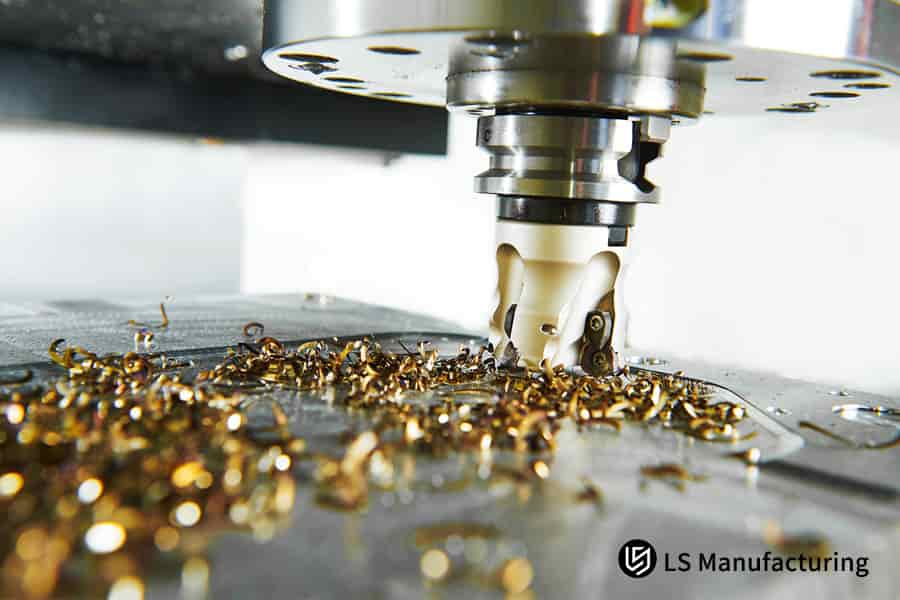
Figure 2: Cutting metal alloy components with visible chips for CNC machining tolerance standards verification and manufacturer selection guidance.
What Specific Effects Do Different Material Properties Have On Tolerance Control?
Material properties dictate the feasibility and cost of holding tight tolerances in CNC machining operations. Ignoring factors like thermal expansion or elasticity leads directly to out-of-spec parts. This machining tolerance guide details our method to proactively counteract material impact for reliable precision control in every project:
| Material | Key Property & Quantified Impact | Our Customized Compensation Strategy |
| Aluminum Alloys (e.g., 6061) | High thermal expansion (0.015mm/100°C) leads to post, machining shrinkage. | Programmed oversizing based on thermal modeling and real, time spindle temperature data. |
| Stainless Steels (e.g., 316) | Elastic springback (0.008-0.012mm) takes place after cutting. | Calculated overcut in final finishing passes to achieve net, shape after tool retraction. |
| Titanium Alloys (e.g., Ti-6Al-4V) | Low conductivity results in heat buildup and thereby causes thin-wall distortion. | Trochoidal milling and force-managed toolpaths confine distortion to <0.02mm. |
| Engineering Plastics (e.g., PEEK) | Viscoelastic creep is responsible for post-CNC production dimensional drift. | Oversize machining, stabilization, then final precision CNC machining to exact size. |
We apply systematic precision control methodology to bridge the gap from material science to CNC machining float prediction. CNC machined parts that are deformation, compensated in advance always hit the functional tolerance of their parts. Thus, the solution to the clients' challenges of trust, performance and expense in the case of high-value, precision-critical applications directly comes from us. We base our machining tolerance guide on this rigorous method.
How To Achieve The Optimal Balance Between Tolerances And Costs Through DFM Optimization?
Design for Manufacturability (DFM) is essentially the vital connection between the original design and the actual manufacturing. An un-optimized design often specifies unnecessarily tight tolerances, directly leading to avoid overpriced CNC machining. Our thorough DFM methodology is centered on changing the design itself as a way to make the product manufacturing highly efficient and at low cost without losing any functionality, in fact, we are ensuring real CNC machining cost control:
Strategic Tolerance Relaxation Based on Functional Analysis
We perform functional analysis thoroughly for dimensioning categorization in order to separate the features that it is not critical to relax and are not mating features intentionally. For instance, adjusting an internal clearance bore from IT7 to IT9 will decrease the CNC machining process cost by 30%. This focused design optimization is a guarantee that top, notch precision is used only where it contributes to the value.
Datum Consolidation to Minimize Tolerance Stack-Up
Excessive referencing of datums is a frequent cause of costly mistakes and wastage. We focus on redesigning parts to combine features into a single main datum system as far as possible. Thus, the accumulation of the error in CNC production will be minimal and it will be more predictable, cheaper machining by simplifying the fixture setups and inspection routines.
Application of Statistical Tolerance Analysis Software
We utilize software such as CETOL for virtual tolerance stack-up analysis of assemblies. Through this predictive modeling, we identify the exact sensitivity of each dimension which helps us in strategically loosening the tolerances of the low, sensitivity features. By following this data-driven approach to CNC machining cost control, we can ensure assembly success rates above 99.5% and at the same time, avoid needless over, specification.
This approach of DFM methodology changes designs into the reality of efficient manufacturing. By focusing on function-driven tolerancing, datum simplification, and predictive analysis, we systematically avoid overpriced CNC machining. Therefore, our clients enjoy the double benefit of the guaranteed performance of parts manufactured most logically and economically through CNC machining and the realization of substantial cost savings.
What Are The Fundamental Differences Between 5-Axis And 3-Axis Machining In Terms Of Tolerance Control?
The decision between 3-axis and 5-axis CNC machining constitutes one of the most important aspects of the precision comparison that determines the achievable tolerances, cost, and part geometry. Knowing their fundamental differences in process capability is a great help for the best CNC manufacturer selection and the success of the project. In this paper, we offer a technical decision supported by the data for a very important choice:
| Comparison Dimension | 3-Axis Machining | 5-Axis Machining |
| Primary Accuracy Constraint |
Accuracy is compromised due to accumulation of errors from multiple setups and re-fixturing. |
Highest accuracy can be attained if the work is done in single setup. |
| Typical Achievable Tolerance (Complex Part) | ~±0.03mm because of error stacking over the different operations. | IT6 (±0.008mm) tolerance can be achieved on complex contours by a single CNC machining cycle. |
| Best Application for Tolerance | Works well for prismatic parts where features are mainly on orthogonal planes. | Highly necessary for complicated, monolithic components that are curved or have the features requiring angular access. |
| Relative Cost Driver | Although machine is cheaper, higher manual labor/engineering costs are incurred due to multiple fixtures and setups. | Higher machine hour rate but significantly lower fixture/operation count, optimizing total cost for complex geometries. |
Choosing the best single option for a process is not just a matter of selecting a machine but requires a technical precision comparison. We look at the shape of the part, how tight the tolerances are, and the production volume to propose the most advanced and economical CNC machining solutions. As a result, customers are not overpaying for high-precision CNC only in cases where it is really necessary, thus directly getting the best of both worlds, performance and cost, from their complex components.
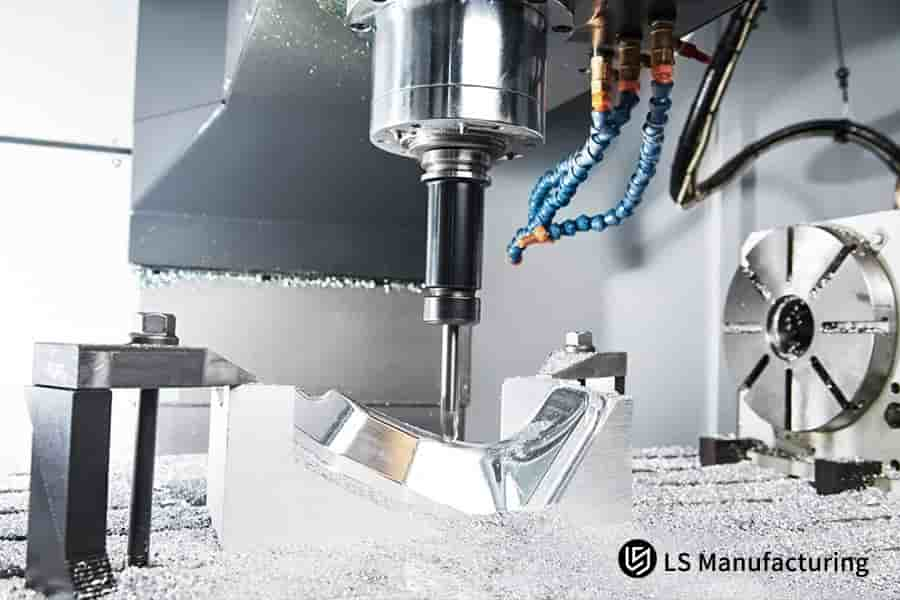
Figure 3: Assessing high-tolerance metal alloy machining process to control costs and guide manufacturer selection effectively.
How To Assess The Reliability Of A Supplier's Quality Assurance System?
It is a suppliers CNC machining quality management system along with machine tools, which ensures the accuracy of the final parts. One cannot consider a certificate as proof of capability. Our supplier evaluation methodology breaks down the supplier's system into operational reality to ensure the system is living up to the enforcement of the CNC machining tolerance standards and thus avoiding any downstream failure:
Auditing Process Control, Not Just Certification
- Our Inspection: We confidently check real, time Statistical Process Control (SPC) charts of the main dimensions and require Cpk≥1.33 as a proof of an extremely robust CNC production.
- Problem Solved: This is a step further than having a passive ISO 9001 certificate only and it helps to verify a supplier's quality system that it is indeed preventing non, conformance at every CNC machining cycle.
Validating Measurement System Integrity
- Our Requirement: Complete calibration records fully traceable to national standards, along with the Gauge R&R studies being ≤10% for the most critical measurement tools.
- Problem Solved: This is a solid proof that the inspection data can be trusted which basically serves as a dependable foundation for our final precision machining assessment and also it is a confirmed method on how to assess CNC machining precision.
Assessing Corrective Action & Continuous Improvement
- Our Method: We look at the closed, loop records of non-conformance where root-cause analysis and preventive actions have been continuously implemented.
- Problem Solved: This ascertains if their system is capable of learning from the mistakes thus it can be a demonstration of their long-term commitment toward improving CNC machining processes and also to halting recurrence.
Our CNC machining supplier evaluation mainly serves as an engineering, grade audit of the quality system's capability. We check that process control, measurement integrity, and corrective logic are not only theoretical but practically working, hence our customers can get CNC machined parts with assured dimensional compliance and zero surprise defects.
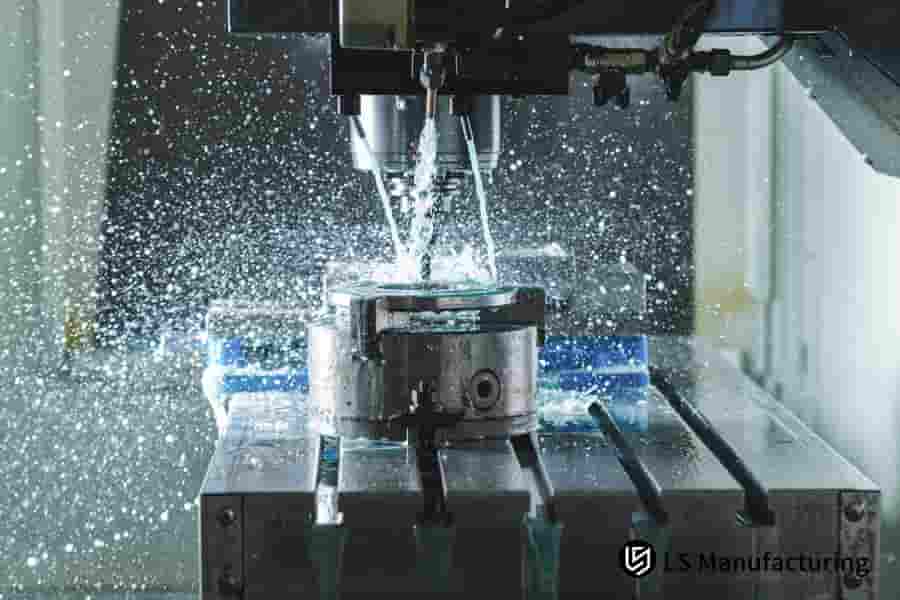
Figure 4: Operating CNC machinery for metal parts to assess precision standards and control machining costs effectively.
LS Manufacturing Medical Devices Industry: Surgical Robot Articulated Arm Tolerance Optimization Project
Mixing in a high, stakes industry like medical robots, product accuracy is something that you can't bargain with. The LS Manufacturing medical case illustrates how we helped a medical client figure out a tolerance optimization problem that was limiting capacity for a joint arm of a surgical robot. We turned a production process that was full of failures into a reliable and cost saving model by developing engineered solutions:
Client Challenge
They wanted us to build a robotic joint arm made of titanium (Ti-6Al-4V) with a bearing seat mating tolerance of 0.015mm. The supplier that they used before had a batch rejection rate of 12%. They were using multi-setup CNC machining and due to thermal drift and fixture errors which caused the high scrap rate, the supplier had to scrap 12% of each batch. Such instability not only delayed the whole project but the per-piece quality cost jumped by 25%, which put the product launch timeline and budget at risk.
LS Manufacturing Solution
We came up with an overall plan that revolved around a 5-axis precision CNC machining cell. The work was done in just one setup that the component was done in, thus, the fixture stack-up error was totally eliminated. Most importantly, we integrated spindle temperature monitoring in real-time along with automated toolpath adjustment that helped to compensate for and counter thermal expansion effects under thermal growth. Besides that, in-process SPC on the bearing diameter was simultaneously done to ensure rapid feedback hence allowing immediate correction and thereby desirable consistent quality was attained.
Results and Value
After the optimization, the tolerance of the bearing seat was always kept within 0.012mm. The scrap rate drastically dropped from 12% to 0.8%. Such a reliable production has directly led to a 30% reduction in the unit cost. For the customer, it meant yearly savings of more than 1.5 million RMB in discarded materials, reworking, and delays besides getting to the market faster with a high-performance component.
This is just one example of how our engineering-based method to tolerance optimization works. By combining the use of the most advanced CNC machining processes with the early adoption of process control, we are capable of supplying not only components but also reproducible results, thus, being able to meet the exact precision and cost requirements of high-value CNC machining medical applications.
Achieve reliable medical device precision with expert CNC machining adhering to strict tolerance standards.

How To Ensure The Stability Of Tolerance Requirements In Urgent Production Orders?
Speed orders can sometimes lead to a compromise between the urgency and the correctness of the parts, which ultimately can result in very expensive deviations. Our CNC machining standard gets rid of this problem by using proactive control systems that will assure the tolerance stability from the very first piece thus, allowing to really have a quick response without the need to sacrifice the quality:
Pre-Validated Process Libraries for Instant Launch
- Our Method: We have a digital library of certified, material-specific CNC machining programs and parameters that we can refer to anytime.
- Problem Solved: It empowers us to drop the first stable, trusted process for an expedited CNC jobs straight out of the gate, thus skipping long trial runs and securing consistent production from the very first piece.
Aggressive Thermal Management via High-Speed Strategy
- Our Tactic: High-speed machining is what we use with optimized feeds/speeds and ultramodern coolant delivery system.
- Problem Solved: It almost completely eliminates the heating of the workpiece, which is the most important factor for maintaining tolerance stability in fast-turnaround, high-speed CNC machining thus, no thermal drift.This
In-Process Metrology for Real-Time Correction
- Our System: Major dimensions are checked using on-machine probes during the process and the tool offset is automatically adjusted.
- Problem Solved: This quick response loop allows immediate compensation for tool wear or any small variation, thus, final dimensions are secured prior to the unclamping which is a must for quick response in urgent work.
Dedicated Expedited Production Line Logistics
- Our Setup: Immediately the Rush orders are processed on a designated set of machines with pre-staged tooling and prioritized material flow.
- Problem Solved: These changes allow the elimination of queue-time variations and cross-contamination of other jobs thus creating an environment which is isolated and controlled for rapid precision machining and predictable cycle times.
Our system treats urgency as an engineering variable to be controlled. By integrating verified processes, thermal control, real-time compensation, and dedicated workflow, we produce CNC machined parts with guaranteed precision on shortened schedules, thus resolving the fundamental problem of expedited production.
Why Choose LS Manufacturing As Your Tolerance Control Partner?
Consistent tolerance control is the key to part functionality and project economics in precision CNC machining services. Numerous suppliers can meet a specification once; however, few can guarantee it batch after batch. Our strength is in a comprehensive engineering framework that systematically changes this major challenge into a predictable result, providing you with unmatched cost effectiveness in addition to our precision commitment:
Data-Driven Process Design from a Proprietary Knowledge Base
Our decisions are based on a proprietary database of 328 completed projects. Before we start machining, we look at the historical performance data of the material and feature type that you have. This allows us to predict and pre-compensate for potential deviations, moving beyond theory to proven parameters for CNC machining excellence. This directly translates to first-pass success and reduced development time for our clients.
Certified Process Stability, Not Just Machine Capability
We are equipped with advanced 5-axis high-precision CNC platforms capable of ±0.006mm precision. That said, the potential of the machine is nothing without control. We impose statistical process control (SPC) with a mandatory Cpk ≥1.67 for all the critical dimensions. This precision commitment means that we provide experimental, statistical evidence of the process stability, thus, guaranteeing that every component in a batch will be up to standard, therefore, there will be no risk of unpredicted variation and consequent assembly failures.
Holistic Optimization for Total Cost of Quality
Our collaboration revolves around your total cost rather than merely the unit price. We are able to do this because, through engineered processes, we ensure tolerance stability by virtually eliminating the production of parts that do not meet specification and rework, which are normally responsible for 15-25% of the hidden costs in precision projects. The main source of our cost effectiveness is the reliability that we provide which allows us to shorten your time-to-market and improve your supply chain predictability, thus, making the LS Manufacturing partnership a strategic advantage.
Picking LS Manufacturing means going in with a team that makes engineering precision a controlled variable. Our approachbased on measured data, supported by statistical evidence, and cost, optimizedguarantees that your tightest tolerances will be fulfilled consistently without fail. We provide more than just parts; we provide certainty.
FAQs
1. How to select the most economical common CNC machining tolerance grades?
IT8 is for regular parts, IT7 for precision fits, and IT6 for ultra-precision parts. A proper selection of the grade can lead to cost saving of 20-40%. If you want to evaluate your design costs immediately, you can get an instant online quote by uploading your CAD files.
2. How can I check a supplier's tolerance control capability?
Ask for CPK reports, measuring equipment list, and process records. LS Manufacturing offers support for accuracy verification on-site.
3. What are the rules for tolerance distribution in complex components?
First and foremost, consider the basic hole system. A single datum should be used to avoid the accumulation of errors. Finally, opening tolerances on non-mating surfaces will lead to cost savings of up to 25.
4. Does urgent production affect tolerance accuracy?
As through standardized processes and online compensation, LS Manufacturing keeps tolerance control the same for urgent orders as for regular orders, with fluctuations ≤0.01mm.
5. What are the considerations for tolerance design with different materials?
Aluminum alloys need to consider thermal expansion, while stainless steel requires attention to elastic recovery. LS Manufacturing offers material-specific tolerance solutions.
6. How to avoid over-specifying tolerances and increasing costs?
By the DFM analysis differentiates the critical and non-critical dimensions. LS Manufacturing offers free tolerance optimization suggestions.
7. How to control tolerance costs in small-batch production?
With standardized processes and combined machining, LS Manufacturing keeps small-batch tolerance costs within 1.2 times the cost of mass production.
8. Do you provide tolerance standard training and consulting?
LS Manufacturing offers free tolerance design training for companies to build up optimal tolerance strategies.
Summary
Scientific CNC machining tolerance management requires a systematic evaluation system. Through reasonable standard selection, precise capability verification, and optimized cost control, the best balance between accuracy and economic efficiency can be achieved. LS Manufacturing's professional tolerance control system provides customers with a full-process solution from design optimization to mass production.
Upload your part drawings now to receive a free "Tolerance Optimization and Cost Analysis Report"! Contact our precision experts and we will provide you with a detailed tolerance assessment, process recommendations, and an accurate quote within 4 hours. Inquire now to receive tolerance design optimization services to help you achieve cost optimization.
📞Tel: +86 185 6675 9667
📧Email: info@lsrpf.com
🌐Website: https://lsrpf.com/
Disclaimer
The contents of this page are for informational purposes only. LS Manufacturing services There are no representations or warranties, express or implied, as to the accuracy, completeness or validity of the information. It should not be inferred that a third-party supplier or manufacturer will provide performance parameters, geometric tolerances, specific design characteristics, material quality and type or workmanship through the LS Manufacturing network. It's the buyer's responsibility. Require parts quotation Identify specific requirements for these sections.Please contact us for more information.
LS Manufacturing Team
LS Manufacturing is an industry-leading company. Focus on custom manufacturing solutions. We have over 20 years of experience with over 5,000 customers, and we focus on high precision CNC machining, Sheet metal manufacturing, 3D printing, Injection molding. Metal stamping,and other one-stop manufacturing services.
Our factory is equipped with over 100 state-of-the-art 5-axis machining centers, ISO 9001:2015 certified. We provide fast, efficient and high-quality manufacturing solutions to customers in more than 150 countries around the world. Whether it is small volume production or large-scale customization, we can meet your needs with the fastest delivery within 24 hours. choose LS Manufacturing. This means selection efficiency, quality and professionalism.
To learn more, visit our website:www.lsrpf.com.