English



Sheet metal fabrication quote is a key cost signal, which solves quotes landing >30% above budget by using DFM to remove excess bends.
A DFM-optimized sheet metal quote lowers per-part fabrication costs by 28.2%, returning precise engineering reviews within 2 hours for buyers.
Behind The Numbers: Practical Experience From LS Manufacturing Experts
Expert of LS Manufacturing in rapid prototyping and rapid manufacturing is Gloria who has been working for 15+ years in engineering and DFM analysis to this guide that is technically reviewed by our chief process engineer in sheet metal. In light of the procedures for welding described in American Welding Society (AWS) standards and the measurement science described in National Institute of Standards and Technology (NIST) framework, each quote of sheet metal fabrications is regarded as an example of floor-level evidence to be interpreted rather than a quotation which has to be taken for granted.
In all of 2025-2026 automated DFM 3D/2D drawing resolution logs, more than 1,200 drawings were analyzed to make a factual base for any suggestion given. For project MED-2026-089, Gloria's engineers have managed to solve the issue of thermal deformation which appeared after bending operations through the implementation of stress relief annealing and a new order of clamping, providing a rework rate of 2.1% and a delivery time in 8 days, saving costs per part by 28.2%.
Grade of material, bends required, tolerance bands, secondary operations, and batch size are the five cost drivers which affect the variance of the final quotes. According to the log data of LS Manufacturing, the grade of material alone affects the base cost up to 35%, while every additional bend axis adds 8% to 12% to the forming process. Gloria’s DFM analysis, given in two hours after uploading the drawings, helps calculate the five cost drivers before hand to let the procurement team know their cost impact before manufacture.
Quick Reference Guide: Sheet Metal Cost Drivers VS Impact
Impacts of five critical cost drivers on manufacturing budget and lead times are listed below, giving engineers an immediate sense of their design optimization priorities.
| Cost Driver | High-Cost Design | LS Manufacturing DFM-Optimized Design | Budget Impact |
| Material grade & gauge | Aerospace-grade alloys / mixed gauges | Standardized AL 6061-T6 / uniform gauge | 10%–15% lower |
| Cutting & complex geometry | Dense internal cutouts, complex bosses | Optimized nesting paths, standardized punches | 12%–20% lower |
| Bends & geometric tolerances | >8 irregular bends, blind ±0.005 mm callouts | Reduced bend count, relaxed to ±0.01 mm–±0.02 mm | 15%–25% lower |
| Secondary ops & fasteners | Manual TIG full weld, non-standard pressed inserts | Spot weld / rivet replacement, standard PEM nuts (ISO 68-1) | 18%–30% lower |
| Batch volume & amortization | Single-piece prototype runs (1–5 pcs) | Scaled batch production, modular tooling amortization | 25%–40% lower |
Standardizing materials and minimizing bends at the designing stage helps achieve the optimum return on investment for the entire sheet metal part without reducing its functionality, providing savings of up to 28.2% per unit cost in most instances.
Key Takeaways
- Material Standardizing: By standardizing the thickness of sheet metals and applying standard aluminum alloy/stainless steel in the whole project, the cost of raw material procurement and processing can be saved up to 15%.
- Reasonable Tolerances: Revising tolerances of non-mating parts to ±0.05 mm and ±0.01 mm and ±0.02 mm would ensure consistency during machining of the parts and avoid rework of up to 20%.
- Assembling and Post-processing Simplified: Using standard PEM fasteners and implementing stamping reduces TIG welding time by 42.8%.
What Drives Material Costs In A Sheet Metal Fabrication Quote?
Sheet metal material selection and gauge are the greatest direct factors contributing to costs in a sheet metal fabrication quote representing 30%–50% of the total quote value. Sheet metal quotes from suppliers depend significantly on these two variables. Choosing 316L stainless over AL 6061-T6 (ASTM B221) will double base material cost.
Material Grade vs Cost Impact
| Alloy specification | Relative material cost | Standard stock gauge range |
| Cold-rolled steel 1018 | Low | 1.0–3.0 mm |
| AL 6061-T6 | Medium | 0.8–6.0 mm |
| Stainless 304 | High | 0.8–3.0 mm |
| Stainless 316L | Higher | 0.8–2.0 mm |
Consolidating to one alloy and gauge cuts scrap by 20%–30%.
Gauges below 0.8 mm need precise fixturing, while gauges above 6.0 mm proceed to plasma and water jet at an additional cost of $50-$200 per hour of machinery. Sizing down to the thinnest gauge saves 10%-15% on the cost.
sheet metal parts price volatility rate ranges between 30% to 51%. The knowledge of sheet metal fabrication cost drivers would help the buyer evaluate quotes relative to actual material costs.
Data Source: LS Manufacturing 2025–2026 automated DFM 3D/2D drawing-resolution logs (sample size >1,200 drawings).
Download our Sheet Metal Material Cost Guide to learn how alloy selection and gauge thickness drive 30%–50% of your quote — and how consolidating to one alloy can cut scrap by 20%–30%.

How Does Part Geometry Impact Custom Sheet Metal Fabrication Service?
Detailed high-density cutouts increase laser cutting path length and punching, thereby increasing cycle cost of any custom sheet metal fabrication service. Intelligent algorithm re-ordering can provide a tolerance of ±0.01 mm to ±0.02 mm.
Three-Step Geometry Optimization for Lower Feature Density Cost
- Combine micro-cutouts into regular rectangles or circles. Fewer features lead to fewer pierce counts and shorter laser cutting path length. For sheet metal laser cutting, consolidation of cutouts into one slot leads to 60% decrease in pierce count.
- Make sure all cutout directions are aligned along one axis. Same direction implies no need in extra laser head rotations between cutting operations, decreasing feature density cost.
- Cluster similar geometries using nesting software. LS Manufacturing's nesting algorithm automatically rearranges cutting paths — this means your batch sees 15%-20% shorter laser cycle time, directly reducing per-part cost. In other words, a few and large cutouts result in faster laser cycle time. Implementation of sheet metal design optimization in 3D results in 15%-20% reduction in laser cutting time per batch.
Action Items
- Keep cutout count per square inch within 5 for standard laser cutting; higher density needs extra programming costs.
- Prepare a 3D CAD with exact cutout geometry; DFM parsing will take 2 hours for optimization analysis.
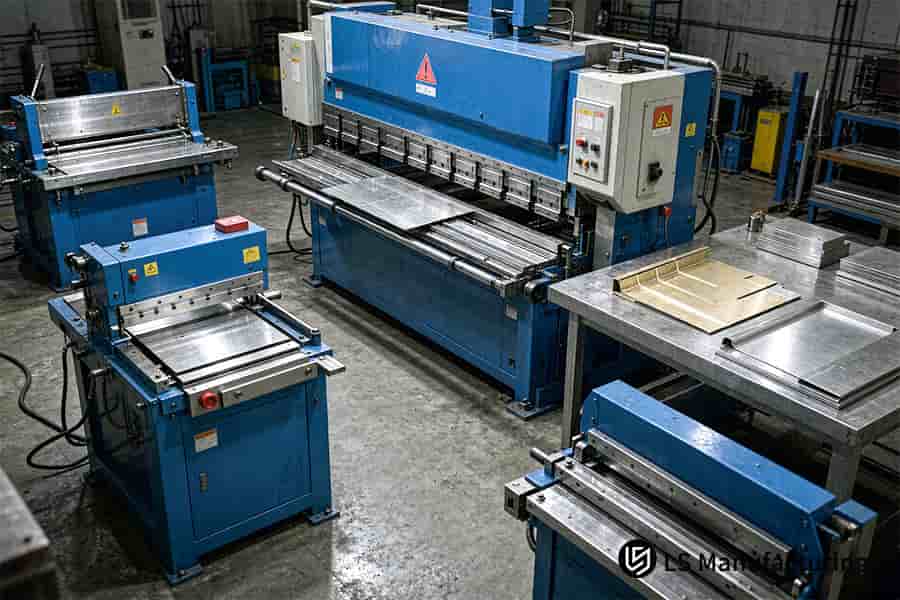
Figure 1: Custom sheet metal fabrication service bends parts to Ra 0.8 μm finish.
Why Do Bending Steps Drive Up Sheet Metal Fabrication Cost?
Press brake tooling setup and number of bends are the key drivers of sheet metal fabrication cost, as a solution to tolerance stack-up through reducing bend directions and combining bend shapes. Design with more than 8 irregular bends doubles die set-up and manual clamping time.
Bend Count vs Setup Impact
| Number of bends | Tooling setup frequency | Cost implication |
| 1–4 bends | Single setup | Baseline |
| 5–8 bends | 1–2 die changes | +15%–25% labor |
| 8+ irregular bends | 3+ die changes | Setup time doubles |
Combining bend directions into co-planar set reduces die set-up times by up to 30%.
Precision Bending Tolerance and Setup Reduction
Precision bending tolerance becomes smaller as the number of bends increases because each bend must be done in a different direction and hence must be repositioned through CNC. LS Manufacturing uses stamped flanges or bent structures to join adjacent bends. Sheet metal bending works more efficiently if co-planar bends have a single set up of ±0.01 mm-±0.02 mm (ISO 2768-1:1989).
For sheet metal parts, the frequency of press brake tooling setup directly translates to the unit price. A recorded set-up schedule clearly delineates between a part that has four bends versus an eight-bend part with three tooling changes. Put simply: Fewer bend angles equals fewer toolings, equals lower cost.
Action Items
- Ask for a tooling setup fee schedule from all suppliers prior to quoting; die change fees may be as much as 15%-25% more than the original quote.
- Max bend radius must be indicated in drawings to ensure fast speed forming and not incremental air bending which doubles cycle times for radii below 2 x material thickness.
How Can Tight Tolerances Increase Precision Sheet Metal Manufacturer Rates?
Uninformed setting of ultra-precision tolerances on all aspects is one of the biggest overlooked factors that lead to a precision sheet metal manufacturer’ pricing. The application of precision class tolerances on mating slots only would solve the problem.
Tolerance stackup grows throughout several bends, and thus slower CNC bending rates and complete inspection are necessary. Over-specification results in additional 40% inspection cost and 25% scrap compared to the selective use.
| Design strategy | Tolerance specification | Cost impact |
| Blind ultra-precision | ±0.002 mm–±0.005 mm everywhere | +40% inspection, +25% scrap |
| Selective precision | ±0.005 mm–±0.01 mm at fits; ISO 2768-1:1989 elsewhere | Baseline +10% inspection |
Precision class tolerances (±0.005 mm-±0.01 mm) for critical slots minimize quality control costs by 60% according to ASME Y14.5-2018.
Non-critical sheet metal features can be inspected using sampling-based methods per ISO 2859-1, replacing costly CMM-based full inspection. In other words: usage of ±0.005 mm on critical features but not everywhere saves inspection cost and provides proper fit of the product parts. Sheet metal inspection cost decreases with application of ISO 2768-m to general surfaces.
Data source: ISO 2768-m/f General Unspecified Tolerances for Sheet Metal and ASME Y14.5 Geometric Tolerances Specification.
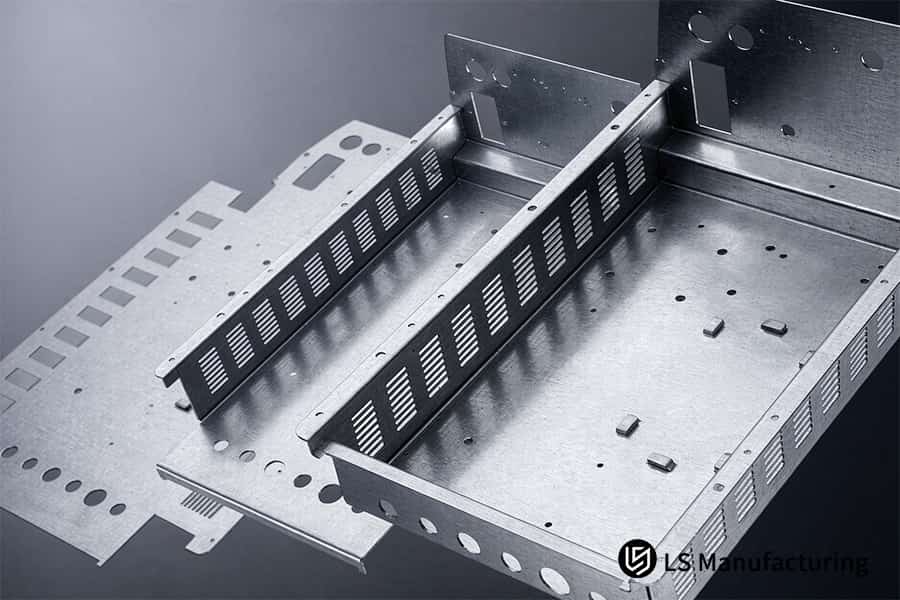
Figure 2: Precision sheet metal manufacturer cuts enclosure within ±0.02 mm accuracy.
What Secondary Operations Inflate Sheet Metal Fabrication Lead Time?
Manual TIG/MIG welding and non-standard fastener installation are the key steps affecting the sheet metal fabrication lead time, and use of standardized PEM fasteners (ISO 68-1) and self-clinching fasteners solves this problem, reducing lead time by 25-50%.
Five-Step Approach to Reduce Secondary Operation Impact
- Automate the process of TIG/MIG welding instead of manual welding. Certified welders earn good pay; spot welding cuts manual welding labor by 60%. Sheet metal welding is best served by automation which prevents any grinding after the process.
- Upgrade the process from nonstandard pressed inserts to standard PEM fasteners (ISO 68-1). Hardware insertion cost is reduced by 40% due to standard threads with no rework needed.
- Use standard surface finish types such as powder coating or MIL-A-8625 Type II anodizing. Post processing finishes are always consistent where custom textures have not been introduced.
- Incorporate self-locating mechanisms like alignment tabs and pilot holes to avoid setting up fixtures for fastening thus reducing fastening time by 35%. Sheet metal fabrication avoids custom textures thus saving 50% of finishing time.
- Consolidate multiple secondary steps into combined processes. Simply put: substituting standard fasteners and automated joining halves secondary operation lead time.
Action Items
- Ask suppliers to quote separately for secondary operations costs in each bid; secondary operations of welding and finishing can conceal 30%-50% impact on true lead time.
- Ask for welder certifications (AWS D1.1/D1.6) from the suppliers when qualifying; an un-certified welder will double the chances of having to re-work medical enclosures.
How Does Order Volume Reduce Sheet Metal Fabrication Quote Prices?
Setup fee amortization and economies of scale are the processes responsible for reducing the unit price of the product in a sheet metal fabrication quote. Fixed cost sharing, such as programming of CNC and press-brake set up is performed on more units, lowering costs per piece.
Volume Tiers and Unit Cost Impact
- Prototype tier (1-10 pieces): all CNC programming, laser tuning, and press-brake set up are performed for limited number of pieces; highest per piece cost.
- Low volume tier (11-100 pieces): setup fee amortization starts; price falls by 25%-40% as compared to the prototype tier.
- High volume tier (100+ pieces): automated scheduling brings down set-up costs to nearly zero; price falls by 50%-65% as compared to the prototype tier.
Prototype vs Production Volume Decisions
Sheet metal prototyping ensures optimum utilization of materials as well as minimum repetition in programming due to combination of all the different parts on one sheet. Differences in pricing in terms of prototype vs production volume after the 100-piece threshold. Set up list is what makes the difference between the order of 10 pieces at base price and 100 pieces with full set up costs.
Economies of scale multiply in cases where sheet metal production run quantities exceed 250 parts due to batch nesting, tool sharing, and continuous press-braking cycles that reduce the cycle time by 30%-45%. In simpler terms, choosing the production order as opposed to the prototype batches halves the cost per unit while maintaining ±0.01 mm-±0.02 mm per ISO 2768-1:1989 standard.
Action Items
- Get quotations on splits of quantities (10/50/250 parts) in order to establish the breakeven point for the setup charge when making the volume order.
- Combine multiple variants on a single sheet during batch nesting programming in order to save 20%-30% of the laser programming costs.
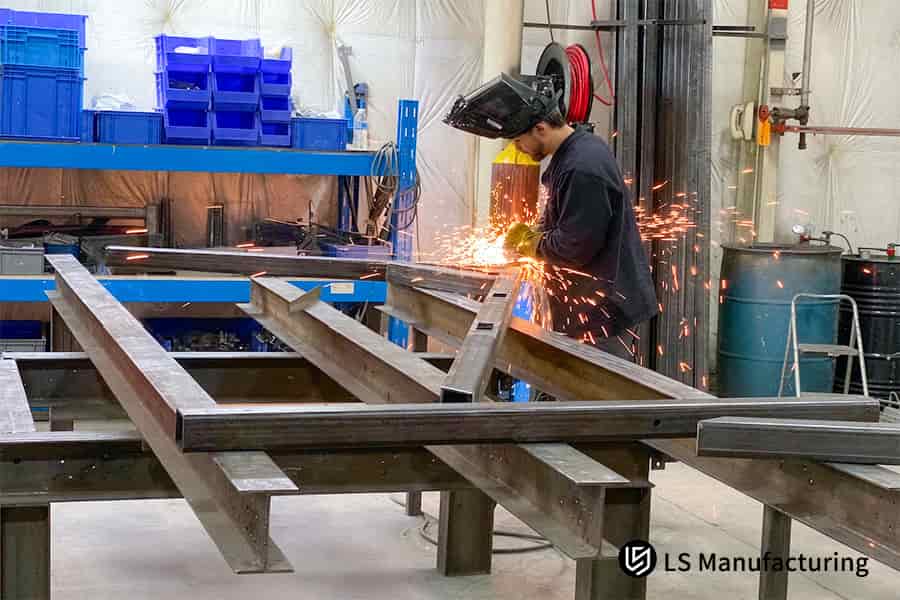
Figure 3: Sheet metal fabrication cost includes welding with 28.2% savings.
Why Choose An Affordable Sheet Metal Fabrication Supplier For DFM Support?
An affordable sheet metal fabrication vendor identifies cost pitfalls and removes them through proactive DFM design optimization. LS Manufacturing’s sheet metal design review is 2-hour long process of getting advice on material usage, bend interference, and availability of surface roughness Ra 0.8 μm (surface roughness measured in micrometers per ISO 4287) after submission of your 3D/2D drawings.
| Supplier approach | DFM timing | Cost impact |
| Drawing-only execution | None; cut to print | Baseline; hidden rework risk |
| Pre-cut DFM review | Within 2 hours | Material waste −20%; rework −35% |
A pre-cut DFM evaluation distinguishes between a reactive shop and an effective sheet metal partner. LS Manufacturing employs 3D CAD within two hours to identify bend interferences and cutout overkill, enabling buyers and engineers to establish the most economical manufacturing method without making prototypes. Documentation of DFM evaluation with tangible cost savings (material yield, bend reduction, surface finish) demonstrates that cost avoidance was done properly.
Engineering review speed is what makes the difference between a good DFM partner and a simple execution-only service provider. Timely DFM process enables design adjustments before tooling, and thereby saves you the expenses associated with the changes in future. Each design adjustment you avoid means saving of 1–2 days worth of work and 8%–12% of prototype cost. Cost-effective sheet metal sourcing goes hand in hand with early DFM process.
In sheet metal cost estimation, 2 hour DFM cycle cuts down pre-production time by 25%–40% using ISO 9001:2015 controlled review process. In simple terms, choosing a vendor that reviews your design, rather than executes it, can help you save money.
Action Items
- Insist that your suppliers provide you with DFM report within 4 hours of drawings' delivery, and their inability to evaluate the quantitative yield and bend interference shows that they are only executing.
- Insist that Ra 0.8 μm surface roughness path be specified in the DFM process, while undefined paths are secondary grinding processes that make parts expensive by 15%–20%.
How To Optimize Your Sheet Metal Fabrication Supplier Selection Criteria?
A sheet metal fabrication supplier should be certified with ISO 9001:2015/AS9100D, Zeiss CMM (Coordinate Measuring Machine, with dimensions measured within ±0.005 mm), and fast DFM response. Supplier qualification selection process is guided by quality assurance standards documents to ensure tolerances in parts at the best cost possible.
Five-Step Supplier Evaluation Checklist
- Check plant certifications: ISO 9001:2015; AS9100D for aerospace. Sheet metal quality control requires Zeiss CMM verification, not just supplier declaration on their own part. Ask for calibration certificate of the inspection equipment.
- Inspect audit equipment inventory. Metrology chain (CMM + optical comparator + surface roughness tester) documentation sets apart a print and cut shop from a precision manufacturing capability partner. Age of the equipment and calibration cycle length are important: Annual recalibration according to ISO 17025 should be a minimum.
- Test response to DFM changes with an actual complex 3D CAD file. Quality assurance standards measurable response (material yield, bend interference, surface finish path) within 4 hours. Slower replies signal execution-only capacity lacking engineering depth.
- Focus on total cost of ownership rather than unit cost. Sheet metal production capabilities including laser cutting, CNC bending and finishing, removes any additional subcontract mark-up. Plating or heat treating outsourced without anyone’s knowledge adds another 15%-25% to delivery time and destroys traceability.
- Ask for a sample FAI (First Article Inspection AS9102) report prior to approval. Lack of AS9102 caused by over-ballooned drawings with critical dimensions reveals inadequate aerospace qualification. Simply put: using certified and in-house CMM service eliminates any tolerance problems at later stages of manufacture.
Action Items
- Ask for a sample FAI report and over-ballooned drawing prior to any supplier qualification; lack of AS9102 points at poor quality assurance system.
- Ask suppliers about any hidden outsourced processes in written form; plating or heat treatment out of house adds 15%-25% to delivery time and destroys traceability.
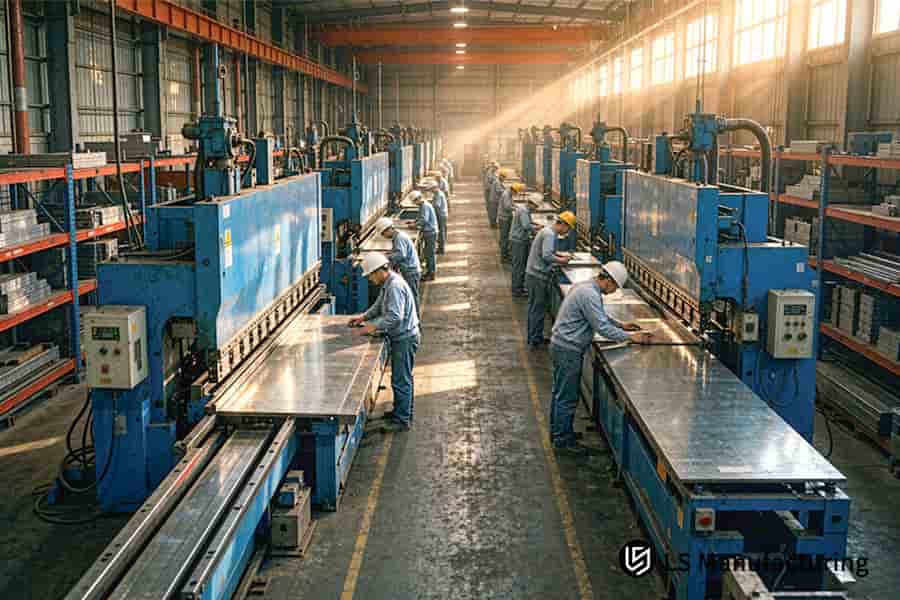
Figure 4: Affordable sheet metal fabrication reduces lead time by 42.8% here.
LS Manufacturing Precision Sheet Metal Fabrication For Medical Device Automation Enclosure: Cost Optimization Insight
Medical device automation enclosure cost optimization is DFM-based tolerance and process rationalization procedure that addresses cost over-runs via fit zone tolerance mapping and standard PEM fasteners (ISO 68-1). LS Manufacturing completed a DFM analysis for Project #MED-2026-089 within two hours of receiving drawings. Sheet metal enclosure design was aided by early DFM evaluation.
Client Challenge
A fluid control valve enclosure required eight non-standard bends and pressed inserts. Tolerances in the drawing ranged from ±0.002 mm to ±0.005 mm (blind). Initial part price quote was $248 each, rework rate was 14.5%, and the lead time was 14 days, putting the prototyping on hold.
LS Manufacturing Solution
LS Manufacturing reduced eight non-standard bends to five standard bends and localized stitch welding, allowed tolerance for non-fitting zones up to ±0.01 mm-±0.02 mm, and replaced non-standard inserts with ISO 68-1 PEM nuts. Stress relief annealing and fixturing sequencing were introduced after first article trial cut showed micro thermal deformation caused by the release of stresses from bending.
Results and Value
Surface finish after optimization was Ra 0.8 μm; cost per unit was reduced from $248 to $178 (-28.2%). Rework rate decreased to 2.1%, lead-time reduced from 14 to 8 days (-42.8%). Sheet metal DFM service response within 2 hours enabled the enclosure to meet ISO 9001:2015 requirements.
LS Manufacturing 2025-2026 empirical database (Project #MED-2026-089) confirmed that MIL-A-8625 Type III hard anodize at 50 μm thickness withstands 1,000-hour neutral salt spray test. In other words: tolerance zones optimization and fasteners standardization resulted in lower cost without any compromise on fit.
Bottom Line
- Request fit-zone tolerance mapping prior to quoting; non-fit features specified by blind ±0.002 mm tolerances increase both cost of the quote and risk of rework.
- Specify ISO 68-1 PEM nuts and MIL-A-8625 Type III anodize at 50 μm in DFM to fix fastener cycle time and corrosion verification upfront.
Data source: LS Manufacturing 2025–2026 automated DFM 3D/2D drawing-resolution logs (Project #MED-2026-089, sample size >1,200).
Reduce your medical enclosure cost from $248 to $178 with 2.1% rework and 42.8% faster delivery — through DFM-driven tolerance mapping and standard PEM fasteners. Request your sheet metal fabrication quote today.

FAQs
1. How does material choice affect sheet metal quotes?
Using standard metals like AL 6061-T6 would reduce the raw materials' base cost by up to 15%, relative to titanium alloys and 316L stainless steel. According to LS Manufacturing, one needs to use empirically analyzed data to choose commonly used specifications for material cost reduction.
Data Source: LS Manufacturing DFM analysis logs
2. Why do excessive bends increase overall fabrication cost?
Additional bends that are not standard require new programming for CNC press brake machines and tools change, thus increasing per hour labor cost. Consistent bend direction in each feature will help keep tolerances between ±0.01 mm-±0.02 mm while minimizing setup time.
3. Can relaxing non-critical tolerances lower quote rates?
Certainly. Reducing the precision of non-critical dimensions from ultra-precise tolerance to ISO 2768-m general tolerance saves inspection and scrap costs by 20%. LS Manufacturing can help identify those dimensions that can safely have relaxed tolerance levels without impacting functionality.
4. How do secondary welding operations impact total time?
The Manual TIG Full Welding process involves a large amount of grinding and finishing work to smooth out seams and remove spatters, whereas the use of riveting or spot welding techniques decreases delivery time by 42.8% through the elimination of all post-weld cleaning, correction, and inspection activities.
Data Source: LS Manufacturing project record #MED-2026-089
5. What is the most cost-effective hardware insertion method?
Substitution of standard threaded inserts for PEM self-clinching nuts, which comply with ISO 68-1 specifications, saves on semi-automatic insertions by over 30% while guaranteeing the reliable pull-out strength and stable insertion quality for sheet metal parts.
6. How does batch size dictate price per sheet metal unit?
Large batches effectively average CNC programming and initial cut-off expenses over a larger number of parts and make it possible to save up to 28.2% of per-part expenses compared to small batch prototypes. LS Manufacturing offers flexible batch pricing structures depending on required production volumes.
7. Does surface finishing significantly increase lead time?
Hard anodizing as specified in MIL-A-8625 Type III and having 50 μm thick coating entails additional salt spray testing and external processing procedures for certification, but proper planning and coordination of scheduling allow avoiding any possible delivery delays while providing the necessary level of corrosion protection.
8. How fast can I get a sheet metal DFM assessment?
With uploading the 3D/2D CAD drawing along with the material and tolerances specification, a senior engineering team at LS Manufacturing will present you with a full DFM analysis and quotation estimate including tooling, cycle time, and costs within 2 hours.
Summary
Taking advantage of the manufacturing capacity of its ISO 9001:2015 and AS9100D certified plant, LS Manufacturing can assist medical device procurement managers and R&D professionals in getting rid of all unnecessary processing overheads at the design stage to achieve perfect harmony between quality and ROI.
Do your sheet metal components' quotations often exceed the project budget? This is a perfect time to optimize your design and reduce costs. Click the quotation button below and upload your 3D/2D CAD drawings to obtain a free DFM manufacturing analysis and cost optimization quotation solution within 2 hours!
📞Tel: +86 185 6675 9667
📧Email: info@lsrpf.com
🌐Website:https://lsrpf.com/
Disclaimer
The contents of this page are for informational purposes only.LS Manufacturing servicesThere are no representations or warranties, express or implied, as to the accuracy, completeness or validity of the information. It should not be inferred that a third-party supplier or manufacturer will provide performance parameters, geometric tolerances, specific design characteristics, material quality and type or workmanship through the LS Manufacturing network. It's the buyer's responsibility.Require partsquotation Identify specific requirements for these sections.Please contact us for more information.
LS Manufacturing Team
LS Manufacturing is an industry-leading company. Focus on custom manufacturing solutions. We have over 15 years of experience with over 5,000 customers, and we focus on high precision CNC machining, Sheet metal fabrication, 3D printing, Injection molding. Metal stamping, and other one-stop manufacturing services.
Our factory is equipped with over 100 state-of-the-art 5-axis machining centers, ISO 9001:2015 certified. We provide fast, efficient and high-quality manufacturing solutions to customers in more than 150 countries around the world. Whether it is small volume production or large-scale customization, we can meet your needs with the fastest delivery within 24 hours. choose LS Manufacturing. This means selection efficiency, quality and professionalism.
To learn more, visit our website:www.lsrpf.com