English



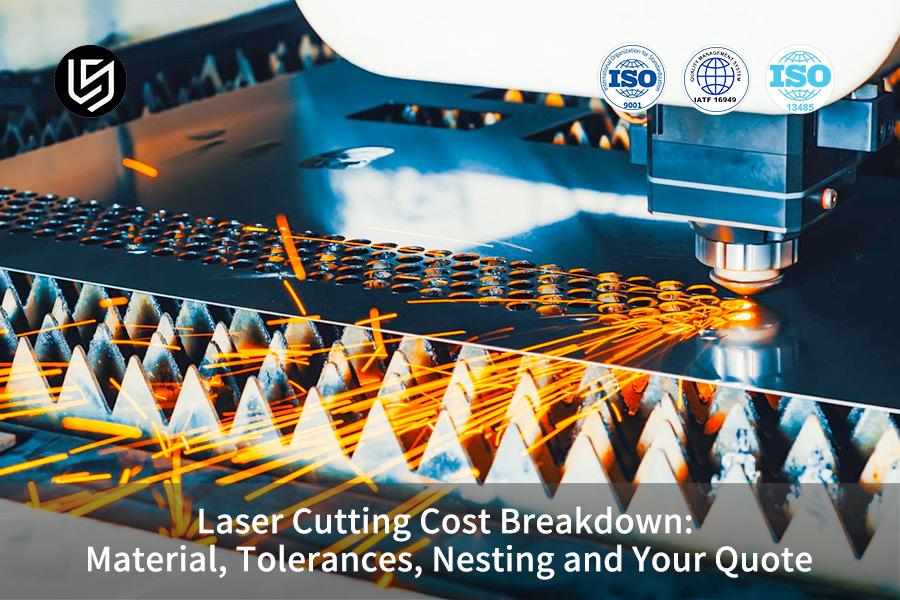
Laser cutting service is a highly accurate sheet metal processing method that uses powerful fiber lasers. The price of a laser cutting job mainly depends on what comes next seven factors: the starting raw material, the period the machine is at work, the count of piercing passes, the auxiliary gas, etc. By employing Design For Manufacturing (DFM) approaches, it is possible to bring down the unit cost by as much as 32%. This improvement can be the solution to the issues of non-transparent pricing and huge errors in cost estimation in cross-border supply chains of robotic and medical device industries.
LS Manufacturing professionals have put together this manual to explain, in great detail, how pricing works. They cover areas like control of heating during cutting, sharing the cost of gas, and methods for optimizing layout that will equip R&D departments with the knowledge to find ways to lower costs during the design phase.
Laser Cutting Service Cost Breakdown Matrix
| Cost Composition Dimensions | Core Influencing Factors | DFM (Design for Manufacturing) Cost Reduction Potential | Typical Cost Percentage |
| Raw Material Base | Sheet material grade, thickness, layout utilization rate. | Common edge layout improves material utilization rate. | 40%-60% |
| Machine Runtime | Cutting length, feed rate, contour complexity. | Optimize contour to reduce deceleration range. | 20%-35% |
| Piercing Count | Number of holes, hole diameter to sheet thickness ratio. | Merge holes, replace punching processes. | 5%-15% |
| Assist Gas Type | Gas type, purity, working pressure. | Match gas standards according to application scenario. | 10%-25% |
| Reflective Premium | Material reflectivity, thermal conductivity. | Optimize parameters to reduce equipment wear risk. | 10%-20% (cumulative machine time) |
| Tolerance Level | Tolerance level, dimensional inspection frequency. | Reasonably relax non-critical dimensional tolerances. | 5%-20% |
| Post-Processing Total Cost of Ownership (TCO) | Deburring, leveling, and surface treatment are required. | One-time forming eliminates the need for secondary processes. | 10%-25% |
Key Takeaways:
- A low ratio of the number of piercing operations to the size of the holes (less than 1:1) is the primary technical justification for the high machine time costs. By improving the hole design, the processing costs can be lowered directly by as much as 30%.
- Premiuming gas by 15% through the use of 99.999% high-purity nitrogen payoff is by far the elimination of secondary oxide layer removal process leading to stainless steel parts total TCO reduction by 22%.
- Using intelligent dynamic common-line nesting, sheet metal utilization can be increased from 70% to more than 85%, and this is absolutely essential for decreasing the per-piece raw material cost allocation.
Why Trust LS Manufacturing’s Transparent-Cost Laser Cutting Service?
We have dissected the entire price chain based on our mass production experience firsthand. Our pricing system is fully compatible with international standards so that everything can be tracked and checked.
I have done cutting parameter testing on high-reflectivity materials for the past three months. I have found out that most suppliers in the industry combine the high-reflectivity material price premium with nesting losses in their quotes, so hiding real billing items. It is a major industry pain point we came across when we implemented a 12000W fiber laser production linecustomers cannot align the quoted price with individual process parameters, thereby making design optimization-based cost reduction infeasible.
ISO 9013:2017 calls for that "the dimensional tolerances and surface roughness of workpieces cut by thermal methods must be explicitly stated in the technical documents based on the grading standards."
To ensure the full compliance with these standard, our pricing document(s) indicate(s) not only the compliance tolerance grade but also the surface Ra value, simultaneously. Every single billing item ties in a particular process step, so there is no room for ambiguous premiums.
Based on our hands-on experience with medical sheet metal mass production projects, a clear cost breakdown can, on average, lead to an 18% reduction in total procurement costs from the design stage.
Clear cost breakdown is a core basis for multinational supply chain decisions. You can send us your existing part drawings and required parameters, and our process team will provide you with a free item-by-item laser cutting quote calculation, intuitively identifying areas for optimization in the price.

Why Does Sheet Metal Material Grade Directly Dictate Your Precision Laser Cutting Service Base Price?
The grade of material has a significant impact on precision laser cutting service for cutting speed and gas consumption through reflectivity and thermal conductivity of the material. Highly reflective materials can reduce the equipment's feed rate to 50%, thereby exponentially increasing the unit price per minute.
Comparison of Cutting Performance Parameters for Different Materials
- Variation in Cutting Speed: Materials with higher thermal conductivity will experience larger laser energy loss. The feed rate will not only decrease but will decrease at a decreasing rate with increase in thickness. The use of a proper laser cutting speed parameter can have the effect of stabilizing the processing efficiency.
- Auxiliary Gas Requirements: Stainless steel and aluminum alloys typically require high-pressure nitrogen, used as an inert gas, to avoid oxidation. Then again, carbon steel can utilize oxygen as an aid in combustion which, in turn, leads to less energy consumption.
- Equipment Wear and Tear Risk: Materials with high reflectivity may cause reflection from the fiber optic leading to damage, and the manufacturers, as a result, will bear a higher cost due to equipment depreciation.
Comparison of Cutting Parameters for Different Materials Using a 6000W Fiber Laser
| Material Grade | Plate Thickness | Cutting Speed (mm/min) | Assist Gas Type | Base Machine Cost Percentage |
| 1018 Carbon Steel | 1.5mm | 8000 | Oxygen | 0% |
| 1018 Carbon Steel | 6.0mm | 3500 | Oxygen | 0% |
| 304 Stainless Steel | 1.5mm | 6000 | 2.5MPa Nitrogen | +10% |
| 304 Stainless Steel | 6.0mm | 2200 | 2.5MPa Nitrogen | +15% |
| 6061-T6 Aluminum Alloy | 1.5mm | 4500 | 2.5MPa Nitrogen | +15% |
| 6061-T6 Aluminum Alloy | 6.0mm | 1800 | 2.5MPa Nitrogen | +20% |
Material Cost Laser Cutting Optimization Path
- For non-critical exposed parts, standard grade materials can be adopted, not necessarily ultra-high purity materials, thereby base material cost will be directly reduced.
- If structure allows, use standard thickness plates popular in market to minimize extra wastage due to custom cutting.
- Adapt the cutting tolerances of laser cutting service to the part's usage, and optimize the scheme of laser cutting material reflectivity to avoid the unnecessary gas cost of overly pursuing anodized cut surfaces.
This guide to laser cutting costs suggests to give oxygen cutting first priority for non-surface carbon steel parts, which can bring a direct machine time cost reduction of 15%.
In short, it is just like picking different tires for different road conditions, material characteristics control the "fuel consumption" and "wear" of processing, and the right matching scheme choice can even help to save extra expenses.
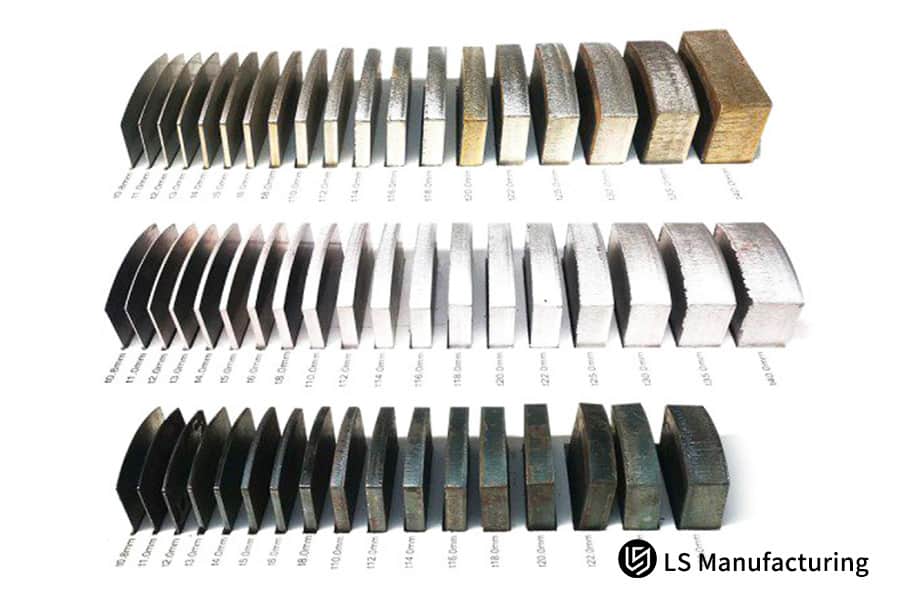
Figure 1: Assortment of sheet metal materials with different grades for laser cutting.
How Do R&D Engineering Tolerance Limits Structurally Impact The Actual Laser Cutting Quote Calculation?
The laser cutting quote will drastically increase if you set blindly the tolerance to ±0.05mm instead of the standard ±0.2mm. Basically, very tight tolerance requirements have made process engineers give up fast flying cuts and use instead a slow piercing process with high-frequency inspection for each single hole.
Cost Differences Between Different Tolerance Grades
- Standard Grade (±0.2mm): Continuous flying cut process, no additional focus compensation required, machine time cost is the baseline value.
- Precision Grade (±0.1mm): Needs dynamic focus compensation and mid-process calibration, laser cutting tolerance cost increases by 40%-60%.
- Ultra-Precision Grade (±0.05mm): Single-hole independent piercing + three dimensional inspections, machine time cost is more than twice the baseline value.
When it comes to precision parts, an issue for many R&D engineers is the uncertainty of the tolerances of the parts without specific tolerance markings.
According to ISO 2768-mk, "Unspecified linear dimensional tolerances shall be uniformly implemented according to the medium precision grade."
To fully comply with this standard, we suggest specifying the tolerance level of the unspecified during the drawing review step so that there will be no unexpected cost changes caused by differences in default standards.
Thermal Stress Compensation Logic for Laser Cutting Tolerance Cost
- Internal stress is released during sheet metal cutting, causing slight warping and affecting dimensional accuracy.
- Higher tolerance requirements necessitate lower cutting power and increased cooling intervals. Precise laser cutting tolerance calibration reduces wasted processing time.
- Thicker sheet metal parts experience more significant thermal deformation, and tolerance premiums increase exponentially with thickness.
For example, robot joints are the type of priority parts/areas in which precision laser cutting service which is carried out by segmenting the cut and using natural cooling in-between the segments to get the dimensional stability at the desired level of precision will be well-suited for the purpose.
It's like when you are driving around a corner, the first thing that you have to do if the corner is sharp is to slow down. If you lower the speed then the time cost per unit distance will naturally increase.
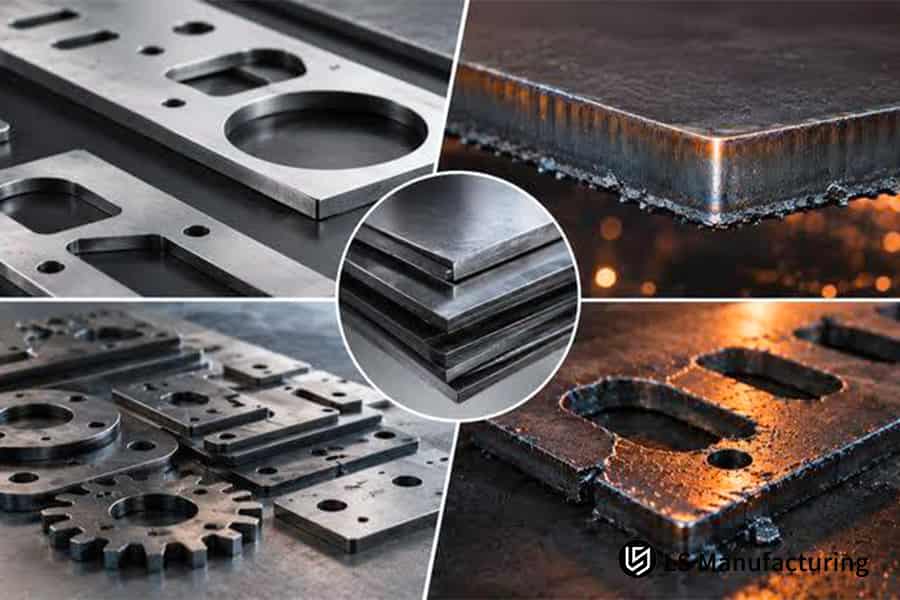
Figure 2: Precision laser cut gears and mechanical components with tight tolerances.
Can Aggressive Laser Cutting Nesting Optimization Significantly Lower Your Final Sheet Metal Piece Price?
Using inappropriate part spacing and edge allowances severely reduce the potential of the laser cutting nesting optimization, the result can be utilization of the sheet metal as low as 60%, and this way the supply chain team will have to pay for the scrap. Optimization of common-edge and nesting layouts through algorithms can increase utilization to more than 85%, thereby reducing raw material cost per unit.
Cost-Benefit Comparison of Mainstream Layout Methods
- Traditional Independent Layout: Parts are separated by a space of 1.5 times the plate thickness, with a utilization rate of about 60%-70%, but more perforations are needed.
- Common-Edge Cutting Layout: Two adjacent parts share one cut, so the utilization is raised to 75%-80% and perforation is reduced by 30%.
- Bridging Layout: Several parts are joined by micro-connections, which leads to elimination of idle paths and results in a further reduction of time costs.
Cost-Effectiveness Comparison of Different Nesting Strategies (1.5mm 304 Stainless Steel, 1220*2440mm Standard Sheet Material)
| Nesting Method | Sheet Material Utilization | Number of Drilling Passes | Material Cost Per Piece | Relative Baseline Cost |
| Traditional Independent Nesting | 68% | 124 Passes | $1.25 | 100% |
| Common Edge Cutting Nesting | 79% | 78 Passes | $1.08 | 86% |
| Bridging + Common Edge Hybrid Nesting | 86% | 52 Passes | $0.99 | 79% |
Prerequisites for Optimizing Laser Cut Price Per Part Nesting
- Part edges have to be straight and parallel if we want to cut them together, but this leaves us with very limited options when it comes to irregularly shaped curved parts.
- Nesting optimization probably has the greatest impact when dealing with batch orders. Quite advanced laser cutting nesting algorithm can help to maximize the utilization of sheet materials and so laser cutting costs can be markedly reduced through better nesting.
- Large-size exchange worktables make it possible to support whole-sheet nesting, which has a material utilization rate that is more than 10% higher than that of small worktables.
To put it another way, it's as if you were playing with Lego blocks. Regularly shaped blocks can be packed more tightly and occupy less space, resulting in a lower cost per piece.
Layout optimization is the fastest way to reduce laser cut costs per part. You can get our layout optimization white paper to learn three practical design techniques for quickly improving material utilization.
Why Do Micro-Feature Restrictions And Piercing Counts Heavily Inflate Your Laser Cutting Cost Guide Parameters?
Fabricating multiple micro-holes with diameters less than the thickness of the workpiece on thin plates, necessitates laser to do hundreds or thousands of pulse piercing cycles. This still, not only linearly raises the processing time as the laser cutting cost guide but also might cause localized heat build-up and deformation quite easily.
Logic Behind the Surge in Machining Time Costs for Micro-Hole Processing
- If the hole diameter is less than the thickness of the plate, one cannot use continuous cutting, rather, one has to do pulse piercing for each hole, each piercing cycle duration being 0.2-0.8 seconds.
- When micro-holes are made densely, heat accumulates, making the edges of the holes get covered with slag, because of this necessitating longer cooling breaks, which further extends the processing time.
- The frequent piercing causes the cutting nozzle and protective lens to wear and tear faster, which results in the manufacturer's consumable depreciation costs going up.
Micro-hole optimization solutions for laser cut price per part
- First, focus on making the hole diameter of non-functional holes at least equal to the plate thickness so that one can go back to continuous cutting processes, and it will reduce the costs by over 30%.
- Arrayed micro-holes can be made by a mixture of CNC punching and laser cutting. Proper laser cutting piercing techniques can lower the cost of each hole.
- Adjust the hole pattern so that there is no excessive local density and this way, the secondary processing costs, which is a result of heat accumulation, can be reduced.
For a better understanding, it can be compared to piercing a paper with a needle. If the hole is smaller than the paper, it can be pierced easily, if the hole is bigger, it has to be pierced several times, which is a waste of time and needles.
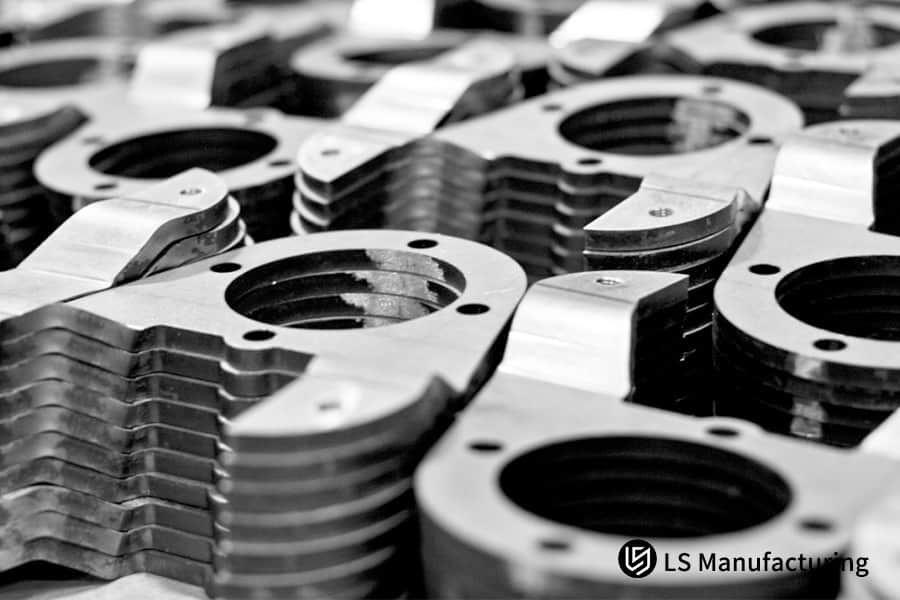
Figure 3: Black and white image of stacked sheet metal parts with micro features.
How Does The Choice Of Assist Gases Alter The Surface Finish And Overall Laser Cutting Quote Efficiency?
Assist gases make up 30% to 50% of the direct cost of laser processing, and their choice will very much influence the composition of the laser cutting quote and ultimately the total cost of ownership. For one thing, oxygen has the advantage of high cutting speed and low unit price, then again the oxide layer on the cut surface created by oxygen will increase processing costs. Decision-making should be based on the scenario of the application.
Comparison of technical parameters for three types of assist gases
- Oxygen: Thanks to combustion and the release of heat, the cutting speed is increased, choice of carbon steel but the cut surface will have an oxide layer.
- Nitrogen: Protective gas without any chemical reaction that results in a neat, oxide-free cut surface, stainless steel and aluminum alloys are suitable, but the cost is higher.
- Compressed Air: The most affordable option, can be used for thin sheet metal parts with low requirements. Still, a slight build-up of slag on the cut surface is possible.
Comparison of Cost and Performance of Three Auxiliary Gases (6000W Laser, 3mm 304 Stainless Steel)
| Gas Type | Hourly Cost | Cutting Speed (mm/min) | Surface Roughness Ra | Post-processing Requirements |
| Oxygen | $1.2 | 5000 | Ra 6.3 | Requires acid pickling to remove oxide layer |
| High-purity Nitrogen (99.999%) | $8.5 | 3800 | Ra 1.6 | None |
| Compressed Air | $0.5 | 4200 | Ra 12.5 | Requires manual deburring |
Gas Selection Strategy for Laser Cutting Service
- Nitrogen cutting is the optimal method to produce parts for welding or painting. This method avoids the formation of an oxide layer that would degrade the adhesion.
- Oxygen cutting is the most efficient way to maximize the running time of a compressor for the production of pieces made up of carbon steel without exposed or welded surfaces.
- Compressed air cutting is a viable option for low protection pieces. At the same time, tightly regulating the laser cutting gas consumption can markedly curb direct costs.
In a very simple analogy, it is as if you choose the level of protection for painting only ordinary paint is enough for indoor use, while the more durable weather-resistant paint is needed for outdoor use. Making the right choice to meet the needs helps save money.
Appropriate gas selection can directly reduce the total cost of ownership (TCO) of parts. You can contact our process engineers for a customized laser cutting service selection plan based on your part's material and usage scenario.
Which Specific Design Parameters Should Quality Engineers Audit To Reduce Individual Laser Cut Price Per Part?
During the design review phase, quality engineers can implement a technical audit of key geometric features on the drawings to directly influence the machine time billing logic, thereby cutting the laser cut price per part. A good way of lowering the unit processing price per piece is to standardize the corner radius, kerf spacing, and lead wire position of parts.
Geometric Feature DFM Cost Reduction Checklist
- Sharp Corner to R-Corner Standard: To prevent heat buildup in the laser head deceleration phase, convert inner sharp corners to R-corners with a radius more than 0.5 times the plate thickness.
- Minimum Spacing Setting: Preferably keep a safety space of 1-1.5 times the plate thickness between parts for high-order nesting purposes.
- Lead Wire Exit Position Design: To lessen the post-grinding work, try to place the cutting lead wire on surfaces that are not important or in scrap areas.
- Common Edge Cutting Geometric Interference Review: Make sure that there are no pieces sticking out which would hinder the straight edges of the parts as this would lead to the maximum usage of common edge nesting.
Design Adaptation Points for Laser Cutting Nesting Optimization
- Try to keep the regularity of the part's outer contour mostly, cut down on irregular protrusions and because of this improve the nesting algorithm space utilization.
- Part that is symmetrical can be laid out through rotation so that the part spacing can be even further squeezed. Contour laser cutting path optimization can go a long way in reducing backlash loss.
- Stick to the same thickness and material for parts so that mixed nesting production can be carried out and the first-piece debugging expense can be brought down.
This can be compared to luggage packing. If the edges and corners are trimmed well, then more items can fit into the suitcase and the shipping price per piece will be cheaper.
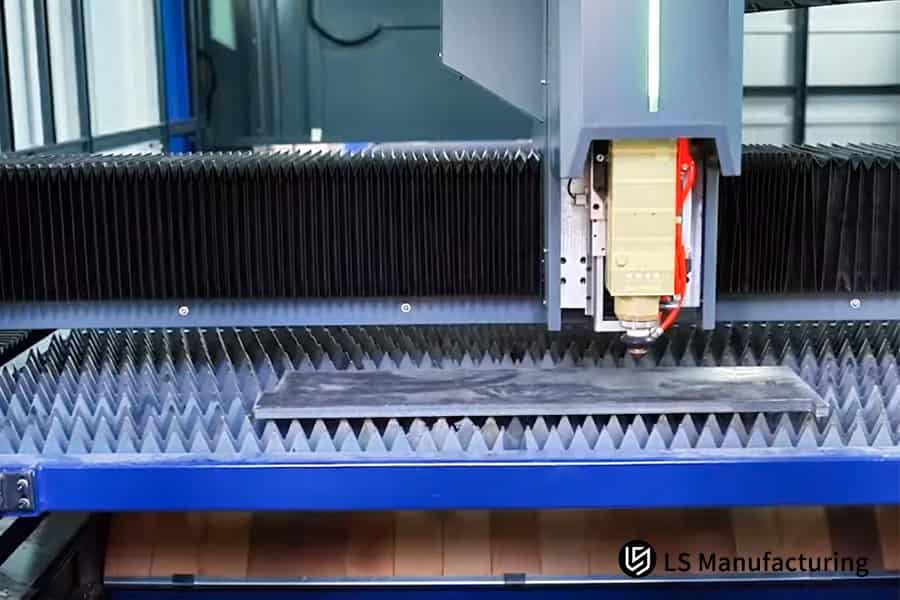
Figure 4: High precision CNC machined parts with smooth surface finishes.
What Custom Manufacturing Case Study Proves LS Manufacturing Can Optimize Your Precision Laser Cutting Service Budget?
By presenting the actual example of LS Manufacturing tailoring high-conductivity copper busbars for new energy vehicle battery packs of a leading automotive parts supplier, we will illustrate how precision laser cutting service, using DFM intervention and advanced equipment configuration, can help clients realize a 32% cost cut plus technical specification maintenance.
Client's Original Problems
- The part being a 3.0mm thick T2 copper conductive busbar with a very dense weight-reducing hole layout, the original method caused large thermal deformations and could not pass IATF 16949 dimensional and flatness inspections.
- Other suppliers gave very high machine time premium prices for high-reflectivity materials, which was over the budget by more than 25% per unit.
- Due to time constraints, conventional methods were incapable of meeting delivery deadlines.
LS Manufacturing Solutions
- Design Optimization: Advising the client to replace sharp edges with rounded corners and changing the wire lead insertion points to avoid heat accumulation while laser head slowing down.
- Process Configuration: Uses a 12000W super intense fiber laser source together with 2.5MPa high-pressure nitrogen gas and anti-reflective optical protection technology that is dynamic.
- Nesting Optimization: Entirely programmed common-edge nesting, high-speed pulse scintillation perforation, and pinpoint laser cutting thermal control to exclude thermal stress warping, instant material vaporization, and heat dissipation (local).
Final Results
- The unit-time for single-piece production was shortened from 85 to 32 seconds, the raw material nesting utilization was stepped up from 68% to 86%.
- Finished product dimensional tolerance has been reliably held within ±0.06 mm, cut roughness Ra has been consistently kept lower than 1.6. Because of this, secondary grinding and leveling are completely eliminated.
- The direct effect of a single-piece purchase price was a drop of 32%, which kept the customer on track with their mass production milestones and was totally in line with IATF 16949 quality standards.
- By laser cutting nesting optimization, this project fully unleashed material utilization and finally cut the laser per-part price by 32%.
Cost reduction for precision parts made of highly reflective materials relies on process capabilities and design experience. You can submit your part drawings and technical requirements, and we will customize a dedicated precision laser cutting service solution for you, providing a precise quote simultaneously.

Why Do Secondary Post-Processing Requirements Significantly Escalate Your Post-Laser Cutting Total Cost Of Ownership?
Post-treatment processes such as manual deburring, secondary leveling and surface polishing after laser cutting often account for more than 20% of the total cost in the laser cutting cost guide. The choice of a manufacturer with a fully integrated processing capability can directly eliminate the logistical and management premium associated with these processes.
Post-Processing Hidden Cost Chain
- The hardening of the heat-affected zone causes micro-cracks at edges that place higher wear on the tools used for tapping which then increases the costs of processing.
- When a part is cut with low-end equipment and has a very poor flatness, it will then need to be leveled by roller coating which is a labor intensive process and also takes the use of equipment thereby increasing costs.
- Logistics turnaround time and management costs are increased by cross-factory post-processing which so lengthens the overall delivery time.
Value that Integrated Laser Cutting Quotas Bring to Saving Cost
- Precision leveling done online at one stop can keep the flatness of parts within 0.5mm/m, so secondary leveling is not necessary.
- An online deburring operation releases the finished products without the intervention of manual grinding. A steady laser cutting edge finish will reduce the post-processing that is needed.
- Since the procedures are in-house, there is less logistics turnover which also results in a delivery time shorter by more than 30%.
Simply put, it's like buying pre-assembled furniturea one-stop solution that saves you money and time by eliminating the need to hire assemblers.
Post-processing costs often account for one-fifth of total expenditure. You can provide your complete part processing requirements, and we will calculate the total cost of ownership savings for you using integrated laser cutting quotas.
FAQs
Q1: In the global B2B precision machining market, what is the approximate hourly workshop processing rate range for precision laser cutting services for industrial clients?
Currently, the industry machine time cost for precision laser cutting ranges from $60 to $150 per hour, depending on the laser power (e.g., 6kW vs 12kW) and the amount of high-pressure, high-purity auxiliary gas required when cutting highly reflective materials.
Q2: Why is ultra-short-range complex laser contour cutting so much more expensive than standard continuous straight-line cutting for the same processing length?
Complex, irregular contours with sharp corners make the laser head decelerate a lot, accelerate, and continually recalibrate the focus during the process. This drastically increases the actual effective machine tool runtime compared to the continuous straight-line cutting, resulting in a substantial increase in machine time and overall processing costs.
Q3: Why does the tolerance cost related to laser cutting show an exponential upward trend with the thickness of the processed sheet material?
Increasing the thickness of sheet metal not only leads to a higher possibility of internal thermal stress release but also of laser beam deflection, both of which increase exponentially. As a result, the feed rate must be reduced much. Also, dynamic focus compensations and dimensional checks become necessary more frequently, which in turn causes manufacturers to charge higher tolerance premiums.
Q4: Is it possible to directly apply the currently mainstream common-edge laser cutting layout optimization technology to all types of customized sheet metal parts?
The technology is mainly designed for array-type parts with regular edges and parallel straight edges. So, it cannot be directly applied to irregularly shaped parts with complex curves or interferences- the layout must keep at least a one-sheet thickness safety distance to prevent thermal burns.
Q5: Generally speaking, what is the minimum hole diameter standard for a part not to increase laser cutting material costs and processing budget?
General sheet metal DFM engineering guidelines recommend that the minimum hole diameter in the drawings should be controlled with the ratio of at least 1:1 to the thickness of the material. Running below this standard would trigger high-frequency pulse piercing, because of this Really increasing processing time and budget.
Q6: Why global purchasing managers should prioritize nitrogen-assisted cutting over traditional oxygen-assisted cutting for stainless steel parts?
Nitrogen, being an inert protective gas, completely isolates the cut from the environment, thereby preventing oxidation and creating a bright, clean surface without impurities. because of this, it avoids the need for additional manual cleaning, acid pickling, polishing etc. thereby reducing the total cost of ownership (TCO).
Q7: How would a production order of larger size change the proportion of upfront costs in a laser cutting quotation?
Layout of CAD drawings, machine parameter setup and adjustment, trial cuts for laser processing are examples of fixed upfront costs. Starting from single-piece sampling, through intermediate quantities and up to mass production, large orders 'absorbing' these setup costs can drive the per-piece price fall by even more than 90%.
Q8: What is the process to decide whether mechanical leveling or deburring is necessary for customized sheet metal parts?
Thermal stress due to localized heating resulting from heavily perforated drawings or the nature of the material (copper aluminum etc.) is often left. LS Manufacturing's one-stop leveling & deburring service is the ideal choice to help you avoid in-store post-processing costs. Besides quotation, you will also get a cost optimization solution by uploading your drawing.
Summary
Typically, the cost of precision laser cutting is regarded as a complex engineering formula influenced by the metallurgical properties of the sheet metal, thermal control of the aperture, choice of auxiliary gas, permissible tolerance limits, and nesting algorithms. One way to maximize the profit margins upon drawing release is to design parts by optimizing their thickness-to-diameter ratios, allow common-edge nesting, and set gas standards rationally, the R&D and procurement teams would, of course, be involved in this process.
Does your next challenging sheet metal job require more budget than expected or presents manufacturing feasibility (DFM) issues that cause delays? In that case, don't let the use of broad estimation formulas to delay your product launch. Send your STEP, DXF, or DWG drawings to ready to help you manufacturers' team of experts. Our experts not only give you very competitive and clear laser cutting prices but, at the same time, our senior manufacturing engineers conduct free DFM drawing technical evaluations to guarantee the cost-effectiveness and high quality of the realization of your precision designs.
📞Tel: +86 185 6675 9667
📧Email: info@lsrpf.com
🌐Website:https://lsrpf.com/
Disclaimer
The contents of this page are for informational purposes only.LS Manufacturing servicesThere are no representations or warranties, express or implied, as to the accuracy, completeness or validity of the information. It should not be inferred that a third-party supplier or manufacturer will provide performance parameters, geometric tolerances, specific design characteristics, material quality and type or workmanship through the LS Manufacturing network. It's the buyer's responsibility.Require partsquotation Identify specific requirements for these sections.Please contact us for more information.
LS Manufacturing Team
LS Manufacturing is an industry-leading company. Focus on custom manufacturing solutions. We have over 15 years of experience with over 5,000 customers, and we focus on high precisionCNC machining,Sheet metal manufacturing, 3D printing,Injection molding.Metal stamping,and other one-stop manufacturing services.
Our factory is equipped with over 100 state-of-the-art 5-axis machining centers, ISO 9001:2015 certified. We provide fast, efficient and high-quality manufacturing solutions to customers in more than 150 countries around the world. Whether it is small volume production or large-scale customization, we can meet your needs with the fastest delivery within 24 hours. choose LS Manufacturing. This means selection efficiency, quality and professionalism.
To learn more, visit our website:www.lsrpf.com